作者: admin

  • APEC should lead inclusive cooperation to rebuild supply chain resilience

    APEC should lead inclusive cooperation to rebuild supply chain resilience

    As the Asia-Pacific Economic Cooperation (APEC) Economic Leaders’ Meeting commenced in Gyeongju, South Korea, on October 31, 2025, Ong Tee Keat, president of the Belt and Road Initiative Caucus for the Asia-Pacific and former Malaysian transport minister, emphasized the forum’s pivotal role in fostering free trade and inclusive supply chain collaboration. Speaking at the event, Ong stressed that APEC should act as a beacon for global economic cooperation, steering clear of trade weaponization aimed at specific nations. He highlighted the importance of rebuilding resilient supply chains to ensure sustainable economic growth across the region. The meeting, attended by leaders from 21 member economies, focused on addressing challenges posed by geopolitical tensions and the lingering impacts of global disruptions. Ong’s remarks underscored the need for collective action to enhance regional integration and promote equitable development. The discussions also explored strategies to mitigate risks associated with supply chain fragmentation, emphasizing the role of technology and innovation in driving economic recovery. As APEC continues to evolve, its commitment to fostering inclusive and resilient trade networks remains critical to achieving long-term prosperity in the Asia-Pacific region.

  • Thai ex-PM Thaksin’s party elects new leader after daughter’s exit

    Thai ex-PM Thaksin’s party elects new leader after daughter’s exit

    Thailand’s Pheu Thai Party, one of the nation’s most prominent political factions, has elected Julapun Amornvivat as its new leader following the resignation of Paetongtarn Shinawatra, the daughter of former Prime Minister Thaksin Shinawatra. Paetongtarn stepped down last week after a court ruling in August removed her from the prime ministerial position due to an ethics violation related to a border dispute with Cambodia. Analysts suggest her departure was a strategic maneuver to protect the party from potential legal repercussions, potentially signaling the end of the Shinawatra family’s long-standing influence in Thai politics. Julapun, a former deputy finance minister and son of veteran politician Sompong Amornvivat, was chosen during a vote livestreamed on the party’s official Facebook page. He expressed gratitude for the trust placed in him by party members. Julapun, 50, has been instrumental in promoting Pheu Thai’s key policies, including a proposed 10,000-baht ($300) stimulus package and the legalization of casinos. Despite the leadership change, observers believe the party will continue to be influenced by Thaksin Shinawatra, who founded the party in the late 1990s and remains a central figure in Thai politics. Thaksin, currently serving a prison sentence for corruption, was ousted in a 2006 coup and spent over a decade in exile. The Shinawatra family has long been at odds with Thailand’s pro-military and pro-royalty elite, who view their populist policies as a challenge to the traditional social order.

  • Plan to allow Guangdong vehicles to travel south to Hong Kong published

    Plan to allow Guangdong vehicles to travel south to Hong Kong published

    In a significant move to enhance regional connectivity, the ‘Southbound Travel for Guangdong Vehicles’ plan was officially unveiled on Friday, allowing private car owners from Guangdong province to travel to the Hong Kong Special Administrative Region. The initiative, announced by Guangdong’s provincial department of public security, aims to foster greater personnel exchanges and interaction between the two regions. The plan is structured in two phases: the first permits parking at Hong Kong border checkpoints, while the second allows vehicles to enter Hong Kong’s urban areas. Initially, the program will be available to residents of Guangzhou, Zhuhai, Jiangmen, and Zhongshan, with plans to expand to other Guangdong cities within six months. Starting November 1, eligible private car owners can apply for travel permits via the Hong Kong-Zhuhai-Macao Bridge. Approved vehicles will gain access to automated parking lots in border areas from November 15 and will be permitted to enter Hong Kong’s urban areas starting December 23. This initiative is expected to boost economic and cultural ties between Guangdong and Hong Kong, while also easing cross-border travel for residents.

  • Tutankhamun treasures, Ramses statue: 5 major highlights at Grand Egyptian Museum

    Tutankhamun treasures, Ramses statue: 5 major highlights at Grand Egyptian Museum

    After two decades of meticulous planning and construction, the Grand Egyptian Museum (GEM) is set to open its doors on November 4, 2025, near the iconic Pyramids of Giza. This monumental $1 billion facility, spanning 24,000 square meters of exhibition space, is poised to become a global cultural landmark, attracting over 5 million visitors annually. Egyptian authorities have hailed it as “the largest cultural building of the 21st century.” The museum’s design, inspired by the nearby pyramids of Khufu, Khafre, and Menkaure, features a striking triangular glass structure created by Heneghan Peng Architects. It houses an impressive collection of 100,000 artefacts from Egypt’s 30 dynasties, with half on display and the remainder preserved for research and restoration. Among the highlights are the 11-meter granite statue of Ramses II, the complete collection of King Tutankhamun’s treasures, and the 4,600-year-old solar boat of Pharaoh Khufu. The museum also offers a panoramic view of the pyramids from its six-story staircase, lined with colossal statues and ancient tombs. With its state-of-the-art facilities, including laboratories and restoration workshops, the GEM aims to play a pivotal role in revitalizing Egypt’s economy while preserving its rich heritage.

  • UN set to vote on a resolution backing Morocco’s plan for Western Sahara, in a major shift

    UN set to vote on a resolution backing Morocco’s plan for Western Sahara, in a major shift

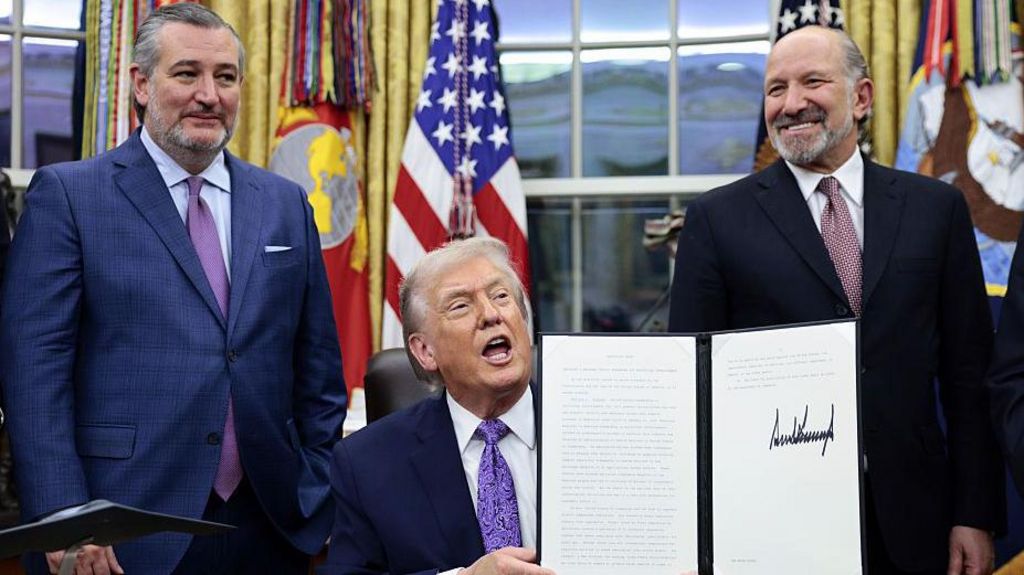
    The United Nations Security Council is set to vote on Friday on a resolution endorsing Morocco’s sovereignty over the disputed Western Sahara region. This move aligns with the Trump administration’s support for Morocco’s autonomy plan, marking a significant shift in the decades-long conflict. The resolution, if passed, would represent the strongest international backing yet for Morocco’s claim, supported by most European Union members and a growing number of African allies. It notably omits references to a U.N.-backed referendum on self-determination, a stance supported by Algeria, Russia, and China, instead proposing ‘genuine autonomy under Moroccan sovereignty’ as the most viable solution. The resolution also seeks to renew the U.N. peacekeeping mission in Western Sahara for another year, a mission that has been in place for over three decades. Western Sahara, a phosphate-rich coastal desert the size of Colorado, has been a contentious territory since Spain relinquished control in 1975. Both Morocco and the Polisario Front, a pro-independence group based in Algerian refugee camps, lay claim to the region. The Polisario Front has rejected the resolution, vowing to continue its fight for self-determination. The U.N. resolution calls for all parties to seize this ‘unprecedented opportunity for lasting peace’ and requests Secretary-General Antonio Guterres to review the peacekeeping mission’s mandate within six months. The conflict remains a central issue in North African diplomacy, with Morocco viewing support for its autonomy plan as a key indicator of international alliances. The resolution comes amid U.S. efforts to reassess funding for U.N. programs, including peacekeeping, as part of a broader strategy to align U.N. operations with American interests.

  • Xi meets Thai PM

    Xi meets Thai PM

    On Friday, October 31, 2025, President Xi Jinping of China engaged in a significant bilateral meeting with Thai Prime Minister Anutin Charnvirakul. The encounter took place on the sidelines of the 32nd APEC Economic Leaders’ Meeting in Gyeongju, South Korea. This meeting underscores the ongoing diplomatic efforts between China and Thailand, two key players in the Asia-Pacific region. The discussions are expected to have focused on enhancing economic cooperation, regional stability, and mutual interests in the context of the APEC framework. Such high-level engagements are pivotal in fostering stronger ties and addressing shared challenges in the region.

  • Watch: BBC is on the ground in hard hit Santa Cruz, Jamaica

    Watch: BBC is on the ground in hard hit Santa Cruz, Jamaica

    The BBC’s Nada Tawfik provides an on-the-ground report from Santa Cruz, Jamaica, a region severely impacted by Hurricane Melissa. The report highlights the critical role of the Jamaican Red Cross in spearheading recovery initiatives. The organization is mobilizing resources and personnel to assist affected communities, focusing on providing essential supplies, medical aid, and shelter. The hurricane has left widespread devastation, with damaged infrastructure and displaced residents. The BBC’s coverage underscores the urgency of the situation and the collaborative efforts between local authorities and international aid organizations to restore normalcy. This report sheds light on the resilience of the Jamaican people and the challenges they face in rebuilding their lives post-disaster.

  • Russia deploys 170,000 troops for push in Ukraine’s Donetsk region, Zelenskyy says

    Russia deploys 170,000 troops for push in Ukraine’s Donetsk region, Zelenskyy says

    In a significant escalation of the ongoing conflict, Russia has deployed approximately 170,000 troops to Ukraine’s eastern Donetsk region, focusing its efforts on capturing the strategic stronghold of Pokrovsk. Ukrainian President Volodymyr Zelenskyy described the situation in Pokrovsk as “difficult” during a media briefing in Kyiv on Friday. While acknowledging that some Russian units have infiltrated the city, Zelenskyy emphasized that Ukrainian forces are systematically eliminating them to preserve personnel. This comes amid Russia’s broader push for a battlefield victory, despite slow and costly progress in terms of troops and equipment. Russian President Vladimir Putin has recently claimed significant advances, though these assertions remain unverified. Meanwhile, Ukraine has retaliated by targeting Russian oil facilities, disrupting military logistics and domestic markets. Vasyl Maliuk, head of Ukraine’s Security Service, reported over 160 successful long-range strikes on Russian oil infrastructure this year, leading to a 20% drop in domestic oil products and temporarily halting 37% of Russia’s refining capacity. Additionally, Ukraine has destroyed nearly half of Russia’s advanced Pantsir air defense systems and one of its hypersonic missiles, the Oreshnik, which Putin had previously touted as invulnerable. On the humanitarian front, Russian drone strikes have caused significant civilian casualties, with a 30% increase reported this year. The UN has expressed concern over Russia’s near-daily attacks on Ukraine’s energy infrastructure, warning of a potential humanitarian crisis as winter approaches. Despite international peace efforts, the conflict shows no signs of abating, with funding for humanitarian operations dwindling from $4 billion in 2022 to $1.1 billion this year.

  • French PhD student at UCAS 2025: Cross-culture encounter awaits

    French PhD student at UCAS 2025: Cross-culture encounter awaits

    Alban Schmoll, a French PhD student, is set to begin an exciting academic journey at the University of Chinese Academy of Sciences (UCAS) in 2025. Speaking at the university’s opening ceremony in Beijing, Schmoll shared his enthusiasm for joining a diverse and dynamic academic community. He expressed eagerness to engage with peers from various cultural backgrounds, emphasizing the value of cross-cultural learning and personal growth. The event marked the start of a new chapter for Schmoll, who is poised to contribute to and benefit from the rich academic environment at UCAS. His story highlights the increasing global appeal of Chinese educational institutions and the importance of fostering international collaboration in higher education.

  • Dutch press agency calls election for centrist D66 party

    Dutch press agency calls election for centrist D66 party

    In a closely contested Dutch national election, the centrist D66 party has narrowly surpassed Geert Wilders’ far-right Party for Freedom (PVV), according to a projection by the national news agency ANP. The prediction, based on nearly all counted ballots and an analysis of remaining votes—primarily from overseas Dutch nationals—suggests D66 leader Rob Jetten is poised to become the Netherlands’ next prime minister. At 38, Jetten would be the country’s youngest and first openly gay leader. He emphasized that the results reflect voters’ desire to move beyond “political nonsense.”

    The two parties are currently tied at 26 seats, with the possibility of D66 gaining a slight edge to 27 as remaining votes are tallied. However, mainstream parties, including D66, have ruled out forming a coalition with the PVV, citing Wilders’ role in destabilizing the previous coalition over migration policies. Political scientist Henk van der Kolk noted that the seat count is largely irrelevant, as the focus shifts to forming a centrist coalition involving D66, the Labor Party, Green Left, the Christian Democrats, and the People’s Party for Freedom and Democracy.

    With the Dutch political landscape highly fragmented, coalition negotiations are expected to span weeks or even months. The election underscores the challenges of governance in a polarized environment, with centrist forces seeking to counter the influence of far-right populism.