The Maldives has taken a groundbreaking step in public health by implementing a generational tobacco ban, effective from November 1, 2025. This bold initiative, which prohibits tobacco use among individuals born on or after January 1, 2007, has been widely praised by health experts, international organizations, and other nations. The ban also includes a nationwide prohibition on electronic cigarettes and vaping products, marking a significant milestone in the global fight against tobacco-related health issues. Maldivian Minister of Education Ismail Shafeeu highlighted the country’s leadership in this area, noting that the decision has been positively received internationally. Ahmed Afaal, managing director of ADK Hospitals and vice-chair of the Tobacco Control Board of the Maldives, emphasized that while the ban’s impact will not be immediate, it is a long-term strategy aimed at fostering a healthier population and reducing healthcare costs. The new regulations require retailers to verify the age of customers before selling tobacco products, ensuring compliance with the law. The move has been welcomed by most citizens, with local resident Mohamed Shauf Rilwan expressing optimism about the creation of a ‘smoke-free generation in the future.’ Analysts have also dismissed concerns that the ban could negatively affect the Maldives’ tourism industry, noting that tourists are drawn to the country for its natural beauty rather than its smoking regulations. Judith Mackay, director of the Hong Kong-based Asian Consultancy on Tobacco Control, lauded the Maldives’ efforts, stating that the country’s actions are commendable and set a strong example for others to follow.
作者: admin
-

In Mamdani’s New York win, India’s Nehru finds an echo
In a historic moment for New York City, Zohran Mamdani, the newly elected mayor of Indian descent, invoked the words of India’s first Prime Minister, Jawaharlal Nehru, during his victory speech on Wednesday. Mamdani, whose roots trace back to South Asia, quoted Nehru’s iconic 1947 ‘Tryst with Destiny’ speech, delivered on the eve of India’s independence from British rule. The speech, which marked the birth of a nation, resonated deeply as Mamdani stepped into his role as New York’s first Indian-origin mayor. The event was punctuated by Bollywood music and Jay-Z’s ‘Empire State of Mind,’ symbolizing a fusion of cultures and a new chapter for the city. Mamdani’s campaign had already embraced Bollywood as a cultural touchstone, with the mayor-elect frequently using Hindi and film references to connect with his heritage. Nehru’s speech, often hailed as one of history’s most stirring orations, emphasized freedom as a beginning rather than an end, a sentiment Mamdani echoed in his own vision for New York. The parallels between Nehru’s leadership in post-colonial India and Mamdani’s ascent in a diverse metropolis underscore the transformative potential of his tenure. As Mamdani embarks on his journey, he carries forward Nehru’s legacy of unity, progress, and service to the people.
-

Envoy: China, US can build on momentum
In a pivotal moment for global diplomacy, China and the United States are being encouraged to build on the positive momentum generated by their leaders’ recent meeting in Busan, South Korea. Ambassador Xie Feng, China’s top envoy in Washington, emphasized the need to steer the ‘giant ship’ of bilateral relations toward a stable and cooperative future. Speaking at the US-China Business Council 2025 China Operations Conference & Dinner via video link, Xie highlighted the significance of the meeting, which recalibrated relations at a critical juncture. He acknowledged the challenges but stressed the importance of maintaining hope and fostering mutual understanding. The meeting, preceded by trade talks in Malaysia, addressed concerns from US business and agricultural sectors, leading to tangible outcomes such as reduced tariffs and expanded cooperation in areas like anti-drug efforts and agricultural trade. Xie urged both nations to follow through on their commitments, warning against actions that could disrupt progress. He also pointed to China’s upcoming 15th Five-Year Plan (2026-30) as a catalyst for deeper collaboration, particularly in innovation and sustainable development. With China’s economy projected to grow significantly, Xie emphasized the country’s role as a global growth engine and its commitment to high-standard opening-up. He called on US companies to seize new opportunities and act as bridges for mutual understanding, highlighting the China International Import Expo as a key platform for partnership. The US-China Business Council echoed optimism, describing the latest trade announcements as ‘very encouraging’ and expressing hope for long-term predictability in bilateral ties.
-

Allies weigh options amid uncertainties
In the face of escalating unpredictability in US trade and foreign policies, key Commonwealth nations such as Canada and New Zealand are actively pursuing strategies to diversify their economic partnerships. Radhika Desai, a political studies professor at the University of Manitoba, highlighted Canada’s precarious position following decades of deepening reliance on the United States. Desai noted that Canadian elites have historically concentrated their economic focus on the US, a strategy she described as a ‘silent surrender.’ This dependence has proven increasingly costly, particularly under the Trump administration, which renegotiated the North American Free Trade Agreement to Canada’s disadvantage. With the potential of a second Trump term, Prime Minister Mark Carney’s perceived inability to challenge Washington has left many Canadians disenchanted. Desai identified two major obstacles to Canada’s shift away from the US: entrenched economic integration and a ruling class resistant to diversification, especially if it involves closer ties with China. Concurrently, Canadian public sentiment has grown increasingly critical of aligning too closely with the US. Desai attributed Washington’s volatility to deeper structural issues within the US, including decades of financialization and deindustrialization, which have made it politically untenable for any candidate to claim economic success. Trump’s focus on tariffs and blame towards trade, China, and immigrants, rather than addressing neoliberalism, has further exacerbated global uncertainties. Desai emphasized that this unpredictability has lasting consequences, with governments worldwide recognizing that the US is unlikely to become a stable economic partner, even under a future Democratic administration. While Canada remains closely tied to the US, Desai believes a gradual realignment towards a multipolar world is inevitable. In a recent move, Prime Minister Carney attended the ASEAN Summit in Kuala Lumpur, aiming to strengthen trade, technology, and energy partnerships with Southeast Asian nations, signaling Canada’s intent to diversify its economic relationships. Meanwhile, the European Union and Australia are advancing their long-awaited Free Trade Agreement, reflecting a shared commitment to an open, rules-based trading system. New Zealand has also been proactive in diversifying its trade partnerships, recently concluding agreements with the UK and the Gulf Cooperation Council, and engaging in negotiations with India. These efforts underscore a broader trend among global allies to enhance supply chain resilience and reduce vulnerability to market-specific shocks.
-

Violence intensifies in Sudan’s North Darfur: UN
The humanitarian crisis in Sudan’s North Darfur region has deepened as violence escalates following the capture of the state capital, El Fasher, by the Rapid Support Forces. According to the United Nations Office for the Coordination of Humanitarian Affairs (OCHA), multiple air and drone strikes were reported in El Fasher, Tina, and Wana Mountain on Sunday, exacerbating the already dire situation. Local sources have cited civilian casualties, though OCHA has been unable to verify these reports due to restricted access and communication challenges in the affected areas. The World Health Organization (WHO) Director-General, Tedros Adhanom Ghebreyesus, condemned the recent attack on the Kernoi Pediatric and Maternity Hospital in North Darfur, which resulted in at least four deaths and three injuries. He emphasized the urgent need to halt attacks on healthcare facilities globally. Despite the perilous conditions, the UN and its partners are delivering critical aid, including therapeutic feeding and vitamin supplementation programs, while also ensuring safe deliveries and emergency care for pregnant women through mobile clinics. Meanwhile, the security situation in Sudan’s Kordofan region has also deteriorated, with at least 40 civilians killed and dozens injured in an attack on a funeral gathering in El Obeid, the capital of North Kordofan state. OCHA has reiterated its call for an immediate cessation of hostilities and for all parties to protect civilians and adhere to international humanitarian law.
-

Istanbul gathering discusses Gaza peace force
Foreign ministers from seven Arab and Muslim-majority nations convened in Istanbul on Monday to deliberate on the establishment of an international peace force as part of a Gaza ceasefire agreement. Hosted by Turkish Foreign Minister Hakan Fidan, the meeting included representatives from the United Arab Emirates, Indonesia, Qatar, Pakistan, Saudi Arabia, and Jordan. The ministers unanimously affirmed their support for Palestinian self-governance, emphasizing that ‘Palestine should be governed and secured by Palestinians.’ Fidan criticized Israel for repeated truce violations and the blockade of humanitarian aid, stressing the collective desire to prevent a resurgence of violence in Gaza and to advance the two-state solution. Despite a U.S.-brokered ceasefire in effect since October 10, reports indicate that Israeli airstrikes have continued, resulting in civilian casualties. Jordanian Foreign Minister Ayman Safadi, speaking at the Manama Dialogue in Bahrain, advocated for a UN-mandated stabilization force, though Jordan ruled out deploying its own troops. Meanwhile, the U.S. circulated a draft UN Security Council resolution proposing an international force in Gaza for at least two years, with potential extensions. Qatari Emir Sheikh Tamim bin Hamad Al Thani urged intensified global efforts to aid Palestinian reconstruction. Analysts view the Istanbul meeting as a continuation of diplomatic efforts initiated during the UN General Assembly, with a focus on creating a temporary international task force to stabilize Gaza while ensuring Palestinian autonomy.
-

Pope Leo calls for ‘deep reflection’ about treatment of detained migrants in the United States
In a press conference held outside the papal retreat at Castel Gandolfo, Pope Leo XIV addressed pressing global issues, emphasizing the need for “deep reflection” on the treatment of migrants detained in the United States. The Chicago-born pontiff highlighted the plight of individuals who have lived peacefully for years but are now profoundly affected by current policies. He stressed that spiritual rights of detainees must be upheld, urging authorities to grant pastoral workers access to these individuals, many of whom have been separated from their families. Leo referenced scripture, posing the critical question: “How did you receive the foreigner?” as a call to action for compassionate treatment of migrants. On the topic of U.S. military strikes against suspected drug traffickers off Venezuela’s coast, the Pope expressed concern over escalating tensions, advocating for dialogue over conflict. Regarding the fragile ceasefire in the Middle East, Leo acknowledged the complexity of the situation, particularly in addressing Israeli settler attacks on Palestinians in the West Bank. He emphasized the need for justice and collaboration to ensure the rights of all peoples. The Pope’s upcoming engagements include a meeting with Palestinian President Mahmoud Abbas and his first papal visit to Turkey and Lebanon later this month.
-

China lays out pitch to lure world’s consumers
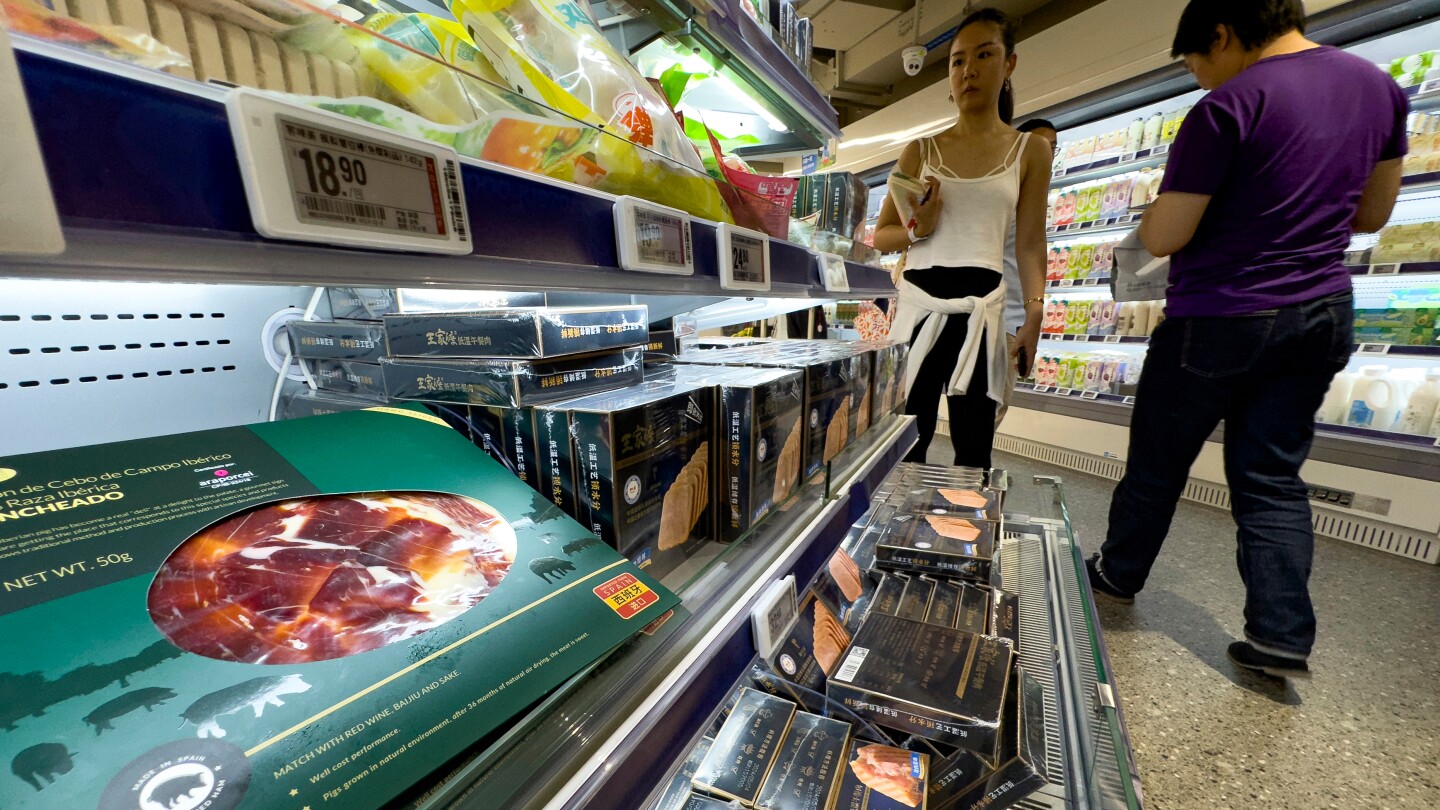
China is strategically positioning itself as a premier shopping destination for international tourists through a series of policy enhancements aimed at improving the visitor experience. Key among these measures is the optimization of the instant tax refund policy, which now allows foreign visitors to initiate tax refund claims directly at the point of sale in major retail outlets. This logistical simplification has significantly reduced friction for consumers, making shopping a primary motivation for overseas tourists visiting the country, according to experts and executives.
The minimum purchase threshold for departure tax refunds has been lowered to 200 yuan ($27.75) at the same store on the same day, as announced by the Ministry of Commerce in April. This change has made it easier for international travelers to take advantage of tax refunds, further incentivizing shopping in China. High-tech gadgets, particularly drones and advanced smartphones, are among the most popular purchases, reflecting a shift in consumer preferences towards innovative and high-value products.
Luo Yao, store manager of drone maker DJI at Beijing APM, noted that their store has become a destination in itself, with foreign visitors often arriving with clear intent to purchase. Luo highlighted that foreign customers, primarily from the United States, Singapore, and Russia, frequently visit in family or friend groups, and the store provides assistance with pricing, tax refunds, and hands-on product testing to simplify the shopping experience.
Wan Zhe, a professor specializing in regional economic development at Beijing Normal University, observed that international travelers’ demand for Chinese goods has evolved from a focus on low cost to an appreciation for superior value and innovation. This transition has been further fueled by protectionist policies in certain Western nations, which have inflated domestic consumer costs, making Chinese alternatives not only cheaper but also smarter and more efficient choices.
The expansion of China’s visa-free entry policies has also played a pivotal role in boosting shopping-focused tourism. The National Immigration Administration reported that from July to September, foreign nationals accounted for 7.24 million visits to China under its visa-free policies, marking a 48.3 percent year-on-year increase. The visa-waiver program now grants entry to nationals of 76 countries and provides up to 10-day transit visas for travelers from 55 more, streamlining access for a growing number of international visitors.
These strategic initiatives underscore China’s commitment to enhancing its appeal as a global shopping hub, leveraging policy upgrades and innovative products to attract and satisfy international consumers.
-

Anti-migrant group ordered to stop blocking foreigners from South African healthcare
A South African court has issued a landmark ruling against Operation Dudula, an anti-migrant group, ordering it to cease obstructing foreign nationals from accessing public health facilities and schools. The Johannesburg High Court declared such actions illegal, emphasizing that the group must stop intimidating, harassing, or interfering with individuals seeking these essential services. Operation Dudula, whose name translates to ‘remove by force’ in Zulu, has been actively picketing hospitals, clinics, and schools in Gauteng and KwaZulu-Natal provinces, demanding identity checks and barring non-South Africans from entry. The court also prohibited the group from making hate speech, unlawfully evicting foreign nationals from their homes or trading stalls, and inciting others to do so. South Africa, home to approximately 2.4 million migrants—about 4% of its population—has long grappled with xenophobia, which has occasionally erupted into violent outbreaks. The ruling comes amid rising anti-migrant sentiment, which has become a contentious political issue. Operation Dudula has expressed disappointment with the verdict and plans to appeal. The case highlights the ongoing tension between migrant communities and local populations in a nation historically reliant on migrant labor from neighboring countries like Lesotho, Zimbabwe, and Mozambique.
-

Pilot to build top-tier shopping hubs
China is embarking on an ambitious two-year pilot program to transform approximately 15 cities into world-class consumption hubs, aiming to attract overseas tourists and elevate the country’s retail and service standards. The initiative, led by the Ministry of Finance and the Ministry of Commerce, seeks to refine China’s consumption ecosystem to meet international benchmarks, thereby driving product and service upgrades and fostering sustainable economic growth.