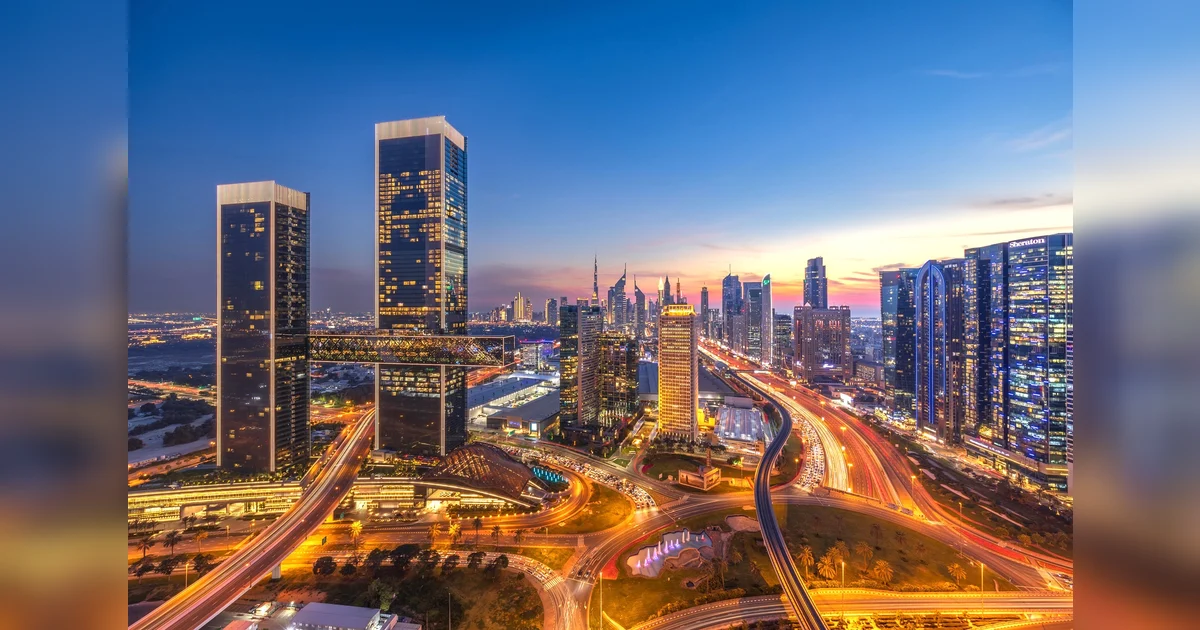
作者: admin

  • Trump signs more orders in one year than his entire first term, a record since World War II

    Trump signs more orders in one year than his entire first term, a record since World War II

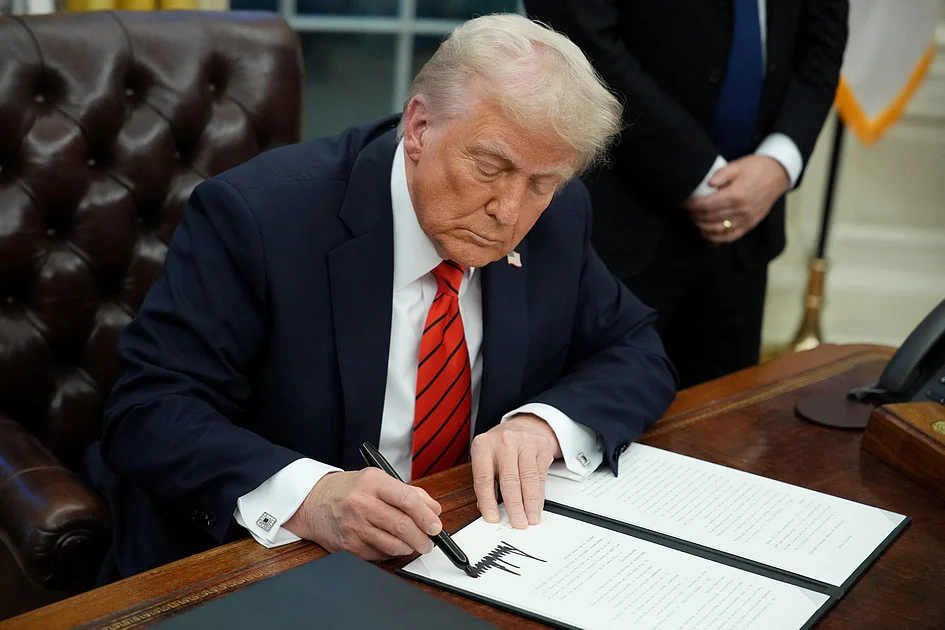
    President Donald Trump has redefined presidential power dynamics during his current term, issuing executive orders at a historical rate unmatched since World War II. Official records from the Federal Register reveal that Trump has signed 221 executive orders since his January 20 inauguration, surpassing the total from his entire previous term in just eleven months.

    The most recent order, signed Monday, designates fentanyl as a ‘weapon of mass destruction,’ continuing the administration’s pattern of bypassing Congressional approval mechanisms. This executive action frenzy represents one of the most substantial exercises of presidential authority in modern American history.

    Comparative analysis shows Trump’s three immediate predecessors—Joe Biden, Barack Obama, and George W. Bush—averaged between 30-40 executive orders annually. Only Franklin D. Roosevelt exceeded Trump’s current pace, issuing approximately 4,000 orders across four terms during the extraordinary circumstances of the Great Depression and World War II.

    According to AFP’s comprehensive analysis of official data, the orders span an exceptionally diverse range of policy areas. Domestic policy dominates at nearly 60%, while foreign affairs accounts for fewer than 10%. Social issues including culture, civil rights, education, and health constitute approximately 30% of all orders, outpacing economic and trade matters (20%) and government reform initiatives (18%).

    The administration’s most productive period occurred during the first four months, with over 30 orders issued monthly. However, the pace has notably slowed since early October, with only a dozen new orders appearing in the subsequent two and a half months. The orders have addressed topics ranging from artificial intelligence regulation and customs barriers to cultural policies and federal architecture standards.
  • Saudi-backed forces shift positions amid STC push in Yemen

    Saudi-backed forces shift positions amid STC push in Yemen

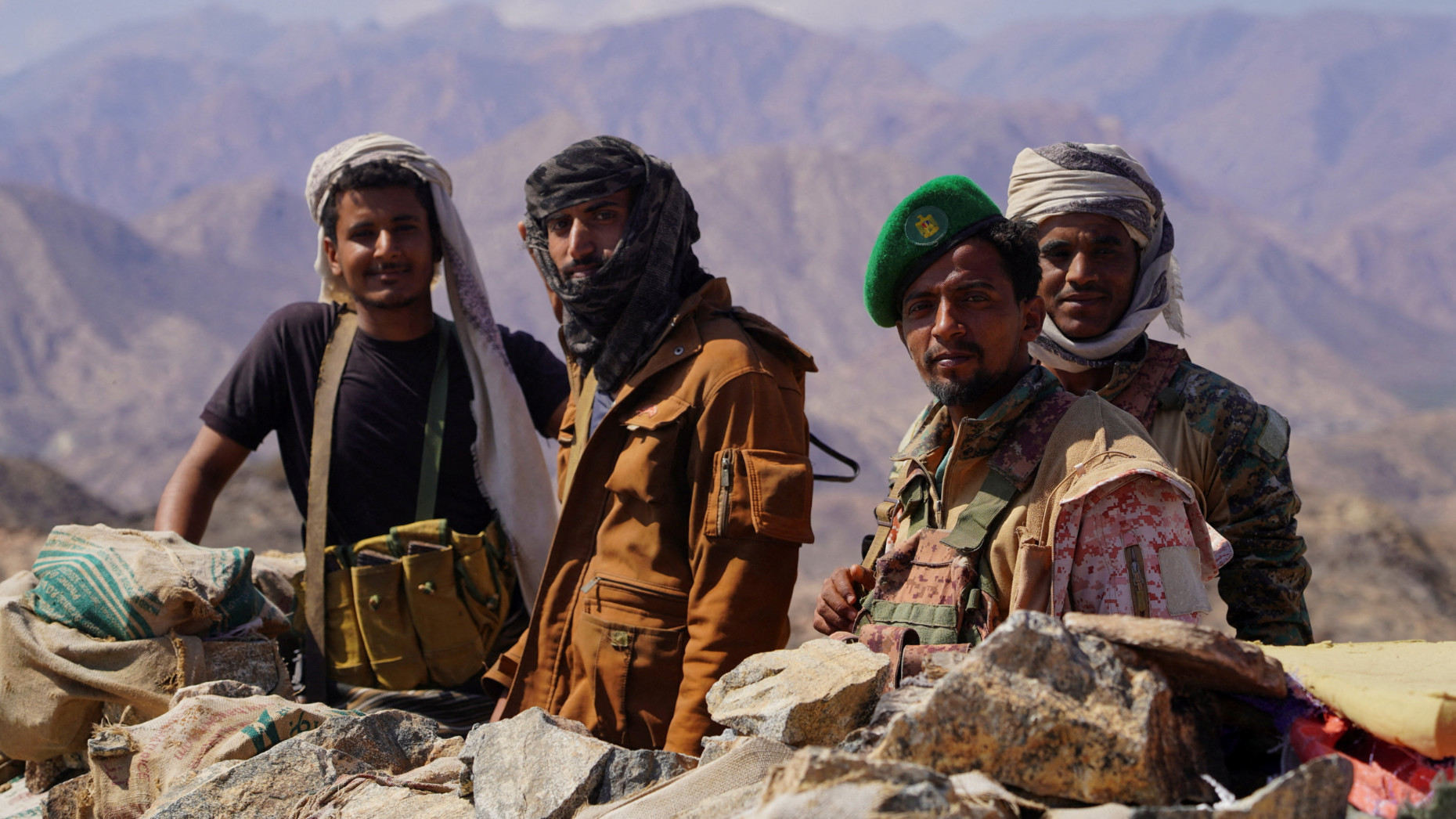
    A significant military redeployment is underway in Yemen’s complex civil war landscape as Saudi-backed forces withdraw from key positions, creating new geopolitical tensions between Gulf powers. The National Shield Forces (NSF), a pro-government military faction, have unexpectedly vacated their regular bases across southern governorates including Aden, Lahj, Abyan, and al-Dhali, repositioning to the strategic corridor between al-Wadiah and al-Abr—immediately west of the contested Hadramaut region.

    This development follows weeks of escalating tensions sparked by the Emirati-backed Southern Transitional Council (STC) asserting control over Hadramaut and al-Mahra governorates. The STC’s armed wing has refused to withdraw from these eastern territories despite pressure from Yemen’s internationally recognized Presidential Leadership Council (PLC).

    Notably, a WhatsApp voice recording circulated by NSF commander Bashir Seif congratulated troops on the redeployment while conspicuously omitting any mention of PLC president Rashad al-Alimi, instead expressing exclusive gratitude to Saudi Arabia’s defense ministry—a telling diplomatic snub that underscores shifting alliances.

    Local reports indicate this realignment follows closed-door negotiations between STC representatives and Saudi military officials, resulting in a tentative understanding: control of Hadramaut would transition to STC-aligned Hadrami Elite Forces, with the separatist group committing to withdraw its own combat units. As part of this arrangement, the STC would consolidate authority over Aden and Socotra while NSF forces establish presence near Saudi border regions.

    The STC justified its eastern expansion as a necessary campaign against corruption, smuggling networks, and extremist organizations including Islamic State and al-Qaeda in the Arabian Peninsula, claiming to restore stability to neglected regions. However, the group’s ultimate objective remains the secession and re-establishment of an independent Southern Yemen, reversing the 1990 unification.

    This power play has exposed growing friction between Saudi Arabia and the United Arab Emirates, both nominal allies in the coalition against Houthi rebels. Saudi Arabia has historically supported Hadrami tribes and the PLC, while the UAE openly backs and funds the separatist STC, with many STC leaders maintaining direct ties to Abu Dhabi.

    The tension manifested unusually publicly through critical coverage in Saudi news outlets—a rare display of diplomatic divergence reminiscent of their differing approaches to the Sudan conflict. Saudi Arabia subsequently closed Yemen’s airspace temporarily, a move analysts suggest facilitated the strategic withdrawal from STC-controlled territories including Aden’s Presidential Palace, facilities at Aden International Airport, and Mayun Island in the critical Bab al-Mandab Strait.

    Concurrently, the STC has been establishing parallel governance structures including the newly created Southern Fatwa Authority, extending its influence beyond military and administrative control to religious legitimacy—a significant step in consolidating state-like authority amid Yemen’s fractured political landscape.

  • UN warns 17 million risk food insecurity in Afghanistan

    UN warns 17 million risk food insecurity in Afghanistan

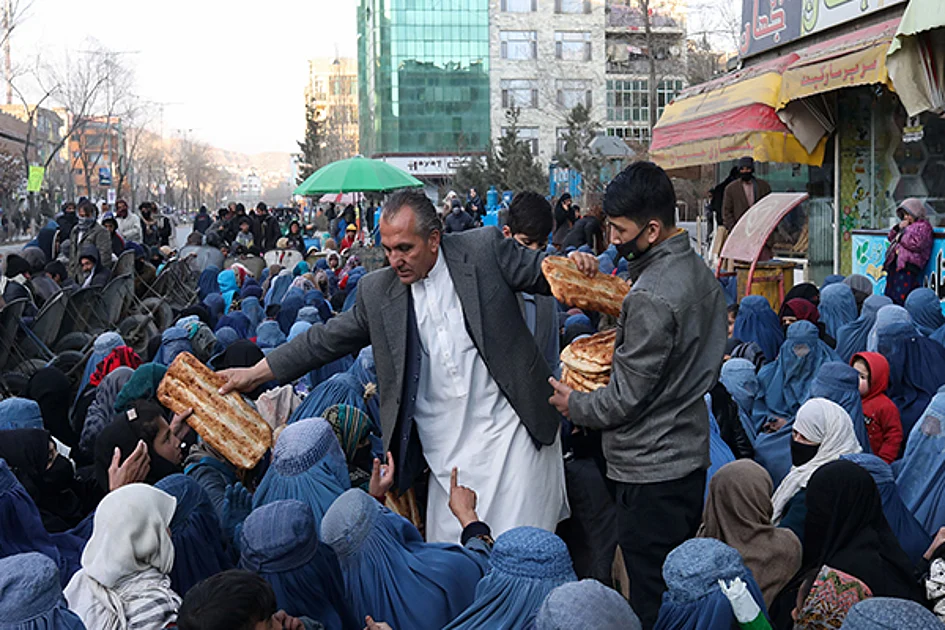
    The United Nations issued a dire warning on Tuesday that Afghanistan confronts an escalating humanitarian catastrophe, with over 17 million people experiencing acute food insecurity as winter approaches. This alarming figure represents a dramatic increase of three million compared to the previous year’s statistics.

    Jean-Martin Bauer, Director of Food Security and Nutrition Analysis at the UN’s World Food Programme, emphasized the critical nature of the situation during a Geneva press briefing. ‘The situation is deteriorating rapidly, and immediate intervention is crucial as Afghanistan enters the winter season when humanitarian needs peak,’ Bauer stated from WFP’s Rome headquarters.

    The crisis stems from multiple compounding factors including severe drought conditions that have devastated agricultural production and livestock, destructive earthquakes that have pushed countless families into poverty, and significant reductions in international aid. Further exacerbating the situation, the forced repatriation of more than 2.5 million Afghan refugees from Iran and Pakistan throughout 2025 has placed unprecedented strain on the nation’s already limited resources and infrastructure.

    Among the most vulnerable populations are nearly four million children suffering from acute malnutrition, creating a lost generation facing irreversible developmental impacts. The WFP anticipates similar refugee return rates in 2026, potentially worsening the crisis.

    Currently, the organization faces critical funding shortages, with only 12 percent of necessary financial resources secured for its Afghan operations. This financial deficit has prevented standard winter preparedness measures, including pre-positioning food supplies in high-risk communities.

    Bauer urgently appealed for international donor support, specifying that $570 million is required over the next six months to provide essential assistance to approximately six million vulnerable Afghans. He stressed the importance of maintaining global attention on Afghanistan’s plight to prevent the most extreme consequences of this growing emergency.

  • Christmas in UAE: Abu Dhabi, Dubai among top 3 most searched winter destinations in UK

    Christmas in UAE: Abu Dhabi, Dubai among top 3 most searched winter destinations in UK

    As winter’s chill descends upon the United Kingdom, British travelers are increasingly turning their gaze toward sun-drenched destinations for their seasonal holidays. Recent data analytics reveal a remarkable trend: the United Arab Emirates has emerged as a premier choice, with both Abu Dhabi and Dubai securing positions among the UK’s top three most searched winter destinations.

    Travelbag, a prominent UK-based travel specialist focusing on long-haul journeys, conducted comprehensive research combining their internal 2024 booking metrics with three months of Google search volume analysis. The findings demonstrate a significant shift in British holiday preferences during the critical Christmas and New Year period.

    The search data reveals extraordinary growth in interest for the UAE capital. Queries for ‘Christmas in Abu Dhabi’ surged by 91 percent, propelling it to the number one position in destination searches. Vietnam followed closely with an 86 percent increase, while Dubai captured the third spot with an 82 percent rise in search volume. Mauritius and Costa Rica completed the top five with increases of 56 and 55 percent respectively.

    Historical booking patterns from 2024 provide additional context for this emerging trend. While New Zealand led with a staggering 105 percent booking increase last year, Dubai already demonstrated strong appeal with a solid 20 percent growth, securing fifth place. The dominance of warm-weather destinations with renowned coastlines—Costa Rica, Australia, and Thailand rounded out the top five—signals a clear preference for temperate climates during the UK’s coldest months.

    Aviation data from global provider OAG corroborates the UAE’s popularity, identifying the federation as the second most popular winter sun destination for British travelers. Between December 20 and January 4, Dubai International Airport (DXB) is scheduled to receive 776 flights from the UK, representing over 1,000 total flights between the two nations during this peak travel period. This substantial air connectivity facilitates the growing demand for Emirati holidays among UK residents seeking refuge from winter’s rain and wind.

  • ‘Syria is proud of him’: Family of Bondi hero reacts

    ‘Syria is proud of him’: Family of Bondi hero reacts

    In a remarkable display of courage during Australia’s deadliest mass shooting in three decades, Syrian immigrant Ahmed al-Ahmed emerged as an international symbol of bravery after confronting an armed assailant at Sydney’s Bondi Beach. The 43-year-old shopowner, who left his war-torn hometown in Idlib nearly two decades ago, successfully wrestled a rifle from the attacker during a violent assault on a Jewish holiday gathering that claimed 15 lives.

    From his hospital bed in Sydney where he recuperates from gunshot wounds, al-Ahmed has received global recognition, including commendation from U.S. President Donald Trump. A grassroots fundraising initiative has generated over A$2.2 million in support of his recovery, demonstrating widespread admiration for his selfless actions.

    Halfway across the world in Syria, relatives recognized al-Ahmed in viral footage of the confrontation. His uncle, Mohammed al-Ahmed, expressed profound pride in his nephew’s heroic intervention, emphasizing that his actions transcended religious considerations. “He acted on pure instinct without considering the victims’ faith—whether Muslim, Christian, or Jewish,” the uncle stated in an interview with Reuters. “That innate moral compass propelled him to intervene and save countless innocent lives.”

    The family’s origins trace back to Nayrab, a town devastated by Syria’s prolonged civil conflict that concluded only last year with the ousting of long-time leader Bashar al-Assad. Their former family residence now lies in ruins, its concrete structure punctured by shelling and surrounded by debris—a stark reminder of the violence that prompted al-Ahmed’s departure in 2006 after completing his university education in Aleppo.

    Family members describe al-Ahmed as embodying a lifelong pattern of gallantry and compassion. His cousin, also named Mohammed al-Ahmed, highlighted the significance of his actions: “Through his courage, he demonstrates to the world that Muslims are instruments of peace rather than conflict.” Now an Australian citizen and father of two daughters, al-Ahmed’s spontaneous heroism has transformed him into an unexpected ambassador for cross-cultural understanding and human solidarity.

  • Roads or rice fields – Madagascar’s highway dilemma

    Roads or rice fields – Madagascar’s highway dilemma

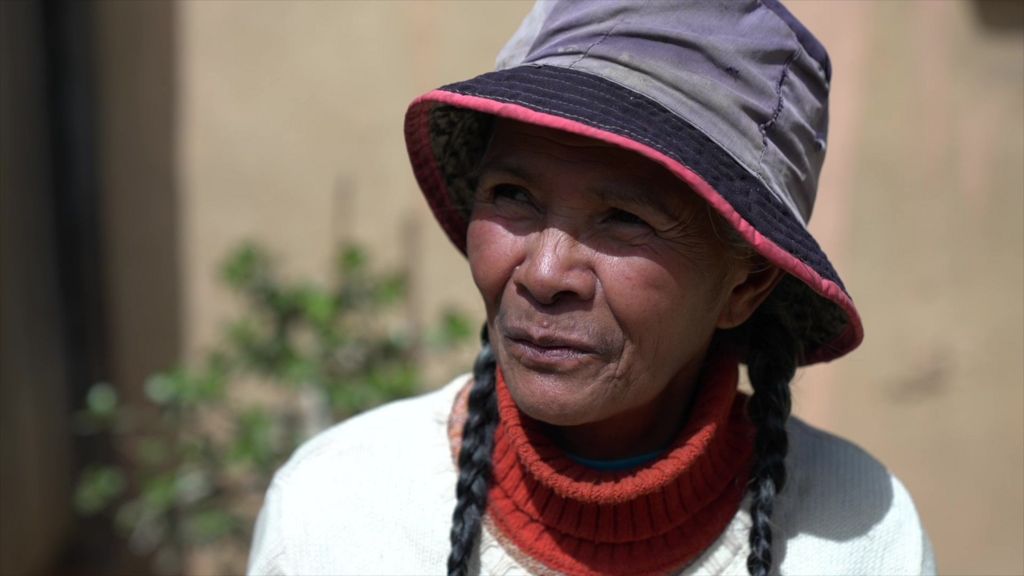
    In the tranquil village of Ambohidava, Madagascar, a crimson wooden post symbolizes an impending transformation that threatens to dismantle generations of agricultural tradition. This marker designates the path of a controversial $1 billion highway project linking the capital Antananarivo to Toamasina, the nation’s primary port city.

    The proposed infrastructure promises to revolutionize Madagascar’s economy by slashing the current 16-hour journey between these key cities to merely three hours. Government projections indicate the highway could triple activity at Toamasina port, facilitate exports of premium commodities like vanilla, and generate substantial employment opportunities along its 260-kilometer corridor.

    However, this development exacts a profound human cost. Seventy-year-old Neny Fara, whose family has cultivated rice and pineapples in Ambohidava for generations, faces the potential destruction of her ancestral farmlands. “I feel stabbed in the back,” she expresses, highlighting the absence of official communication regarding compensation. Her concerns echo throughout the community, where multiple farmers report similar uncertainties despite governmental assurances of restitution within one year of the road’s completion.

    The project’s implementation continues despite recent political upheaval that deposed initial proponent President Andriy Rajoelina. The current administration maintains commitment to the venture, financed through a combination of state funds (20%) and international sources including the Arab Bank for Economic Development in Africa.

    Environmental considerations have undergone significant revision since the project’s inception. Originally feared to encroach upon pristine rainforests housing Madagascar’s unique biodiversity, the route now primarily traverses previously cleared agricultural zones. Egyptian construction firm Sancrete further claims the improved road could reduce transportation emissions by up to 30%.

    Yet cultural tensions persist. Villagers voice distress over potential desecration of ancestral burial grounds, considered sacred in Malagasy tradition. An impromptu community gathering, led by Neny Fara, revealed determined opposition to the current plans.

    Former Environment Minister Max Fontaine defended the balance between preservation and progress, emphasizing parallel initiatives to formalize land ownership and prevent corporate land grabs. “This highway will radically change the face of Madagascar,” he stated, acknowledging both the transformative potential and necessary safeguards for affected communities.

    As construction advances on the initial 8-kilometer segment, Ambohidava embodies the complex dilemma facing developing nations: reconciling economic advancement with environmental conservation and cultural heritage preservation.

  • US military build-up in Caribbean has shadows of the past – but differences are stark

    US military build-up in Caribbean has shadows of the past – but differences are stark

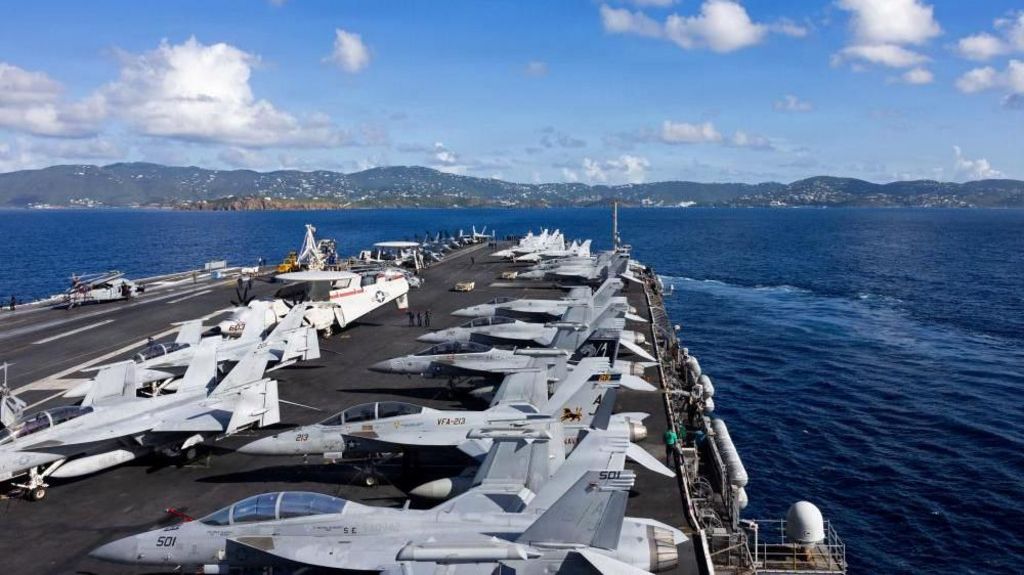
    The Caribbean Sea is witnessing its most significant US military deployment since the Cold War’s conclusion, with the nuclear-powered USS Gerald Ford aircraft carrier leading a formidable naval presence. This strategic mobilization responds to escalating tensions between Washington and Caracas, drawing inevitable comparisons to the 1989 US invasion of Panama that ousted President Manuel Noriega.

    The historical parallel emerges from strikingly similar circumstances: both episodes feature Latin American leaders accused by Washington of direct involvement in narcotics trafficking, both involve years of accumulated diplomatic enmity, and both concern nations possessing immense strategic value—Panama with its critical canal and Venezuela with its vast oil reserves.

    Yet the distinctions between these two moments reveal evolving geopolitical realities. The 1989 operation against Noriega occurred within a Cold War context, with concrete evidence presented through financial records and cartel testimonies. Current allegations against President Nicolás Maduro center on what US officials term the ‘Cartel of the Suns’—an alleged network of current and former Venezuelan military officials that some drug policy analysts question as a formally structured organization.

    The legal justification has similarly evolved. Where the Panama intervention followed the shooting death of US Marine Lieutenant Robert Paz at a checkpoint, the current administration employs the concept of ‘narco-terrorism’ to characterize its operations against drug-smuggling vessels in international waters. This approach has sparked controversy regarding international law interpretations, particularly after a September incident where a follow-up airstrike killed two survivors from an initial engagement.

    Adding complexity to the situation, the Trump administration has imposed fresh sanctions on three of Maduro’s nephews, including two previously convicted in the 2015 ‘narco-nephews’ cocaine smuggling case. Venezuelan officials vehemently deny all allegations, with Interior Minister Diosdado Cabello dismissing the Cartel of the Suns as ‘an imperialist invention.’

    With US forces having already seized a tanker carrying Venezuelan crude and controlling air and sea approaches to Venezuela, analysts note that the situation remains highly volatile. As demonstrated in Panama, such military buildups can be triggered into full-scale conflict by a single incident, making the current Caribbean standoff one of the most dangerously unpredictable geopolitical situations in recent decades.

  • A marathon and a war: UAE’s Ahmad Skaik set to battle for Asian Tour glory in Thailand

    A marathon and a war: UAE’s Ahmad Skaik set to battle for Asian Tour glory in Thailand

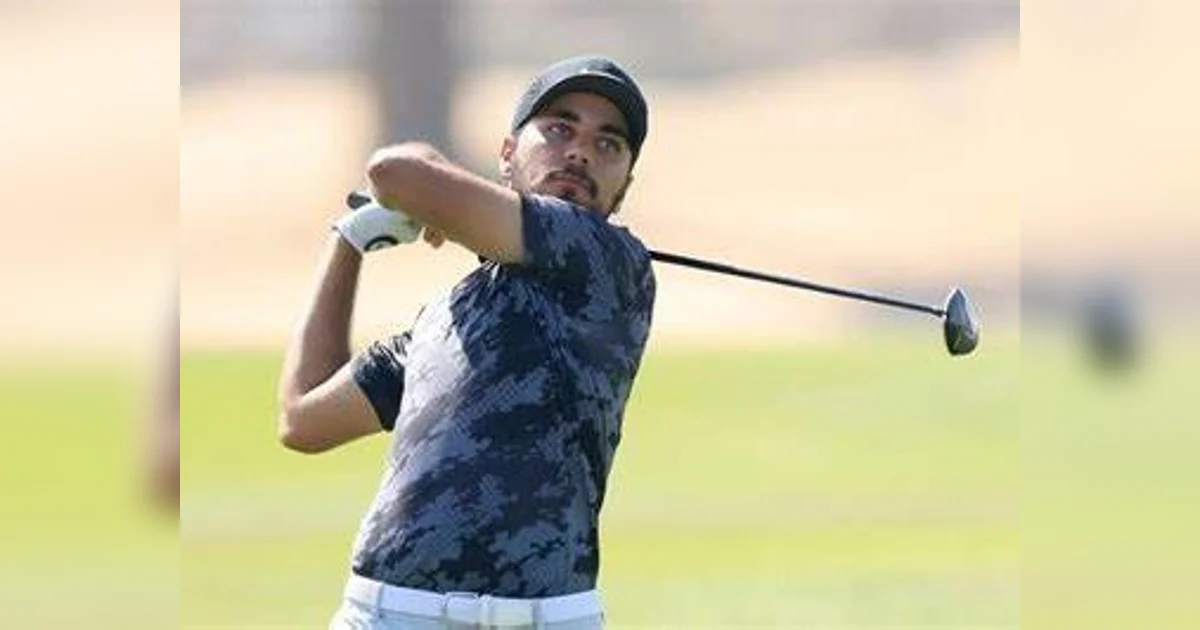
    Emirati professional golfer Ahmad Skaik approaches the Asian Tour Final Qualifying School in Hua Hin, Thailand, with a warrior’s mentality, describing the five-round tournament as both “a marathon and a war.” The event, held at the challenging Lake View Resort and Golf Club, represents a critical juncture in Skaik’s nascent professional career, where 200 competitors vie for merely 35 coveted tour cards for the 2026 season.

    The qualifying structure presents a formidable test of endurance and skill across four distinct courses (A, B, C, and D), with initial cuts after 36 holes and a final elimination after 72 holes. With a modest prize fund of $15,000 overshadowed by the life-changing opportunity of tour membership, the competition demands both physical excellence and mental fortitude.

    In an exclusive interview with Khaleej Times, Skaik revealed his strategic approach to the high-pressure environment. “I feel very confident. The game is in a good place,” stated the recently turned professional, emphasizing the importance of process-oriented thinking. “You just go out there, play one shot at a time. Stick to the process, stay patient, and see where that puts you.”

    Skaik provided insightful analysis of the course conditions, noting the particularly challenging greens. “They are nice but very sloppy and quick, so you gotta miss them in the right spots, or else it’s almost like a guaranteed bogey.” His strategy involves calculated aggression: taking advantage of par fives and shorter par fours while exercising caution on more demanding holes.

    The psychological dimension of the tournament remains paramount in Skaik’s preparation. Recognizing the extended nature of the competition, he emphasizes patience as a weapon: “You cannot win it from the first day. It’s gonna take every day as it goes.”

    For Skaik, qualification represents more than personal achievement—it embodies the realization of a professional dream. “This is why we play, to be on such big tours and to hopefully win tournaments there,” he expressed, acknowledging that Asian Tour status would constitute “a very big step towards achieving my dreams.”

    While honored to represent the United Arab Emirates on the international stage, Skaik maintains a focused perspective: “When I’m on the golf course, I just think about what I’m doing… I cannot put added pressure, or think about who’s watching.” This balanced approach between national pride and individual concentration may prove decisive in his quest for one of the precious 35 tour cards.

  • Iran says dual national held since Israel war on spy charges is Swedish

    Iran says dual national held since Israel war on spy charges is Swedish

    Iran’s judiciary has formally identified a detained dual citizen, arrested during recent hostilities with Israel, as holding Swedish nationality. Judicial spokesman Asghar Jahangir disclosed through the Mizan Online news agency that the individual obtained Swedish citizenship in 2020 and had been residing there prior to their arrest.

    The defendant stands accused of conducting espionage operations for Israel’s Mossad intelligence service during the 12-day conflict that erupted in June. According to judicial authorities, the suspect was allegedly recruited by Israeli intelligence in 2023 and participated in training sessions across six European capitals before entering Iran approximately one month preceding the outbreak of hostilities.

    Investigators reported discovering electronic surveillance equipment in the defendant’s possession upon arrest near Karaj, a provincial area adjacent to Tehran. Judicial officials state the individual has provided confessions regarding espionage activities, with a verdict expected imminently.

    This case emerges amid heightened tensions following Iran’s implementation of stricter espionage penalties in October, mandating capital punishment and asset confiscation for those convicted of spying for Israel or the United States. Since the June conflict, Iranian authorities have executed at least nine individuals convicted on similar charges, reflecting Tehran’s intensified crackdown on alleged foreign intelligence operations.

    The arrest occurs against the backdrop of complex diplomatic relations between Iran and Sweden, particularly following a June 2024 prisoner exchange that secured the release of two Swedish citizens in return for former Iranian official Hamid Noury.

  • UAE boards align with Vision 2050 but struggle to look ahead, new index finds

    UAE boards align with Vision 2050 but struggle to look ahead, new index finds

    A groundbreaking study reveals that corporate boards across the Middle East demonstrate remarkable alignment with national development agendas while simultaneously struggling to shift from retrospective review to forward-looking strategic planning. The inaugural Middle East Board Value Index, conducted by Board Intelligence, surveyed 100 board directors throughout the GCC region, uncovering significant insights about corporate governance trends.

    The research indicates that an overwhelming 97% of regional boards maintain substantial alignment with transformational national frameworks including UAE Vision 2050 and Saudi Vision 2030, with 60% characterizing this alignment as ‘extremely effective’ and 37% as ‘moderately aligned.’ This represents a strong commitment to incorporating national priorities into corporate strategic frameworks.

    However, the study exposes a critical strategic gap in temporal orientation among boardrooms. Merely 38% of boards prioritize future-focused discussions, while 41% acknowledge spending more time reviewing past performance than planning ahead. A mere 21% achieve equilibrium between retrospective analysis and prospective planning, potentially limiting their ability to anticipate market disruptions and generate long-term value.

    Despite these temporal challenges, board confidence remains notably high. Nearly half (48%) of directors perceive their boards as essential to performance and value creation, while 94% report efficient operational processes. The primary obstacles identified include suboptimal information quality (41%) and inflexible decision-making frameworks (38%), both of which constrain organizational agility in rapidly evolving market conditions.

    The research further highlights boards’ strategic positioning within regional transformation initiatives. While 98% describe themselves as aligned with integration and diversification agendas, only 48% claim active leadership in these efforts. Sovereign engagement emerges as a particular strength, with 61% of directors expressing high confidence in managing regulatory relationships and state stakeholder dynamics.

    Risk management capabilities present a varied picture: 60% of boards feel very confident addressing cybersecurity threats, and 58% believe they can anticipate geopolitical shifts. Nevertheless, the prevailing reactive rather than anticipatory posture suggests room for improvement in foresight capabilities and information quality enhancement.

    Pippa Begg, CEO of Board Intelligence, commented: ‘Middle Eastern boards are entering a new era of strategic confidence. The contemporary challenge involves leveraging this confidence through enhanced future orientation. In an environment characterized by rapid transformation, the most valuable boards will be those capable of converting insight into foresight and governance into sustainable growth.’

    As the region accelerates its economic diversification and digital transformation initiatives, these findings present a clear imperative for corporate governance evolution—from alignment with national visions to anticipation of future challenges and opportunities.