作者: admin

  • Jiangsu government investigates Nanjing Museum’s handling of donated relics

    Jiangsu government investigates Nanjing Museum’s handling of donated relics

    Authorities in Jiangsu province have established a high-level investigative team to examine the Nanjing Museum’s management practices regarding donated cultural relics and broader collection security concerns. This decisive action follows the unexpected appearance of a celebrated painting from the museum’s collection at a public auction, which sparked widespread public attention and scrutiny.

    The investigation, announced through state media CCTV, brings together expertise from multiple disciplinary bodies including the commission for discipline inspection, supervisory commission, and departments of publicity, political and legal affairs, public security, culture and tourism, and cultural relics management.

    In response to the developing situation, the Nanjing Museum issued an official statement revealing it had initiated an internal review in November 2024 after receiving court documents related to a “gift contract dispute” lawsuit filed by Pang Shuling. According to museum records, the institution accepted 137 donated paintings from Pang Zenghe (Pang Shuling’s father) in January 1959.

    The museum disclosed that five of these donated works, including those currently under dispute, were determined to be forgeries following two separate appraisals conducted in the early 1960s. These artworks were subsequently disposed of during the 1990s in accordance with museum collection regulations then in effect.

    The Nanjing Museum has committed to full cooperation with legal proceedings and pledged to work with relevant authorities should any illegal or non-compliant actions be discovered during the investigation into their disposal practices.

    Concurrently, the National Cultural Heritage Administration has formed its own working group that has already arrived in Nanjing to conduct parallel investigations into the museum’s relic management protocols.

    Provincial authorities have emphasized that any identified illegal activities or regulatory non-compliance will face strict legal measures without tolerance. The investigation results and subsequent actions will be made publicly transparent upon completion.


  • China launches Long March 12A carrier rocket

    China launches Long March 12A carrier rocket

    China achieved a significant milestone in its space program with the inaugural flight of the Long March 12A carrier rocket on Tuesday, December 23, 2025. The launch from the Jiuquan Satellite Launch Center in Inner Mongolia marked both a technical achievement and a learning opportunity for reusable rocket technology.

    The 70.4-meter rocket, China’s tallest space vehicle to date, lifted off at 10:00 AM from a newly constructed service tower. While the second-stage booster successfully reached its predetermined orbital position, the mission encountered a setback when the first-stage booster failed to land at the designated recovery site in Gansu province.

    Engineers from the China National Space Administration have initiated a comprehensive investigation into the recovery failure. Despite this partial setback, the administration emphasized that critical technical data was obtained during the flight, providing valuable insights for future reusable rocket development.

    Developed by the Shanghai Academy of Spaceflight Technology, a subsidiary of state-owned China Aerospace Science and Technology Corp, the Long March 12A represents China’s latest advancement in space transportation. The rocket features a 3.8-meter-wide main body and a 4.2-meter-diameter fairing, with a liftoff weight of 437 tons and capacity to deliver at least 6 tons of payload to low-Earth orbit.

    This launch occurs within the context of China’s broader strategy to develop reusable rocket technology, which promises to dramatically reduce launch costs while increasing mission frequency and efficiency. The recent attempt follows similar developments in the global space industry, where reusable rockets have become a focal point for major spacefaring nations and commercial entities.

    Earlier in December, Chinese commercial space company LandSpace experienced a comparable outcome with its ZQ 3 reusable rocket, which reached orbit but failed to recover its first-stage booster. These developments mirror the early experiences of American companies SpaceX and Blue Origin, both of which endured multiple recovery failures before achieving successful booster landings.

    The Long March 12A mission demonstrates China’s growing capabilities in space technology while highlighting the technical challenges inherent in developing reusable launch systems. As the global space industry continues to evolve, such missions contribute valuable data and experience that will shape the future of cost-effective space access.

  • Trump renews call to take over Greenland despite strong objections

    Trump renews call to take over Greenland despite strong objections

    In a move that has reignited international tensions, former U.S. President Donald Trump has publicly reiterated his controversial proposition to annex Greenland, immediately drawing forceful condemnations from Greenlandic, Danish, and European Union leadership.

    Speaking from his Mar-a-Lago estate in Florida, Trump framed the potential acquisition as a critical national security imperative, explicitly stating, “We need Greenland for national security, not for minerals.” This assertion directly contradicts previous justifications from his administration, which had cited a combination of Arctic strategic interests, security concerns, and the island’s vast reserves of critical minerals as primary motivations.

    The controversy intensified with Trump’s announcement appointing Louisiana Governor Jeff Landry as a special envoy to Greenland. Landry characterized the role on social media platform X as a voluntary position dedicated to making “Greenland a part of the U.S.” Trump defended the appointment, claiming, “We have to have it and he wanted to lead the charge,” while dismissively questioning Danish sovereignty by asserting they “have spent no money and have no military protection.”

    This political maneuver has triggered a swift and unified diplomatic backlash. Danish Foreign Minister Lars Lokke Rasmussen expressed profound dismay, labeling the envoy’s statements “completely unacceptable” and announcing the summoning of the U.S. Ambassador to Denmark for formal discussions.

    In a powerful joint statement, Danish Prime Minister Mette Frederiksen and Greenlandic Prime Minister Jens-Frederik Nielsen delivered a unequivocal message: “We have said it very clearly before. Now we say it again. You cannot annex other countries. Not even with an argument about international security. Greenland belongs to the Greenlanders.” They emphasized their expectation of respect for their “joint territorial integrity.”

    The European Union reinforced this position through Foreign Affairs spokesperson Anouar El Anouni, who declared that preserving “the territorial integrity of the Kingdom of Denmark, its sovereignty and the inviolability of its borders is essential for the European Union,” confirming the bloc’s longstanding stance on the matter.

    The autonomous territory of Greenland, while self-governing in domestic affairs since 2009, remains under Danish authority regarding foreign, defense, and security policy, making this proposition a direct challenge to established international sovereignty norms.

  • Philippines records 7 firecracker-related injuries ahead of Christmas, New Year’s Eve

    Philippines records 7 firecracker-related injuries ahead of Christmas, New Year’s Eve

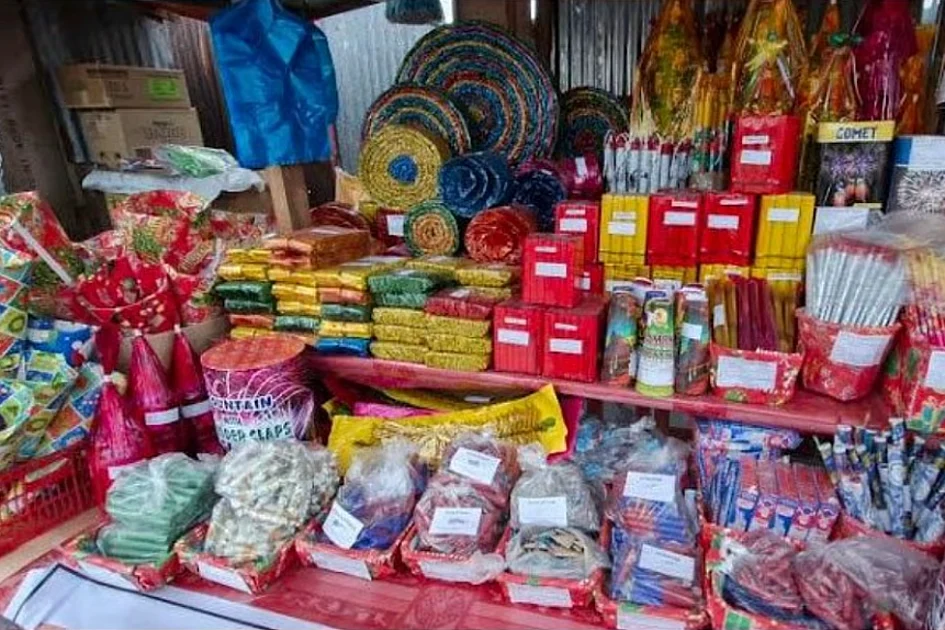
    Health authorities in the Philippines have documented a significant reduction in pyrotechnic-related injuries during the current holiday period, with only seven cases reported as of December 23, 2025. This figure represents a substantial 75 percent decrease compared to the 28 incidents recorded during the equivalent monitoring window in 2024.

    The Department of Health’s surveillance data, collected from 62 designated sentinel hospitals nationwide, indicates three new cases emerged between December 21 and the early hours of December 23. Concerningly, four of the seven injured individuals were aged 19 years or younger, with most injuries attributed to popular firecracker types known as ‘Boga’ and ‘5-Star’.

    Despite cultural traditions involving fireworks during New Year’s celebrations, improper handling continues to pose serious health risks. The health agency has intensified its safety campaign, urging immediate hospital treatment for victims and promoting the use of the National Emergency Hotline 911.

    Concurrent with these health initiatives, the Department of Labor and Employment has implemented enhanced safety oversight within the pyrotechnics industry. Manufacturers, distributors, and retailers now face stricter compliance requirements and potential penalties for safety protocol violations.

    The monitoring period for firecracker-related incidents will extend through January 5, 2026, as part of broader holiday safety efforts that also address increased risks of road accidents and seasonal health conditions like holiday heart syndrome.

  • Greater interdependence in Asia needed amid rising global conflicts

    Greater interdependence in Asia needed amid rising global conflicts

    Amid escalating global conflicts, the executive director of the Mekong Institute has issued a compelling call for strengthened regional interdependence among Asian nations. Suriyan Vichitlekarn emphasized that neighboring countries must deepen cooperative ties and economic integration as international tensions continue to rise.

    The Mekong Institute, an intergovernmental organization representing all six nations of the Greater Mekong Subregion, serves as a critical platform for regional collaboration. Member countries include Cambodia, China, Laos, Myanmar, Thailand, and Vietnam, representing one of Asia’s most economically dynamic corridors.

    Vichitlekarn’s statement comes at a time of increasing global instability, with multiple conflict zones creating ripple effects across international supply chains and diplomatic relations. The executive director positioned regional cooperation not merely as an economic advantage but as a strategic necessity in the current geopolitical climate.

    ‘The intensification of global conflicts makes it increasingly vital for neighboring countries to deepen interdependence and cooperation,’ Vichitlekarn stated, highlighting how regional solidarity can serve as a buffer against external shocks.

    The Greater Mekong Subregion has historically been a hub of economic growth and cultural exchange, with the Mekong River serving as both a geographical and symbolic connector between nations. The Institute’s work focuses on capacity building, policy dialogue, and development projects that benefit the entire region.

    This call for enhanced cooperation reflects a broader recognition among Asian leaders that regional stability and prosperity require coordinated responses to global challenges, from economic pressures to security concerns. The approach signals a shift toward more self-reliant regional frameworks in the face of international uncertainty.

  • Issue-based integration to bring Asian economies together

    Issue-based integration to bring Asian economies together

    A transformative approach to regional economic cooperation is emerging across Asia, with nations increasingly pursuing integration through targeted issue-based alliances rather than comprehensive multilateral frameworks. According to Amitendu Palit, Senior Research Fellow at the National University of Singapore’s Institute of South Asian Studies, this strategic pivot represents a fundamental reimagining of economic collaboration mechanisms.

    The new paradigm emphasizes concentrated cooperation on specific critical areas such as climate change mitigation, digital trade standardization, and sustainable development initiatives. This thematic approach allows diverse economies with varying development levels and political systems to find common ground on pressing transnational challenges without requiring full policy alignment across all economic sectors.

    Palit suggests that this issue-focused methodology may prove significantly more effective than traditional blanket integration models. By creating flexible coalitions around shared priorities, countries can achieve tangible progress on specific objectives while maintaining sovereignty in other policy domains. This granular approach particularly benefits regions with substantial economic diversity, such as Asia, where unified comprehensive agreements have historically proven challenging to negotiate and implement.

    The shift reflects growing recognition that complex global challenges require specialized, expertise-driven solutions rather than one-size-fits-all frameworks. Digital trade corridors, cross-border carbon markets, and joint renewable energy initiatives represent practical applications where issue-based cooperation is already demonstrating measurable success across Asian economies.

    This evolution in economic diplomacy signals a maturation of regional relations, moving beyond traditional geographic or ideological blocs toward more dynamic, interest-based partnerships that can adapt rapidly to emerging global priorities and technological transformations.

  • Death toll in South Africa’s latest pub shooting rises to 10

    Death toll in South Africa’s latest pub shooting rises to 10

    South African authorities have escalated investigations into a devastating weekend shooting that claimed ten lives at an unlicensed tavern in Bekkersdal township, approximately 46 kilometers west of Johannesburg. The tragic incident, which occurred during early morning hours on Sunday, represents the second such mass shooting at a township drinking establishment within a three-week period.

    According to Gauteng provincial police reports, the victims included three women and seven men, with nine additional patrons remaining hospitalized from the attack. Colonel Mavela Masondo, official police spokesperson, confirmed that establishment owner now faces criminal charges including fraud and operating an illegal liquor outlet, resulting in the immediate confiscation of all alcohol from the premises.

    In a significant development, Acting Provincial Commissioner Major General Fred Kekana announced that investigators have identified two potential suspects based on community intelligence provided to law enforcement. The breakthrough follows intensive police-community collaboration in the aftermath of the shooting.

    This tragedy echoes similar violence that occurred in early December at an unlicensed bar near Pretoria, where at least twelve individuals lost their lives. Authorities subsequently arrested a 32-year-old man in connection with that incident on Monday.

    These events unfold against the backdrop of South Africa’s persistently high violent crime rates, with official statistics recording over 26,000 homicides in 2024 alone—averaging more than 70 daily fatalities. Despite the nation’s stringent firearm regulations, authorities acknowledge that illicit weapons remain frequently employed in criminal activities, with firearms constituting the most common weapons used in homicides.

  • Amsterdam-Hyderabad KLM Airlines flight gets bomb threat, lands safely

    Amsterdam-Hyderabad KLM Airlines flight gets bomb threat, lands safely

    Indian aviation authorities have responded to yet another security scare at Hyderabad’s Rajiv Gandhi International Airport after KLM Airlines Flight KL877 from Amsterdam received a bomb threat via email around midnight. The aircraft landed safely at approximately 1:00 AM local time with all passengers and crew members unharmed, according to official reports.

    Airport security personnel immediately activated established safety protocols upon notification of the threat. Comprehensive security sweeps of the aircraft were conducted, with no suspicious items or devices discovered during the inspection process.

    This incident represents the fourth such security alert at Hyderabad’s aviation facility within a three-week period. On December 6, two separate international flights—British Airways Flight 277 and Kuwait Airways Flight 373—received similar email threats. While the British Airways aircraft completed its journey successfully, the Kuwait Airways flight returned to its departure airport as a precautionary measure.

    The pattern of threats began on December 5 when Emirates Flight EK526 traveling from Dubai to Hyderabad was targeted. The previous day, an IndiGo flight from Madinah, Saudi Arabia, was diverted to Ahmedabad’s Sardar Vallabhbhai Patel International Airport following an identical threat. All affected flights in these incidents landed without incident, and thorough investigations revealed each threat to be unsubstantiated.

    Aviation security experts are increasingly concerned about the psychological and operational impacts of such repeated hoaxes, which strain emergency response resources and create unnecessary passenger anxiety. Indian authorities have launched investigations to identify the source of these threatening communications.

  • Louvre tightens security after $102M jewel heist, installs bars on infamous window

    Louvre tightens security after $102M jewel heist, installs bars on infamous window

    The Louvre Museum in Paris has commenced critical security upgrades in response to the devastating October heist that exposed systemic vulnerabilities in its protection systems. On Tuesday, maintenance crews from Grima-Nacelles company ascended via freight lift to install reinforced metal bars on the very window that thieves exploited during their meticulously executed robbery eight months ago.

    The operation bore eerie similarities to the October 19th incident when perpetrators disguised as maintenance workers used identical equipment to access the Apollo Gallery. Within a mere eight-minute window, the thieves successfully absconded with historically significant crown jewels valued at approximately $102 million, including priceless tiaras, emerald earrings, and sapphire necklaces.

    While French authorities have apprehended and charged all four suspects connected to the audacious theft, the stolen treasures remain missing. The Louvre administration maintained silence regarding Tuesday’s security enhancement operation, though Samuel Lasnel of Grima-Nacelles confirmed his team’s previous collaborations with the museum on both interior and exterior projects.

    The world’s most visited museum now faces the complex challenge of balancing public accessibility with heightened security protocols. These physical improvements represent just one aspect of a comprehensive security overhaul initiated in the aftermath of one of history’s most valuable museum heists, aiming to prevent future breaches while preserving the institution’s cultural mission.

  • Pakistan to receive bids for PIA privatisation in televised auction

    Pakistan to receive bids for PIA privatisation in televised auction

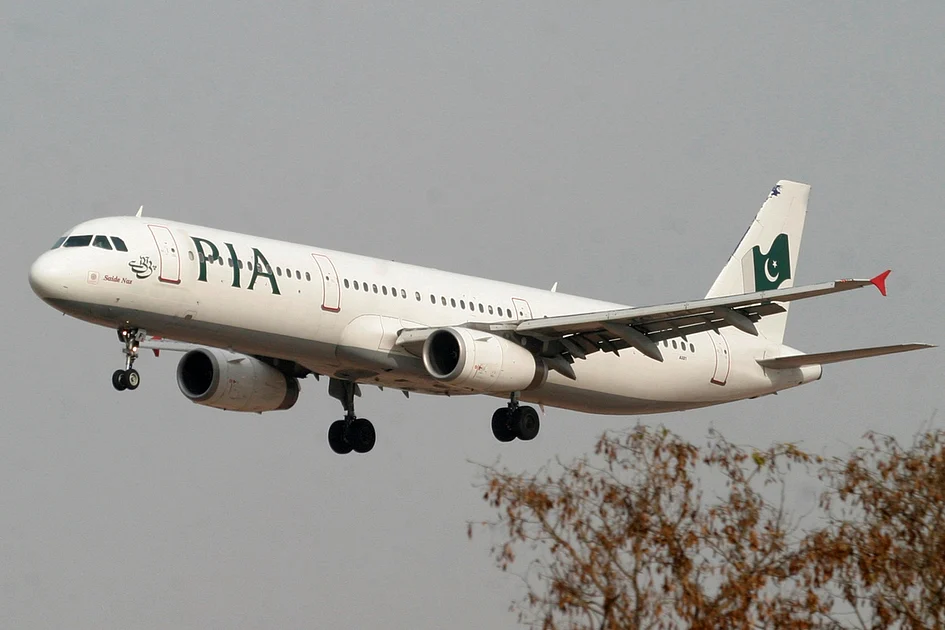
    Pakistan has initiated a publicly televised auction process for the privatization of Pakistan International Airlines (PIA) on Tuesday, marking a significant step in the government’s economic reform agenda mandated by the International Monetary Fund. This represents the nation’s second attempt to divest the historically significant flag carrier after last year’s televised bidding collapsed due to insufficient offers.

    The auction structure involves two distinct phases for majority stake submissions, with initial bids due at approximately 10:45 AM local time (0545 GMT) followed by a public bid-opening ceremony later the same day. According to Privatisation Minister Muhammad Ali, three domestic entities are anticipated to participate in the competitive process following the withdrawal of military-affiliated Fauji Fertilizer from consideration.

    Notably, the government has structured the transaction to permit up to 100% acquisition of PIA, with any stake exceeding 75% subject to a 15% premium surcharge. This revised approach follows last year’s unsuccessful attempt where the government’s minimum price of $305 million for a 60% stake attracted only a single bid of $36 million from real estate developer Blue World City, which subsequently declined to increase its offer citing financial concerns and operational inefficiencies within the airline.

    The current privatization effort occurs under substantially improved circumstances. The Pakistani government has assumed majority responsibility for PIA’s legacy debt, the carrier has reported its first pre-tax profit in twenty years, and critical flight restrictions to European destinations have been lifted following the removal of a five-year ban by Britain and the European Union. These developments have significantly enhanced PIA’s market valuation potential compared to previous assessment periods.

    This airline divestment constitutes a cornerstone of Pakistan’s broader privatization initiative under its IMF bailout program, which additionally includes planned sales of state-owned banking institutions, power distribution companies, and various other loss-making public enterprises aimed at reducing fiscal burdens and restoring investor confidence in the national economy.