In a landmark crackdown on global financial crime, U.S. authorities have seized over $14 billion in bitcoin and charged Chen Zhi, the founder of Cambodia’s Prince Holding Group, with orchestrating a sprawling cryptocurrency scam. The indictment, unsealed by Brooklyn federal prosecutors on Tuesday, accuses Chen and unnamed co-conspirators of exploiting forced labor to defraud investors and laundering illicit proceeds to fund a lavish lifestyle, including the purchase of yachts, private jets, and a Picasso painting. Chen, 38, faces charges of wire fraud conspiracy and money laundering conspiracy, with potential penalties of up to 40 years in prison if convicted. The U.S. Treasury Department has designated Prince Holding Group, a conglomerate involved in real estate and financial services, as a transnational criminal organization, while sanctions have been imposed by both U.S. and British authorities. Chen, who remains at large, is alleged to have sanctioned violence against workers, authorized bribes to foreign officials, and used his businesses, including online gambling and cryptocurrency mining, to launder profits. The scam, described as one of the largest investment fraud operations in history, reportedly generated $30 million daily at its peak. U.S. authorities plan to use the seized bitcoins, currently valued at approximately $113,000 each, to compensate victims. The case highlights the growing threat of Southeast Asia-based scams, which cost Americans $10 billion in 2023 alone. Chen, a close associate of Cambodia’s ruling elite, has been under investigation by Chinese authorities since 2020 for cyber fraud and money laundering. Experts warn that while the indictment and sanctions disrupt the criminal network, dismantling the scam economy will require sustained international efforts.
作者: admin
-

Sudan’s conflict is ‘a war on children’, says landmark report
A damning report by the Raoul Wallenberg Centre for Human Rights has unveiled the harrowing reality of Sudan’s ongoing conflict, revealing that children are being deliberately targeted in what it describes as a ‘war on children.’ The investigation implicates both the Sudanese Armed Forces (SAF) and the paramilitary Rapid Support Forces (RSF) in widespread atrocities, including killings, sexual violence, forced recruitment, and the destruction of critical infrastructure such as hospitals and schools. The report also highlights the involvement of external actors, particularly the United Arab Emirates (UAE), which is accused of supplying heavy weaponry, drones, and financial support to the RSF.
-

AUC congratulates Seychelles president-elect Patrick Herminie
The African Union (AU) has extended its congratulations to Patrick Herminie, the newly elected president of Seychelles, following his victory in the presidential runoff election on October 12, 2025. The AU has pledged its full support to the incoming administration, emphasizing its commitment to collaborating on the objectives outlined in Agenda 2063, the continent’s strategic framework for socio-economic transformation.
Mahmoud Ali Youssouf, Chairperson of the African Union Commission, praised the citizens of Seychelles for their ‘peaceful and orderly participation’ in what he termed a ‘credible democratic process.’ In a statement released on Sunday, Youssouf highlighted the election as a testament to Seychelles’ dedication to the rule of law and democratic governance. He also lauded the outgoing president, Wavel Ramkalawan, and other candidates for their adherence to the principles of peaceful political competition.
Official results from the Seychelles Electoral Commission revealed that Herminie, leader of the United Seychelles party, secured 52.7 percent of the votes, narrowly defeating incumbent Ramkalawan, who received 47.3 percent. The election proceeded to a second round after neither candidate achieved an outright majority in the initial ballot held two weeks prior.
In his victory speech, Herminie expressed his commitment to unifying the nation, stating, ‘We are turning a new page for all Seychellois. I will be the president of all Seychellois, ending divisions and ensuring fairness and opportunity for everyone.’ His election marks a significant moment in Seychelles’ political landscape, signaling a shift towards inclusive governance and renewed regional collaboration under the AU’s guidance.
-

What to know about the events leading up to Madagascar’s military coup
Madagascar has plunged into political chaos as the military seized control from the civilian government on Tuesday, following weeks of escalating protests led by young citizens. President Andry Rajoelina, who fled the country for his safety, was ousted amid widespread dissatisfaction with chronic power and water shortages, persistent poverty, and alleged government corruption. Colonel Michael Randrianirina, commander of the elite CAPSAT military unit, announced the takeover, declaring, ‘We are taking power,’ as demonstrators celebrated alongside soldiers in the capital, Antananarivo. Rajoelina’s office condemned the coup as a ‘serious breach of the rule of law,’ but the military’s decisive action has shifted the balance of power. The protests, spearheaded by a group calling itself ‘Gen Z Madagascar,’ were inspired by recent youth uprisings in Nepal and Sri Lanka. The movement gained momentum when CAPSAT troops joined the demonstrators last weekend, clashing with security forces loyal to Rajoelina. The president’s attempts to reassert authority, including dissolving parliament, were ignored as lawmakers voted overwhelmingly to impeach him. The military has since announced plans to form a council to appoint a prime minister and establish a civilian government. Meanwhile, reports suggest France aided Rajoelina’s escape, raising questions about its involvement in the crisis. The former French colony, known for its biodiversity and vanilla production, continues to grapple with political instability and poverty, a legacy of its colonial past.
-

Employment of woman jailed was ‘risk’ to Dáil security – Humphreys
In a heated radio debate, Irish presidential candidates Catherine Connolly and Heather Humphreys clashed over the employment of a woman with a criminal past in the Dáil Éireann, Ireland’s national parliament. Heather Humphreys, representing Fine Gael, criticized Connolly’s decision to hire Ursula Ní Shionnain, who had served nearly four and a half years of a six-year sentence for firearms offences. Humphreys argued that Ní Shionnain’s employment posed a significant risk to the security of the Dáil, citing a lack of proper vetting by gardaí during her six-month tenure in an administrative role. Connolly, an independent TD supported by left-leaning parties, defended her decision, stating that Ní Shionnain had ‘fully rehabilitated her life’ and that no rules were broken in the hiring process. Ní Shionnain, a former member of the socialist republican party Érígí, was convicted in 2014 for her involvement in a dissident republican operation, which included possession of handguns, ammunition, and disguises. Connolly emphasized that Ní Shionnain was a ‘success story of the prison system’ and had been recommended by other parliamentarians involved in prison visiting groups. Despite Connolly’s assurances, Humphreys raised concerns about the potential security implications of employing someone with such a background in the heart of Ireland’s legislative body. The debate has sparked a broader conversation about rehabilitation, security protocols, and the responsibilities of public officials in ensuring the safety of national institutions.
-

Kenyan family urges extradition of British national in death of woman after night out with soldiers
Thirteen years after the tragic death of Agnes Wanjiru, a Kenyan woman whose body was discovered in a septic tank near a British army training ground, her family is intensifying calls for justice. On Tuesday, British Defense Secretary John Healey met with the family’s spokesperson, Esther Njoki, who described the meeting as pivotal. The family is urging the UK government to expedite the arrest and extradition of a British national implicated in Wanjiru’s murder, following a recent Kenyan High Court ruling.
-

A passenger bus in northern India catches fire and burns at least 20 people to death
A tragic incident unfolded in northern India on Tuesday when a suspected electrical short circuit ignited a fire on a passenger bus, resulting in the deaths of at least 20 individuals and leaving 15 others critically injured. The bus, carrying between 35 and 50 passengers, was en route from Jaisalmer to Jodhpur in Rajasthan state when the blaze erupted. According to Mahant Pratap Puri, a local lawmaker, the fire spread rapidly, leaving passengers with no time to escape. Nineteen victims were found inside the charred vehicle, while one succumbed to severe burns while being transported to a hospital. Witnesses reported that smoke began emanating from the rear of the bus just minutes after departure, prompting the driver to halt near a military station. However, the flames quickly consumed the vehicle. Puri, who was present during the rescue efforts, noted that the bus was newly equipped with air-conditioning and had only one exit, which tragically hindered evacuation efforts. Authorities have launched an investigation into the cause of the fire and are using DNA evidence to identify the victims. Prime Minister Narendra Modi and Rajasthan Chief Minister Bhajan Lal Sharma expressed their condolences to the families of the deceased, as the incident raises urgent questions about vehicle safety standards.
-

French pair sentenced in Iran on spying charges
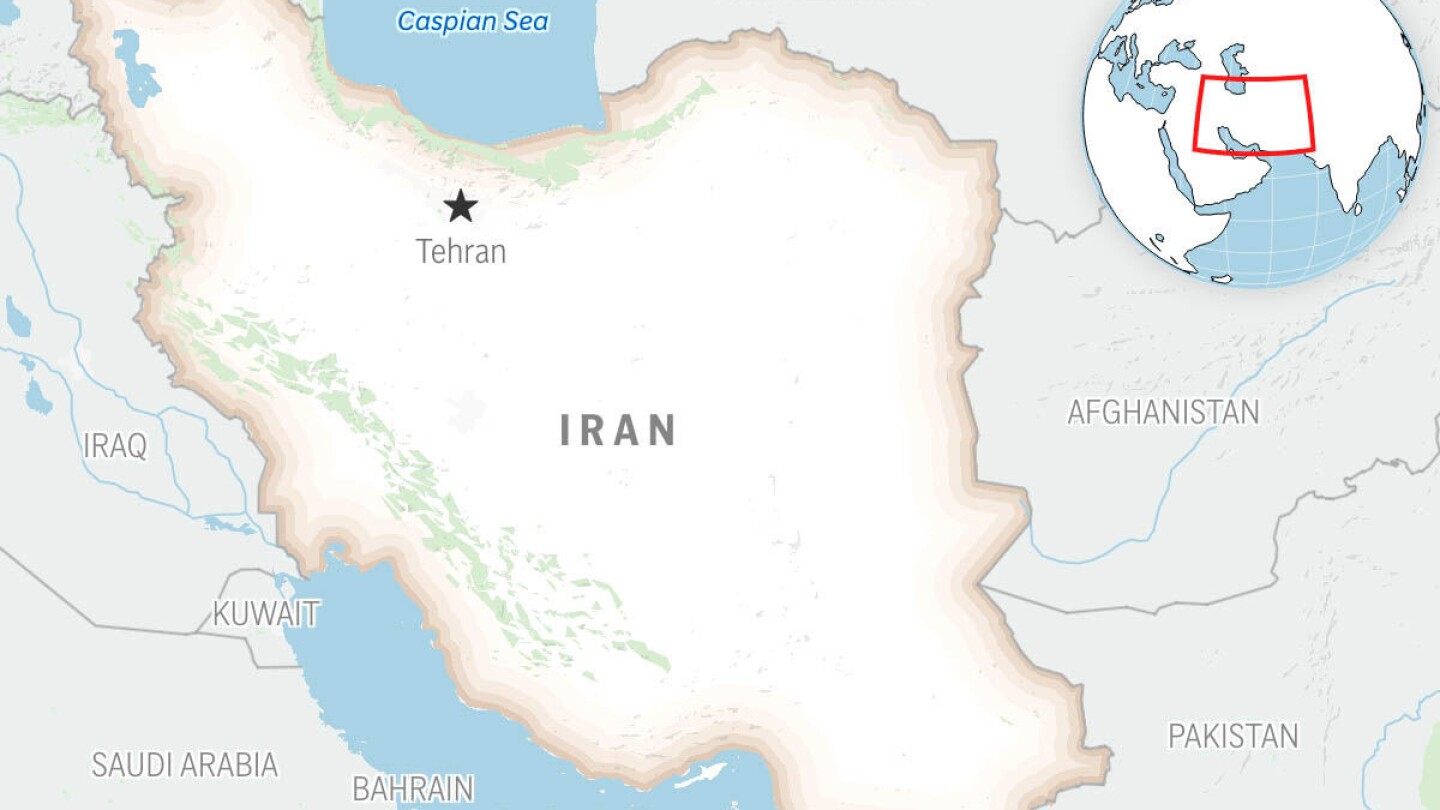
Two French citizens, Cecile Kohler, 40, and Jacques Paris, 72, have been sentenced to lengthy prison terms by an Iranian court after being convicted of espionage. The pair, arrested during a tourist trip in May 2022, were accused of spying for both France and Israel. Iranian state media reported the verdicts but did not name the defendants, though they are widely believed to be the only French nationals detained in Iran. Kohler and Paris were sentenced to multiple years in prison and exile, with their pre-trial detention time to be deducted from their sentences. The verdicts can be appealed within 20 days. This case follows a pattern of Iran detaining foreign nationals, often for diplomatic leverage. Earlier this year, another French tourist, Olivier Grondeau, was released after serving part of a five-year sentence. Iran has previously suggested that Kohler and Paris could be exchanged for Mahdieh Esfandiari, an Iranian woman held in France on terrorism-related charges. France has condemned the detentions as arbitrary and accused Iran of subjecting the pair to torturous conditions. Human rights groups have criticized Iran for using detainees as bargaining chips in international negotiations. The situation highlights ongoing tensions between Iran and Western nations, with multiple Europeans currently held in Iranian custody.
-

Top US news outlets push back against Pentagon’s reporting restrictions
Several prominent US news organizations have publicly rejected a controversial new Pentagon policy that restricts journalists’ access to the Department of Defense unless they agree to report only officially authorized information. Major outlets such as The New York Times, The Washington Post, and CNN have refused to comply, arguing that the policy undermines press freedom and the public’s right to know. Reporters who fail to sign the agreement by 17:00 EST on Tuesday will be required to surrender their media credentials and vacate Pentagon facilities. Defense Secretary Pete Hegseth responded to the backlash on social media with a dismissive hand-waving emoji, signaling a stark departure from traditional press relations. The Trump administration defends the policy as necessary for national security, with Hegseth stating that ‘Pentagon access is a privilege, not a right.’ A memo outlining the changes, sent to reporters last month, mandates that all information, even unclassified, must be approved for public release by an authorized official. The Pentagon Press Association has criticized the policy as an unprecedented act of intimidation, warning that it stifles free speech and discourages unapproved interactions with the press. Other major media organizations, including The Associated Press, Reuters, and The Guardian, have also refused to sign the agreement. In a joint statement, ABC News, CBS News, CNN, Fox News Media, and NBC News emphasized their commitment to covering national security issues without compromising journalistic independence. The new 21-page policy document imposes strict requirements, including pre-approval for military personnel to share information with the media. While journalists are not explicitly barred from reporting on unclassified information, they risk being labeled a ‘security or safety risk’ if they disclose such information without Pentagon clearance. The policy has sparked widespread criticism, with many viewing it as an escalation of restrictions on press access under Hegseth, who has faced scrutiny for his handling of sensitive information in the past.
-

Job-destroying potential: Nobel economist warns of AI dangers
In a stark warning issued on Monday, Canadian economist Peter Howitt, a recent Nobel laureate, highlighted the dual-edged nature of artificial intelligence (AI). While acknowledging its ‘amazing possibilities,’ Howitt emphasized the urgent need for regulation to mitigate its potential to disrupt the labor market. His remarks come at a time of escalating global concerns about AI’s societal and economic impacts. Howitt, a professor emeritus at Brown University in the United States, was among three economists honored by the Royal Swedish Academy of Sciences for their groundbreaking work on how technology influences growth. His research, conducted in collaboration with French economist Philippe Aghion, delves into the theory of ‘creative destruction,’ where new innovations render older products obsolete, often displacing established companies. Speaking at a press conference, Howitt expressed uncertainty about AI’s future leadership and its broader implications. ‘It’s a fantastic technology with immense potential, but it also poses significant risks to highly skilled labor. This conflict necessitates regulation,’ he stated. He drew parallels to historical technological advancements, such as the telecoms boom of the 1990s and the advent of electricity and steam power, noting that while these innovations enhanced labor, their modern-day counterparts could lead to job displacement. Howitt admitted to lacking specific solutions but stressed that unregulated markets would fail to address these challenges effectively. Meanwhile, fellow Nobel laureate Joel Mokyr offered a more optimistic perspective, asserting that AI would not replace human labor but rather shift it toward more complex and engaging tasks. Mokyr, recognized for his research on the prerequisites for sustained technological growth, expressed greater concern about future labor shortages due to aging populations rather than technological unemployment. Howitt also reflected on his journey with Aghion, recalling their early confidence in the significance of their work. ‘Philippe always believed we’d win a Nobel Prize. Now, our time has come,’ he remarked, underscoring the profound impact of their research. As California Governor Gavin Newsom signed a pioneering law regulating AI interactions, the debate over AI’s role in society continues to intensify.