作者: admin

  • New Year holiday projected to see over 2m daily trips

    New Year holiday projected to see over 2m daily trips

    China’s National Immigration Administration has projected a significant surge in cross-border travel during the upcoming New Year holiday period, forecasting more than 2.1 million daily inbound and outbound trips. This represents a substantial 22.4 percent increase compared to the same period last year, signaling a robust recovery in cross-border mobility.

    The holiday period, spanning from Thursday to Saturday, is expected to witness its passenger flow peak on Wednesday evening and throughout Thursday. This travel boom is largely attributed to the successful implementation of newly introduced immigration management measures that have enhanced customs clearance efficiency and facilitated smoother border transitions.

    Major international airports across China are preparing for heavy traffic volumes. Shanghai Pudong International Airport is anticipated to handle approximately 97,000 daily passengers, followed by Guangzhou Baiyun International Airport with 53,000, and Beijing Capital International Airport with 43,000. Chengdu Tianfu International Airport and Shenzhen Baoan International Airport are projected to process 19,000 and 18,000 passengers daily respectively.

    Additionally, the administration highlighted that numerous large-scale events scheduled throughout Guangdong, Hong Kong, and Macao will contribute to increased traffic at land ports connecting these regions. To manage the anticipated surge, border control authorities nationwide have been directed to implement enhanced measures including real-time travel flow updates, intensified guidance services, and extended operating hours at key ports. These initiatives aim to maintain waiting times for Chinese citizens within 30 minutes during peak clearance periods.


  • Trump, Netanyahu to discuss second phase of Gaza truce plan

    Trump, Netanyahu to discuss second phase of Gaza truce plan

    Israeli Prime Minister Benjamin Netanyahu and U.S. President Donald Trump are scheduled for a high-stakes meeting at the Mar-a-Lago resort in Florida on Monday, December 29th, to address the implementation challenges of the second phase of the Gaza ceasefire agreement. This diplomatic engagement occurs amid growing White House concerns that both Israeli and Hamas authorities are deliberately delaying progress.

    The Trump administration is reportedly preparing to announce by January the establishment of a technocratic Palestinian government to oversee Gaza, accompanied by an international stabilization force. This initiative aims to create transitional governance structures while ensuring regional security. Israeli government spokeswoman Shosh Bedrosian confirmed that discussions would focus on Hamas disarmament and Gaza demilitarization requirements.

    Netanyahu’s agenda extends beyond Gaza, with plans to address Iran’s nuclear program and regional influence. The Israeli leader intends to advocate for increased U.S. military strikes against Tehran’s nuclear facilities, highlighting concerns about Iran’s accelerated nuclear reconstitution since June’s joint strikes.

    This meeting concludes several days of intensive diplomacy in Palm Beach, following Trump’s Sunday discussions with Ukrainian President Volodymyr Zelensky regarding Russia’s ongoing invasion. The Gaza ceasefire remains one of the Trump administration’s significant first-year accomplishments, though implementation has encountered substantial obstacles.

    According to Middle East expert Yossi Mekelberg of Chatham House, ‘There are increasing indications of American administration frustration with Netanyahu. The fundamental question remains what actionable measures will be taken, as the second phase currently shows minimal progress.’

    The initial truce phase successfully secured the release of nearly all hostages from Hamas’s October 2023 attack, while the subsequent stage requires Israeli troop withdrawals from Gaza positions and Hamas’s complete disarmament—a persistent negotiation hurdle. Concurrently, plans advance for an interim governance authority and international security deployment.

    Political analysts suggest Netanyahu’s emphasis on Iran may represent a strategic diversion from Gaza challenges as Israel approaches election season, with Mekelberg noting ‘all decisions connect to maintaining political power.’

  • PLA drills around Taiwan a necessary response, expert says

    PLA drills around Taiwan a necessary response, expert says

    In a significant escalation of regional tensions, the People’s Liberation Army has initiated comprehensive military exercises surrounding Taiwan, which Chinese military experts characterize as an essential countermeasure to recent US-Taiwan defense collaborations. The drills come as a direct response to Washington’s unprecedented approval of over $11.1 billion in advanced weaponry to Taiwan, marking the largest arms package in the history of US-Taiwan relations.

    Fu Zhengnan, a prominent researcher at the PLA’s Academy of Military Science, emphasized that the latest American arms transfer represents a substantial escalation in both scale and strategic nature. The package notably shifts from previous defensive systems to explicitly offensive capabilities, fundamentally altering the regional security landscape.

    This development, according to Fu, constitutes a severe violation of the foundational principles established in the three China-US joint communiques, particularly the August 17 Communique. The inclusion of integrated systems such as the Taiwan Tactical Network and Team Awareness Kit effectively transforms Taiwan’s regional forces into an extension of the US combat infrastructure, dramatically increasing the potential for direct confrontation between major powers.

    Despite repeated diplomatic warnings from Beijing, the continued US-Taiwan military collaboration has compelled China to undertake these necessary and lawful defensive measures. Fu underscored that protecting national sovereignty and territorial integrity represents the unanimous will of China’s 1.4 billion citizens, including patriotic compatriots in Taiwan.

    The military scholar concluded with a stark warning to separatist elements, stating that regardless of external support, acquired weaponry, or political disguises, the pursuit of Taiwan independence remains fundamentally doomed to failure.

  • Abu Dhabi Knight Riders seal playoff spot with 32-run win over Gulf Giants

    Abu Dhabi Knight Riders seal playoff spot with 32-run win over Gulf Giants

    In a decisive final league encounter of DP World ILT20 Season 4, the Abu Dhabi Knight Riders secured their playoff qualification with a comprehensive 32-run triumph against the Gulf Giants at Dubai International Stadium on Sunday. The victory sets up an Eliminator clash with the Dubai Capitals scheduled for January 1, 2026.

    The Knight Riders’ success was built upon a spectacular batting display from openers Michael Pepper and Phil Salt, who orchestrated a dominant 131-run partnership – only the second century stand of the tournament. Pepper’s explosive 83 from 51 deliveries, featuring six boundaries and four sixes, combined with Salt’s unbeaten 72 from 56 balls to establish a formidable total of 179/1.

    Despite a valiant counter-attack from Moeen Ali, whose 79 off 49 balls provided temporary resistance, the Giants’ chase faltered due to insufficient support from other batsmen. The Knight Riders’ bowling unit maintained relentless pressure throughout the innings, with Jason Holder making early breakthroughs by dismissing Rahmanullah Gurbaz and James Vince within the powerplay.

    The match reached its turning point in the 15th over when Sunil Narine claimed two crucial wickets, followed by Andre Russell’s decisive double strike in the 18th over that removed both Moeen Ali and Aayan Khan in consecutive deliveries. The Giants ultimately finished at 147/9, concluding their campaign with six consecutive losses.

    Post-match reflections highlighted contrasting emotions between the teams. Player of the Match Michael Pepper emphasized strategic patience and matchup exploitation, while Gulf Giants captain James Vince acknowledged the challenging batting conditions and praised Moeen Ali’s solitary effort amidst the team’s bowling deficiencies.

  • UAE: Fast digital loans offer convenience, but experts warn of risks for some borrowers

    UAE: Fast digital loans offer convenience, but experts warn of risks for some borrowers

    Financial experts across the United Arab Emirates are raising urgent concerns about the hidden dangers embedded within the rapidly expanding digital lending sector. While these app-based platforms offer unprecedented convenience through instant loan approvals, they simultaneously create potential debt traps for vulnerable demographics, including students, gig workers, and low-income earners.

    The core of the problem, according to specialists, lies in the fundamental mismatch between the structure of these short-term credit products and the financial reality of their users. Brijesh Kumar, Chief Business Officer at Paisabazaar.ae, emphasized that the risk intensifies dramatically when these easily accessible funds are utilized for routine living expenses—such as rent, utilities, or tuition—instead of genuine, one-off emergencies. This practice often initiates a perilous cycle where borrowers take new credit to service existing debt, causing financial stress and borrowing costs to compound rapidly.

    This vulnerability is exacerbated by irregular income patterns. Vijay Valecha, Chief Investment Officer at Century Financial, highlighted that the short repayment timelines typical of digital loans are frequently incompatible with the unpredictable earnings of gig workers and students. An income delay that might be minor can instantly trigger late fees, forcing individuals into a cycle of additional borrowing just to stay afloat.

    Despite the UAE’s robust regulatory framework for consumer lending, which mandates lender licensing and consumer protection standards, execution-level challenges persist. Experts agree that the very speed and simplicity of digital applications can obscure the true long-term cost of borrowing. There is a recognized need for strengthened controls around repeat borrowing, more transparent communication of fees and annual percentage rates (APR), and more rigorous affordability assessments before disbursement.

    Furthermore, the long-term credit implications are severe. As more Buy Now, Pay Later (BNPL) and short-term loan data is integrated into credit bureau reports, a single missed payment today could severely restrict an individual’s access to major future financing, such as mortgages or car loans.

    The consensus among analysts is that a multi-faceted approach is essential. While financial education is crucial for helping the UAE’s young and diverse expatriate population understand repayment obligations, responsibility cannot rest solely with consumers. Lenders must design more responsible products with built-in safeguards, regulators must enforce stricter guardrails, and educational institutions should introduce practical financial literacy early on. As Faris Ali of Jawab Economic & Management Consultants concluded, awareness helps people understand risk, but it cannot replace structural protections—much like how driver education works in tandem with seatbelts and speed limits engineered into vehicles.

  • More UAE shoppers turn to diamond jewellery as gold hits record high prices

    More UAE shoppers turn to diamond jewellery as gold hits record high prices

    The United Arab Emirates jewelry sector is experiencing a significant market transformation as record-breaking gold prices drive consumer preference toward diamond jewelry. With gold reaching unprecedented levels of $4,549 per ounce globally and exceeding Dh546 per gram locally in 2025, Dubai jewelers report substantial growth in both natural and lab-grown diamond demand.

    Industry leaders indicate that diamond sales have increased by 25-30% year-on-year, effectively compensating for declining gold jewelry transactions. Chirag Vora, Managing Director of Bafleh Jewellers, explained that elevated gold prices have created market challenges, but diamond sales have emerged as a crucial revenue offset. “Diamond is offsetting the effect of gold sales for almost all companies,” Vora noted, emphasizing that wholesale distribution channels have particularly benefited from this trend.

    The market shift extends beyond mere price considerations to evolving gifting preferences. Consumers now increasingly favor diamond-studded gifts over smaller gold ornaments, perceiving them as more impressive presents. This behavioral change spans both natural and lab-grown diamond categories, with both segments growing simultaneously rather than one replacing the other.

    Chandu Siroya of Siroya Jewellers characterized 2025 as a challenging retail environment, noting that while dollar-term sales remained strong due to inflated gold prices, quantitative sales decreased by 20-30%. This has prompted industry-wide innovation, with jewelers promoting more elegant, diamond-studded pieces rather than traditional heavy gold jewelry.

    Market adaptation includes the introduction of 14-carat gold jewelry by the Dubai Jewellery Group, making pieces more affordable amid sustained high gold prices. Industry professionals anticipate 2026 will mark a new era for jewelry, with consumers having accepted that gold will maintain its elevated price point around $4,000 per ounce.

    The lab-grown diamond segment continues gaining traction, with new varieties expected to enter the market in 2026. International brands like Tanishq are capitalizing on this trend, with Aditya Singh, Head of International Jewellery Business at Titan Company, noting increased industry focus on diamond categories through expanded design offerings and promotional activities. The convergence of high gold prices and evolving consumer preferences is driving innovation toward lighter, more wearable everyday jewelry pieces across the UAE market.

  • South Korea president vows to reveal truth on anniversary of deadly Jeju Air crash

    South Korea president vows to reveal truth on anniversary of deadly Jeju Air crash

    On the first anniversary of South Korea’s deadliest aviation disaster, President Lee Jae Myung issued a formal apology and committed to uncovering the complete truth behind the Jeju Air tragedy that claimed 179 lives. The catastrophic incident occurred on December 29, 2024, when Flight 501 crash-landed at Muan International Airport, erupting into flames after impacting an embankment at runway’s end. Only two survivors emerged from the wreckage of the aircraft carrying 181 people.

    President Lee acknowledged systemic failures in national safety protocols, stating, ‘As president who bears the responsibility to protect lives and safety, I offer my deepest apologies. This disaster revealed the systematic problems and limitations of our society.’ He emphasized that ‘real change and action’ rather than ‘perfunctory promises or empty words’ were necessary moving forward.

    Despite a preliminary January report from the Aviation and Railway Accident Investigation Board citing bird strikes affecting both engines, critical questions remain unanswered. Investigations have been delayed regarding potential safety lapses, runway design deficiencies at Muan International, and the pilots’ final actions before impact.

    Victims’ families continue demanding accountability as parliamentary reviews advance plans to overhaul the accident investigation board to ensure greater independence and technical expertise. Memorial services are scheduled at the crash site in southwestern South Korea, where relatives will commemorate the tragedy that has prompted nationwide scrutiny of aviation safety standards.

  • Nepal’s former rapper to run for PM months after Gen Z protests against corruption

    Nepal’s former rapper to run for PM months after Gen Z protests against corruption

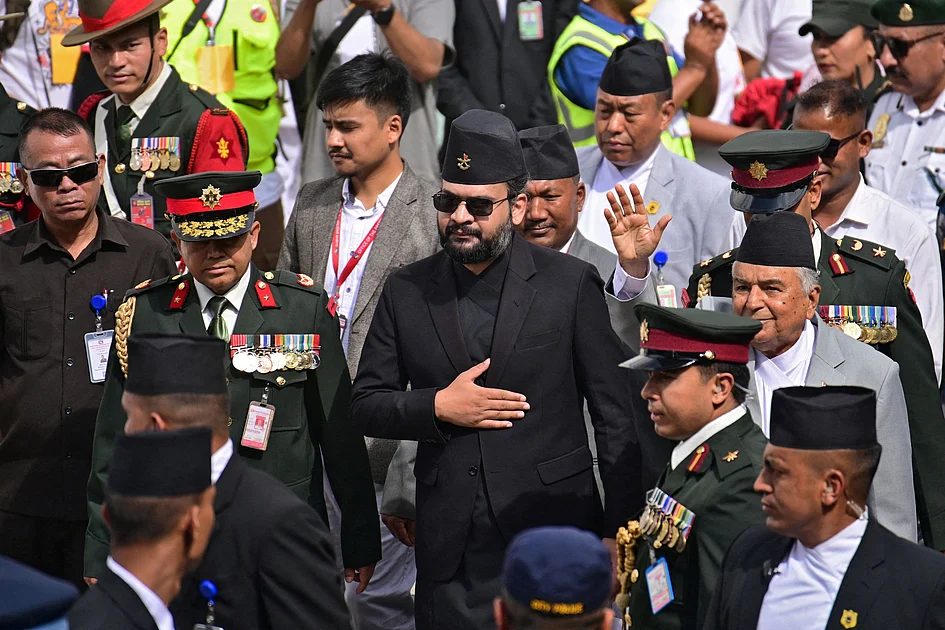
    In a dramatic shift within Nepal’s political landscape, two prominent youth-oriented figures have formed a strategic alliance that threatens to disrupt the country’s established political order. Balendra Shah, the 35-year-old rapper-turned-Mayor of Kathmandu popularly known as Balen, has officially joined the Rastriya Swatantra Party (RSP), led by former television host Rabi Lamichhane.

    The partnership, announced Sunday, positions Balen as the prime ministerial candidate should the RSP secure victory in the upcoming March 5 parliamentary elections, while Lamichhane will maintain his role as party chairman. This development comes just months after widespread youth-led protests against systemic corruption resulted in 77 fatalities and ultimately forced Prime Minister K.P. Sharma Oli to resign in September.

    Political analysts view this alliance as a calculated maneuver that capitalizes on the growing discontent among Nepal’s younger generation. ‘This represents an exceptionally astute strategic move by the RSP to incorporate Balen and his substantial youth following into their political framework,’ noted analyst Bipin Adhikari. ‘Traditional political parties are experiencing significant anxiety about losing their young voter base to the RSP.’

    The election commission reports that approximately 19 million of Nepal’s 30 million citizens are eligible to participate in the March elections, with nearly one million new voters—predominantly youth—added to the rolls following the recent protests. Balen emerged as an unofficial leader during the September demonstrations and subsequently played a role in establishing the interim government under former Chief Justice Sushila Karki to supervise the electoral process.

    This new political force now presents a substantial challenge to the Communist Party of Nepal (Unified Marxist-Leninist) and the centrist Nepali Congress party, which have dominated the Himalayan nation’s governance for most of the past three decades.

  • Video: One killed after two helicopters collide midair in New Jersey

    Video: One killed after two helicopters collide midair in New Jersey

    Federal authorities have initiated a comprehensive investigation following a devastating midair collision between two helicopters in southern New Jersey that resulted in one fatality and critical injuries. The tragic incident occurred Sunday morning at approximately 11:25 AM local time near Hammonton Municipal Airport, involving an Enstrom F-28A and an Enstrom 280C aircraft.

    According to the Federal Aviation Administration, both helicopters were operating with only pilots aboard when they collided in flight over Hammonton. The aircraft subsequently crashed in an open field, prompting immediate emergency response from local fire departments and medical teams. Hammonton Fire Department Chief Sean Macri confirmed that first responders executed a rapid rescue operation, airlifting both victims to a nearby trauma center for emergency treatment.

    Preliminary reports indicate one pilot sustained critical injuries during the impact, while the other victim experienced possible cardiac arrest during transport via ambulance. Authorities later confirmed one individual succumbed to injuries sustained in the crash.

    The National Transportation Safety Board has assumed leadership of the investigation, deploying specialized investigators to document the crash site and recover wreckage. The agency announced it will examine multiple factors including flight track data, aircraft maintenance records, air traffic control communications, and witness testimonies. All recovered components will be transferred to secure facilities for detailed technical evaluation.

    New Jersey Senator Cory Booker expressed profound concern regarding the incident, stating his office has established direct communication with federal investigators to monitor developments. In an official statement posted on social media platform X, Senator Booker described the crash as ‘horrifying and tragic’ while extending condolences to affected families and individuals.

  • The infrastructure gap beneath global shipping

    The infrastructure gap beneath global shipping

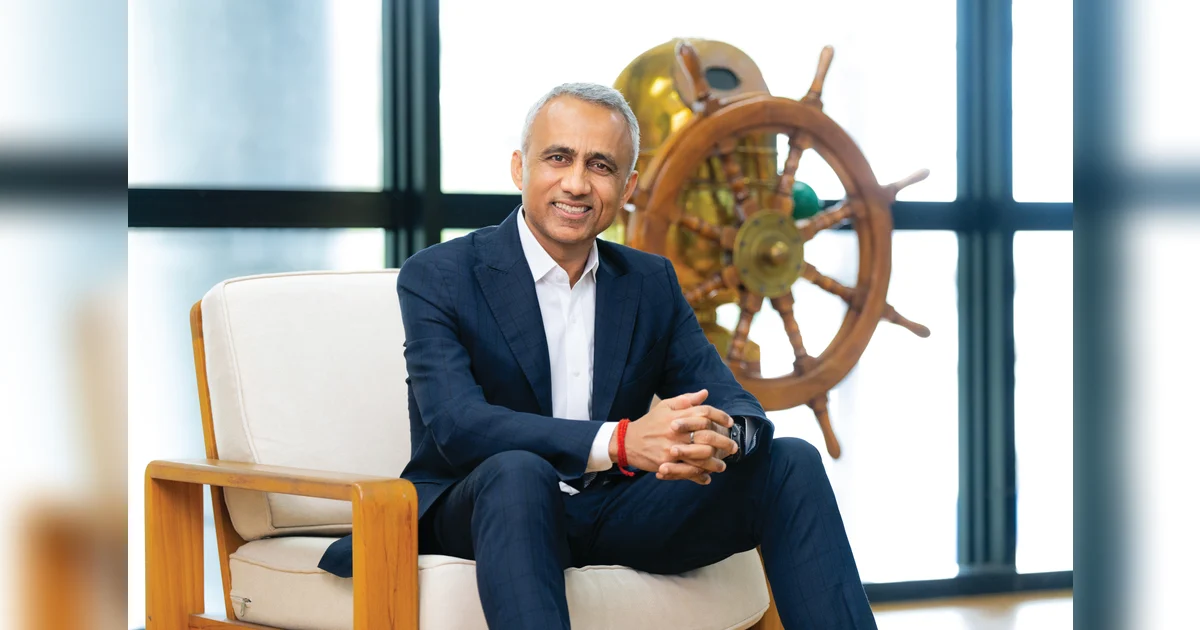
    The global maritime industry is confronting an unprecedented infrastructure crisis as ship repair capacity fails to meet escalating demand, creating a structural gap that will define the sector through 2030. According to Sandeep Seth, Group CEO of Goltens Worldwide, the industry is projected to grow at 6-8% compounded annually, but existing repair facilities cannot maintain the current fleet, let alone handle the massive retrofitting requirements driven by environmental regulations.

    The geographical distribution of repair capacity reveals significant imbalances. China currently dominates with nearly 50% of global ship-repair capabilities, followed by Turkey at approximately 9%. Europe and the United States have largely exited their historical roles as major repair hubs. This concentration has created supply chain vulnerabilities and capacity constraints across global shipping networks.

    Environmental mandates are accelerating the crisis. The International Maritime Organization’s Carbon Intensity Indicator framework has rendered 25,000-30,000 vessels effectively non-compliant with ratings of C, D or E. Rather than scrapping assets, owners are increasingly opting for retrofits, driving unprecedented demand for sustainability upgrades including ballast-water treatment systems, scrubbers, fuel-optimization technologies, and carbon-capture solutions.

    Goltens’ strategic expansion into Batam, Indonesia reflects the industry’s geographical evolution. As Singapore transitions toward higher-value maritime services, Batam emerges as a complementary hub offering proximity (45 minutes by ferry), competitive labor costs, and technical capabilities. This move addresses critical inflationary pressures and skills shortages that have compressed margins throughout the industry.

    Technological adoption is progressing cautiously. While digital twins and predictive-maintenance tools are gaining traction for optimizing routes and fuel consumption, artificial intelligence remains in nascent stages. Seth emphasizes that marine-specific applications rather than generic large language models will ultimately drive operational improvements.

    The industry’s transformation extends beyond vessels to encompass port infrastructure, shore power, and entire maritime ecosystems. Projects like the Captain Arctic—a low-emission exploration vessel powered primarily by wind and solar—demonstrate the sector’s innovative direction, particularly in Middle Eastern markets where ferry and port decarbonization initiatives are accelerating.

    With over 100,000 vessels globally and insufficient maintenance capacity, the supply-demand imbalance threatens to intensify throughout the decade. Owners face complex decisions regarding asset lifecycles, capital allocation, and compliance strategies amid regulatory uncertainty and infrastructure constraints that show no signs of abating.