作者: admin

  • Life in Wadi Shaam: A journey through Ras Al Khaimah’s mountain villages

    Life in Wadi Shaam: A journey through Ras Al Khaimah’s mountain villages

    Nestled within the formidable peaks of Ras Al Khaimah, the villages of Wadi Shaam stand as living monuments to an era defined by communal resilience and profound connection to the natural world. Through the recollections of native elder Saeed Abdullah Al-Zahouri, 60, we gain unprecedented insight into a vanishing way of life that thrived on collective resourcefulness and intergenerational wisdom.

    These remote settlements, including the modest Ahbabbt area with its ten households and the historic Al-Ghashbah with structures predating the 1940s, exemplified self-sufficient existence. Families cultivated wheat, raised livestock, and constructed dwellings from indigenous materials—mountain gravel, wood, and a specialized clay known as Al-Jass. Their architectural ingenuity manifested in Bayt Al-Qofl (houses of locks), designed with layered roofs of wood and Al-Sakhbar plants to withstand extreme weather.

    Survival hinged on sophisticated water management systems. Communities excavated reservoirs, lining them with kiln-baked clay discs and connecting them via intricate channel networks called Al-Maseelah to harvest rainwater. Filter basins purified runoff, providing safe water for consumption and agriculture despite the arid environment.

    Seasonal migration shaped annual rhythms. During scorching summers, families journeyed for days to cooler regions like Al-Arshan or Fujairah, transporting supplies on donkey and camel caravans. Winters brought communal gatherings in mountain caves, where elders shared stories while baking traditional bread in stone ovens—a testament to enduring social bonds.

    The 1970s marked a transformational period following the UAE’s formation. Under Sheikh Zayed’s visionary leadership, mountain families transitioned to planned communities with modern amenities while preserving cultural traditions. This carefully managed evolution allowed Wadi Shaam’s residents to embrace progress without sacrificing the heritage that defined their identity for generations.

  • “It’s ‘Operation Don’t Come Last’ at the Olympics”

    “It’s ‘Operation Don’t Come Last’ at the Olympics”

    North Yorkshire athlete Axel Brown is preparing for his second and final Olympic appearance as pilot of the Trinidad and Tobago bobsleigh team at the upcoming Milano Cortina 2026 Winter Games. The 33-year-old from Harrogate, who previously competed for the Caribbean nation at Beijing 2022, will steer the sled at speeds approaching 100mph (160km/h) in what he confirms will be his Olympic swan song.

    Brown’s unconventional journey to winter sports began twelve years ago when, after being released from an American football team just before the Sochi 2014 Olympics, he discovered bobsleigh through television coverage. “You don’t grow up in Harrogate thinking you’re going to be an Olympic bobsleigher,” Brown reflects on his unexpected career path.

    After seven years competing for Great Britain, Brown made the strategic decision in 2021 to represent his mother’s native Trinidad and Tobago. As pilot, his responsibilities extend beyond mere participation. “I steer the sled to ensure we’re efficient, smooth and don’t crash – because that’s a very real part of the sport,” he explains of the technically demanding role.

    The Harrogate athlete acknowledges the psychological dimensions of the sport, noting that even at slower courses reaching 70mph (113km/h), bobsleigh requires “a healthy level of fear.” He maintains that complacency could be dangerous, stating: “If there’s a day when I was completely not scared of bobsleigh, that’s probably the day to walk away.”

    Brown’s previous Olympic performance saw him finish 28th out of 30 teams in the two-man event at Beijing 2022, ahead of Jamaica and Brazil. However, he considers qualification for Milano Cortina 2026 his true “gold medal” moment, achieved under significantly more challenging circumstances. With reduced nation spots and requiring top-17 global ranking, Brown describes the qualification process as “right at the limit of what was possible.”

    For his final Games, Brown embraces modest ambitions under the banner “Operation Don’t Come Last,” while anticipating the emotional significance of competing with family present after COVID restrictions prevented their attendance in Beijing. Beyond his athletic career, the self-described non-thrill-seeker plans to convert a barn for residential purposes with his partner, embracing a quieter life after retirement from breakneck speeds.

  • Plane crashes with Maharashtra Deputy CM Ajit Pawar onboard, 6 feared dead

    Plane crashes with Maharashtra Deputy CM Ajit Pawar onboard, 6 feared dead

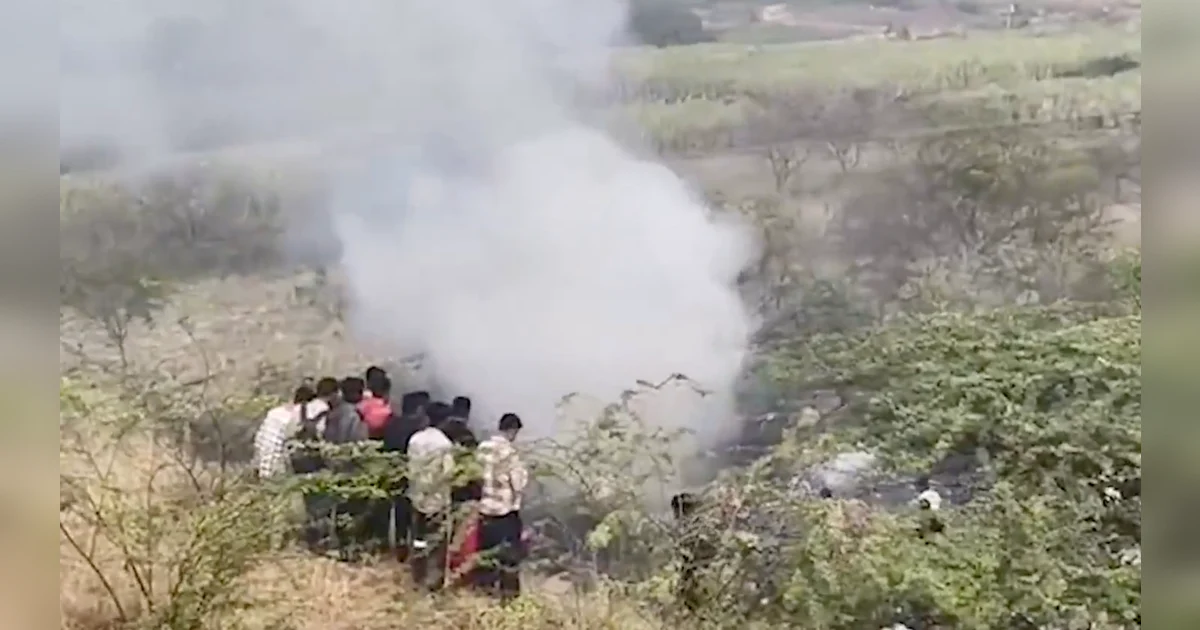
    A tragic aviation incident has shaken India’s political landscape after a aircraft carrying Maharashtra Deputy Chief Minister Ajit Pawar crashed on Wednesday morning. The disaster, which occurred around 8:41 AM local time on January 28, 2026, is believed to have claimed the lives of all six individuals aboard according to preliminary reports.

    The aircraft, whose specific make and model remain under investigation, was en route to an undisclosed destination when it went down under circumstances that aviation authorities have yet to fully determine. Emergency response teams were immediately dispatched to the crash site, though the severity of the impact suggests minimal chances of survival for those on board.

    Ajit Pawar, a prominent political figure and key leader within the Nationalist Congress Party, held significant influence in Maharashtra state politics. His potential demise creates immediate political ramifications for the state’s governing coalition and raises questions about succession within both the administration and his political party.

    The crash has prompted an urgent investigation by India’s Directorate General of Civil Aviation, with officials working to establish both the cause of the accident and the complete list of casualties. Aviation experts are examining multiple potential factors including weather conditions, mechanical failure, and human error.

    This incident marks one of the most significant political tragedies in recent Indian history, drawing national attention and condolences from across the political spectrum. The government has announced heightened security protocols for officials traveling by air while the investigation continues.

  • Plane carrying Maharashtra Deputy CM Ajit Pawar crashes, ‘no survivors’ yet authority says

    Plane carrying Maharashtra Deputy CM Ajit Pawar crashes, ‘no survivors’ yet authority says

    A private aircraft carrying Ajit Pawar, the Deputy Chief Minister of Maharashtra, crashed under tragic circumstances on January 28th in the Baramati region of western India. Aviation authorities confirmed the politician was traveling with four other individuals—two additional personnel and two crew members—aboard the ill-fated flight.

    According to an official statement released by India’s Directorate General of Civil Aviation (DGCA), preliminary assessments indicate no survivors from the catastrophic incident. The aircraft was reported to have been completely engulfed in flames upon impact in Pune district, with emergency response teams immediately deploying to the scene.

    Rescue operations continue intensively as firefighting crews work to extinguish the remaining blaze at the crash site. The DGCA has initiated a comprehensive investigation to determine the precise cause of the accident, though adverse weather conditions or technical malfunctions remain speculative at this early stage.

    The incident has sent shockwaves through India’s political establishment, particularly in Maharashtra state where Pawar served as a prominent political figure and key government official. The veteran politician held significant influence in regional politics and was actively involved in state governance matters at the time of the tragedy.

    Aviation safety experts emphasize that this accident represents one of the most serious incidents involving high-ranking Indian officials in recent years. The international community has begun expressing condolences while awaiting further developments in the investigation.

  • Why China views the UK visit as part of something bigger

    Why China views the UK visit as part of something bigger

    Despite Beijing’s harsh winter conditions, the Chinese capital has become an unexpected hub of diplomatic activity, welcoming a succession of Western leaders seeking to reestablish ties with the world’s second-largest economy. The most notable among these visitors is British Prime Minister Sir Keir Starmer, marking the first UK leadership visit to China in eight years.

    This diplomatic flurry comes after China secured approval for a massive new embassy in London, a precondition Beijing officials explicitly tied to announcing Starmer’s visit. The UK delegation arrives with substantial economic ambitions, hoping to secure dozens of new trade agreements to bolster Britain’s economy amid ongoing domestic challenges.

    Dr. Yu Jie, Senior Research Fellow at Chatham House, notes that even establishing a reasonable trading relationship would constitute significant progress given current circumstances. The visit represents part of China’s broader charm offensive, positioning itself as a stable, predictable alternative to the United States in global partnerships.

    This strategy appeared successful with Canadian Prime Minister Mark Carney, who recently announced a “new strategic partnership with China” during his Beijing visit. However, such overtures risk provoking Washington’s ire, as demonstrated by President Trump’s threat to impose 100% tariffs on Canada should it proceed with Chinese trade deals.

    Starmer has attempted to navigate these geopolitical tensions by declaring Britain would not choose between the US and China. Analysts suggest Beijing remains realistic about its limited ability to fracture the special relationship between Washington and London.

    The current diplomatic engagement marks a notable shift from what Prime Minister Starmer himself termed an “ice age” in UK-China relations. While a return to the “golden era” symbolized by the 2015 meeting between Xi Jinping and David Cameron remains improbable, experts view these developments as the beginning of a cautious thaw.

    Beyond high-level politics, people-to-people connections endure. The story of Bowei Wang exemplifies lasting cultural ties—after studying in Scotland during warmer diplomatic times, he now imports Glasgow-brewed ale to his Beijing pub near Tiananmen Square, creating a cross-cultural experience complete with British historical imagery.

    China’s economic leverage provides substantial negotiating power, controlling approximately one-third of global goods manufacturing, over 90% of rare earth mineral processing, and 60-80% of renewable energy components. This dominance has enabled Beijing to employ trade measures against countries that displeased it, as experienced by Australia, Canada, Japan, and South Korea in recent years.

    Business leaders like Tom Simpson of the China Britain Business Council emphasize the visit’s importance, noting China’s position as Britain’s third-largest trading partner with £45 billion in annual exports. However, Chinese analysts express concerns about Starmer’s inconsistent follow-through on engagement promises and Britain’s domestic political stability.

    The diplomatic movement has practical implications for ordinary citizens. British tour operators in China hope successful negotiations might lead to visa-free travel for UK passport holders, mirroring arrangements Beijing has already extended to 70 other countries.

    As Western leaders brave Beijing’s winter chill, they calculate that reengagement with China—despite its complexities and risks—represents a necessary strategic calculation in an increasingly multipolar world.

  • Sarah Mullally confirmed as archbishop of Canterbury, first woman to lead the Church of England

    Sarah Mullally confirmed as archbishop of Canterbury, first woman to lead the Church of England

    In a groundbreaking development for religious leadership, Sarah Mullally was formally confirmed as Archbishop of Canterbury on Wednesday, shattering centuries of tradition by becoming the first woman to lead the Church of England. The 63-year-old former cancer nurse turned cleric assumed her responsibilities during a legal ceremony presided over by judges, finalizing an appointment initially announced nearly four months prior.

    This confirmation service represents a significant evolution for the Church of England, which only began ordaining female priests in 1994 and consecrated its first female bishop in 2015. The church’s progressive stance on gender leadership stands in stark contrast to the Roman Catholic Church, which maintains prohibitions against women serving as priests, let alone global spiritual leaders.

    While the worldwide Anglican Communion lacks a formal head structure, the Archbishop of Canterbury traditionally serves as its spiritual leader across 165 countries encompassing approximately 100 million members. Mullally’s appointment has been hailed as a monumental statement regarding women’s position in religious society, though it simultaneously threatens to exacerbate existing divisions within the global communion.

    The new archbishop faces immediate challenges, including deepening rifts over gender equality and LGBTQ treatment policies. Conservative factions within Anglicanism, notably the Gafcon organization representing traditionalist members, have condemned Mullally’s appointment as divisive. Rwandan Archbishop Laurent Mbanda, chairman of Gafcon’s council of senior bishops, specifically criticized Mullally’s support for blessing same-sex marriages, asserting she “cannot provide leadership to the Anglican Communion” due to these progressive positions.

    Additionally, Mullally must address ongoing sexual abuse scandals that have plagued the church for over a decade, particularly following predecessor Justin Welby’s resignation after criticism for failing to report abuse allegations to authorities.

    The appointment process involved nomination by a 17-member commission of clerics and lay people, with final confirmation granted by King Charles III in his capacity as the church’s Supreme Governor. Mullally’s installation will culminate on March 25 at Canterbury Cathedral, where she will be formally installed as bishop of the diocese of Canterbury, marking the commencement of her public-facing ministry.

  • A new report warns that combined war casualties in Russia’s war on Ukraine could soon hit 2 million

    A new report warns that combined war casualties in Russia’s war on Ukraine could soon hit 2 million

    A sobering analysis from the Center for Strategic and International Studies (CSIS) projects that combined military casualties in Russia’s war against Ukraine could approach two million by spring 2025, representing the highest toll for any major power since World War II. The Washington-based think tank’s comprehensive assessment, released Tuesday, reveals Russia has suffered approximately 1.2 million casualties including up to 325,000 fatalities since launching its full-scale invasion in February 2022.

    Ukraine, despite its smaller population and military capacity, has endured between 500,000 to 600,000 casualties with an estimated 140,000 deaths according to the report. These staggering figures emerge as both nations continue to manipulate casualty reporting for strategic purposes, with Moscow officially acknowledging only 6,000 military deaths amid systematic suppression of accurate loss documentation in Russian media.

    The CSIS analysis, incorporating data from independent Russian news outlet Mediazona, BBC research, British government estimates, and official interviews, portrays a conflict of devastating attrition with minimal territorial gains. Despite controlling battlefield initiative throughout 2024, Russian forces have advanced at an exceptionally sluggish pace of 15-70 meters daily in their most significant offensives—slower than nearly any major military campaign in the past century.

    Concurrent with the report’s release, fresh attacks demonstrated the war’s ongoing brutality. Ukrainian officials confirmed two civilians killed in overnight strikes on Kyiv’s outskirts, while nine others were wounded in separate assaults targeting Odesa, Kryvyi Rih, and the front-line Zaporizhzhia region. Russia’s Defense Ministry reported intercepting 75 Ukrainian drones overnight, with significant activity over the Krasnodar region and annexed Crimea.

    The report concludes that Russia is paying an extraordinary human cost for marginal strategic advantages, fundamentally diminishing its status as a major global power despite claims of battlefield momentum.

  • Trump aide Miller says Minneapolis agents may have breached ‘protocol’

    Trump aide Miller says Minneapolis agents may have breached ‘protocol’

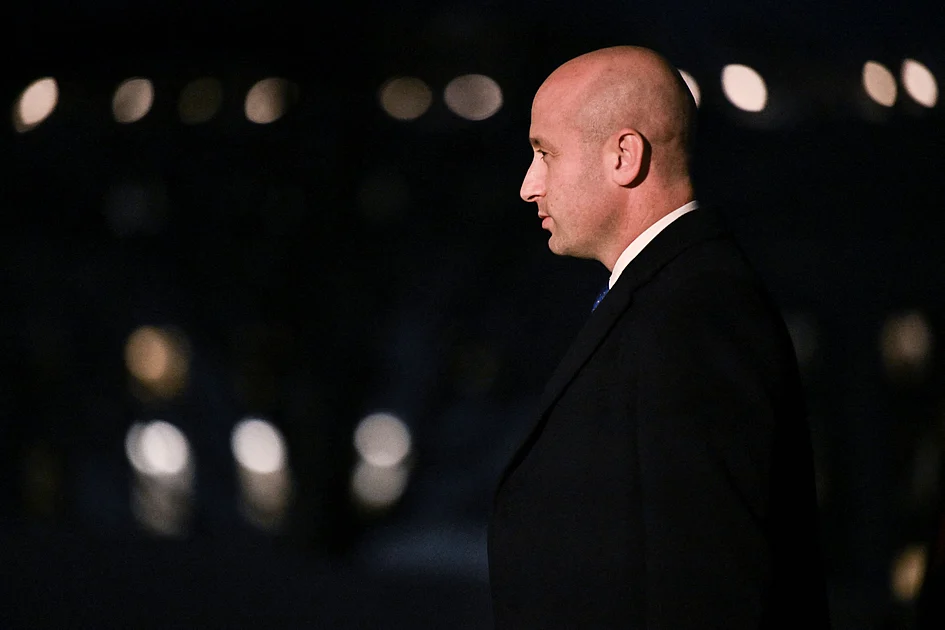
    The White House has initiated an internal review into potential protocol violations by federal agents during the Minneapolis protest incident that resulted in the fatal shooting of 37-year-old nurse Alex Pretti. Senior Presidential Advisor Stephen Miller confirmed the investigation Tuesday, marking a significant shift from previous administration statements that falsely characterized the victim as a would-be assassin.

    Miller, who serves as Deputy Chief of Staff and architects the administration’s immigration policies, disclosed that Customs and Border Protection personnel might have deviated from established operational guidelines during Saturday’s protest against immigration enforcement measures. The admission follows President Trump’s expressed desire to de-escalate tensions in Minneapolis amid growing national scrutiny.

    According to Miller’s statement, the White House had issued explicit directives for additional personnel to establish physical separation between arrest teams and demonstrators. “We are evaluating why the CBP team may not have been following that protocol,” Miller acknowledged, while simultaneously attributing his earlier inflammatory remarks to preliminary information provided by Homeland Security Secretary Kristi Noem.

    Video evidence subsequently contradicted initial claims that Pretti was brandishing a weapon when approached by federal agents. Footage confirmed that although the nurse legally carried a sidearm, agents had already secured the firearm before firing multiple shots at close range. This visual evidence directly contradicts Noem’s initial assertion that Pretti threatened agents with a weapon.

    Miller’s statement represents the administration’s first public concession regarding potential procedural failures in the incident, which has sparked nationwide protests and intensified scrutiny of federal immigration enforcement tactics.

  • Huge landslide cleaves off the edge of a town in Sicily and forces the evacuation of 1,500 people

    Huge landslide cleaves off the edge of a town in Sicily and forces the evacuation of 1,500 people

    The southern Sicilian town of Niscemi has become the epicenter of a geological disaster following Cyclone Harry’s torrential rains, which triggered a massive landslide that severed the town’s perimeter and displaced approximately 1,500 residents. Italian Premier Giorgia Meloni conducted an aerial assessment of the devastated area on Wednesday, surveying the 4-kilometer (2.5-mile) landslide zone where entire structures have plummeted 20 meters from unstable cliffs.

    Civil Protection Chief Fabio Ciciliano confirmed the alarming geological reality: “The entire hill is collapsing onto the plain of Gela. Houses positioned along the landslide edge are permanently uninhabitable, necessitating permanent relocation solutions for affected families.” Authorities have established a 150-meter-wide exclusion zone as the water-saturated terrain continues to shift unpredictably.

    This catastrophe has exposed longstanding geological vulnerabilities in Niscemi, where the town’s foundation of sand and clay layers becomes dangerously permeable during heavy rainfall. University of Catania geology professor Giovanna Pappalardo emphasized the unprecedented scale: “The current landslide front extends approximately 4 kilometers and directly impacts slope-facing residences, representing a significant escalation from previous events.”

    The disaster has ignited political confrontations regarding construction approvals in geologically high-risk areas. While Sicilian regional president Renato Schifani acknowledged legitimate concerns about building permissions, opposition leader Elly Schlein proposed redirecting 1 billion euros from the controversial Sicily-mainland bridge project—currently stalled in legal challenges—toward emergency relief efforts.

    The federal government has declared a state of emergency for southern regions, allocating an initial 100 million euros ($120 million) for immediate response. However, Sicilian officials estimate total damages could reach 2 billion euros ($2.4 billion), highlighting the substantial gap between initial funding and actual recovery needs.

  • Ecuador says ICE agent attempted to enter its Minneapolis consulate

    Ecuador says ICE agent attempted to enter its Minneapolis consulate

    A significant diplomatic incident has unfolded between Ecuador and the United States following an attempted entry by a U.S. Immigration and Customs Enforcement (ICE) agent into Ecuador’s consular facility in Minneapolis. Ecuador’s foreign ministry issued a formal condemnation, stating that consular officials prevented the agent from accessing the premises to ensure the protection of Ecuadorian citizens inside the building.

    The confrontation occurred at approximately 11:00 local time on Tuesday, with Ecuadorian officials citing the 1963 Vienna Convention on Consular Relations which designates consular premises as ‘inviolable.’ The convention explicitly prohibits host country authorities from entering consular working areas without consent from the consular post’s head—consent that Ecuador maintains was neither given nor assumed in this instance.

    Unverified video footage circulating in Ecuadorian media appears to show a tense exchange where a consular official blocks the ICE agent’s access, repeatedly stating ‘this is the consulate, you’re not allowed in here.’ The agent responds with a warning that physical contact would result in detention attempts.

    This incident creates unexpected diplomatic friction between the Trump administration and Ecuadorian President Daniel Noboa, who has generally maintained strong bilateral relations. Just two months prior, both leaders had agreed to strengthen commercial ties, and Noboa had previously expressed gratitude for the U.S. designation of Ecuadorian criminal gangs as Foreign Terrorist Organizations.

    The consular confrontation occurs amid heightened tensions in Minneapolis following the fatal shootings of two individuals, including intensive care nurse Alex Pretti, by border agents during immigration protests. President Trump recently announced he would ‘de-escalate immigration and border operations a little bit’ in Minnesota, where approximately 3,000 immigration agents are currently deployed.

    The Ecuadorian government has delivered an official letter of protest to the U.S. embassy in Quito, marking a rare diplomatic challenge between the two nations as the Trump administration continues its prioritized enforcement of strict immigration policies that have resulted in over 675,000 removals according to recent Homeland Security statements.