作者: admin

  • Watch: Moderate rains hit RAK; police urge residents to take safety precautions

    Watch: Moderate rains hit RAK; police urge residents to take safety precautions

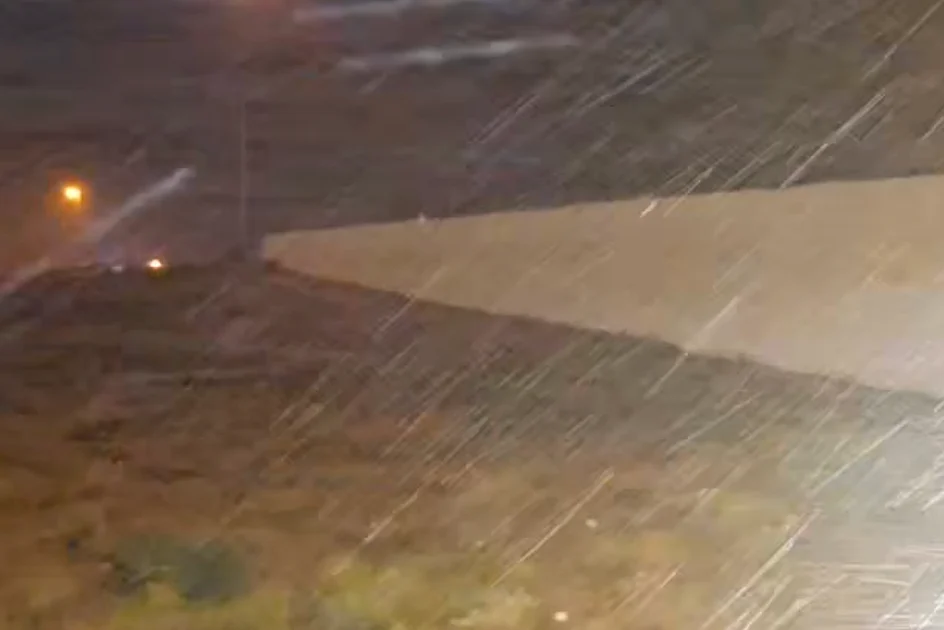
    Ras Al Khaimah experienced moderate rainfall on December 30, 2025, prompting local police to issue urgent safety advisories to residents. The precipitation event, which occurred during evening hours, led authorities to caution citizens against approaching wadis, standing water pools, and areas prone to flash flooding.

    According to meteorological reports from the National Centre of Meteorology (NCM), an orange alert was activated between 11:06 PM and 4:00 AM, indicating potential hazards from strong winds, thunderstorms, and cumulonimbus cloud formations. The advisory specifically emphasized reduced driving speeds and compliance with official instructions from emergency response units.

    This weather event follows previous rainfall incidents on December 18 that resulted in property damage across RAK. Multiple residential properties reported water infiltration, while vehicles sustained damage from falling tree branches and debris. Many residents described the previous incident as unexpectedly severe, with most discovering the extent of damage only upon morning inspection.

    The NCM further forecasted persistent strong winds expected to continue through New Year’s Eve celebrations on December 31. While no precipitation was predicted for year-end festivities, meteorological officials anticipated cloudy conditions with wind speeds remaining elevated. Temperature projections indicated daytime highs of 22°C alongside nighttime lows reaching 8°C in interior regions, creating notably cooler conditions for New Year’s celebrations.

    Tourists and residents preparing for outdoor celebrations were advised to monitor updated weather bulletins and prepare for potentially disruptive wind conditions during nighttime events.
  • UAE President exchanges New Year greetings with Pakistan PM during meeting

    UAE President exchanges New Year greetings with Pakistan PM during meeting

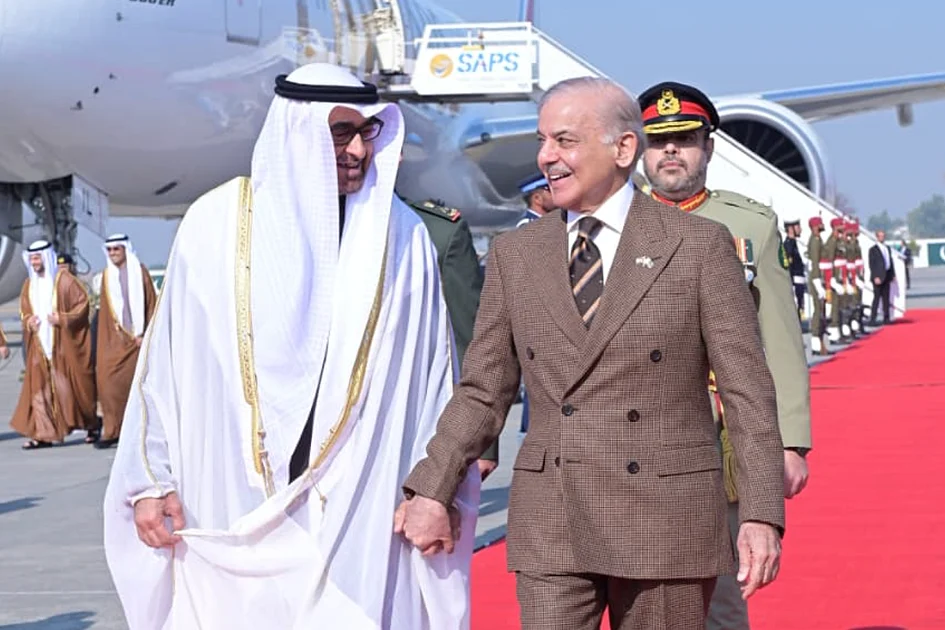
    In a significant diplomatic engagement, UAE President Sheikh Mohamed bin Zayed Al Nahyan and Pakistani Prime Minister Muhammad Shehbaz Sharif convened during the President’s private visit to Pakistan, marking a reinforcement of bilateral relations between the two nations. The high-level meeting, which occurred on December 26th, 2025, at Nur Khan Airbase, served as a platform for exchanging New Year greetings and discussing substantive cooperation frameworks.

    The leadership dialogue extended beyond ceremonial formalities to address comprehensive partnership enhancement across multiple sectors. Both leaders articulated mutual aspirations for continued progress and prosperity in their respective countries while emphasizing the importance of global security and stability. The discussions specifically focused on strengthening economic collaboration, trade expansion, and development initiatives aligned with both nations’ strategic priorities.

    Prime Minister Sharif expressed profound appreciation for the UAE’s consistent support in Pakistan’s development endeavors, particularly noting the significance of President Sheikh Mohamed’s recent official visit. The Pakistani leadership acknowledged the UAE’s substantial contributions to various development sectors within Pakistan.

    Notably, the UAE President’s arrival was marked by a ceremonial military jet escort upon entering Pakistani airspace, symbolizing the deep respect and warm relations between the two countries. The delegation accompanying Sheikh Mohamed included Sheikh Sultan bin Hamdan Al Nahyan and Sheikh Mohammed bin Hamad bin Tahnoun Al Nahyan, both Advisers to the UAE President, along with Salem Mohammed Al Zaabi, UAE Ambassador to Pakistan, and several ministers and senior officials.

    The bilateral talks also encompassed thorough reviews of regional and international matters of mutual concern, facilitating an exchange of perspectives on pressing global issues. This meeting represents the latest chapter in the longstanding diplomatic relationship between the UAE and Pakistan, characterized by consistent high-level engagement and cooperative initiatives.

  • Global shares trade mixed with some exchanges closed ahead of the New Year

    Global shares trade mixed with some exchanges closed ahead of the New Year

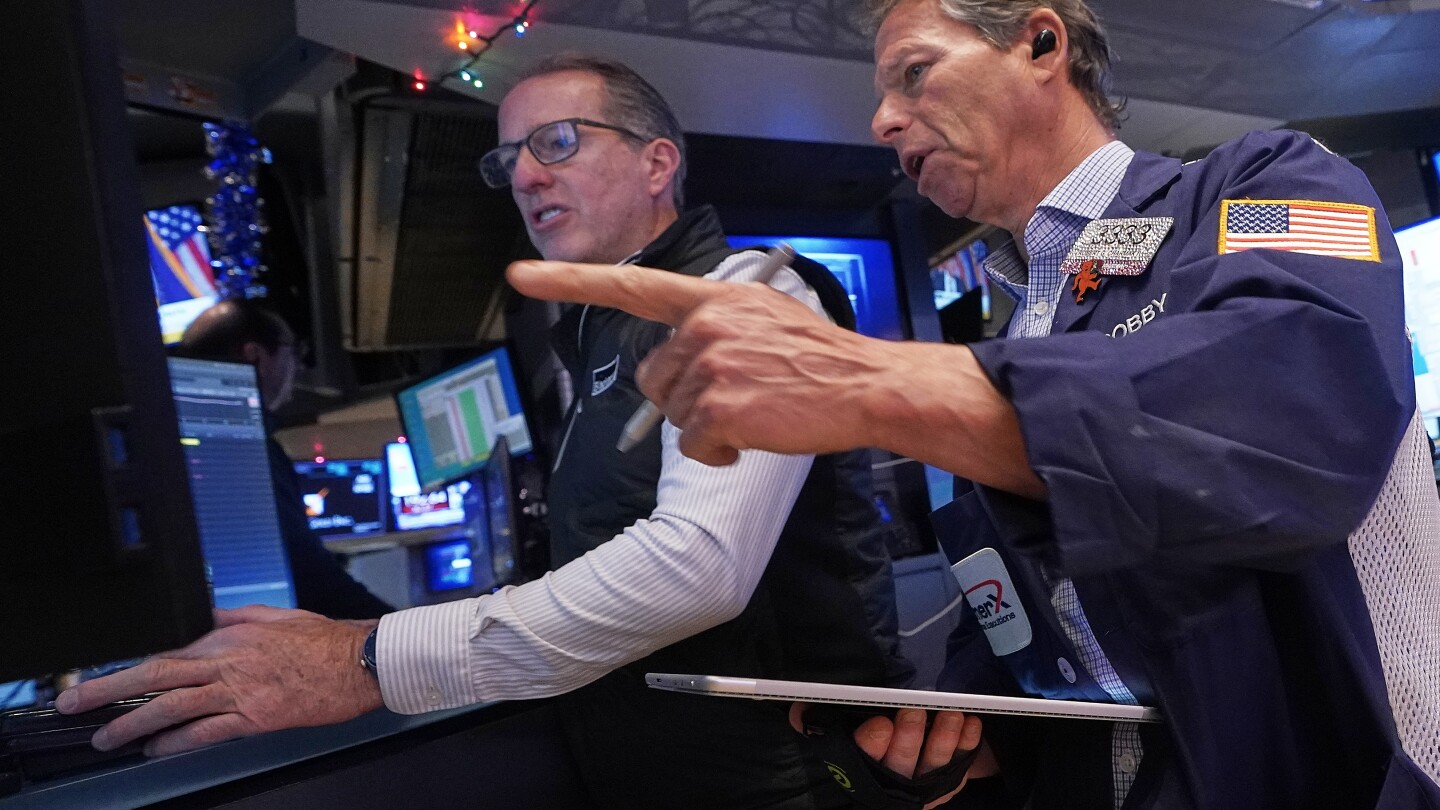
    Financial markets worldwide presented a fragmented picture during year-end holiday trading sessions, with several major exchanges across Europe and Asia remaining closed for seasonal observances. Among active European indices, France’s CAC 40 declined by 0.5% to reach 8,130.14 while Britain’s FTSE 100 retreated 0.2% to 9,923.59. Asian markets demonstrated divergent trajectories with Hong Kong’s Hang Seng dropping 0.9% to 25,630.54, while Taiwan’s Taiex surged 0.9% to 28,963.60. Australia’s S&P/ASX 200 remained nearly unchanged with a marginal decline. Tokyo and South Korean markets scheduled extended closures through the New Year period, with Wall Street maintaining limited Wednesday operations before its Thursday holiday closure.

    Energy markets witnessed subtle adjustments as U.S. crude prices decreased by 16 cents to $57.79 per barrel, with international benchmark Brent crude experiencing a comparable decline to $61.18. Currency markets reflected modest fluctuations with the U.S. dollar strengthening to 156.55 Japanese yen from 156.36 yen, while the euro weakened slightly against the dollar to $1.1727.

    Market analysts identified persistent concerns regarding inflationary pressures and central bank policy directions as key factors influencing trading sentiment. The Federal Reserve’s December meeting minutes revealed internal divisions regarding economic threat assessments, contributing to market uncertainty. Financial experts including Sung Won Sohn, economics professor at Loyola Marymount University, emphasized that central banks must exercise caution amid labor shortages and interest rate uncertainties, predicting continued market volatility requiring sophisticated risk management strategies from businesses and investors.

  • Isiah Whitlock Jr: The Wire and Veep actor dies at 71

    Isiah Whitlock Jr: The Wire and Veep actor dies at 71

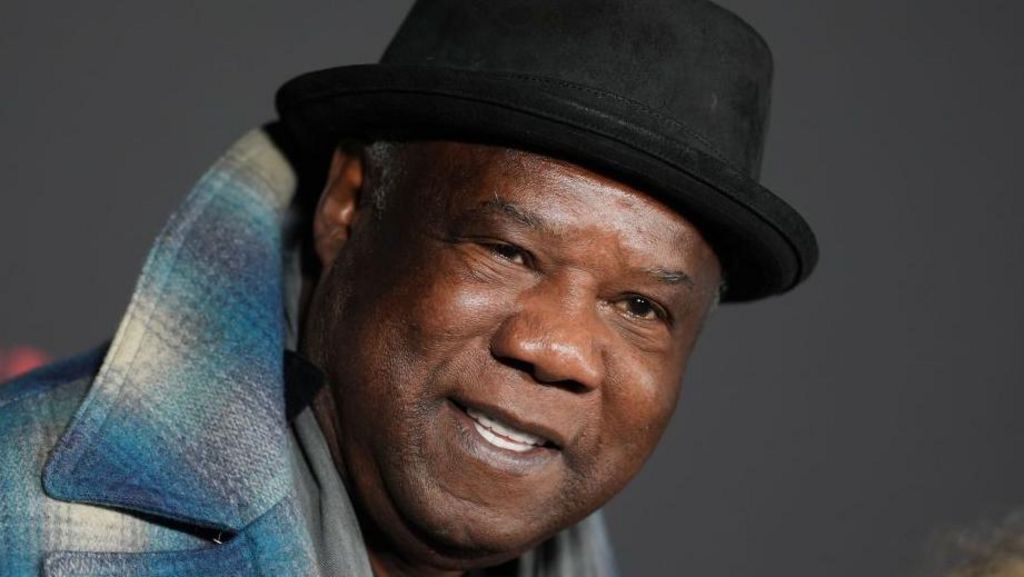
    The entertainment industry mourns the loss of distinguished character actor Isiah Whitlock Jr., who passed away at age 71 following a brief illness in New York. His manager, Brian Liebman, confirmed the sad news through an emotional Instagram post that described Whitlock as both a brilliant performer and an exceptional human being.

    Whitlock leaves behind an impressive cinematic legacy spanning four decades, with particular recognition for his collaborations with acclaimed director Spike Lee. The filmmaker honored his frequent collaborator with a moving tribute, calling Whitlock his ‘dear beloved brother’ alongside a photograph capturing their genuine camaraderie.

    Among his most iconic contributions was the portrayal of corrupt politician Clay Davis in the seminal HBO series ‘The Wire,’ where he popularized an elongated, memorable version of a profane catchphrase that entered popular culture. Whitlock had previously revealed the distinctive delivery was inspired by his uncle’s manner of speaking.

    His versatility shone through diverse roles including a comical interpretation of the Defense Secretary in the political satire ‘Veep,’ where his character ran against Julia Louis-Dreyfus’s protagonist. Beyond television, Whitlock appeared in six Spike Lee films—’25th Hour,’ ‘She Hate Me,’ ‘Red Hook Summer,’ ‘Chi-Raq,’ ‘BlacKkKlansman,’ and ‘Da 5 Bloods’—alongside performances in Martin Scorsese’s ‘Goodfellas,’ Disney animations ‘Cars 3’ and ‘Lightyear,’ and various ‘Law & Order’ franchise episodes.

    Colleagues and admirers remember Whitlock not only for his professional accomplishments but for his warm personality and generous spirit. Liebman’s statement captured the collective grief: ‘If you knew him – you loved him. May his memory forever be a blessing.’

  • Israel to suspend several aid groups operating in Gaza, starting January 1

    Israel to suspend several aid groups operating in Gaza, starting January 1

    Israel’s Ministry of Diaspora Affairs and Combating Antisemitism announced on Tuesday its decision to suspend multiple humanitarian organizations operating in Gaza effective January 1, 2025. The regulatory action targets groups that allegedly failed to comply with enhanced security protocols requiring detailed employee information to prevent potential terrorist affiliations.

    The ministry stated that affected organizations had received formal notifications regarding license revocations after demonstrating what officials characterized as insufficient cooperation. These groups reportedly refused to submit comprehensive lists of their Palestinian staff members, preventing authorities from conducting necessary security vetting procedures.

    According to official statements, the suspended organizations—whose identities remain undisclosed—must completely cease operations by March 1. Ministry representatives emphasized that these groups had been given a ten-month compliance window but ultimately failed to meet updated regulatory requirements governing international NGOs in Palestinian territories.

    In a significant development, the ministry specifically implicated Doctors Without Borders (Médecins Sans Frontières or MSF), alleging that two employees maintained connections with militant organizations. Officials claimed one individual was identified as a Palestinian Islamic Jihad member in June 2024, while another was allegedly a Hamas sniper as of September 2024. The ministry asserted that MSF failed to provide complete disclosure regarding these individuals’ identities and roles despite repeated requests.

    MSF responded to these allegations by stating the organization would never knowingly employ individuals engaged in military activities, noting such affiliations would endanger both staff and patients. The medical charity confirmed ongoing registration discussions with Israeli authorities but clarified it had not yet received formal re-registration decisions.

    The ministry maintained that these measures would not significantly disrupt humanitarian aid distribution, estimating that fewer than 15% of operating organizations violated the updated regulatory framework. However, multiple NGOs have expressed concerns to international media about substantial impacts on aid distribution capabilities throughout Gaza.

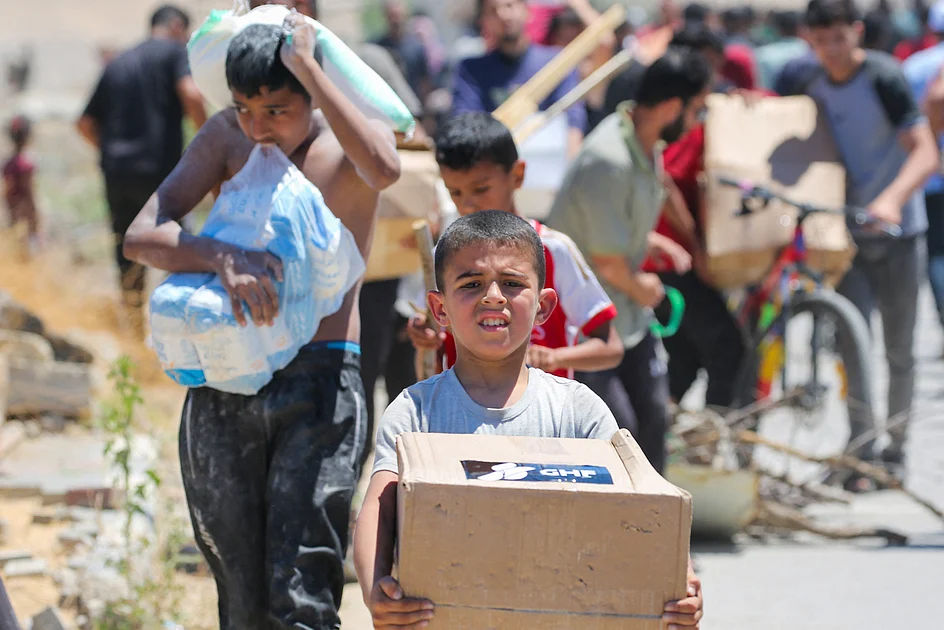
    This regulatory tightening occurs amid ongoing humanitarian challenges in the region. Despite October ceasefire agreements stipulating 600 daily aid trucks, current figures range between 100-300 trucks according to United Nations and NGO reports, creating significant supply shortages for Gaza’s population.

  • Mali and Burkina Faso impose retaliatory travel ban on US nationals

    Mali and Burkina Faso impose retaliatory travel ban on US nationals

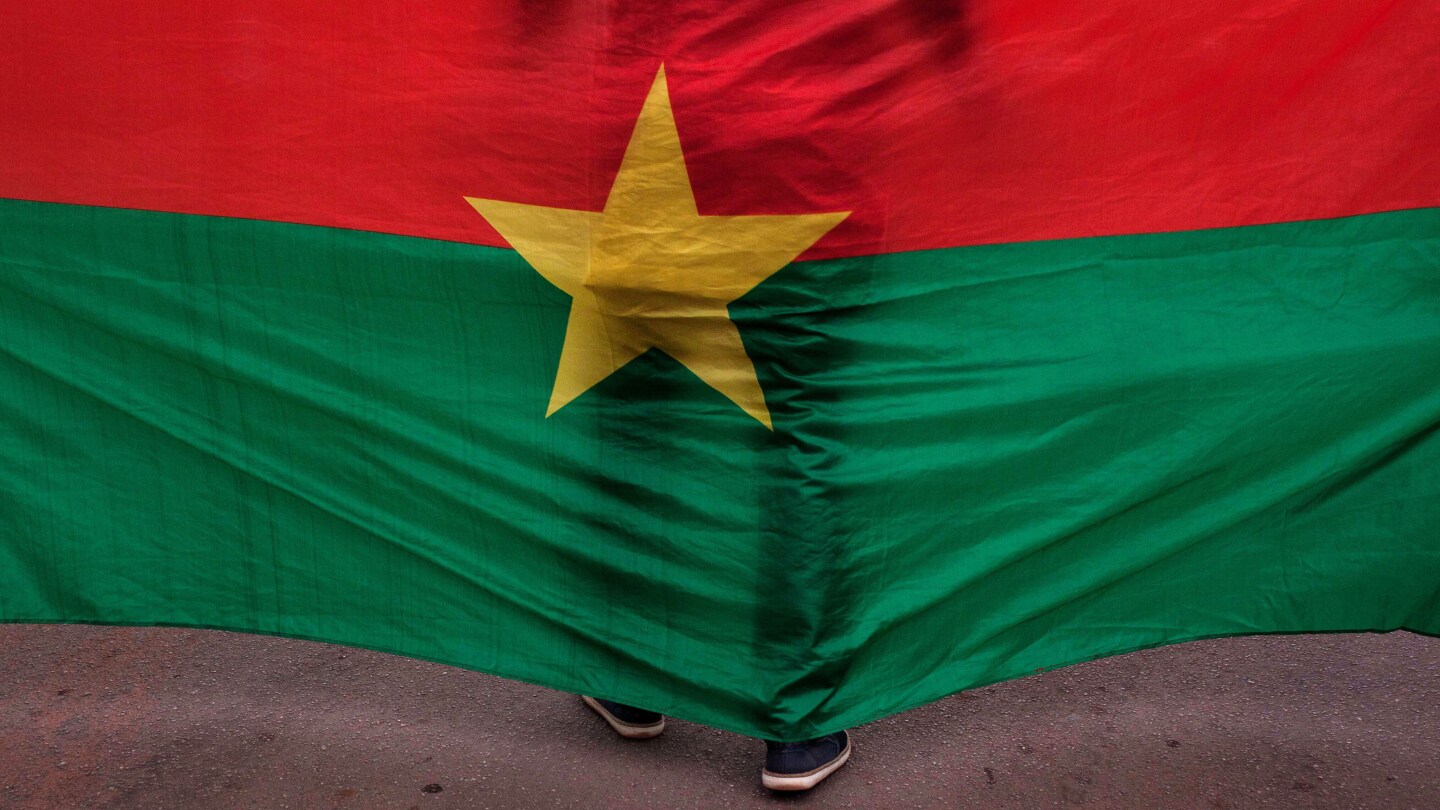
    BAMAKO, Mali — In a significant diplomatic escalation, the military governments of Mali and Burkina Faso have instituted immediate entry bans targeting United States citizens. This decisive action comes as a direct response to the Trump administration’s recent expansion of travel restrictions affecting citizens from both West African nations.

    The reciprocal measures were formally announced through separate declarations issued by the foreign ministries of both countries late Tuesday. Mali’s Ministry of Foreign Affairs and International Cooperation stated it would ‘apply the same conditions and requirements to US nationals as those imposed on Malian citizens’ based on the principle of reciprocity. Burkina Faso’s Foreign Minister Karamoko Jean-Marie Traoré similarly endorsed parallel restrictions citing identical justification.

    This development represents the latest deterioration in relations between the United States and West African nations currently governed by military juntas. The tension stems from President Trump’s December 16th executive order that extended existing travel limitations to encompass twenty additional countries, including Mali, Burkina Faso, and neighboring Niger.

    These three nations, all currently under military rule following coups that overthrew civilian governments, have recently formed a breakaway alliance distinct from the Economic Community of West African States (ECOWAS) regional bloc. The White House had previously cited persistent security challenges and armed group activities as primary motivations for implementing the original travel restrictions.

    Both Mali and Burkina Faso have faced significant struggles containing violent extremist organizations that have rapidly expanded their operational territories across the region. The current military administrations originally seized power promising enhanced security measures against these armed factions, though instability continues to affect large portions of the region.

  • Two midnight ball drops, jumping over 7 waves: How some countries will ring in New Year 2026

    Two midnight ball drops, jumping over 7 waves: How some countries will ring in New Year 2026

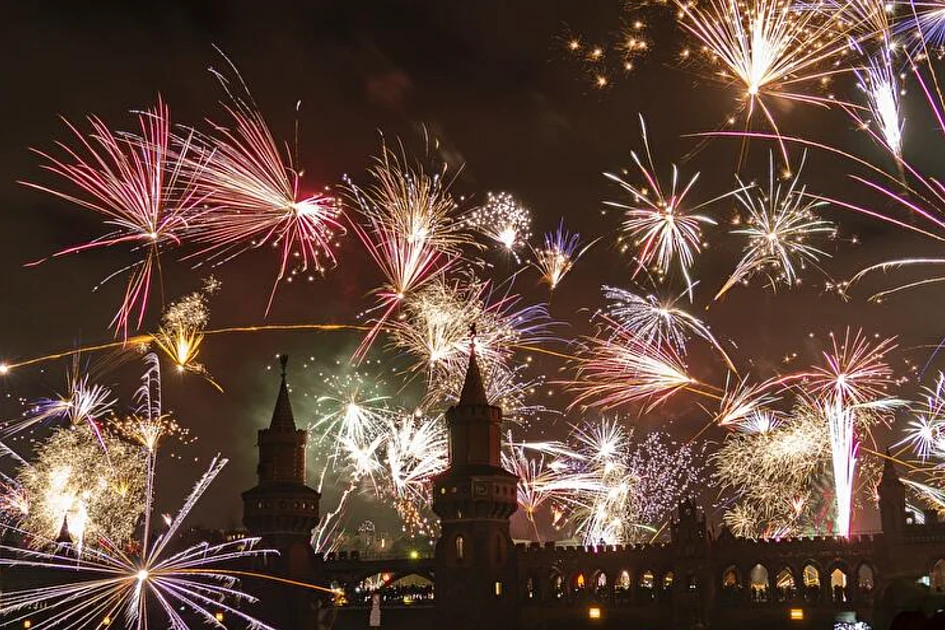
    As the world prepares to welcome 2026, nations are finalizing plans for distinctive celebrations that blend cultural heritage with contemporary festivities. Beyond the universal spectacle of fireworks illuminating skies across time zones, numerous countries will observe New Year’s Eve through rituals deeply rooted in their historical and spiritual traditions.

    In New York’s Times Square, organizers have planned an unprecedented double ball drop ceremony. The iconic descent will occur initially at 11:59 PM for its traditional sixty-second journey. However, in a historic departure from convention, a second descent will commence at 12:04 AM to commemorate the 250th anniversary of American independence. This special celebration will feature the sphere illuminated in patriotic red, white, and blue hues, accompanied by confetti showers and a pyrotechnic finale synchronized to Ray Charles’ “America the Beautiful.”

    Japan will maintain its ancient Buddhist practice of Joya no Kane, where temple bells resonate 108 times at midnight. This ritual symbolizes the purification of 108 human earthly desires and attachments. While typically performed by monks, some temples permit public participation in this profound spiritual cleansing ceremony.

    Rio de Janeiro will host the vibrant Festa de Iemanjá, honoring the African-derived deity regarded as queen of the oceans. Celebrants clad in white garments will gather along Copacabana Beach at midnight to perform ceremonial dances in the waters. Participants will leap over seven consecutive waves while articulating their aspirations for the forthcoming year, believing this act conveys their petitions to the oceanic divinity.

    London’s celebration will center around the precisely engineered mechanisms of Big Ben. The 166-year-old clock tower, maintained by three dedicated horologists requiring ear protection against its 115-decibel chimes, will mark midnight with astonishing accuracy. In 2025, the landmark’s strike registered within five-thousandths of a second of true midnight.

    Berlin will transform its historical Brandenburg Gate vicinity into what authorities are promoting as the “planet’s most extensive dance floor.” This complimentary techno celebration will accommodate 20,000 revelers across a stretch extending to the Victory Column, featuring 16 mobile sound systems and 100 DJs culminating in a seven-minute pyrotechnic display above the Quadriga statue.

  • A forgotten chapter: The stories of Allied POWs in Nagasaki during the atomic bombing

    A forgotten chapter: The stories of Allied POWs in Nagasaki during the atomic bombing

    Eight decades after the atomic devastation of Nagasaki, the overlooked narrative of Allied prisoners of war who endured both Japanese captivity and nuclear destruction is finally emerging through dedicated research and reconciliation efforts. On August 9, 1945, when the United States dropped the “Fat Man” plutonium bomb, hundreds of POWs from Allied nations were held in brutal camps across Nagasaki, their existence largely absent from historical accounts.

    Recent commemorations have brought together descendants of Dutch POWs and Japanese atomic bombing survivors, united in honoring all victims of that catastrophic day. The POWs, primarily Dutch servicemen captured in Indonesia, were transported via notorious “hell ships” to Nagasaki, where they were imprisoned at Fukuoka Camp No. 2 and Camp No. 14. According to the POW Research Network Japan, approximately 150,000 Allied prisoners were held across Asia during WWII, with 36,000 forcibly relocated to Japan to address wartime labor shortages.

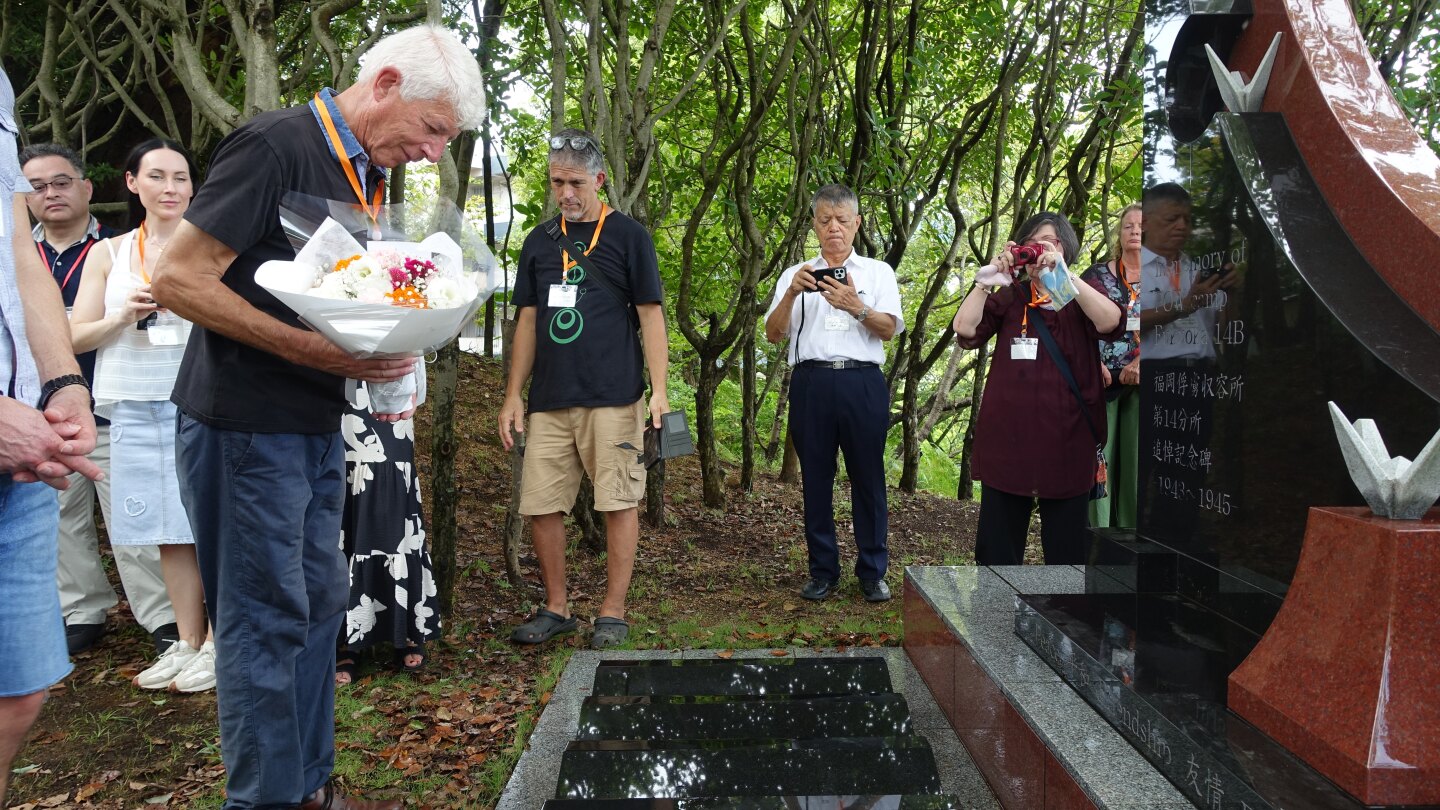
    The atomic impact varied dramatically between camps. Camp No. 2, situated approximately 10 kilometers from ground zero, experienced shattered windows and structural damage but no immediate fatalities. In stark contrast, Camp No. 14—located much closer to the epicenter—suffered complete destruction, resulting in eight POW deaths and dozens injured. Survivor accounts describe the terrifying moment of detonation: a colossal orange fireball, purple smoke, and the iconic triple-layer mushroom cloud.

    Post-war trauma extended far beyond physical injuries. Johan Willem Schram, a Dutch sailor imprisoned at Camp No. 2, returned to the Netherlands but remained emotionally scarred, feeling both Japan and his homeland had treated POWs with disrespect. His son Andre documented these experiences in “Johan’s Story,” highlighting the complex legacy of suffering and the need for genuine reconciliation.

    Despite Japanese laws providing medical support for certified atomic bombing survivors—currently numbering 99,000, down from 372,000 in 1980—only 11 former POWs (seven Dutch, three Australian, and one British) have received official recognition. Researchers like Taeko Sasamoto of the POW Research Network note that the issue has been “swept under the rug,” requiring meticulous examination of neglected historical documents.

    The recent granite monument in Nagasaki, featuring three inscribed panels, symbolizes growing efforts to acknowledge this dual tragedy. As Kazuhiro Ihara, whose father survived the bombing and dedicated himself to POW reconciliation, emphasizes: these commemorations represent a crucial step toward healing wounds that have persisted for generations.

  • Machu Picchu train crash leaves one dead and dozens injured

    Machu Picchu train crash leaves one dead and dozens injured

    A catastrophic head-on collision between two tourist trains on the single-track route to Machu Picchu has resulted in one fatality and at least 40 injuries, with approximately 20 victims reported in serious condition. The incident occurred Tuesday near the ancient Inca town, disrupting transportation to Peru’s most iconic UNESCO World Heritage site.

    According to local government authorities, emergency response teams deployed 20 ambulances to the rugged terrain surrounding the crash site between Ollantaytambo Station and Aguas Calientes. Medical personnel evacuated injured passengers to healthcare facilities in Cusco, though rescue operations faced significant challenges due to the difficult topography. Hundreds of tourists remained stranded at the scene awaiting evacuation, as reported by local media outlet Peru21.

    The U.S. Embassy in Peru confirmed American citizens were among those injured, though police have not yet released formal identification of victims. The involved trains were operated by rival companies PeruRail and Inca Rail, both providing service to the renowned archaeological site.

    PeruRail issued a statement expressing profound regret for the incident and confirming their staff provided immediate first aid to the train driver, conductor, and passengers. The exact cause of the collision remains under investigation.

    This tragedy occurs amidst ongoing disputes regarding transportation services to Machu Picchu, where local communities have raised concerns about insufficiently open bidding processes for lucrative transit contracts. The site’s limited accessibility creates highly profitable operations for approved transport providers, with ticket prices remaining steep for visitors.

    Built in the 15th century in the Peruvian Andes, Machu Picchu stands as one of the Seven Modern Wonders of the World. While officials implemented daily visitor caps in 2011 to address preservation concerns, the infrastructure supporting tourism continues to face scrutiny amid persistent worries about overtourism.

  • Eurostar to resume services after Channel tunnel power glitch; passengers warned

    Eurostar to resume services after Channel tunnel power glitch; passengers warned

    Eurostar services are gradually recommencing after a significant power supply malfunction within the Channel Tunnel caused widespread cancellations on December 30, 2025, during one of the busiest travel periods of the year. The technical fault, compounded by a separate failed LeShuttle freight train within the tunnel, led to the suspension of all cross-channel routes connecting London with Paris, Brussels, and Amsterdam.

    The operator confirmed a partial reopening of the tunnel mid-afternoon, with the first services resuming around 4:00 PM GMT. However, Eurostar issued a strong advisory for passengers to postpone non-essential travel due to the persistent overhead power issue, warning that all resumed services would be subject to severe delays and potential last-minute cancellations. The disruption even affected some continental routes not utilizing the tunnel, such as Paris-Brussels services.

    The incident created chaos at major terminals, including London’s St. Pancras and Paris’s Gare du Nord, where crowds of stranded travelers scrambled to find alternative arrangements. Passengers shared their frustrations with AFP correspondents, with many expressing disappointment over ruined New Year’s Eve plans. While some adopted a philosophical attitude toward the disruption, others desperately sought alternative transportation options, including flights and ferries, despite limited availability during the peak holiday season.

    This incident represents the latest in a series of operational challenges for Eurostar, which transported a record 19.5 million passengers in 2024. The monopoly holder of Channel Tunnel passenger services since 1994 now faces emerging competition from Richard Branson’s venture and Trenitalia’s planned Paris-London service by 2029. Previous disruptions include an electrical fault in August 2025 and cable theft in northern France that caused June service interruptions.