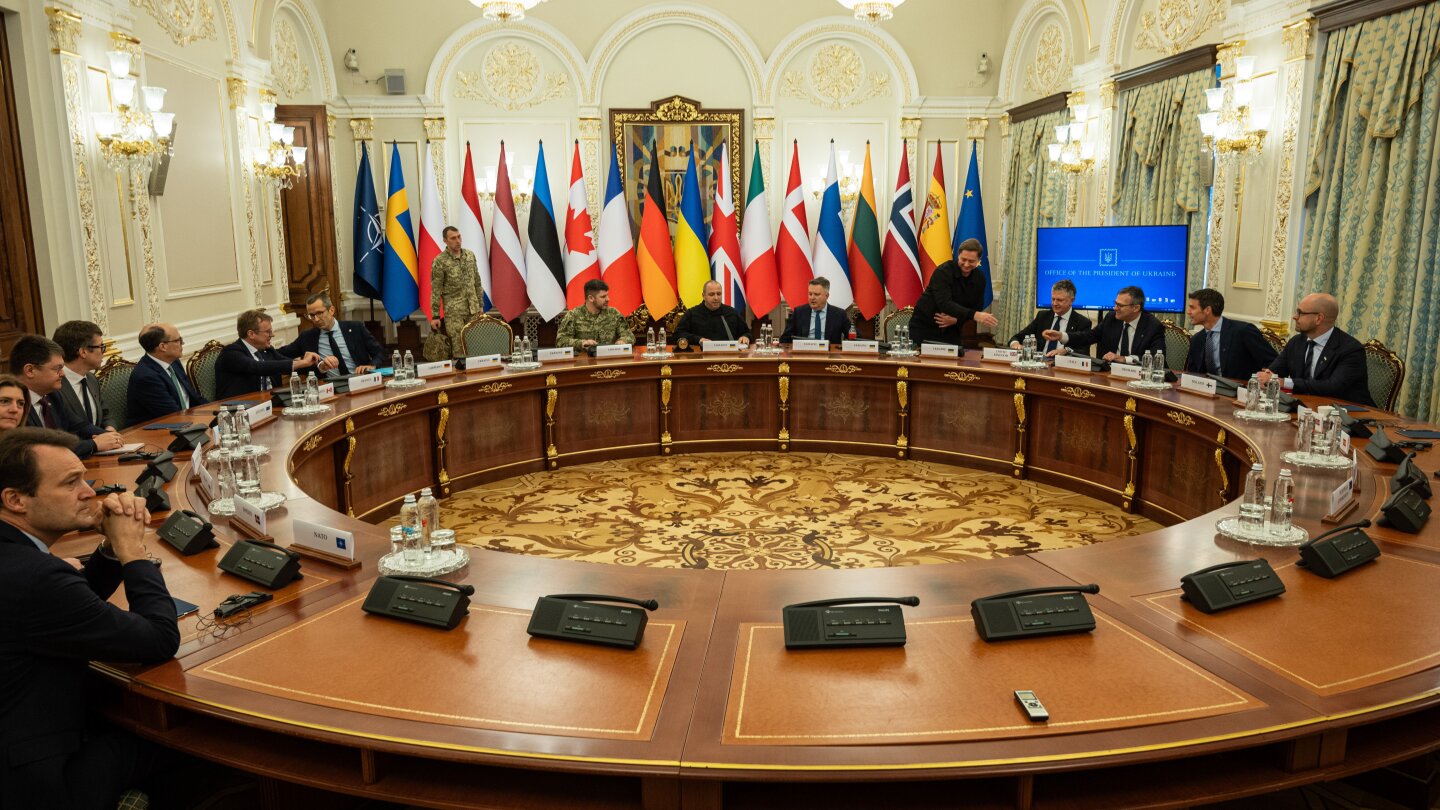
Saudi Crown Prince Mohammed bin Salman’s recent visit to Washington highlighted significant economic and military agreements with the United States, including a multi-billion-dollar investment pledge and the acquisition of F-35 fighter jets. However, the Crown Prince stopped short of fulfilling a long-standing U.S. aspiration: the formal normalization of relations between Saudi Arabia and Israel. This reluctance comes amid escalating regional tensions and Israel’s controversial military actions in Gaza, Lebanon, Yemen, Iran, Syria, and Qatar, which have sparked widespread anger across the Arab world. The Crown Prince emphasized the importance of a two-state solution as a prerequisite for any normalization, reflecting Saudi Arabia’s cautious approach to regional diplomacy. The Abraham Accords, brokered by the Trump administration, have seen several Arab nations, including the UAE, Bahrain, Morocco, and Sudan, establish formal ties with Israel. However, these agreements have faced criticism from Palestinians and other Arab states, particularly in light of Israel’s aggressive policies in occupied territories. Saudi Arabia’s stance underscores the complex geopolitical landscape of the Middle East, where historical grievances and ongoing conflicts continue to shape diplomatic relations.
作者: admin
-

Australian far-right senator wears burqa to parliament, sparking outrage
Australian far-right Senator Pauline Hanson has ignited widespread condemnation after wearing a burqa in Parliament as part of her campaign to ban the Muslim garment in public spaces. The controversial act occurred shortly after Hanson’s proposed bill to outlaw burqas and other full-face coverings was rejected by the Senate. Hanson’s stunt drew sharp criticism from fellow senators, who accused her of blatant racism and disrespect. The Senate chamber erupted in anger as Hanson entered wearing the burqa, leading to a suspension of proceedings when she refused to remove it. Mehreen Faruqi, a Greens senator from New South Wales, labeled Hanson’s actions as ‘racist,’ while independent Senator Fatima Payman from Western Australia called the move ‘disgraceful.’ Both Penny Wong, leader of the Labor government in the Senate, and Anne Ruston, deputy leader of the opposition coalition, condemned Hanson’s behavior, with Wong describing it as ‘not worthy of a member of the Australian Senate.’ Hanson, a Queensland senator and leader of the One Nation party, has a history of anti-immigration and anti-Islamic rhetoric. She previously wore a burqa in Parliament in 2017, advocating for a national ban. In a Facebook statement, Hanson defended her actions, claiming they were a protest against the Senate’s rejection of her bill and a call to highlight the ‘oppressive’ nature of the garment. Her One Nation party has gained traction in recent years, securing four Senate seats in the May general election amid rising support for far-right policies.
-

Saudi Arabia further eases alcohol restrictions according to residents
Saudi Arabia appears to have taken another step in relaxing its historically stringent alcohol restrictions, with reports indicating that certain foreign residents have successfully purchased alcohol from the kingdom’s sole liquor store. Initially opened in Riyadh in January 2024, the store was originally intended to serve only non-Muslim diplomats. However, premium visa holders have confirmed that the rules have been quietly adjusted to include them. One such resident shared, ‘I heard about it from friends who tried it. I went there two days ago and it actually worked. It saved me a lot of money rather than buying from the black market. Prices are reasonable, and we finally can buy alcohol.’ The premium resident status, introduced in 2019, is available to a select group of foreigners who meet specific criteria, including a one-time payment of 800,000 riyals ($213,000). While the Saudi government has not officially acknowledged this change, it signifies a notable shift in a country that has enforced a total alcohol ban since 1952. This ban was instituted following a tragic incident involving Prince Mishari bin Abdulaziz Al Saud and British diplomat Cyril Ousman, which led to the prince’s life imprisonment and the subsequent prohibition of alcohol. Under Crown Prince Mohammed bin Salman’s Vision 2030, Saudi Arabia has implemented several social reforms, including allowing women to drive, hosting public concerts, and opening cinemas. However, the loosening of alcohol restrictions may provoke backlash from conservative Muslims who view its consumption as forbidden by Islamic law. Historically, alcohol consumption in Saudi Arabia has been punishable by fines, imprisonment, public flogging, and deportation for foreigners. This latest development reflects the kingdom’s ongoing efforts to modernize its society while balancing traditional values.
-

Abu Dhabi T10: Quetta Qavalry first team to qualify for playoffs
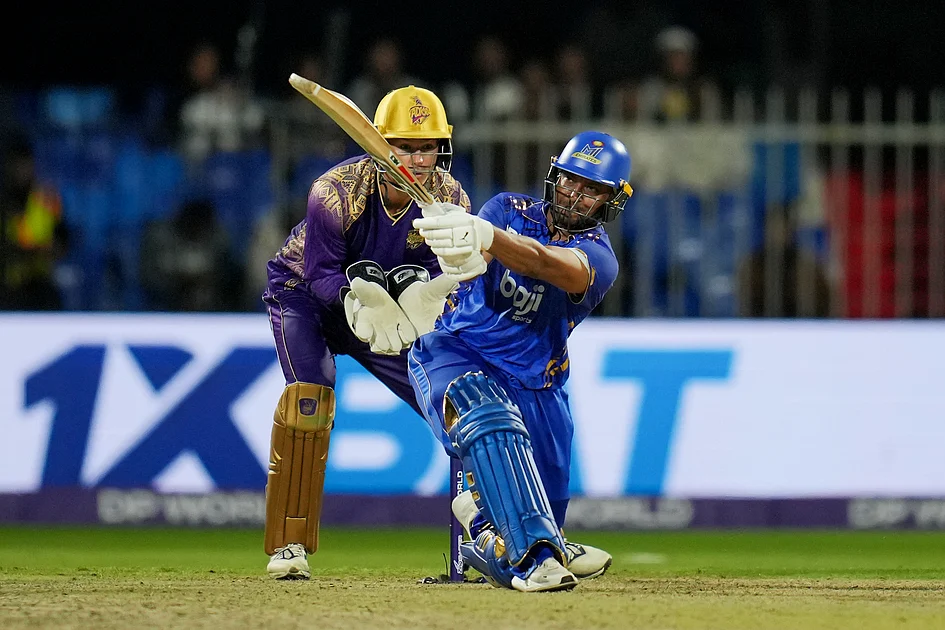
The 2025 Abu Dhabi T10 tournament has reached its midway point, and Quetta Qavalry has emerged as the first team to secure a playoff berth. With an impeccable five-match winning streak, Qavalry has accumulated 10 points and boasts an exceptional Net Run Rate (NRR) of 4.00, setting a high standard for excellence in cricket’s fastest format. Their dominant performance has solidified their position among the tournament’s top four teams. Meanwhile, the race for the remaining three playoff spots remains fiercely competitive. Vista Riders currently hold second place with six points from four matches, while UAE Bulls, Ajman Titans, Deccan Gladiators, and Northern Warriors are locked in a tight battle, each tied on four points. Aspin Stallions, with two points, still have a slim chance, while Royal Champs face a daunting challenge after four consecutive losses. The tournament has also showcased remarkable individual performances. Northern Warriors’ Johnson Charles leads the run charts with 204 runs, while Deccan Gladiators’ Tom Kohler-Cadmore has been equally explosive, scoring 151 runs, including a stunning 78 off 29 balls. Quetta Qavalry’s Khwaja Nafay remains undefeated this season with 144 runs and 12 sixes. On the bowling front, Aspin Stallions’ Zohair Iqbal leads with nine wickets, closely followed by Qavalry’s Khuzaima Tanveer and Vista Riders’ Andrew Tye, each with seven wickets. The Abu Dhabi T10 continues to deliver thrilling cricket, with 34 matches scheduled over two action-packed weeks.
-

British columnist Melanie Phillips lashes out at Palestinians at pro-Israel NYC event
British columnist and broadcaster Melanie Phillips has ignited a firestorm of controversy with her recent remarks at the ‘Rage Against the Hate’ conference held at the Museum of Jewish Heritage in New York City. Organized by Shurat HaDin, an Israeli legal organization known for its efforts to counter international law violations by the Israeli government, the event aimed to unite Jewish and pro-Israeli activists globally. During her twenty-minute speech, Phillips made several contentious statements, including the assertion that ‘there is no such thing as the Palestinian people’ and that only Jewish people have a legitimate claim to historic Palestine. She argued that the Jewish people are the indigenous inhabitants of the land and possess an entitlement rooted in law, history, and morality. Phillips also criticized the West for what she described as a ‘death wish’ in the face of what she termed a ‘death cult’ within the forces of Islam. She accused the Palestinian cause of being a ‘holy war’ and a ‘Trojan Horse for the Islamisation of the West,’ suggesting that the West is complicit in its own destruction. Phillips’ speech drew sharp criticism, particularly for her historical comparisons and her previous writings on Islamophobia, which have been labeled as antisemitic by some Jewish organizations. Her remarks have reignited debates over the Israeli-Palestinian conflict and the broader implications of her views on international relations and religious tolerance.
-

UK government prepares to defend ban on Palestine Action in judicial review
In a dramatic escalation of counter-terrorism measures, the UK government’s proscription of Palestine Action has led to widespread arrests and legal challenges. Since the ban was enacted four months ago, over 2,000 individuals—including teachers, students, clergy, and activists—have been detained under sections 12 and 13 of the Terrorism Act. Many were arrested for merely holding signs expressing opposition to genocide and support for Palestine Action, raising concerns about the erosion of civil liberties.
-

Haytham Ali Tabatabai: The Hezbollah commander who cut his teeth in Syria and Yemen
In a significant escalation of tensions, Israel conducted its first strike on Beirut since June, targeting and killing Haytham Ali Tabatabai, Hezbollah’s most senior military figure. This marks the highest-ranking Hezbollah official to be eliminated since the ceasefire in Lebanon was established a year ago. Tabatabai, also known as Abu Ali, had risen through the ranks to become Hezbollah’s top military chief after Israel decimated much of the group’s senior leadership. During last year’s conflict, he headed Hezbollah’s operations division and was later appointed chief of staff following the ceasefire. Hezbollah mourned him as a foundational leader who ensured the group’s strength and victories. The Israeli military stated that Tabatabai had been instrumental in restoring Hezbollah’s readiness for war. Born of Iranian and Lebanese descent, Tabatabai joined Hezbollah in the 1980s, holding various senior positions, including leadership of the elite Radwan Force. He played a pivotal role in military operations against Israel since the 1990s, including the 2006 war, and later oversaw Hezbollah’s interventions in Yemen and Syria. The US had designated him a terrorist in 2016, offering a $5 million reward for information. His assassination has sparked warnings from Hezbollah, with the group’s executive council head, Ali Damoush, stating that Israel had made a grave mistake. The strike, which hit a densely populated area in Beirut’s southern suburbs, killed five and wounded 28. Lebanese security analyst Ali Rizk views this as part of a broader Israeli escalation, highlighting Israel’s intelligence superiority and its strategy to weaken Hezbollah without engaging in full-scale war. Recent weeks have seen increased Israeli operations in Lebanon, with over 300 killed since the ceasefire, including civilians. Israel’s actions, including occupying strategic positions and conducting daily raids, aim to prevent Hezbollah from rebuilding its military capabilities. Despite Hezbollah’s reduced arsenal and leadership losses, Israeli officials remain cautious of the group’s potential to inflict damage. Rizk concludes that Israel seeks unrestrained operational freedom in Lebanon, mirroring its actions in southern Syria.
-

Social media accounts linked to Sudan’s RSF are based in the UAE
A recent investigation by Middle East Eye has uncovered that several social media accounts associated with Sudan’s Rapid Support Forces (RSF) appear to be operating from the United Arab Emirates (UAE). The discovery comes as X, formerly known as Twitter, introduced a new feature allowing users to identify the location and region from which accounts connect to the platform. This feature revealed that numerous accounts linked to the RSF and its affiliated institutions, including the interior ministry of the Government of Peace and Unity—a parallel administration backed by the RSF—are based in the UAE. Notably, Gony Mustafa Abubakr Sharif, the RSF’s representative at the United Nations, also operates his account from the Emirates. Additionally, accounts for the foreign affairs ministry and the prime minister’s office of the parallel government are connected from ‘West Asia,’ a region encompassing the Middle East but excluding Sudan. While some users claim these accounts previously displayed UAE as their location before switching to ‘West Asia,’ this remains unverified. The investigation also highlighted that Faris El-Nur, an RSF adviser, and Ibrahim El-Mirghani, a Sudanese politician supporting the RSF, operate their accounts from the UAE, despite listing their locations as the UK and Sudan, respectively. The UAE’s involvement extends beyond social media, with reports indicating the country has been supplying the RSF with weapons through a complex network spanning Libya, Chad, Uganda, and Somalia. US intelligence agencies have also noted an increase in UAE’s provision of Chinese drones and other weapon systems to the RSF. Despite these allegations, the UAE denies any involvement in supporting the RSF. The ongoing conflict in Sudan, which began in April 2023, has seen both the RSF and the Sudanese Armed Forces accused of widespread atrocities, including war crimes and genocide in Darfur.
-

Pakistan: Rooftop solar output to exceed grid demand in some hubs next year
Pakistan is poised to witness a groundbreaking shift in its energy landscape as rooftop solar generation is expected to surpass grid-linked power demand during daytime hours in several major industrial regions by next year. This development, highlighted by Aisha Moriani, Secretary of Pakistan’s Climate Change Ministry, underscores the nation’s rapid adoption of solar energy, driven by power cuts, tariff hikes, and a growing emphasis on sustainability. The surge in solar panel installations has not only reduced emissions and power bills but also disrupted the financial stability of debt-laden electric utilities due to declining grid demand. Regions such as Lahore, Faisalabad, and Sialkot, known for high solar penetration, are likely to experience ‘negative demand’ during peak solar output periods, particularly on bright summer afternoons and industrial holidays. Pakistan, now the world’s third-largest solar panel importer, is also renegotiating LNG contracts with Qatar and Italy’s Eni to align its energy strategy with fiscal constraints and seasonal demand patterns. The government is introducing new tariffs and fee structures to ensure large solar users contribute equitably to grid maintenance. While grid-linked power demand is projected to grow modestly this year, the increasing reliance on solar energy could significantly impact future consumption trends. Pakistan’s challenge lies in evolving its grid infrastructure, regulations, and market design to keep pace with the rapid growth of renewable energy.
-

BBC is not ‘institutionally biased’, says author of critical memo
The BBC has been exonerated from claims of institutional bias by the very author of a damning report that had previously thrown the broadcaster into turmoil. Michael Prescott, a former editorial adviser, compiled a comprehensive dossier highlighting several issues within BBC News, including mishandling in the editing of a Trump speech, accusations of bias in its coverage of the Israel-Hamas conflict, and contentious reporting on transgender issues. Despite the severe repercussions of the leaked report—which led to the resignations of Director General Tim Davie and head of news Deborah Turness, as well as a $5 billion lawsuit threat from former President Trump—Prescott maintains that the BBC is not inherently biased. Speaking to a committee of lawmakers, Prescott acknowledged the BBC’s world-class factual and non-factual programming and praised its political reporting from Westminster. He emphasized that his memo was intended to address systemic issues and spur improvements, not to condemn the institution. Prescott also shared his findings with the Department of Media and Ofcom, the media regulator, to ensure the corporation could better handle bias-related concerns.