作者: admin

  • UAE: Can insurance deny car repair coverage after heavy rain damage?

    UAE: Can insurance deny car repair coverage after heavy rain damage?

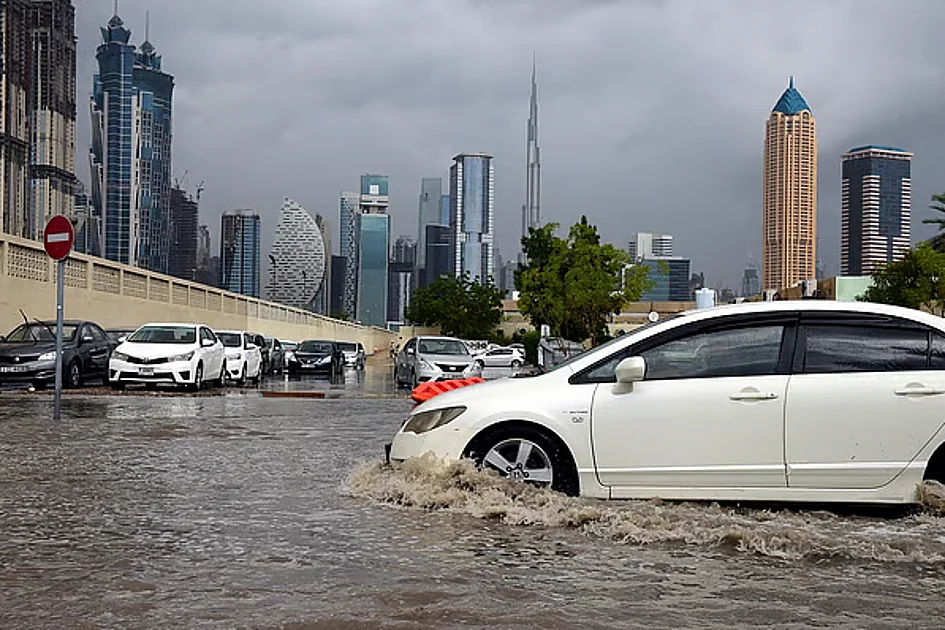
    Recent heavy rainfall across the United Arab Emirates has prompted numerous vehicle insurance inquiries, particularly regarding claim denials for rain-related damages. Under UAE insurance regulations, the legality of such denials depends entirely on policy specifications and established legal frameworks.

    The insurance landscape for motor vehicles operates under the Unified Motor Vehicle Insurance Policy Against Loss and Damage, implemented through the Insurance Authority Board of Directors’ Decision No. (25) of 2016 and currently administered by the Central Bank of the UAE. This comprehensive regulatory structure defines insurer obligations and permissible exclusions.

    Policy type constitutes the primary determinant of coverage eligibility. Comprehensive motor insurance typically covers damage resulting from external causes, including weather incidents, while third-party liability policies exclusively address damages to other vehicles and property, offering no protection for the policyholder’s own vehicle.

    Article 1026 of the Federal Law No. (5) of 1985 Concerning the Civil Transactions Law establishes that insurance represents a binding contractual agreement wherein the insurer assumes obligation to compensate losses according to expressly agreed risks, terms, and conditions upon premium payment.

    Chapter Four of the Unified Policy outlines specific circumstances permitting legitimate claim denial. Exclusions include deliberate acts by the insured, intentional damage, unauthorized vehicle usage (such as racing or testing), operation by unlicensed drivers, usage beyond geographical limits, and failure to implement reasonable preventive measures against damage.

    While rainfall damage isn’t explicitly enumerated among exclusions, insurers may deny claims if policy documents contain specific clauses excluding weather-related incidents, flooding, or natural disasters. Additionally, demonstrated negligence during the incident could justify refusal.

    Policyholders possessing comprehensive coverage without applicable exclusions should typically receive compensation for rain damage claims. Those facing unjustified denials may escalate matters through the Insurance Dispute Resolution Committee of the Central Bank of the UAE, accessible via the Sanad/Sandak platform.

    The fundamental principle remains that insurance claim validity hinges on policy specifications rather than blanket acceptance or rejection of weather-related damages. Consumers should thoroughly review policy documents and understand coverage limitations before filing claims.

  • A taste of Hainan: From dawn to midnight

    A taste of Hainan: From dawn to midnight

    Beyond its tropical beaches and resort landscapes, China’s Hainan Island reveals its true cultural essence through a distinctive culinary tapestry that unfolds across the day. From the break of dawn to midnight hours, the island’s food culture represents more than mere sustenance—it embodies a complete lifestyle philosophy deeply interwoven with local traditions.

    The culinary journey begins at sunrise with Hainan’s signature breakfast: a bowl of authentic Hainan rice noodles. This morning staple, known locally as ‘Hainan fen,’ features delicate rice noodles served in a complex broth derived from hours of simmering pork bones and seafood, typically accompanied by slices of tender meat, fresh herbs, and pickled vegetables.

    As the day progresses, residents and visitors alike gravitate toward the island’s characteristic ‘laobacha’ teahouses. These establishments represent the heart of Hainan’s social fabric, where people gather to enjoy strong, locally-grown tea alongside casual conversation. These teahouses function as community hubs where news is exchanged, business connections are made, and the pace of life deliberately slows to match the island’s tropical rhythm.

    When night falls, Hainan’s food scene transforms yet again with the emergence of ‘qingbuliang’ as the preferred evening refreshment. This colorful dessert soup combines an assortment of fresh tropical fruits, chewy tapioca pearls, jelly cubes, and coconut milk served over shaved ice—creating a refreshing counterpoint to the island’s humid evenings.

    What distinguishes Hainan’s culinary landscape is its seamless integration of food with cultural identity. Each meal reflects the island’s geographical advantages—abundant seafood from the surrounding waters, tropical fruits from inland orchards, and agricultural products grown in the volcanic soil of the island’s interior. The food culture demonstrates how Hainan has developed its unique gastronomic traditions while maintaining Chinese culinary fundamentals.

    This daily culinary rhythm has become increasingly attractive to tourists seeking authentic experiences beyond conventional beach activities. Food tourism now represents a significant aspect of Hainan’s appeal, with visitors specifically planning their itineraries around these distinctive eating experiences that showcase the island’s cultural heritage and relaxed approach to living.

  • From sunrise to starlight: A day in Hainan

    From sunrise to starlight: A day in Hainan

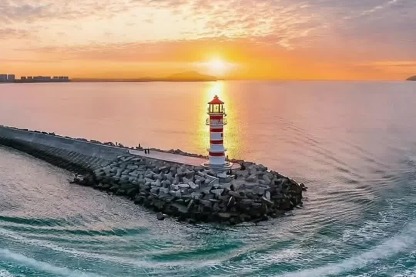
    The tropical island province of Hainan unveils a daily spectacle of natural beauty that transforms ordinary hours into extraordinary experiences. From the first golden rays illuminating the eastern coastline to the celestial tapestry that emerges over palm-fringed shores after dusk, this island paradise offers a continuous visual symphony that engages both senses and spirit.

    At daybreak, the sun emerges from the South China Sea, casting shimmering pathways across the waters while local fishermen begin their daily routines against this breathtaking backdrop. As morning progresses, the island’s diverse landscapes awaken—dense coconut groves sway in gentle breezes, mountainous rainforests echo with wildlife, and pristine beaches await the day’s first footprints.

    Noon brings vibrant intensity to Hainan’s scenery, with sunlight highlighting the vivid greens of tropical vegetation and the azure clarity of coastal waters. Throughout the afternoon, visitors discover the island’s varied attractions from volcanic formations to cultural sites, all set within a lush natural panorama.

    As evening approaches, Hainan undergoes its most dramatic transformation. Sunset paints the western shores in fiery hues, gradually giving way to one of the island’s most remarkable features—exceptionally clear night skies. With minimal light pollution, countless stars become visible, creating astronomical displays that captivate both amateur stargazers and professional photographers.

    This daily cycle of natural wonders has established Hainan as more than just a tropical destination; it represents a sanctuary where time seems to slow, allowing visitors to fully immerse themselves in moments of tranquil beauty and profound natural connection.

  • Swiss identify 24 victims of New Year fire at ski resort

    Swiss identify 24 victims of New Year fire at ski resort

    Swiss authorities have made significant progress in identifying victims of the catastrophic New Year’s Eve fire that ravaged a popular bar in the luxury ski resort of Crans-Montana, with 24 of the 40 deceased individuals now formally identified. The devastating blaze, which also left 119 people injured with severe burns, has plunged Switzerland into a state of collective mourning.

    Among the confirmed victims are 11 minors and six foreign nationals, including two 16-year-old Italians, a 39-year-old French citizen, and teenagers holding dual Italian-Emirati, Romanian, and Turkish citizenship. Swiss nationals accounted for the majority of those identified, with victims ranging from 14 to 31 years old. The international scope of the tragedy became evident as injured parties included citizens from France, Italy, Serbia, Belgium, Bosnia, Luxembourg, Poland, and Portugal.

    Investigative authorities have launched a criminal probe against the bar’s French owners, Jacques and Jessica Moretti, charging them with negligent manslaughter, negligent bodily harm, and negligent arson. Preliminary investigations suggest the fire originated from sparklers attached to champagne bottles that ignited highly flammable soundproofing foam on the ceiling, potentially causing a flashover that rapidly engulfed the crowded basement venue.

    The resort community has been enveloped in grief as hundreds of mourners participated in memorial services, braving subzero temperatures to pay respects at a chapel near the disaster site. Religious leaders including Bishop Jean-Marie Lovey of Sion and Pastor Gilles Cavin emphasized the need for compassion and solidarity with affected families, many of whom lost young apprentices, students, and children in their prime.

    Switzerland has declared January 9 a national day of mourning, with church bells scheduled to ring across the country followed by a moment of silence. The tragedy has raised serious questions about safety compliance in entertainment venues, with video evidence showing partygoers desperately attempting to escape through windows as flames spread with alarming speed. Despite the owners’ claims of adhering to safety norms, the investigation will thoroughly examine whether proper safety standards were maintained at the establishment, which reportedly had a capacity of 300 people plus additional terrace seating.

  • French owners of Swiss bar under scrutiny after New Year blaze

    French owners of Swiss bar under scrutiny after New Year blaze

    A devastating fire that erupted during New Year’s celebrations at Le Constellation bar in the Swiss alpine resort of Crans-Montana has resulted in 40 fatalities and 119 injuries, prompting a criminal investigation into the French proprietors. Jacques and Jessica Moretti, initially questioned as witnesses, now face formal scrutiny for alleged negligence following the catastrophic incident.

    Preliminary findings suggest the blaze originated in the establishment’s basement where smoldering candles affixed to champagne bottles were positioned dangerously close to the ceiling. The rapid ignition of acoustic insulating foam covering the basement ceiling exacerbated the tragedy, while chaotic scenes of crowding and pushing on stairwells hampered evacuation efforts.

    The Valais cantonal prosecutor has launched a criminal inquiry for negligent homicide, negligent bodily harm, and negligent arson. Investigators will examine renovation work conducted in 2015, materials used throughout the property, operational permits, and compliance with Swiss safety regulations requiring clearly marked exit routes and doors that open outward.

    The Morettis, who acquired Le Constellation in 2015 after previously operating a bar in Corsica’s port town of Bonifacio, expanded their business portfolio with two additional establishments in the region. Despite character references describing Jacques Moretti as a ‘hard worker’ and ‘friend of the resort,’ the couple now confronts intense legal examination.

    Prosecutor Beatrice Pilloud emphasized that while suspicions warranted investigation, the presumption of innocence remains paramount until conclusive evidence emerges. The investigation will determine whether the case proceeds to trial or is dismissed, with no pretrial detention currently imposed on the owners.

  • South Korea holds emergency meeting as North Korea fires ballistic missiles towards sea

    South Korea holds emergency meeting as North Korea fires ballistic missiles towards sea

    South Korea convened an urgent national security council session on Sunday morning following confirmation that North Korea had launched multiple ballistic missiles toward the Sea of Japan. The projectiles were fired from Pyongyang’s vicinity at approximately 7:50 AM local time, marking Pyongyang’s first weapons test in two months.

    The strategic timing coincides with South Korean President Lee Jae Myung’s commencement of a state visit to China, where discussions regarding Korean Peninsula stability were slated to dominate the diplomatic agenda. South Korea’s Joint Chiefs of Staff immediately enhanced surveillance protocols and maintained heightened vigilance against potential additional launches, while coordinating intelligence sharing with United States and Japanese counterparts.

    Japanese defense authorities confirmed the missiles had landed in offshore waters without impacting territorial boundaries. This demonstration of military capability follows North Korean leader Kim Jong Un’s recent directive to dramatically expand tactical weapons production capacity during his Saturday inspection of munitions facilities. Kim has conducted an extensive tour of weapons manufacturing sites and nuclear submarine installations in recent weeks, with all developments strategically timed ahead of the Workers’ Party’s Ninth Party Congress where critical policy objectives will be established.

    The geopolitical implications are particularly significant given President Lee’s concurrent meetings with Chinese President Xi Jinping. Security advisor Wi Sung-lac indicated Seoul’s expectations for Beijing to assume an active role in fostering regional peace, though specific agenda details remained undisclosed. Regional analysts suggest Lee’s diplomatic mission aims to enlist China as intermediary for renewed dialogue with North Korea, despite Pyongyang’s previous dismissals of Seoul’s overtures.

  • National railways carry 4.255 billion passenger trips in 2025

    National railways carry 4.255 billion passenger trips in 2025

    China’s national railway system demonstrated remarkable operational capacity throughout 2025 by transporting approximately 4.255 billion passenger trips, according to official data released in early January 2026. This substantial volume represents a significant 4.2 percent increase compared to the previous year’s passenger traffic, underscoring the continued expansion and modernization of the country’s transportation infrastructure.

    The consistent growth in railway patronage reflects several key developments within China’s transit network, including the ongoing expansion of high-speed rail services, improved connectivity between urban and rural areas, and enhanced service quality across conventional rail lines. The railway administration has implemented numerous technological upgrades and operational improvements to accommodate the growing demand for rail travel among both domestic commuters and long-distance travelers.

    This upward trajectory in passenger numbers occurs alongside China’s broader initiatives to develop comprehensive, environmentally sustainable transportation systems. Railway transportation remains a cornerstone of the country’s strategy to reduce carbon emissions from the transportation sector while providing efficient mobility solutions for its massive population.

    The 2025 performance data indicates a strong recovery and expansion of travel and economic activities following previous years of global transportation challenges. The reliable and extensive rail network continues to serve as a critical component of China’s economic infrastructure, facilitating business travel, tourism, and interregional connectivity across the nation.

  • North Korea fires ballistic missiles in first test of 2026

    North Korea fires ballistic missiles in first test of 2026

    In a significant escalation of regional military tensions, North Korea launched multiple ballistic missiles from its eastern coast on Sunday morning, marking its first weapons test of 2026. The launch occurred amidst heightened geopolitical sensitivities following recent U.S. military operations in Venezuela and ahead of crucial diplomatic meetings in the region.

    According to South Korea’s Defense Ministry, several projectiles—presumed to be ballistic missiles—were detected originating from areas near Pyongyang at approximately 7:50 am local time (2250 GMT Saturday). The missiles traveled approximately 900 kilometers (559 miles) before landing in waters off the Korean Peninsula’s eastern coastline. South Korean and United States intelligence agencies immediately commenced joint analysis of the missiles’ technical specifications while maintaining maximum defensive readiness.

    The timing of this provocation appears strategically calculated, occurring merely hours before South Korean President Lee Jae Myung’s scheduled departure for Beijing to discuss inter-Korean relations with Chinese President Xi Jinping. Additionally, the test follows closely after U.S. military operations in Venezuela that resulted in the removal of President Nicolas Maduro—an action that North Korean leadership perceives as validating their long-standing fears of American-led regime change operations.

    Pyongyang’s Foreign Ministry issued a formal statement condemning the Venezuela operation as a “serious encroachment of sovereignty” and characterizing it as confirmation of “the rogue and brutal nature of the U.S.” This perspective aligns with North Korea’s historical justification for its nuclear and missile programs as essential deterrents against perceived American aggression.

    Japanese defense authorities confirmed detecting two projectiles reaching altitudes of 50 kilometers with flight distances of 900 and 950 kilometers respectively. Defense Minister Shinjiro Koizumi denounced the development as “absolutely intolerable,” emphasizing that North Korea’s weapons programs threaten regional and international stability.

    Analysts suggest the missile test serves multiple strategic purposes: demonstrating military capabilities amid heightened tensions, testing weapons potentially destined for Russian markets, and signaling resolve ahead of North Korea’s first ruling party congress in five years. Recent reports indicate leader Kim Jong Un has personally overseen the expansion of missile production capabilities, ordering a 250 percent increase in manufacturing capacity during a factory inspection this week.

  • UAE weather: Alerts issued for fog; dusty skies likely

    UAE weather: Alerts issued for fog; dusty skies likely

    The United Arab Emirates’ National Centre of Meteorology (NCM) has activated multiple weather warnings affecting various regions across the country. A significant red alert remains in effect for dense fog conditions, substantially reducing visibility until 10 AM Sunday morning. Concurrently, yellow alerts have been issued for several areas experiencing vigorous northwesterly winds reaching speeds of 45 kilometers per hour.

    Mariners have been cautioned about hazardous sea conditions in the Arabian Gulf, where offshore wave heights could surge up to seven feet. This yellow alert status persists until 1 PM on Sunday, January 4th. Despite these weather disturbances, temperatures throughout the UAE are forecast to maintain moderate levels, with maximum readings not exceeding 29°C. Major urban centers will experience cooler conditions, with Dubai anticipating an overnight low of 15°C and Abu Dhabi dropping to 18°C.

    Atmospheric conditions are predicted to feature dusty to partially overcast skies throughout Sunday. Meteorological officials additionally project increased humidity levels during nighttime hours extending into Monday morning, particularly affecting eastern interior regions. These conditions may create additional visibility challenges and affect road conditions in susceptible areas.

    The NCM continues to monitor atmospheric developments closely and advises residents to exercise caution during reduced visibility periods, especially during early morning travel. Maritime activities are discouraged in affected coastal zones until weather patterns stabilize.

  • Trump’s plan to seize and revitalize Venezuela’s oil industry faces major hurdles

    Trump’s plan to seize and revitalize Venezuela’s oil industry faces major hurdles

    The prospect of US-led revitalization of Venezuela’s crippled oil industry following military actions against Nicolás Maduro’s regime presents a complex scenario with limited immediate market impact. While possessing the world’s largest proven crude reserves at approximately 303 billion barrels, Venezuela’s current production languishes at just 1.1 million barrels daily – a dramatic decline from its 1999 peak of 3.5 million barrels due to years of systemic corruption, mismanagement, and international sanctions.

    Energy analysts emphasize that infrastructure decay represents merely one challenge in resurrecting Venezuela’s oil sector. Patrick De Haan, lead petroleum analyst at GasBuddy, notes that while physical infrastructure escaped recent military actions unscathed, it has been deteriorating for decades and requires substantial reconstruction time.

    The political landscape remains equally problematic. American energy corporations demand regime stability before committing significant investment, yet Venezuela’s leadership situation remains volatile. Current Vice President’s claim to power, the high court’s intervention, and competing narratives about legitimate governance create precisely the uncertainty that deters foreign capital.

    Phil Flynn, senior market analyst at Price Futures Group, suggests that demonstrated US control over the next 24-48 hours could generate optimism about rapid industry revitalization. Such development could potentially enable Venezuela to double or triple production, ultimately applying downward pressure on global oil prices and reducing reliance on Russian energy.

    However, Francisco Monaldi, director of Rice University’s Latin American energy program, projects a more realistic timeline: approximately a decade and $100 billion in investment would be required to boost production to four million barrels daily. Legal complications surrounding resource ownership and contract enforcement under occupation add further uncertainty, with Columbia University law professor Matthew Waxman highlighting potential violations of international law regarding resource appropriation.

    Despite these challenges, Venezuela’s heavy crude remains particularly valuable for diesel production and heavy equipment fuels – commodities currently in global short supply due to sanctions. Gulf Coast refineries, specifically optimized for processing such crude, would benefit significantly from renewed Venezuelan production.