作者: admin

  • UAE: New ‘security dome’ to increase safety on RAK roads

    UAE: New ‘security dome’ to increase safety on RAK roads

    Ras Al Khaimah Police have launched a groundbreaking public safety initiative called the Integrated Security Dome Project, representing one of the emirate’s most ambitious technological transformations. This sophisticated system employs cutting-edge surveillance technologies and advanced data analytics to create a comprehensive security network across the region’s roads and critical areas.

    The innovative platform operates through a unified digital interface that integrates and analyzes data from multiple operational processes. This interconnected approach enables authorities to predict potential risks, enhance proactive security measures, and significantly improve emergency response capabilities across all police departments. The system’s design incorporates both local and international policing best practices, aligning with the UAE’s broader digital transformation objectives and the national ‘We the UAE 2031’ vision.

    Brigadier Dr. Tareq Mohammed bin Saif, Director-General of Police Operations, emphasized the project’s strategic importance in supporting decision-making processes and building institutional resilience against evolving criminal methodologies. The implementation followed carefully structured phases within a comprehensive operational framework that includes strategic planning, intelligence gathering, governance principles, and risk management protocols.

    This technological advancement aims to achieve national targets for criminal and traffic safety indicators while reinforcing security for all community segments. The integrated platform facilitates unprecedented coordination among criminal, traffic, and operational police teams, potentially establishing new standards for smart security ecosystems in the region.

  • Surgery ‘not good option’ for Malaysia’s 100-year-old ex-PM Mahathir: Son

    Surgery ‘not good option’ for Malaysia’s 100-year-old ex-PM Mahathir: Son

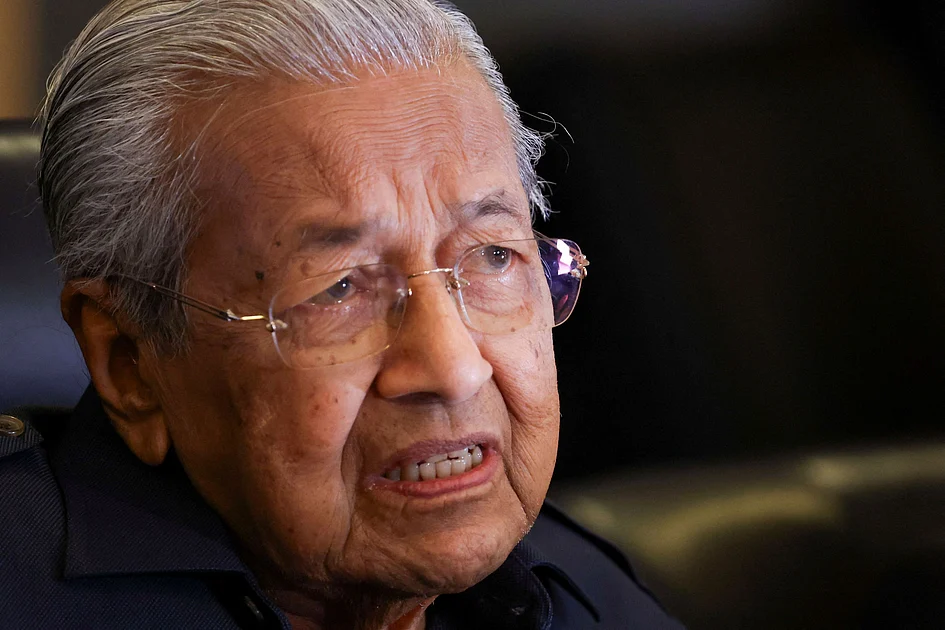
    Malaysia’s former Prime Minister Mahathir Mohamad, who recently celebrated his 100th birthday, will pursue non-surgical treatment for a hip fracture sustained during a fall at his residence. The medical decision was confirmed by his son Mukhriz Mahathir on Wednesday, citing advanced age as the primary factor against surgical intervention.

    The incident occurred Tuesday when the veteran statesman fell inside his home following his routine brisk walking exercise. He was transported conscious via ambulance to Kuala Lumpur’s National Heart Institute, where physicians diagnosed a fracture to his right hip.

    Medical specialists have recommended a comprehensive rehabilitation protocol instead of surgical options, acknowledging the heightened risks associated with invasive procedures for centenarian patients. The recovery process is expected to require several weeks of hospitalization for treatment and observation.

    Mukhriz Mahathir stated via a video message distributed through his political party’s communications: ‘Considering his remarkable age of 100 years, surgical intervention presents substantial challenges. The medical team has advised a standardized rehabilitation approach that will necessitate considerable time.’

    The family expressed gratitude for the public’s concern while respectfully requesting privacy during the recovery period. Daughter Marina Mahathir provided reassurance through national media, characterizing the injury as ‘serious but not dangerous,’ while acknowledging the particular severity of fractures at extreme advanced age.

    Mahathir Mohamad’s medical history includes previous cardiac bypass procedures. The nonagenarian leader made history as the world’s oldest elected official during his second premiership from 2018-2020, following his initial landmark tenure from 1981-2003 that transformed Malaysia’s economic landscape.

  • Millions celebrate Orthodox Christmas on Jan. 7, following ancient traditions

    Millions celebrate Orthodox Christmas on Jan. 7, following ancient traditions

    Across the globe, millions of Orthodox Christians commemorated Christmas on January 7th, creating a distinctive celebration pattern that occurs nearly two weeks after Western Christian observances. This temporal divergence stems from deep historical roots in calendar systems that continue to shape religious practices worldwide.

    The chronological discrepancy originates from the adherence of certain Eastern Orthodox churches—including Russian, Serbian, Georgian, and some Ukrainian traditions—to the ancient Julian calendar. This system runs thirteen days behind the Gregorian calendar adopted by Catholic, Protestant, and most secular societies. Meanwhile, the Ethiopian Orthodox Church and various Oriental Orthodox communities, while distinct from Eastern Orthodoxy, similarly celebrated on January 7th, sharing many liturgical traditions despite their separate ecclesiastical histories.

    This complex calendrical landscape emerged from sixteenth-century reforms when Pope Gregory XIII introduced a revised system to correct astronomical inaccuracies in the Julian calendar. While Western Christian denominations and secular governments gradually adopted the Gregorian system, Eastern Orthodox communities maintained divergent approaches. In 1923, an inter-Orthodox gathering proposed a revised Julian calendar that aligned with the Gregorian system, which was embraced by Greek, Romanian, Bulgarian, and other traditions but rejected by the Russian Orthodox Church—the largest Eastern Orthodox communion—and several allied traditions.

    North American observances reflect this global diversity, with Greek and Antiochian Orthodox churches celebrating on December 25th, while Serbian and Russian traditions maintain January 7th observances. Liturgical celebrations typically feature elaborate nighttime services preceding Christmas Day, with distinctive customs like the Serbian practice of burning oak branches accompanied by proclamation of Christ’s birth.

    The Armenian Orthodox tradition represents a unique case, observing Christmas on January 6th, further illustrating the rich tapestry of Christian liturgical practice that continues to evolve, particularly in regions like Ukraine where some communities have recently transitioned to December celebrations.

  • US will control Venezuela oil sales ‘indefinitely’, official says

    US will control Venezuela oil sales ‘indefinitely’, official says

    The United States government has announced it will indefinitely maintain control over sales of previously sanctioned Venezuelan oil, marking a significant strategic pivot in its foreign policy approach. This decision comes as the administration prepares to reintroduce Venezuelan crude into global markets under a novel revenue control mechanism.

    White House officials confirmed the policy implementation, revealing that initial sales will involve 30 to 50 million barrels of oil. The generated revenue—estimated by analysts at approximately $2.8 billion—will be administered exclusively by U.S. authorities to preserve diplomatic leverage over the Venezuelan government. Energy Secretary Chris Wright articulated the strategy at an energy conference in Miami, stating, “We’re going to let the oil flow,” while emphasizing that financial control remains essential to “drive the changes that simply must happen in Venezuela.”

    The operational framework, initiated through coordination with major banking institutions and commodity trading firms, follows President Donald Trump’s social media announcement regarding Venezuela’s transfer of up to 50 million barrels to U.S. control. The administration asserts that proceeds will be deposited into U.S.-managed accounts, with President Trump personally overseeing distribution to benefit both Venezuelan citizens and American interests.

    Secretary of State Marco Rubio clarified the objective: ensuring funds reach “the Venezuelan people—not corruption, not the regime.” This approach aims to stabilize Venezuela’s crippled economy while maintaining pressure on Nicolás Maduro’s government.

    Despite possessing the world’s largest proven oil reserves, Venezuela’s production has collapsed to approximately 1 million barrels daily (less than 1% of global output) due to chronic disinvestment, mismanagement, and sustained sanctions. Recent production had primarily supplied China until U.S. naval blockades disrupted these shipments.

    China has condemned the U.S. seizure of Venezuelan assets, with Beijing’s foreign minister criticizing American control over Venezuela’s oil resources. Meanwhile, industry analysts note that U.S. refiners—particularly Chevron—equipped to process Venezuela’s heavy crude stand to benefit immediately. This development may pressure Canadian and Mexican producers who currently dominate heavy crude supply to U.S. refineries.

    Oil markets have already responded to the prospect of increased Venezuelan access, with prices declining further amid already subdued demand expectations. However, analysts caution that meaningful production recovery requires years of investment and billions of dollars—investment that may prove challenging given more attractive opportunities in stable regions like the U.S. and Guyana.

  • Intl mayors explore Hezhe cultural heritage

    Intl mayors explore Hezhe cultural heritage

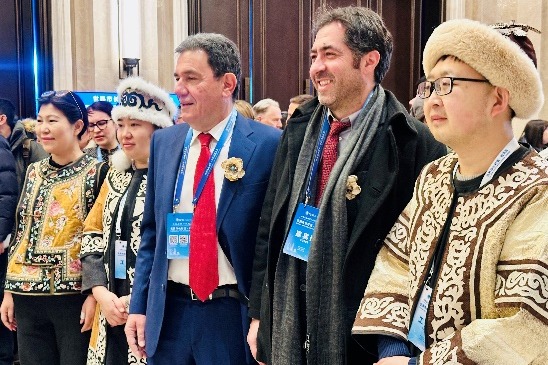
    In a remarkable cultural prelude to the Global Mayors Dialogue in Harbin, municipal leaders from seven nations immersed themselves in the rich artistic traditions of China’s Hezhe ethnic minority on January 6th. The international delegation explored an exclusive exhibition of intangible cultural heritage, witnessing extraordinary craftsmanship that blends ancient techniques with contemporary expression.

    The mayors encountered three distinctive art forms that showcase Hezhe cultural preservation: wheat straw mosaic art demonstrating intricate natural material work, birch bark paintings depicting urban landscapes through indigenous perspectives, and innovative fish leather artistry utilizing piscine hides transformed into durable decorative pieces. This unique gallery experience provided a rare insight into how traditional craftsmanship maintains relevance in modern society.

    The cultural exchange event served as both diplomatic bridge-building and cultural education, allowing global city leaders to appreciate China’s diverse ethnic heritage while fostering mutual understanding. The Hezhe people, one of China’s smallest ethnic groups with a population of approximately 5,000, primarily inhabit the Heilongjiang region and are renowned for their fishing culture and distinctive artistic traditions.

    This intercultural engagement highlights how heritage preservation and international diplomacy can intersect, creating opportunities for cultural appreciation beyond formal political dialogues. The event demonstrated China’s commitment to showcasing its multicultural tapestry while building connections between local traditions and global leadership.

  • UN calls on Israel to end its ‘apartheid system’ in the West Bank

    UN calls on Israel to end its ‘apartheid system’ in the West Bank

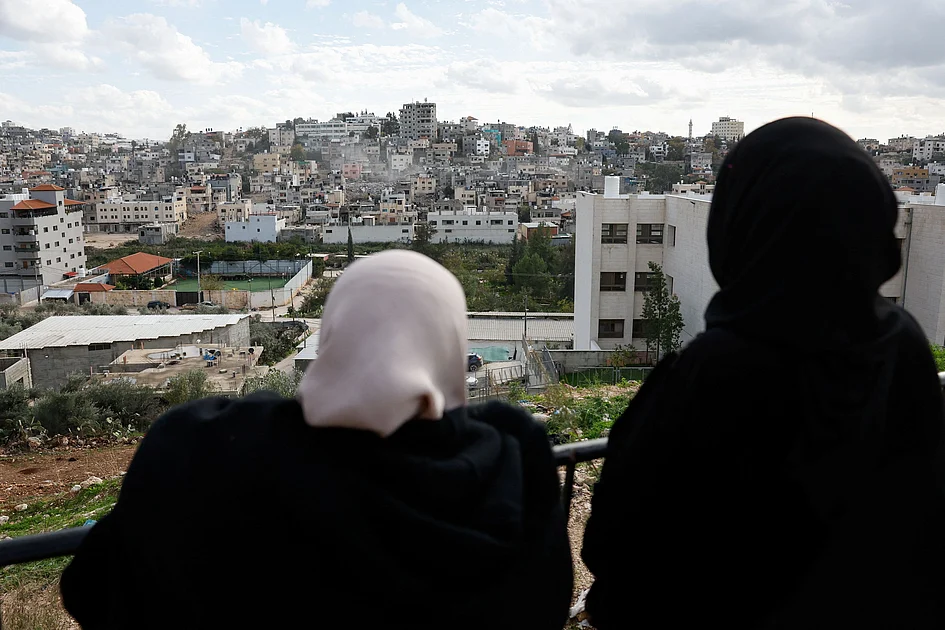
    In a landmark declaration, United Nations Human Rights Chief Volker Turk has formally characterized Israel’s treatment of Palestinians in the West Bank as an “apartheid system,” marking the first time a UN rights chief has applied this controversial term to the situation. A comprehensive report released Wednesday details what it describes as intensifying systematic discrimination against Palestinians across occupied territories.

    The UN investigation reveals that Israeli authorities enforce two distinct legal systems and policies for Israeli settlers and Palestinians, creating profoundly unequal treatment across critical areas including land rights, resource access, and judicial proceedings. Palestinians face large-scale land confiscation, resource deprivation, and systematic violations of due process rights through military court prosecutions.

    Turk emphasized that “every aspect of life for Palestinians in the West Bank is controlled and curtailed by Israel’s discriminatory laws, policies and practices,” from accessing water and education to seeking medical care and visiting relatives. The report specifically highlights the “systematic asphyxiation of the rights of Palestinians” through what it terms a “particularly severe form of racial discrimination and segregation.”

    Compounding the discrimination, the document details escalating settler violence that frequently occurs “with the acquiescence, support and participation of Israel’s security forces.” Since the start of the Gaza war following Hamas’s October 2023 attack, Israeli troops and settlers have killed more than 1,000 Palestinians in the West Bank, according to figures from the Palestinian health ministry.

    The report documents an “almost complete impunity” for unlawful killings, noting that of over 1,500 Palestinian deaths between 2017 and September 2025, Israeli authorities opened just 112 investigations resulting in only one conviction. Additionally, thousands of Palestinians remain arbitrarily detained under administrative detention without charge or trial.

    The UN rights office has called on Israel to immediately repeal all laws, policies and practices perpetuating systemic discrimination based on race, religion or ethnic origin. It further urged Israel to end its “unlawful presence in the occupied Palestinian territory, including by dismantling all settlements and evacuating all settlers,” while respecting the Palestinian people’s right to self-determination.

  • China set to establish early pregnancy clinics across 10k hospitals

    China set to establish early pregnancy clinics across 10k hospitals

    China’s National Health Commission has announced a comprehensive healthcare expansion plan for 2026, featuring the establishment of specialized early pregnancy care clinics across 10,000 medical institutions nationwide. This initiative represents a significant advancement in promoting fertility health and developing a child-friendly society.

    The ambitious program includes creating 150,000 additional affordable nursery care slots to reduce family childcare burdens and increase enrollment rates according to regional needs. These measures address some of the most pressing concerns in China’s healthcare landscape.

    In a major public health advancement, the commission will implement free HPV vaccinations for 13-year-old girls following last September’s inclusion of the vaccine in the national immunization program. This strategic intervention aims to substantially reduce HPV infection rates and lower cervical cancer incidence in adulthood.

    To improve healthcare accessibility, immunization services will now be available at township health centers and community healthcare facilities during weekends. The commission also plans to train 3,200 healthcare professionals in integrated Western and traditional Chinese medicine, expanding access to high-quality combined medical services.

    Additional expansions will enhance pediatric, mental health, and hemodialysis services, while ensuring all major public hospitals provide comprehensive weight management programs. These coordinated efforts demonstrate China’s commitment to addressing diverse healthcare needs through a multi-faceted approach.

  • Cold front coats Guizhou mountains in rime

    Cold front coats Guizhou mountains in rime

    A recent Arctic cold front has dramatically transformed the mountainous terrain of Guizhou province into a spectacular winter landscape. The Qianxi region’s iconic terraced fields, normally characterized by their vibrant green hues, now appear blanketed in a crystalline layer of rime—a delicate frost formation that occurs when supercooled water droplets freeze upon contact with surfaces.

    The aerial perspective reveals an ethereal scene where the intricate patterns of the terraces merge with the frosty covering, creating a mesmerizing mosaic of white against the distant emerald peaks. A persistent mist gently envelops the higher elevations, adding an atmospheric quality to the already stunning visual spectacle.

    This meteorological phenomenon highlights the unique agricultural practices of southwest China’s mountainous regions. Due to the challenging topography that limits conventional farmland, local communities have historically developed sophisticated terracing systems along hillsides. These engineered landscapes represent both practical adaptation to geographical constraints and cultural heritage preserved through generations.

    The current frost coverage, while creating temporary visual magnificence, serves as a reminder of the region’s vulnerability to temperature fluctuations. Such extreme weather events provide both challenges for local agriculture and opportunities for ecological study regarding microclimates in mountainous areas.

  • How could Donald Trump ‘take’ Greenland?

    How could Donald Trump ‘take’ Greenland?

    The White House has confirmed that all strategic options remain under consideration regarding Greenland, including potential military action, as articulated by former President Donald Trump. This revelation has triggered profound concerns within the NATO alliance, given the prospect of one member state initiating aggression against another—Denmark, which maintains sovereignty over the vast Arctic territory.

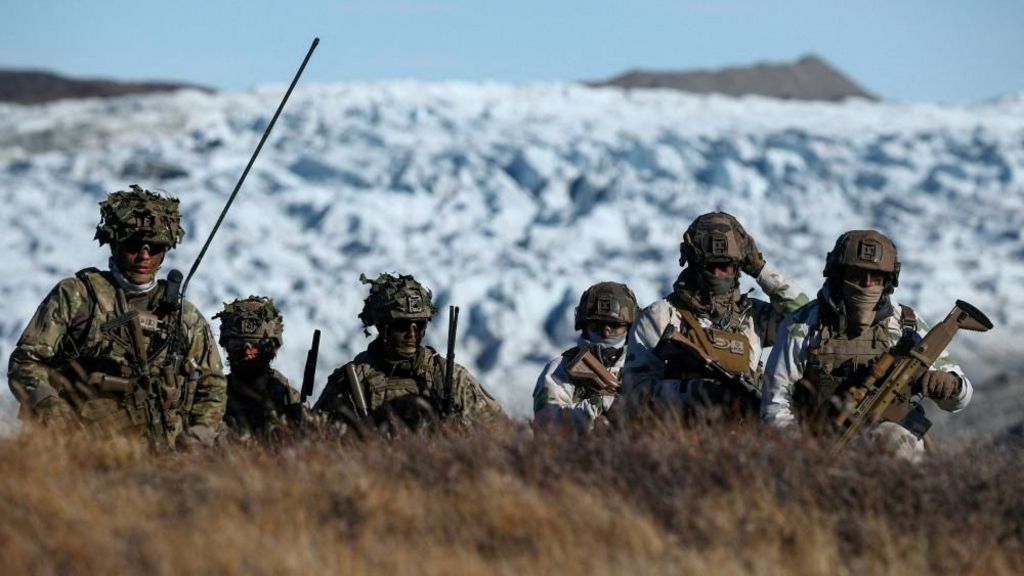
    Trump has consistently framed Greenland as critically important to U.S. national security, alleging without substantiation that its waters are ‘covered with Russian and Chinese ships.’ Defense specialists analyzing the scenario acknowledge that a rapid military takeover would be operationally feasible due to Greenland’s minimal population of approximately 58,000 and virtually nonexistent military defenses. The territory relies on Denmark for protection, which maintains limited air and naval resources across the massive island, with certain remote areas patrolled only by the specialized Sirius Patrol unit using dog sleds.

    Analysts like Hans Tito Hansen of Risk Intelligence and Justin Crump of Sibylline Ltd. suggest that the U.S. 11th Airborne Division, supported by air and naval assets, could execute an invasion with overwhelming force, potentially encountering little resistance. However, such an operation would blatantly violate international law and risk catastrophic diplomatic fallout, potentially fracturing NATO.

    Despite the theoretical ease of invasion, numerous former U.S. officials and security experts deem military action highly improbable. Mick Mulroy, former Deputy Assistant Secretary of Defense, emphasized that any move toward military engagement would likely confront staunch Congressional opposition, invoking the War Powers Act to prevent unauthorized conflict.

    Acquisition via purchase, reportedly the administration’s preferred method, presents another complex avenue. However, both the Greenlandic and Danish governments have firmly stated the territory is not for sale. Any potential treaty would require a two-thirds Senate majority and European Union approval—hurdles experts consider insurmountable. Furthermore, such expenditure could alienate Trump’s political base, which prioritizes domestic spending.

    Alternatively, the U.S. might pursue a soft-power strategy, encouraging Greenland’s independence movement—polls indicate strong local desire for autonomy from Denmark, though not for assimilation into the U.S.—and subsequently establishing a defense partnership akin to agreements with Pacific nations like Palau. However, this approach would not grant the U.S. ownership of Greenland’s extensive mineral resources, likely a key motivator for the administration.

    Ultimately, analysts concur that without support from the Greenlandic people, any non-military strategy to incorporate the territory will fail. As one expert noted, the current U.S. administration has a limited timeframe, while Greenlanders are considering their future over the next millennium.

  • Saudi Arabia sentences 3 to death for joining terrorist group, making explosives

    Saudi Arabia sentences 3 to death for joining terrorist group, making explosives

    Saudi Arabian authorities have carried out capital punishment against three individuals convicted of terrorism-related offenses in the Qassim Region. The executions, conducted on Wednesday, January 7, 2026, followed comprehensive judicial proceedings that culminated in final verdicts upheld by the court of appeal.

    The convicted individuals—Rayan bin Yousuf bin Ibrahim Al-Dubaikhi, Mohammed bin Sulaiman bin Mohammed Al-Shuwaini, and Saudi national Abdulrahman bin Ibrahim bin Ahmed Al-Aybari—were found guilty of multiple severe crimes. Their charges included affiliation with an external terrorist organization, manufacturing explosive devices, illegal possession of firearms and live ammunition, financing terrorist operations, and providing shelter to perpetrators of terrorist acts.

    The Ministry of Interior issued an official statement emphasizing that these sentences demonstrate the kingdom’s unwavering commitment to national security and justice. The ministry further clarified that these measures align with Islamic Sharia rulings, which strictly prohibit attacks on innocent civilians and violations of their fundamental rights to life and security.

    This judicial action represents Saudi Arabia’s continued zero-tolerance approach toward terrorism and its ongoing efforts to combat extremist activities within its borders. The public announcement serves both as a deterrent to potential offenders and as reassurance to citizens and residents regarding the government’s dedication to maintaining stability and safety across the nation.