作者: admin

  • Why Southeast Asia’s online scam industry is so hard to shut down

    Why Southeast Asia’s online scam industry is so hard to shut down

    In an unprecedented move against transnational cybercrime, Cambodian authorities have extradited powerful tycoon Chen Zhi to China, marking a rare victory against a sophisticated criminal network accused of orchestrating massive online scams that have defrauded victims worldwide of tens of billions of dollars.

    The arrest represents merely the tip of a criminal iceberg that spans Southeast Asia, where an estimated 220,000 people across Myanmar and Cambodia alone are trapped in forced labor conditions according to UN estimates. These victims, recruited from at least 56 countries through deceptive job offers, find themselves confined to sprawling compounds where they work 12-16 hour days under threat of violence.

    These scam centers evolved from casino operations that previously catered to Chinese high-rollers. When COVID-19 travel restrictions devastated their revenue streams, criminal syndicates pivoted to digital fraud operations, utilizing existing infrastructure and trafficked labor to target victims globally. The compounds range from massive rural complexes like Myanmar’s notorious KK Park to discreet urban offices, often operating with protection from local elites.

    The global impact is staggering: Americans lost approximately $10 billion to Southeast Asian-linked scams in 2024 alone, while victims worldwide have been targeted through increasingly sophisticated methods. Scammers now employ AI-powered translation tools to overcome language barriers and create convincing fraudulent schemes ranging from cryptocurrency investments to fake romantic relationships.

    Despite high-profile raids and rescues—such as the 1,500 workers who fled to Thailand during a Myanmar military operation—the industry demonstrates remarkable resilience. New centers continually emerge across the region and beyond, with operations reported as far as Africa and Latin America. Experts emphasize that without targeting the criminal masterminds behind these operations, rather than just rescuing victims, the scourge will continue to proliferate globally.


  • A familiar refrain as China and Japan, uneasy neighbors in East Asia, begin 2026 at odds again

    A familiar refrain as China and Japan, uneasy neighbors in East Asia, begin 2026 at odds again

    BEIJING — Diplomatic relations between China and Japan have entered a new phase of confrontation as 2026 begins, reigniting historical grievances and contemporary geopolitical tensions. The current escalation stems from November remarks by Japanese Prime Minister Sanae Takaichi suggesting Japan might intervene militarily if China moves against Taiwan—comments Beijing characterized as a direct threat to its sovereignty.

    China’s Foreign Ministry spokesperson Mao Ning condemned Takaichi’s statements as “erroneous remarks” that “infringe upon China’s sovereignty and territorial integrity” during a Wednesday briefing. This diplomatic offensive follows recent Chinese military exercises around Taiwan and represents the latest chapter in a complex relationship marked by alternating cooperation and confrontation.

    The current tensions are deeply rooted in historical context. Japan’s colonization of Taiwan in 1895 and its brutal occupation of parts of China in the 1930s-40s created enduring resentment that continues to shape bilateral relations. Contemporary flashpoints include disputes over the Diaoyu/Senkaku Islands and Japanese officials’ visits to the Yasukuni Shrine, which honors war criminals from Japan’s imperial past.

    This week, China implemented multiple measures against Japan, including restrictions on “dual-use exports” that could be adapted for military purposes. While not specifying banned items, the move potentially affects everything from drone technology to rare earth minerals. Japan’s Foreign Ministry condemned the restrictions as “deviating significantly from international practice” and “absolutely unacceptable.”

    Additionally, China launched an investigation into alleged dumping of Japanese dichlorosilane—a chemical used in chip manufacturing—after prices dropped 31% between 2022-2024. In a more provocative move, a Chinese arms control association released a report titled “Nuclear Ambitions of Japan’s Right-Wing Forces: A Serious Threat to World Peace,” accusing Japan of failing to confront its militaristic past.

    Simultaneously, China conspicuously strengthened ties with South Korea, hosting President Lee Jae Myung for a four-day visit that produced 24 export contracts worth $44 million and agreements on trade, technology, and environmental cooperation. Chinese media highlighted South Korea surpassing Japan as the top destination for Chinese outbound flights, alongside government warnings about “significant risks” to Chinese citizens in Japan.

    Regional analysts suggest the current tensions may prove more persistent than previous diplomatic spats. Sebastian Maslow, an East Asia specialist at the University of Tokyo, noted that “with diplomatic channels in short supply and domestic political agendas paramount, an off-ramp for the current dispute is not in sight.” The situation is further complicated by the United States’ planned arms sales to Taiwan, adding another layer of complexity to already fraught regional dynamics.

  • Legal support for IPs to be bolstered

    Legal support for IPs to be bolstered

    China is embarking on significant legislative reforms to enhance its intellectual property protection framework, according to announcements from the China National Intellectual Property Administration. Commissioner Shen Changyu revealed on Wednesday that the administration will prioritize legal upgrades to cultivate a more innovation-conducive environment through elevated protection standards.

    The comprehensive overhaul includes advancing amendments to integrated circuit layout design regulations and accelerating revisions to the Trademark Law. A draft amendment to the Trademark Law has already undergone preliminary review by the Standing Committee of the National People’s Congress in December, marking a crucial step in the legislative process.

    Addressing emerging technological challenges, Shen emphasized the urgent need for robust IP protection in new sectors and the expedited establishment of data-related intellectual property regulations. This initiative responds to the rapid evolution of technologies including artificial intelligence, biomedicine, and advanced internet applications.

    Legal expert Liu Bin of Beijing Zhongwen Law Firm endorsed the proposed reforms, highlighting critical gaps in current regulations. “Data has transformed into an essential production factor, yet the absence of clear guidelines creates a paradox where everyone desires to utilize it but hesitates due to legal uncertainties,” Liu noted. He identified pressing challenges including determining ownership of AI-generated content and clarifying rights concerning data circulation and utilization.

    Liu advocated for establishing comprehensive data IP protection rules that would clarify legal data sources, define permissible usage parameters, and implement benefit-sharing mechanisms. “These measures are fundamental to safeguarding contributors’ legitimate interests while encouraging corporate participation in data development and innovative applications,” he added.

    Recent achievements during the 14th Five-Year Plan period (2021-25) demonstrate China’s progressive trajectory in IP development. The administration completed substantial revisions to the Patent Law and its implementing regulations, establishing a high-standard system for punitive damages against infringement. Updated patent examination guidelines have improved review standards for emerging fields, including artificial intelligence.

    Operational efficiencies have shown marked improvement, with invention patent examination periods reduced from 20 to 15 months since 2020. Trademark registration reviews have stabilized at approximately four months, ranking among the fastest globally. Quantitative achievements include surpassing 5 million valid domestic invention patents and reaching 16 high-value invention patents per 10,000 people, exceeding established targets.

  • China expects huge surge in winter tourism

    China expects huge surge in winter tourism

    China’s winter tourism sector is experiencing unprecedented growth, with snow sports rapidly evolving from specialized activities into mainstream economic drivers. According to the China Tourism Academy’s latest report, the December 2025-February 2026 season is projected to witness 360 million winter tourism excursions, generating approximately 450 billion yuan ($64 billion) in revenue.

    The transformation reflects a fundamental shift in consumer behavior, as evidenced by Yang Lezhi, a 27-year-old Beijing resident who represents the new generation of winter sports enthusiasts. “Skiing makes me feel like Elsa from Frozen—it’s almost addictive once you master the slopes,” she remarked, highlighting how winter activities have transitioned from niche pursuits to popular recreational trends.

    This remarkable expansion stems from multiple factors: the successful legacy of the 2022 Beijing Winter Olympics, substantial government support, and strategic infrastructure investments. In November 2024, China’s State Council issued comprehensive guidelines targeting a 1.2 trillion yuan winter economy by 2027 and 1.5 trillion yuan by 2030.

    Industry analyst Yang Jinsong from the China Tourism Academy identifies several growth catalysts: “Post-Olympic awareness has significantly increased public interest in winter activities, while supportive policies have encouraged broader industry participation. Both naturally advantaged northern regions and southern provinces with artificial facilities are contributing to this expansion.”

    Remarkably, southern China—including Guangdong province—has emerged as the national leader in winter tourism infrastructure investment, exceeding 30 billion yuan annually. The industry’s structural development is equally impressive, with 1,423 new winter tourism companies established in 2025, bringing the national total to over 14,000 enterprises—an 11% increase from 2024.

    Supporting data reveals consistent industry expansion, with winter-related consumption reaching 187.5 billion yuan between late 2024 and early 2025. The sector has demonstrated remarkable growth trajectory, expanding from 270 billion yuan in 2015 to 980 billion yuan in 2024, and is projected to surpass 1 trillion yuan for the first time in 2025.

    Consumer surveys indicate strong continued demand, with 75% of respondents expressing interest in winter travel, over 40% planning increased participation frequency, and a similar percentage intending to boost winter activity spending—signaling sustained momentum for China’s burgeoning winter economy.

  • Mainland sanctions Taiwan officials, warns separatists

    Mainland sanctions Taiwan officials, warns separatists

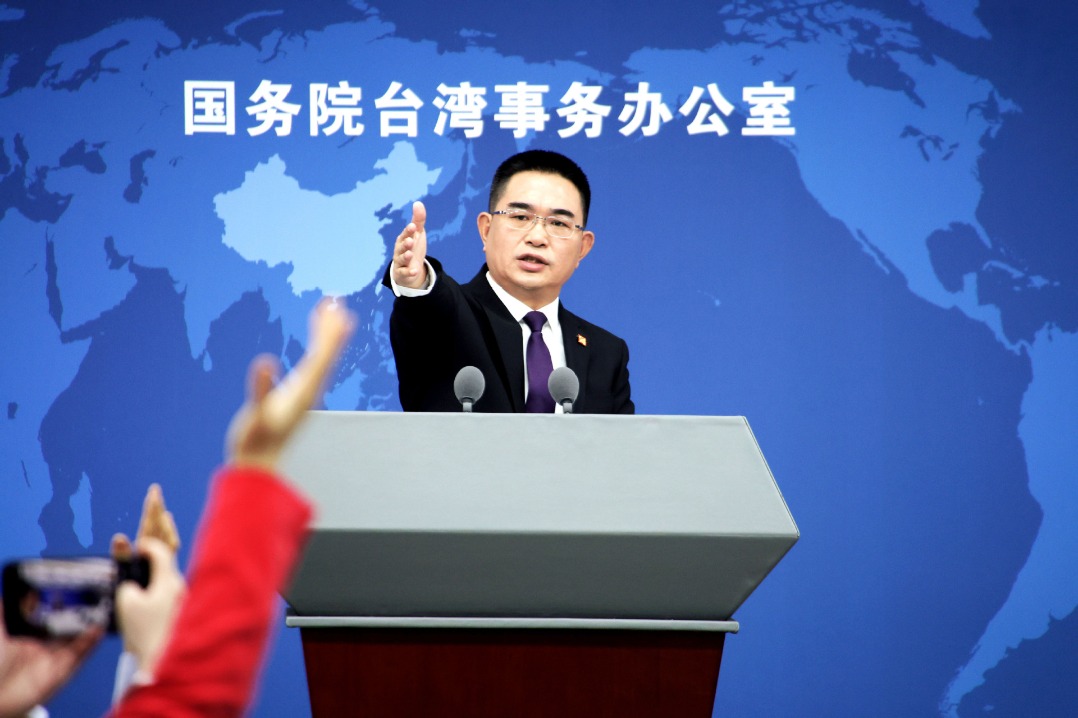
    In a significant escalation of cross-strait tensions, Chinese mainland authorities have designated two senior Taiwanese officials as hardened ‘Taiwan independence’ separatists and imposed comprehensive sanctions against them. The announcement came from Chen Binhua, spokesperson for the State Council’s Taiwan Affairs Office, during a press briefing on Wednesday.

    Liu Shih-fang, head of Taiwan’s Interior Affairs Department, and Cheng Ying-yao, overseeing the island’s education policy, were formally added to Beijing’s list of individuals accused of promoting separatist agendas. According to the spokesman, both officials have engaged in persistent activities that contradict mainstream public opinion and deliberately undermine cross-strait relations.

    The sanctions package imposes lifelong legal accountability measures, prohibiting the officials and their family members from entering mainland China, Hong Kong, and Macao. Additionally, organizations affiliated with either official are barred from conducting business or establishing cooperative ties with mainland entities.

    In a parallel development, prosecutor Chen Shu-yi from Taiwan’s High Prosecutors Office was designated as an accomplice to separatist activities. Authorities accused her of manufacturing cases and targeting individuals who support cross-strait exchanges, allegedly creating an atmosphere of intimidation.

    The mainland has now identified 14 individuals as primary ‘Taiwan independence’ separatists, including Taiwan’s deputy leader Hsiao Bi-khim and defense chief Koo Li-hsiung, alongside 12 individuals listed as accomplices.

    The spokesman referenced China’s Anti-Secession Law, emphasizing that challenges to national sovereignty would face severe consequences. He also addressed a recently withdrawn proposal by DPP lawmakers that sought to redefine cross-strait relations, warning that such ‘de jure independence’ attempts would not be tolerated.

    Authorities have encouraged citizens from both sides of the strait to provide information regarding illegal activities by those named in the sanctions list.

  • Pursuit of ‘silver dividends’ redefines seniors’ golden years

    Pursuit of ‘silver dividends’ redefines seniors’ golden years

    China is undergoing a profound demographic transformation as millions of experienced seniors are redefining retirement through workforce reentry, creating both opportunities and challenges for the nation’s economy. This shift comes alongside policy changes that are gradually raising retirement ages and encouraging the utilization of older workers’ accumulated expertise.

    The voluntary retirement age adjustment policy, implemented from January 1, 2025, progressively increases the retirement threshold from 60 to 63 for men and from 55 to 58 for women over a 15-year transition period. This aligns China more closely with developed nations where retirement typically occurs between 64-65 years, with several countries moving toward 67 in response to aging populations.

    Personal narratives illustrate this trend. Yan Qin, a 58-year-old former accountant from Beijing, returned to employment after three years of retirement, finding satisfaction in supporting younger colleagues despite reduced compensation expectations. Similarly, 62-year-old Wang Qingwen of Hangzhou invested in barista training, aspiring to establish her own café despite visual and manual challenges.

    Research from the China Research Center on Aging reveals distinct employment patterns by age cohort: 38.3% of respondents aged 60-69 seek paid employment, compared to 19.4% of those 70-79, and merely 5.2% of octogenarians and beyond.

    This demographic shift necessitates robust legal protections and policy support. Landmark regulations proposed in July 2025 by multiple government agencies aim to safeguard older workers’ rights through written agreements specifying working conditions, compensation, and insurance coverage. Employers are encouraged to provide age-appropriate positions while prohibited from assigning physically or mentally hazardous tasks.

    The economic implications are substantial. China’s silver economy reached approximately 7 trillion yuan (6% of GDP) in 2024, with projections indicating growth to 30 trillion yuan (10% of GDP) by 2035. Currently, 77,600 companies specialize in products and services for seniors, supported by government investments including 7.59 billion yuan for constructing 202 nursing facilities in 2024.

    Demographic statistics underscore the urgency: China’s 310 million citizens aged 60+ constitute 22% of the population, including 220 million aged 65+ (15.6%). Life expectancy has risen to 79 years, exceeding global averages by five years.

    Beyond economic contributions, seniors are increasingly pursuing quality lifestyles through continued education, technology adoption, and experiential consumption. Wellness products, tailored smartphones, specialized tourism, and educational programs are gaining popularity among older demographics seeking meaningful engagement rather than mere subsistence.

    Experts emphasize that successful integration of senior workers requires collaborative efforts between government, employers, and older individuals themselves—transforming demographic challenges into sustainable silver dividends through experienced talent utilization while alleviating pension system pressures.

  • Viral ‘Chinese Trump’ wins laughs on both sides of Pacific

    Viral ‘Chinese Trump’ wins laughs on both sides of Pacific

    A social media sensation has emerged from southwest China, where 42-year-old Ryan Chen has captivated millions with his remarkably accurate impersonation of former US President Donald Trump. Operating from his hometown of Chongqing, Chen has masterfully replicated Trump’s distinctive mannerisms, vocal cadence, and signature phrases like ‘tremendous’ and ‘amazing’ without venturing into political satire.

    Chen’s content strategy cleverly combines entertainment with cultural exchange. His videos, presented in English with Chinese subtitles, feature lighthearted explorations of Chinese cuisine, cultural customs, and humorous interactions with foreigners. The performer frequently incorporates Trump’s trademark stage song ‘YMCA’ into his routines, creating a unique fusion of American political parody and Chinese cultural presentation.

    The architectural professional turned internet personality discovered his talent unexpectedly. Initially creating English-teaching content as a career alternative during China’s property crisis, Chen’s breakthrough came in 2025 following a friend’s challenge to imitate Trump. His appearance on American YouTuber IShowSpeed’s livestream during his China visit further amplified his visibility, propelling him to international recognition.

    Chen maintains a carefully apolitical approach, emphasizing his role as an entertainer rather than political commentator. ‘Trump is an endless well that never runs dry because he draws more online traffic than anyone else on the planet,’ Chen explained in an interview. His impersonation work has generated substantial followings across platforms—over one million on Instagram, nearly as many on TikTok, and more than 2.5 million on Chinese social media networks.

    The performer’s success has translated into professional opportunities through advertising partnerships with automotive, digital product, gaming, and dairy brands. In a significant validation of his approach, Chen recently obtained a US visa and is currently visiting the country for the first time. As Trump prepares for his anticipated visit to China, Chen has extended an invitation for the former president to experience Chongqing’s famously spicy hotpot, though he maintains no aspirations for an actual meeting, recognizing the potential diplomatic complications.

  • US quits 66 intl organizations under Trump’s order: White House

    US quits 66 intl organizations under Trump’s order: White House

    In a landmark foreign policy decision, the Trump administration has formally initiated the United States’ withdrawal from 66 international organizations. The White House announced the move via social media platform X on Wednesday, following the signing of a presidential memorandum by President Donald Trump.

    The comprehensive disengagement encompasses 35 non-United Nations organizations and 31 UN-affiliated entities that the administration asserts ‘no longer serve American interests.’ The presidential memorandum represents one of the most significant unilateral reductions of U.S. participation in global governance frameworks in modern history.

    This strategic pivot reflects the administration’s America First doctrine, prioritizing national sovereignty over multilateral commitments. The withdrawal process from these diverse international bodies will unfold through established diplomatic channels, though the specific organizations affected were not detailed in the initial announcement.

    The move signals a profound shift in how the United States engages with international institutions, potentially reshaping global power dynamics and creating strategic vacuums that other nations may seek to fill. The decision follows years of criticism from the administration regarding what it perceives as ineffective or counterproductive international agreements that constrain U.S. autonomy.

  • Australia to hold royal commission inquiry into Bondi Beach shooting

    Australia to hold royal commission inquiry into Bondi Beach shooting

    The Australian government has announced a comprehensive royal commission investigation into the December 14 Bondi Beach mass shooting that claimed 15 lives, marking the nation’s deadliest firearm incident in three decades. Prime Minister Anthony Albanese confirmed the high-level inquiry on Thursday, reversing his previous stance amid mounting public pressure for transparency.

    The investigation—Australia’s most authoritative form of public inquiry—will examine multiple dimensions of the tragedy, including intelligence failures, the proliferation of antisemitic sentiment, and security protocol deficiencies. The alleged perpetrators, Sajid Akram and his Australian-born son Naveed, targeted Jewish attendees at a Hanukkah celebration in what authorities describe as an ISIS-inspired attack. While Sajid was fatally shot by responding officers, Naveed remains incarcerated facing terrorism and murder charges.

    Former High Court Justice Virginia Bell will lead the commission, which will incorporate an existing security services review originally scheduled for April completion. The inquiry follows intense advocacy from victims’ families, business leaders, and prominent academics who demanded accountability through open letters.

    Security agencies face scrutiny regarding their prior awareness of the perpetrators. Documents reveal that intelligence officials had flagged Naveed Akram in 2019 but subsequently removed him from monitoring protocols after determining he posed no imminent threat. The pair’s travel to the southern Philippines prior to the attack has raised questions about potential connections to regional extremist networks, though police maintain current evidence suggests they acted independently.

    The government has simultaneously initiated sweeping policy responses, including the largest firearm buyback program since the 1996 Port Arthur massacre and strengthened measures against hate speech. Special Envoy for Antisemitism Jillian Segal endorsed the commission, noting it reflects ‘the seriousness of the growth in antisemitism and its impact on our country and democracy.’

  • Nation’s annual parcel volume hits nearly 200 billion

    Nation’s annual parcel volume hits nearly 200 billion

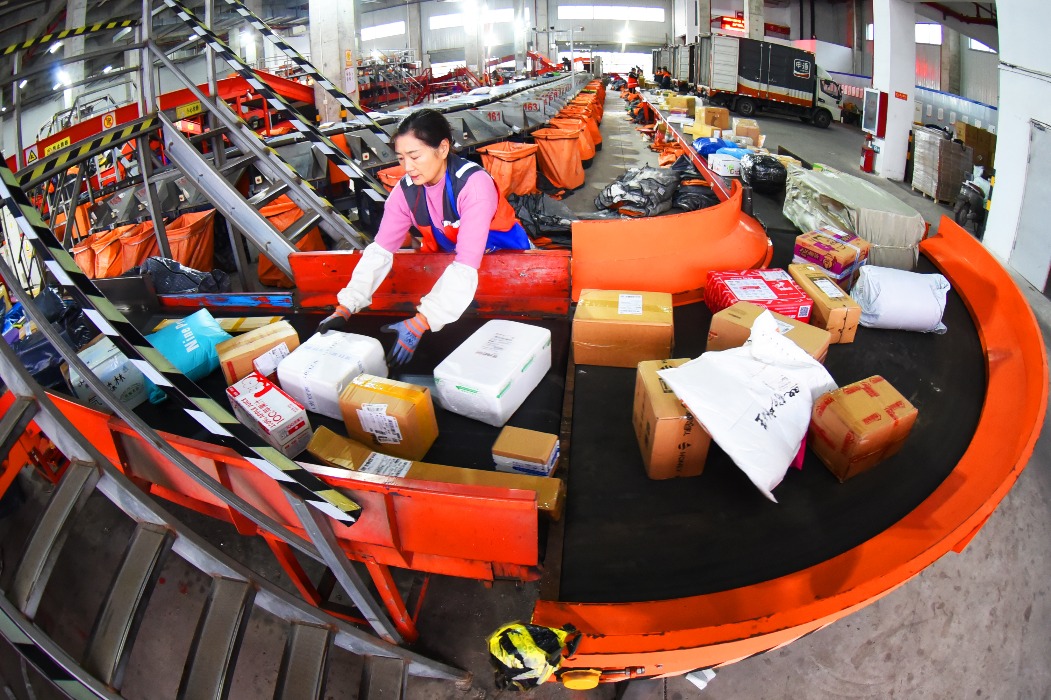
    China has reinforced its global dominance in express delivery services, achieving an unprecedented milestone of 199 billion parcels handled in 2025. This represents a substantial 13.7% year-on-year growth, while sector revenue climbed to 1.5 trillion yuan ($214 billion), marking a 6.5% increase from the previous year.

    The State Post Bureau of China, announcing these figures at its annual conference in Beijing, revealed the industry has now led global parcel volumes for twelve consecutive years. The nation has developed the world’s most extensive delivery network, serving the largest consumer base while continuously enhancing both technological capabilities and geographical coverage.

    During the 14th Five-Year Plan period (2021-2025), China’s parcel volume skyrocketed from over 80 billion to nearly 200 billion items, accounting for more than 60% of worldwide courier growth. The peak daily processing capacity reached 777 million parcels, with annual per capita parcel usage surging from 59 to 141 items between 2020 and 2025.

    Bureau head Zhao Chongjiu emphasized how the sector’s prosperity reflects both growing public demand for convenient postal services and the underlying resilience of China’s economy. “We’ve established the planet’s largest delivery network, penetrating deep into rural communities while expanding international connections to major global economies,” Zhao stated.

    Significant infrastructure expansion has brought postal services to all border villages, with nationwide service outlets increasing nearly 1.5 times. Central and western regions saw their shares of express delivery revenue and volume rise by 5.4 and 7.5 percentage points respectively, facilitating better integration into the national unified market.

    In Xinjiang Uygur Autonomous Region, daily mail and parcel deliveries increased nearly fivefold since 2020. Resident Aikeremu Tula from Gonglati village noted the transformation: “Previously we traveled to town pickup points, but now we have a local station just minutes from home.”

    Technological advancements have been equally impressive. The 180 billionth parcel milestone in November 2025—a smart learning device ordered by Shenzhen resident Li Xiaojun—was processed through fully automated JD.com facilities and delivered via unmanned vehicle. Li praised the “much faster and more precise” service, highlighting the logistics system’s growing efficiency.

    JD’s Pingshan warehouse head An Jixing reported unmanned vehicles now handle approximately 15,000 parcels daily, boosting capacity while reducing staff workload. Nationwide, over 450 drones delivered nearly 4 million parcels in 2025.

    Looking ahead, the sector anticipates handling 214 billion parcels in 2026, maintaining an estimated 8% growth trajectory. Bureau researcher Liu Jiang identified technology as “a strong engine injecting lasting vitality into the market,” while Zhao confirmed expectations for continued revenue growth across both postal and express services.