作者: admin

  • Overburdened power cable behind Bosnia retirement home fire that killed 15

    Overburdened power cable behind Bosnia retirement home fire that killed 15

    A tragic fire at a retirement facility in Tuzla, Bosnia-Herzegovina, has claimed the lives of 15 elderly residents, with authorities attributing the cause to an overburdened power cable. The incident, which occurred on November 4, began on the seventh floor of the retirees’ boarding house when a radio cable, squeezed between a bed and a wall, caused a short circuit. The blaze resulted in 11 fatalities on the day of the incident and left 30 others injured. Since then, four more individuals have succumbed to their injuries in the Tuzla hospital, including two last week and two within the past 24 hours, as confirmed by medical officials on Friday.

    Investigations are ongoing to determine whether negligence or oversight contributed to the disaster. The facility, which housed elderly residents with limited mobility or chronic illnesses, has faced significant public criticism. In the wake of the tragedy, the complex’s manager has resigned. Authorities have pledged to continue their probe to ensure accountability and prevent future occurrences.

  • Pakistan says it has arrests 4 militants over involvement in suicide bombing at Islamabad court

    Pakistan says it has arrests 4 militants over involvement in suicide bombing at Islamabad court

    In a significant development, Pakistani authorities announced the arrest of four militants allegedly involved in a suicide bombing outside a district court in Islamabad. The attack, which occurred on Tuesday, claimed 12 lives and left 28 others injured. The suspects, identified as members of the outlawed Tehrik-e-Taliban Pakistan (TTP), were apprehended in a joint operation by the Intelligence Bureau and Counter-Terrorism Department. One of the detainees, Sajid Ullah, is believed to have handled the explosive device used in the attack. According to government statements on social media platform X, Ullah confessed to receiving orders from TTP commander Saeed-ur-Rehman, also known as Daadullah, via the Telegram messaging app. The commander, currently hiding in Afghanistan, orchestrated the attack by sending Ullah photographs of the suicide bomber, an Afghan national from Nangarhar province. Ullah arranged the bomber’s accommodation near Islamabad and retrieved the explosive vest from a graveyard in Peshawar before transporting it to the capital. The arrests highlight Pakistan’s escalating security challenges amid a resurgence of militancy and strained relations with Afghanistan. Interior Minister Mohsin Naqvi confirmed Afghan nationals’ involvement in both the Islamabad bombing and a separate attack in Wana, where a prolonged gun battle resulted in the deaths of three soldiers and all assailants. The incidents underscore the fragile cross-border ceasefire and the urgent need for regional cooperation to combat terrorism.

  • UAE to charge suspects after foiling Sudan-bound arms smuggling attempt

    UAE to charge suspects after foiling Sudan-bound arms smuggling attempt

    In a significant crackdown on illegal arms trafficking, the United Arab Emirates (UAE) has successfully thwarted a major attempt to smuggle weapons and military equipment to Sudan. Following an extensive investigation, UAE authorities arrested members of a criminal cell and announced formal charges against the suspects. The operation, conducted under the supervision of the Public Prosecution, involved the seizure of a substantial quantity of military-grade ammunition and the confiscation of financial proceeds linked to the illicit deal. The suspects were apprehended while inspecting the contraband inside a private aircraft at a UAE airport. Investigations revealed the involvement of Sudanese military authorities, including high-ranking officers and officials, as well as individuals and companies on US sanctions lists and Interpol notices. The operation was carried out with judicial warrants issued by the Attorney General, ensuring a lawful and transparent process. Authorities also uncovered evidence of covert brokerage, mediation, and money laundering activities tied to the smuggling attempt. The UAE has vowed to bring all involved parties to justice, with additional names expected to be disclosed as the investigation progresses.

  • London judge finds global mining giant BHP Group liable in Brazil’s worst environmental disaster

    London judge finds global mining giant BHP Group liable in Brazil’s worst environmental disaster

    In a groundbreaking decision, a London judge has ruled that BHP Group, the global mining giant, is legally responsible for Brazil’s most catastrophic environmental disaster. The tragedy occurred a decade ago when a tailings dam collapsed, releasing millions of tons of toxic waste into the Doce River, claiming 19 lives and causing widespread devastation to downstream communities. Justice Finola O’Farrell of the High Court determined that BHP’s negligence played a pivotal role in the disaster, despite the company not owning the dam at the time. BHP, an Anglo-Australian corporation, holds a 50% stake in Samarco, the Brazilian firm operating the iron ore mine where the dam ruptured on November 5, 2015. The collapse unleashed enough waste to fill 13,000 Olympic-sized swimming pools, obliterating the village of Bento Rodrigues and severely impacting other towns. The disaster also decimated 14 tons of freshwater fish and inflicted irreversible damage to 600 kilometers of the Doce River, a sacred site for the Krenak Indigenous people. Victims of the catastrophe hailed the ruling as a historic victory. Mônica dos Santos of the Commission for Those Affected by the Fundão Dam expressed relief, stating, ‘We had to cross the Atlantic Ocean to finally see accountability.’ Gelvana Rodrigues, who lost her 7-year-old son in the disaster, vowed to continue fighting for justice. The judge’s 222-page decision emphasized that the collapse was foreseeable and preventable, criticizing BHP for prioritizing production over safety. The claimants are seeking £36 billion ($47 billion) in compensation, with a second trial phase to determine damages. The case was filed in the UK due to BHP’s London-based legal entity. The ruling comes shortly after Brazil’s federal government reached a $23 billion settlement with Samarco and Vale, BHP’s joint venture partner, to address the disaster’s human, environmental, and infrastructural impacts. BHP had argued that the UK lawsuit was redundant, as it overlapped with ongoing legal proceedings in Brazil.

  • Researchers reveal how global dust regulates carbon cycle, climate change

    Researchers reveal how global dust regulates carbon cycle, climate change

    A groundbreaking study has revealed the pivotal role of global dust in regulating the Earth’s carbon cycle and influencing climate change. Conducted by a collaborative team from the Institute of Tibetan Plateau Research under the Chinese Academy of Sciences (CAS), alongside British and Swedish researchers, the findings were published in the journal Nature Reviews Earth & Environment. The research analyzed 22 global dust records from sediment cores, uncovering that dust deposition in major ocean basins has increased significantly since the Cenozoic era, particularly during periods of Northern Hemisphere ice sheet expansion and aridification in regions like Asia, North America, and Africa. Each year, over 4 billion tonnes of dust are released from global land surfaces, carrying essential nutrients such as iron and phosphorus into the oceans through atmospheric circulation. This process fertilizes marine phytoplankton, enhancing ocean productivity and strengthening the ‘biological pump,’ which transfers substantial amounts of carbon dioxide from the atmosphere into the deep ocean. The study also highlighted varying fertilization effects based on dust origin, with Asian glacial dust showing a stronger impact in the North Pacific compared to North African dust. The research underscores the need for future studies to focus on the nutrient composition of global dust sources and integrate these insights into Earth system models to improve projections of global climate change.

  • China’s 3D-printed miniature turbojet engine completes flight test

    China’s 3D-printed miniature turbojet engine completes flight test

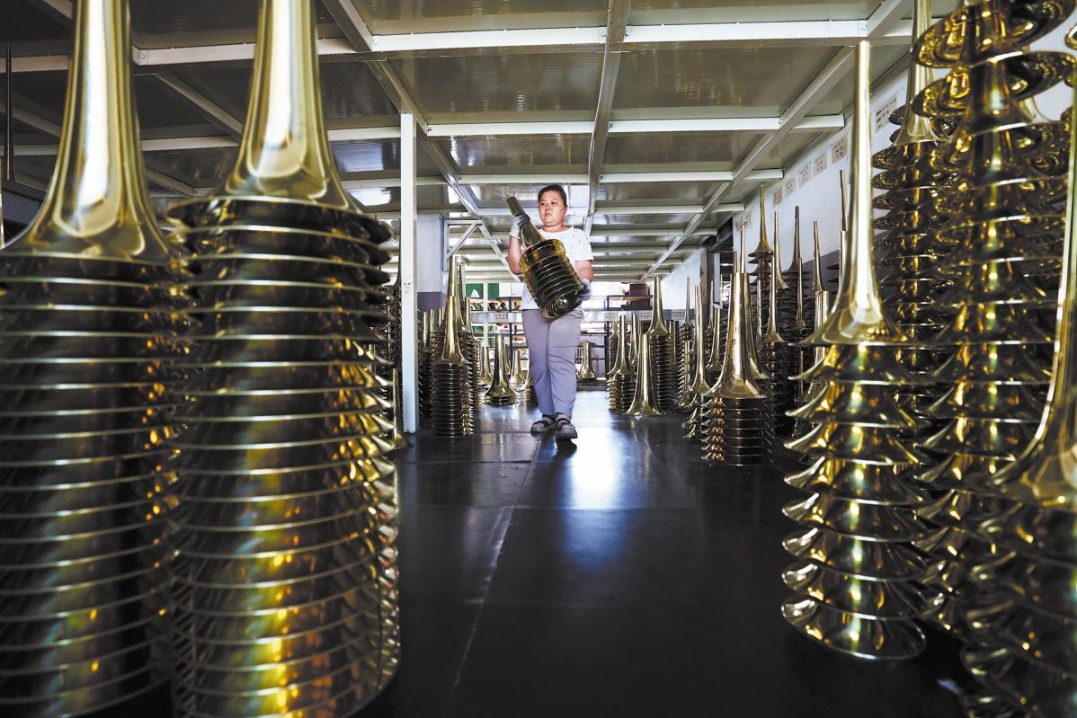
    China has marked a significant advancement in aerospace technology with the successful flight test of its first domestically developed, ultra-lightweight miniature turbojet engine, primarily manufactured using 3D printing. The Aero Engine Corporation of China (AECC) announced the milestone on Thursday, revealing that the engine powered a target drone for a 30-minute flight, reaching an altitude of 6,000 meters and a speed of Mach 0.75. The engine demonstrated stable and reliable performance throughout the test. This achievement follows an earlier captive-carry flight test conducted in July 2025, further validating the engine’s capabilities in higher altitudes and complex environments. The engine, which falls within the 160-kilogram thrust class, utilizes multi-disciplinary topology optimization and 3D printing technologies to achieve its lightweight and high-performance design. Over 75% of the engine’s weight consists of 3D-printed rotating parts, significantly reducing the number of components, lowering weight, and simplifying maintenance. This breakthrough paves the way for future developments targeting higher altitudes and greater speeds, while also accelerating China’s progress in independent research and manufacturing of aviation propulsion systems.

  • Smaller, grander: Rocco Forte plans Middle East debut with 60-room hotel in Red Sea

    Smaller, grander: Rocco Forte plans Middle East debut with 60-room hotel in Red Sea

    Rocco Forte Hotels, the renowned luxury hospitality brand, is poised to make its Middle Eastern debut with a meticulously curated 60-room hotel in Saudi Arabia’s Red Sea region. Sir Rocco Forte, the brand’s CEO and chairman, revealed that the project is in advanced discussions and is expected to materialize within the next two to three years. This move marks a significant step in the company’s expansion strategy, particularly in the Middle East and North Africa (MENA) region. The hotel will feature serviced villas and apartments, embodying the brand’s philosophy of delivering personalized luxury on a smaller scale. The Gulf Cooperation Council (GCC) region, which accounts for 8-10% of Rocco Forte’s clientele, is a key market for the brand, trailing only the United States and the United Kingdom. The company’s recent partnership with Saudi Arabia’s Public Investment Fund (PIF) has bolstered its financial strength and accelerated its growth trajectory. Forte emphasized the importance of establishing a regional hub in the Middle East, with potential expansions into Egypt, North Africa, and the Maldives. While discussions for properties in the UAE are ongoing, the brand’s model relies heavily on developer partnerships, particularly in high-cost locations like Dubai. Rocco Forte Hotels, currently operating 14 properties across Europe, aims to double its portfolio over the next five years while maintaining its family-led, personalized approach. The brand’s commitment to curated luxury, attention to detail, and intimate guest experiences sets it apart in the competitive luxury hospitality landscape. As the Middle East continues to experience robust economic growth, Rocco Forte’s entry into the region promises to elevate the standard of luxury hospitality, offering a unique blend of elegance and exclusivity.

  • Hurdles remain over next phase of Gaza truce

    Hurdles remain over next phase of Gaza truce

    One month into the Gaza ceasefire, a fragile calm has settled over the region, but experts warn that significant obstacles threaten to derail the next phase of negotiations. The initial phase of the truce, which began on October 10 after over two years of conflict, has seen tangible progress, including the release of 20 Israeli hostages by Hamas and the return of 24 remains, alongside Israel’s handover of approximately 300 Palestinian bodies. Humanitarian aid has also surged, with over 37,000 metric tons of supplies delivered to Gaza by the UN and its partners since the ceasefire began. However, sporadic skirmishes and mutual accusations of violations have kept tensions simmering, with at least 245 Palestinian casualties reported since the truce took effect. The second phase of negotiations, as outlined in a US-proposed 20-point plan, focuses on critical issues such as Hamas’ disarmament and Israel’s full withdrawal from Gaza. Yet, experts highlight deep-seated challenges, including a lack of trust, internal divisions, and irreconcilable demands. Israeli Prime Minister Benjamin Netanyahu has vowed to disarm Hamas, while Hamas views concessions as an existential threat. Analysts argue that the US plan’s failure to address the two-state solution and Hamas’ governance rights further complicates progress. Without resolution, the ceasefire risks collapsing, potentially reigniting a cycle of violence.

  • UN human rights body holds special session on Sudan after hundreds killed in Darfur’s el-Fasher

    UN human rights body holds special session on Sudan after hundreds killed in Darfur’s el-Fasher

    The United Nations Human Rights Council convened a special one-day session in Geneva on Friday to address the escalating human rights violations in Sudan’s Darfur region. The session focused on the recent massacre at a hospital in el-Fasher, where over 450 people were killed by the Rapid Support Forces (RSF), a paramilitary group engaged in conflict with the Sudanese army. The RSF’s brutal campaign included house-to-house killings, sexual violence, and attacks on healthcare facilities, according to the World Health Organization (WHO).

    Volker Türk, the UN High Commissioner for Human Rights, condemned the atrocities as “the gravest of crimes,” emphasizing that the violence was both foreseeable and preventable. He highlighted reports of mass civilian killings, ethnically targeted executions, sexual assaults, abductions, and widespread detentions since the RSF seized control of el-Fasher, the capital of North Darfur.

    The council debated a draft resolution, led by several European nations, calling for an urgent investigation by an existing team of independent experts. The resolution aims to identify those responsible for the crimes and hold them accountable. Mona Rishmawi, a member of the investigative team, described el-Fasher as a “crime scene,” detailing evidence of torture, rape, abductions, and enforced disappearances on a massive scale.

    While the Human Rights Council lacks enforcement power, it plays a critical role in documenting violations and raising international awareness, potentially aiding future prosecutions at institutions like the International Criminal Court. The ongoing conflict between the Sudanese military and the RSF, which began in 2023, has resulted in at least 40,000 deaths and displaced 12 million people, with aid groups warning the actual toll could be far higher.

  • German government to subsidize industry’s energy prices in bid to revitalize economy

    German government to subsidize industry’s energy prices in bid to revitalize economy

    In a decisive move to rejuvenate its sluggish economy, Germany’s governing coalition has agreed to subsidize energy prices for heavy industry over the next three years. Chancellor Friedrich Merz announced on Thursday evening that starting January 1, 2024, companies facing intense international competition will benefit from a reduced electricity price of approximately 5 euro cents (6 U.S. cents) per kilowatt hour, extending through 2028. This initiative aims to alleviate the financial burden on energy-intensive industries and enhance their global competitiveness. Talks with the European Union’s executive commission are nearing completion, with Merz expressing confidence in securing approval for the plan. Germany’s economy, the largest in Europe, has struggled with stagnation for the past two years, with minimal growth recorded. The coalition government, comprising the conservative Merz and the center-left Social Democrats, has prioritized economic revitalization since assuming office in May. Despite these efforts, recent data shows the gross domestic product (GDP) remained stagnant in the third quarter of 2023. Independent economic advisers predict a modest growth of 0.9% in 2024, following a slight 0.2% increase this year. High energy costs, competition from Chinese manufacturers, a shortage of skilled labor, and bureaucratic inefficiencies have further hindered economic progress. To address these challenges, the government has launched a comprehensive investment program, allocating 500 billion euros ($581.4 billion) over the next 12 years to modernize infrastructure, reduce red tape, and accelerate digitization. Economists like Carsten Brzeski of ING have praised the subsidy plan, noting its potential to provide both immediate relief and long-term stability for industries. Holger Lösch, deputy managing director of the Federation of German Industries, emphasized the importance of the subsidized price in maintaining the international competitiveness of energy-intensive companies. Finance Minister Lars Klingbeil estimated the cost of the measure at between 3 and 5 billion euros ($3.4 billion and $5.8 billion). Additionally, the coalition has agreed to reduce a tax on airline tickets starting in July, a long-standing demand of the air transport industry. Both measures will require parliamentary approval.