作者: admin

  • Britain says tanker seizure is a win for trans-Atlantic security but tensions loom over Greenland

    Britain says tanker seizure is a win for trans-Atlantic security but tensions loom over Greenland

    LONDON — The recent interception of a Venezuela-linked oil tanker by U.S. special forces has sparked contrasting interpretations across the Atlantic. While British officials characterize the operation as a model of international cooperation, other analysts perceive it as emblematic of America’s unilateral foreign policy approach under the current administration.

    The strategic seizure of merchant vessel Bella 1 occurred with British naval and aerial support, according to U.K. Defense Secretary John Healey, who emphasized the nations’ enduring defense alliance. British authorities frame the action as part of broader efforts to combat Russia’s ‘shadow fleet’ of aging tankers used to circumvent international oil sanctions, estimating these operations have generated approximately $100 billion in prohibited revenue for Moscow.

    Prime Minister Keir Starmer’s government faces mounting pressure as it attempts to maintain diplomatic relations with Washington amid contentious U.S. policies. These include President Trump’s renewed interest in acquiring Greenland—a semi-autonomous Danish territory—and the controversial capture of Venezuelan President Nicolás Maduro. European leaders, including French President Emmanuel Macron, have expressed concern over America’s apparent divergence from established international norms and alliances.

    Defense Secretary Healey briefed Parliament that NATO remains ‘stronger, larger and more united than ever,’ while simultaneously acknowledging the administration’s commitment to provide security guarantees for Ukraine following future cease-fire agreements. This delicate diplomatic dance reflects what international affairs expert Bronwen Maddox describes as Europe’s fundamental dilemma: balancing principle against pragmatism when engaging with an administration that has imposed tariffs on trading partners, withdrawn from international organizations, and questioned NATO’s value.

    Starmer has adopted a cautiously optimistic approach, avoiding direct criticism of Trump’s policies despite domestic pressure to condemn actions such as the $10 billion lawsuit against the BBC and attacks on London Mayor Sadiq Khan. The Prime Minister’s office confirmed he communicated Britain’s position on Greenland’s sovereignty during a recent phone call with President Trump, though the administration’s response remains undisclosed.

    Analysts from the Chicago Council on Global Affairs suggest Starmer has demonstrated tactical proficiency in navigating these complex diplomatic waters, though Maddox warns that some U.S. proposals may ultimately prove too extreme for Britain’s conciliatory strategy to remain effective.


  • Global mayors learn to carve ice in Harbin

    Global mayors learn to carve ice in Harbin

    HARBIN, CHINA – In an extraordinary cultural exchange, municipal leaders from across the globe gathered at Harbin’s renowned Ice and Snow World on Tuesday evening to participate in an immersive ice sculpture workshop. The event, part of the Global Mayors Dialogue initiative, transformed diplomatic representatives into temporary artisans as they carved the conference logo into blocks of ice using professional tools.

    The participating delegation included mayors, deputy mayors, and official representatives from Canada, Finland, Germany, Greece, South Korea, Thailand, Türkiye, and China. The specially designated ice sculpture zone provided these international visitors with a practical understanding of northeastern China’s winter cultural traditions.

    Against the backdrop of Harbin’s spectacular ice architecture, the leaders received hands-on instruction in ice carving techniques, wielding specialized shovels under the guidance of local masters. This interactive session offered more than mere observation – it created a profound connection to the region’s artistic heritage and the skilled craftspeople who maintain these frozen art forms.

    The initiative represents a significant step in cultural diplomacy, using Harbin’s subzero temperatures as an asset for international relationship building. Rather than conventional conference activities, the ice carving workshop provided a memorable, tactile experience that demonstrated China’s commitment to sharing its cultural wealth with global partners.

    This unconventional diplomatic engagement occurred as temperatures plunged in Heilongjiang province, where Harbin has established itself as a premier destination for winter tourism and cultural exchange. The event successfully blended political dialogue with cultural immersion, creating a unique platform for cross-cultural understanding through shared artistic experience.

  • NASA cuts space station mission short after an astronaut’s medical issue

    NASA cuts space station mission short after an astronaut’s medical issue

    NASA has initiated an accelerated return protocol for four International Space Station crew members following an onboard medical incident. The space agency announced Thursday that the multinational team—comprising American, Japanese, and Russian astronauts—will conclude their mission earlier than scheduled after an unspecified medical situation prompted mission controllers to cancel the year’s first planned spacewalk.

    While maintaining strict confidentiality regarding the crew member’s identity and specific medical condition, NASA confirmed the individual has stabilized and is receiving appropriate care. The affected astronaut is among the seven-person crew currently operating the orbiting laboratory, which includes personnel who arrived via SpaceX’s August launch and a separate Soyuz-launched trio scheduled to remain until summer.

    The early return affects NASA astronauts Zena Cardman and Mike Fincke, Japan Aerospace Exploration Agency’s Kimiya Yui, and Roscosmos cosmonaut Oleg Platonov. Their premature departure necessitates rescheduling critical maintenance operations, including a canceled spacewalk intended to prepare for future solar panel installations to enhance the station’s power capacity.

    NASA Administrator Jared Isaacman praised the agency’s rapid response, stating: ‘I’m proud of the swift effort across the agency thus far to ensure the safety of our astronauts.’ This medical evacuation occurs as NASA continues long-term planning for the station’s eventual decommissioning, having contracted SpaceX to safely deorbit the facility by approximately 2030.

  • Somalia denies US allegation that it destroyed food aid warehouse

    Somalia denies US allegation that it destroyed food aid warehouse

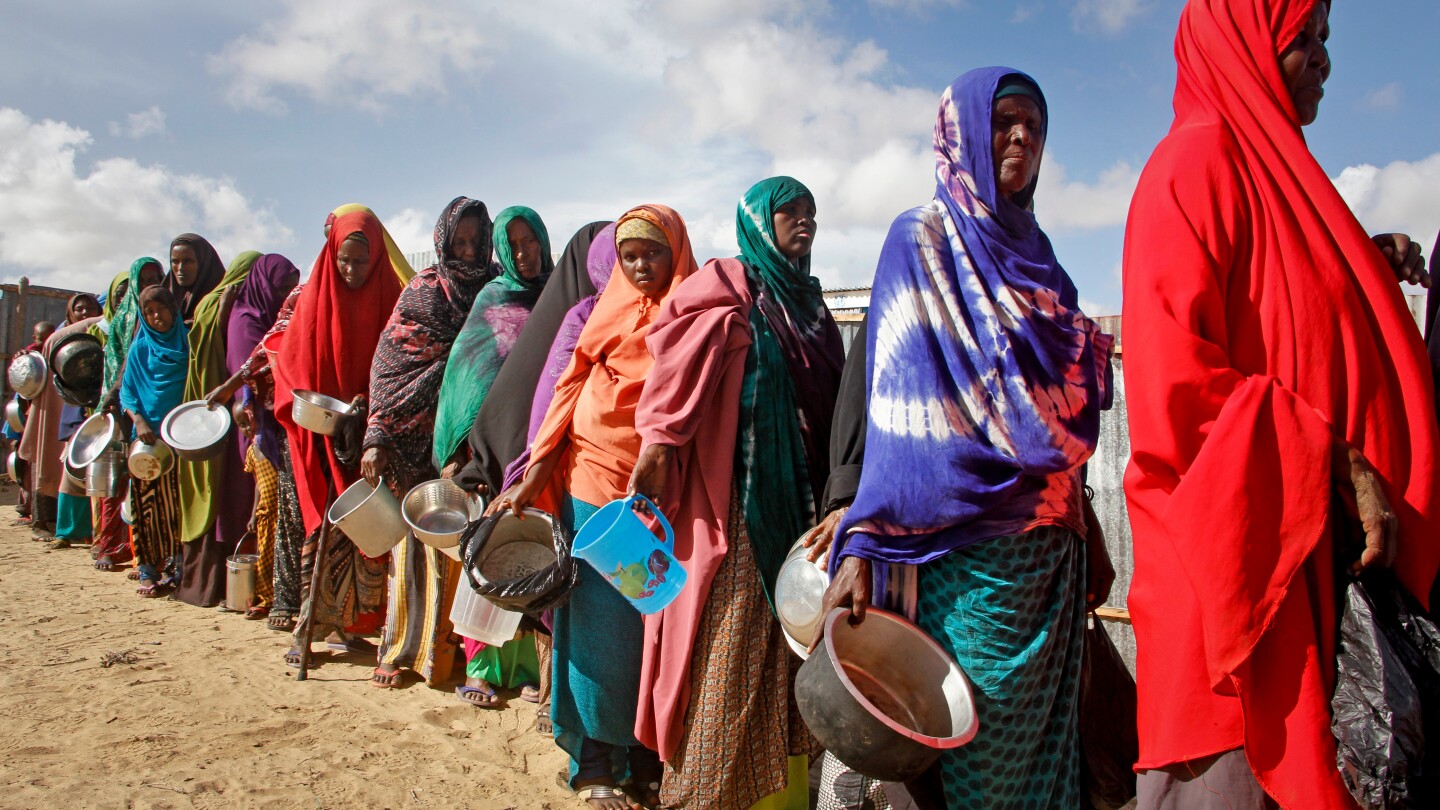
    A significant diplomatic rift has emerged between the United States and Somalia following allegations that Somali authorities demolished an American-funded World Food Program warehouse and confiscated humanitarian aid destined for vulnerable civilians. The U.S. State Department announced an immediate suspension of all assistance to Somalia’s federal government on Wednesday, citing the Trump administration’s “zero-tolerance policy for waste, theft and diversion of life-saving assistance.”

    According to a senior U.S. official speaking anonymously, Mogadishu port authorities destroyed the UN agency’s warehouse under direct orders from President Hassan Sheikh Mohamud without prior notification to international donors. The official described this action as particularly concerning given Somalia’s severe food crisis affecting approximately 4.4 million people.

    The Somali government has vehemently denied these allegations through its foreign ministry, asserting that the referenced food commodities “remain under the custody and control of the World Food Program.” Officials attributed the incident to ongoing expansion and repurposing works at Mogadishu port, maintaining that humanitarian operations remain unaffected.

    However, the World Food Program contradicted the government’s account, confirming to The Associated Press that its warehouse had indeed been demolished while containing 75 metric tons of specialized nutritious foods intended for malnourished pregnant women, breastfeeding mothers, and young children. The UN agency emphasized the critical timing of this incident, with nearly a quarter of Somalia’s population facing crisis-level hunger.

    This controversy unfolds against the backdrop of Somalia’s protracted humanitarian crisis, exacerbated by chronic conflict, insecurity, and recurring natural disasters. The Horn of Africa nation remains one of the world’s poorest countries, historically dependent on international assistance. The now-suspended U.S. aid amounted to $770 million during the last year of the Biden administration, though only a fraction directly reached the Somali government.

    The aid suspension coincides with the Trump administration’s increasingly restrictive policies toward Somali refugees and migrants in the United States, including heightened scrutiny over fraud allegations involving childcare centers in Minnesota and significant entry restrictions.

    The broader implications of this decision extend beyond Somalia, as demonstrated by parallel aid restrictions imposed on South Sudan. The U.S. Embassy in Juba announced suspensions targeting specific regions, accusing South Sudanese officials of “abuse, exploitation, and theft directed against U.S. foreign assistance.” These developments signal a tougher American stance on foreign aid accountability under the current administration.

  • Spain’s Catholic Church signs deal on sexual abuse compensation

    Spain’s Catholic Church signs deal on sexual abuse compensation

    In a historic move addressing decades of institutional failure, Spain’s government and Roman Catholic Church leadership have established a groundbreaking cooperative framework to provide compensation for victims of clergy sexual abuse. This unprecedented agreement creates a state-managed pathway for victims to seek reparations even when legal avenues are unavailable due to expired statutes of limitations or deceased perpetrators.

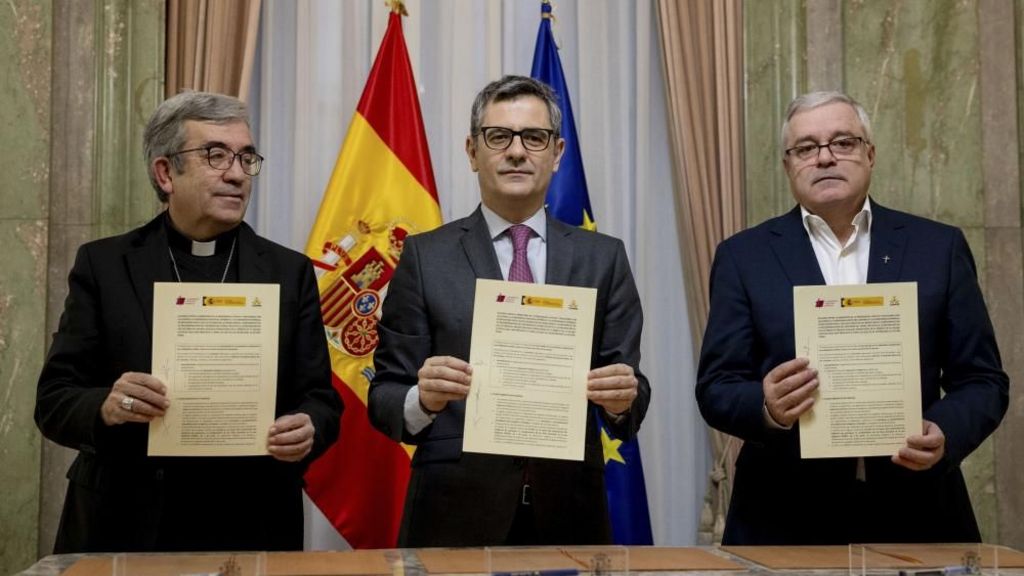
    The accord, signed by Justice Minister Félix Bolaños and Church representatives including Episcopal Conference President Luis Argüello, represents a significant shift from the Church’s previous independent handling of abuse cases. Under the new system, victims will submit claims to a specialized agency within the justice ministry, which will then forward cases to the ombudsman’s office for evaluation and reparation proposals. The Church must accept these proposals or return them for reconsideration.

    This development follows mounting pressure from victims’ organizations and international scrutiny from the Vatican. A comprehensive 2023 study by Spain’s ombudsman estimated that approximately 440,000 Spaniards—1.1% of the population—had suffered sexual abuse by clergy or Church-affiliated individuals, though the Church has contested these figures.

    The agreement acknowledges multiple forms of reparation, including symbolic gestures, psychological support, and financial compensation. While specific monetary amounts remain undefined, the ombudsman has suggested benchmarking against European standards, where payments have ranged from €6,000 in Belgium to approximately €63,000 in Ireland.

    The initiative comes after years of criticism regarding the Church’s handling of abuse cases. Its internal reparations scheme, established in 2023, had resolved only 58 cases by November and faced accusations of opacity and exclusion of victim input. Last June, several victims’ groups severed ties with the Spanish Church, alleging systematic exclusion from reparations processes.

    This Spanish agreement aligns with global patterns of addressing clerical abuse, following major scandals that emerged initially in North America during the 1980s and subsequently across numerous Catholic-majority nations. While Spain experienced relatively fewer public scandals initially, recent investigations and high-profile cases—including the November resignation of Cádiz bishop Rafael Zornoza over abuse allegations—have brought the issue to national prominence.

    Victims’ advocates have welcomed the agreement as a crucial step toward accountability. Juan Cuatrecasas of the Association for Stolen Childhood described the arrangement as addressing ‘an endemic, structural evil’ within the Church that required institutional acknowledgment rather than continued concealment.

  • New burial rules promote eco-friendly rituals, curb high costs

    New burial rules promote eco-friendly rituals, curb high costs

    In a landmark move addressing public concerns over funeral costs and environmental sustainability, China’s State Council has introduced comprehensive revisions to national funeral management regulations. The updated framework, representing the first major overhaul since 2012, will take effect March 30 with significant implications for burial practices nationwide.

    The reforms establish a fundamental shift toward non-profit governance, mandating that all newly established funeral service institutions must be government-operated and non-commercial. No new for-profit funeral entities will be permitted under the revised regulations, which aim to reinforce the public-service nature of burial services.

    A key innovation involves categorizing funeral services into ‘basic’ and ‘nonbasic’ tiers. Essential services including corpse transportation, storage, cremation and eco-burials will be incorporated into a national list with legally standardized pricing. Nonbasic services will face stringent price controls to prevent exploitation through hidden charges or fraudulent pricing practices.

    The regulations introduce substantial penalties for violations, including fines ranging from 30,000 to 200,000 yuan ($4,300 to $28,600) for infractions such as hospital morgues outsourcing services or providers creating unauthorized fees. More severe penalties target the manufacture or sale of conventional burial items like coffins in cremation-mandated areas, with fines potentially reaching two to five times illegal gains when exceeding 100,000 yuan.

    Environmental conservation forms a cornerstone of the new policy. The regulations encourage sea burials, tree burials, flower burials and lawn burials in cremation regions, while promoting deep burials without tombstones or ground hardening where conventional burial remains permitted. Financial subsidies may be provided to support eco-friendly interments.

    The rules explicitly prohibit tomb construction on cultivated land, forests, urban parks, scenic spots, cultural protection zones, and areas near reservoirs, river embankments and water sources. Existing graves in prohibited zones—except those of historical significance—must be relocated or deep buried without mounds.

    While respecting ethnic burial customs, the regulations encourage all citizens to adopt environmentally sustainable and land-efficient burial methods. The State Council described the move as part of broader efforts to ‘strengthen the public welfare attributes of the funeral industry’ and ‘promote socialist spiritual civilization.’

    Additionally, online memorial platforms inducing excessive consumption or mishandling deceased individuals’ data face penalties of 100,000 to 300,000 yuan and potential shutdowns. Local governments must establish funding mechanisms to meet basic public needs, with the state gradually incorporating eligible funeral services into the national basic public service system.

  • Russian drone strikes cause major blackouts in two regions of Ukraine

    Russian drone strikes cause major blackouts in two regions of Ukraine

    In a severe escalation of attacks on civilian infrastructure, Russian drone strikes have triggered a massive power outage across southern Ukraine, leaving entire regions without electricity during winter conditions. Officials confirmed on Thursday that the Zaporizhzhia region experienced a complete blackout for four hours—the first total power loss since the invasion began—while over 600,000 households in Dnipropetrovsk remained without electricity into the afternoon.

    The systematic targeting of energy facilities represents Moscow’s continued strategy of ‘weaponizing winter’ against civilian populations, denying basic heating and utilities as temperatures drop. Ukrainian President Volodymyr Zelenskyy condemned the attacks as militarily unjustified, emphasizing their devastating humanitarian impact.

    These developments unfold against complex diplomatic maneuvers. Zelenskyy revealed that a security agreement with the United States stands ‘ready to be finalized,’ potentially to be signed alongside President Donald Trump. This agreement, designed to deter future Russian aggression, would only take effect following a peace settlement. Meanwhile, Ukraine has presented peace options to U.S. officials for potential discussion with Moscow, though Russia shows no public willingness to compromise.

    The human cost continues to mount beyond power outages. Russian ballistic missiles struck apartment buildings in Kryvyi Rih, injuring ten people with one in critical condition. Russia’s Defense Ministry meanwhile claimed to have intercepted 66 Ukrainian drones over various territories, including annexed Crimea and adjacent seas.

    Zelenskyy has urgently called for enhanced international pressure on Moscow and warned citizens of potential new massive attacks, urging vigilance toward air raid alerts in coming days.

  • US seizure of Maduro creates fear, uncertainty for residents of Caracas

    US seizure of Maduro creates fear, uncertainty for residents of Caracas

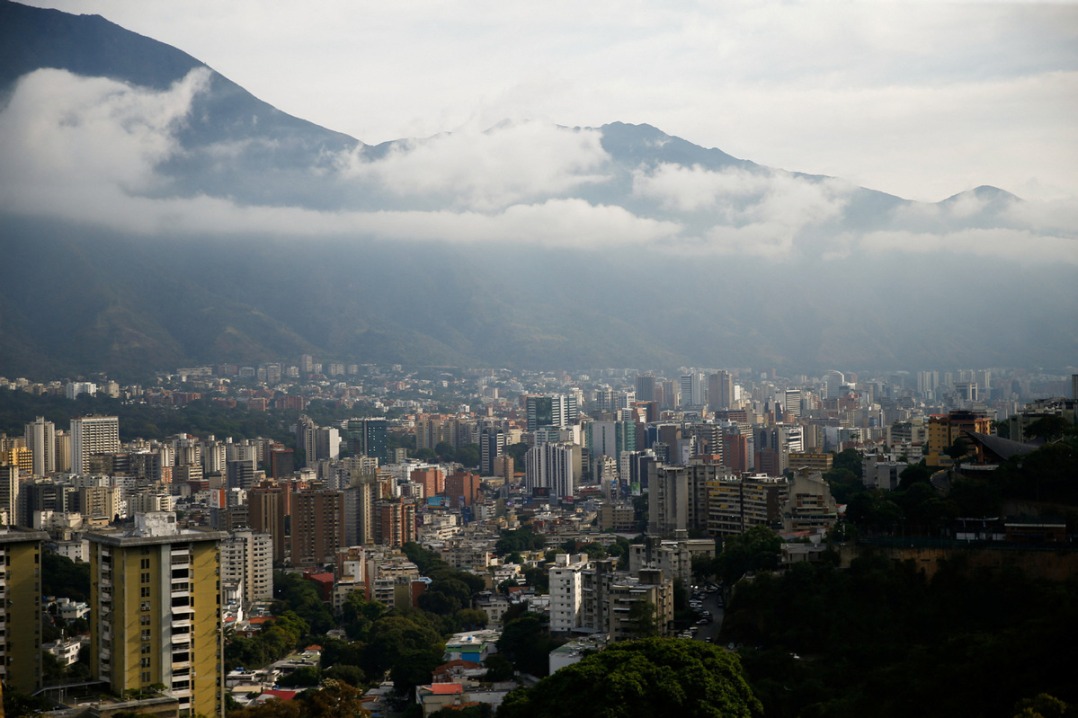
    A palpable sense of dread and confusion has engulfed Venezuela’s capital city following a dramatic nighttime military operation by United States forces that resulted in the capture of President Nicolas Maduro. The unprecedented intervention, which Caracas residents describe as a sovereign violation, has created an atmosphere of suspended normalcy throughout the city.

    Norell Ramirez, a local kiosk owner, revealed to China Daily that the initial shock of Saturday’s bombing raid kept most citizens awake through the night. ‘I maintained my shop closure until Sunday due to overwhelming fear—an emotion that persists today,’ Ramirez stated. ‘The uncertainty stems from not knowing what might happen next. They bombed in early morning hours, and there are confirmed casualties.’

    While official death tolls remain unverified, preliminary estimates indicate approximately 80 fatalities, including both Venezuelan security personnel and civilians. The Cuban government separately confirmed that 32 of its citizens working within Venezuela were among those killed.

    The psychological impact on Caracas residents has been exacerbated by contradictory narratives emerging from Washington and local authorities. Ramirez expressed the collective confusion: ‘Despite surface-level calmness, we receive conflicting messages—President Trump declares one reality while our government asserts another. This leaves us uncertain about appropriate actions or beliefs.’

    Maria Antonieta Peralta, a healthcare professional in Caracas, described the situation as ‘very strange,’ noting existing medication shortages have worsened amid widespread apprehension. ‘I’m navigating mixed emotions of fear and uncertainty while attempting to determine the optimal path forward for our nation,’ Peralta explained. ‘We must maintain daily routines pretending nothing is wrong, yet constantly worry about potential colonial treatment.’

    Jose Camacho, another resident, voiced strong opposition to the US intervention despite acknowledging Venezuela’s challenges. ‘I’ve managed to progress under both Chavez and Maduro’s administrations—securing employment, housing, and transportation,’ Camacho emphasized. ‘While not everyone experiences equal comfort, we’ve recently seen improvements in power stability and resource availability. Now American involvement forces compliance with external demands, which feels fundamentally unjust.’

    The military operation has created visible urban tension, with some businesses remaining shuttered while others tentatively reopened Monday. Public transportation continues operation, though many citizens prefer monitoring developments through state media and mobile devices from their homes.

  • Russia slams Western peacekeeping plan for Ukraine

    Russia slams Western peacekeeping plan for Ukraine

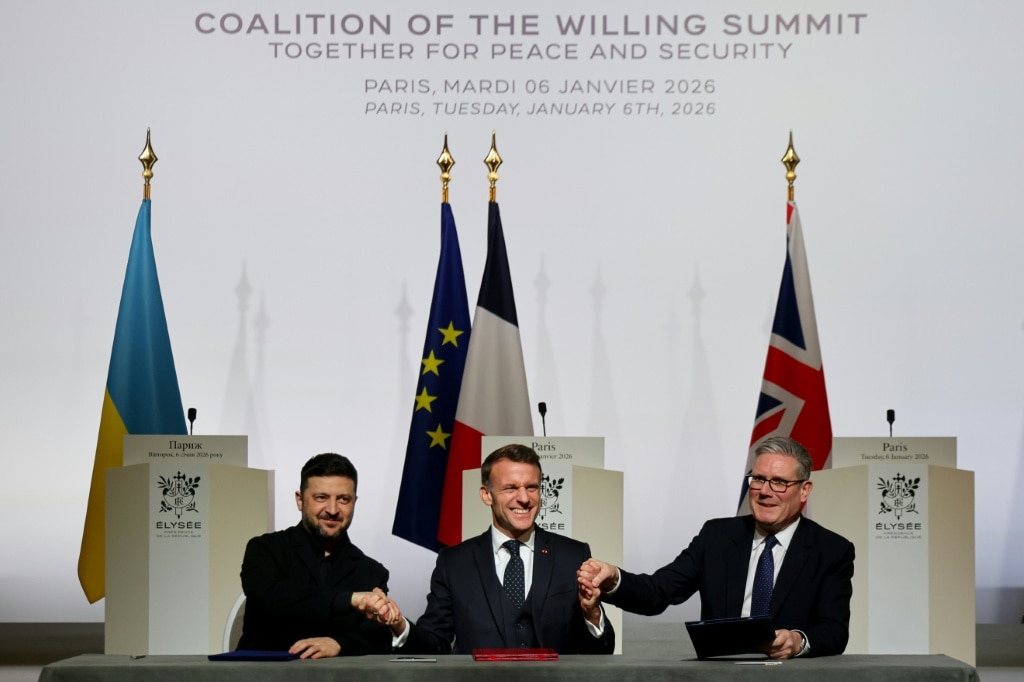
    Russia has vehemently condemned Western proposals for post-conflict security arrangements in Ukraine, dismissing them as ‘dangerous’ and ‘destructive’ initiatives that effectively create an ‘axis of war’. The sharp criticism from Moscow’s foreign ministry spokeswoman Maria Zakharova came in response to recent diplomatic efforts by Ukraine’s allies, who convened in Paris to establish security guarantees for Kyiv that included provisions for a potential multinational peacekeeping force.

    The diplomatic developments unfolded alongside intensified military actions, with Russian strikes causing widespread power outages affecting approximately 500,000 households across Ukraine’s Dnipropetrovsk and Zaporizhzhia regions. These attacks, which Ukrainian authorities described as a ‘national level emergency’, resulted in three fatalities in the southern city of Kherson and forced educational institutions to extend holiday closures.

    President Volodymyr Zelensky confirmed that bilateral security agreements between Ukraine and the United States are nearing finalization, emphasizing that binding security assurances from allies remain essential to deter future Russian aggression. However, critical negotiation points regarding territorial control of the eastern Donbas region and the status of the Russian-occupied Zaporizhzhia nuclear facility remain unresolved.

    Moscow’s position appears increasingly uncompromising, with repeated warnings that any NATO peacekeeping deployment would be considered legitimate military targets for Russian forces. German Chancellor Friedrich Merz acknowledged the significant distance to any ceasefire agreement, stating that Russia’s consent—which currently seems unlikely—remains prerequisite to any sustainable security arrangement.

    The simultaneous escalation of diplomatic rhetoric and military operations suggests both sides are positioning for protracted conflict rather than imminent resolution, with security guarantees becoming the latest focal point in the nearly four-year confrontation.

  • Saudi-led coalition accuses UAE of helping separatist leader flee Yemen

    Saudi-led coalition accuses UAE of helping separatist leader flee Yemen

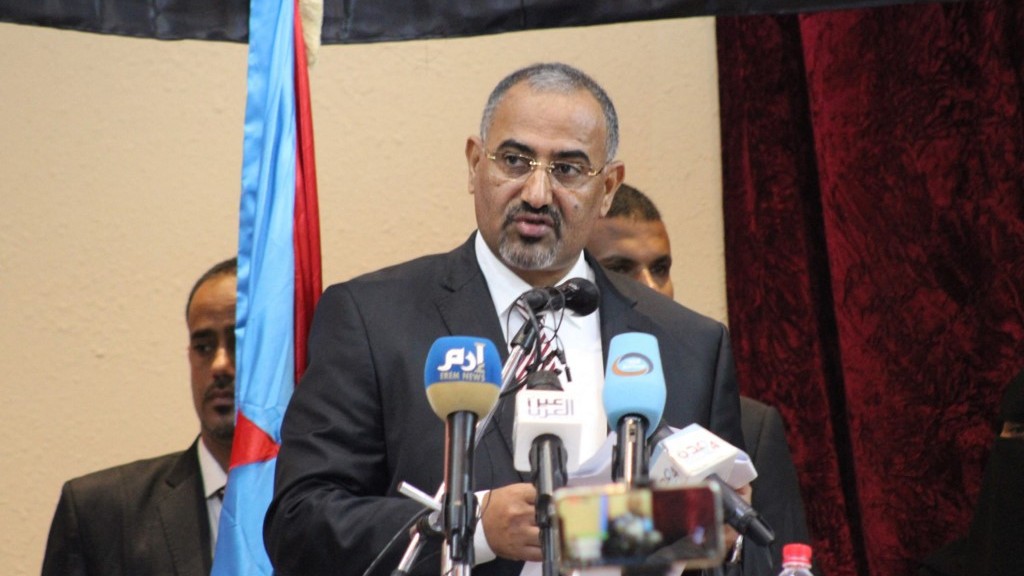
    A significant diplomatic rift has emerged between key Gulf allies as Saudi Arabia’s coalition command has formally charged the United Arab Emirates with orchestrating an elaborate clandestine operation to extract separatist leader Aidarous al-Zubaidi from Yemen following treason allegations.

    Coalition spokesman Major General Turki al-Maliki disclosed in an official Thursday statement that intelligence confirmed Zubaidi, head of the UAE-backed Southern Transitional Council (STC), departed Aden via maritime route on January 7th. The operation reportedly involved the vessel Bamedhaf, which sailed from Port of Aden shortly after midnight with its identification systems disabled while navigating toward Somaliland.

    According to detailed coalition accounts, the ship docked at Berbera around midday where Zubaidi allegedly contacted Major General Awad Saeed bin Musleh Al-Hababi, identified as joint operations commander in the UAE Armed Forces. The group subsequently boarded an Ilyushin Il-76 transport aircraft—a type commonly utilized in conflict zones across Libya, Ethiopia and Somalia—which departed without declaring its intended destination.

    The aircraft made a brief stop at Mogadishu International Airport before proceeding toward the Arabian Gulf. Coalition tracking indicated the plane again disabled its transponder over the Gulf of Oman before reactivating systems prior to landing at Al Reef military airport in Abu Dhabi at 20:47 Saudi time.

    Maritime records reveal Bamedhaf sails under the flag of Saint Kitts and Nevis, matching the registry of another vessel previously implicated in transporting combat vehicles and weapons from Fujairah to Mukalla—a shipment destroyed by Saudi airstrikes on December 30th.

    The extraction operation occurred amid escalating tensions, with coalition officials noting Zubaidi had ignored direct instructions to travel to Saudi Arabia for urgent talks regarding STC-led violence in Hadhramaut and al-Mahra. This development follows Yemen’s Presidential Leadership Council charging Zubaidi with high treason for allegedly damaging Yemen’s political and military standing, forming illegal armed groups, and committing severe violations against civilians and military personnel.

    Coalition forces are currently tracking several figures believed to have facilitated Zubaidi’s escape, including former Aden governor Ahmed Hamid Lamlas and Security Belt Forces commander Mohsen al-Wali, both reportedly out of contact.

    This incident represents the latest manifestation of growing friction between nominal allies, following last week’s Saudi condemnation of UAE support for southern separatists and the subsequent UAE announcement withdrawing military personnel from Yemen citing ‘recent developments.’