作者: admin

  • Flydubai cancels flights to Iran until January 11 amid protests

    Flydubai cancels flights to Iran until January 11 amid protests

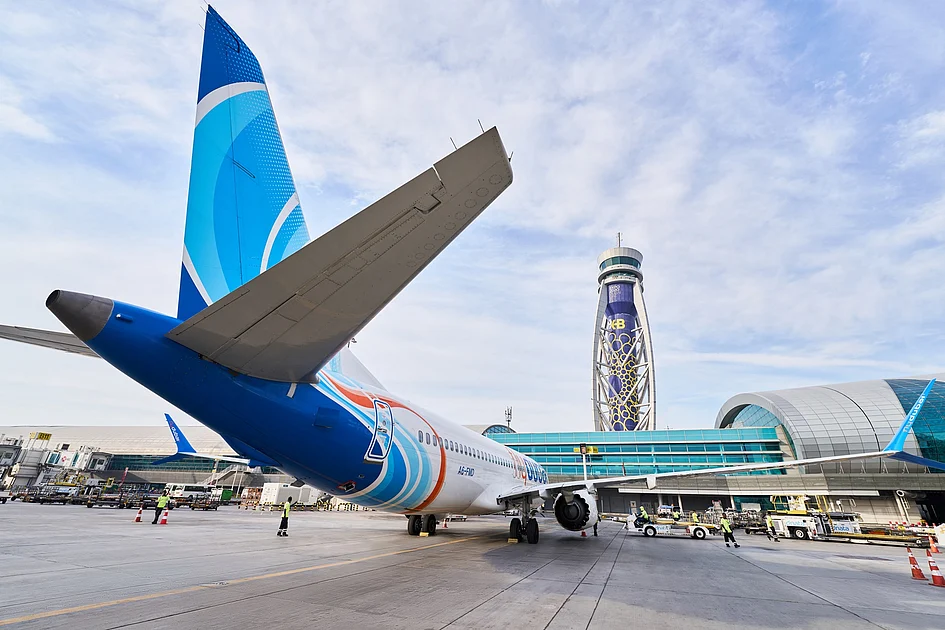
    Dubai-based carrier flydubai has officially extended flight cancellations to Iran through January 11, 2026, citing ongoing civil unrest and security concerns within the country. The airline specifically suspended operations to Bushehr Airport (BUZ) and Esfahan Airport (IFN) as widespread protests continue to disrupt normal operations.

    The decision comes amid escalating tensions in Iran where demonstrations that began on December 28 over economic grievances have evolved into broader political challenges. Authorities have implemented severe measures including nationwide internet restrictions, creating operational challenges for international airlines.

    Flydubai issued an official apology to affected passengers, emphasizing that passenger and crew safety remains their paramount concern. The airline has established direct communication channels with impacted travelers regarding rebooking alternatives and refund procedures.

    Passengers holding reservations for Iran routes are advised to contact the airline’s Dubai-based customer service center, visit official travel shops, or coordinate with their booking agents. The carrier also recommended that travelers maintain updated contact information through the ‘Manage your booking’ portal on flydubai.com for real-time flight status updates.

    This marks the second cancellation announcement from flydubai, which previously suspended Iran flights on January 9 amid similar concerns. The extended suspension reflects the airline’s cautious approach to the evolving security situation in the region.

  • Meta locks 500,000 accounts in Australia but calls for a ‘better way’

    Meta locks 500,000 accounts in Australia but calls for a ‘better way’

    In an unprecedented global move, Australia’s implementation of a social media prohibition for users under 16 has resulted in the mass deactivation of hundreds of thousands of accounts across major platforms. Meta, the parent company of Instagram, Facebook, and Threads, reported disabling approximately 500,000 accounts during the initial enforcement period from December 4-11, 2023.

    The landmark legislation, which took effect on December 10, mandates age restrictions across nine prominent social media platforms including Instagram, Threads, Facebook, TikTok, Snapchat, X, YouTube, Reddit, and Kick. This regulatory intervention automatically deactivates or removes accounts belonging to minors under 16 years of age.

    Prime Minister Anthony Albanese characterized the policy as “one of the biggest social and cultural changes that our nation has faced” during the initiative’s launch. He acknowledged the implementation “won’t be perfect” but emphasized its significance as a “profound reform” expected to influence global approaches to youth digital protection. The Prime Minister noted that several other nations are considering emulating Australia’s regulatory framework.

    The legislative action follows News Corp’s ‘Let Them Be Kids’ advocacy campaign, with government officials stating the primary objective is to provide “greater peace of mind for Australian parents” regarding their children’s online activities.

    Meta, while asserting compliance with the new regulations, has simultaneously advocated for alternative approaches to age verification. The technology corporation proposed that age validation would be more effectively implemented at the app store level rather than within individual applications. This methodology, Meta contends, would prevent the “whack-a-mole effect” of minors migrating to newer, less-regulated platforms to circumvent the restrictions.

    The company further recommended establishing industry-wide incentives to develop “safe, privacy-preserving, age appropriate experiences online” as a more sustainable solution than blanket prohibitions. This position highlights the ongoing tension between regulatory intervention and technological innovation in addressing youth digital safety concerns.

  • Sudanese government announces return to capital Khartoum

    Sudanese government announces return to capital Khartoum

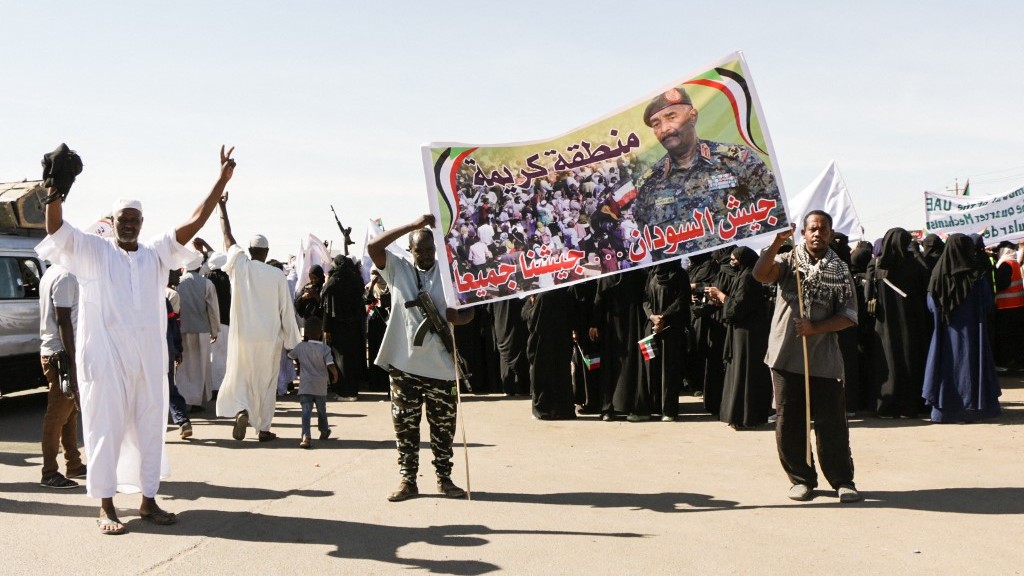
    In a significant political development, Sudan’s transitional administration has declared its intention to reestablish operations in the national capital of Khartoum after relocating to Port Sudan in 2023 due to escalating military conflicts. Prime Minister Kamel Idris formally announced the governmental return on Sunday, pledging enhanced public services for Khartoum’s residents during a press briefing in the city.

    The Prime Minister, who previously served as a United Nations official, proclaimed that ‘the government of hope is returning to the national capital,’ emphasizing the symbolic importance of this transition. Idris had previously dissolved Sudan’s caretaker government in June, replacing it with a technocratic administration that he characterizes as focused on national recovery. However, the unelected leader faces criticism from some quarters who view him as a civilian representative for the Sudanese Armed Forces (SAF).

    This governmental relocation occurs against the backdrop of a devastating civil war that erupted in April 2023 between the SAF and the paramilitary Rapid Support Forces (RSF). The conflict forced the SAF-aligned government to abandon the capital and establish temporary headquarters in Port Sudan, which has since functioned as the primary hub for humanitarian aid distribution and commercial maritime activities.

    The human cost of the conflict has been staggering, with approximately 13 million people displaced nationwide. Current territorial control shows the RSF maintaining dominance over five states in the Darfur region, while the Sudanese army controls the remaining 13 states across southern, northern, eastern, and central regions, including Khartoum.

    These opposing factions previously collaborated in 2019 to overthrow Omar al-Bashir’s three-decade regime but fractured in 2023. The RSF faces serious allegations of genocide and war crimes, including mass killings in el-Fasher last November, with reports indicating military support from the United Arab Emirates. Simultaneously, the SAF confronts accusations of human rights violations and wartime atrocities, creating a complex humanitarian and political crisis that continues to unfold.

  • First lady of Philippines, Louise Araneta-Marcos, visits Dubai, discusses trade ties

    First lady of Philippines, Louise Araneta-Marcos, visits Dubai, discusses trade ties

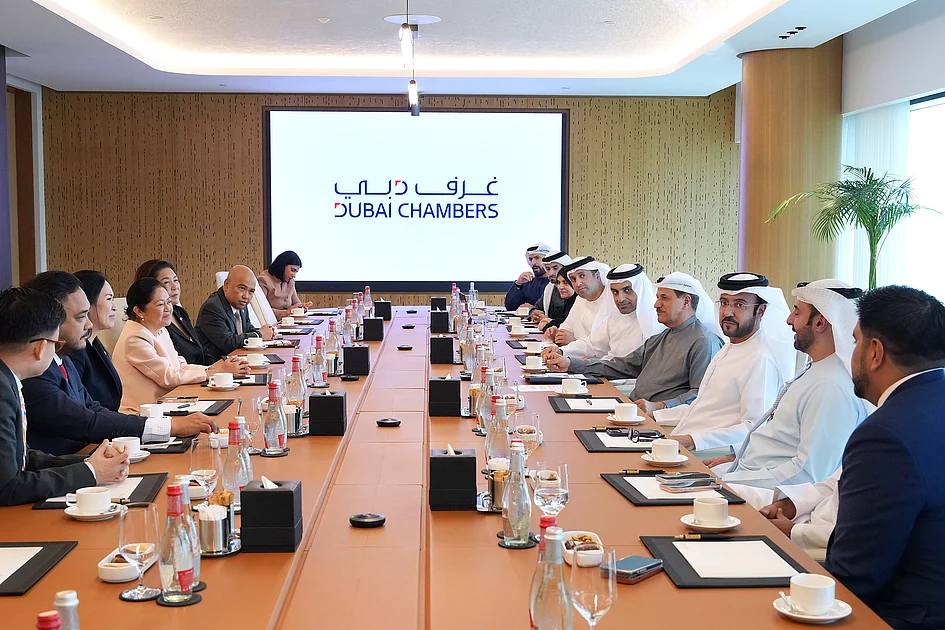
    In a significant diplomatic engagement, Philippine First Lady Louise Araneta-Marcos conducted a high-level meeting with Dubai Chambers leadership on January 11, 2026, to explore enhanced economic collaboration between the two regions. The delegation, led by Eng. Sultan bin Saeed Al Mansoori, Chairman of Dubai Chambers, and President/CEO Mohammad Ali Rashed Lootah, presented Dubai’s strategic advantages as a global business hub.

    The comprehensive presentation detailed Dubai’s exceptional infrastructure, strategic geographical positioning, and pro-business regulatory environment designed to facilitate international trade. Both parties identified multiple sectors with substantial potential for mutual economic cooperation, building upon already robust bilateral relations.

    Current trade metrics demonstrate flourishing economic ties, with non-oil bilateral trade reaching AED 3.1 billion in 2024. The partnership has seen remarkable growth, with 653 Philippine companies joining Dubai Chamber of Commerce in just the first three quarters of 2025, bringing total active Philippine member companies to 2,508 by September 2025.

    This visit builds upon previously established cooperation frameworks, including a successful trade mission to Manila featuring 17 Dubai-based companies across diverse sectors. The earlier mission facilitated 180 bilateral business meetings and culminated in the signing of a Memorandum of Understanding between Dubai Chamber of Commerce and the Philippine Chamber of Commerce and Industry. The agreement established formal mechanisms for continued commercial collaboration and knowledge exchange between the business communities of both nations.

  • Iran president to address ‘people’s demands’, economic situation in interview

    Iran president to address ‘people’s demands’, economic situation in interview

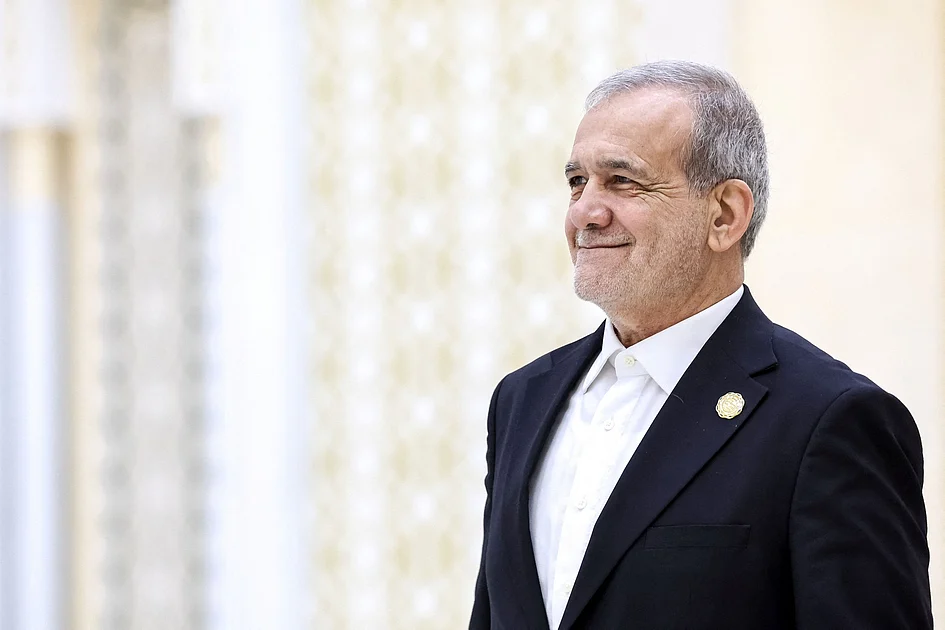
    Iranian President Masoud Pezeshkian is set to deliver a nationally televised address on Sunday evening addressing mounting public discontent over economic conditions and outlining governmental responses to ongoing protests. The presidential interview comes after two weeks of sustained demonstrations triggered by escalating living costs and economic pressures throughout the country.

    According to state broadcaster IRIB, President Pezeshkian will detail his administration’s comprehensive economic strategy, particularly focusing on proposed reforms to Iran’s subsidy infrastructure. The broadcast will also cover the government’s position regarding recent civil unrest and its approach to addressing citizen demands.

    The announcement follows a period of significant social unrest marked by public demonstrations expressing frustration over inflation and economic hardship. Simultaneously, the Iranian government has declared three days of national mourning for unspecified ‘martyrs,’ though official statements have not elaborated on the circumstances surrounding these casualties.

    This confluence of events—economic protests, presidential response, and national mourning—creates a complex socio-political landscape in Iran. The administration’s communication strategy appears designed to acknowledge public grievances while maintaining governmental authority and control over the narrative.

    The upcoming address represents a critical moment for President Pezeshkian’s administration as it attempts to balance economic policy announcements with responses to civil discontent. The effectiveness of this communication approach in addressing both immediate public concerns and long-term economic planning remains to be seen as Iran navigates this period of economic challenge and social tension.

  • Bahrain opposition leader Ebrahim Sharif given six-month sentence for Israel criticism

    Bahrain opposition leader Ebrahim Sharif given six-month sentence for Israel criticism

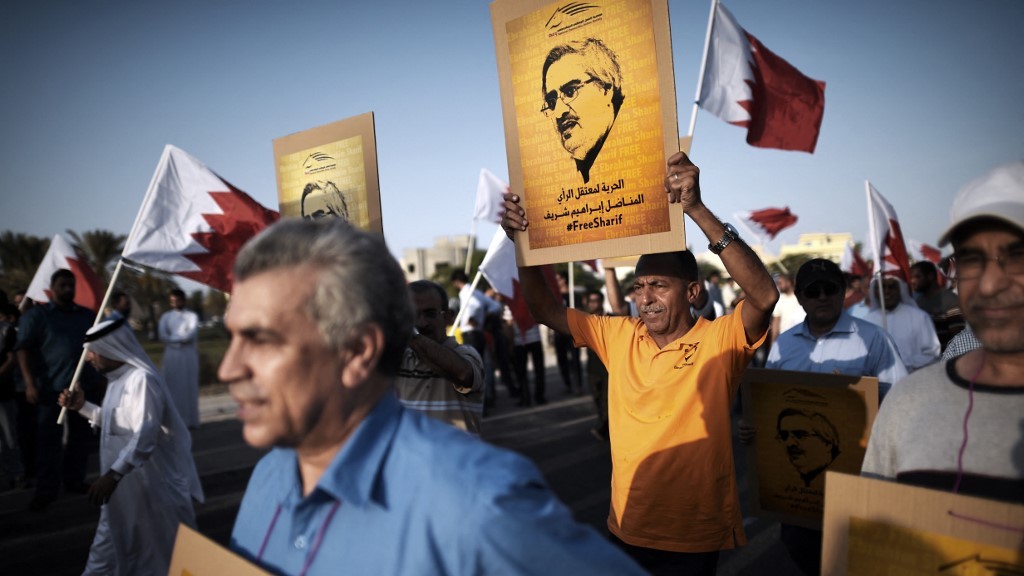
    Bahrain’s political landscape faces renewed scrutiny as prominent opposition figure Ebrahim Sharif receives a six-month prison sentence for his vocal criticism of the kingdom’s diplomatic relations with Israel. The sentencing by Bahrain’s Lower Criminal Court on Thursday marks the latest development in a case that has drawn international condemnation from human rights advocates.

    Sharif, a secular leftist activist and head of the National Democratic Action Society (Wa’ad), was convicted on charges of “spreading false news on social media” and “making offensive remarks against sister Arab states and their leaders.” The court specifically cited an interview Sharif gave to LuaLuaTV in Beirut where he condemned Arab nations for their perceived failure to support Palestinians and their increasing ties with Israel.

    According to the Public Prosecutor’s office, Sharif’s statements contained “false and offensive information about Arab countries, accusing them of collusion and conspiracy” while encouraging citizens to “resist and rise up against their governments.” The court additionally imposed a fine of 200 Bahraini dinars ($530).

    This case represents the tenth instance since 2011 that Bahraini authorities have arrested, interrogated, or prosecuted Sharif, who emerged as a significant figure during the 2011 pro-democracy protests. His sentencing occurs against the backdrop of Bahrain’s 2020 normalization of relations with Israel through the US-brokered Abraham Accords, a move that has generated substantial domestic criticism that intensified following Israel’s military operations in Gaza.

    Human rights organizations have condemned the verdict as emblematic of Bahrain’s deteriorating free expression environment. Sayed Ahmed Alwadaei of the Bahrain Institute for Rights and Democracy described the sentence as setting “a chilling precedent” where “a prominent public figure is being criminalized for standing with Palestine.”

    The case unfolds amid ongoing concerns about Bahrain’s prison conditions. Recent reports from UN committees and organizations like Human Rights First have documented consistent allegations of torture and mistreatment of political prisoners, despite Bahrain being a signatory to the UN Convention Against Torture. Last month, Human Rights First submitted a dossier to the US administration recommending sanctions against Bahrain’s Interior Minister for alleged oversight of torture practices.

    The UN Committee Against Torture’s November assessment expressed deep concern about “consistent reports indicating that persons in custody are subjected to torture or ill-treatment” and noted “the reported lack of accountability, which contributes to a climate of impunity.”

  • ‘Avatar: Fire and Ash’ tops box office for fourth straight week with newcomer ‘Primate’ second

    ‘Avatar: Fire and Ash’ tops box office for fourth straight week with newcomer ‘Primate’ second

    LOS ANGELES — James Cameron’s cinematic phenomenon ‘Avatar: Fire and Ash’ continues its remarkable box office reign, securing the top position for the fourth consecutive weekend during Hollywood’s traditionally quiet January period. The latest installment in the Pandora saga generated $21.3 million in North American theaters for The Walt Disney Co., maintaining its strong performance despite the industry’s seasonal slowdown.

    The film has now accumulated $342.6 million domestically and $888 million internationally, recently joining its predecessors as a billion-dollar franchise. Meanwhile, Paramount Pictures’ new horror release ‘Primate’ emerged as the week’s top newcomer with $11.3 million in domestic earnings and $13.4 million globally.

    Disney’s animated sequel ‘Zootopia 2’ demonstrated extraordinary longevity since its November debut, particularly resonating with Chinese audiences. The film has grossed $1.65 billion worldwide, positioning it to potentially surpass 2019’s ‘The Lion King’ ($1.66 billion) as Disney’s highest-grossing animated feature. In its seventh week, the animation collected $10.1 million domestically, bringing its North American total to $378.8 million.

    Lionsgate’s thriller ‘The Housemaid’ continued its impressive commercial performance, earning $11.2 million domestically in its fourth weekend. With a production budget of just $35 million, the film has generated $94.15 million in North America and $192.5 million worldwide, prompting the studio to greenlight a sequel.

    The box office results arrived as Hollywood focused on the Golden Globe Awards, where both ‘Avatar: Fire and Ash’ and ‘Zootopia 2’ received two nominations each. Among major Globe contenders, only A24’s ‘Marty Supreme’ appeared in the weekend’s top ten, finishing sixth with $7.6 million and a $70.1 million four-week domestic total. The film earned nominations for Best Picture Musical or Comedy, Best Actor for Timothée Chalamet, and Best Screenplay for co-writer and director Josh Safdie.

    Industry analysts note that 2026 has begun strongly, with weekend revenues showing a 23% increase compared to the same period in 2025. This upward trend follows a challenging 2025 that saw declining theater attendance, generating optimism that 2026 could become the industry’s strongest performing year of the decade with anticipated releases including new ‘Avengers,’ ‘Spider-Man,’ ‘Toy Story,’ ‘Super Mario Bros,’ and ‘Dune’ installations.

  • Iran authorities make ‘significant’ arrests over protests

    Iran authorities make ‘significant’ arrests over protests

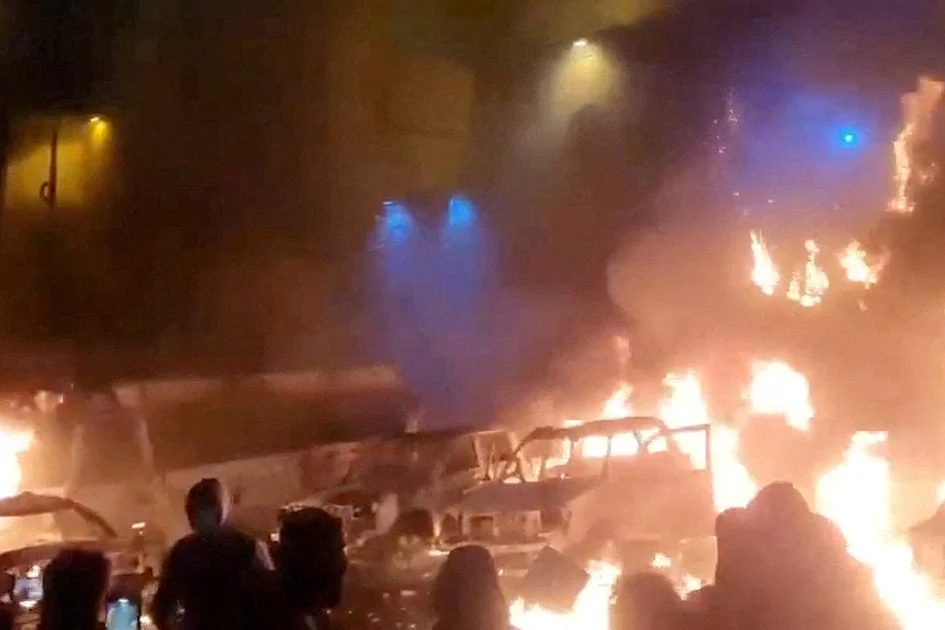
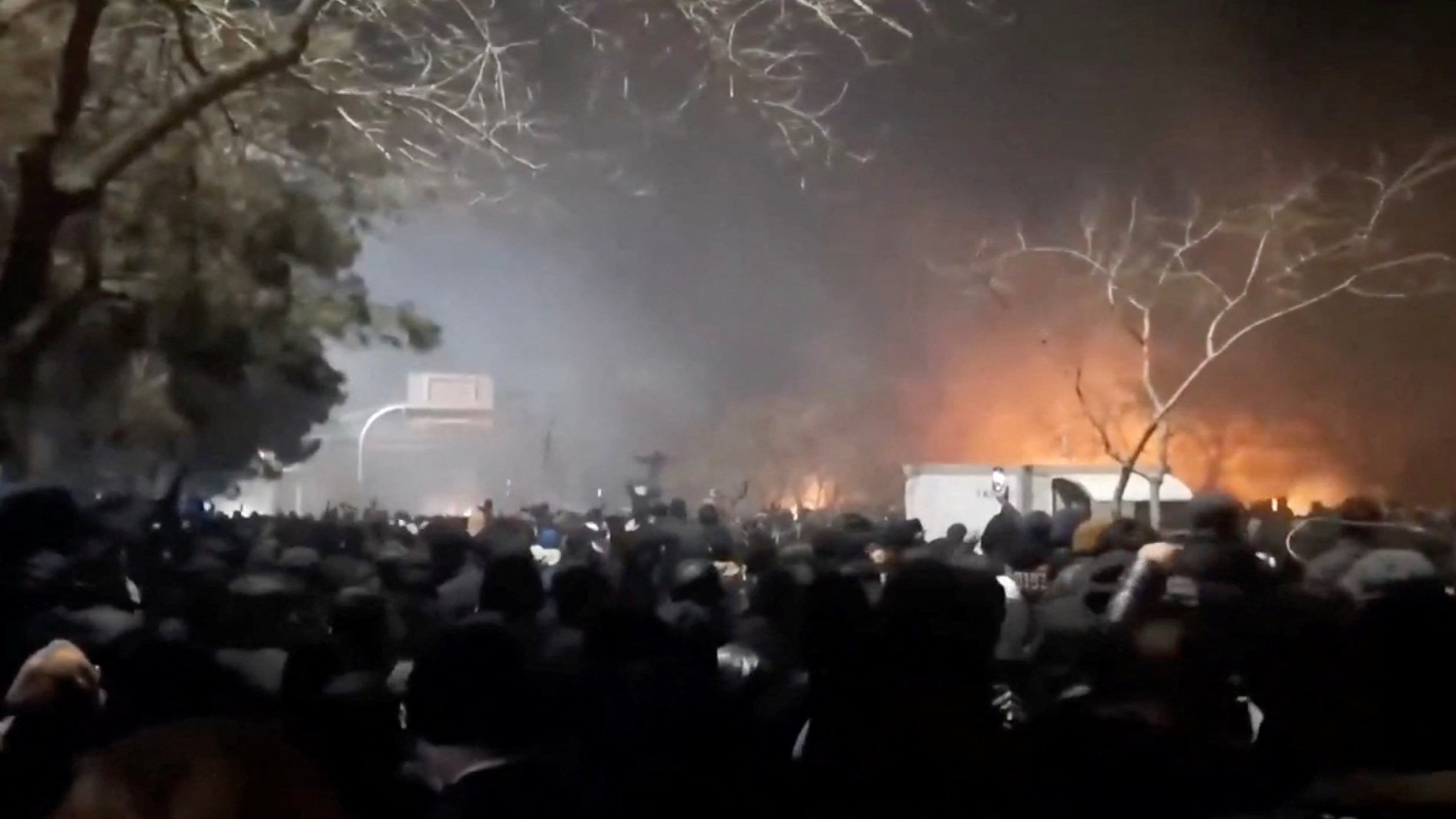
    Iranian authorities have confirmed the detention of prominent figures within the nationwide protest movement that has gripped the Islamic Republic for two weeks. National Police Chief Ahmad-Reza Radan disclosed on state television that “significant arrests were made of the main elements in the riots” during Saturday evening operations, though specific details regarding the number or identities of those detained remain undisclosed.

    The government has implemented a strategic differentiation between legitimate economic grievances and what it categorizes as unlawful disturbances. Iran’s security chief Ali Larijani characterized protests stemming from economic hardship as “completely understandable” while condemning what he termed “riots” that employ methods “very similar to the terrorist groups.”

    Tehran presents a landscape of escalating tension and economic strain. According to AFP correspondents, the capital experiences near-paralysis with substantial price inflation—meat costs have nearly doubled since demonstrations began. Commercial activity remains severely restricted, with operating businesses forced to close by late afternoon coinciding with intensified security deployments.

    Communication networks have faced deliberate disruption, with mobile services becoming largely unavailable on Saturday, effectively severing contact channels for organizers and participants. The government’s containment strategy extends beyond arrests to include systematic suppression of information flow.

    Exiled opposition figure Reza Pahlavi, son of the deposed shah, has emerged as a vocal supporter of the demonstrations, urging continued street presence and promising future personal involvement. Meanwhile, international tensions escalate as U.S. President Donald Trump has threatened military intervention should Iranian authorities initiate lethal force against protesters.

    Iranian officials responded with unequivocal warnings. Parliament Speaker Mohammad Bagher Ghalibaf declared that any American military action would trigger retaliatory strikes against “occupied territory and centres of the US military and shipping,” implicitly referencing Israel which Iran considers occupied Palestinian land.

  • Musk’s X to open source new algorithm in seven days

    Musk’s X to open source new algorithm in seven days

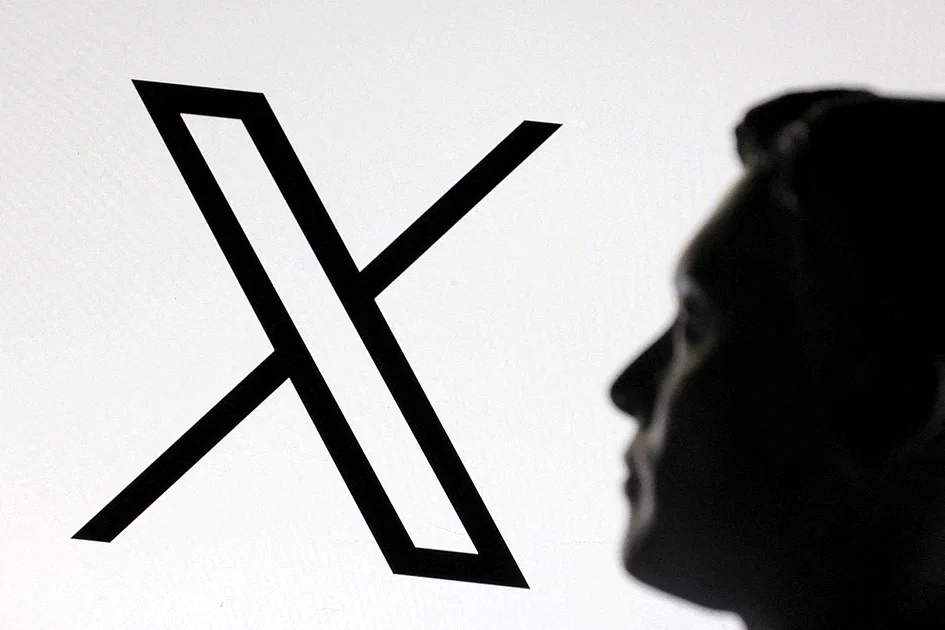
    In a significant transparency move, Elon Musk declared via his social media platform X that the company will publicly release its new recommendation algorithm, including complete code for both organic and advertising content distribution, within seven days. This unprecedented disclosure marks a radical shift in how social media platforms traditionally guard their proprietary algorithms.

    The announcement, made on Saturday, establishes a recurring monthly release cycle where X will provide comprehensive developer documentation alongside code updates. This initiative aims to offer external observers detailed insights into the platform’s algorithmic evolution and content prioritization mechanisms.

    This development occurs against the backdrop of intensified regulatory pressure from European authorities. The European Commission has formally extended its retention order concerning X’s algorithms and illegal content dissemination practices until December 2026, as confirmed by spokesperson Thomas Regnier. This regulatory action originated from ongoing investigations into potential algorithmic bias and data extraction violations.

    Simultaneously, X faces mounting criticism regarding its AI image generation capabilities. The platform’s Grok feature has reportedly enabled widespread creation of nonconsensual sexualized imagery through simple text prompts. According to experts and watchdog organizations, including The Midas Project and the National Center on Sexual Exploitation, X failed to implement adequate safeguards despite prior warnings about potential misuse.

    Tyler Johnston of The Midas Project stated, ‘We previously cautioned that xAI’s image generation essentially functioned as a weaponizable nudification tool—precisely what has now materialized.’ Legal representatives emphasize that X neglected to remove abusive training materials or ban users requesting illegal content, raising serious ethical and legal concerns about the platform’s content moderation policies.

    Musk’s response to the controversy involved posting laugh-cry emojis alongside AI-modified images of public figures, further intensifying debate about the platform’s approach to serious ethical issues surrounding artificial intelligence and user safety.

  • Israeli social media erupts with calls for overthrowing Iran’s government

    Israeli social media erupts with calls for overthrowing Iran’s government

    Israeli social media platforms have become flooded with overt demands for the Iranian government’s overthrow as widespread protests intensify across the Islamic Republic, prompting authorities to implement a near-total internet shutdown.

    While Israel’s current political leadership has maintained official silence regarding the demonstrations, former Israeli officials, commentators, and activists have enthusiastically embraced the prospect of Tehran’s government collapsing, characterizing the turmoil as a potentially transformative historical moment.

    Israeli media outlets report that security agencies have counseled politicians against public commentary on the protests, cautioning that such statements might inadvertently validate Iran’s narrative that the unrest is being engineered by Israel and the United States, potentially causing substantial diplomatic harm.

    Defying these advisories, former far-right Knesset member Moshe Feiglin declared on social media platform X that Iran’s regime would inevitably fall, emphasizing that the critical issue was which forces would influence the post-Islamic Republic political landscape.

    Right-wing Israeli activist Yoseph Haddad expressed support for the demonstrations, sharing an image alongside supporters of Iran’s former monarchy with the caption: “God willing, soon we will be able to wave these two flags together side by side in Tehran.”

    Some Israeli commentators analyzed the situation through an economic lens, describing Iran as a “dormant energy and minerals giant” possessing enormous gas and mineral reserves. One prominent right-wing account suggested that foreign intervention might be justified to access Iran’s resources, proposing that “a little military assistance” could be exchanged for future economic advantages.

    These statements reflect persistent Israeli and Western dialogues concerning Iran’s strategic importance, even as protesters within Iran maintain that their demands stem from economic survival and political dignity rather than geopolitical considerations.

    Left-wing Israeli voices expressed solidarity with protesters while cautioning against attempts to co-opt the uprising or idealize authoritarian alternatives. Israeli journalist Orly Noy described the emotional complexity of witnessing the events in Iran, expressing hope that she might someday revisit her homeland while warning against growing support for Iran’s exiled former crown prince among Israeli and diaspora audiences.

    Another left-wing activist noted that while his “heart is with the protesters,” Israel would likely seek a new regional adversary if Iran could no longer fulfill that role, potentially enabling continued justification of Israel’s treatment of Palestinians as self-defense.

    Inside Iran, protests initially triggered by rising prices of essential goods nearly two weeks ago have expanded into broader demonstrations challenging the political system itself. The unrest has spread across multiple cities, with participants chanting slogans such as “death to the dictator” directly targeting Supreme Leader Ali Khamenei.

    Iranian officials have minimized the scale of the disturbances and characterized protesters as violent vandals operating under foreign direction. In a televised address, Khamenei dismissed the protests as insignificant and accused the United States of exploiting the situation, while Foreign Minister Abbas Araghchi alleged that the U.S. and Israel were encouraging unrest to destabilize the Islamic Republic.

    Iran’s economy continues to struggle under the weight of years of U.S.-led sanctions, rampant inflation, and a sharply declining currency, leaving substantial portions of the population unable to afford basic necessities.