作者: admin

  • Italy restores lucky testicles on bull mosaic worn down by tourists

    Italy restores lucky testicles on bull mosaic worn down by tourists

    Deep in the heart of Milan’s iconic 19th-century Galleria Vittorio Emanuele II, one of Italy’s most beloved cultural landmarks is finally getting a lifeline. The historic prancing bull mosaic, a symbolic emblem of Italy’s first capital Turin, has fallen victim to generations of a charming but destructive tourist tradition, prompting local authorities to launch a full restoration project this week.

    For more than a century, a folk legend has drawn millions of visitors to the floor-mounted artwork: tourists who twist three times on the spot with their heel pressed against the bull’s genital area are said to receive good fortune and a guaranteed return trip to Milan. What started as a local custom popular among 19th-century Milanese has evolved into a must-do ritual for casual travelers, with thousands of visitors repeating the grinding spin every single day.

    This constant friction has taken a severe toll on the centuries-old artwork. Years of repeated contact have carved a noticeable crater into the mosaic’s sensitive “lucky spot”, where the soft pink tiles that form the bull’s testicles have slowly worn away to almost nothing. This is not the first time the landmark has needed repair: the last full restoration effort was carried out back in 2017, but the unrelenting stream of participating visitors has required another intervention just under a decade later.

    Work got underway earlier this week, with a small protected work zone erected around the mosaic to allow master artisan Gianluca Galli to carry out careful, hands-on repairs. Onlookers gathered around the site to watch Galli kneel over the artwork, hand-cutting replacement stone tiles to match the original work and patch the eroded area.

    In an interview with AFP, Galli acknowledged the charm of the centuries-old tradition while noting its unavoidable impact on the fragile artwork. “It’s probably a charming gesture, but also quite damaging for a work of art,” he explained.

    Local city councillors Emmanuel Conte and Marco Granelli framed the restoration as a balancing act between preserving living heritage and accommodating the public’s deep affection for the landmark. “The Galleria is a living heritage, which can wear away precisely because it is loved and experienced: we take care of it so that it continues to be so,” they shared in an official statement. The project aims to fully restore the mosaic to its original 19th-century glory, ensuring it can be enjoyed by future generations of visitors who come to seek their luck at the famous landmark.

  • White House says Iran and US agreed to 60-day ceasefire extension, awaiting Trump’s approval

    White House says Iran and US agreed to 60-day ceasefire extension, awaiting Trump’s approval

    Tensions spanning the Persian Gulf have taken a tentative turn toward diplomacy, after negotiators from the United States and Iran hammered out a preliminary agreement to extend an existing bilateral ceasefire for 60 days. The deal, crafted to create a window for talks on a permanent end to hostilities, still requires formal sign-off from both US President Donald Trump and Iran’s supreme leadership, the White House has confirmed.

    The breakthrough comes at a moment of rapidly escalating friction between the two nations, as the current ceasefire framework collapsed into open conflict in recent days. The US launched a series of airstrikes targeting Iran’s Bandar Abbas port, prompting Tehran to retaliate with a missile strike against a US military installation based in Kuwait.

    If finalized, the 60-day truce is expected to clear the way for negotiations on deeply divisive core issues that have strained US-Iran relations for decades, including Iran’s civilian nuclear program and the rollback of crippling US economic sanctions. According to reporting from Axios, the tentative agreement includes specific security provisions for the Strait of Hormuz, one of the world’s most critical global energy chokepoints. Under the terms, Iran would guarantee unimpeded, toll-free passage for all commercial shipping through the strait and clear all naval mines from the waterway within 30 days of the ceasefire taking effect.

    The question of transit fees for the Strait of Hormuz has already sparked sharp pushback from US leadership. Iran had previously pushed to impose a transit charge on ships passing through the waterway, holding preliminary discussions on the proposal with Oman, which shares territorial water boundaries with Iran in the strait. During a press briefing Wednesday, Trump issued an explicit threat against Oman if it backed the Iranian proposal, insisting the strait must remain open to all global traffic as international waters. “No, the strait is going to be open to everybody,” Trump stated. “It’s international waters, and Oman will behave just like everybody else, or we’ll have to blow them up.” US Treasury Secretary Scott Bessent doubled down on this threat Thursday, announcing the US would “aggressively target” Oman if it assisted Iran in implementing a toll system for the strait.

    Additional terms of the draft ceasefire include a gradual lifting of the US naval blockade on Iranian ports, with the easing of restrictions tied directly to verified increases in restored commercial shipping activity out of Iranian terminals. The memorandum of understanding also includes a preliminary Iranian commitment not to pursue the development of nuclear weapons, with the disposal of Iran’s existing stockpiles of enriched uranium set to be one of the first topics addressed during expanded negotiations.

    Tehran has long made sanctions relief and the unlocking of billions of dollars in Iranian assets frozen overseas core demands for any long-term agreement. Per Axios’ reporting, the tentative 60-day truce commits US negotiators to open formal discussions on both of these demands during the ceasefire period. The draft framework also includes provisions to negotiate a formal mechanism that would allow Iran to receive essential commercial goods and humanitarian aid from the international community.

    Aaron David Miller, a veteran former US State Department negotiator with decades of experience working on Middle East diplomacy, framed the tentative deal as a small first step rather than a breakthrough, writing on social platform X that the agreement amounts to “a ticket to a negotiation – a letter of intent – if you will – to negotiations on all core issues.” He cautioned that the coming talks would be fraught with difficulty, adding, “Get ready for painful negotiations that will feel like daily root canals and migraine headaches.”

  • ‘Dad strength’: Veteran Rooster in career-best form as his side looks to avenge horror record against the Storm

    ‘Dad strength’: Veteran Rooster in career-best form as his side looks to avenge horror record against the Storm

    As the Sydney Roosters prepare to face the Melbourne Storm at AAMI Park this Saturday, veteran Roosters enforcer Naufahu Whyte says the 15th-place ladder position of the perennial powerhouse means nothing. For Whyte, who has followed the Storm since early childhood, the Melbourne side has been a consistent benchmark of excellence in the National Rugby League (NRL) for nearly two decades.

    Calculated from when Whyte first started watching rugby league at age four, the Storm have only fallen short of a top-four finish on three occasions since the 2006 season. That long history of dominance is why Whyte admits he remains stunned by the club’s underwhelming 2026 form, even as he prepares his side for a brutal battle on the Storm’s home turf.

    “I’ve watched Storm growing up my whole life and never once did I see them outside the top four. So it’s crazy, man,” Whyte told NewsWire. “But that’s footy sometimes, and things don’t always go your way. When we go down there this week, we’re not going to expect any less from them … On the ladder or whatever doesn’t mean anything. Melbourne Storm is still Melbourne Storm, and they’re still a hard team to beat down in Melbourne.”

    Whyte knows firsthand how tough the Storm can be: he has only claimed victory once in six career appearances against them. The Roosters as a whole have also struggled against the NRL’s two modern powerhouses, Melbourne and the Penrith Panthers, notching just three wins from their last 27 combined matches against the two sides. Yet recent history gives the Roosters confidence heading into this weekend’s clash.

    Last year, the Roosters righted their wrongs against the Storm with a stunning come-from-behind thrashing in Melbourne, where they scored 40 unanswered points in the second half to lock in the win. Earlier this 2026 season, the Roosters pulled off an upset against the Panthers in a round two clash, securing victory despite being missing several key starting players.

    “I think people sleep on us a lot about going up against Penrith and Storm,” Whyte said. “I know stats-wise it hasn’t shown, but I’ll back our team to beat any pack at the end of the day. When we’re at our best, we can beat anyone that stands in front of us.”

    Whyte added that those two upset wins have reshaped the squad’s belief that they can compete with the league’s elite. “That win towards the back end of the year going into finals and everything definitely was a huge leap for us and gave us confidence going into that finals series even if it didn’t come off the way we wanted it to,” he explained. “Even at the start of the season against Panthers, we didn’t have anybody and we still managed to come away with the win. So it just goes to show we can compete with the top teams, and I believe that we are a top team in this comp. I know when we’re at our best, I know a lot of teams fear us being at our best.”

    Leading the forward pack this Saturday, Whyte will count on valuable support from impact substitute Nat Butcher, who is currently playing the best football of his 10-year NRL career. Butcher, who made his league debut in 2016, has filled multiple roles for the Roosters across his career, shifting between middle forward, edge position, and his current role off the interchange bench. This season, he is averaging a career-high 112 running metres per game, and put up a massive 182-metre performance with a try against Brisbane just weeks ago.

    Whyte credits Butcher’s new status as a father of three for his elevated form, after Butcher and his wife welcomed twin daughters in January that expanded their young family to five children. “I think he is in his career-best form right now,” Whyte said. “I kind of look at him and he’s got a little family of his own now, and you obviously just see that dad strength in him coming out. That mentality of wanting to provide for his family, that’s how I see him, and he’s playing his best footy. Big minutes, big carries, big tackles. He’s been doing that for a very long time, but I feel like it’s just this time around he’s getting his flowers, and he’s getting his recognition of what he does in the game.”

    Butcher himself says his career-best form comes after a frustrating injury-plagued 2025 season that forced him to miss extensive game time, which ultimately rekindled his appreciation for the sport. “I had a horrid year last year with the injury. That was super frustrating and I missed the game heaps, missed playing, missed being around the team, missed so many of those little things that you just don’t get to experience when you’re injured and on the sidelines,” Butcher said. “I had the amazing support of my wife, Harmony, and got to have some great time with my son, Beau, that you just wouldn’t get in the thick of the season. That was super grateful and it also put into perspective my love for the game, my love for the club, and my love for my teammates.”

    “I’m not sure if I can pinpoint anything. I think I just love what I’m doing,” he added.

  • WHO chief says Ebola ‘can be stopped’ as he lands in DR Congo

    WHO chief says Ebola ‘can be stopped’ as he lands in DR Congo

    The head of the World Health Organization touched down in the Democratic Republic of the Congo (DRC) Thursday, bringing a public message of resolve that the 17th Ebola outbreak recorded in the impoverished central African nation can be contained, even as ongoing armed conflict in the epidemic’s epicenter complicates response efforts.

    Tedros Adhanom Ghebreyesus, WHO’s Director-General, landed in Kinshasa, the DRC’s capital, Thursday evening. He is scheduled to travel Friday to Ituri province in the country’s unstable northeast, where the current outbreak is centered. In comments delivered shortly after his arrival, Tedros emphasized that the outbreak can be defeated, adding that the global health body rejects the imposition of travel bans on the DRC, arguing such measures provide little public health benefit. “Together, we will overcome this outbreak,” he stated, pledging to use “everything in my power to help you” in the response effort.

    According to the latest WHO data updated through May 24, the outbreak, formally declared on May 15, has already killed 10 confirmed and 223 suspected Ebola patients, out of more than 1,000 combined confirmed and suspected cases across the country. WHO officials have warned that the actual scope of transmission is likely far larger than official counts, as the virus circulated undetected for an unknown period before it was identified.

    Decades of persistent violence in northeastern DRC have created major barriers to mounting an effective response. The mineral-rich region has been plagued by clashes between armed groups for more than 30 years, and fighting between the Rwanda-backed M23 rebel group and government forces has intensified over the past 18 months, displacing thousands of people and disrupting access to affected communities. Tedros issued an urgent appeal to all warring factions in the region to lay down their arms. “Conflict and displacement make everything harder,” he said. “I am making a direct appeal to all warring parties in this region: please, declare a ceasefire. No cause, no conflict, no grievance is worth condemning innocent people to death from a preventable disease.”

    The current outbreak is driven by the Bundibugyo strain of Ebola, for which no specifically approved vaccine or treatment currently exists. However, Jean Kaseya, head of the Africa Centres for Disease Control and Prevention (Africa CDC), announced Thursday that a targeted vaccine and pharmaceutical treatments should be ready for deployment by the end of 2026. “What we can tell you for sure, by the end of this year, 2026, Africa CDC will make sure that we have a vaccine and medicine against Bundibugyo,” Kaseya told reporters during an online briefing, adding that African leaders have committed the necessary investment to accelerate development of the medical tools.

    International support for the response is already flowing into the country. The WHO confirmed it has delivered 4.6 tonnes of emergency response supplies to Bunia, the capital of Ituri province, while UNICEF, the United Nations’ children’s agency, is preparing to ship an additional 100 tonnes of aid to support affected communities. The WHO has also convened its expert advisory groups, which have recommended launching clinical trials for existing vaccine and treatment candidates that may prove effective against the Bundibugyo strain, and the organization says it will collaborate closely with authorities in the DRC and neighboring Uganda to coordinate research and regulatory evaluation of these products.

    Neighboring Uganda, which has recorded one confirmed Ebola death and six additional cases linked to the outbreak, has already moved to close its entire border with the DRC effective immediately. On the international stage, the United States has announced it will bar entry to any person infected with the virus, and the Trump administration is planning to open a dedicated treatment facility for infected U.S. citizens in Kenya, rather than repatriating patients for care in the United States as it has done during past Ebola outbreaks. The plan has sparked local pushback: a Kenyan human rights group filed a court petition Thursday seeking to block the facility’s operations, and Kenyan health officials have warned that hosting the center would add additional strain to the country’s already overstretched public health system.

    Ebola has a long history of deadly outbreaks across Africa. Over the past 50 years, the virus has killed more than 15,000 people across the continent. The deadliest outbreak in the DRC’s modern history struck between 2018 and 2020, killing nearly 2,300 people out of 3,500 confirmed cases.

  • Ghanaian mother and child detained at airport for days after arriving on valid visas, lawyers say

    Ghanaian mother and child detained at airport for days after arriving on valid visas, lawyers say

    A legal standoff over immigration policy and medical access is unfolding at Washington Dulles International Airport, where a 38-year-old pregnant Ghanaian woman and her 4-year-old son have been held in a windowless detention cell for more than a week, according to court filings from her legal team. The case has sparked sharp debate between civil rights advocates and federal authorities over the treatment of migrant asylum seekers entering the United States with valid travel documentation.

  • Artists back out of concerts for US 250th anniversary

    Artists back out of concerts for US 250th anniversary

    Just 24 hours after organizers unveiled the full performer lineup for Freedom 250, the multi-week concert series marking the United States’ 250th anniversary in Washington D.C., two of the nine announced headlining acts have publicly pulled out of the event, sparking widespread criticism and online mockery across social media platforms.

    Unveiled on Wednesday, the initial lineup leaned heavily on acts that reached the peak of their mainstream popularity decades ago. The roster included 1990s dance group C+C Music Factory, 1990s rap figure Vanilla Ice, and a surviving member of Milli Vanilli – the infamous lip-syncing duo, whose other founding member passed away in 1998. The announcement immediately drew backlash from online commentators, who questioned how a celebration of the nation’s 250-year history could feature a lineup full of dated, faded acts rather than contemporary, chart-topping American music stars.

    The first high-profile drop-out came from Grammy-nominated rapper Young MC, best known for his 1989 breakout hit *Bust a Move*. In an official Instagram post, the rapper confirmed he would not take the stage at the Freedom 250 event. He explained that while industry outlet SPIN had publicly labeled the celebration as a Trump-backed initiative, none of the contracted artists were ever informed of any political affiliations or ties to the former president tied to the event.

    Though Freedom 250 organizers have repeatedly emphasized that the event is officially nonpartisan, former president Donald Trump has moved ahead with a series of high-profile, politically charged plans tied to the summer 2026 anniversary celebration, seeking to tie his own political brand to the national milestone. The most prominent of these is a planned UFC fight card scheduled to be held on the White House South Lawn in June, timed to coincide with Trump’s 80th birthday.

    Shortly after Young MC’s announcement, veteran funk and R&B artist Morris Day – who rose to fame collaborating with the legendary Prince and appeared as Prince’s on-screen musical rival in the iconic 1984 film *Purple Rain* – also confirmed he was withdrawing from the celebration. In an Instagram statement, Day clarified that “Contrary to rumor, Morris Day and the Time will not be performing at the ‘Great American State Fair,’” a related component of the 250th anniversary events.

    The White House has declined to comment on the lineup changes and the growing controversy surrounding the celebration. While most remaining acts have stayed quiet on their political ties, Freedom Williams, lead vocalist for C+C Music Factory, pushed back hard against claims he supported Trump in a profanity-laced Instagram video – though he confirmed the group would still honor their booking and perform at the event.

    The lackluster lineup and unfolding drama have drawn widespread mockery from social media users, many of whom have pointed to the contrast between the historic milestone and the underwhelming celebration plans. One viral post on X from user @cturnbull1968 summed up popular frustration, writing: “We fought a Revolutionary War, a Civil War, two World Wars, defeated fascism and communism while establishing an indomitable Democracy that’s the envy of the world. And how are we going to celebrate 250 years of American exceptionalism? A UFC fight and Milli Vanilli.”

    The awkward timing of the Freedom 250 announcement only amplified the criticism, coming the same day that a high-profile progressive-leaning all-star concert was announced for Washington D.C. this fall. On Wednesday night, legendary rock singer Bruce Springsteen – a longstanding outspoken opponent of Trump – announced he would bring his tour back to the Washington area for the Power to the People Festival on October 3. He will be joined by other top-tier headliners including Foo Fighters, Dave Matthews, and iconic folk activist Joan Baez, a lineup that has been widely contrasted with the Freedom 250 roster online.

  • The Golden Trailer Awards: Hollywood’s ‘Oscars’ for movie previews

    The Golden Trailer Awards: Hollywood’s ‘Oscars’ for movie previews

    Every year, thousands of moviegoers around the world are drawn to cinemas by snappy, emotionally resonant previews that stick with them long before the feature film starts. This Thursday, the unsung creators behind these unforgettable clips step into the spotlight as the 26th annual Golden Trailer Awards gets underway in Los Angeles — an event widely hailed as the ‘Oscars of movie previews’ that honors the often-overlooked craft of trailer production.

    The awards ceremony traces its origins back to 1999, when co-founders Monica Brady and Evelyn Watters encountered a surprising gap in the entertainment industry while searching for a specialized team to produce a trailer. At the time, the editors and designers who shaped movie previews operated almost entirely in anonymity. As Brady told AFP in a recent interview, the professionals responsible for crafting some of the most memorable moments of the entire moviegoing experience received zero formal recognition for their work. They were not credited either on the trailers themselves or in the final film’s credits, and there was not even a centralized directory to connect productions with skilled trailer creators.

    What began as a small New York-based inaugural event, handing out just 19 awards, has grown dramatically over the past 26 years. Now based in Los Angeles, the heart of the global film industry, the Golden Trailer Awards now recognize outstanding work across more than 100 distinct categories, covering everything from big-budget blockbusters to independent features and streaming content.

    When it comes to what makes a standout trailer, co-founder Evelyn Watters says a powerful, unforgettable hook always comes first. Beyond that, a prizewinning preview typically offers audiences a fresh narrative thread, compelling characters, and an unexpected emotional beat that has not been seen in previous marketing. She frames a great trailer as a carefully balanced act of storytelling: ‘A winning trailer is a tempting appetizer, it is not the whole meal’ — enough to leave viewers hungry for the full feature without spoiling the entire plot.

    Taylor Engel, creative director at Create Advertising Group, which earned an impressive 16 nominations this year for its work on previews for *Sinners*, *Tron: Ares*, and *Only Murders in the Building*, compares the process of editing a trailer to assembling a complex puzzle. Teams often receive a scattered set of raw materials at the start of a project, ranging from the full completed cut of a film to only unedited dailies of individual scenes. The core challenge, Engel explains, lies in weaving together audio, visuals, and editing effects to craft a cohesive narrative that may reframe the film or highlight its most compelling unique elements, rather than just repeating the full movie.

    As the film marketing landscape has grown increasingly crowded, with hundreds of new releases vying for audience attention each year, competition among trailer creators has grown exponentially. One of the ceremony’s most popular categories even caters to a well-known industry quirk: the preview that ends up being more compelling than the film itself. Named the ‘Golden Fleece’ award, this year’s nominees include previews for the Elisabeth Moss-led horror film *Shell* and *The Strangers: Chapter 3*.

    Against a backdrop of widespread AI adoption across other sectors of Hollywood, from script writing to visual effects, trailer creation remains a distinctly human craft. Engel notes that unlike other entertainment roles, trailer editors do not face the same industry pressure to integrate artificial intelligence tools into their workflow. Every creative choice — from pairing a specific shot with a particular track of music to adjusting pacing to build tension — is rooted in original, intentional decision-making. While AI may eventually get better at replicating the structure of past successful trailers, Engel argues that the most exciting, memorable previews are those that bring entirely new concepts and styles to audiences, something that artificial tools cannot replicate.

    As the 26th ceremony kicks off, the event continues to fill its original mission: shining a long-overdue spotlight on the talented creators who shape first impressions of the films audiences love.

  • Messi to captain Argentina at the World Cup

    Messi to captain Argentina at the World Cup

    Four years after lifting the coveted World Cup trophy in Qatar, Argentine football icon Lionel Messi is set to make history this summer, after national team head coach Lionel Scaloni officially confirmed Thursday that the 38-year-old will wear the captain’s armband and lead the defending champions at the 2026 FIFA World Cup co-hosted by the United States, Canada, and Mexico. The announcement ends weeks of unofficial speculation, confirming that the eight-time Ballon d’Or winner will feature in a record-breaking sixth World Cup, a milestone only matched by Portugal’s Cristiano Ronaldo and Mexican goalkeeper Guillermo Ochoa in this year’s tournament.

    The 26-man roster unveiled by Scaloni retains 17 of the 26 players that delivered Argentina’s third World Cup title in 2022, blending veteran championship experience with exciting young emerging talent. Among the most notable inclusions is Tottenham Hotspur center-back and captain Cristian Romero, who earned a call-up despite suffering a season-ending knee injury last month that ruled him out of the remainder of the English Premier League campaign. Romero’s injury came after he was collided with by Sunderland striker Brian Brobbey, forcing him off the pitch prematurely, but Scaloni has opted to include the recovered defender in his final squad.

    Young prospects stepping into their first World Cup include 21-year-olds Nicolas Paz and Valentin Barco, as well as Palmeiras forward Jose Manuel Lopez, who earned his first international cap only last year. The announcement, however, brought several surprising omissions that have drawn attention across global football. Most notably, 18-year-old Franco Mastantuono, one of the most hyped young Argentine talents in recent years currently plying his trade at Real Madrid, was left out of the final cut. Other high-profile absentees include in-form Aston Villa attacking midfielder Emiliano Buendia and AS Roma star forward Paulo Dybala, both of whom missed out on a spot in the roster.

    In recent days, Messi has been the center of growing injury concerns after he was substituted early in Inter Miami’s 6-4 win over the Philadelphia Union in the 73rd minute. The Major League Soccer club confirmed this week that medical assessments diagnosed the forward with muscle fatigue in his left hamstring, but has yet to release a clear timeline for his return to competitive match action. Scaloni moved quickly this week to downplay fears over the issue, telling reporters the injury is not serious enough to threaten Messi’s participation in the tournament.

    The 2026 World Cup, the largest iteration of the tournament in history with an expanded 48-team format, will kick off on June 11. Argentina will open their title defense campaign five days later on June 16, facing Algeria in a Group Stage match hosted in Kansas City. Before the tournament gets underway, the South American side will travel to the United States to play pre-tournament warm-up friendlies against Honduras on June 6 and Iceland three days later on June 9. Argentina’s Group also includes Austria and Jordan, as the side looks to become only the third men’s national team to win back-to-back World Cup titles in the modern era.

  • New Zealand World Cup player finds social media fame after being named by soccer influencer

    New Zealand World Cup player finds social media fame after being named by soccer influencer

    In the lead-up to the 2026 FIFA World Cup co-hosted by Canada, the United States and Mexico, an unexpected viral social media movement has turned a little-known New Zealand defender into an overnight global soccer phenomenon. Thirty-two-year-old Tim Payne, a long-serving member of New Zealand’s men’s national team who just hit the milestone of 50 international caps after making his senior debut at age 18, has captured the hearts of soccer fans worldwide thanks to a coordinated campaign launched by an influential Argentine content creator.

    The mastermind behind Payne’s sudden rise to fame is Valen Scarsini, better known to his online fanbase as El Scarso, a popular soccer influencer with more than 500,000 followers of his own. Scarsini set out on a mission to find the most under-the-radar, little-known player set to feature at this year’s World Cup, combing through every participating nation’s squad list and analyzing each player’s social media following to identify his pick. After sorting through hundreds of candidates, he landed on Payne, who had only amassed roughly 4,700 Instagram followers earlier this week.

    In a post shared to his followers, Scarsini issued a unifying call to action: with just days remaining until the opening kickoff of the World Cup, why not rally behind a single underdog player that fans from every country could support, regardless of national loyalty? He urged his audience to mention Payne across every social platform, create short-form videos building up the “legend of Tim Payne,” and share photos of his sticker in World Cup collector albums, all with the goal of turning the anonymous defender into a household name before the tournament begins.

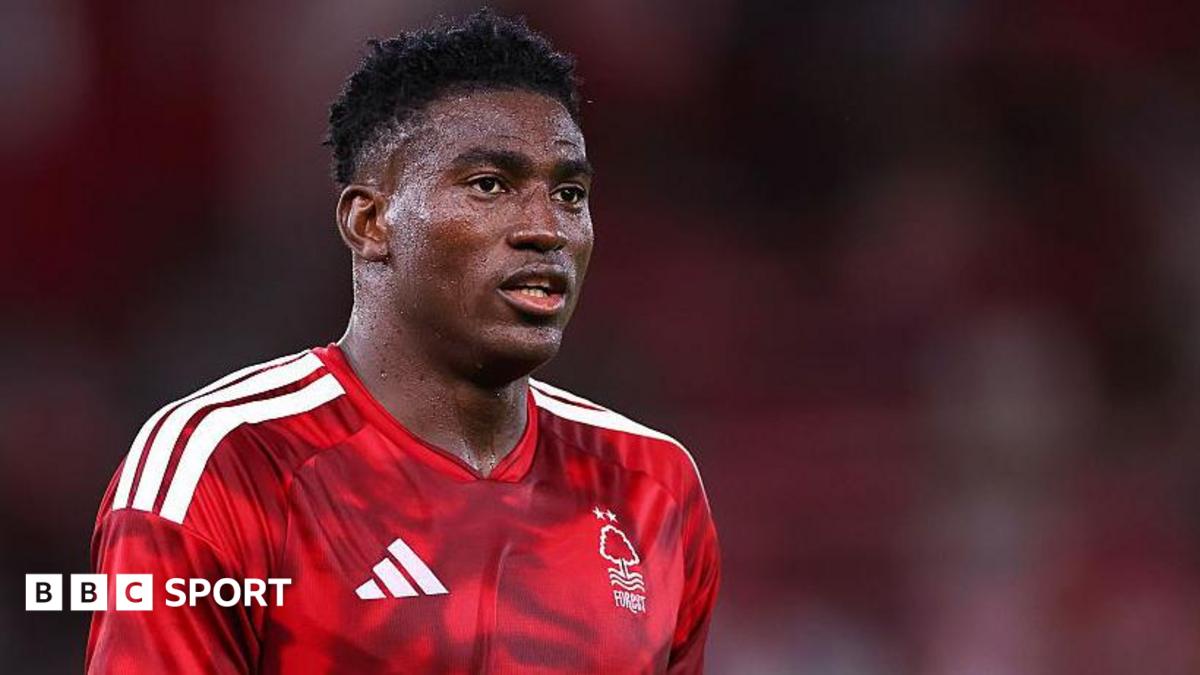
    The campaign has exceeded all expectations, triggering an astronomical surge in Payne’s social media following. In the days since Scarsini shared his call to action, Payne has been gaining new followers at a staggering rate of nearly 1,000 new fans per minute, pushing his Instagram follower count past the one million mark by Friday. To put that growth in perspective, Payne’s following is now six times larger than that of New Zealand captain and global soccer name Chris Wood, the Nottingham Forest forward who has long been the All Whites’ most recognizable player.

    The grassroots movement has grown so large that fans have even recorded an original dedicated track in support of Payne. The song’s Spanish chorus translates to: “I’ve got his back. I cheer him on. I’ve been rooting for him from the beginning. Tim Payne, from cradle to grave. You’re a crack. I cheer you on, every step,” and closes with a catchy pun: “no Payne, no gain.”

    The viral attention caught Payne entirely off guard, and he released a public statement Friday to respond to the outpouring of global support. “Was wondering why my socials were blowing up and found your post, man,” he said, addressing Scarsini directly. “Appreciate the love! Gracias, hermano. I just want to say a massive thank you first to you Valen. It’s been a pretty crazy 48 hours to say the least. I just wanted to also express that I’m very grateful to be representing my country and I appreciate all the love from all around the world.”

    New Zealand, nicknamed the All Whites, is making its third ever appearance at the men’s World Cup, having previously qualified in 1982 and 2010. The nation has yet to secure a win in World Cup competition, and will enter this year’s tournament drawn into Group G alongside Belgium, Iran, and Egypt.

  • Survival before safety for Delhi’s poor as temperatures hit 45C

    Survival before safety for Delhi’s poor as temperatures hit 45C

    In one of Delhi’s busiest commercial hubs, a stark divide plays out on a sweltering 40-plus degree Celsius afternoon. Inside air-conditioned showrooms, shoppers browse clothing racks in cool comfort, shielded from the brutal summer sun. Just steps outside, under an unforgiving blaze, street vendors, cycle-rickshaw operators, fruit sellers and ice cream cart owners keep working, their livelihoods dependent on enduring temperatures that can overwhelm even the fittest bodies. Even a short walk across the market leaves visitors drained, but for millions of India’s informal workers, stepping out of the heat is not a choice they can afford.

    Nearly 90 percent of India’s total workforce earns a living in the informal sector, where most lack formal employment contracts, job security or sick leave, and the vast majority rely on outdoor daily wage labor to put food on their families’ tables. Fifty-two-year-old cycle-rickshaw driver Harish Chandra is one of these millions, pedaling through Delhi’s congested streets until the heat becomes too crippling to continue. After splashing cold water from a public tap over his face, he sinks into a thin strip of shade edging the market, and sums up the struggle simply: “The body gives up.”

    Clad in a thin, worn cotton shirt, Chandra says Delhi’s summers have grown increasingly unendurable year after year. “My day starts around 9 a.m., when the heat is still manageable,” he explains. “But by noon, it becomes unbearable. The sun is so harsh that sometimes I can feel my body giving out mid-pedal. Still, if we stop working, we stop earning. And if we don’t earn, our families don’t eat.” To escape Delhi’s suffocating heat, Chandra recently sent his wife and three children back to their home village in Bihar. While temperatures there are just as high, he says open countryside and better ventilation make it far easier to cope than the capital’s cramped, congested residential lanes. For workers like Chandra, who spend almost all their waking hours outside, summer is no longer just a season—it is an annual battle for survival.

    India’s heat season typically runs from April through early July, when monsoon rains finally bring relief. But climate scientists warn that extreme heat events are growing longer, more intense and less predictable, as global warming supercharges heatwaves across South Asia. Former World Health Organization chief scientist Dr. Soumya Swaminathan told Indian news agency ANI this week that the temperatures now recorded across India are approaching the upper limits of human tolerability, representing a direct threat to both lives and livelihoods.

    Since mid-May, Delhi and surrounding regions have logged daily highs above 40°C, with afternoon temperatures sometimes climbing past 45°C. While a brief cool-down is forecast for the coming weekend, repeated extreme heatwaves have become a normalized part of Indian summers. Cities like Delhi are disproportionately at risk due to the urban heat island effect: concrete infrastructure, heavy traffic and limited green space trap heat, leaving city centers several degrees hotter than surrounding rural areas.

    India’s weather department and the Delhi government have issued regular heat warnings, and Prime Minister Narendra Modi recently posted on social media urging the public to stay hydrated, carry water when outdoors, and monitor for heat exhaustion, particularly among children, elderly people and outdoor workers. Delhi is one of several Indian cities with an official heat action plan, which includes color-coded heat alerts, public advisories to avoid outdoor activity during peak afternoon heat, free water kiosks and public cooling centers. But for daily wage workers, much of this guidance is impossible to follow. Rent is still due every month, and food still needs to be bought—regardless of how high the temperature climbs.

    Fifty-year-old tuk-tuk driver Mohammad Umar has been waiting for passengers near a busy traffic intersection since dawn. He rarely takes a day off, but last week the heat finally forced him to stay home. “My heart was racing, and my body had no strength left,” Umar recalls. “I must have bathed five times that day just to stay conscious.” But skipping work comes at a steep cost. “Losing a day of work means losing 500 to 700 rupees (roughly $5 to $7),” he says. “We still have to pay for food and daily essentials, so that money comes straight out of our tiny savings.”

    International projections paint a grim picture of the future. The International Labour Organization estimates that heat stress could cut India’s total available working hours by 5.8 percent by 2030, with outdoor workers in agriculture and construction hit hardest. A 2024 Lancet Countdown report found that India lost 247 billion potential labor hours to extreme heat last year alone, translating to $194 billion in economic losses.

    Medical experts explain that prolonged exposure to extreme heat puts catastrophic strain on the human body, especially for workers who spend hours outside without shade, cooling or consistent access to clean drinking water. Dr. Satish Koul, principal director and unit head of internal medicine at Fortis Hospital Gurgaon, says hospitals see a steady surge in cases of dehydration, low blood pressure, kidney strain and heat exhaustion during extended heatwaves. “There are early warning signs people often ignore: dizziness, weakness, headaches, nausea and confusion,” Dr. Koul notes. “If someone stops sweating, becomes disoriented or collapses, it becomes a life-threatening medical emergency very quickly.”

    For many informal workers, the danger does not end when they finish their shifts. Most of Delhi’s informal migrant workforce lives in densely packed unplanned settlements, with unreliable electricity, poor airflow and no access to air conditioning. Many homes are built from tin sheeting and plastic, which absorb heat all day and slowly release it overnight, keeping indoor temperatures sweltering long after the sun goes down. Doctors warn that overnight heat retention is especially dangerous, because it prevents the human body from cooling down and recovering after a day of exposure. “When the body can’t cool properly during sleep, exhaustion builds up day after day,” Dr. Koul adds.

    This cumulative exhaustion shapes every part of daily life in these neighborhoods, where nearly every family relies on physically demanding labor to get by. Men leave for outdoor jobs before dawn, while many women take low-paying domestic work in nearby neighborhoods. Alongside long working hours, women are also responsible for cooking, childcare and household chores in cramped, sweltering homes with almost no relief from the heat.

    Workers have adapted with small coping strategies: covering their heads to block direct sun, drinking salted water to replace electrolytes, and shifting work hours to avoid the harshest midday sun. But these measures offer only minimal relief. Sanjeeda, a 40-year-old widow who has worked in factories, small shops and private homes for years to support her children, says she was bedridden for days in mid-May after a severe heat exposure left her with crippling headaches and a fever. “The sun is harsh starting first thing in the morning,” she says. “By the time I get to a house and start sweeping and mopping, my clothes are completely soaked. Some days I even have to clean rooftops where the marble floors feel like they’re on fire.” While her employers sometimes offer water, lemonade or a few minutes of rest in front of a fan, she says, “No matter how hot it gets, the work has to get done.”