作者: admin

  • Tanzania president remorseful over internet shutdown on election day

    Tanzania president remorseful over internet shutdown on election day

    In an unprecedented address to the diplomatic community, Tanzanian President Samia Suluhu Hassan has broken her silence regarding the controversial internet blackout and violent unrest that followed the country’s October elections. Speaking before ambassadors, high commissioners, and international organization representatives in the capital city of Dodoma on Thursday, Hassan extended formal apologies for the six-day digital shutdown and service disruptions that coincided with the nation’s most severe post-election turmoil in decades.

    The President expressed particular sympathy toward foreign nationals and diplomatic personnel affected by the government’s drastic measures, which included a complete internet blackout and widespread service restrictions. While defending these actions as necessary for preserving constitutional order and citizen protection, Hassan simultaneously pledged enhanced vigilance to prevent recurrence of such disruptive events.

    This diplomatic outreach follows an election that international observers have widely criticized for failing to meet democratic standards. Hassan secured victory with an overwhelming 97% of votes after authorities barred candidates from the two primary opposition parties from participation. The country’s main opposition leader remains incarcerated on treason charges.

    The post-election period witnessed significant violence beginning on election day and continuing for several days amid heavy police crackdowns. According to human rights organizations, these clashes resulted in hundreds of fatalities and substantial property damage worth millions of Tanzanian shillings. In a controversial attribution, President Hassan blamed foreign elements for instigating the violence while simultaneously pardoning hundreds of arrested youths whom she claimed acted under peer pressure.

    In response to the crisis, Tanzania has established an official commission of inquiry to investigate the violence that disrupted the nation’s decades-long record of relative political stability.

  • Trump threatens to invoke Insurrection Act to quell anti-ICE protests in Minnesota

    Trump threatens to invoke Insurrection Act to quell anti-ICE protests in Minnesota

    Minneapolis has become the epicenter of escalating national tensions over immigration enforcement as President Donald Trump threatens to invoke the 19th-century Insurrection Act. This unprecedented move would authorize active-duty military deployment for domestic law enforcement following violent protests triggered by federal immigration operations.

    The crisis intensified Wednesday when Department of Homeland Security agents shot Julio Cesar Sosa-Celis, a Venezuelan national, during an altercation involving a shovel and broom handle. DHS Secretary Kristi Noem characterized the incident as an ‘attempted murder of federal law enforcement,’ stating agents were ‘ambushed and attacked’ while pursuing Sosa-Celis, who had previous convictions for unlicensed driving.

    This shooting follows the fatal January 7th encounter where ICE agent Jonathan Ross killed 37-year-old Renee Nicole Good, sparking nationwide demonstrations and raising $1.4 million for her family through online fundraising. Agent Ross’s supporters have concurrently raised $740,000 for his legal defense.

    The administration maintains both shootings were acts of self-defense, while Minnesota Democrats vehemently disagree. Governor Tim Walz, who recently ended his reelection bid following a welfare fraud scandal, directly appealed to Trump to ‘turn the temperature down,’ having previously labeled ICE as a ‘modern-day Gestapo.’ Minneapolis Mayor Jacob Frey declared the situation ‘unsustainable’ and demanded ICE’s withdrawal from the city.

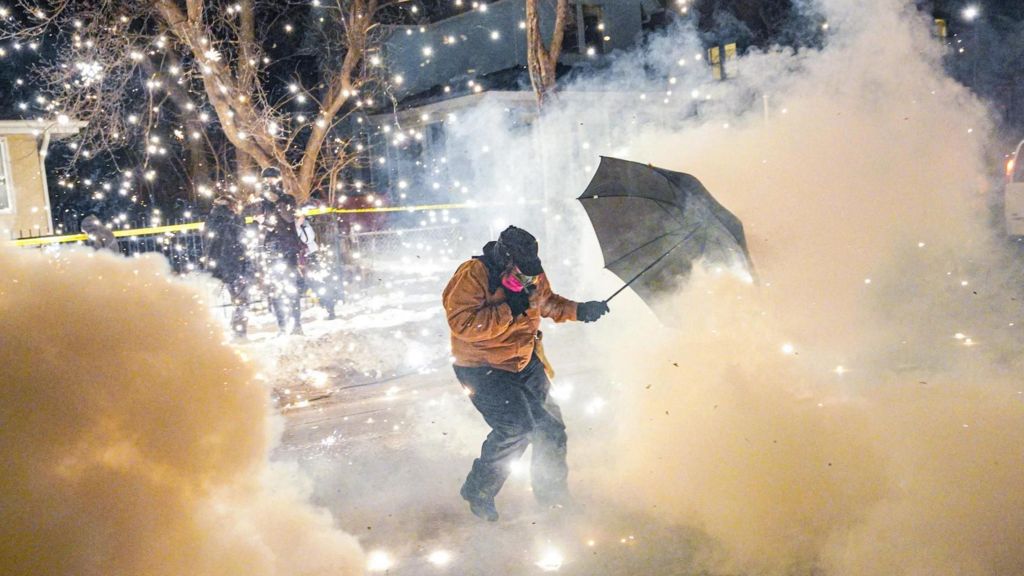
    Despite a federal judge denying Minnesota prosecutors’ request for a temporary restraining order against ICE, approximately 3,000 federal officers remain deployed throughout the state. Wednesday night witnessed renewed clashes in Minneapolis’s Hawthorne neighborhood, where protesters damaged government vehicles and assaulted officers with fireworks, ice, and snowballs according to police reports.

    The standoff represents a critical test of federal authority versus local governance, with the rarely used Insurrection Act looming as a potential constitutional flashpoint in American law enforcement history.

  • From Kansas to karst: Unpacking Guangxi’s charms

    From Kansas to karst: Unpacking Guangxi’s charms

    In a remarkable transition from the flat plains of Kansas to the dramatic karst formations of Southern China, American expatriate Gabrielle Chen documents her profound encounter with Guangxi Zhuang Autonomous Region’s natural wonders. Her journey through Liuzhou, Hechi, and Guilin reveals a landscape so visually stunning it challenges perception itself.

    Chen describes Guangxi as a ‘dreamscape’ where mist-veiled mountains pierce the sky and crystalline waters create perfect mirror images of the dramatic topography. This stands in stark contrast to the familiar flat expanses of her Kansas homeland, presenting what she characterizes as nature’s most concentrated artistic achievement.

    The experiential highlight occurred during a bamboo raft excursion across Pohao Lake, where the gentle rhythm of waves synchronized with what Chen describes as a spiritual awakening. Passing beneath ancient stone bridges, she felt she was ‘looking into the Earth’s soul,’ witnessing an seamless integration of mountain, sky, and water that transcends verbal description.

    Chen’s journey included the iconic Liujiang River in Yangshuo, where she replicated the famous imagery from China’s 20 yuan banknote—a symbolic connection between representation and reality. Her account emphasizes that Guangxi’s beauty remains fundamentally un-capturable through reproduction, existing instead as a purely experiential phenomenon that must be personally encountered to be fully appreciated.

    This personal narrative emerges from China Daily’s ongoing series featuring expatriates sharing their experiences across Chinese cities and regions, highlighting cross-cultural appreciation of China’s diverse geographical wonders.

  • Iran will ‘defend itself against any foreign threat’, Araghchi tells Saudi FM

    Iran will ‘defend itself against any foreign threat’, Araghchi tells Saudi FM

    In a significant diplomatic development, Iranian Foreign Minister Abbas Araghchi and Saudi Foreign Minister Prince Faisal bin Farhan held urgent telephone discussions on Thursday amid escalating regional tensions. The conversation centered on potential military confrontation between Iran and the United States, with Araghchi emphasizing Tehran’s readiness to “defend itself against any foreign threat.”

    The diplomatic exchange occurred as Washington continues to contemplate military options in response to Iran’s handling of domestic protests. According to Araghchi’s Telegram channel statement, the Iranian minister stressed the critical need for “global condemnation of foreign interference in the internal affairs of regional countries.”

    In a crucial development, Saudi Arabia directly communicated to Tehran that it would not permit its territory or airspace to be utilized for any military offensive against Iran. A source close to the Saudi military confirmed to AFP that “Saudi Arabia has informed Tehran directly that it will not be part of any military action taken against it.”

    The Saudi Press Agency acknowledged the conversation, noting that both ministers “discussed developments in the region and how to enhance its security and stability.” This diplomatic engagement occurs against the backdrop of explicit warnings from Tehran that it would target US military and shipping assets if attacked, while the United States maintains that military response remains an option concerning Iran’s protest crackdown.

  • Chongqing red leaf festival draws record 4.7 million visitors

    Chongqing red leaf festival draws record 4.7 million visitors

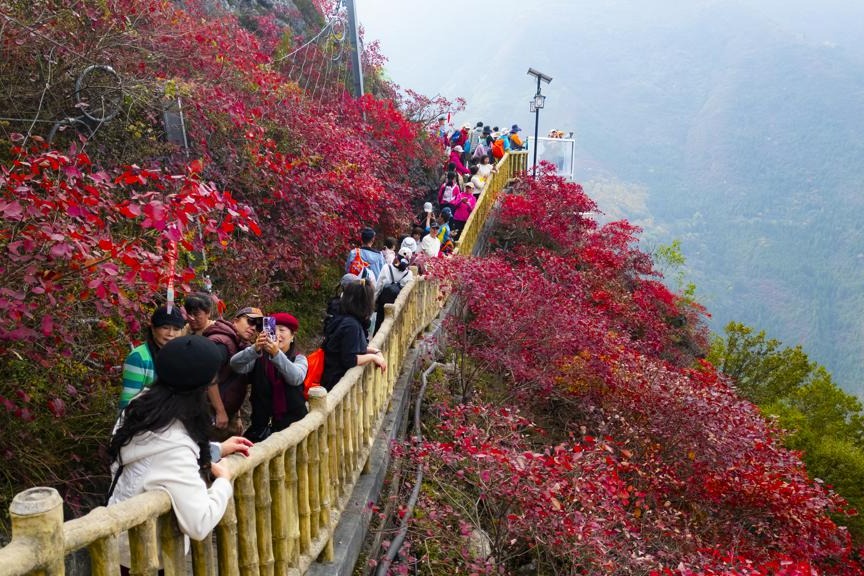
    Chongqing’s Wushan county has witnessed an extraordinary surge in tourism as its 19th Yangtze River Three Gorges International Red Leaf Festival attracted an unprecedented 4.7 million visitors between November and December. According to the local culture and tourism committee, this remarkable figure represents a 13.22 percent increase compared to the previous year’s attendance, setting a new benchmark for the annual autumn event.

    The festival’s overwhelming popularity necessitated unprecedented measures as Wushan’s three major scenic areas issued crowd control notifications for the first time in the event’s history. Several outdoor routes consistently recorded daily visitor numbers exceeding 10,000, while accommodation providers reported average occupancy rates surpassing 80 percent across the county. More than 270,000 guests opted for overnight stays, significantly boosting local hospitality revenue.

    The international festival, centered around the spectacular autumn foliage along the Yangtze River Three Gorges, has evolved into one of Chongqing’s most significant cultural tourism attractions. The dramatic increase in visitor numbers reflects growing domestic tourism demand and successful marketing strategies implemented by local authorities. The event not only showcases nature’s vibrant transformation but also demonstrates how seasonal phenomena can drive substantial economic benefits to regional communities through tourism development.

  • China carries out nearly 8.5m  hectares of land greening in 2025

    China carries out nearly 8.5m hectares of land greening in 2025

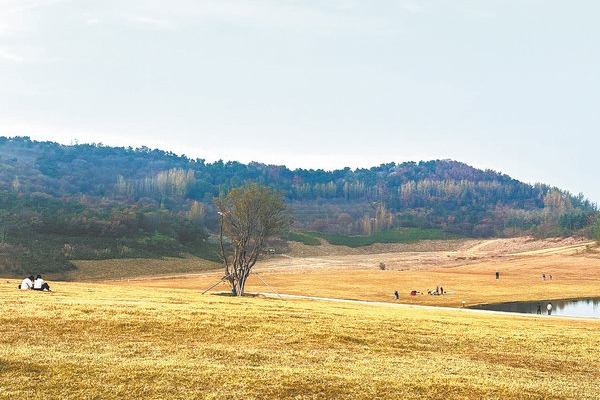
    China has made extraordinary strides in ecological restoration, having successfully greened approximately 8.47 million hectares of land throughout 2025 according to official data released by the National Forestry and Grassland Administration. This remarkable achievement was announced during the administration’s annual work conference, highlighting the nation’s unwavering commitment to environmental sustainability.

    The comprehensive greening initiative encompassed multiple approaches to ecological rehabilitation. Nearly 3.6 million hectares were transformed through strategic afforestation projects, while the remaining areas were restored through sophisticated grassland rehabilitation techniques. These concerted efforts have produced tangible results, with China’s forest coverage rate now reaching 25.09 percent and forest stock volume approaching 21 billion cubic meters.

    Examining the broader Five-Year Plan period (2021-2025), China’s environmental accomplishments become even more impressive. The country successfully greened a total of 36.6 million hectares, including 12.3 million hectares through afforestation. Additionally, an annual average of approximately 3.1 million hectares of degraded grassland underwent restoration, maintaining comprehensive vegetation coverage above the critical threshold of 50 percent.

    Perhaps most notably, China has emerged as a global leader in desertification control. Over the past five years, the nation has treated roughly 10.1 million hectares of desertified land while implementing protective measures across nearly 1.9 million hectares to prevent further deterioration. This systematic approach has resulted in continuous declines in desertification and sandification-affected areas, positioning China as the first major nation to achieve zero net growth in land degradation—a landmark accomplishment in global environmental conservation.

  • Zhou Liang sees hope for Yangtze sturgeon after decades of conservation work

    Zhou Liang sees hope for Yangtze sturgeon after decades of conservation work

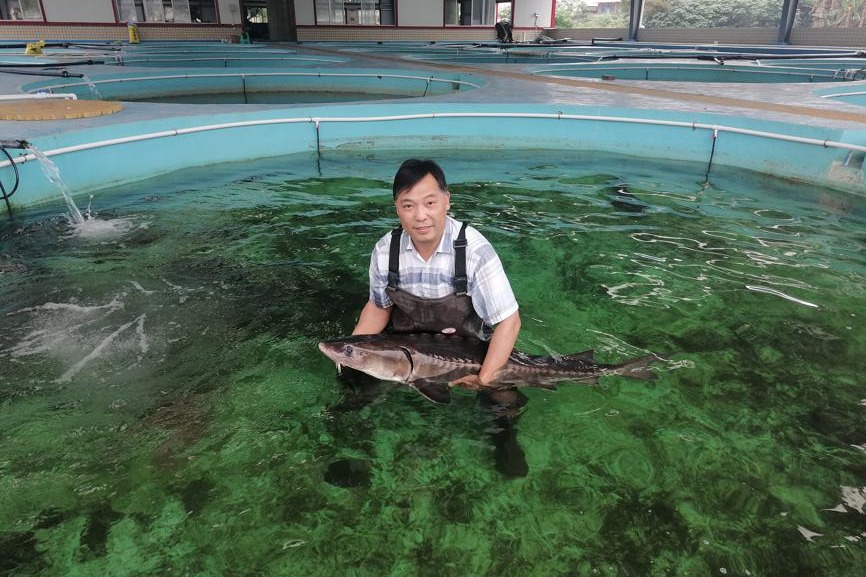
    After 35 years of relentless dedication, Zhou Liang, director of the Yibin Institute of Rare Aquatic Animals, is witnessing transformative progress in restoring the wild population of the critically endangered Yangtze sturgeon. The 53-year-old conservationist has pursued this mission as both a professional commitment and a personal legacy, continuing the work initiated by his late father, Zhou Shiwu.

    The Yibin Institute, recognized as China’s first private research organization focused on preserving rare aquatic species in the Yangtze River, represents a remarkable family endeavor. Rather than pursuing urban career opportunities after university, Zhou Liang returned to his hometown in Sichuan Province to establish this pioneering conservation facility during a period of severe ecological crisis.

    By the turn of millennium, the Yangtze sturgeon faced existential threats from multiple fronts: intensive overfishing, extensive dredging operations, and widespread dam construction had decimated natural breeding populations. Scientific surveys confirmed the alarming absence of naturally spawned juvenile sturgeons throughout the entire river system by approximately 2000.

    The conservation breakthrough emerged in 2004 when Zhou’s team mastered large-scale artificial breeding techniques. This scientific achievement resulted in the successful hatching of tens of thousands of Yangtze sturgeon fry at the institute’s breeding facilities, marking a critical milestone in species preservation.

    Current observations indicate promising signs of population recovery, suggesting that decades of coordinated efforts between research institutions, government agencies, and local communities are finally yielding measurable ecological restoration. Zhou’s work demonstrates how sustained scientific commitment can reverse even the most severe biodiversity declines, offering valuable insights for global conservation initiatives.

  • Experts growing new skin for badly-burnt survivors of Swiss fire tragedy

    Experts growing new skin for badly-burnt survivors of Swiss fire tragedy

    In an unprecedented medical response, the Cell Production Centre at Lausanne University Hospital has mobilized its entire team to cultivate life-saving skin grafts for victims of Switzerland’s devastating New Year’s bar fire. The specialized facility—Europe’s largest of its kind—has received 15 urgent requests for artificial skin cultivation specifically for Crans-Montana fire survivors, a number that typically represents three-quarters of their annual caseload.

    The tragedy at Le Constellation bar on January 1st resulted in 40 fatalities—primarily teenagers—and left 116 injured, with 80 patients still hospitalized across Switzerland and neighboring countries weeks after the incident. According to Laurent Carrez, the center’s pharmacist technical manager, medical staff are working seven days weekly to address the overwhelming need.

    This cutting-edge medical process begins with collecting healthy skin samples from burn victims themselves to prevent tissue rejection. Through sophisticated laboratory techniques, technicians can transform a mere 10 square centimeters of original tissue into substantial grafts covering up to 7,800 square centimeters—approximately the surface area of three human backs.

    The production occurs in controlled cleanroom environments where specialists meticulously nurture skin cells in nutrient-rich solutions. The current phase involves multiplying keratinocyte cells, which naturally form layered tissue over approximately three weeks. These laboratory-grown skins lack hair follicles and sweat glands but provide critical protection once grafted.

    As explained by severe burns specialist Olivier Pantet, such extensive tissue cultivation becomes essential when patients have lost over 50% of their skin surface. While awaiting grafts, medical teams utilize temporary measures including specialized dressings, donor skin, and even fish skin applications.

    The grafting process itself carries significant challenges, with an 80% success rate considered excellent outcomes. Post-operative care involves meticulous environmental control in high-humidity rooms maintained at 30°C (86°F), followed by extensive rehabilitation with joint positioning and splinting.

    Authorities believe the catastrophic fire ignited when champagne bottles adorned with sparklers contacted soundproofing foam on the basement ceiling. Lausanne University Hospital currently treats seven patients from the incident, many suffering from both extensive surface burns and deep tissue damage.

  • Vir Das on ‘Happy Patel’: How Bollywood’s spy boom finally made his comedy film possible

    Vir Das on ‘Happy Patel’: How Bollywood’s spy boom finally made his comedy film possible

    Comedian-actor Vir Das has unveiled the remarkable journey behind his upcoming spy comedy film “Happy Patel: Khatarnak Jasoos,” explaining how Bollywood’s recent espionage genre explosion finally made the project feasible after a decade in development.

    In an exclusive interview, Das revealed the film’s concept originated long before India’s current obsession with slick spy thrillers like “War,” “Tiger,” “Pathaan,” and “Dhurandhar.” Inspired by franchises like “Johnny English,” Das initially faced industry skepticism when pitching an Indian spy comedy concept ten years ago. “The genre simply hadn’t taken hold yet,” he noted.

    The recent dominance of spy cinema created the perfect cultural moment for “Happy Patel.” Das revisited old drafts two years ago, recognizing the timing had finally aligned. “Spy is the biggest genre in India right now,” he stated. “So I rewrote the script and decided it was time.”

    The film, which represents Das’s co-directorial debut alongside Kavi Shastri, recently received an ‘A’ certificate from India’s censor board. Das humorously remarked it’s “the only ‘A’ I’ve ever received,” but emphasized the adult rating serves a purposeful creative vision. “It’s hard to have a spy movie for kids,” he explained. “When guns are going off around you, or someone’s finger gets chopped off, chances are you’re using some expletives.”

    Production benefited from rigorous oversight by producer Aamir Khan, described by Das as “a stickler for the script” who wouldn’t permit shooting until every line and character met his standards. The script underwent numerous revisions before filming commenced, with improvisation allowed only after scripted versions were securely captured.

    A significant development occurred weeks before production when Imran Khan, after a decade-long screen hiatus, expressed interest in joining the project. His involvement prompted creative adjustments, including a flamboyant action sequence specifically designed around showcasing his untapped action potential.

    Das described the transition from stand-up comedy to filmmaking as moving from solitary creation to collaborative trust. The production attracted top-tier talent, including technicians from India’s Oscar submission “Homebound,” costume designers from “Sacred Games,” and action teams previously working with Ajay Devgn.

    The film underwent nearly 30 test screenings with general audiences rather than industry insiders, allowing for extensive joke refinement through recuts and retiming. Das envisions the final product as a collective theatrical experience, structured like a stand-up set with strong openings, callbacks, and a big finish.

    “Happy Patel: Khatarnak Jasoos” premieres in UAE cinemas on January 16, coinciding with Das’s promotional visit to Dubai for his book “The Outsider: A Memoir for Misfits.”

  • Emirati oud player on storytelling, sharing the UAE’s sound with the world

    Emirati oud player on storytelling, sharing the UAE’s sound with the world

    Dubai’s Jumeirah Beach Hotel prepares to host an extraordinary convergence of musical excellence as Global Fusion 2026 brings together GRAMMY Award-winning artists from diverse cultural backgrounds. Among these international talents stands Emirati oud master Abdel Rahman Al Blooshi, who emerges as a significant cultural ambassador introducing the UAE’s rich auditory heritage to worldwide audiences.

    In an exclusive dialogue, Al Blooshi reflects on the profound honor of representing Emirati musical traditions alongside globally celebrated musicians. “This collaboration demonstrates that our music transcends local folklore,” he emphasizes. “It represents a vibrant, living tradition capable of meaningful artistic dialogue with the world’s premier musical forms.”

    The artist describes his dual role as both performer and cultural storyteller, noting that the oud serves as more than merely an instrument—it functions as the vocal embodiment of regional history and emotion. “When I play,” Al Blooshi explains, “I channel the landscapes, memories, and emotional depth of our culture without uttering a single word.”

    Al Blooshi’s musical journey began in childhood through an innate attraction to the oud’s warm tonality and emotional expressiveness. His formal training commenced at Fujairah Fine Arts Academy in 2019, where he refined his technical mastery and deepened his understanding of musical maqams. Despite his accomplishments, the musician maintains a student’s mindset, continuously exploring new dimensions of his instrument.

    Cross-cultural collaborations have significantly expanded Al Blooshi’s artistic perspective. Interactions with musicians from India, Europe, and beyond have revealed how the oud can integrate with jazz rhythms and diverse musical scales while preserving its distinctive character. These experiences have challenged him to develop greater flexibility and broaden his perception of the instrument’s capabilities.

    Regarding the UAE’s evolving creative landscape, Al Blooshi observes a cultural renaissance underway. Younger generations of Emirati artists are recognizing the timeless quality of traditional sounds while fearlessly experimenting with global influences. This shift from preservation to innovation, he notes, enhances the accessibility of Emirati music to international audiences.

    For aspiring Emirati musicians, Al Blooshi offers compelling advice: “Embrace your cultural identity with pride. The global community doesn’t seek uniformity—it values authentic expression and cultural uniqueness. Master your craft while honoring your heritage, and no stage will remain beyond your reach.”