作者: admin

  • China bans 73 people from soccer for life in latest anti-corruption controversy

    China bans 73 people from soccer for life in latest anti-corruption controversy

    In an unprecedented move to cleanse Chinese football of systemic corruption, authorities have issued lifetime bans to 73 individuals and imposed significant sporting penalties on nine top-flight clubs. The Chinese Football Association (CFA) announced these stringent measures on Thursday as part of its ongoing campaign against match-fixing and financial misconduct.

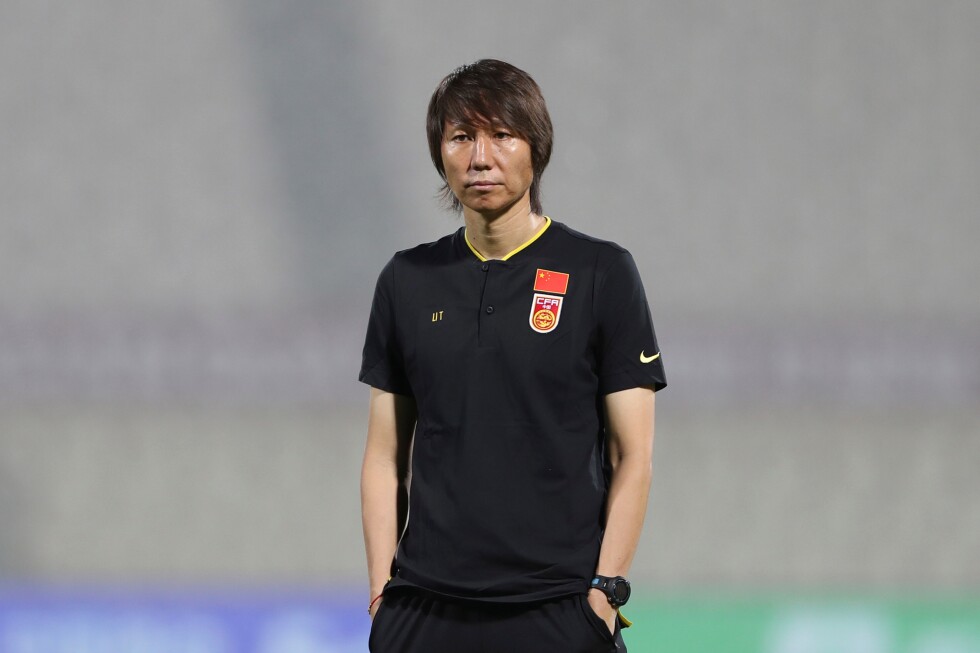
    Among the most prominent figures permanently barred from all football-related activities are Chen Xuyuan, former president of the CFA, and Li Tie, former national team manager and former Everton midfielder. Both officials were previously convicted in 2024 on corruption charges involving millions of dollars in bribery schemes. Li received a 20-year prison sentence while Chen was handed a life term for their roles in undermining the integrity of Chinese football.

    The disciplinary actions extend beyond individuals to club-level punishments. Shanghai Shenhua, last season’s runners-up, and Tianjin Jinmen Tigers face the most severe sanctions with 10-point deductions and fines of 1 million yuan ($143,788). Defending champions Shanghai Port will begin the 2026 season with a five-point deficit.

    CFA officials emphasized that the severity of punishments reflects ‘the amount, nature, seriousness and social impact of the improper transactions’ involved. This latest crackdown follows September’s disciplinary action that saw 43 officials and players receive lifetime bans, demonstrating the association’s commitment to its zero-tolerance policy against corruption.

    The sweeping measures represent the most comprehensive attempt to reform Chinese football since President Xi Jinping’s call to develop the sport nationwide, addressing deep-rooted issues that have plagued the country’s football development for years.


  • 2025 border crossings hit record high

    2025 border crossings hit record high

    China achieved an unprecedented milestone in cross-border mobility during 2025, with national immigration authorities processing a record-breaking 697 million border crossings—marking a substantial 14.2% increase from the previous year. This remarkable surge was primarily driven by the country’s expansive visa-free policies and enhanced immigration service efficiency.

    Foreign nationals accounted for over 82 million crossings, representing a 26% year-on-year increase, with more than 30 million entries occurring through visa-free channels. This visa-free segment witnessed nearly 50% growth compared to 2024, constituting 73% of all foreign entries into China.

    Domestic travel patterns showed equally impressive growth, with mainland residents making 335 million border crossings (up 15%) and residents from Hong Kong, Macao, and Taiwan accounting for nearly 280 million crossings (a 10% increase).

    The National Immigration Administration’s spokeswoman Lyu Ning attributed this historic movement to comprehensive policy reforms and innovative measures designed to support high-quality development and stimulate economic momentum. Administrative enhancements included expanding the online travel document application pilot to 50 cities, resulting in 457,000 successful digital applications.

    Significant policy expansions featured the inclusion of Indonesia in the 240-hour visa-free transit program and the designation of five additional ports in Guangdong province for the scheme, bringing the national total to 65 eligible ports. Additionally, China launched visa-free entry for tourist groups from ASEAN countries visiting Xishuangbanna Dai Autonomous Prefecture in Yunnan province.

    Through coordinated efforts with relevant departments, China increased its unilateral visa-free countries to 48 and mutual visa exemption partners to 29, with 28 countries now granting unilateral visa-free access to Chinese citizens.

    These initiatives have significantly boosted the ‘Travel in China’ and ‘Shop in China’ campaigns while enhancing China’s global image as an open, inclusive, and dynamic destination. Ministry of Commerce data revealed that expanded visa-free policies and optimized tax refund measures nearly doubled sales of tax-refundable goods.

    China Tourism Academy President Dai Bin characterized 2025 as a landmark year for China’s institutional opening-up in tourism, noting the country’s leadership in tourism exchanges with Belt and Road Initiative partners across Southeast Asia, West Asia, Africa, and Latin America. European tourism exchanges have nearly returned to 2019 levels.

    Looking ahead to 2026 and the 15th Five-Year Plan period (2026-30), China is positioned to assume a greater role in global tourism development. The National Immigration Administration has committed to continuing the expansion and deepening of high-level opening-up policies, optimizing immigration measures, and responding to public demands to further drive economic and social development through continuous reform and innovation.

  • Germany to harden critical infrastructure as Russia fears spike

    Germany to harden critical infrastructure as Russia fears spike

    In a decisive move to bolster national security, the German parliament is set to enact sweeping legislation on Thursday mandating enhanced protection for critical infrastructure. This action comes as escalating geopolitical tensions with Russia amplify fears of sabotage, hybrid attacks, and systemic vulnerabilities.

    The comprehensive security package, designed to align with EU directives, will impose stringent new requirements on approximately 1,700 essential service providers. These entities—spanning energy, water, food supply, healthcare, transport, IT, telecommunications, finance, and waste management—must now implement rigorous physical security upgrades, enhance alarm systems, conduct frequent risk analyses, and report incidents without delay. Facilities serving over 500,000 people fall under the new mandate.

    The impetus for this legislative overhaul was starkly illustrated by a recent far-left militant arson attack on a Berlin power cable. The assault, which plunged tens of thousands into darkness for nearly a week and crippled mobile networks, heating, and transit, exposed critical gaps in the nation’s defensive preparedness. In response, the government has issued a €1 million reward for information leading to the arrest of the perpetrators.

    Chancellor Friedrich Merz emphasized the necessity of shifting from transparency toward resilience, noting that sensitive data—such as publicly accessible grid maps—must be safeguarded to prevent exploitation by malicious actors.

    While many security experts endorse the bill in principle, opposition figures like Greens MP Konstantin von Notz criticize it as ‘wholly inadequate,’ ‘poorly crafted,’ and dangerously delayed. Business associations have also raised concerns over potentially burdensome compliance duties and significant financial penalties.

    Defence Minister Boris Pistorius highlighted the broader context of hybrid threats facing Europe, including cyberattacks, espionage, disinformation campaigns, and physical disruptions like the severing of Baltic Sea data cables. He warned that such threats directly impact private industry and supply chains, underscoring the need for robust civil defense.

    Experts like Daniel Hiller of the Fraunhofer Institute argue that complete invulnerability is unattainable; instead, redundancy, contingency planning, and system resilience are paramount. Sabrina Schulz of the European Initiative for Energy Security echoed this, stating that fortifying infrastructure is ‘at least as important as tanks and drones’ in contemporary defense strategy.

  • China executes 11 linked to Myanmar scam compounds

    China executes 11 linked to Myanmar scam compounds

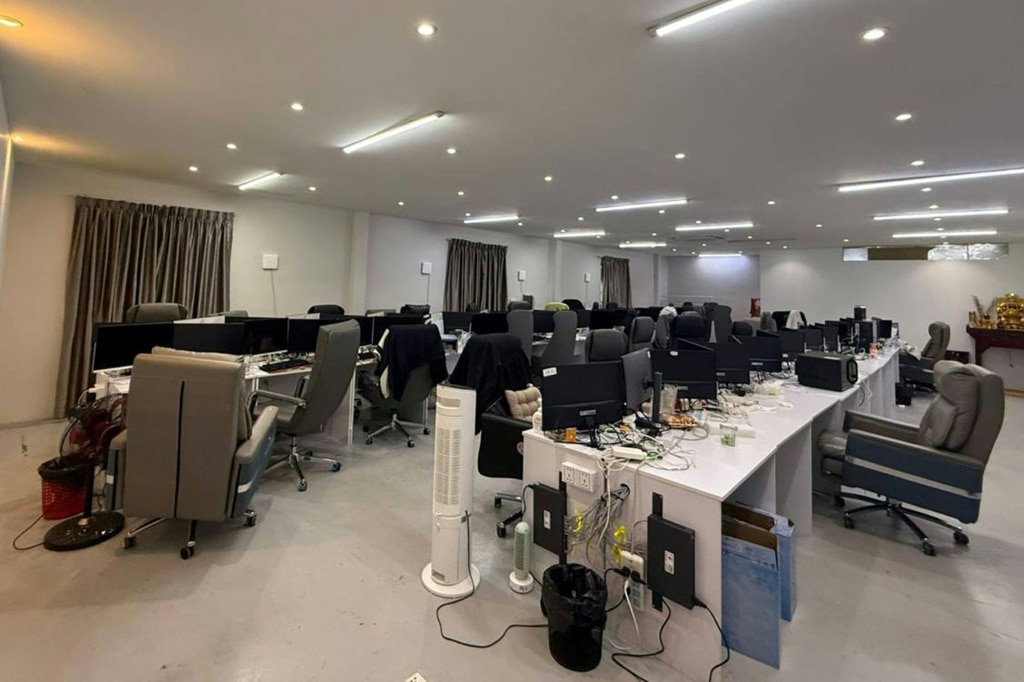
    In a decisive move against transnational organized crime, Chinese authorities have executed eleven individuals connected to extensive telecom fraud operations based in Myanmar. The executions, carried out on Thursday, represent Beijing’s most severe response to date in its ongoing campaign against criminal networks that have defrauded victims worldwide through sophisticated online scams.

    The executed individuals, identified as key operatives within these criminal organizations, received death sentences in September from a court in Wenzhou, eastern China. According to state media reports, their convictions included charges of intentional homicide, intentional injury, unlawful detention, fraud, and illegal casino operations. Among those executed were members of the notorious ‘Ming family criminal group,’ whose activities directly contributed to the deaths of 14 Chinese citizens and injuries to numerous others.

    These criminal enterprises, primarily operating from Myanmar’s lawless border regions, have developed into a multi-billion dollar industry targeting victims globally through romance scams and fraudulent cryptocurrency investment schemes. What began as operations focusing predominantly on Chinese-speaking targets has evolved into sophisticated multilingual fraud networks exploiting victims across continents.

    The Chinese Supreme People’s Court reviewed and approved all death sentences, confirming that evidence dating back to 2015 was ‘conclusive and sufficient’ for conviction. In addition to the executions, the September rulings included death sentences with two-year reprieves for five other individuals and prison terms ranging from five years to life imprisonment for 23 additional suspects.

    This crackdown forms part of Beijing’s broader strategy to combat transnational cybercrime through enhanced regional cooperation. Chinese authorities have intensified collaboration with Southeast Asian governments, resulting in the repatriation of thousands of suspected fraudsters to face China’s judicial system. The executions follow similar severe sentencing in November, when five individuals received death penalties for their involvement in scam operations that resulted in six Chinese fatalities.

    According to United Nations assessments, the global cyberscam industry has expanded dramatically, with hundreds of thousands of people now working in fraud centers worldwide. The UN Office on Drugs and Crime has documented the industry’s spread beyond Southeast Asia to South America, Africa, the Middle East, Europe, and various Pacific Islands, indicating the increasingly global nature of this criminal phenomenon.

  • Heavy gunfire and blasts heard near airport in Niger’s capital

    Heavy gunfire and blasts heard near airport in Niger’s capital

    Niamey, Niger – Heavy gunfire and powerful explosions rocked the vicinity of Diori Hamani International Airport in Niger’s capital during the early hours of Thursday, with air defense systems reportedly engaging unidentified projectiles. The sustained attack near the strategic aviation hub created panic among residents before subsiding approximately two hours after commencement.

    Multiple eyewitness accounts and verified video footage depicted anti-aircraft systems intercepting incoming threats in the night sky, though the origin and nature of the projectiles remain unconfirmed. While official casualty figures and damage assessments are pending, government sources indicate the situation has been stabilized without providing specific details.

    The airport complex, located merely 10 kilometers from the presidential palace, houses critical military infrastructure including an air force base. This incident occurs amid heightened tensions surrounding a substantial uranium shipment currently stranded at the facility due to ongoing legal and diplomatic disputes with France.

    A Foreign Affairs ministry official, speaking to Anadolu news agency on condition of anonymity, stated: ‘The situation is under control. There is no need to worry,’ while acknowledging investigations are underway to determine potential connections between the attack and the contested uranium cargo.

    This security breach unfolds under the military governance of General Abdourahamane Tiani, who assumed power through a 2023 coup that deposed the democratically elected government. Niger continues to confront significant security challenges, including jihadist insurgencies affecting the broader Sahel region alongside neighboring Mali and Burkina Faso.

  • Domestic drugmakers take center stage in development, innovation

    Domestic drugmakers take center stage in development, innovation

    In a remarkable transformation of China’s healthcare landscape, domestic pharmaceutical companies are emerging as powerful innovators, delivering breakthrough treatments to patients at unprecedented affordability. The story of Zhang, a 38-year-old thyroid eye disease patient in Beijing, exemplifies this shift. His access to a novel domestic injection—the first new treatment for his condition in China in over seven decades—comes at a fraction of the cost of foreign equivalents, thanks to its inclusion in the national reimbursement drug list.

    This patient-centric revolution stems from comprehensive regulatory reforms, substantial capital investments, and a strategic focus on research innovation. While drug development remains notoriously challenging—typically requiring a decade and approximately $1 billion per successful medication with a 90% failure rate—Chinese companies are defying these odds through systematic advancements.

    China’s regulatory framework now recognizes two distinct categories of novel drugs: improved formulations of existing treatments (such as Zhang’s injection) and truly innovative drugs containing new molecular entities. This classification system has created a structured pathway for pharmaceutical advancement, encouraging both incremental improvements and groundbreaking discoveries.

    The expansion of Beijing’s national reimbursement drug list for 2026 has been instrumental in making cutting-edge treatments accessible to ordinary citizens. Patients who previously faced financial barriers to innovative therapies now receive coverage for domestically developed medications, creating a virtuous cycle that rewards innovation while improving public health outcomes.

    Industry analysts attribute this biopharmaceutical renaissance to three key factors: streamlined regulatory approval processes that reduce development timelines, increased venture capital flowing into life sciences, and a growing pool of scientific talent returning to China from overseas research institutions. This convergence of factors has positioned Chinese drugmakers not just as local providers, but as emerging global competitors in the high-stakes pharmaceutical industry.

  • Restored moat better reflects glory of Xi’an city wall

    Restored moat better reflects glory of Xi’an city wall

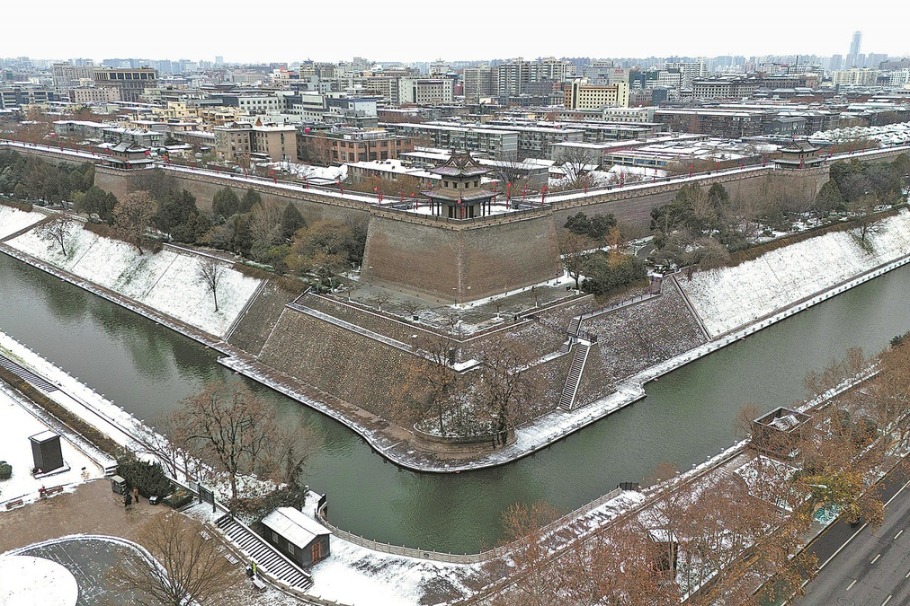
    After a monumental 40-year restoration endeavor, Xi’an’s ancient city wall is once again encircled by a pristine moat, marking a significant achievement in urban conservation. The recently completed project has fully reconnected the moat water system for the first time in over seven decades, transforming what was previously considered an urban eyesore and seasonal flood hazard into a breathtaking historical landmark.

    The revitalized moat now presents visitors with a spectacular visual panorama where sunlight dances upon crystal-clear waters against the majestic gray stone fortifications. This transformation has already captivated tourists, with many expressing astonishment at the dramatic improvement in both aesthetic appeal and environmental quality.

    According to Jia Haitao, cultural heritage specialist at the Xi’an City Wall Management Committee, the 14.6-kilometer moat originally served as a critical military defense feature during the Tang Dynasty (618-907). “For centuries, successive dynasties maintained this defensive legacy utilizing both engineered and natural barriers against approaching forces,” Jia explained.

    In contemporary times, the waterway functioned primarily as a storm drainage system until sedimentation and pollution gradually diminished its utility and created unpleasant odors. The restoration initiative launched in 1983 mobilized hundreds of thousands of local volunteers, with additional support coming from 5,000 PLA soldiers in 1998, creating shared community memories of collective civic effort.

    The final 859-meter section near Xi’an Railway Station, completed January 20, 2026, presented particular challenges. Project manager Wang Jie from Sinohydro Corporation Engineering Bureau 15 described how silt accumulation averaging 1.2 meters had compromised drainage capacity and created seasonal flooding that inundated underground facilities.

    The comprehensive rehabilitation included extensive desilting operations and the introduction of water-purifying vegetation including irises and water lilies to establish sustainable ecological circulation. The renewed moat now significantly enhances urban flood control capabilities while providing new green spaces for residents and visitors alike.

    Local residents have welcomed the transformation, with Wang Jianguo recalling childhood memories of polluted waters now replaced by thriving ecosystems attracting waterbirds and surrounded by landscaped pathways. The illuminated nightscape of the ancient wall reflected in the restored waters has further elevated Xi’an’s tourism appeal, with travel content creators highlighting the moat-side experience as an essential attraction rivaling even the famous Terracotta Warriors.

  • EU appears poised to sanction Iran’s Revolutionary Guard over protest crackdown

    EU appears poised to sanction Iran’s Revolutionary Guard over protest crackdown

    BRUSSELS — The European Union is preparing to impose unprecedented sanctions against Iran’s paramilitary Revolutionary Guard, designating the powerful military force as a terrorist organization in response to Tehran’s brutal suppression of nationwide protests. This decisive move represents a significant escalation in Western pressure on the Islamic Republic, which already faces severe economic strain from existing international sanctions.

    The EU’s top diplomat, Kaja Kallas, announced the landmark decision, stating that Iran’s Revolutionary Guard would be placed “on the same footing with al-Qaida, Hamas, and Daesh” in the bloc’s terrorist designation list. “If you act as a terrorist, you should also be treated as a terrorist,” Kallas declared, underscoring the EU’s hardening stance toward Tehran’s human rights violations.

    This development occurs against a backdrop of heightened military tensions in the Middle East. The United States has deployed the USS Abraham Lincoln aircraft carrier group and several guided-missile destroyers to the region, capable of launching sea-based attacks. Iran has responded with counter-threats, including warnings of preemptive strikes against American military bases and Israeli targets.

    The protests, initially sparked by economic grievances, have evolved into a broader challenge to Iran’s theocratic government. According to activist reports, at least 6,373 people have been killed during the crackdown on demonstrations. Iran’s economic situation continues to deteriorate, with its rial currency plummeting to a record low of 1.6 million to one U.S. dollar on Thursday.

    French Foreign Minister Jean-Noël Barrot emphasized that “the unbearable repression that has engulfed the peaceful revolt of the Iranian people cannot go unanswered.” Despite initial reservations from France regarding potential risks to detained French citizens and diplomatic missions, President Emmanuel Macron’s administration has now endorsed the sanctions decision.

    Under EU legislation, sanctions require unanimous approval from all 27 member states, a requirement that has previously complicated the bloc’s ability to leverage its economic influence in international crises, including responses to Russia’s invasion of Ukraine.

  • New ‘Payday Super’ laws to hit Australian businesses with major cash crunch

    New ‘Payday Super’ laws to hit Australian businesses with major cash crunch

    A landmark shift in Australia’s superannuation payment system is poised to significantly enhance retirement savings for millions of workers, while simultaneously presenting substantial cash flow challenges for the small business sector. Effective July 1, 2024, federal regulations will mandate that employers disburse superannuation contributions concurrently with salary payments, abolishing the existing 90-day quarterly payment window.

    The Australian Taxation Office (ATO) has characterized this policy modification as a “once in a generation change” designed to combat the pervasive issue of unpaid superannuation. Treasury Department projections indicate that a median-income 25-year-old worker could accumulate approximately $6,000 additional retirement savings—representing a 1.5% enhancement—through the accelerated compounding effect of fortnightly contributions compared to quarterly deposits.

    ATO Deputy Commissioner Emma Rosenzweig emphasized the regulatory benefits, stating: “This reform enables significantly faster identification of non-compliant employers. The elimination of quarterly accumulation prevents businesses from accruing substantial debts they might subsequently struggle to settle.” While the ATO pledges collaborative support for businesses adapting to the new system, officials acknowledge enhanced capacity to detect deliberate non-payment.

    Despite approximately 40% of enterprises already utilizing more frequent than quarterly superannuation payments, the transition poses particular difficulties for the remaining 60%. Employment Hero CEO Ben Thompson acknowledged the employee benefits while highlighting severe financial implications: “While positive for workers’ compounding growth, our modeling indicates an average cash flow impact of $124,000 per business. Most small operations lack such liquidity reserves.”

    Thompson revealed that 87% of businesses using their platform currently leverage the quarterly payment period for temporary cash flow management, with 26% anticipated to encounter financial strain under the new regime. This has raised concerns about potential employment market repercussions as businesses adjust to the revised fiscal responsibilities.

    The ATO has disseminated comprehensive preparatory guidelines urging employers to initiate compliance planning immediately, warning against last-minute implementation attempts.

  • New York police probe car crash into synagogue as hate crime

    New York police probe car crash into synagogue as hate crime

    Authorities in New York City are investigating a deliberate vehicle collision at the global headquarters of Chabad Lubavitch in Brooklyn as a potential antisemitic hate crime. The incident occurred Wednesday evening when a motorist repeatedly rammed the rear entrance of the prominent Hasidic Jewish institution located in the Crown Heights neighborhood.

    According to NYPD Commissioner Jessica Tisch, officers responding to reports of a disturbance at the synagogue witnessed the driver intentionally striking the building’s rear door multiple times. Law enforcement personnel immediately apprehended the male suspect at the scene without incident. Comprehensive sweeps by bomb squad technicians confirmed no explosive devices were present.

    While no injuries were reported, the incident prompted strong condemnations from city leadership. Mayor Zohran Mamdani characterized the attack as “deeply alarming,” emphasizing that “antisemitism has no place in our city, and violence or intimidation against Jewish New Yorkers is unacceptable.”

    In response to the incident, the NYPD has substantially enhanced security measures around religious institutions across all five boroughs as a precautionary measure. The department’s specialized Hate Crimes Task Force has assumed investigation of the case, though authorities have not yet established a definitive motive.

    New York Governor Kathy Hochul expressed solidarity with the Jewish community, stating on social media that “an attack against the Jewish community is an attack against all New Yorkers.” The Chabad Lubavitch headquarters serves as a central institution for the ultra-Orthodox Hasidic movement, representing one of the most visible symbols of Jewish religious life in Brooklyn.