作者: admin

  • Explained: NCM official breaks down the latest cold wave across UAE, parts of the world

    Explained: NCM official breaks down the latest cold wave across UAE, parts of the world

    Meteorological authorities in the United Arab Emirates have provided scientific clarification regarding the recent cold spell affecting the region, confirming its connection to broader global climate patterns. Dr. Mohamed Al Ebri, Director of Meteorology at the National Center of Meteorology (NCM), revealed that the unusual chill represents a localized manifestation of the La Niña climate phenomenon currently influencing weather systems worldwide.

    The current temperature drop stems from complex atmospheric interactions driven by cooler-than-normal sea surface temperatures in the Pacific Ocean. This La Niña configuration has altered global pressure and wind patterns, facilitating the southward movement of colder air masses into Northern Hemisphere regions including the UAE. Despite the noticeable chill, historical data confirms these conditions do not represent record-breaking lows for the Emirates.

    Globally, meteorological institutions including the World Meteorological Organisation have detected weak La Niña conditions with approximately 55% probability of persistence through coming months. The Northern Hemisphere has experienced particularly pronounced effects, with disruptions to the polar vortex enabling cold air outbreaks across North America and Europe.

    The Southern Hemisphere presents a contrasting picture, with Australia experiencing severe heatwaves exceeding 40°C in major cities despite the La Niña phase. This paradox demonstrates how climate change can produce extreme weather variations simultaneously across different regions.

    Dr. Al Ebri emphasized that climate oscillations now occur more frequently due to global warming influences, shifting from traditional 5-7 year cycles to 2-3 year intervals. This accelerated pattern creates increased weather variability and prediction challenges.

    For UAE residents, meteorologists anticipate continued below-average temperatures with overnight chills particularly in desert interior regions. A gradual warming trend is expected imminently, with potential light rainfall in northern and eastern areas around January 25th. The winter season will likely continue featuring temperature fluctuations between moderate warm periods and occasional cold spells.

    Authorities advise standard precautions during cooler periods, especially during early morning and evening hours when temperatures reach their lowest points.
  • Abu Dhabi hosts trilateral talks on Ukraine: 5 previous attempts to end war

    Abu Dhabi hosts trilateral talks on Ukraine: 5 previous attempts to end war

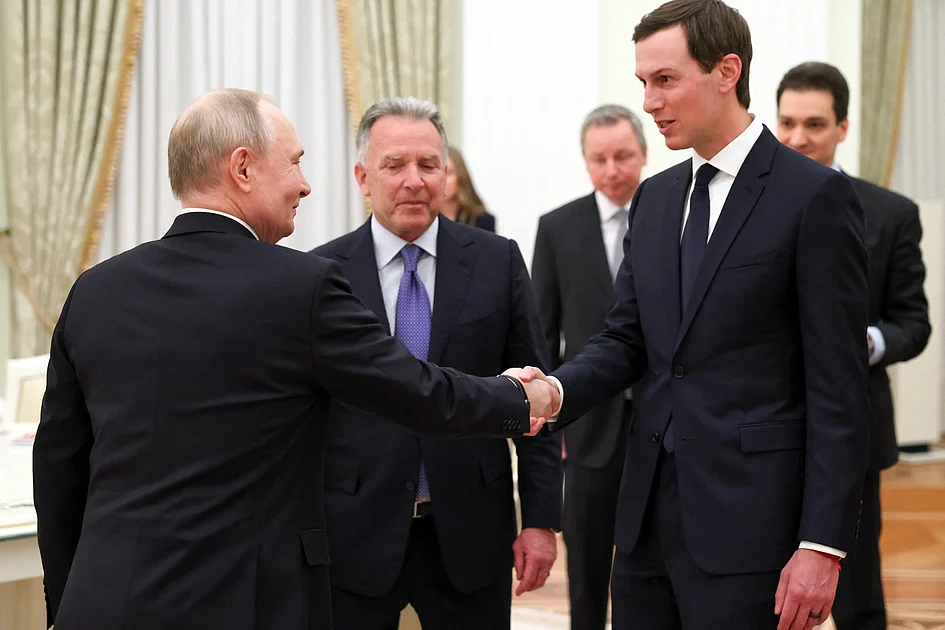
    Abu Dhabi has positioned itself as a pivotal diplomatic arena for high-stakes trilateral discussions aimed at resolving the ongoing Ukraine conflict. On January 23, 2026, senior officials from Ukraine, Russia, and the United States convened in the UAE capital to deliberate on a American-proposed peace framework, despite persistent disagreements over territorial sovereignty.

    This latest diplomatic initiative represents the sixth major attempt to broker a cessation of hostilities since Russia’s full-scale invasion in February 2022. The current negotiations follow five previously unsuccessful diplomatic endeavors:

    The initial negotiations occurred mere days after the invasion commenced, with meetings near the Belarusian border. Russian delegates presented ultimatums including Ukrainian recognition of Russian sovereignty over Crimea and the Donbas regions—terms immediately rejected by Kyiv as unacceptable.

    Subsequent talks in Antalya and Istanbul during March 2022 showed tentative progress, with Russia offering partial troop withdrawals and Ukraine considering neutral status. These discussions collapsed following the discovery of mass civilian casualties in Bucha after Russian forces withdrew from the Kyiv suburb.

    Diplomatic efforts remained dormant throughout 2023-2024 until President Donald Trump’s return to office in January 2025. The new administration reversed previous policies of isolating Moscow while simultaneously suspending military assistance to Ukraine. Despite direct engagement with Vladimir Putin, Trump’s administration secured only a temporary—and frequently violated—commitment to avoid targeting energy infrastructure.

    Further negotiations in Istanbul during May 2025 yielded limited success, resulting solely in prisoner exchanges without achieving a ceasefire agreement. The subsequent Trump-Putin summit in Alaska marked the Russian leader’s first visit to Western territory since the invasion began, yet concluded without tangible concessions or progress toward ending hostilities.

    The current Abu Dhabi negotiations represent a continuation of months of shuttle diplomacy conducted by American envoys between Moscow and Kyiv. While President Trump has expressed optimism about reaching a settlement, fundamental disagreements regarding territorial control continue to present significant obstacles to any comprehensive peace agreement.

  • Keys revels in Melbourne heat as Djokovic steps up history bid

    Keys revels in Melbourne heat as Djokovic steps up history bid

    Melbourne’s intense heatwave, with temperatures soaring towards 40°C (104°F), became a central character on Day Seven of the Australian Open, prompting tournament organizers to adjust schedules while elite athletes adapted their strategies for survival and victory.

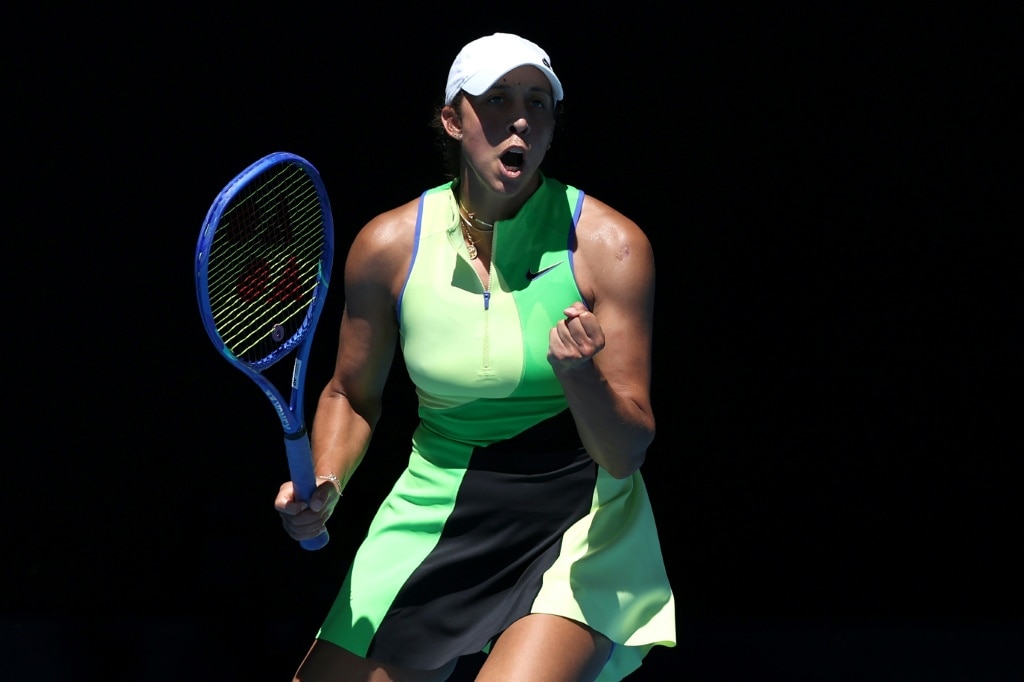
    American powerhouse Madison Keys demonstrated remarkable heat resilience, delivering a commanding 6-3, 6-3 victory over former world number one Karolina Pliskova in just 75 minutes on Rod Laver Arena. The 2018 finalist from Florida, well-acclimated to extreme conditions, expressed enthusiasm for the challenging environment. “I was excited for the heat today, and ready for it,” Keys stated following her impressive performance that sets up an all-American clash with compatriot Jessica Pegula.

    Pegula, the tournament’s sixth seed, efficiently dispatched Russian qualifier Oksana Selekhmeteva 6-3, 6-2 in just 66 minutes, appreciating her early scheduling that spared her the worst of the afternoon heat.

    The spotlight intensifies as Novak Djokovic continues his historic campaign for an unprecedented 25th Grand Slam title. The Serbian legend, scheduled for the evening session on Rod Laver Arena when temperatures are expected to moderate, faces 75th-ranked Dutchman Botic Van de Zandschulp. Djokovic has displayed dominant form through the early rounds, not dropping a single set while managing his match schedule carefully to maximize performance from his 38-year-old body.

    Meanwhile, defending men’s champion Jannik Sinner seeks his third consecutive Melbourne title, facing American Eliot Spizzirri during what forecasters predict will be the day’s peak temperatures. The day’s schedule also features multiple major champions including Iga Swiatek, who aims to complete her career Grand Slam with an Australian Open victory, and two-time champion Naomi Osaka, who faces Australian qualifier Maddison Inglis.

    The extreme conditions prompted tournament officials to implement heat policies, including the potential suspension of play and earlier match start times, ensuring player safety remains paramount during the challenging weather conditions.

  • TikTok US venture to collect precise user location data

    TikTok US venture to collect precise user location data

    TikTok’s newly formed US joint venture has implemented significant revisions to its privacy policy, substantially expanding the scope of location data collection from its 200 million American users. The policy update follows Thursday’s finalized investment deal between TikTok’s Chinese parent company ByteDance and a consortium of American investors, establishing a new operational framework for the popular short-form video platform in the United States.

    The updated privacy terms now permit the collection of ‘precise location data, depending on your settings’—a notable departure from the previous policy that only authorized the gathering of ‘approximate’ location information. While TikTok remained unavailable for immediate commentary regarding these changes, the company’s policy documentation emphasizes that sensitive personal information will be processed ‘in accordance with applicable law’ and that users retain the ability to disable location services through their device settings at any time.

    Historically, TikTok gathered location data through user SIM cards and IP addresses even before the joint venture’s establishment. However, the platform had refrained from collecting GPS information—even approximate data—from American users operating the most current application version, according to its 2024 privacy policy.

    The restructured entity has also broadened its permissions regarding user interactions with TikTok’s artificial intelligence tools. The enhanced data collection now encompasses user-submitted prompts and queries, along with comprehensive metadata detailing how, when, and where AI-generated content was initiated or produced.

    TikTok USDS Joint Venture LLC comprises three principal investors, including cloud computing behemoth Oracle, which is making substantial investments in AI infrastructure despite accruing significant debt to finance its ambitions in this rapidly expanding sector. Oracle, chaired by Republican megadonor and longtime Trump ally Larry Ellison, played a pivotal role in the negotiations that culminated in this arrangement.

    This agreement concludes years of diplomatic tensions between Washington and Beijing that originated during President Trump’s first term, when his administration attempted—unsuccessfully—to ban the application over national security apprehensions. The 2024 legislation mandating ByteDance’s divestiture of US operations by January 2025 prompted repeated enforcement delays until this week’s finalized joint venture.

    The newly established entity asserts its primary objective is ‘to secure U.S. user data, apps and the algorithm through comprehensive data privacy and cybersecurity measures.’ Oracle will supervise the retraining of TikTok’s content recommendation algorithm using existing American user data, with the algorithm subsequently secured within Oracle’s US cloud environment. ByteDance maintains a minority stake of approximately 20% in the venture.

    Additional managing partners include US technology investment firm Silver Lake and Abu Dhabi’s state-owned investment fund MGX, which has previously conducted business with the Trump family’s cryptocurrency enterprise, World Liberty Financial.

    On Friday, House Select Committee on China Chairman John Moolenaar (R-MI) voiced concerns regarding ByteDance’s continued involvement, questioning whether the arrangement adequately prevents Chinese influence over the algorithm and ensures American data security—issues he emphasized would require thorough congressional oversight.

  • Trump administration’s defense strategy tells allies to handle their own security

    Trump administration’s defense strategy tells allies to handle their own security

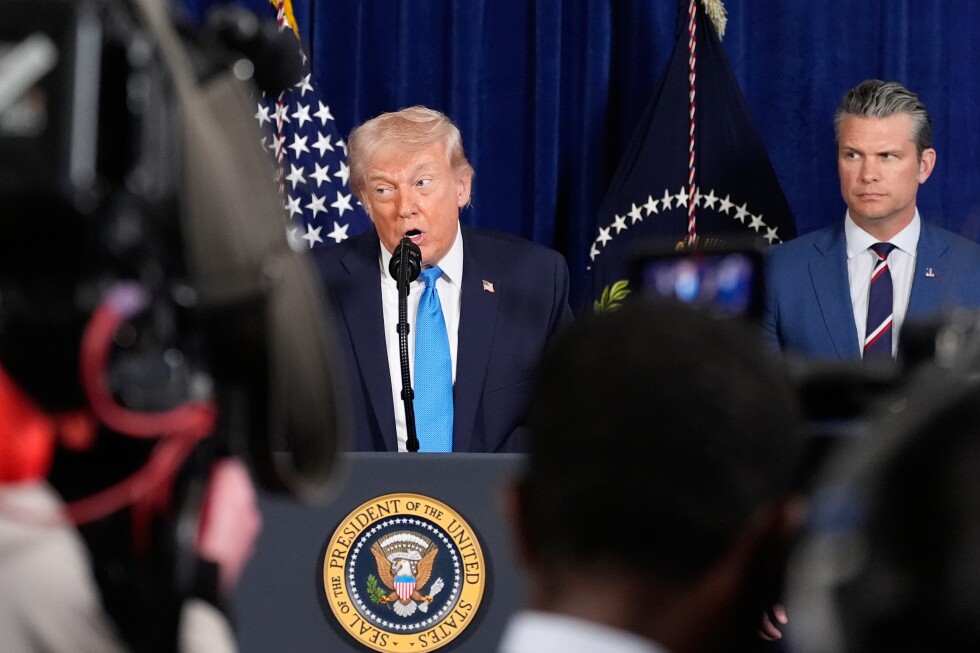
    The Pentagon has unveiled a transformative National Defense Strategy that fundamentally reorients U.S. military priorities toward hemispheric dominance while compelling American allies to assume greater responsibility for their own security. The 34-page document, released late Friday, represents the most significant shift in defense policy since 2022, explicitly criticizing European and Asian partners for their historical reliance on U.S. military subsidies.

    The strategy framework emphatically declares an end to what it characterizes as decades of neglect toward American interests, opening with the stark assertion: ‘For too long, the U.S. Government neglected — even rejected — putting Americans and their concrete interests first.’ This philosophical foundation translates into concrete policy changes that will require allied nations to take primary responsibility for countering threats from Russia to North Korea.

    Geopolitical tensions surrounding strategic assets emerged as a central theme, with the document specifically highlighting U.S. intentions to guarantee military and commercial access to the Panama Canal and Greenland. This focus follows President Trump’s recent confirmation of ongoing negotiations for ‘total access’ to Greenland through a framework agreement with NATO leadership, though Danish officials maintain that formal negotiations have not yet commenced.

    The strategy markedly departs from previous administrations’ approach to China, no longer identifying the Asian power as America’s ‘pacing challenge’ but rather as an established regional force that requires deterrence rather than domination. Notably absent is any mention of security guarantees for Taiwan, contrasting sharply with the Biden administration’s 2022 strategy that explicitly supported the island’s asymmetric self-defense capabilities.

    European allies received particularly direct messaging, with the document asserting that NATO members are ‘strongly positioned to take primary responsibility for Europe’s conventional defense’ against Russia, which the strategy classifies as ‘a persistent but manageable threat.’ This assessment comes amid confirmed U.S. troop reductions along NATO’s eastern borders, raising concerns among European partners about potential security vulnerabilities.

    The comprehensive strategy document reinforces the Trump administration’s ‘America First’ philosophy throughout, emphasizing bilateral relationships based on mutual interest rather than traditional alliance structures, while maintaining the Pentagon’s role in supporting—but not leading—regional security architectures worldwide.

  • US threatened to block Iraq from its Federal Reserve deposits over Iran-aligned politicians

    US threatened to block Iraq from its Federal Reserve deposits over Iran-aligned politicians

    The United States has issued a stark financial ultimatum to Iraq regarding the formation of its next government, according to confirmation from an Iraqi official to Middle East Eye. Washington has threatened to sever Baghdad’s access to its oil revenue reserves held at the Federal Reserve Bank of New York if Iranian-aligned paramilitary figures are incorporated into the new administration.

    This financial pressure campaign emerges as political negotiations intensify following Iraq’s November parliamentary elections. The Financial Times initially reported the specific threat to cut off Iraq’s dollar deposit supply—a crucial mechanism that has existed since the 2003 U.S. invasion. Under this arrangement, Iraq’s oil export proceeds are stored in the U.S., with monthly shipments of hard currency airlifted to Baghdad, providing Washington with significant economic leverage.

    The Trump administration has previously demonstrated willingness to utilize this financial weapon. During the 2020 crisis following the assassination of Iranian commander Qassem Soleimani, when Baghdad threatened to expel U.S.-led coalition forces, American officials similarly threatened to restrict Iraq’s access to its dollar reserves.

    Joshua Harris, the chargé d’affaires at the U.S. embassy in Baghdad, has personally delivered these warnings to Iraqi officials and influential Shia leaders. The absence of a formal ambassador—with Trump appointing Mark Savaya, a former legal cannabis dealer from Michigan, as special envoy—has placed Harris as the top-ranking State Department official in Iraq.

    The tension escalated particularly after the election of Adnan Fayhan as first deputy speaker of parliament last month. Fayhan, a former member of the Iranian-backed Asaib Ahl al-Haq (AAH) militia, represents the type of political figure Washington seeks to exclude. The U.S. embassy reportedly suspended meetings with officials who supported Fayhan’s election and provided Iraqi counterparts with a list of unacceptable MPs.

    Despite these pressures, Iraq’s political landscape remains complex. Prime Minister Mohammed al-Sudani’s coalition emerged victorious in November’s elections but lacks sufficient seats to independently form a government. Meanwhile, the U.S. military presence has significantly diminished, with recent announcements of “full withdrawal” from Iraq’s military facilities excluding the Kurdish region, where approximately 1,500 troops remain stationed.

  • Chinese asylum seeker who exposed rights abuses fights to stay in the US

    Chinese asylum seeker who exposed rights abuses fights to stay in the US

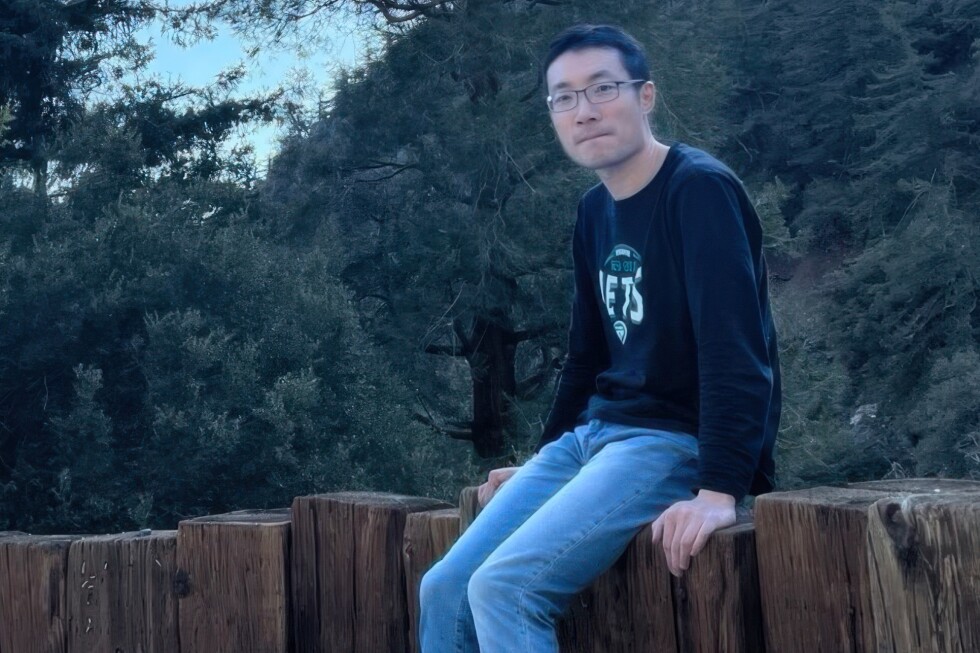
    A Chinese whistleblower who documented human rights violations in Xinjiang faces an uncertain future as he fights against deportation from United States custody. Guan Heng, 38, remains detained at the Broome County Correctional Facility in New York while awaiting a critical court decision on his asylum appeal scheduled for Monday.

    Guan fled China over four years ago after covertly filming detention facilities in Xinjiang, capturing evidence supporting allegations of widespread rights abuses against ethnic minorities. The Chinese government maintains these facilities are vocational training centers aimed at combating extremism.

    His legal troubles began in August when U.S. Immigration and Customs Enforcement (ICE) apprehended him during an operation targeting his housemates outside Albany. Although the Department of Homeland Security initially pursued deportation to Uganda, the plan was abandoned in December following congressional attention and public outcry.

    Guan represents one of tens of thousands of asylum seekers caught in intensified deportation efforts under the Trump administration. According to data from California-based nonprofit Mobile Pathways, approximately 170,626 asylum seekers received deportation orders in 2025, with asylum application abandonment rates skyrocketing from 11% to 31%.

    Immigration advocates express deep concern over what they describe as the systematic erosion of asylum protections. ‘We are very worried about the number of asylum seekers that will be sent back to extremely dangerous conditions,’ said Vanessa Dojaquez-Torres of the American Immigration Lawyers Association.

    Despite his predicament, Guan maintains faith in American democracy and institutions. He acknowledges understanding the rationale behind stricter immigration policies while appreciating the support from local communities and lawmakers. Representative Raja Krishnamoorthi, a member of the House Select Committee on the Chinese Communist Party, has urged Homeland Security to release Guan and approve his asylum request, emphasizing America’s commitment to protecting human rights whistleblowers.

    Should he prevail in his legal battle, Guan aspires to contribute meaningfully to American society, hoping to establish connections that would enable him to help others while cherishing the freedom from fear he found in the United States.

  • How Jared Kushner’s Gaza plan would erase Palestinian culture

    How Jared Kushner’s Gaza plan would erase Palestinian culture

    A dystopian cartoon titled “Gaza Beach 2030” by award-winning Dutch artist Peter de Wit portrays parents sunbathing on a Gazan beach while their toddler unearths human skulls from the sand. This haunting imagery now intersects with real-world geopolitical plans as Jared Kushner, former U.S. President Trump’s son-in-law and special envoy, unveiled a controversial vision for Gaza’s future at the World Economic Forum in Davos.

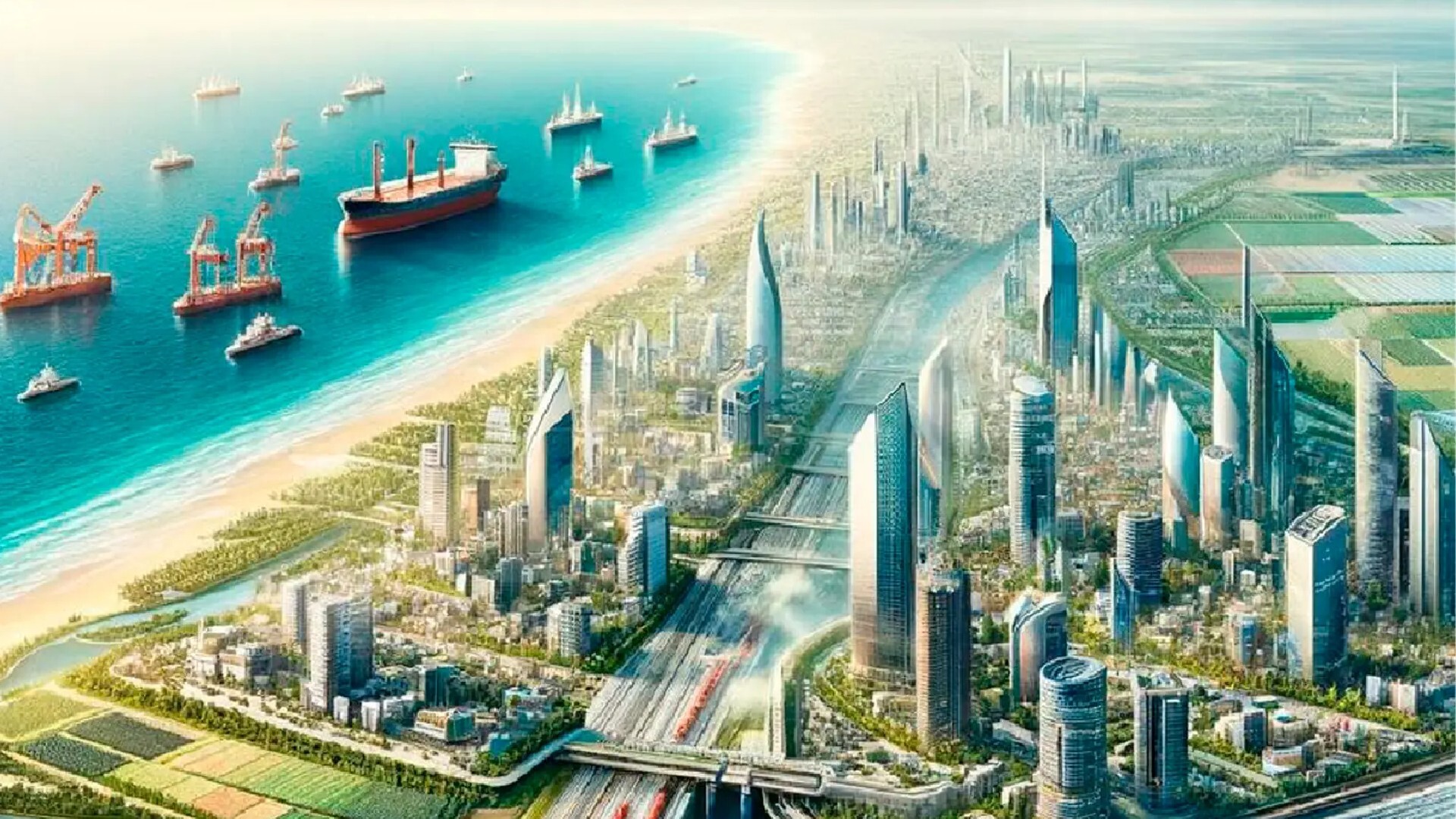
    Kushner’s proposal envisions a transformed Gaza Strip featuring gleaming skyscrapers, coastal tourist attractions, and commercial districts operating under “free market economy principles” modeled after Trump’s America. The presentation included AI-generated renderings depicting a cityscape resembling Gulf Arab states rather than traditional Palestinian architecture, complete with cultural inaccuracies such as Arabic text written in the wrong direction.

    Analysts universally condemned the proposal as colonial capitalism exploiting tragedy. Daniel Levy, a British-Israeli analyst and former peace negotiator, characterized it as continuation of profit-seeking from genocide, noting that over 71,500 Palestinians have been killed in the conflict recognized as genocide by UN experts and human rights organizations.

    Palestinian political analyst Abed Abou Shhadeh invoked Naomi Klein’s “The Shock Doctrine” to explain the phenomenon, stating: “They see the death of people as an opportunity to take their land, to take their apartments, and to take the rights over their land.” He predicted profiteers would include not only American and Israeli interests but also Arab businesspeople and wealthy Palestinians, while excluding the Palestinian people collectively.

    Renowned British-Israeli academic Avi Shlaim called the plan “preposterous and obscene,” noting its “total denial of any Palestinian agency.” Critics highlighted the irony of Kushner promoting this vision while his private equity firm had received substantial investments from Gulf states including UAE, Qatar, and Saudi Arabia after leaving the White House.

    Practical implementation appears unlikely according to most analysts. Annelle Sheline, a former State Department official who resigned over the Gaza war, noted the prerequisite of Hamas’s complete disarmament would be improbable given Israel’s military failure to achieve this despite extensive operations. She warned Trump should remember American failures in Iraq and Afghanistan when considering forced transformations of foreign territories.

  • India and EU set for ‘mother of all deals’ as Trump’s tariff uncertainty looms

    India and EU set for ‘mother of all deals’ as Trump’s tariff uncertainty looms

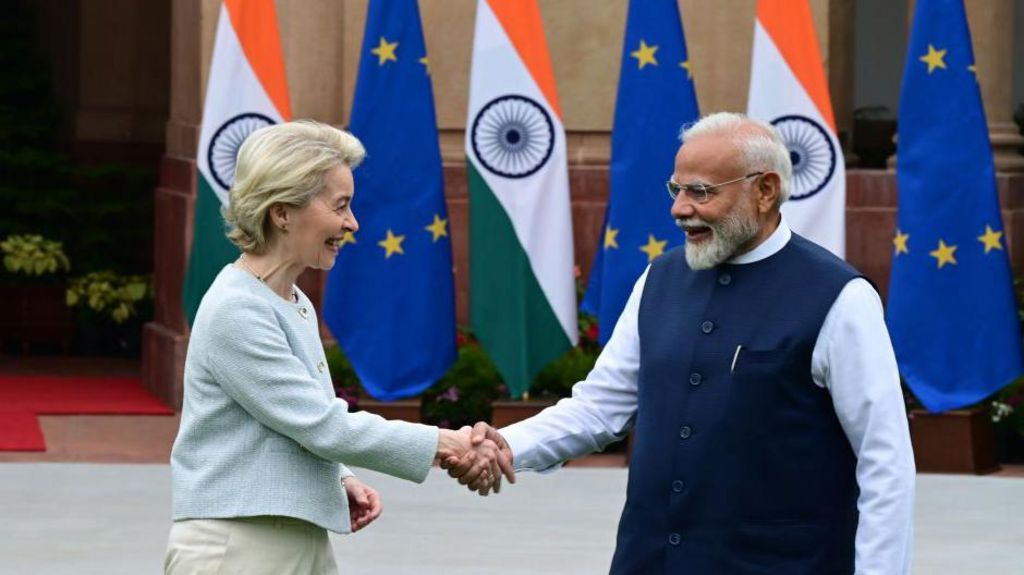
    In a significant diplomatic development, European Council President Antonio Luis Santos da Costa and European Commission President Ursula von der Leyen will attend India’s Republic Day celebrations as chief guests on January 26th. Beyond the ceremonial honors, their visit marks a crucial juncture in nearly two decades of free trade negotiations between the European Union and Asia’s third-largest economy.

    The potential agreement, which some reports suggest could be announced as early as January 27th during a high-level summit, represents a strategic pivot for both parties. For India, this constitutes its ninth free trade pact in four years, following recent deals with the UK, Oman, and New Zealand. The EU, meanwhile, continues expanding its trade network after concluding agreements with Mercosur nations, Japan, South Korea, and Vietnam.

    This accelerated negotiation timeline occurs against a backdrop of global trade uncertainty. Recent geopolitical tensions, including former President Donald Trump’s threatened tariffs against European allies and ongoing US-India trade disputes, have created renewed urgency for both parties to secure reliable trading partnerships. As Chietigj Bajpaee of Chatham House notes, “It sends a signal that India maintains a diversified foreign policy and that it is not beholden to the whims of the Trump administration.”

    The economic stakes are substantial. The EU is already India’s largest trading bloc, with bilateral trade currently favoring India—$76 billion in exports versus $61 billion in imports. The agreement would restore Generalized System of Preferences (GSP) benefits withdrawn in 2023, potentially boosting Indian exports in garments, pharmaceuticals, steel, petroleum products, and machinery.

    For Europe, partnering with the world’s fourth-largest and fastest-growing major economy—projected to surpass Japan’s GDP this year—offers access to a massive consumer market. Von der Leyen previously emphasized that an EU-India partnership would create a free market of two billion people accounting for a quarter of global GDP.

    Nevertheless, significant challenges remain. Europe seeks stronger intellectual property protections, including enhanced data security and patent regulations. India faces concerns regarding the EU’s new Carbon Border Adjustment Mechanism (CBAM), which effectively imposes border charges on Indian exports regardless of FTA provisions—particularly burdensome for small and medium-sized enterprises.

    India is expected to protect sensitive sectors like agriculture and dairy, while gradually reducing tariffs on automobiles, wine, and spirits—a approach consistent with previous trade agreements. As analyst Sumedha Dasgupta observes, the deal represents “a continuing and significant effort to shed India’s notoriously protectionist carapace.”

    Despite these hurdles, analysts ultimately view the agreement as mutually beneficial. Alex Capri of the National University of Singapore notes that the pact could “expedite trade decoupling from unreliable partners,” reducing vulnerabilities to arbitrary tariffs and weaponized supply chains. The agreement may also benefit from improved EU-India relations following India’s reduction of Russian crude oil purchases since November 2025.

    As Dasgupta concludes, recent political friction with the US means “EU leaders will now be more welcoming towards this trade deal than they would have otherwise been,” suggesting favorable conditions for finalizing this long-anticipated agreement.

  • Australian Open: Alcaraz dazzles in 100th Slam match as Sabalenka, Gauff grind through

    Australian Open: Alcaraz dazzles in 100th Slam match as Sabalenka, Gauff grind through

    The Australian Open witnessed a spectacular display of generational talent on Friday as established stars and emerging phenoms battled through contrasting challenges to secure their spots in the fourth round.

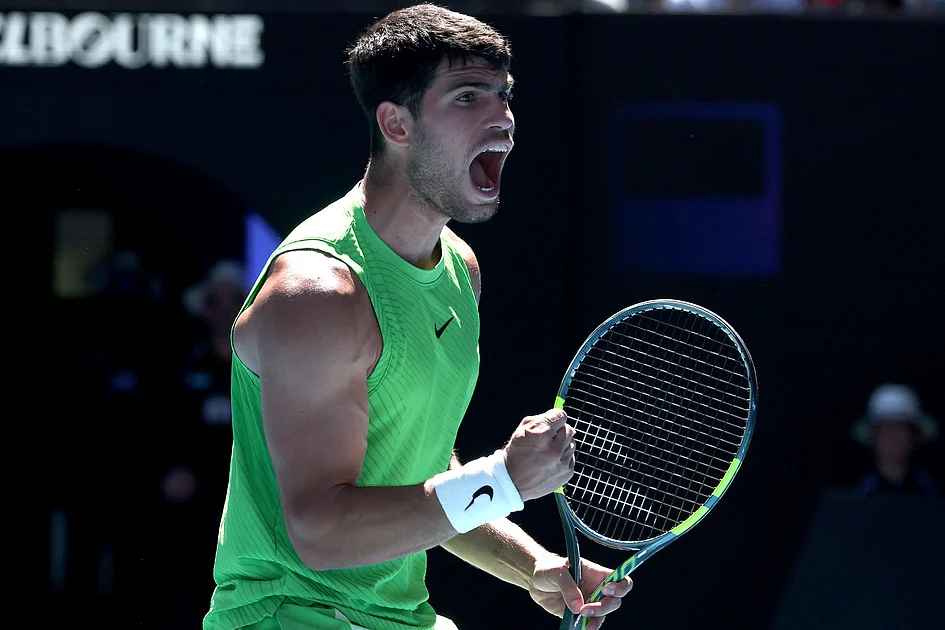
    Carlos Alcaraz delivered a masterclass performance in his milestone 100th Grand Slam match, dismantling French drop-shot specialist Corentin Moutet 6-2, 6-4, 6-1. The Spanish sensation showcased his extraordinary athleticism with what many are calling the rally of the tournament, chasing down a lob with a between-the-legs ‘tweener’ before threading a precision shot down the line. The victory extended Alcaraz’s unbeaten record against left-handers to 14 matches as he continues his quest to become the youngest man to complete the career Grand Slam.

    Home favorite Alex de Minaur created history by reaching the last 16 for the fifth consecutive year, joining John Newcombe as only the second Australian to achieve this feat in the professional era. His efficient 6-3, 6-4, 7-5 victory over American Frances Tiafoe has ignited local hopes for a first men’s champion since Mark Edmondson in 1976. “I’m looking for more and I’m in a position where I want more,” declared an ambitious de Minaur.

    The women’s draw saw top contenders tested severely. Defending champion Aryna Sabalenka survived a monumental scare against Russia-born Austrian Anastasia Potapova, prevailing 7-6(4), 7-6(7) while extending her incredible tiebreak winning streak to 21 consecutive sets. “You have to be there 100% in tiebreaks,” Sabalenka emphasized. “I just take it one point at a time.”

    American teenager Coco Gauff demonstrated resilience after dropping her first set of the tournament, rallying to defeat compatriot Hailey Baptiste 3-6, 6-0, 6-3. Meanwhile, the youth movement continued spectacularly as 18-year-old Iva Jovic toppled seventh seed Jasmine Paolini, and 19-year-old Canadian Victoria Mboko defeated 14th seed Clara Tauson to set up a showdown with Sabalenka.

    In other notable results, third seed Alexander Zverev continued his dominance over Briton Cameron Norrie with their seventh consecutive meeting victory, while Daniil Medvedev staged a remarkable comeback from two sets down against Hungary’s Fabian Marozsan. The tournament also saw emotional moments as wily Kazakh Yulia Putintseva ended Turkish qualifier Zeynep Sonmez’s dream run amid intense crowd support from Melbourne’s Turkish community.