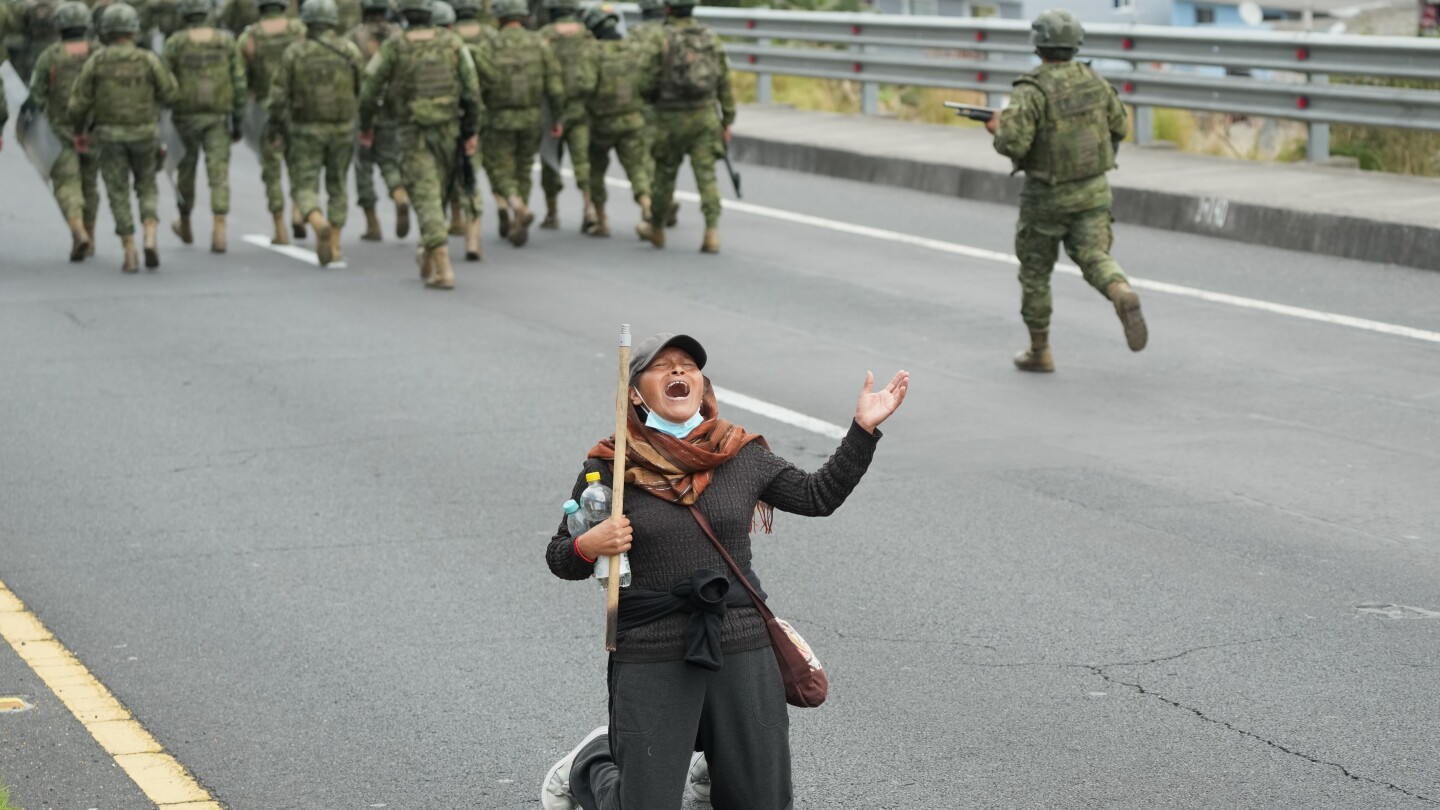
Ecuador is facing a deepening political crisis as widespread protests over the government’s decision to eliminate diesel subsidies enter their third week. The unrest, led by the Confederation of Indigenous Nationalities of Ecuador (CONAIE), has resulted in one fatality, numerous injuries, and over 100 arrests. President Daniel Noboa, who assumed office in May, is grappling with one of the most challenging moments of his presidency as tensions escalate. The government has deployed 5,000 troops to Quito to prevent vandalism and property destruction, following violent clashes between protesters and security forces. The protests, initially concentrated in rural areas, particularly Imbabura province, are now threatening to spread to urban centers, raising fears of further violence. The CONAIE, a powerful Indigenous organization, has rejected government offers of economic handouts, insisting on the restoration of the diesel subsidy and broader policy changes. Critics accuse Noboa of authoritarian tendencies and a lack of willingness to engage in dialogue, while the Indigenous movement is seen as uncompromising in its demands. The situation has drawn international attention, with concerns over the excessive use of force by security forces. Experts warn that without mediation from institutions like the Catholic Church or civil society, the crisis could worsen.
作者: admin
-

De Klerk smacks Proteas to stunning win over India
In a breathtaking display of resilience and skill, South Africa triumphed over India by three wickets in a nail-biting encounter at the ICC Women’s World Cup in Visakhapatnam. Chasing India’s total of 251, South Africa found themselves in dire straits at 81-5 before Nadine de Klerk orchestrated a remarkable comeback with an unbeaten 84 off just 54 balls. Her innings, punctuated by five towering sixes, sealed the victory with seven balls to spare, leaving the Indian team and their fans in disbelief.
-

London’s £34bn pension fund complicit in Israeli genocide, report says
A recent report by ‘Shake the CIV,’ a London-wide divestment campaign, has uncovered that London’s £34 billion ($45 billion) pension fund has £7 billion invested in companies allegedly enabling Israel’s human rights violations against Palestinians. Published on Thursday, the report scrutinizes the London Collective Investment Vehicle (LCIV), the investment pool for London-based local government pension schemes, jointly owned by the City of London and all 32 London boroughs. Over a fifth of the LCIV’s portfolio, amounting to more than £7 billion, is tied to firms accused of facilitating these abuses. The LCIV manages pensions for approximately 700,000 Londoners. Last year, it divested £6.7 million in Israeli government bonds and is currently evaluating its investments in 12 unnamed companies. The report highlights nearly £1 billion invested in arms manufacturers, including £10 million in Israel’s Elbit Systems and £228 million in British arms giant BAE Systems. Additionally, £5.2 billion is invested in technology firms accused of enabling Israel’s surveillance and control of Palestinians, with over £2.5 billion allocated to Microsoft. Last month, Microsoft announced it would sever ties with Israel’s Unit 8200, a surveillance entity accused of spying on Palestinians using Microsoft’s Azure cloud platform. The LCIV clarified that £6.5 billion of the £7 billion cited in the report are ‘passive strategies’ managed by third-party fund managers, outside the LCIV’s control. The report calls for immediate and complete divestment from companies complicit in Israel’s alleged genocide and apartheid against Palestinians. Councillor Liam Shrivastava of Lewisham Council’s pension committee emphasized the moral and democratic imperative to act, drawing parallels to past divestments from apartheid South Africa and fossil fuels.
-
Colombian President Petro suggests Qatar could mediate US military actions off Venezuela
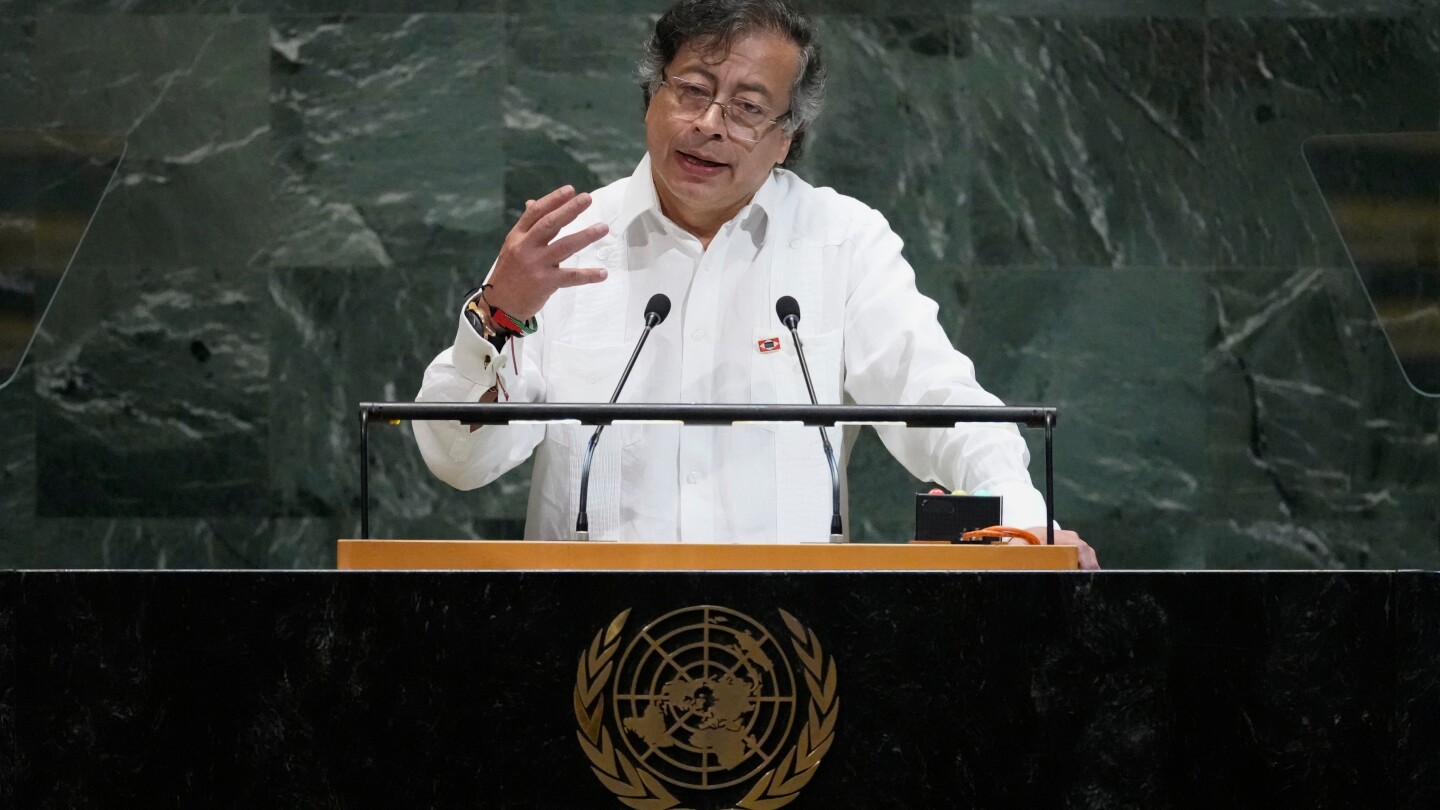
Colombian President Gustavo Petro has suggested that Qatar could act as a mediator to persuade the United States to halt its military operations in international waters near Venezuela. During a visit to Brussels, Petro emphasized Qatar’s successful track record in mediating tense situations and expressed confidence in its ability to convince the US to cease missile strikes in the Caribbean. These strikes, conducted by the US military, have targeted small boats allegedly involved in drug trafficking, with the Trump administration reporting the destruction of four such vessels. Petro’s proposal follows his earlier claim, made without evidence, that Colombians may have been aboard one of the boats destroyed by US forces. The US has disputed this assertion and urged Petro to retract his statement, but the Colombian leader has refused, citing national data on drug seizures and the nationalities of those apprehended. Meanwhile, US officials have reaffirmed their commitment to Colombia as a strategic partner, despite policy differences. Venezuelan President Nicolás Maduro has consistently denied his country’s involvement in major drug trafficking and has sought international support, including from the Pope, to maintain peace. Petro has criticized the US military actions as disproportionate and called for negotiations to dismantle drug trafficking organizations, citing Colombia’s recent talks with the Clan del Golfo in Qatar as a model for future mediation efforts.
-
South African farm worker describes how women fed to pigs to ‘dispose of evidence’
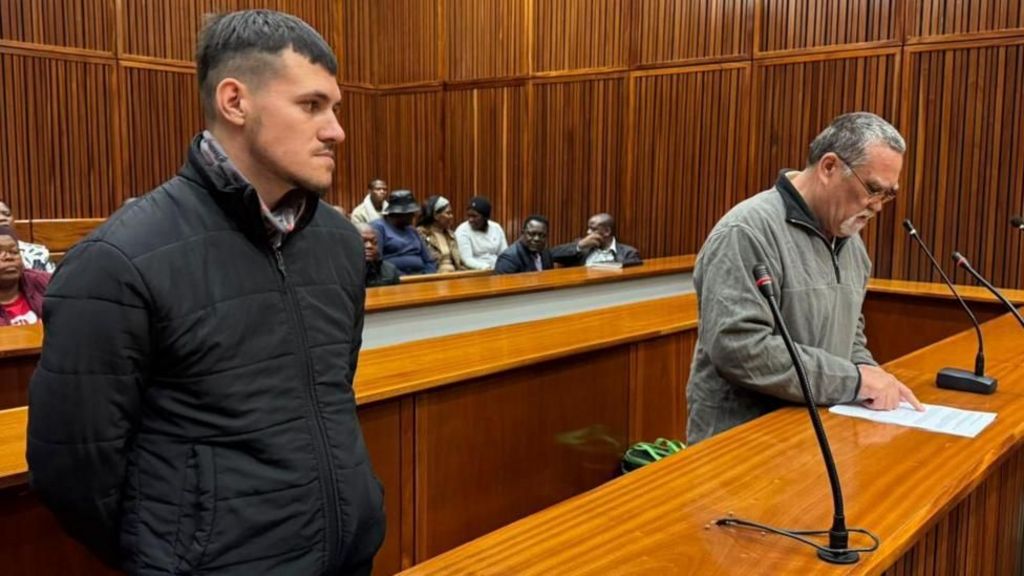
A harrowing courtroom testimony has revealed the gruesome details of a South African farm worker’s forced involvement in disposing of two women’s bodies by feeding them to pigs. Adrian De Wet, 21, recounted to the Polokwane High Court how his boss, farm owner Zachariah Johannes Olivier, coerced him into throwing the bodies into a pig enclosure after they were shot. De Wet explained that Olivier believed the pigs would consume the evidence, stating, ‘When pigs are hungry enough, they’ll eat anything.’
De Wet admitted to firing shots alongside Olivier on the night of August 17, 2024, when they heard voices of trespassers on the farm. The victims, Maria Makgato, 45, and Lucia Ndlovu, 34, were allegedly searching for food on the property. The following morning, De Wet and Olivier discovered the bodies and disposed of them in the pigsty. A second body was found nearby and similarly discarded. Days later, they returned to find the pigs had devoured large portions of the women’s flesh, as evidenced by graphic photos presented in court.
De Wet, initially accused of murder, was granted immunity after agreeing to testify against Olivier and another suspect, William Musora. He claimed he acted under duress. Olivier and Musora face murder charges, with the case reigniting racial tensions in South Africa, where private farmland remains predominantly owned by the white minority, while black farm workers endure poor wages and living conditions.
The trial has sparked national outrage, highlighting the persistent racial divide in rural areas, decades after the end of apartheid. The defense’s cross-examination of Olivier and Musora is set to resume next Wednesday.
-

Belgian police detain 3 over a suspected plot to attack politicians with a drone
Belgian authorities have thwarted a suspected terrorist plot involving a drone carrying explosives, targeting prominent politicians including Prime Minister Bart De Wever. On Thursday, three individuals were detained following coordinated raids in Antwerp, led by an anti-terrorism judge and supported by explosives detection units. Federal prosecutors revealed that an improvised device, steel balls, and a 3D printer—believed to be used for constructing attack components—were discovered during the searches. Investigators indicated that the suspects intended to build a drone to deliver a payload, potentially inspired by jihadist ideologies. While the politicians targeted were not explicitly named, Belgian Foreign Minister Maxime Prevot confirmed the plot’s focus on Prime Minister De Wever, describing the incident as ‘deeply shocking.’ The suspects, described as young adults born in 2001, 2002, and 2007, were questioned, with two set to appear before a judge and the third released. This incident underscores Belgium’s ongoing struggle with terrorism, particularly the misuse of drones, as highlighted by recent suspicious drone activity near a military base. The Belgian justice system, already strained by a surge in terrorism investigations and drug-related crime, has called for increased government support to bolster security measures. The 2016 Brussels bombings, which claimed 32 lives, remain a stark reminder of the nation’s vulnerability to terrorist threats.
-

Texas court blocks death row inmate’s execution in shaken baby case
A Texas court has intervened to stop the execution of Robert Roberson, a man convicted of killing his two-year-old daughter in a case centered on shaken baby syndrome. Roberson, who has consistently argued that his daughter’s death was caused by medical complications and a prescribed medication rather than abuse, was scheduled to face execution on October 16. The Texas Court of Criminal Appeals issued an emergency stay on Thursday, invoking the state’s 2013 ‘junk science’ law, which permits courts to revisit convictions based on outdated or discredited scientific evidence. Shaken baby syndrome, a diagnosis that describes severe brain injuries from forcefully shaking a child, has faced increasing scrutiny in recent years. Roberson’s case has drawn bipartisan support for re-examination, with lawmakers and legal experts questioning the validity of the medical theories used to convict him. This is not the first time Roberson’s execution has been delayed; last October, a bipartisan group of state lawmakers intervened to pause the process. Texas Attorney General Ken Paxton, however, continues to support the execution, asserting that Roberson abused his daughter. Roberson maintains that his daughter died after falling out of bed and suffering complications from prescribed medications, which are no longer administered to children due to their risks. Brian Wharton, the lead detective in the case, has publicly expressed regret, stating that he believes Roberson is innocent. The case highlights ongoing debates about the reliability of shaken baby syndrome diagnoses and the broader implications for justice.
-
Madagascar’s Gen Z protesters clash with police as they call for president to step down
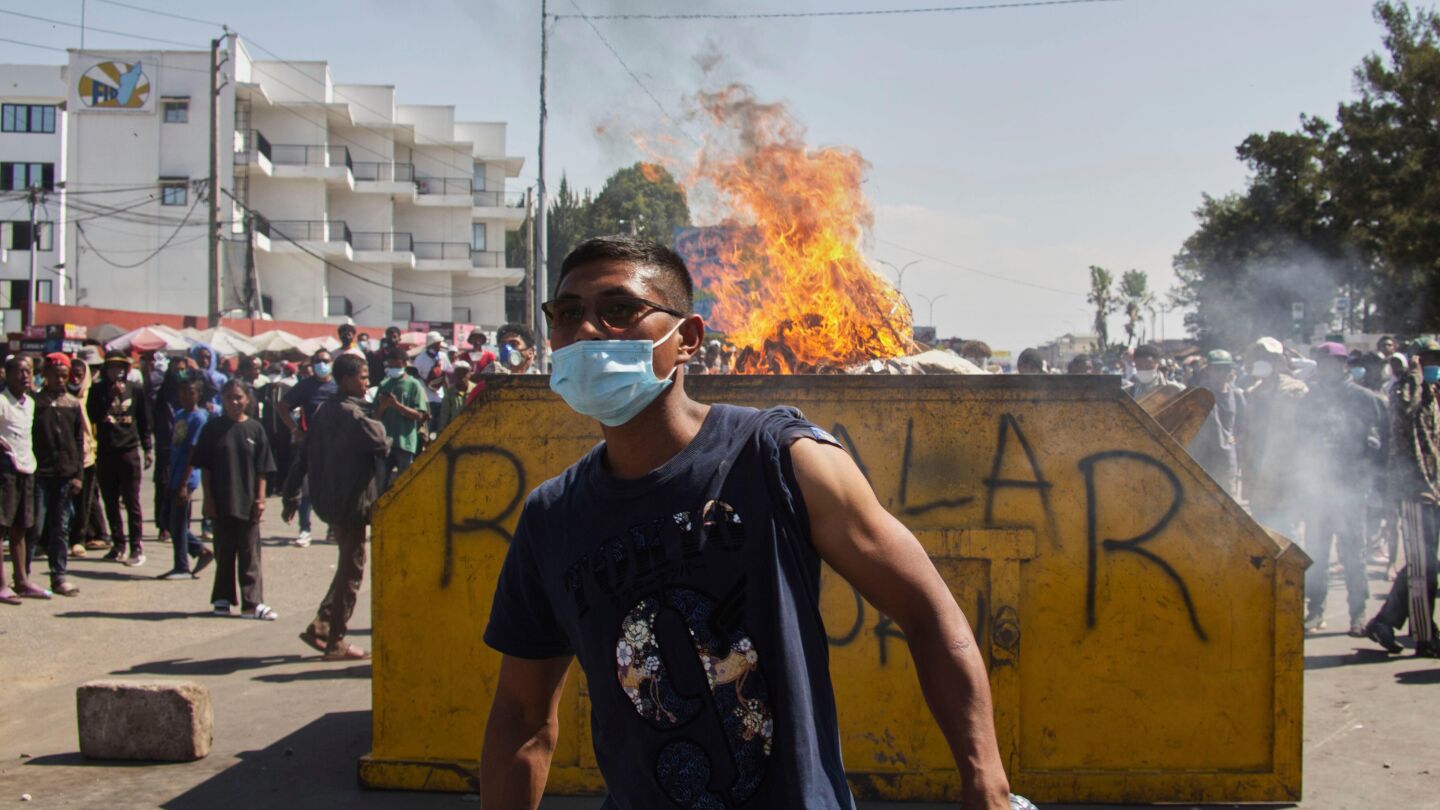
Antananarivo, Madagascar witnessed intense clashes on Thursday as approximately 1,000 demonstrators, predominantly masked, confronted police forces in the capital. The unrest, now in its third week, marks the most significant upheaval the Indian Ocean island nation has seen in years. Authorities deployed armored vehicles and utilized tear gas and stun grenades to disperse the crowd, though the extent of injuries remains unclear. The protests, spearheaded by the group ‘Gen Z Madagascar,’ have reportedly resulted in 22 fatalities and numerous injuries, according to the United Nations—a claim contested by the government. Initially triggered by utility disruptions, the demonstrations have broadened to address grievances over alleged corruption and nepotism. In response, President Andry Rajoelina dismissed his entire Cabinet, a move that failed to quell the unrest. Protesters have now escalated their demands, calling for Rajoelina’s resignation and rejecting his invitation for dialogue. The clashes, concentrated in the Anosy and Mahamasina districts, saw demonstrators block streets with rocks and burning tires. Authorities have imposed vehicle bans in key areas, including Democracy Square in Ambohijatovo, as police maintain vigilance. Madagascar, a nation of 31 million grappling with severe poverty and a history of political instability since its 1960 independence from France, has seen multiple leaders ousted through uprisings. Rajoelina, elected in 2018 and reelected in 2023 amid opposition boycotts, now faces a protest movement inspired by recent youth-led uprisings in Nepal and Sri Lanka. The movement, symbolized by a pirate skull and crossbones emblem, has mobilized online, though reports of looting during demonstrations have emerged.
-

Eurovision has never been about politics, says BBC boss Tim Davie
The Eurovision Song Contest, renowned for its vibrant music and cultural celebration, is now embroiled in political controversy as debates intensify over Israel’s participation in the 2025 event. BBC Director General Tim Davie, addressing the UK Parliament’s Public Accounts Committee, emphasized that Eurovision ‘has never been about politics’ and should remain a unifying platform for music and culture. However, concerns over Israel’s actions in Gaza have prompted broadcasters from Ireland, the Netherlands, Slovenia, Iceland, and Spain to threaten a boycott if Israel is allowed to compete. Spain’s Culture Minister Ernest Urtasun echoed Prime Minister Pedro Sánchez’s earlier calls for Israel’s exclusion, citing accusations of genocide and imposing measures such as an arms embargo. Israel’s Foreign Minister Gideon Saar countered, labeling Sánchez’s administration as antisemitic and criticizing its rhetoric. The European Broadcasting Union (EBU), which oversees Eurovision, is set to make a final decision in December. The controversy mirrors the 2022 expulsion of Russia following its invasion of Ukraine, which the EBU justified as necessary to preserve the contest’s integrity. Meanwhile, Austria prepares to host next year’s event in Vienna, following Austrian singer JJ’s victory in 2024. Amidst the political tensions, Eurovision’s history of subtle political messaging continues, with past performances like Ukraine’s 2016 winning song ‘1944’ addressing historical injustices. As the EBU navigates this complex issue, the future of Eurovision as a non-political celebration hangs in the balance.
-
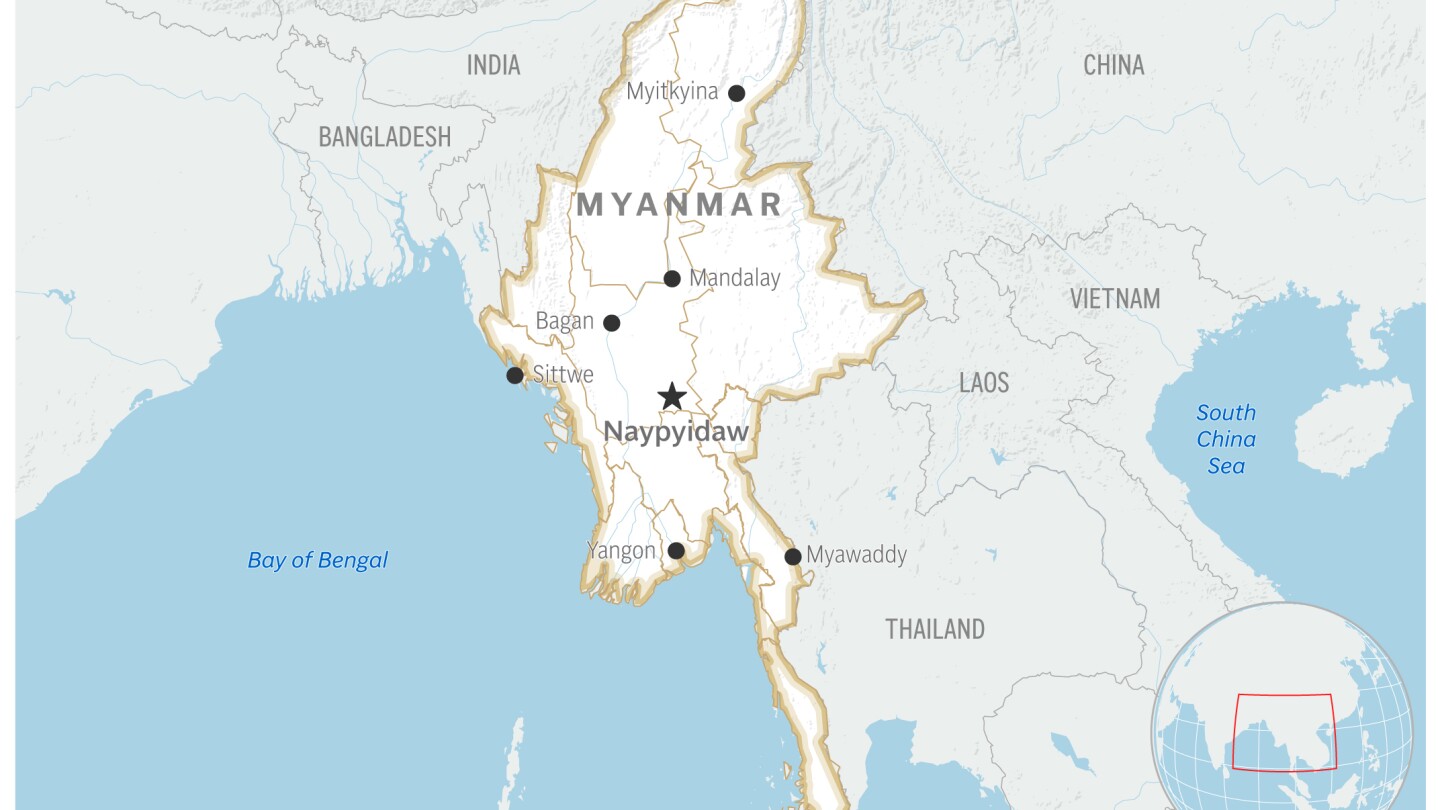
Myanmar’s military acknowledges attacking festival, accuses resistance forces of using human shields
Myanmar’s military government has acknowledged carrying out an attack on a religious festival in the Sagaing region, which witnesses claim resulted in the deaths of approximately two dozen people, including children. The attack, which occurred on Monday night, involved bombs dropped by motorized paragliders on a primary school compound in the village of Bon To. The military’s information office issued a statement blaming resistance forces for the casualties, accusing them of using civilians as human shields in their anti-government campaigns. However, neither the government nor its opponents reported any armed combat near the bombing site. The United Nations condemned the attack, with a spokesperson for Secretary-General António Guterres stating that the indiscriminate use of airborne munitions is unacceptable. Witnesses reported that the paragliders conducted two sorties, each dropping two bombs believed to be 120 mm mortar rounds. Initial casualty reports varied, but a local resistance group member estimated 24 deaths and 50 injuries. The attack took place during a traditional oil lamp prayer ceremony marking the end of Buddhist Lent, where attendees also called for the release of political prisoners and protested the military’s planned December election, which critics deem neither free nor fair. The Sagaing region has been a stronghold of armed resistance since the military seized power in February 2021. The military’s statement accused the resistance of forcing civilians to protest, a claim rejected by attendees who stated participation was voluntary. In a separate development, Malaysian Foreign Minister Mohamad Hasan met with Myanmar’s military chief, Senior Gen. Min Aung Hlaing, to discuss the upcoming election, humanitarian aid, and peace efforts.