
In a stunning political upset, centrist candidate Rodrigo Paz emerged victorious in Bolivia’s presidential runoff on Sunday, marking the first time in two decades that a conservative leader has claimed the presidency. The 58-year-old senator, previously a relatively obscure figure, defeated his prominent right-wing rival, former President Jorge “Tuto” Quiroga, to become Bolivia’s next head of state, set to assume office on November 8. Paz’s triumph comes amid a severe economic crisis, with the country grappling with fuel shortages, a scarcity of U.S. dollars, and the collapse of the statist economic model established under the Movement Toward Socialism (MAS) party, led by former President Evo Morales. Paz campaigned on a platform of gradual economic reforms, contrasting with Quiroga’s more aggressive fiscal shock proposals, and promised to address inequality and unemployment. His victory signals a potential shift in Bolivia’s political and economic trajectory, as well as a reset in relations with the United States, which Paz has emphasized as crucial for Bolivia’s future. His running mate, ex-police Captain Edman Lara, played a pivotal role in the campaign, amplifying Paz’s anti-corruption message and resonating with working-class and Indigenous voters. Despite his plans to eliminate fuel subsidies and devalue the Bolivian currency, Paz’s populist tone and promises of cash handouts for the poor helped secure broad support across the nation.
作者: admin
-

Airport inferno could cost Bangladesh $1bn in damages – experts
A catastrophic fire at Hazrat Shahjalal International Airport in Bangladesh has left the nation’s business community reeling, with potential losses estimated at over $1bn (£750m). The blaze, which erupted in the airport’s logistics section on Saturday, destroyed vast quantities of clothing, raw materials, and other essential goods, putting numerous businesses at risk. The fire, which took 27 hours to extinguish, forced the temporary suspension of flights and airport operations. Bangladesh, the world’s second-largest apparel exporter after China, relies heavily on its garment sector, which generates approximately $40bn annually and contributes over 10% to the country’s GDP. Local media reported that around 35 people were injured while battling the flames. The damaged cargo village, a critical logistics hub, stored fabrics, pharmaceuticals, chemicals, and other goods, including samples crucial for securing new buyers. Inamul Haq Khan, senior vice-president of the Bangladesh Garment Manufacturers and Exporters Association, highlighted that the destruction of these samples could jeopardize future business opportunities. The International Air Express Association of Bangladesh also confirmed the $1bn damage estimate in an email to the BBC. This incident marks Bangladesh’s third major fire within a week, following a deadly warehouse fire that claimed 16 lives and a factory blaze in Chittagong. Online conspiracy theories have linked these incidents, alleging they were pre-planned. Historically, such tragedies have been politicized, with parties accusing each other of exploiting disasters for political gain. The interim government has vowed to take immediate action if evidence of sabotage or arson is found. Frequent fires in Bangladesh are often attributed to poor infrastructure and lax safety enforcement, with hundreds of lives lost in recent years.
-

Father says visa cost is keeping his family apart
A father from Ashington, Northumberland, is enduring the heartbreak of living thousands of miles away from his family due to the prohibitive costs of UK visa applications. Christopher Wade, a supermarket delivery driver, has been separated from his wife, Josianne Charlebois, and their two-year-old daughter, Layla, who resides in Canada. While Layla holds British citizenship, Ms. Charlebois faces a daunting financial hurdle: a visa application fee of £1,938 and an NHS surcharge of £2,588, totaling over £4,500. Despite applying for a fee exemption based on financial hardship, their request was denied, leaving the family in limbo.
Mr. Wade and his wife, a government administrative worker, met in Canada and married in 2022. They initially planned to settle in the UK, where Mr. Wade’s extended family could assist with childcare. However, due to prior debts and daycare expenses, saving the required funds proved impossible. Their solicitor, Chris Boyle, who is providing pro bono legal assistance, argued that the couple meets the Home Office’s exemption criteria, as they submitted 47 documents detailing their financial situation.
The prolonged separation has taken a toll on Mr. Wade’s mental health, causing panic attacks and a sense of despair. Ms. Charlebois, who lacks familial support in Canada, also faces challenges, including the risk of losing her job due to frequent absences to care for their daughter. The couple’s dream of reuniting in the UK remains elusive, with Mr. Wade unable to relocate to Canada due to his need to work and repay debts.
The Home Office declined to comment on individual cases, leaving the family’s future uncertain. Mr. Wade expressed his anguish, stating, ‘I don’t know how much longer this can go on.’ Their story highlights the broader struggles faced by families navigating the UK’s immigration system, particularly those with limited financial resources.
-

Chancellor says Brexit deal caused long-term damage to economy
In a significant address to the International Monetary Fund (IMF), UK Chancellor Rachel Reeves emphasized the enduring economic repercussions of the 2020 Brexit deal. Speaking at a high-profile international economic committee, Reeves highlighted the UK’s productivity challenges, which she attributed to the manner of the country’s departure from the European Union. She referenced the Office for Budget Responsibility’s (OBR) estimate of a 4% long-term economic decline compared to remaining in the EU, underscoring the UK’s commitment to forging stronger trade relationships to mitigate these effects. This marks a notable shift in the Labour Party’s stance, which had previously been cautious in discussing Brexit’s economic downsides. However, recent developments indicate a more assertive approach, with ministers increasingly vocal about the issue. The Chancellor’s remarks at the IMF, attended by global finance leaders from the G7, China, India, the EU, and European Central Banks, signal a significant change in domestic policy emphasis. This is expected to play a pivotal role in the government’s arguments leading up to the Budget announcement on November 26, where new measures, likely including tax increases, will be necessitated by a downgrade in long-term UK productivity. The OBR is anticipated to provide a detailed explanation for this downgrade in its upcoming forecast, with Brexit expected to be a key factor. Economists have pointed to reduced investment and underperformance in goods trade post-referendum, though some note resilience in services trade and new global trade opportunities. The issue remains sensitive as the government finalizes negotiating positions for a Brexit ‘reset,’ including reducing post-Brexit checks on food and farm trade and supporting UK manufacturers in accessing Europe’s growing defense budgets. European ministers have called for ambitious talks to alleviate the impact of global trade wars. Reeves, who announced £40bn in annual tax rises in her first Budget last November, now faces the prospect of further public finance adjustments. The Conservatives have proposed significant public spending cuts if they win the next election, creating a clear policy divide.
-

China’s economic growth slows as trade tensions with US flare up
China’s economic expansion decelerated to 4.8% in the third quarter of 2024, marking its slowest pace in a year, as trade tensions with the United States intensified. This figure, released by China’s National Bureau of Statistics on Monday, represents a decline from the 5.2% growth recorded in the previous quarter. The slowdown coincides with Beijing’s imposition of stringent controls on rare earth exports, critical minerals for global electronics production, which has further strained its fragile trade truce with Washington. The third-quarter GDP data will influence discussions among China’s top leaders this week as they deliberate on the nation’s economic strategy for 2026–2030. Despite the challenges, Chinese officials highlighted the economy’s ‘strong resilience and vitality,’ attributing growth momentum to the technology sector and business services. Beijing remains committed to its annual growth target of ‘around 5%,’ supported by government measures to avert a sharp downturn. In response to China’s export controls, US President Donald Trump threatened to impose an additional 100% tariffs on Chinese imports. Meanwhile, US Treasury Secretary Scott Bessent plans to meet Chinese officials in Malaysia to ease tensions and facilitate a potential meeting between Trump and Chinese President Xi Jinping. Prior to the recent escalation, Chinese businesses capitalized on the trade truce, boosting exports to the US by 8.4% in September. China’s industrial output also rose by 6.5% year-on-year, driven by strong performances in 3D printing, robotics, and electric vehicle manufacturing. The service sector, encompassing IT support, consultancies, and logistics, also expanded.
-

South Korea seeks to arrest dozens of online scam suspects repatriated from Cambodia
South Korean authorities are moving to formally arrest the majority of 64 citizens repatriated from Cambodia, where they were allegedly involved in online scam operations. The individuals, detained in Cambodia over recent months, were flown back to South Korea on a charter flight last Saturday. Upon arrival, they were held for questioning to determine whether their participation in the scam organizations was voluntary or coerced. Police have requested arrest warrants for 58 of the returnees, accusing them of engaging in fraudulent activities such as romantic scams, fake investment schemes, and voice phishing, primarily targeting fellow South Koreans. Courts are expected to decide on the arrest requests in the coming days. Five individuals have been released, though the reasons remain undisclosed as investigations continue. Four returnees reported being beaten while held against their will in Cambodian scam centers. The case has sparked public outcry in South Korea, urging stronger measures to protect citizens from being trafficked into overseas scam operations. This follows the tragic death of a South Korean student in Cambodia, who was reportedly lured into providing his bank account for scam activities and later tortured. The U.N. estimates that over 100,000 people have been trafficked to scam centers in Cambodia, with similar numbers in Myanmar and other regions. South Korea has imposed a travel ban on parts of Cambodia and dispatched a government delegation to address the issue. Interpol reports indicate that the reach of these scam centers has expanded globally, with victims now being trafficked from South America, Western Europe, Eastern Africa, and new centers emerging in the Middle East, West Africa, and Central America.
-

Asian shares advance, with Japan’s benchmark surging after ruling party forms new coalition
Asian markets experienced a significant surge on Monday, buoyed by a strong performance on Wall Street and easing concerns over bank lending and the U.S.-China trade war. Japan’s Nikkei 225 soared 2.9% to a record high of 48,970.40, following the Liberal Democratic Party’s formation of a new coalition, paving the way for Sanae Takaichi to potentially become Japan’s first female prime minister. Takaichi is anticipated to advocate for market-friendly policies, including low interest rates and increased government spending. Meanwhile, China reported a 4.8% annual economic growth rate for the last quarter, driven by robust exports to non-U.S. markets. However, this marks the slowest growth pace in a year, as the nation grapples with a prolonged property market slump and sluggish consumer and business spending. The Chinese Communist Party’s leadership convened in Beijing to outline policy goals for the next five years and address personnel changes, with outcomes expected to be formalized in March. Hong Kong’s Hang Seng rose 2.5%, while South Korea’s Kospi hit a record high, fueled by optimism over a potential trade deal with the U.S. and strong semiconductor demand. U.S. futures edged higher, and oil prices declined slightly. Bank stocks stabilized after several institutions reported stronger-than-expected quarterly profits, though concerns linger over loan quality following recent bankruptcies. JPMorgan CEO Jamie Dimon warned of potential risks in the lending sector, emphasizing the need for caution. In currency markets, the U.S. dollar strengthened against the Japanese yen, while the euro also gained ground.
-

Women’s World Cup: England clinch semifinal berth after Indian collapse
In a dramatic showdown at the Women’s World Cup in Indore, England secured their place in the semifinals with a narrow four-run victory over hosts India. Despite a shaky bowling performance, England’s competitive total of 288-8, anchored by Heather Knight’s stellar century, proved just enough to edge out the Indian side. Knight’s masterful 109 off 91 balls, featuring 15 fours and a six, was the cornerstone of England’s innings, earning her the Player of the Match accolade. The match took a dramatic turn when India, seemingly in control with 62 runs needed off the last 10 overs and seven wickets in hand, suffered a sudden collapse. The dismissals of Smriti Mandhana, Richa Ghosh, and Deepti Sharma in quick succession derailed India’s chase, leaving their tailenders with an insurmountable task. Mandhana’s reckless attempt to clear long-off and Sharma’s ill-fated slog sweep were pivotal moments that shifted the momentum decisively in England’s favor. India’s third consecutive defeat has left their semifinal hopes hanging by a thread, with their upcoming match against New Zealand now a must-win encounter. Meanwhile, England’s clinical performance has cemented their position in the semifinals, sitting second on the table with nine points, just behind defending champions Australia. Indian captain Harmanpreet Kaur expressed her disappointment, lamenting the team’s inability to close out the game despite coming so close in their last three matches.
-

UK military to get powers to shoot down drones near bases
The United Kingdom is set to grant its military personnel enhanced powers to shoot down drones that pose a threat to military installations. Defence Secretary John Healey will announce the initiative in a speech on Monday, emphasizing the need for quicker and more decisive responses to aerial threats. This move follows a series of mysterious drone sightings at four British airbases utilized by US forces last year, as well as numerous disruptions across European airspace in recent months. While the new authority initially applies solely to military sites, there is potential for its extension to civilian locations, including airports. The proposed ‘kinetic option,’ first reported by the Daily Telegraph, will empower British troops and Ministry of Defence (MoD) police to neutralize drones endangering UK military bases. Current protocols require soldiers to divert drones or disrupt their GPS signals using counter-drone equipment, with shooting down drones permitted only in extreme cases. RAF Lakenheath, RAF Mildenhall, RAF Feltwell, and RAF Fairford all reported drone incursions in November 2023, prompting the deployment of 60 RAF personnel to assist the US Air Force in its investigation. The strategic importance of these airbases was underscored by the recent deployment of F-22A fighter jets to RAF Lakenheath following US airstrikes on Iranian nuclear sites in June. The UK’s decision aligns with broader European efforts to address drone threats. Earlier this month, EU leaders convened in Denmark to discuss a multi-layered ‘drone wall’ aimed at detecting, tracking, and destroying Russian drones. Recent incidents, including 20 Russian drones crossing into Poland in September and Russian MiG-31 jets entering Estonian airspace, have heightened concerns. Drone sightings have also forced temporary closures of airports in Germany, Denmark, and Norway. While Russia has denied involvement in these incursions, the UK’s new measures reflect a proactive approach to safeguarding national security.
-
Ultraconservative Sanae Takaichi on track to become Japan’s first female prime minister
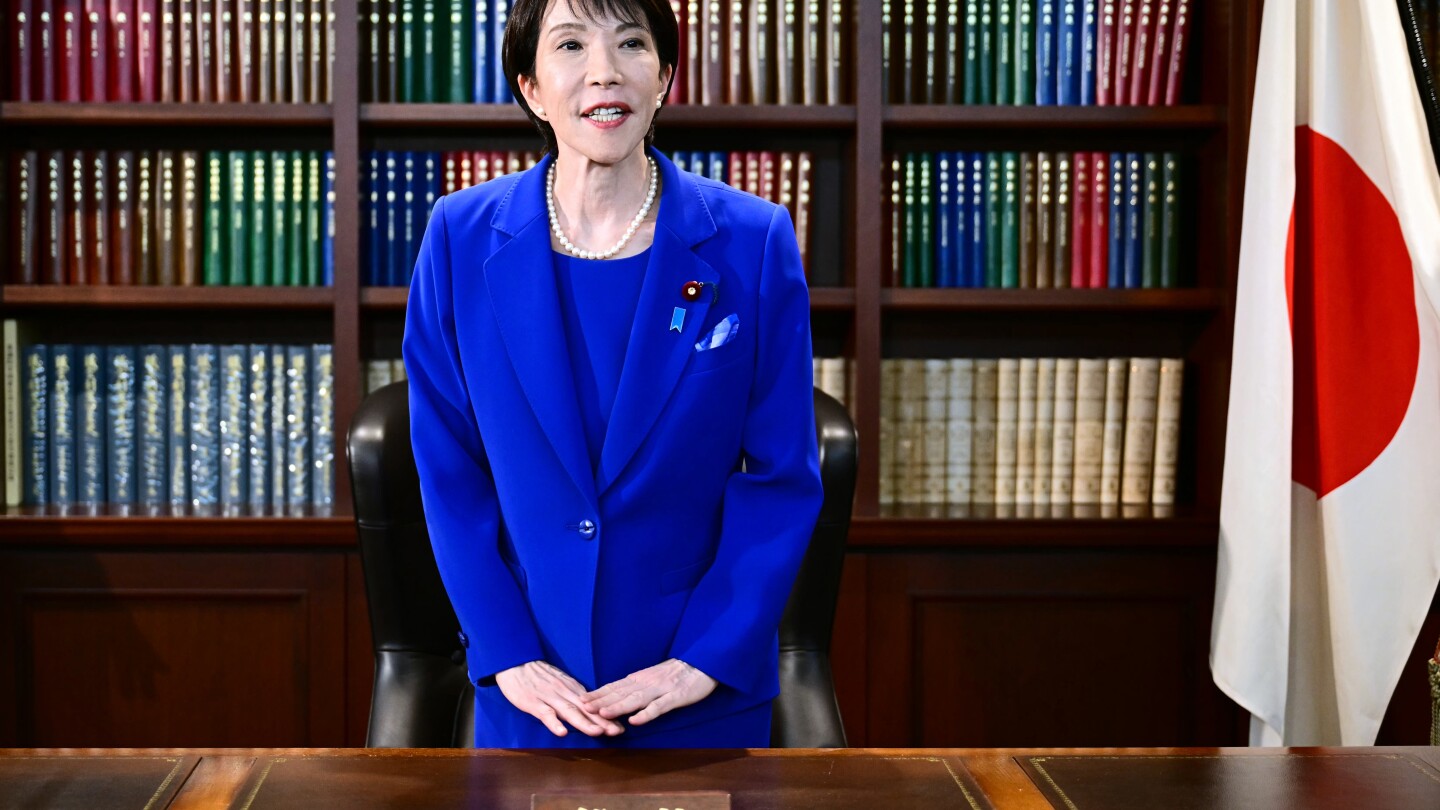
Japan is on the brink of a historic political milestone as Sanae Takaichi, leader of the Liberal Democratic Party (LDP), is set to become the nation’s first female prime minister. This follows a tumultuous period of political instability after the LDP’s coalition with the Komeito party dissolved in July, leading to a three-month leadership vacuum. Takaichi, 64, is expected to replace Prime Minister Shigeru Ishiba in a parliamentary vote on Tuesday, marking a significant shift in Japan’s political landscape. However, her path to power has been fraught with challenges. The Komeito party, a moderate centrist group, severed ties with the LDP after 26 years, citing concerns over Takaichi’s ultraconservative policies and the LDP’s handling of slush fund scandals. To secure the necessary votes, Takaichi forged a fragile alliance with the Japan Innovation Party (JIP), a conservative faction based in Osaka. While this coalition offers a short-term solution, its long-term stability remains uncertain. Takaichi’s premiership, if confirmed, will face immediate tests, including diplomatic engagements with U.S. President Donald Trump and regional summits. Domestically, she must address rising prices and implement economic measures to appease a frustrated public. Despite her historic achievement, Takaichi’s leadership is met with skepticism, particularly among women. Critics argue that her ultraconservative stance on issues like male-only imperial succession, same-sex marriage, and separate last names for married couples undermines gender equality. Political commentators also question her ability to navigate Japan’s complex political environment, given her coalition’s minority status and the need for opposition support to pass legislation. Takaichi’s policies, which focus on short-term economic fixes and military expansion, have drawn criticism for lacking a long-term vision to address Japan’s demographic challenges. As she prepares to take office, Takaichi faces a delicate balancing act between maintaining conservative support and fostering stability in a deeply divided political landscape.