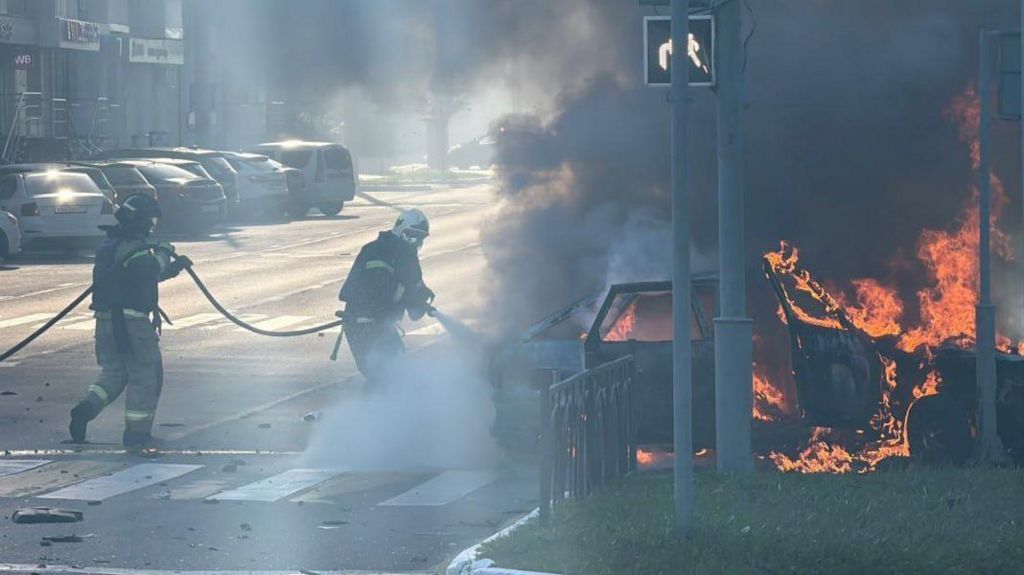
The Belgorod region in Russia has become a focal point of escalating tensions between Ukraine and Russia, as residents report increasingly frequent drone strikes, blackouts, and air-raid sirens. According to local accounts, the sound of gunfire aimed at incoming Ukrainian drones has become a daily occurrence, with Kyiv retaliating against Russian bombardments of its cities. Nina, a Belgorod resident, described the terrifying experience of hearing sirens and explosions while trying to seek shelter. Data from local authorities analyzed by BBC News Russian reveals a nearly fourfold increase in Ukrainian drone attacks on the region since the start of 2025, with over 4,000 drones recorded in September alone. The strikes have targeted key infrastructure, including power plants and substations, leaving thousands without electricity. Ukrainian President Volodymyr Zelensky has framed these attacks as a direct response to Russia’s ongoing assaults on Ukraine’s energy infrastructure. Belgorod, a critical logistics hub for Russian forces near the Ukrainian border, has seen its once-unaffected city center now grappling with frequent power outages and fuel shortages. Residents like Ekaterina recount the sudden onset of missile alerts and the ensuing chaos of explosions and darkness. The region’s authorities admit to being overwhelmed, urging residents to purchase backup generators amid a fuel crisis exacerbated by Ukrainian attacks on Russian oil refineries. The introduction of Ukraine’s lightweight ‘Darts’ drones and heavier weapons like Himars rockets has intensified the strikes, overloading Russian air defense systems. For Belgorod residents, the war is no longer a distant conflict but a daily reality, marked by anxiety and uncertainty. As the conflict continues, many, like Yakov, fear that Russia is racing toward an inevitable collapse.
作者: admin
-

Cambodian police arrest 57 South Koreans over alleged links to online scams
In a significant crackdown on cybercrime, Cambodian authorities have arrested 57 South Korean nationals linked to an alleged online scam operation. The arrests were made during a police raid on a building on the outskirts of Phnom Penh on Wednesday. According to a statement released by Cambodia’s Secretariat of the Commission for Combating Online Scams, 86 individuals were found at the site, including 29 Chinese nationals. A delegation of South Korean lawmakers, led by Kim Seok-ki, accompanied the raid as part of an ongoing parliamentary investigation into reports of employment scams, illegal confinement, and torture of South Korean citizens in Cambodia. This marks the second South Korean delegation to visit Cambodia in recent weeks, following a visit by Vice Foreign Minister Kim Jina last week. The arrests come in the wake of the repatriation of 50 South Koreans accused of involvement in similar scams. These individuals were among 64 South Koreans detained in Cambodia in recent months and flown back to South Korea on a charter flight. Upon arrival, they were detained for further investigation to determine whether they participated voluntarily or were coerced. The crackdown follows the tragic death of a South Korean student allegedly forced to work in a Cambodian scam center, which sparked public outrage in South Korea. Online scams, particularly those based in Southeast Asia, have surged since the COVID-19 pandemic, victimizing both those forced to work in such operations and the targets of their fraud. Monitoring groups estimate that these scams generate billions of dollars annually for international criminal networks. Cambodian authorities have intensified efforts to combat these operations, raiding 92 locations across 18 provinces over the past four months, arresting 3,455 individuals from 20 nationalities. Most of those detained were identified as victims and have been deported, while 75 suspected ringleaders face charges in Cambodian courts. The Korean National Police Agency has issued arrest warrants for 49 of the 64 returnees, with courts reviewing warrants for 10 others. These individuals are accused of engaging in various online fraud schemes, including romantic scams, fake investment pitches, and voice phishing, primarily targeting South Koreans.
-

At a pumpkin festival near Berlin, powerful women take shape — one gourd at a time
The Klaistow Farm near Berlin has transformed into a vibrant celebration of pumpkins, drawing thousands of visitors to its annual Pumpkin Festival. Now in its 22nd year, the event showcases over 100,000 pumpkins of 500 varieties from around the world, each meticulously labeled with its name and origin. The festival, which began in 2004 as Germans embraced the American tradition of Halloween, has grown into a cultural phenomenon, attracting up to 12,000 visitors on weekends and 5,000 on weekdays. This year’s theme, “Women’s Power,” features 15 larger-than-life pumpkin sculptures depicting iconic figures such as Frida Kahlo, Pippi Longstocking, and Cleopatra. The festival also offers a culinary journey with pumpkin-inspired dishes, from stuffed pumpkin to pumpkin crème brûlée. Families can explore the farm’s winding paths, marveling at creative displays like Marge Simpson’s hair made of winter squash and Elsa from “Frozen” adorned in pale yellow pumpkins. The event not only celebrates the pumpkin’s versatility but also highlights its historical journey from America to Europe, as recounted by Antje Winkelmann, co-owner of the family-run farm. Visitors can purchase 30 different types of pumpkins and indulge in a variety of pumpkin delicacies, making it a must-visit autumn destination.
-

Wall Street quietly mixed early while crude prices soar $3 after Trump sanctions Russian oil giants
Wall Street exhibited a cautious stance on Thursday as U.S. President Donald Trump announced sanctions targeting Russian oil giants Rosneft and Lukoil, causing crude oil prices to surge over 5%. Futures for the S&P 500 and Nasdaq edged up marginally, while Dow Jones futures dipped slightly. The sanctions aim to pressure Russian President Vladimir Putin to negotiate an end to the ongoing conflict in Ukraine. Concurrently, European Union leaders convened to approve additional sanctions and explore utilizing frozen Russian assets to support Ukraine’s economy and war efforts for the next two years. U.S. benchmark crude oil rose to $61.63 per barrel, with Brent crude climbing to $65.72. In corporate news, Tesla’s shares dropped 3.2% after reporting a 37% decline in third-quarter earnings, marking its fourth consecutive quarterly profit drop. CEO Elon Musk shifted focus to Tesla’s AI and robotaxi ventures during an investor call. IBM’s shares fell 6.8% despite beating sales and profit targets, as cloud revenue growth slowed. Molina Healthcare plummeted over 20% after missing profit forecasts and revising its full-year earnings outlook downward. European markets showed mixed results, with Germany’s DAX down 0.3%, Britain’s FTSE 100 up 0.6%, and France’s CAC 40 rising 0.4%. Asian markets were similarly mixed, with Hong Kong’s Hang Seng gaining 0.7% and Japan’s Nikkei 225 shedding 1.4% amid stimulus package discussions. Gold prices rebounded 1.6% to $4,131.80 after a two-day decline.
-
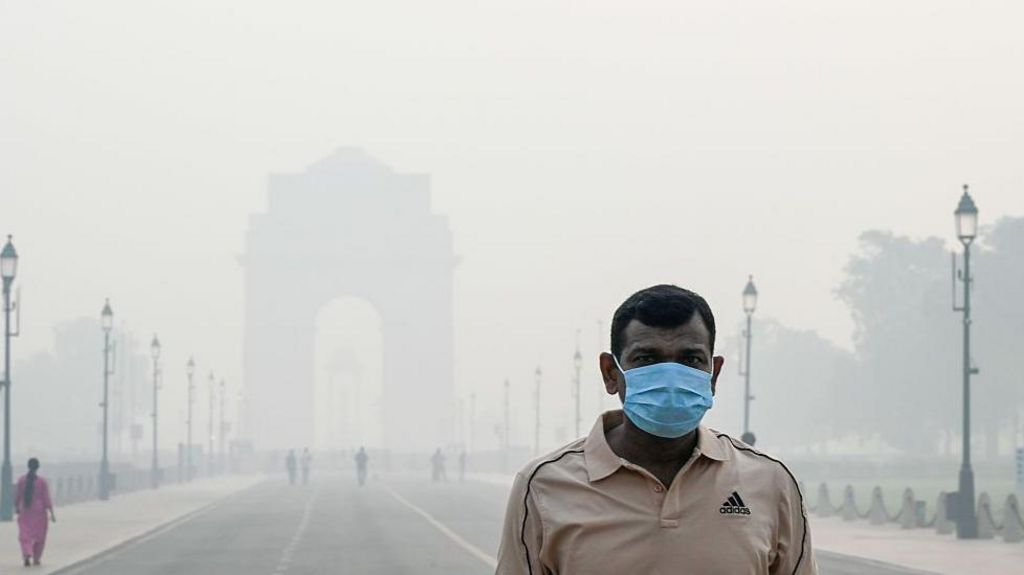
Delhi’s air has become toxic once again
Delhi, India’s capital, is once again grappling with its annual air pollution crisis, as the city’s air quality has plummeted to ‘very poor’ levels this week. A toxic haze envelops the city, causing respiratory distress, eye irritation, and widespread health concerns. This recurring issue, which intensifies after the Diwali festival, has been exacerbated by a combination of factors, including firecracker emissions, vehicular pollution, and crop residue burning in neighboring agrarian states like Punjab, Haryana, and Uttar Pradesh. The onset of winter further aggravates the situation, as colder temperatures and low wind speeds trap pollutants close to the ground. Despite efforts to curb stubble burning and promote cleaner alternatives, affordability remains a significant barrier for farmers. Additionally, the recent relaxation of a ban on firecrackers during Diwali, albeit for ‘green crackers,’ has done little to mitigate the pollution. Reports indicate widespread flouting of restrictions, with more polluting crackers being used beyond the mandated time. The political blame game between Delhi and Punjab governments continues, while experts emphasize the need for long-term, collaborative solutions. As winter sets in, Delhi and northern India face yet another season of hazardous air quality, a tragic routine that underscores the urgent need for systemic change.
-
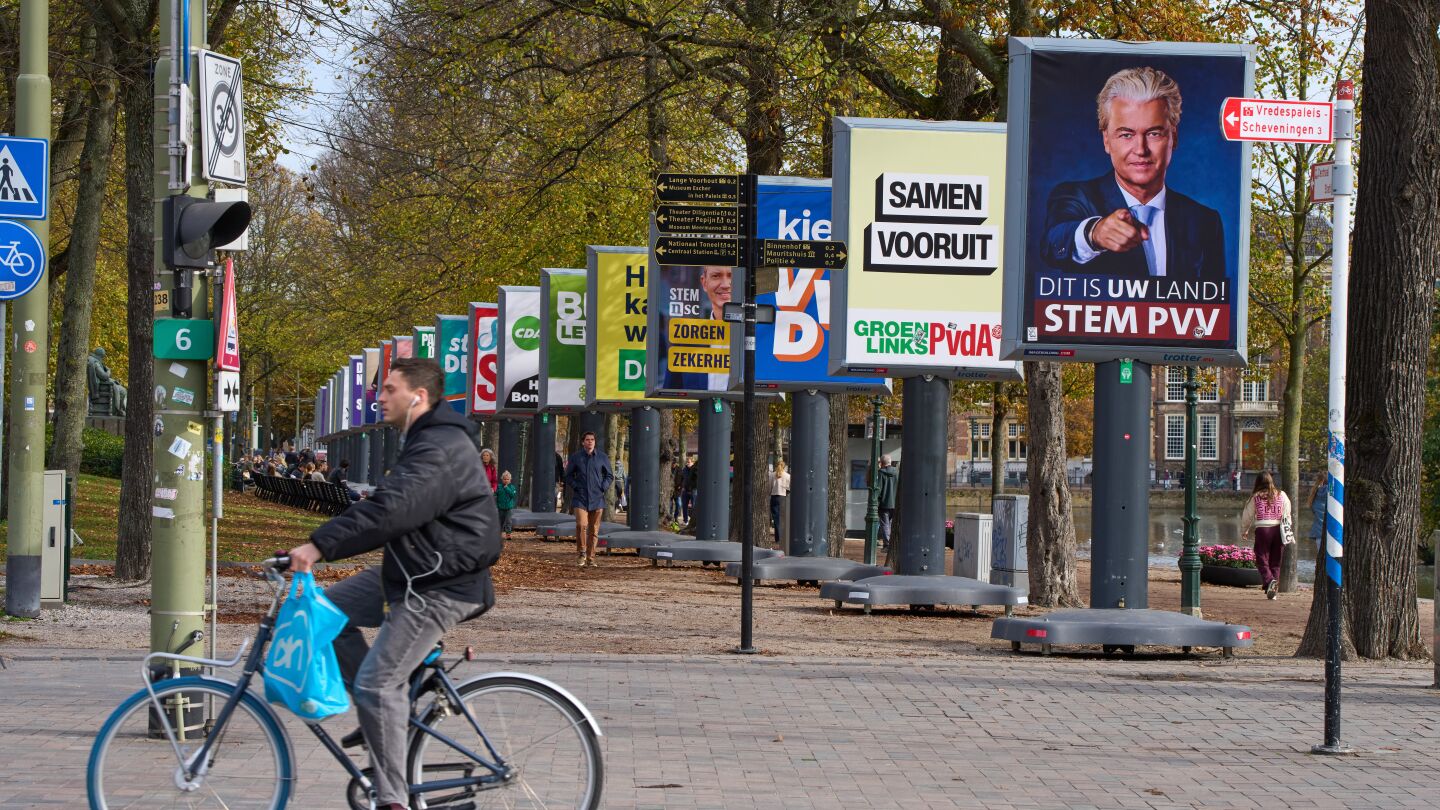
Dutch general election focuses on migration and housing crisis as Wilders seeks another win
As the Netherlands approaches its parliamentary elections on October 29, the political discourse is dominated by two contentious issues: migration and the chronic housing shortage. These themes reflect broader debates across Europe, where right-wing politics are gaining traction.
-

French vow to intercept migrant boats hit by delays and political turmoil
Recent developments indicate that France is stepping back from its earlier pledge to intensify maritime interventions aimed at curbing the influx of small boats crossing the English Channel. This shift comes amid ongoing political instability in France, which has reportedly hindered the implementation of a new ‘maritime doctrine’ designed to intercept and redirect these vessels. The UK government, which has long sought stronger French cooperation on this issue, views this as a significant setback.
-
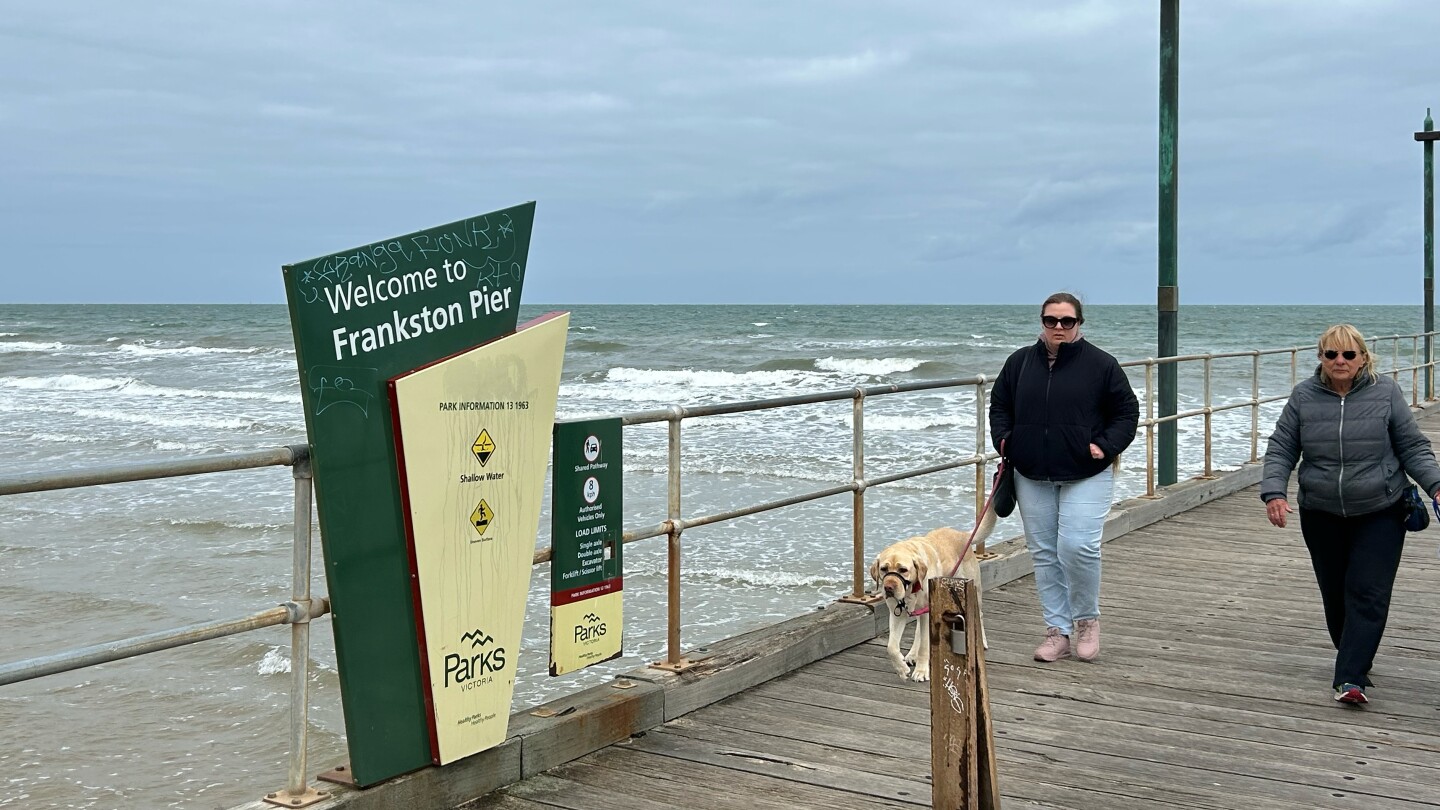
Surfer in distress and rescuer both die in stormy weather in Australia
MELBOURNE, Australia — A tragic incident unfolded off the coast of Melbourne during severe storm conditions, resulting in the deaths of two individuals, authorities confirmed on Thursday. The event occurred late Wednesday near Frankston Pier, where a 36-year-old British national, residing in suburban Frankston, ventured into the turbulent waters to surf despite the hazardous weather. The surfer’s board was damaged under unclear circumstances, leaving him struggling in the water. Witnessing his distress, a 43-year-old local friend attempted a rescue but was also overcome by the perilous conditions. Both men were retrieved from the water by a police rescue helicopter but could not be revived. An emergency responder involved in the operation was hospitalized after ingesting a significant amount of water but was later discharged. Authorities have yet to formally identify the deceased. Detective Inspector Melissa Nixon emphasized the dangers of entering the water during unsafe conditions. The storm, with wind gusts reaching up to 130 kph (81 mph), caused widespread damage, including fallen trees and power outages affecting thousands of homes and businesses across Melbourne and Victoria state.
-

Judge to rule in 1972 Bloody Sunday murder case against former British soldier
In a landmark ruling set for Thursday, the fate of the only British soldier charged in the 1972 Bloody Sunday massacre will be determined in a Northern Ireland courtroom. Judge Patrick Lynch will deliver the verdict at Belfast Crown Court, deciding whether the former paratrooper, identified only as Soldier F, is guilty of murder and attempted murder during one of the deadliest episodes of sectarian violence known as ‘The Troubles.’ The incident, which occurred on January 20, 1972, in Londonderry (also known as Derry), saw 13 people killed and 15 wounded when British troops opened fire on unarmed civilians during a civil rights march. Soldier F, whose identity remains protected to prevent retaliation, is accused of killing two individuals and attempting to kill five others. The event has become a symbol of the conflict between Catholic supporters of a united Ireland and Protestant factions loyal to the United Kingdom. While the 1998 Good Friday Agreement largely ended the violence, tensions persist. Families of the victims continue to seek justice, while supporters of army veterans argue that investigations have unfairly targeted them. Soldier F, who did not testify in his defense, claimed in a 2016 police interview that he had no ‘reliable recollection’ of the events but was certain he had fulfilled his duties. Defense lawyer Mark Mulholland criticized the prosecution’s case as ‘fundamentally flawed,’ citing reliance on unreliable witnesses and fading memories. The prosecution, however, argued that Soldier F and his comrades acted without justification, intending to kill. The case has been marred by delays and setbacks since the 2010 Saville Inquiry, which overturned an earlier exoneration of the troops and paved the way for Soldier F’s prosecution. Former Prime Minister David Cameron previously described the killings as ‘unjustified and unjustifiable.’ Soldier F has pleaded not guilty to two counts of murder and five counts of attempted murder.
-
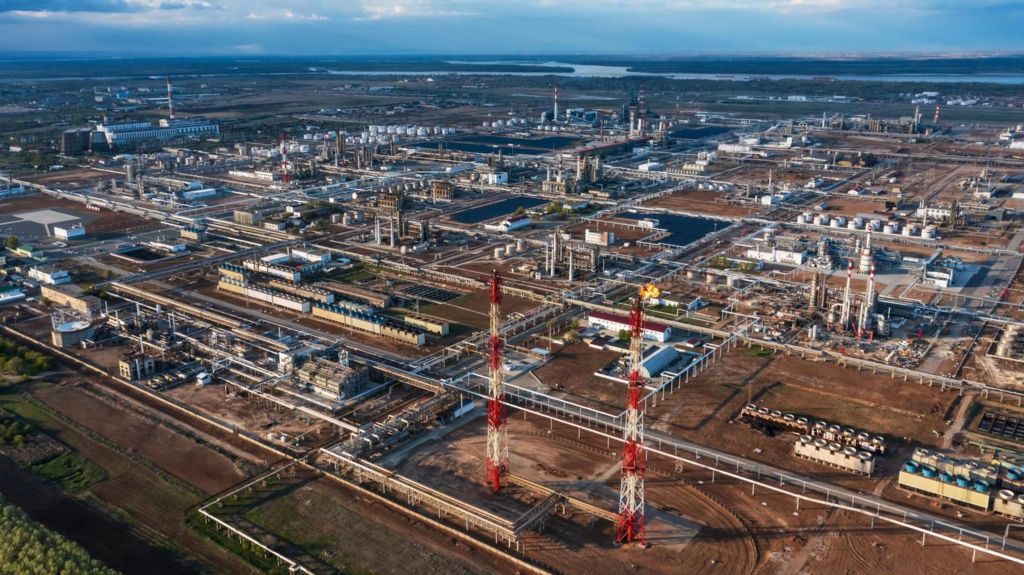
What do US sanctions on Russian oil mean, and who could be affected?
In a significant escalation of economic measures, US President Donald Trump announced stringent new sanctions targeting Russia’s two largest oil producers, Rosneft and Lukoil. The move, unveiled via Trump’s Truth Social platform, aims to pressure Moscow into ending its ongoing conflict in Ukraine. US Treasury Secretary Scott Bessent emphasized that these companies are critical financiers of the Kremlin’s military operations, describing the sanctions as a response to Russian President Vladimir Putin’s refusal to halt what he termed a “senseless war.”
The sanctions, administered by the US Department of the Treasury’s Office of Foreign Assets Control (OFAC), effectively blacklist Rosneft and Lukoil, which together account for nearly half of Russia’s crude oil exports. Rosneft, a state-controlled entity led by Putin’s close ally Igor Sechin, is responsible for almost half of Russia’s oil production, contributing 6% of global output. Lukoil, a privately held firm, also plays a pivotal role in Russia’s energy sector. Combined, the two companies export approximately 3.1 million barrels of oil daily.
Trump’s decision follows similar measures by the UK and comes just a day after he indefinitely postponed a planned meeting with Putin in Budapest. The US president expressed frustration over the lack of progress in peace negotiations, stating, “Every time I speak to Vladimir, I have good conversations and then they don’t go anywhere.”
Experts suggest the sanctions have dual objectives: to cripple Russia’s industrial capacity to wage war and to coerce Moscow into accepting peace terms. Dr. Stuart Rollo of the University of Sydney’s Centre for International Security Studies noted that while the sanctions may not immediately alter the military balance in Ukraine, they could force Russia to reconsider its stance as economic pressures mount. Michael Raska of Nanyang Technological University added that shrinking profit margins may compel Russia to choose between socio-economic stability and financing a protracted conflict.
The sanctions are expected to have far-reaching implications, not only for Russia but also for its major oil importers, including China and India. Both nations have significantly increased their reliance on Russian energy since the Ukraine war began. Trump has urged these countries to halt purchases of Russian oil, warning of potential secondary sanctions. Indian state refiners are reportedly reviewing their trade documents to ensure compliance, while Reliance, India’s top buyer of Russian oil, is recalibrating its imports.
The announcement has already caused global oil prices to surge, with Brent crude rising by 5%. While the long-term impact on oil prices remains uncertain, the immediate effect underscores the interconnectedness of global energy markets and the potential for further economic disruptions.