作者: admin

  • Israeli army chief orders to boost defensive readiness amid Iran tensions

    Israeli army chief orders to boost defensive readiness amid Iran tensions

    The Israeli Defense Forces (IDF) have initiated a comprehensive enhancement of defensive readiness in response to escalating regional tensions originating from Iran. Military Chief Eyal Zamir issued direct orders for all army formations to strengthen their defensive capabilities, according to an official statement released Wednesday.

    IDF Spokesman Effie Defrin confirmed the strategic shift through an official communication on social media platform X, emphasizing that while the military remains vigilant, current developments in Iran are considered an internal matter of the Islamic Republic. “The IDF maintains continuous monitoring of regional developments and stands prepared defensively for potential surprise scenarios should the situation necessitate,” Defrin stated.

    The military leadership has been conducting regular situational assessments in recent days, though officials confirmed no changes to civilian defense guidelines at this stage. Defense authorities reiterated their commitment to providing public updates should the security landscape evolve.

    Concurrently, Israel’s Airports Authority reported normal operations across all aviation facilities, though travelers were advised to maintain communication with their airlines due to the volatile regional climate. This advisory comes amid widespread demonstrations that erupted in multiple Iranian cities during late December.

    The geopolitical context includes heightened rhetoric from U.S. President Donald Trump, who has repeatedly threatened military action against Iran if protesters face violence. Iranian officials have countered with warnings of potential targeting of U.S. and Israeli military installations in response to any aggression.

  • China cracks the code for manufacturing high-performance carbon fiber

    China cracks the code for manufacturing high-performance carbon fiber

    China has achieved a monumental technological breakthrough with the successful launch of its first domestic large-scale production facility for T1000-grade carbon fiber in Datong, Shanxi province. This development marks a significant milestone in materials science, ending decades of foreign dominance in high-performance carbon fiber manufacturing.

    The newly operational facility, resulting from collaboration between the Institute of Coal Chemistry (ICC) under the Chinese Academy of Sciences and Huayang Carbon Material Technology Co., Ltd., produces carbon fiber with exceptional properties. With a tensile strength exceeding 6,600 MPa and density just one-quarter that of steel, the material demonstrates strength-to-weight ratio capabilities more than five times superior to conventional metals.

    Carbon fiber, often called ‘black gold’ for its value and appearance, contains over 90% carbon while maintaining textile-like flexibility. This combination of lightweight durability, heat resistance, and corrosion immunity has established it as the ‘king of modern materials’ with critical applications across aerospace, renewable energy, transportation, and sporting goods industries.

    The breakthrough culminates decades of research dating to the 1960s when ICC first pioneered carbon fiber studies in China. Previous limitations in mass production capabilities had maintained a market stranglehold by American and Japanese firms, which controlled over 90% of the global high-end carbon fiber market.

    Dr. Zhang Shouchun, ICC deputy director who led the development team, described the painstaking process: ‘Every step was like feeling for stones while crossing a river. Maintaining production stability required extraordinary effort—we shuttled among workshops exceeding 40°C and others as cold as 5°C, checking every parameter until we achieved consistency.’

    The project’s success stems from a fully indigenous innovation chain that translated laboratory research into industrial production. The resulting product not only matches international standards but surpasses comparable foreign products in application performance, positioning China firmly among global leaders in advanced materials technology.

    With an initial annual capacity of approximately 200 tonnes, this breakthrough ensures China’s self-sufficiency in critical materials for national security and advanced manufacturing sectors. The achievement is expected to drive development across industrial supply chains and support emerging technologies during China’s 15th Five-Year Plan period (2026-2030).

  • Hong Kong pledges all-out efforts in fire aftermath, mulls reform to strengthen building safety

    Hong Kong pledges all-out efforts in fire aftermath, mulls reform to strengthen building safety

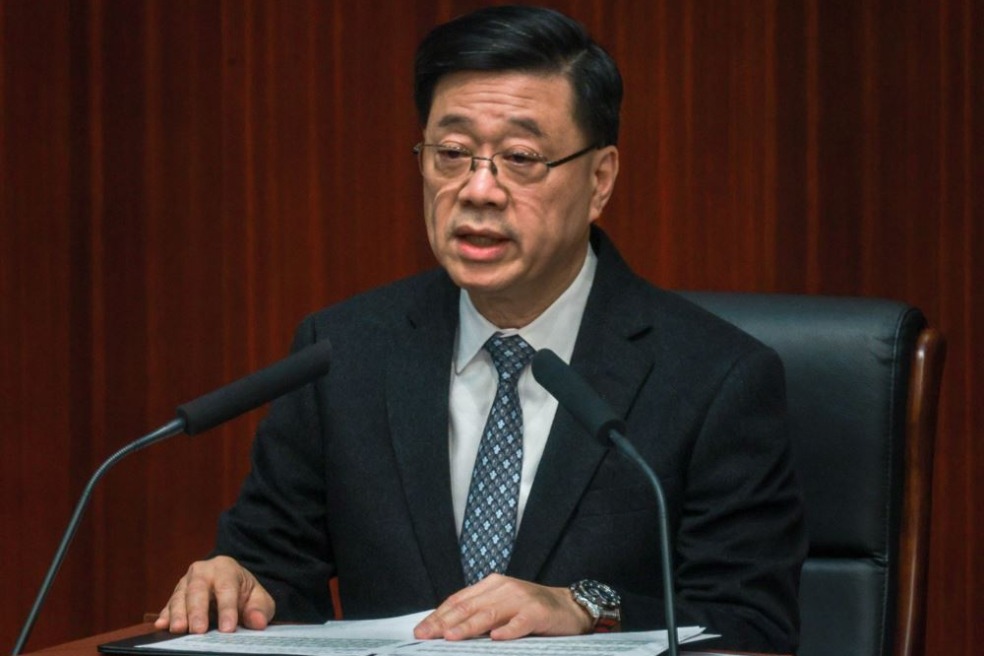
    Hong Kong’s government has initiated sweeping safety reforms and pledged full support to victims in the aftermath of a catastrophic residential fire that engulfed multiple buildings in the Tai Po district. Chief Executive John Lee Ka-chiu announced the comprehensive response during his address to the newly convened eighth-term Legislative Council on January 14, 2026.

    The tragic November 26 blaze at Wang Fuk Court residential complex, which resulted in multiple fatalities, has prompted immediate action from Hong Kong authorities. Law enforcement agencies have made several arrests related to suspected manslaughter and corruption charges, while the Development Bureau has mandated the removal of all scaffolding nets from buildings undergoing maintenance and completely restructured approval protocols for such safety installations.

    The government has simultaneously activated emergency support systems, providing substantial subsidies and relief measures to affected residents. An independent investigative committee has been established with a nine-month deadline to determine the exact causes of the incident and establish accountability frameworks. Chief Executive Lee emphasized that the government will implement all recommendations from the committee, initiating systematic reforms across multiple sectors to prevent similar tragedies.

    This multi-faceted approach represents one of Hong Kong’s most significant building safety initiatives in recent years, addressing both immediate concerns and long-term structural improvements to urban safety protocols and emergency response systems.

  • Warrants filed against oil tankers

    Warrants filed against oil tankers

    The Trump administration has initiated a significant escalation in its campaign against Venezuela’s oil industry by filing federal court warrants targeting oil tankers connected to the sanctioned South American nation. According to Reuters reports from Tuesday, the U.S. government has submitted multiple civil forfeiture actions seeking authorization to confiscate both vessels and cargo involved in Venezuelan oil trade.

    This legal maneuver follows the Pentagon’s stark declaration on Friday that it would actively “hunt down and interdict all dark fleet vessels transporting Venezuelan oil at the time and place of our choosing.” Since December, U.S. forces have already seized five oil tankers with Venezuelan connections, demonstrating the administration’s commitment to disrupting President Nicolas Maduro’s primary revenue stream.

    The aggressive stance comes amid dramatic developments in the Venezuela crisis. On January 3rd, the Pentagon executed a large-scale strike in the oil-rich nation that resulted in the capture of President Maduro, who now faces drug charges in New York custody. Following this operation, President Trump announced the United States would assume control over Venezuela’s substantial oil resources, with Energy Secretary Chris Wright clarifying that this control would extend beyond marketing stored oil to indefinitely managing the country’s oil production sales.

    Parallel to these coercive measures, diplomatic channels show tentative signs of activity. Bloomberg reported that Venezuela’s acting President Delcy Rodriguez is preparing to dispatch an envoy to Washington amid discussions about potentially reopening the U.S. embassy in Venezuela. Felix Plasencia, the country’s ambassador to Britain and former foreign minister, is expected to meet with senior U.S. officials at Rodriguez’s direction. Additionally, prominent opposition figure Maria Corina Machado is anticipated to visit the White House, signaling possible political negotiations.

    The State Department confirmed on Friday that personnel from its Colombia-based Venezuela Affairs Unit will conduct preliminary assessments for a “potential phased resumption of operations” in Venezuela, suggesting the possibility of renewed diplomatic engagement despite the ongoing economic pressure campaign.

  • Watch: Astronauts return to Earth after medical evacuation

    Watch: Astronauts return to Earth after medical evacuation

    A NASA astronaut and three crewmates have made an unscheduled return to Earth after cutting their International Space Station mission short by approximately one month due to an onboard medical emergency. The spacecraft carrying the four astronauts successfully splashed down on Thursday, concluding what was originally planned as a longer duration orbital mission.

    The early departure was triggered when one crew member required urgent medical attention that could not be adequately addressed within the Space Station’s medical facilities. While NASA has not disclosed specific details regarding the nature of the illness due to privacy considerations, the agency confirmed that the situation warranted immediate return to Earth for proper medical treatment.

    This incident marks one of the rare medical evacuations from the orbiting laboratory, highlighting the inherent challenges of managing health emergencies in space. The return procedure involved meticulous planning between NASA mission control, international space partners, and medical teams on the ground to ensure safe re-entry and subsequent medical care.

    The successful return demonstrates the robustness of emergency protocols developed for space missions, though it also raises questions about medical preparedness for longer deep-space missions planned for the future. Space agencies worldwide will likely analyze this event to improve medical support systems for astronauts aboard the International Space Station and beyond.

  • In pictures: Fog and frozen lakes as cold weather sweeps northern India

    In pictures: Fog and frozen lakes as cold weather sweeps northern India

    A severe cold wave continues to paralyze vast regions of northern India, bringing life to a near standstill as temperatures plummet to near-freezing levels. The intense chill, characterized by dense fog and icy winds, has persisted for four consecutive days, with meteorological departments forecasting its continuation until Friday.

    Delhi experienced its coldest morning of the season on Thursday, with temperatures dropping to a brisk 2.9°C (37.2°F). The cold proved even more extreme in neighboring Haryana state, where readings fell below 1°C (33.8°F) in several areas. Social media platforms have been flooded with striking images of frost-encrusted vehicles and frozen landscapes, illustrating the unusual severity of this winter event.

    The extreme conditions have significantly disrupted transportation networks. Delhi Airport issued advisories warning passengers of substantial flight delays due to severely limited visibility caused by thick fog. Multiple train services across the region have been canceled or are operating with significant delays, compounding travel chaos.

    This weather event exposes critical infrastructure vulnerabilities. Most residential buildings in India’s plains lack central heating systems, leaving millions unprepared for such harsh winter conditions. The crisis disproportionately affects homeless populations, who have been forced to light makeshift fires on city streets for warmth during frigid nights.

    Compounding the situation, the cold wave has exacerbated already dangerous air quality levels across northern Indian cities. Meteorological experts note that low winter temperatures create atmospheric conditions that trap pollutants close to ground level, significantly worsening air pollution and creating serious respiratory hazards, particularly for children, the elderly, and those with pre-existing health conditions.

    In Indian-administered Kashmir, the cold has reached even more extreme levels, with reports of completely frozen water pipes and partially frozen bodies of water, including sections of the famous Dal Lake in Srinagar. Several waterfalls in the region have transformed into icy formations as temperatures dropped below zero.

  • Senior government officials study Xi’s speech at CPC disciplinary agency plenum

    Senior government officials study Xi’s speech at CPC disciplinary agency plenum

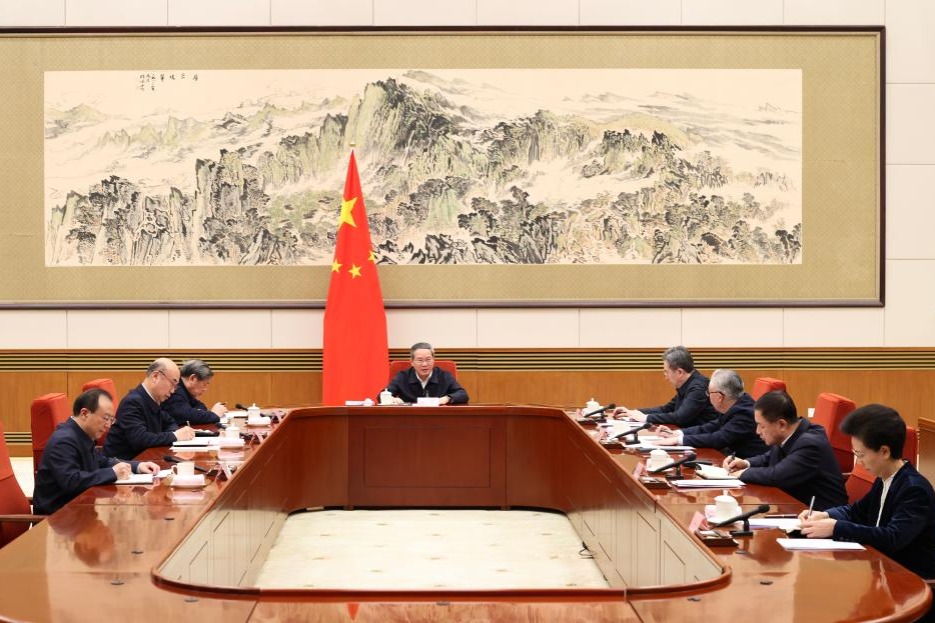
    Beijing’s highest governmental body has convened to thoroughly analyze President Xi Jinping’s pivotal address delivered at the Communist Party’s central disciplinary plenum. The meeting of the State Council’s leading Party members group, chaired by Premier Li Qiang on January 14, 2026, brought together senior officials including Vice-Premier Ding Xuexiang to deliberate on the implementation guidelines emanating from the Fifth Plenary Session of the 20th CPC Central Commission for Discipline Inspection.

    The assembly recognized substantial advancements achieved throughout the previous year in enhancing administrative integrity, refining official conduct, and intensifying anti-corruption measures. Participants underscored the necessity of maintaining this momentum throughout 2026 to establish a robust foundation for the successful launch of the nation’s 15th Five-Year Plan.

    Critical emphasis was placed on adopting a comprehensive strategy that addresses both superficial manifestations and fundamental causes of corruption, particularly in sectors identified as high-risk for recurrent or severe misconduct. The meeting further highlighted the imperative of vigilantly identifying and countering emerging forms of corruption that may manifest through novel or concealed methodologies, ensuring the continued integrity of governance structures.

  • China’s large drone completes pioneering plateau logistics flight

    China’s large drone completes pioneering plateau logistics flight

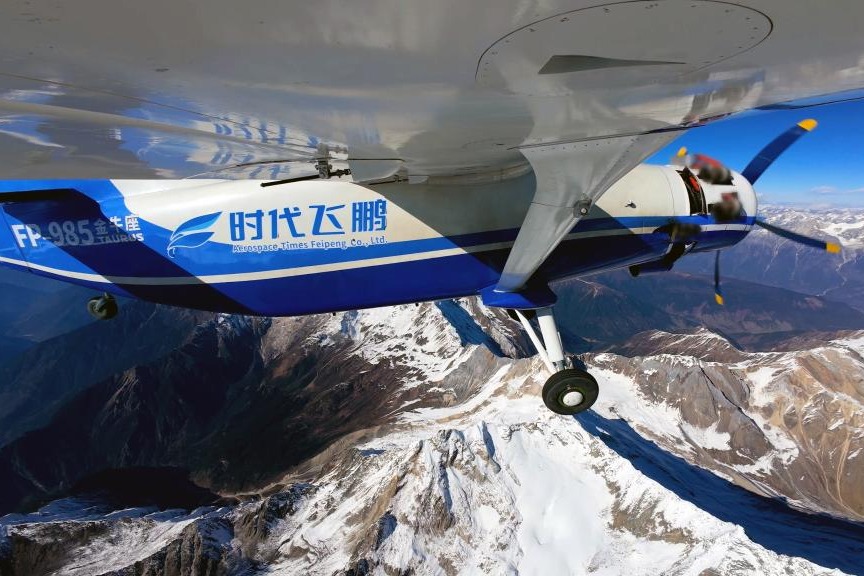
    In a landmark achievement for unmanned aerial logistics, China’s indigenously developed FP-985 ‘Taurus’ large fixed-wing drone has successfully completed the nation’s first high-altitude plateau logistics validation flight. The pioneering mission covered over 1,100 kilometers between Nyingchi in the Xizang Autonomous Region and Beichuan County in Sichuan Province on January 13, 2026.

    Engineered by Aerospace Times Feipeng Co., Ltd., the Taurus represents a technological leap in extreme-environment cargo transport capabilities. The aircraft boasts impressive specifications: a maximum takeoff weight of 5.7 tonnes, payload capacity exceeding 2 tonnes, and a ferry range surpassing 2,000 kilometers. Its specialized design enables operations in challenging environments ranging from high-altitude plateaus to island salt-fog conditions.

    The drone’s successful maiden flight carried symbolic regional products including traditional butter tea and yak dairy products, demonstrating practical logistics applications. Chief designer Wei Yachuan revealed key technological innovations: ‘We modified the piston engine to maintain operational efficiency at 4,000 meters above sea level equivalent to平原 performance.’ This engineering breakthrough allows all-weather continuous operations with advanced anti-icing/de-icing systems, lightning protection, and high wind resistance.

    This achievement transforms the economic connectivity between the Qinghai-Xizang Plateau and Sichuan Basin. The new aerial route dramatically reduces transport time from over 40 hours by land to under 6 hours by air. The corridor establishes a vital economic bridge that will facilitate two-way commerce: enabling swift distribution of plateau specialties like Xizang yak meat and herbal medicines to national markets, while efficiently delivering industrial products and essential supplies to remote high-altitude regions.

    Beichuan County, designated as a provincial pilot zone for low-altitude economy, has developed a comprehensive industrial ecosystem covering R&D, manufacturing, operations, and training. County Party Chief Li Haotian anticipates the regular operation will attract numerous logistics and e-commerce enterprises to the region.

    The breakthrough promises significant socioeconomic impact by enhancing commercialization of specialty agricultural products, directly supporting income growth and industrial upgrading in ethnic regions. This successful flight paves the way for expanded ‘aerial bridges’ across western China’s challenging terrain, injecting robust low-altitude momentum into regional development initiatives and China’s broader common prosperity goals.

  • Tour trend takes students to factories

    Tour trend takes students to factories

    Across China, an emerging educational trend is transforming industrial facilities into dynamic learning environments as factory tours gain unprecedented popularity among students. The movement represents a significant shift in educational tourism, moving beyond traditional cultural and recreational activities to showcase the nation’s technological advancements in manufacturing.

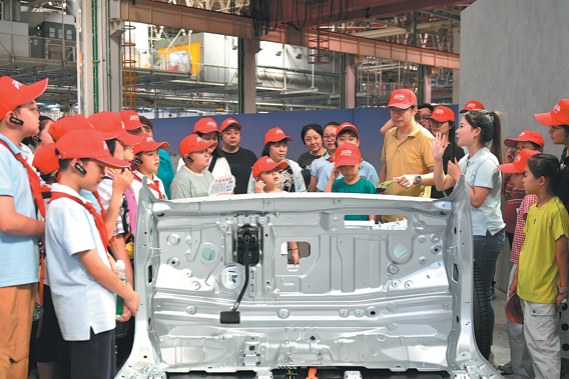
    At Geely Auto’s Jinzhong facility in Shanxi province, middle school students witness robotic arms performing precision welding operations that challenge conventional perceptions of industrial environments. “My whole concept of manufacturing involved heat, noise and crowded spaces,” remarked 8th-grader Zhang Heyuan. “Instead, I discovered a clean, quiet, and highly automated facility that feels like stepping into the future.”

    The phenomenon extends beyond automotive plants to include electric vehicle manufacturers, robotics laboratories, dairy producers, and traditional craft workshops. Demand has surged to remarkable levels, with Beijing’s Xiaomi electric vehicle plant reporting over 100,000 registrations for tours in the first ten months of 2025. The facility has expanded its winter schedule to accommodate 126 sessions this month alone.

    These industrial visits function as interactive classrooms where theoretical knowledge meets practical application. At Nio’s Second Advanced Manufacturing Base in Hefei, Anhui province, students observe innovative systems including three-dimensional storage solutions and intelligent assembly lines that resemble elevated highways. Since opening to the public in 2018, Nio’s Hefei facilities have welcomed approximately 300,000 visitors who participate in automotive science lectures and hands-on model building activities.

    The trend coincides with China’s ascent in global manufacturing, where the nation maintains its position as the world’s largest manufacturer for 15 consecutive years. With over 500,000 high-tech enterprises and commanding more than 40% of global “Lighthouse Factories”—benchmarks for smart manufacturing and digitalization—China’s industrial landscape offers substantial educational value.

    Educational experts emphasize the tours’ multifaceted benefits. “These experiences enhance scientific literacy while helping students intuitively understand China’s position in the global technological ecosystem,” explained Yang Yi, Public Affairs Director at Nio Manufacturing. The exposure frequently inspires career aspirations, as evidenced by high school student Ma Hexuan’s reaction after visiting Siasun Robot & Automation: “Witnessing technological innovation’s power has motivated me to contribute to such industries.”

    According to Xiong Bingqi, Director of the 21st Century Education Research Institute, these experiences help students align academic choices with societal needs. The movement also fosters broader cultural appreciation for innovation, with Chinese Academy researcher Han Junhui noting that “smart factories becoming tourist attractions epitomize China’s transition from traditional to intelligent manufacturing.”

  • UAE: Death of friends, family impact children differently; how parents can help

    UAE: Death of friends, family impact children differently; how parents can help

    In the wake of recent tragedies across the United Arab Emirates, mental health professionals are shedding light on the complex ways children process grief and loss, emphasizing that young minds require specialized support mechanisms distinct from adult coping strategies.

    The emotional landscape of childhood grief has come into sharp focus following a devastating road accident that claimed the lives of four siblings, prompting educators and psychologists to reexamine support systems for bereaved children. Unlike adults who typically express grief overtly, children often internalize their pain, manifesting through behavioral changes that may persist for years without proper intervention.

    Clinical psychologist Dr. Reena Thomas of Medeor Hospital, Dubai, explains: “Children’s responses to mortality vary significantly based on developmental stage, temperament, and comprehension capacity. While some exhibit immediate emotional outbursts, others retreat into silence that parents frequently misinterpret as resilience. This silence often represents profound internal struggle rather than healthy adaptation.”

    Two contrasting cases illustrate this psychological complexity. Fatima S. (pseudonym) discovered her daughter had silently mourned a close friend’s death for over two years, exhibiting diminished school engagement and persistent questioning. Conversely, an Abu Hail family witnessed their son develop pervasive anxiety about mortality after losing both an elderly grandfather and young cousin within months, demonstrating how consecutive losses can fundamentally alter a child’s perception of safety.

    Educational institutions are increasingly implementing proactive measures. Numerous UAE schools have established dedicated spaces for emotional expression, with teachers facilitating peer support networks recognizing that classroom grief requires as much attention as home-based mourning. These initiatives have gained urgency following recent tragedies, including the quadruple sibling fatality and a sudden death at a Sharjah educational institution.

    Dr. Thomas recommends parents monitor behavioral indicators including sleep pattern alterations, appetite changes, academic performance declines, and newfound anxieties about loved ones’ mortality. She emphasizes: “Children frequently grieve in non-linear stages across extended periods. Parental presence and stability provide more therapeutic value than perfectly crafted explanations. Maintaining routines while permitting emotional expression in whatever form it takes proves most beneficial.”

    The psychological community stresses that societal support systems must evolve to address childhood grief’s unique characteristics, particularly as communities process collective tragedies. With proper understanding and intervention, professionals believe children can develop healthy coping mechanisms that serve them throughout life.