作者: admin

  • Bahrain urges residents to update mobile devices to receive emergency alerts

    Bahrain urges residents to update mobile devices to receive emergency alerts

    Bahrain’s Ministry of Interior has issued a specific directive targeting Apple device users, urging them to immediately update their iOS systems to version 26.2 to ensure proper functionality of the nation’s newly implemented wireless emergency alert network. The announcement, made on January 31, 2026, emphasizes that this update is critical for receiving timely emergency notifications during crisis situations.

    The advisory explicitly states that Android and Huawei device users require no action, as their systems are already compatible with the emergency broadcast infrastructure. This selective requirement highlights the technical complexities involved in maintaining cross-platform compatibility for national safety systems.

    This development follows Bahrain’s recent approval of a phased pilot operation for its advanced wireless alert mechanism, designed to revolutionize public safety communication. The system represents a significant technological leap in emergency preparedness, capable of delivering crucial information to citizens and residents before, during, and after emergencies with unprecedented speed and efficiency.

    The emergency network was developed following extensive deliberations at the Civil Defence Council, where officials examined early warning protocols and enhanced coordination frameworks between government sectors. The system will undergo staged testing in designated emergency zones once infrastructure preparations are finalized.

    Concurrently, regional neighbor Kuwait has implemented monthly testing of its emergency warning sirens, scheduled for 10 AM on the first Monday of each month. Kuwait has also conducted specialized training programs for chemical, biological, and radiological incident response, reflecting broader regional efforts to enhance emergency preparedness amid ongoing geopolitical tensions.

  • Venezuelan activist Javier Tarazona released from prison as US diplomat assumes post

    Venezuelan activist Javier Tarazona released from prison as US diplomat assumes post

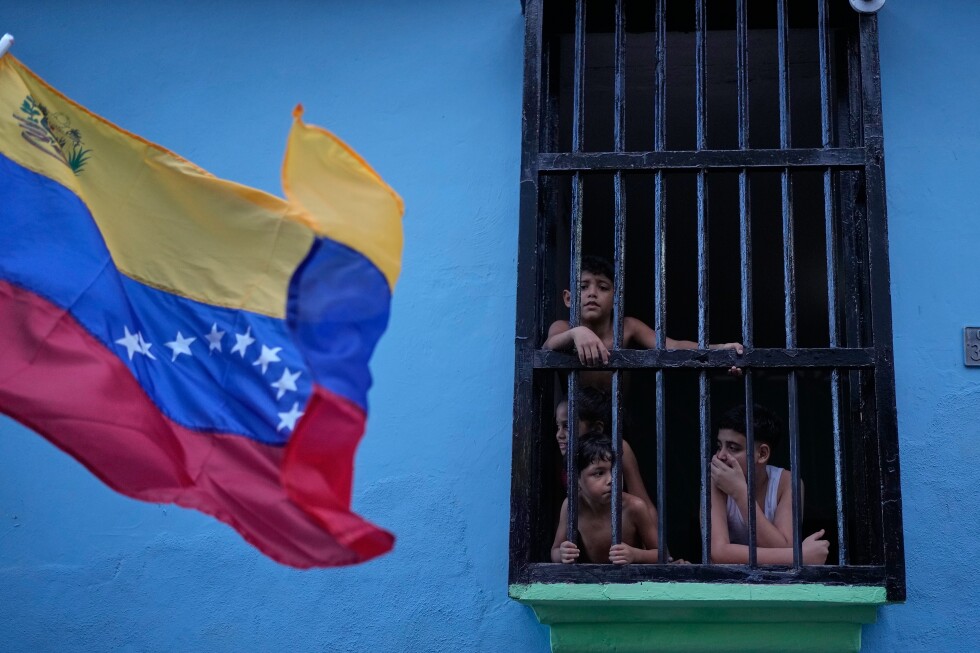
    In a significant development signaling potential political reconciliation, Venezuelan human rights defender Javier Tarazona has been released from imprisonment following the government’s commitment to an amnesty initiative for detained opposition figures. The director of FundaRedes, a nonprofit monitoring human rights violations, regained freedom after 1,675 days in custody.

    Tarazona’s 2021 arrest occurred shortly after he reported intimidation by state intelligence operatives, with two additional activists from his organization facing simultaneous detention. His release coincides with the arrival of US Charge d’Affaires Laura Dogu, who is reestablishing American diplomatic presence in Caracas after a seven-year hiatus in bilateral relations.

    The liberation aligns with Venezuela’s recently announced amnesty legislation, a cornerstone demand from opposition factions. According to monitoring by Foro Penal, an organization tracking politically motivated detentions, approximately 310 individuals have been released while 700 remain incarcerated under similar circumstances.

    Tarazona had faced terrorism allegations—a frequent charge against government critics—particularly regarding his investigations into illegal armed groups along the Colombian border and their alleged connections to high-ranking officials. During his confinement, Amnesty International documented concerning deterioration in his health due to inadequate medical care.

    Opposition leader María Corina Machado hailed Tarazona’s perseverance, declaring on social media: ‘All of Venezuela admires your bravery and commitment. You understand better than anyone that justice will prevail in Venezuela.’ The government maintains its position denying systematic political persecution, asserting instead that accused individuals faced legitimate charges of conspiring against state institutions.

  • ‘RRR’ and ‘Peddi’ star Ram Charan, wife Upasana welcome twins: a baby boy and girl

    ‘RRR’ and ‘Peddi’ star Ram Charan, wife Upasana welcome twins: a baby boy and girl

    In a joyous development within India’s entertainment industry, acclaimed actor Ram Charan and his entrepreneur wife Upasana Konidela have welcomed twins—a boy and a girl—marking a significant expansion of their family. The announcement was formally made on social media by Ram Charan’s father, veteran Telugu cinema icon Chiranjeevi, who expressed profound gratitude for the overwhelming support received from well-wishers.

    The veteran actor’s official statement emphasized that both newborns and the mother are in excellent health, describing the arrival as a moment of ‘pure joy and divine blessing’ for the entire family. This event marks the couple’s second and third children, following the birth of their first daughter, Klin Kaara, in 2023, whom they have notably kept out of the public spotlight.

    Social media platforms have been inundated with celebratory messages from fans, industry colleagues, and admirers nationwide, reflecting Ram Charan’s substantial popularity following his global recognition through the blockbuster film ‘RRR.’ The actor’s professional trajectory continues its upward climb with the anticipated release of his forthcoming project ‘Peddi,’ scheduled for global distribution on March 27, 2026. Directed by Buchi Babu Sana of ‘Uppena’ fame, the film features an ensemble cast including Janhvi Kapoor and represents another significant milestone in Charan’s evolving career.

  • Israel partially reopens Gaza’s Rafah crossing for ‘limited passage of residents’

    Israel partially reopens Gaza’s Rafah crossing for ‘limited passage of residents’

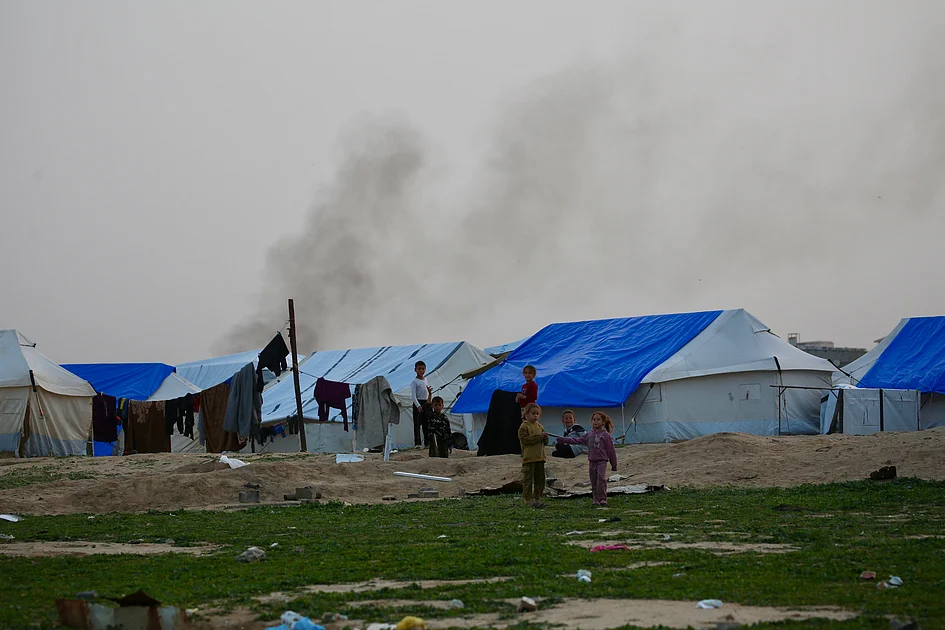
    In a significant development following months of international pressure, Israeli authorities have partially reactivated the Rafah border crossing between Gaza and Egypt, though initial operations remain strictly limited to pedestrian transit. This cautiously orchestrated reopening occurs against a backdrop of persistent violence, with Gaza’s civil defence agency reporting numerous casualties from Israeli military actions just one day prior, despite an officially declared ceasefire.

    The Rafah crossing represents a critical humanitarian corridor for both civilian movement and aid distribution, yet had remained shuttered since Israeli forces assumed control in May 2024 during hostilities with Hamas, excepting a brief operational window in early 2025. COGAT, Israel’s defence coordination unit for Palestinian civilian affairs, characterized Sunday’s activation as “an initial pilot phase” conducted in coordination with European Union monitoring, emphasizing that full bidirectional passenger movement would commence upon completion of preliminary preparations.

    The reopening follows Israel’s recovery of Ran Gvili’s remains—the final Israeli hostage held in Gaza—whose repatriation had been stipulated as a precondition for border access. Meanwhile, approximately 200 medically vulnerable patients await evacuation authorization, with Gaza’s health ministry confirming their urgent need for overseas treatment. Concurrently, a 40-member Palestinian Authority contingent has positioned itself on the Egyptian border awaiting entry permission to initiate administrative functions.

    While a broader reopening is anticipated Monday, sources indicate no consensus has been reached regarding transit quotas. Egyptian officials have committed to admitting all Israel-approved departures. The crossing’s operationalization is expected to facilitate the entry of the newly established National Committee for the Administration of Gaza (NCAG)—a 15-member technocratic body tasked with governing the territory’s 2.2 million residents under US-supervised ceasefire provisions, though committee members confirm no immediate entry timeline has been established.

  • 5-year-old Liam Conejo Ramos and father return to Minnesota from ICE facility in Texas

    5-year-old Liam Conejo Ramos and father return to Minnesota from ICE facility in Texas

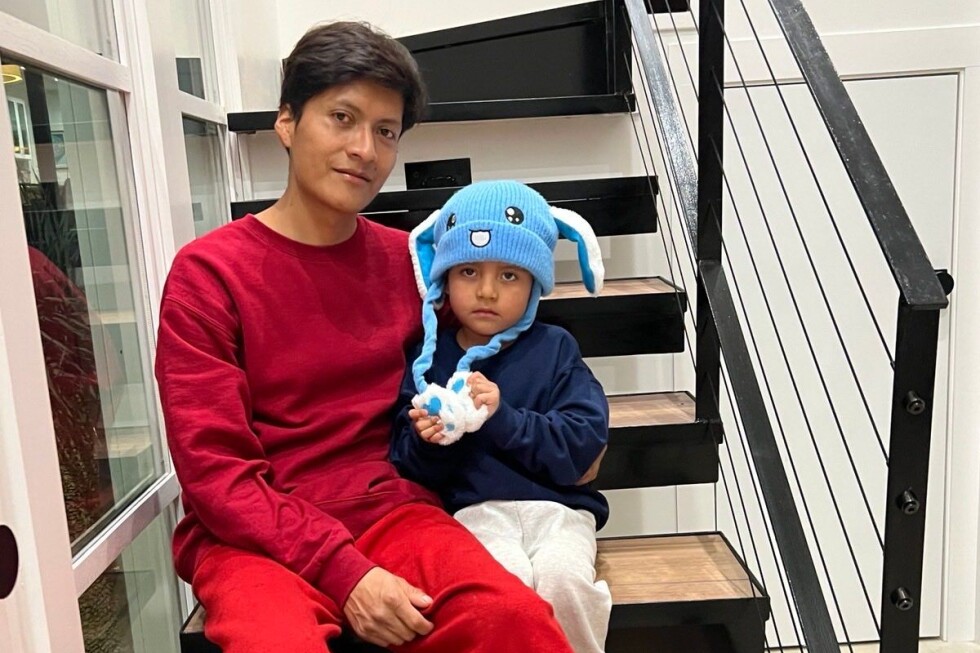
    A federal judge has mandated the release of five-year-old Liam Conejo Ramos and his father, Adrian Conejo Arias, from Immigration and Customs Enforcement (ICE) custody, concluding a contentious detention case that has ignited national debate. The pair, originally apprehended in a Minneapolis suburb on January 20, were held at a facility in Dilley, Texas, before their return to Minnesota on Sunday, confirmed by Representative Joaquin Castro’s office.

    The case’s origins trace back to the father’s unauthorized entry from Ecuador in December 2024, though his legal representative confirms a pending asylum claim currently permits his stay in the U.S. The detention gained notoriety after images circulated of the young boy, distinguished by his blue bunny hat and Spider-Man backpack, surrounded by federal officers, provoking public outcry against the administration’s enforcement tactics.

    In a scathing judicial order, U.S. District Judge Fred Biery condemned the government’s approach, attributing the case to an “ill-conceived and incompetently-implemented government pursuit of daily deportation quotas, apparently even if it requires traumatizing children.” This sentiment was echoed by local community members and school officials who alleged officers used the preschooler as “bait” to coax his mother to the door—an accusation the Department of Homeland Security (DHS) vehemently denies, labeling it an “abject lie.” DHS maintains the father attempted to flee on foot, leaving the child alone in a running vehicle.

    The government’s stance was articulated by DHS Assistant Secretary Tricia McLaughlin, who stated ICE did not target the child and that his mother refused custody following the father’s apprehension. McLaughlin reaffirmed the administration’s commitment to “restoring the rule of law and common sense to our immigration system,” vowing to continue efforts toward the “arrest, detention, and removal of aliens who have no right to be in this country.”

    The release was met with celebratory responses from Democratic lawmakers. Rep. Castro, who personally escorted the family home, penned an inspirational letter to Liam during their flight, asserting, “America became the most powerful, prosperous nation on earth because of immigrants not in spite of them.” Minnesota Senator Amy Klobuchar and Representative Ilhan Omar also welcomed the pair’s return, with Omar posting a symbolic photo holding Liam’s backpack on social media.

  • Trump says Iran is ‘seriously talking’ with US

    Trump says Iran is ‘seriously talking’ with US

    President Donald Trump indicated on Saturday that Iran has entered into substantive diplomatic discussions with the United States, marking a potential shift in the tense relationship between the two nations. Speaking to reporters aboard Air Force One, Trump acknowledged ongoing communications while maintaining strategic ambiguity regarding military decisions.

    “We do have very big, powerful ships heading in that direction,” Trump stated when questioned about his final decision on Iran, carefully balancing diplomatic overtures with military demonstration. The president expressed hope for a negotiated settlement that would address nuclear concerns, emphasizing that “we could make a negotiated deal that would be satisfactory, with no nuclear weapons.”

    In a separate interview with Fox News, Trump revealed an unusual aspect of his administration’s strategy, noting that the U.S. cannot share military plans with Gulf allies during negotiations with Iran. “If I told them the plan, it would be almost as bad as telling you the plan—it could be worse, actually,” Trump explained, suggesting heightened security measures around diplomatic maneuvers.

    This development follows statements from Iranian President Masoud Pezeshkian, who affirmed on Friday that Tehran consistently pursues engagement and dialogue to resolve disputes. Pezeshkian articulated Iran’s approach as “dignity-based diplomacy” conducted within international law frameworks, emphasizing mutual respect and rejection of threats or coercion.

    The United States has maintained specific conditions for any comprehensive agreement, including a ban on uranium enrichment, removal of already-enriched uranium, caps on long-range missile capabilities, and reduced support for regional proxy forces—all demands previously rejected by Iranian leadership. This diplomatic exchange occurs against a backdrop of continued military preparedness, creating a complex landscape of negotiation and deterrence.

  • Twelve killed by Russian strike near bus in Ukraine, official says

    Twelve killed by Russian strike near bus in Ukraine, official says

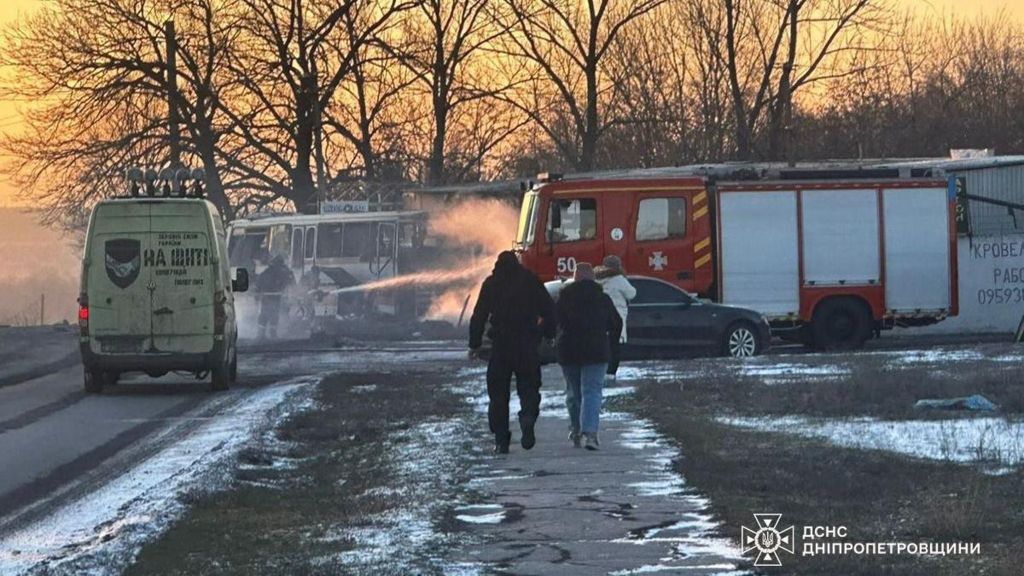
    A Russian drone attack targeting a civilian shuttle bus in eastern Ukraine has resulted in the deaths of twelve mine workers and left seven others wounded, according to regional authorities. The assault occurred in the Pavlohrad district, where the vehicle was transporting employees of energy provider DTEK following their shift.

    Regional military administration chief Oleksandr Ganzha confirmed the casualties via Telegram, stating that investigation into the details is ongoing while air alerts continue throughout the region. DTEK, Ukraine’s largest private energy firm, denounced the incident as a deliberate attack on civilian workers, initially reporting fifteen fatalities in their official statement.

    This devastating strike follows a pattern of intensified attacks across Ukraine over the weekend. In a separate incident in Zaporizhzhia, a drone strike hit a maternity hospital, injuring six people including two women undergoing medical examinations. Regional head Ivan Fedorov described the hospital attack as further “proof of a war directed against life,” sharing visual evidence of extensive damage including blown-out windows and debris-strewn medical facilities.

    Additional violence claimed three lives in Kherson and Dnipro, according to local officials. These developments occur amidst Russia’s continued targeting of Ukraine’s energy infrastructure during an exceptionally cold winter, with temperatures forecast to drop below -20°C. The attacks on power grids have severely compromised heating and electricity supplies across the country.

    Contradictory statements have emerged regarding potential ceasefires, with US President Donald Trump claiming on Thursday that Russian President Putin had agreed to halt attacks on major Ukrainian cities during the cold snap. The Kremlin later indicated this pause would extend only until Sunday, leaving the humanitarian situation precarious.

  • Aspiring Nigerian singer dies after being bitten by a snake

    Aspiring Nigerian singer dies after being bitten by a snake

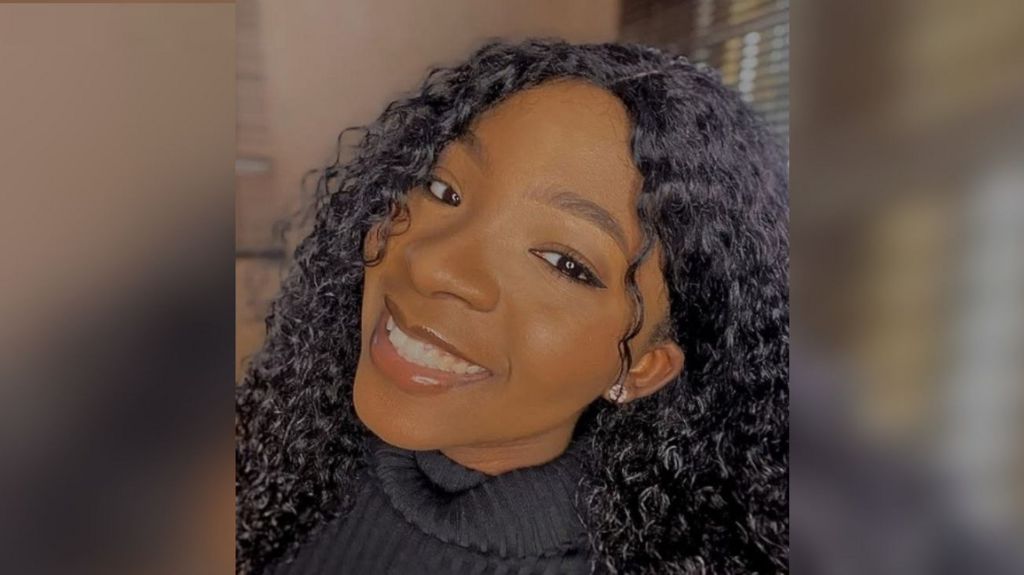
    A wave of national mourning has swept through Nigeria following the tragic death of 26-year-old vocalist Ifunanya Nwangene, who succumbed to a venomous snake bite in Abuja on Saturday. The emerging artist, who gained recognition through her appearance on The Voice Nigeria in 2021, was known for her remarkable vocal versatility across jazz, opera, classical, and soul genres.

    Disturbing social media footage documented snake handlers extracting a cobra from her residence, with audible screams from bystanders confirming the lethal nature of the incident. According to close associates, Nwangene was asleep when the serpent attacked, awakening her abruptly. Subsequently, authorities discovered a second snake within the premises.

    The medical response proved tragically inadequate. After initial treatment at a local clinic lacking antivenom supplies, Nwangene was transferred to a hospital that possessed only one of the two required antivenoms. Sam Ezugwu, music director of the Amemuso Choir where she performed, recounted the desperate search for the missing antivenom while the young artist struggled to breathe and communicated through hand gestures before her condition deteriorated.

    This devastating incident has ignited fierce criticism of Nigeria’s healthcare infrastructure, coming shortly after the controversial death of novelist Chimamanda Ngozi Adichie’s infant son under similar circumstances. Health Minister Muhammad Ali Pate has acknowledged systemic failures and announced the formation of a national task force focused on clinical governance and patient safety.

    The World Health Organization classifies venomous snakebites as a neglected tropical disease, with sub-Saharan Africa experiencing approximately 30,000 fatalities annually from an estimated 435,000-580,000 bites requiring treatment. The crisis disproportionately affects rural communities with limited medical resources, though Nwangene’s death in an urban setting has highlighted the pervasiveness of the problem.

    Experts identify antivenom scarcity, improper storage requirements, and high costs as primary obstacles to effective treatment, forcing many victims to seek traditional remedies rather than professional medical care.

  • Bayern powerbroker Uli Hoeneß ‘appalled’ by agent’s behavior as Dayot Upamecano contract talks go on

    Bayern powerbroker Uli Hoeneß ‘appalled’ by agent’s behavior as Dayot Upamecano contract talks go on

    MUNICH — Bayern Munich’s leadership has expressed growing concern over the unresolved contract situation of French international defender Dayot Upamecano. The 27-year-old center-back’s current agreement with the German champions is set to expire at the conclusion of this season, creating mounting anxiety within the club’s hierarchy.

    Uli Hoeneß, the influential honorary president of Bayern Munich, revealed his disappointment regarding the stalled negotiations. In an exclusive interview with Kicker magazine published Sunday, the 74-year-old club legend stated: “I would be absolutely delighted if Dayot Upamecano decides to remain with FC Bayern. I am aware that both he and his family have established strong roots in Munich and feel thoroughly comfortable here.”

    However, Hoeneß voiced significant concerns about external influences potentially derailing the extension talks. “My apprehension lies with his representatives, who appear to be employing every possible tactic to facilitate his departure from our club,” he added, highlighting the contentious nature of the discussions.

    The veteran executive, whose association with Bayern spans over forty years across various roles including player and manager, indicated that the club has made considerable financial concessions to meet the demands of both player and agent. Hoeneß described himself as “appalled” by the negotiating stance adopted by Upamecano’s representatives.

    According to Kicker’s sources, Bayern’s management team plans to arrange urgent talks with the defender in the coming days to address his future prospects and encourage a definitive decision. The situation has gained additional urgency due to reported interest from European powerhouses Real Madrid and Paris Saint-Germain, who could secure the player’s services without transfer compensation.

    Upamecano originally joined Bayern Munich from RB Leipzig in 2021 after the Bavarian club activated his €43 million release clause. His professional journey in Germany began with Leipzig in 2017, following his transition from sister club Red Bull Salzburg. During his tenure with Bayern, the French international has made 178 competitive appearances while earning 35 caps for the French national team.

  • Pakistan says cricket team will boycott T20 World Cup match against India

    Pakistan says cricket team will boycott T20 World Cup match against India

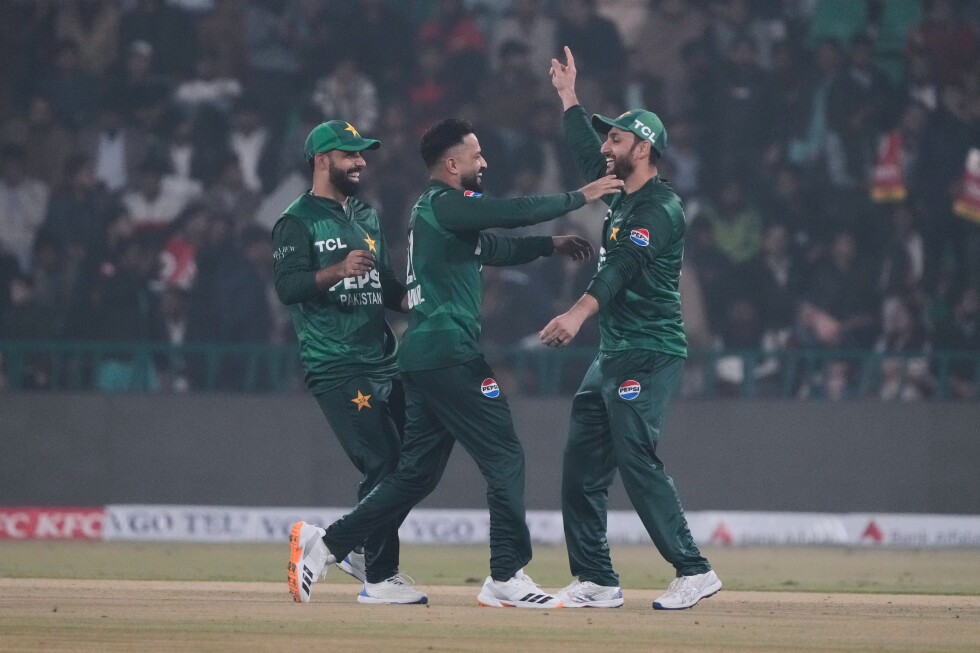
    In a controversial decision with far-reaching implications for international cricket, the Pakistani government has granted its national team permission to compete in the upcoming ICC T20 World Cup while simultaneously mandating a boycott of its high-profile group stage match against arch-rival India.

    The tournament, co-hosted by India and Sri Lanka and featuring twenty national teams, commences this Saturday. The Pakistani squad will conduct all its matches in Sri Lanka, a logistical arrangement necessitated by the persistent political tensions between Islamabad and New Delhi.

    Official communication from the Government of the Islamic Republic of Pakistan, disseminated via its verified social media channel, explicitly stated: “The Pakistan Cricket Team shall not take the field in the match scheduled on 15th February 2026 against India.” No specific justification was provided for this selective boycott. However, the decision follows strong criticism from Pakistan Cricket Board (PCB) Chairman Mohsin Naqvi, who previously accused the International Cricket Council (ICC) of applying “double standards” in its scheduling. Naqvi had been particularly vocal regarding the ICC’s refusal to relocate Bangladesh’s matches to Sri Lanka, a team ultimately replaced by Scotland for the tournament. The PCB chairman presented the complex situation to Prime Minister Shehbaz Sharif, leaving the final participation decision to the government.

    The ICC responded with a formal statement expressing deep concern, noting it was awaiting official confirmation from the PCB. The global governing body warned that Pakistan’s stance threatens “the spirit and sanctity” of world sporting events. “This position of selective participation is difficult to reconcile with the fundamental premise of a global sporting event where all qualified teams are expected to compete on equal terms,” the ICC asserted. While acknowledging governmental roles in national policy, the council emphasized that the boycott disadvantages global cricket and disappoints millions of fans, including those in Pakistan. The ICC urged the PCB to seek a “mutually acceptable resolution” and cautioned about the “significant and long-term implications” for Pakistan’s standing within the international cricket ecosystem.

    The financial ramifications are substantial, as a Pakistan-India clash traditionally generates enormous broadcast revenue and sponsor interest. A forfeit would automatically award two points to India. This diplomatic friction extends beyond politics onto the pitch; last year during the Asia Cup in the UAE, Indian players notably refused to shake hands with their Pakistani counterparts.

    Team captain Salman Ali Agha, fresh from a 3-0 T20 series victory over Australia in Lahore, confirmed the team would comply with governmental directives. “It’s not our decision, we can’t do anything about it,” Agha stated. “We will do whatever our government and the PCB chairman say.” Pakistan’s tournament begins with a match against the Netherlands on Saturday, followed by fixtures against the U.S. on February 10th and Namibia on February 18th.