作者: admin

  • Apple’s Mac online store just changed: Here’s how buying a Mac works now

    Apple’s Mac online store just changed: Here’s how buying a Mac works now

    Apple has implemented a comprehensive overhaul of its digital retail platform, fundamentally transforming how consumers purchase Mac computers through its online store. The tech giant has eliminated all preconfigured models across its entire Mac lineup, including MacBook Air, MacBook Pro, iMac, Mac mini, Mac Studio, and Mac Pro devices.

    The new purchasing paradigm requires customers to build their machines from the ground up through an intricate customization process. Instead of selecting from predetermined configurations, buyers now navigate through sequential customization steps beginning with display size and color selection. The process continues with choices regarding nano-texture display options, Apple’s M-series chip configurations, RAM capacity, and SSD storage specifications.

    Additional personalization options include selecting preferred power adapter configurations, keyboard language preferences, and software bundle additions such as Final Cut Pro and Logic Pro licenses. The familiar AppleCare+ protection plan remains available as a final purchase consideration before checkout completion.

    While the customization experience has been significantly enhanced, the available hardware components remain unchanged. Notably, the MacBook Pro series continues to lack M5 Pro or M5 Max chip options, indicating that next-generation Apple Silicon upgrades remain forthcoming in future product revisions.

    The transition to this fully customizable approach was first identified by industry observers at Macworld and has been fully implemented across Apple’s UAE digital storefront, suggesting a global rollout strategy. This strategic shift represents Apple’s most substantial e-commerce transformation in recent years, emphasizing personalized computing experiences over standardized configurations.

  • Venezuela releases rights activist Javier Tarazona

    Venezuela releases rights activist Javier Tarazona

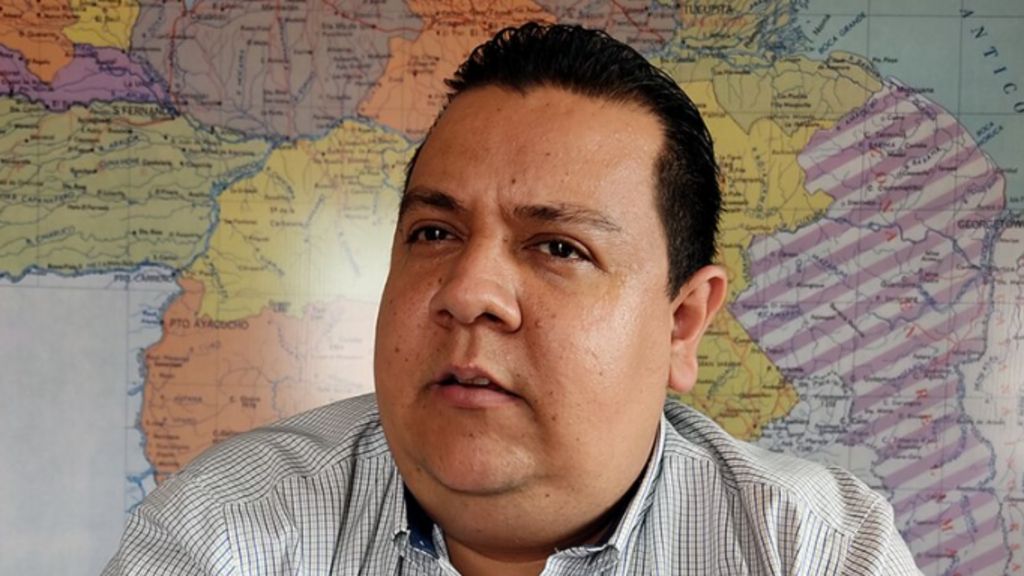
    In a significant development within Venezuela’s political landscape, prominent human rights defender Javier Tarazona has been released from detention following increased international pressure for governmental reforms. Tarazona, who leads the non-governmental organization Fundaredes, had been incarcerated since July 2021 in the notorious El Helicoide prison facility located in Caracas.

    The liberation was formally confirmed by Fundaredes on Sunday, marking another instance in a series of prisoner releases initiated by the Venezuelan government. This action aligns with recent announcements from acting President Delcy Rodríguez regarding proposed amnesty legislation intended to benefit hundreds of individuals currently detained for political reasons. The proposed bill additionally mandates the closure of the El Helicoide prison complex.

    According to documentation by Foro Penal, a separate Venezuelan rights monitoring organization, over 300 political prisoners have secured their freedom since early January. Tarazona’s initial arrest stemmed from his allegations regarding connections between Venezuelan officials and Colombian guerrilla factions operating along the shared border. Government authorities had charged him with treason, terrorism, and incitement to hatred in response to these claims.

    While welcoming Tarazona’s release, Fundaredes emphasized that this development does not negate the injustice endured during his detention, characterizing it as merely a preliminary step in addressing systematic issues of criminalization, persecution, and judicial irregularities.

    The timing of these releases follows the dramatic capture of President Nicolás Maduro by United States special forces on January 3rd, which subsequently intensified demands for comprehensive political and economic restructuring within Venezuela. This event has galvanized families of detained opposition figures and human rights advocates to amplify their campaigns for prisoner releases and charge dismissals.

    Although Venezuelan officials have historically denied maintaining political prisoners, the proposed amnesty law represents an acknowledgment of these longstanding concerns. Rodríguez described the legislation as instrumental in ‘healing the wounds of political confrontation, violence, and extremism.’ The National Assembly is anticipated to ratify the bill in the coming days.

    However, Foro Penal notes that many recently freed individuals continue to face unresolved legal charges, creating a state of judicial uncertainty and restricting their ability to participate publicly in political discourse.

  • ‘Quiet assassin’ Rybakina targets world number one after Melbourne win

    ‘Quiet assassin’ Rybakina targets world number one after Melbourne win

    Elena Rybakina has solidified her status as tennis’s premier ‘quiet assassin’ following a spectacular Australian Open victory that positions her for a potential ascent to world number one. The Moscow-born Kazakh star demonstrated remarkable composure under pressure to dethrone defending champion Aryna Sabalenka in a gripping three-set final (6-4, 4-6, 6-4) that showcased the sport’s most explosive power game.

    The 26-year-old’s Melbourne triumph represents her second Grand Slam title, coming more than three years after her breakthrough Wimbledon victory in 2022. This latest achievement gains additional significance considering Rybakina’s path to the championship included victories over both the world’s top-ranked players—Sabalenka and Poland’s Iga Swiatek, whom she dispatched in straight sets during the quarterfinals.

    Rybakina’s journey to tennis elite status has been marked by significant challenges. Since switching allegiance to Kazakhstan in 2018 for financial support reasons, her career has been periodically hampered by physical ailments including chronic back issues and insomnia. These struggles made her recent 20-win streak from the past 21 matches particularly impressive.

    The final itself represented a dramatic reversal of fortune from the 2023 Australian Open championship, where Sabalenka had rallied from a set down to claim victory. This time, despite the Belarusian establishing a 3-0 advantage in the decisive third set, Rybakina maintained her characteristic composure to stage a remarkable comeback.

    Post-victory, Rybakina revealed the intense psychological pressure she experienced during her previous Grand Slam final appearances, contrasting it with her ability to genuinely enjoy this latest achievement. When questioned about statistical evidence suggesting she has been the world’s best player since mid-2023, the typically reserved athlete appeared almost embarrassed by the recognition.

    With her aggressive serving game and improved mental fortitude, Rybakina now stands poised to challenge for the top ranking position. Her current career-high ranking of world number three seems certain to improve as she carries forward the momentum from what Australian media have dubbed a ‘quiet assassin’ campaign style.

  • Budget 2026: India is making it easier for NRIs to invest in equities

    Budget 2026: India is making it easier for NRIs to invest in equities

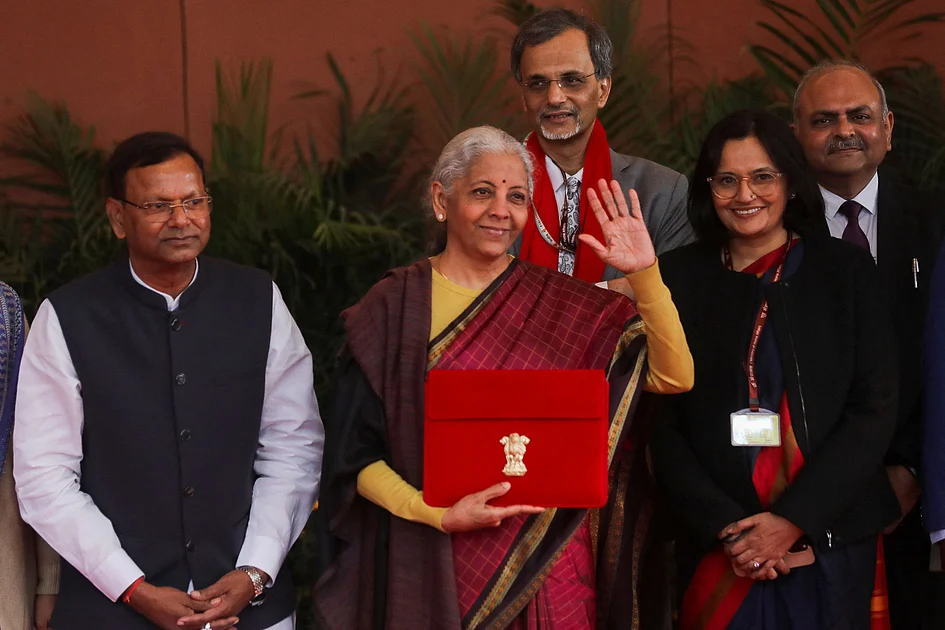
    India’s landmark Budget 2026 has introduced transformative financial reforms specifically designed to mobilize capital from the global Indian diaspora. Finance Minister Nirmala Sitharaman has implemented strategic measures to position overseas Indians as crucial contributors to India’s capital markets amid cautious foreign institutional investment trends.

    The centerpiece reform doubles individual investment limits for Persons Resident Outside India (PROI) in listed Indian companies from 5% to 10%, while simultaneously raising the aggregate foreign holding cap from 10% to 24%. This structural change enables non-resident Indians to acquire more substantial equity positions without encountering regulatory barriers, providing both retail and high-net-worth investors with expanded portfolio opportunities and meaningful ownership in blue-chip enterprises.

    Concurrently, the government has strengthened the Portfolio Investment Scheme (PIS) framework, facilitating direct stock market access through Reserve Bank of India-approved designated bank accounts. This enhancement arrives at a critical juncture, as foreign investors withdrew approximately Rs 19 billion from Indian equities in 2025 followed by an additional Rs 4 billion in January 2026. The revitalized PIS mechanism aims to counterbalance volatile institutional flows with more stable, long-term diaspora capital.

    Regulatory modernization forms another cornerstone of these reforms, with promised simplifications to Foreign Exchange Management Act (FEMA) rules governing Non-Debt Instruments and Overseas Investments. This shift from control-oriented approaches to facilitation-focused frameworks promises accelerated approvals, reduced compliance burdens, and streamlined fund repatriation processes—particularly beneficial for investments in startups, unlisted companies, and alternative assets.

    The budget further amplifies Gujarat International Finance Tec-City (GIFT City) as a global financial hub, offering tax incentives, international-standard regulations, and simplified cross-border transaction mechanisms. This development provides NRIs with enhanced access to international financial products while maintaining connectivity to Indian markets through globally competitive platforms.

    Financial experts anticipate these reforms will fundamentally reshape foreign participation patterns in Indian equities. By expanding direct access for overseas individuals, India diversifies its investor base beyond large institutions while potentially stabilizing markets through longer investment horizons characteristic of diaspora investors. Sectors including banking, financial services, capital goods, and technology are expected to benefit most significantly from the expanded NRI participation.

    These targeted measures form part of broader budgetary initiatives aimed at boosting infrastructure spending, strengthening manufacturing incentives, and supporting digital finance ecosystems—all designed to sustain growth momentum and improve corporate earnings visibility that fundamentally drives equity returns.

  • Four Britons die after holiday sickness, say lawyers

    Four Britons die after holiday sickness, say lawyers

    A devastating health crisis has emerged from the tropical archipelago of Cape Verde, where six British tourists have died following severe gastric illnesses contracted during holidays since January 2023. The alarming pattern has prompted legal action representing over 1,500 affected travelers against tourism giant TUI.

    The most recent casualties include Mark Ashley, 55, from Bedfordshire; Elena Walsh, 64, from Birmingham; Karen Pooley, 64, from Gloucestershire; and an unidentified 56-year-old man. All succumbed to complications arising from violent stomach infections characterized by symptoms including severe diarrhea, vomiting, fever, and extreme lethargy.

    Medical tragedies unfolded differently across cases. Mr. Ashley collapsed at his Houghton Regis home weeks after returning from holiday and was pronounced dead minutes after hospital admission. Ms. Walsh, a part-time nurse, died during her August 2025 stay at Riu Cabo Verde resort on Sal island. Most tragically, Ms. Pooley’s condition was compounded by a fall on wet flooring from a leaking fridge, resulting in a fractured femur that escalated into fatal sepsis and multi-organ failure.

    Irwin Mitchell, the law firm representing all affected families, described the scale of illness as ‘truly staggering.’ Senior lawyer Jatinder Paul noted he had ‘never seen repeated and continued illness outbreaks at the same resorts on such a scale over such a period of time.’

    Families have expressed profound grief and frustration. Emma Ashley reported her husband’s illness through TUI’s app during their October holiday and raised concerns about resort hygiene standards. Andy Pooley described poor communication from medical facilities and holiday providers during his wife’s medical emergency.

    TUI acknowledged the investigations but declined detailed comment due to ongoing legal proceedings. The company noted it had transported over one million visitors to the islands since 2022 and provided support to those reporting illness.

    Coroner investigations and legal proceedings continue as health authorities examine the unprecedented cluster of tourist illnesses in the popular destination located west of Mauritania and Senegal.

  • Samsung Galaxy S26 Ultra leaks: Unpacked 2026 date, battery details and design revealed

    Samsung Galaxy S26 Ultra leaks: Unpacked 2026 date, battery details and design revealed

    Samsung Electronics is generating significant anticipation for its Galaxy Unpacked 2026 event, with multiple leaks revealing crucial details about the upcoming flagship Galaxy S26 Ultra. According to reliable industry insider Evan Blass, the unveiling ceremony is scheduled for February 25, 2026, marking the continuation of Samsung’s early-year flagship launch tradition.

    The battery specifications have emerged as a particularly contentious topic among technology enthusiasts. Despite increasing competition from Chinese manufacturers adopting advanced silicon-carbon battery technology, Samsung appears committed to maintaining its 5,000mAh battery capacity from the previous S25 Ultra model. This decision comes at a time when competitors like Honor and Xiaomi are demonstrating breakthrough multi-day battery performance in their 2025 flagship devices.

    Design renders indicate evolutionary refinements rather than revolutionary changes to the S26 Ultra’s aesthetic. The device showcases subtly rounded edges and introduces a new pill-shaped camera housing, drawing design inspiration from Samsung’s recently launched Galaxy Z Fold 7. The sophisticated camera array maintains its impressive specifications, featuring a 200-megapixel primary sensor complemented by 50-megapixel ultrawide and periscope telephoto lenses, alongside a 10-megapixel telephoto camera.

    Notably, the S26 Ultra demonstrates advancements in structural engineering, measuring at 163.6 x 78.1 x 7.9mm – representing a slimmer profile than its predecessor while preserving battery capacity. This achievement suggests successful implementation of ultra-thin manufacturing techniques previously exclusive to Samsung’s foldable smartphone lineup.

    Industry analysts suggest that potential price reductions could significantly enhance the device’s market competitiveness, though Samsung has yet to confirm any official pricing strategy. The combination of refined design, maintained battery capacity, and possible aggressive pricing positions the Galaxy S26 Ultra as a potentially transformative product in Samsung’s 2026 mobile portfolio.

  • Tens of thousands of Czechs rally in support of President Pavel over dispute with foreign minister

    Tens of thousands of Czechs rally in support of President Pavel over dispute with foreign minister

    PRAGUE — The Czech Republic witnessed unprecedented political mobilization as tens of thousands of citizens flooded Prague’s historic squares on Sunday, demonstrating firm support for President Petr Pavel amid a escalating constitutional confrontation with Foreign Minister Petr Macinka. The massive gathering, which overflowed from Old Town Square to Wenceslas Square, featured a sea of Czech, Ukrainian, and EU flags alongside banners proclaiming ‘Long Live Pavel’ in a striking show of public solidarity.

    The core of the dispute centers on President Pavel’s refusal to appoint Filip Turek as environment minister, a nominee from the right-wing Motorists for Themselves party. This decision came after media investigations revealed Turek’s Facebook posts containing openly racist, homophobic, and sexist content. While Turek offered partial apologies for some posts, he denied authorship of others, further complicating the nomination.

    Foreign Minister Macinka, who leads the Euro-skeptic party, has accused the president of constitutional violations and threatened legal consequences if the appointment isn’t finalized. President Pavel characterized these threats as attempted blackmail and has scheduled a critical meeting with Prime Minister Andrej Babiš for Wednesday to resolve the impasse.

    The current government, sworn in on December 15 after Babiš’s ANO movement formed a coalition with the Freedom and Direct Democracy party and the Motorists, has advocated for shifting away from Ukraine support and rejecting key EU policies. This stands in direct opposition to President Pavel’s staunch pro-Ukraine stance as a retired army general, highlighting the deepening ideological divide within Czech leadership.

    Parallel demonstrations supporting the president emerged in multiple cities across the country, signaling broad public engagement in this constitutional crisis that pits presidential authority against government ambitions.

  • Pakistan win toss, opt to bowl against India in crucial Under-19 World Cup clash

    Pakistan win toss, opt to bowl against India in crucial Under-19 World Cup clash

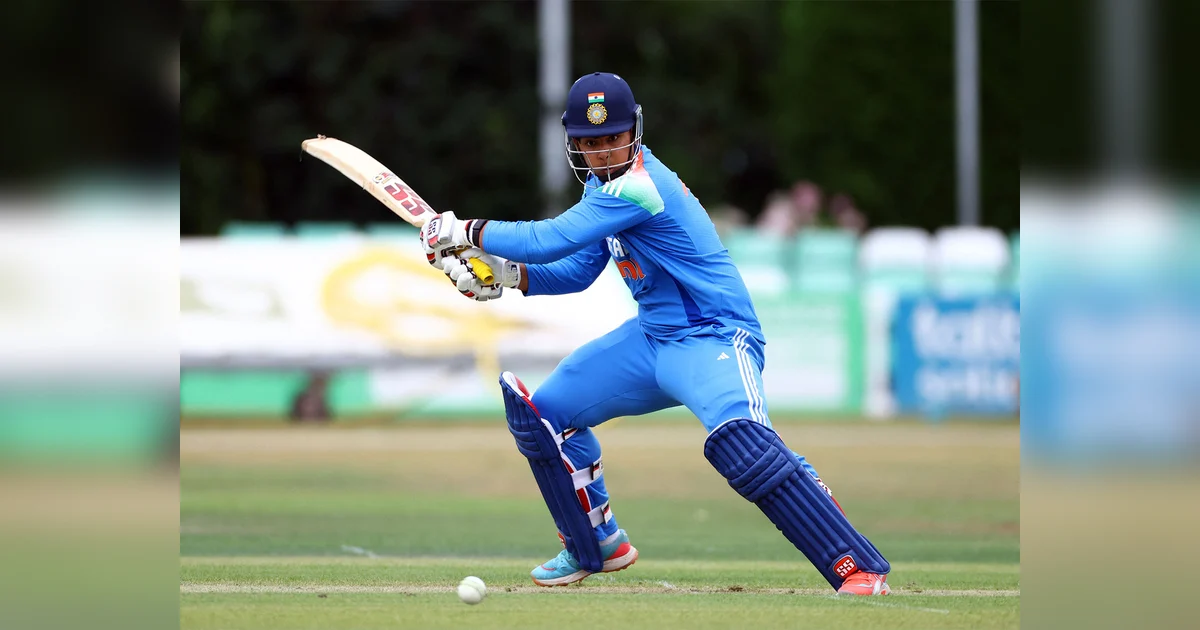
    In a pivotal Super Six Group 2 encounter of the ICC Under-19 World Cup 2026, Pakistan’s young cricketers won the toss and elected to field first against their Indian counterparts. This high-voltage match, contested at a sun-drenched venue on February 1, 2026, represents the final group-stage fixture, with the victor securing the last remaining semifinal berth.

    The tournament landscape has already seen Australia and Afghanistan advance from Super Six Group 1, while England has clinched qualification from Group 2. This setup creates a winner-takes-all scenario for the Asian rivals. India enters the contest holding a superior position, perched second in the group with an unblemished record of three victories and a formidable net run rate of +3.337. Pakistan, positioned third with two wins from three matches and a net run rate of +1.484, faces a mathematical challenge: not only must they defeat India to level both teams at six points, but they require a substantial victory margin to overcome India’s significant net run rate advantage.

    Indian captain Ayush Mhatre expressed confidence at the toss, revealing his team’s preference to bat first despite the opposition’s choice. He announced one strategic alteration to the lineup, with Deepesh Devendran replacing Udhav Mohan. Mhatre noted the improved weather conditions compared to earlier rain-affected matches, believing the sunny conditions would favor his team’s preparations.

    The teams field the following compositions:
    India U19 Playing XI: Aaron George, Vaibhav Sooryavanshi, Ayush Mhatre (c), Vihaan Malhotra, Abhigyan Kundu (w), Vedant Trivedi, RS Ambrish, Kanishk Chouhan, Khilan Patel, Henil Patel, Deepesh Devendran.
    Pakistan U19 Playing XI: Hamza Zahoor (w), Sameer Minhas, Usman Khan, Ahmed Hussain, Farhan Yousaf (c), Huzaifa Ahsan, Ali Hassan Baloch, Abdul Subhan, Momin Qamar, Mohammad Sayyam, Ali Raza.

    This encounter continues the storied cricketing rivalry between the nations at the youth level, with both teams understanding that victory secures progression to the tournament’s knockout stages.

  • Ethiopian double at Dubai Marathon as Melak, Dessie clinch titles

    Ethiopian double at Dubai Marathon as Melak, Dessie clinch titles

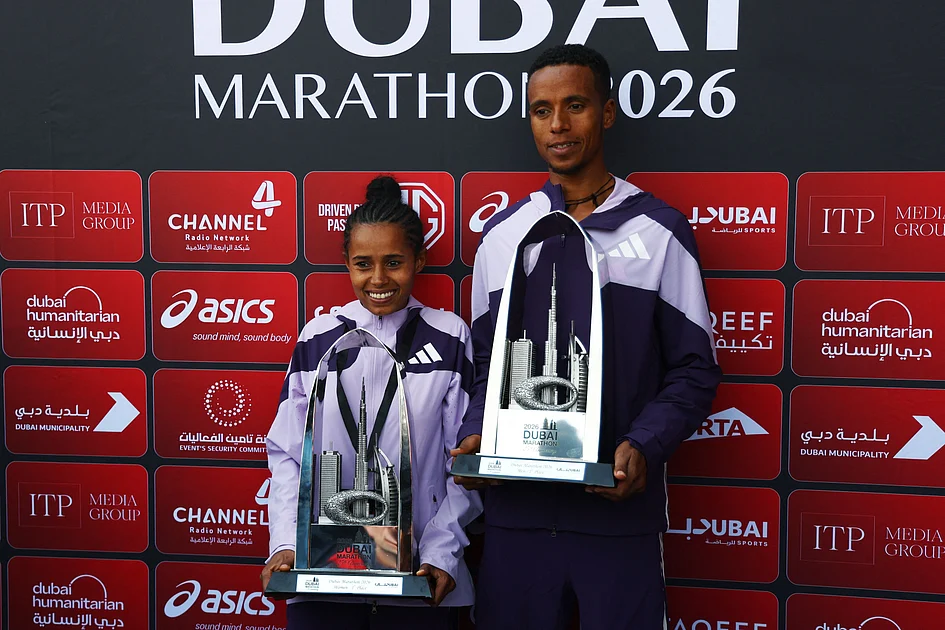
    Ethiopian athletes delivered another masterclass in long-distance running at the 25th anniversary edition of the Dubai Marathon, securing an unprecedented fifth consecutive men’s and women’s double victory in the Middle East’s premier marathon event. The historic achievement further cemented East Africa’s dominance in the iconic race that has traditionally been contested between Ethiopian and Kenyan athletes.

    Nibret Melak emerged as the standout performer of the day, capturing the men’s elite title in a spectacular marathon debut. The 26-year-old Ethiopian clocked an impressive 2:04:00, recording the third-fastest time in the event’s history and missing the course record by a mere 26 seconds. Melak demonstrated remarkable composure throughout the race, finishing ahead of compatriot Yasin Haji (2:05:52) and Rwanda’s John Hakizimana (2:06:04) who claimed silver and bronze respectively.

    In the women’s competition, Anchinalu Dessie produced a stunning comeback victory while setting a personal best of 2:18:31. The 23-year-old Ethiopian champion overcame a significant deficit in the final stages, capitalizing on race leader Muliye Dekebo’s sudden stomach troubles to secure her third consecutive marathon victory following previous triumphs in Seville and Beijing.

    The event, supported by Dubai Sports Council, featured a flat and fast course that attracted elite runners worldwide. Beyond the professional races, thousands of running enthusiasts participated in the accompanying 10km Road Race and 4km Fun Run, highlighting the event’s growing popularity across skill levels.

    Both champions expressed ambitious future goals, with Melak declaring his intention to break the world marathon record and Dessie confident she can achieve even faster times. Their performances underscored Ethiopia’s continuing production of world-class distance running talent and set the stage for exciting developments in international marathon competitions.

  • Bahrain urges residents to update mobile devices to receive emergency alerts

    Bahrain urges residents to update mobile devices to receive emergency alerts

    Bahrain’s Ministry of Interior has issued a specific directive targeting Apple device users, urging them to immediately update their iOS systems to version 26.2 to ensure proper functionality of the nation’s newly implemented wireless emergency alert network. The announcement, made on January 31, 2026, emphasizes that this update is critical for receiving timely emergency notifications during crisis situations.

    The advisory explicitly states that Android and Huawei device users require no action, as their systems are already compatible with the emergency broadcast infrastructure. This selective requirement highlights the technical complexities involved in maintaining cross-platform compatibility for national safety systems.

    This development follows Bahrain’s recent approval of a phased pilot operation for its advanced wireless alert mechanism, designed to revolutionize public safety communication. The system represents a significant technological leap in emergency preparedness, capable of delivering crucial information to citizens and residents before, during, and after emergencies with unprecedented speed and efficiency.

    The emergency network was developed following extensive deliberations at the Civil Defence Council, where officials examined early warning protocols and enhanced coordination frameworks between government sectors. The system will undergo staged testing in designated emergency zones once infrastructure preparations are finalized.

    Concurrently, regional neighbor Kuwait has implemented monthly testing of its emergency warning sirens, scheduled for 10 AM on the first Monday of each month. Kuwait has also conducted specialized training programs for chemical, biological, and radiological incident response, reflecting broader regional efforts to enhance emergency preparedness amid ongoing geopolitical tensions.