作者: admin

  • Three West African juntas have turned to Russia. Now the US wants to engage them

    Three West African juntas have turned to Russia. Now the US wants to engage them

    The United States has initiated a fundamental recalibration of its foreign policy toward three West African nations currently combating Islamist insurgencies. This strategic shift sees Washington prioritizing security cooperation and mineral resource interests over previously emphasized democratic governance principles.

    State Department officials confirmed that Nick Checker, head of the Bureau of African Affairs, will soon visit Bamako to formalize this new approach centered on “respect for Mali’s sovereignty.” The diplomatic mission aims to establish revised relations with Mali and its allies Burkina Faso and Niger, collectively known as the Alliance of Sahel States (AES).

    This policy transformation, increasingly evident since Donald Trump’s return to presidency twelve months ago, represents a dramatic departure from previous administrations. The Biden government had suspended military cooperation following constitutional overthrows that deposed elected civilian leaders in all three nations between 2020-2023.

    The revised American stance explicitly sidelines democracy and human rights concerns that previously dominated diplomatic engagements. Instead, Washington now emphasizes counterterrorism collaboration and economic interests, particularly regarding the region’s substantial mineral resources including gold, lithium, and uranium.

    This recalibration responds to several strategic considerations. Security apprehensions remain paramount as the Sahel region currently accounts for approximately half of global terrorism-related fatalities according to some metrics. Islamic State in the Greater Sahara (ISGS) maintains particularly strong presence in the tri-border area where Mali, Burkina Faso and Niger converge.

    Additionally, the administration seeks to counterbalance Russia’s growing influence. Moscow has deployed approximately 1,000 security contractors across the three nations, establishing itself as their primary defense partner following their rejection of French military cooperation.

    The new American approach will not involve significant troop deployments, aligning with President Trump’s campaign promises to avoid “forever wars.” Instead, support will center on intelligence sharing, potential weapons transfers, and limited training missions rather than reactivating former operational bases like the Agadez drone facility in Niger.

    This policy evolution occurs as regional dynamics continue shifting. The three military governments have withdrawn from ECOWAS, the West African regional bloc, to form their own confederation. This development has enabled remaining ECOWAS members to pursue practical security cooperation without addressing the AES nations’ internal governance standards.
  • ’85 seconds to midnight’: How wars, less nuclear arms control affects ‘Doomsday Clock’

    ’85 seconds to midnight’: How wars, less nuclear arms control affects ‘Doomsday Clock’

    The international architecture governing nuclear non-proliferation is facing unprecedented collapse, according to leading atomic researcher Professor Karen Hallberg. Speaking at the World Laureate’s Summit, the Secretary General of the Pugwash Conferences on Science and World Affairs warned that critical treaties are expiring while nuclear rhetoric escalates among world powers.

    The imminent expiration of the New Strategic Arms Reduction Treaty (New START) between Russia and the United States on February 4, 2026, marks a pivotal moment in nuclear diplomacy. This expiration represents the first significant retreat from nuclear restraint in decades, potentially triggering a dangerous escalation in warhead deployment. Professor Hallberg emphasized the alarming lack of public awareness regarding these developments, contrasting current apathy with historical mass protests against nuclear weapons.

    Current global nuclear inventories remain concentrated among nine nations, with approximately 12,331 warheads documented by the Federation of Atomic Scientists. Russia and the United States collectively control over 83% of these stockpiles. While overall numbers show a gradual decline, the reduction pace has slowed considerably compared to previous decades.

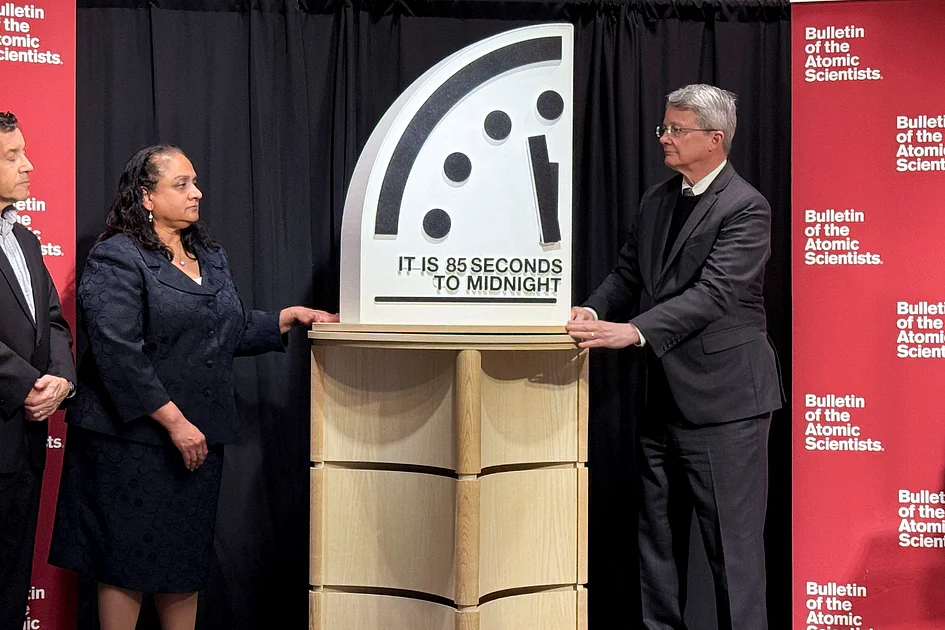
    The deteriorating situation prompted The Bulletin of the Atomic Scientists to advance the symbolic Doomsday Clock to 85 seconds before midnight—the closest approach to catastrophic midnight in the mechanism’s history. This adjustment reflects growing concerns about diminished arms control agreements, escalating geopolitical conflicts, and emerging threats from artificial intelligence.

    Professor Hallberg’s organization, awarded the Nobel Peace Prize in 1995 for efforts to reduce nuclear weapons’ role in international politics, now warns of a potential new nuclear arms race as more states pursue weapons capabilities. This convergence of diplomatic breakdown and technological advancement creates what experts describe as the most perilous nuclear landscape since the Cold War era.

  • Djokovic vows to push on despite ‘bitter’ Australian Open final loss

    Djokovic vows to push on despite ‘bitter’ Australian Open final loss

    In a stunning reversal at Rod Laver Arena, world number one Carlos Alcaraz dethroned Novak Djokovic’s decade-long dominance in Australian Open finals with a spectacular 2-6, 6-2, 6-3, 7-5 victory on Sunday. The Spanish phenom has now thwarted Djokovic’s pursuit of a record-breaking 25th Grand Slam title for the third time in major finals, maintaining the Serbian’s tie with Margaret Court for the all-time record.

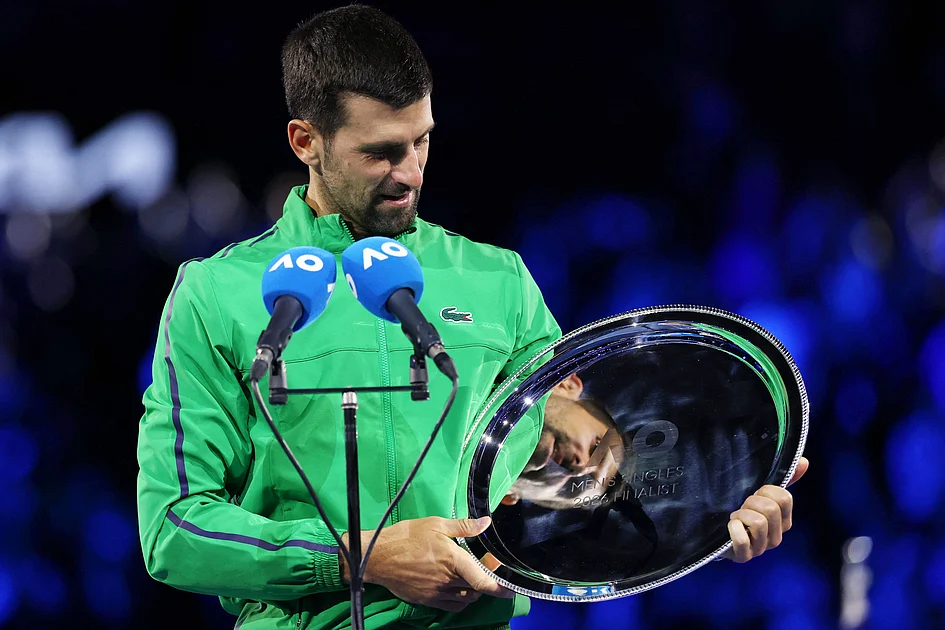
    The 38-year-old Djokovic, while visibly disappointed immediately following the match, expressed measured optimism about his tournament performance and future prospects. ‘It’s hard just right after the match to be all positive and smiling because you are a competitor and you don’t want to lose,’ Djokovic told reporters. ‘I managed to beat Jannik Sinner – who is double-defending champion here – in five sets, very proud of that. Incredible match, incredible achievement.’

    Djokovic acknowledged Alcaraz’s emerging legendary status, stating, ‘I lost to a number one in the world and already a legendary player.’ The Serbian star dominated the opening set but experienced a noticeable energy drop in subsequent sets, though he declined to elaborate on the specific reasons, preferring to credit Alcaraz’s performance.

    A critical moment occurred at 4-4 in the fourth set when Djokovic failed to convert a break point with an errant forehand. ‘That forehand, I had a good look at that forehand. Yeah, my forehand broke down in important moments,’ he reflected. ‘One or two shots can change the momentum of the match and switch things around. A lot of what-if scenarios in my head.’

    Despite the defeat, Djokovic remains committed to his Grand Slam ambitions. ‘I have belief, and I have always confidence and vision to win a Slam anywhere where I play,’ he asserted. In a characteristically humorous moment, the veteran acknowledged the new generation’s ascendancy: ‘The two of them [Alcaraz and Sinner], I guess, are going to be fighting for biggest titles, and then the youngsters like myself are going to try to catch up.’

    The path to this final saw Djokovic benefit from favorable circumstances – a walk-over in the fourth round and opponent Lorenzo Musetti’s retirement while down two sets in the quarterfinals. This context made the championship match potentially his best opportunity for another major trophy, adding significance to the narrow loss.

  • NRIs applaud India Budget 2026 push, welcome business-friendly measures

    NRIs applaud India Budget 2026 push, welcome business-friendly measures

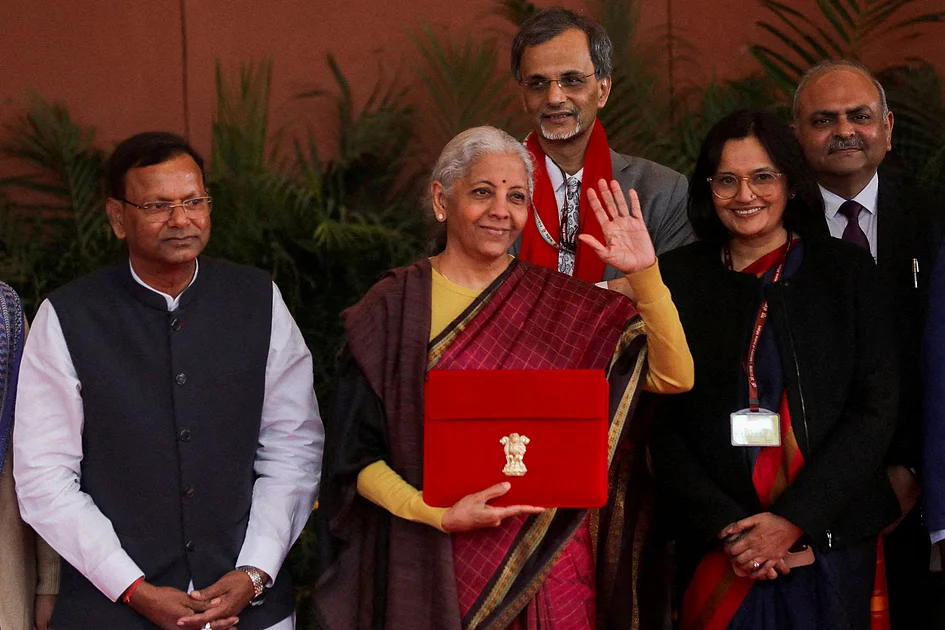
    Indian business executives based in the United Arab Emirates have expressed widespread approval of India’s Budget 2026, praising its strategic focus on sustained economic growth, technological advancement, and enhanced non-resident Indian (NRI) participation. The fiscal plan, presented by Finance Minister Nirmala Sitharaman, has been characterized as a balanced approach that maintains fiscal discipline while accelerating infrastructure development and digital transformation.

    Prominent business figures highlighted several key initiatives that signal India’s ambition to emerge as a global manufacturing and technology leader. Yusuff Ali MA, Chairman of LuLu Group International, noted that the budget’s emphasis on artificial intelligence, micro, small and medium enterprises (MSMEs), and infrastructure development reinforces India’s position as an emerging economic powerhouse. The easing of Portfolio Investment Scheme rules and increased foreign holding limits were particularly welcomed as measures that would encourage greater NRI investment in India’s growth story.

    Healthcare sector leaders including Dr. Azad Moopen, Founder of Aster DM Healthcare, applauded the budget’s healthcare roadmap, which includes the Biopharma Shakti initiative and customs duty exemptions on critical cancer drugs. The expansion of medical infrastructure through new AIIMS facilities and district hospital upgrades is expected to strengthen India’s healthcare ecosystem and position the country as a global medical hub.

    Financial experts noted the budget’s careful balancing act between growth stimulation and fiscal responsibility. Siddharth Balachandran, Chairman of the Indian Business and Professional Council, observed that while the securities transaction tax hike on derivatives might be challenging, it was a necessary measure. The budget’s recognition of AI and deep technologies at the macroeconomic level was widely praised as timely and strategic.

    Several business leaders emphasized the importance of execution following the budget’s announcement. Thumbay Moideen, Founder President of Thumbay Group, stressed that implementation at scale would be crucial for realizing the budget’s vision. The budget’s focus on public-private partnership models was seen as instrumental in building a self-sustaining and resilient Indian economy aligned with the ‘Viksit Bharat 2047’ vision.

    While overall reception was positive, some executives noted areas for potential enhancement. Adeeb Ahamed, Managing Director of LuLu Financial Holdings, suggested that clearer financial services reforms and a more integrated tourism strategy could have further strengthened the medium-term outlook. Similarly, Anuj Puri of Anarock Group noted the absence of direct affordable housing incentives as a missed opportunity for inclusive urban development.

  • Starbucks bets on robots to brew a turnaround in customers

    Starbucks bets on robots to brew a turnaround in customers

    Starbucks CEO Brian Niccol is spearheading a technological revolution while simultaneously championing a return to human-centered service, as the coffee giant works to reverse years of sluggish performance. The company is deploying artificial intelligence across its operations—from AI-powered drive-thru voice systems and virtual barista assistants to automated inventory scanners—in a multimillion-dollar technological overhaul.

    These innovations are already showing promising results. The company recently reported its first comparable sales increase in two years within the U.S., its most critical market representing approximately 70% of total revenue. However, investor concerns about profit margins caused a 5% stock price decline despite the sales improvement.

    Niccol, who joined Starbucks in 2024 after successfully turning around Chipotle Mexican Grill, inherited a business facing multiple challenges. The company was grappling with customer resistance to price hikes, intensifying competition, and boycott calls related to union disputes and geopolitical stances.

    The CEO implemented a multi-faceted strategy that included halting price increases, simplifying menus, setting faster service targets, closing underperforming locations, and reducing corporate staff. Paradoxically, while investing heavily in technology, Niccol also initiated a back-to-basics approach emphasizing human connection—including handwritten customer names on cups and store renovations costing $150,000 per location.

    ‘We lost our focus because we got a little too distracted on efficiency and technology, and lost our focus on experience, customer and connection,’ Niccol acknowledged. ‘The business is not an average business. The business is a coffee shop-by-coffee shop business.’

    The company now aims to find $2 billion in cost savings over three years while continuing technological investments. Niccol expressed confidence that consistent sales growth will address profit concerns, though he didn’t rule out future ‘muted’ price increases as a last resort.

    Starbucks faces ongoing challenges from union organizers who criticize Niccol’s compensation package—$97 million in 2024 compared to the average employee’s $17,300—and his remote working arrangements. The CEO stated he remains ‘wildly open’ to conversations but provided no timeline for contract resolutions.

    Looking forward, Starbucks plans ambitious global expansion, nearly doubling its international footprint to 40,000 stores. Niccol believes the company’s ultimate competitive advantage lies not in its coffee but in creating welcoming ‘third places’ for community gathering.

  • ‘At least 200’ feared dead in massive mine landslide in DR Congo, says govt

    ‘At least 200’ feared dead in massive mine landslide in DR Congo, says govt

    A catastrophic landslide has struck a coltan mining operation in the Democratic Republic of Congo’s eastern region, resulting in what government officials fear to be at least 200 fatalities. The disaster occurred at the militia-controlled Rubaya mine in North Kivu province, an area that has been under the occupation of the M23 armed group since April 2024 with alleged support from neighboring Rwanda.

    The communications ministry expressed profound dismay in an official statement, confirming that the massive slope failure likely buried hundreds of artisanal miners who worked under perilous conditions with minimal equipment. According to information obtained by humanitarian sources, the initial collapse occurred Wednesday afternoon, followed by a secondary landslide on Thursday morning, compounding the tragedy.

    This mining facility represents a significant portion of global coltan production, responsible for 15-30% of worldwide supply. The rare mineral serves as a critical component in manufacturing electronic devices including smartphones and laptops. Despite an official mining ban implemented in February 2025, between 112 and 125 tonnes continue to be extracted monthly and routed exclusively to Rwanda, according to Congolese authorities.

    The remote location and ongoing conflict have severely hampered rescue operations and verification efforts. Phone networks remain inoperative for several days, while civil authorities evacuated when M23 forces seized control. Information emerges sporadically via motorcycle couriers navigating the volatile region, making accurate casualty assessment extremely challenging.

    United Nations experts have documented that M23 has established parallel administrative structures to regulate mine operations, generating approximately $800,000 monthly through a seven-dollar-per-kilo taxation system on coltan production and sales. Kinshasa has condemned what it describes as “armed occupation and organized looting” by Rwanda-backed militants, urging international awareness of both the human tragedy and systematic resource exploitation.

    Injured survivors have been transported to inadequately equipped local medical facilities, while recovery efforts continue under extremely difficult circumstances in this conflict-ravaged region that has endured three decades of persistent violence.

  • After Career Slam, will Alcaraz chase a clean sweep of majors this year?

    After Career Slam, will Alcaraz chase a clean sweep of majors this year?

    Carlos Alcaraz has etched his name in tennis history by capturing the Australian Open title, completing a career Grand Slam at just 22 years old. The Spanish sensation defeated Novak Djokovic in a thrilling final at Melbourne’s Rod Laver Arena, surpassing compatriot Rafael Nadal as the youngest male player to achieve this remarkable feat.

    Beneath his charismatic exterior and trademark smile lies an intensely driven competitor focused on rewriting the record books. Alcaraz’s victory over Djokovic marks his seventh major title and demonstrates his evolution into a complete player capable of winning on all surfaces. His journey to the top began in the small town of El Palmar and has been characterized by unprecedented achievements, including becoming the only player to defeat both Nadal and Djokovic consecutively at the 2022 Madrid Open.

    The newly crowned champion credits his mental toughness and never-say-die attitude as key factors in his success. This was particularly evident during his semifinal clash against Alexander Zverev, where he battled through physical discomfort and a fifth-set deficit to secure victory. ‘I just hate giving up,’ Alcaraz stated, reflecting on his competitive philosophy. ‘When I was younger there were matches I didn’t want to fight anymore, but I matured and now I hate that feeling of losing.’

    Despite his historic accomplishment, Alcaraz remains grounded about the possibility of achieving a calendar Grand Slam in 2026. ‘It’s going to be a big challenge,’ he told reporters. ‘Those are big words, to be honest. I just want to take it one tournament at a time.’ His immediate focus turns to the French Open, where he has ‘great memories’ and feels ‘really special’ every time he competes.

    Beyond Grand Slam aspirations, Alcaraz has set additional goals including completing all Masters 1000 tournaments, winning the ATP Finals, and securing Davis Cup glory for Spain. In keeping with tradition, the champion plans to commemorate his Australian Open victory with a kangaroo tattoo, joining his collection of body art that includes symbols from his previous major triumphs.

  • India budget 2026: Six key measures set to boost NRI investments

    India budget 2026: Six key measures set to boost NRI investments

    In a landmark fiscal announcement on Sunday, February 1, 2026, Indian Finance Minister Nirmala Sitharaman presented a transformative budget featuring six strategic measures specifically designed to catalyze investment from Non-Resident Indians (NRIs) and Overseas Indians. The comprehensive policy overhaul aims to channel substantial NRI capital into India’s economic growth narrative while counterbalancing recent foreign institutional investor outflows that have pressured the rupee.

    The centerpiece of these reforms is the significant liberalization of the Portfolio Investment Scheme (PIS). The budget doubles the per-investor equity limit from 5% to 10% for Persons Resident Outside India (PROIs), while simultaneously raising the aggregate investment ceiling for all individual PROIs from 10% to 24%. This groundbreaking change enables direct equity investments in Indian listed companies through the PIS route.

    Beyond market access reforms, the budget introduces substantial tax facilitations. The government has eliminated the mandatory requirement for resident individuals to obtain a Tax Deduction and Collection Account Number (TAN) when purchasing immovable property from non-residents. Additionally, small taxpayers holding foreign assets will benefit from a new time-bound disclosure scheme for declaring foreign assets and income, addressing historical non-compliance issues through a structured fee-based resolution mechanism.

    The fiscal package also excludes specified non-resident businesses currently under presumptive taxation from Minimum Alternate Tax requirements. Particular exemptions extend to operators of cruise ships and providers of services or technology for establishing electronics manufacturing facilities in India.

    Complementary measures include enhanced passenger facilitation through increased duty-free allowances and permission to import new laptops, alongside customs rationalization and reforms to Tax Collected at Source (TCS) provisions. Collectively, these initiatives represent India’s strategic positioning as a premier investment destination for its global diaspora.

  • Qatar to introduce 10-year residency for entrepreneurs, senior executives

    Qatar to introduce 10-year residency for entrepreneurs, senior executives

    In a significant corporate development reshaping the business consultancy landscape of the Gulf region, Helen & Sons and BBK have officially announced the formation of a comprehensive strategic joint venture. This partnership is strategically designed to amalgamate their respective expertise, creating an unparalleled suite of services for enterprises operating within the United Arab Emirates and the wider Gulf Cooperation Council (GCC) nations.

    The alliance brings together the deep-rooted, local market intelligence and established client networks of Helen & Sons with BBK’s renowned international operational frameworks and specialized advisory capabilities. The synergistic entity aims to deliver an integrated portfolio, encompassing strategic management consulting, financial advisory, market entry facilitation, and bespoke corporate support services tailored to the complex demands of the regional market.

    This expansion initiative is a direct response to the accelerating economic diversification and burgeoning entrepreneurial growth witnessed across the GCC. By combining forces, the joint venture is poised to offer clients a more robust, one-stop solution, enhancing their competitive edge and operational efficiency. The move is expected to significantly broaden the reach and depth of professional business support available, catering to both multinational corporations seeking to deepen their regional presence and local SMEs aiming for scalable growth and international standards.

    The formation of this venture underscores a strategic commitment to fostering a more dynamic and supportive business ecosystem, ultimately contributing to the economic vision and ambitious development goals set forth by GCC member states.

  • First passenger flight lands at Sudan’s Khartoum airport nearly 3 years into war

    First passenger flight lands at Sudan’s Khartoum airport nearly 3 years into war

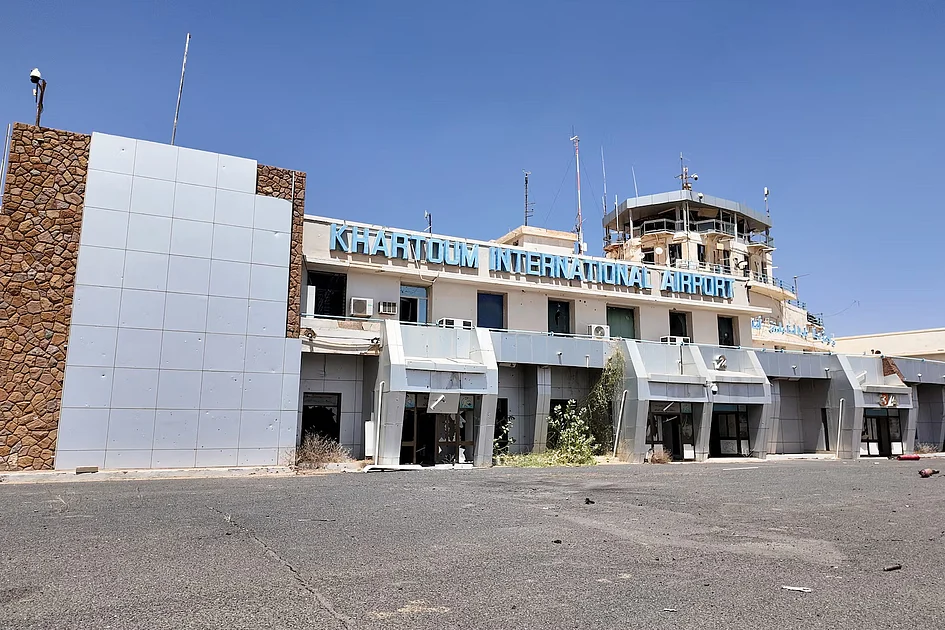
    In a landmark development signaling potential progress in Sudan’s protracted conflict, a commercial passenger aircraft successfully touched down at Khartoum International Airport on Sunday, February 1, 2026. This event marks the first such arrival since April 2023, when violent hostilities between the national army and rival paramilitary factions forced the complete suspension of commercial aviation operations.

    The significant flight, operated by Sudan’s national carrier Sudan Airways, originated from Port Sudan, a Red Sea coastal city that has served as the country’s provisional administrative capital during the conflict. Sudanese aviation authorities confirmed the aircraft transported passengers upon its arrival in Khartoum, formally inaugurating the highly anticipated resumption of airport functionality after an extensive period of wartime closure.

    This aviation milestone occurs amidst a complex and ongoing military situation. Recent reports indicate continued security challenges, including a drone strike targeting the airport’s vicinity just prior to its scheduled reopening, demonstrating the fragile and volatile conditions that persist. The decision to resume commercial flights follows meticulous assessments and represents a critical step toward reestablishing essential international connections and facilitating humanitarian and economic movement.

    The resumption of air travel to the nation’s capital is interpreted by regional observers as a cautiously positive indicator, potentially reflecting negotiated security arrangements or localized de-escalation agreements between the warring parties. However, analysts emphasize that a single flight does not signify a comprehensive resolution to the broader conflict, which has resulted in severe humanitarian consequences and widespread displacement across the region.