作者: admin

  • Zelenskyy says Russia largely observing energy ceasefire ahead of peace talks

    Zelenskyy says Russia largely observing energy ceasefire ahead of peace talks

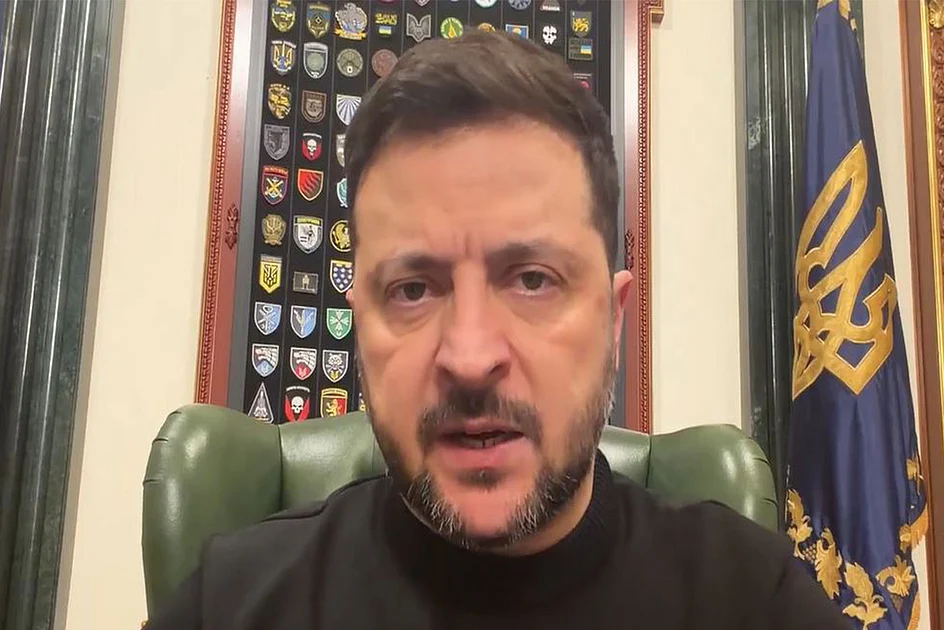
    Ukrainian President Volodymyr Zelenskyy confirmed Monday that Russian forces have largely adhered to a temporary cessation of attacks on Ukraine’s energy infrastructure, creating a fragile but significant de-escalation ahead of scheduled trilateral peace negotiations. The reported compliance comes as diplomatic preparations intensify for upcoming talks involving Russian, Ukrainian, and US officials in Abu Dhabi.

    Zelenskyy stated that targeted missile and drone strikes against Ukrainian energy facilities had notably diminished over the preceding 24-hour period, though some frontline energy installations continued to experience shelling. The Ukrainian leader characterized these de-escalation measures as vital confidence-building steps that could enhance public trust in the negotiation process. “Ukraine is ready for real steps. We believe it is realistic to achieve a dignified and lasting peace,” Zelenskyy emphasized following consultations with his negotiation team.

    The temporary truce on energy infrastructure, announced the previous week, had been clouded by conflicting interpretations regarding its duration. While the Kremlin acknowledged that former US President Donald Trump had personally requested Russian President Vladimir Putin refrain from strikes until February 1st, Ukrainian officials maintained the ceasefire was intended to extend for one week beginning January 30th.

    Despite the relative reprieve, Ukraine continues grappling with severe energy challenges resulting from months of systematic attacks on its power grid. Energy providers race against time and extreme winter conditions to restore electricity and heating services to affected populations. Maxim Timchenko, CEO of Ukraine’s largest private energy company DTEK, highlighted the critical nature of the ceasefire period: “We need some time to recover what is destroyed for the last three months… This ceasefire is extremely important for us to recover partly and avoid any tragic consequences.”

    The fragile situation was underscored by DTEK’s report of renewed attacks on its coal mining operations in Dnipropetrovsk region, where a Sunday strike had killed twelve miners. Meanwhile, regional officials in Donetsk confirmed civilian casualties from shelling that killed a father and son while injuring a mother and her two children. Zelenskyy additionally noted that Russian forces appear to have shifted tactical focus toward targeting transportation logistics, particularly railway infrastructure.
  • Watch: Why is no-one being prosecuted over the Epstein files?

    Watch: Why is no-one being prosecuted over the Epstein files?

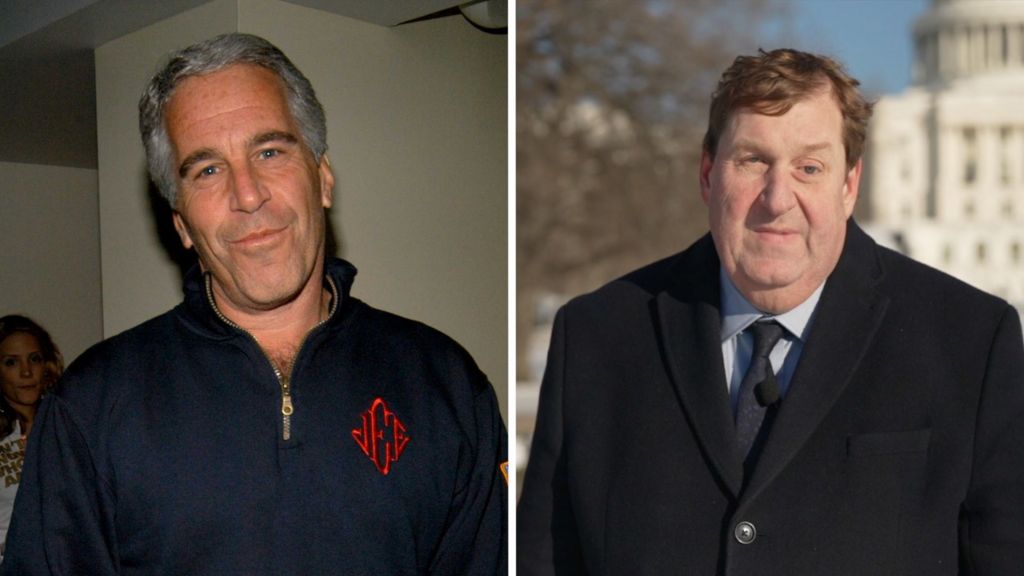
    The comprehensive release of millions of documents from the Jeffrey Epstein case has generated widespread public anticipation for new criminal prosecutions, yet legal experts identify multiple structural barriers preventing immediate judicial action. Despite containing names of powerful associates and detailed accounts, these documents primarily constitute civil case records rather than new criminal evidence.

    Legal analysts emphasize that most documents unveiled through recent court orders represent depositions and discovery materials from Virginia Giuffre’s settled civil lawsuit against Ghislaine Maxwell. These materials lack the evidentiary standards required for criminal convictions, with many accounts representing hearsay or uncorroborated testimony rather than direct proof of criminal activity.

    Prosecutorial challenges include statutes of limitations that have expired for many potential offenses, the death of key figures Epstein and Maxwell, and witness credibility issues. Former federal prosecutors note that while the documents provide contextual information about Epstein’s network, they largely contain allegations already examined by investigators during previous criminal cases.

    The documents’ release through civil litigation mechanisms means they underwent less rigorous verification than criminal evidence would require. Many individuals named maintain their innocence and claim inclusion resulted from Epstein’s manipulation rather than their own wrongdoing. Legal authorities continue reviewing the materials, but experts caution that expectations of imminent prosecutions may be legally unrealistic given existing jurisdictional and evidentiary constraints.

  • Trump announces India-US trade deal ‘effective immediately’ with reduced tariff plans

    Trump announces India-US trade deal ‘effective immediately’ with reduced tariff plans

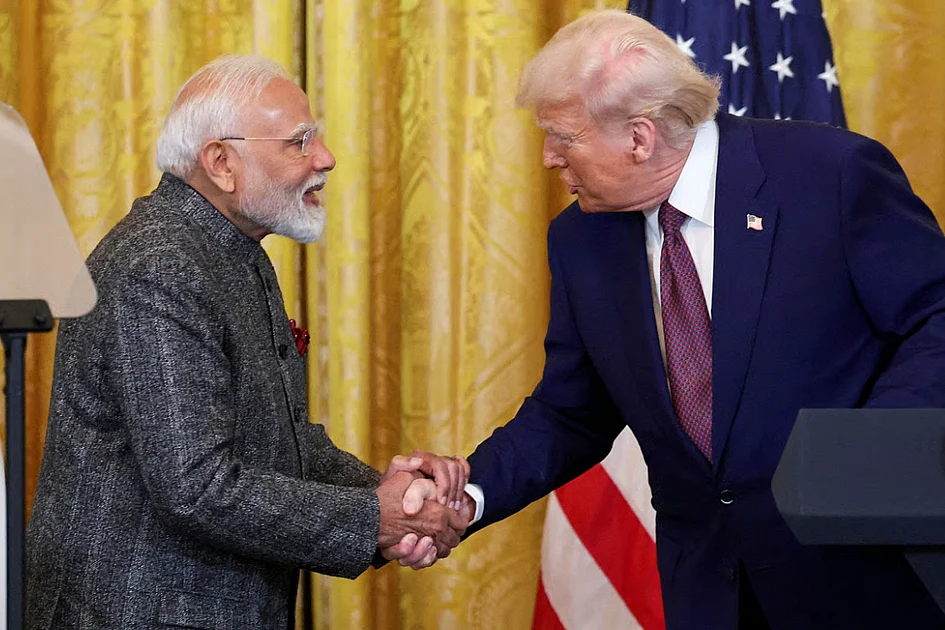
    In a landmark diplomatic development, President Donald Trump has declared the immediate implementation of a comprehensive trade agreement between the United States and India. The announcement came following a substantive phone discussion with Indian Prime Minister Narendra Modi on February 2, 2026.

    The breakthrough agreement establishes reciprocal tariff reductions, with the United States committing to lower its tariffs on Indian goods from 25% to 18%. In a corresponding move, India has pledged to eliminate both tariff and non-tariff barriers against American imports, effectively reducing them to zero. This bilateral arrangement represents a significant departure from previous trade tensions between the two nations.

    Beyond commercial considerations, the dialogue addressed critical geopolitical matters. Prime Minister Modi committed to substantial energy purchases from the United States, totaling over $500 billion across multiple sectors including technology, coal, and energy resources. In a strategic shift with global implications, India agreed to cease purchasing Russian oil and instead source petroleum products from the United States and potentially Venezuela.

    President Trump characterized these energy agreements as instrumental to conflict resolution, stating that this collective approach ‘will help end the war in Ukraine, which is taking place right now, with thousands of people dying each and every week.’ Prime Minister Modi expressed gratitude on behalf of India’s 1.4 billion citizens, emphasizing the mutual benefits of strengthened Indo-American relations.

    This agreement marks a significant realignment in global trade dynamics and energy markets, potentially altering existing geopolitical alliances and economic partnerships across multiple continents.

  • Where is Evo Morales? Bolivia’s ex-leader vanishes from public view for nearly a month

    Where is Evo Morales? Bolivia’s ex-leader vanishes from public view for nearly a month

    Bolivia’s political sphere has been thrown into turmoil following the unexplained absence of former socialist president Evo Morales, whose sudden withdrawal from public life has generated intense speculation across the South American nation. The iconic leader, who has maintained an active political presence despite facing an arrest warrant for human trafficking charges, has unexpectedly vanished from his usual public engagements since early January.

    Morales’ unprecedented disappearance marks a dramatic shift for the firebrand politician who consistently maintained visibility through his weekly radio broadcasts, social media activity, and regular appearances with his coca-growing union in the Chapare region. His absence has become particularly conspicuous given his previous pattern of political engagement, even while evading judicial authorities.

    Close associates have offered dengue fever as explanation for his absence, with Dieter Mendoza, vice president of the Six Federations coca growers’ union, stating Morales has been advised to rest completely. However, the extended nature of his disappearance has fueled skepticism and alternative theories among both supporters and political opponents.

    The mystery has reignited historical tensions dating back to Morales’ 2019 resignation under military pressure following his controversial bid for a third term. Right-wing lawmaker Edgar Zegarra has boldly claimed, without evidence, that Morales has fled to Mexico, echoing the former president’s previous exile pattern. Meanwhile, police officials have cryptically confirmed only that Morales hasn’t left Bolivia through official channels.

    This political drama unfolds against Bolivia’s significant ideological shift following the October election of centrist President Rodrigo Paz, who has moved to reverse Morales’ anti-American policies by reestablishing relations with the United States, including potential DEA involvement—a particularly sensitive issue in coca-growing regions still traumatized by 1990s drug wars.

    The uncertainty surrounding Morales’ whereabouts has provided ammunition for conservative critics who accuse the government of failing to execute an outstanding arrest warrant. Former presidential candidate Jorge Quiroga has intensified pressure on the Paz administration, declaring that Morales is “making a mockery of the state” by evading justice.

    Despite the speculation, Morales retains substantial grassroots support, with loyalists vowing to resist any security operations in the Chapare region. His inner circle maintains an enigmatic stance, with former senator Leonardo Loza offering only that Morales is “doing very well” in “a corner of our greater homeland,” leaving Bolivia’s political future hanging in the balance.

  • Australian charity funnelling millions in donations directly to Israeli soldiers: Report

    Australian charity funnelling millions in donations directly to Israeli soldiers: Report

    An Australian charitable organization, United Israel Appeal (UIA) Australia, has transferred nearly $300 million in tax-exempt donations to Keren Hayesod, Israel’s official fundraising entity, since 2013 according to financial disclosures. The most recent data shows $29 million was directed in 2024 alone, despite ongoing military operations in Gaza that have resulted in significant civilian casualties.

    Keren Hayesod, established in 1920 following the World Zionist Congress, describes itself as one of four “pillar national institutions” of Israel with special protected legal status. The organization operates fundraising arms across 45 countries, with UIA Australia serving as its primary channel for Australian donations.

    The charity’s stated mission involves both short-term humanitarian relief and long-term integration support for Jewish immigrants. However, financial records indicate substantial funding supports the “Wings Lone Soldier” program, which provides assistance to diaspora Jews who voluntarily enlist in the Israeli military. According to Keren Hayesod’s 2024 impact report, the program supported 2,200 soldiers last year, with 65% choosing to remain in Israel after service.

    Controversy surrounds these transfers as they occurred during intense military conflict. Independent outlet Michael West Media first reported the figures, noting that The Jerusalem Post documented $645 million in global donations to Keren Hayesod from 2023-2025 specifically supporting Israel during the Gaza operations.

    UIA Australia’s upcoming 2026 gala will feature Ron Dermer, former Israeli ambassador to the US and top advisor to the Israeli prime minister, as headline speaker. The organization maintains offices in multiple countries, with varying beneficiary structures—UIA USA raises funds for The Jewish Agency for Israel while the Canadian branch supports Keren Hayesod directly.

    Middle East Eye attempted to contact UIA Australia for comment but received no response prior to publication.

  • Shanties in a Lagos lagoon: Bulldozed and burnt

    Shanties in a Lagos lagoon: Bulldozed and burnt

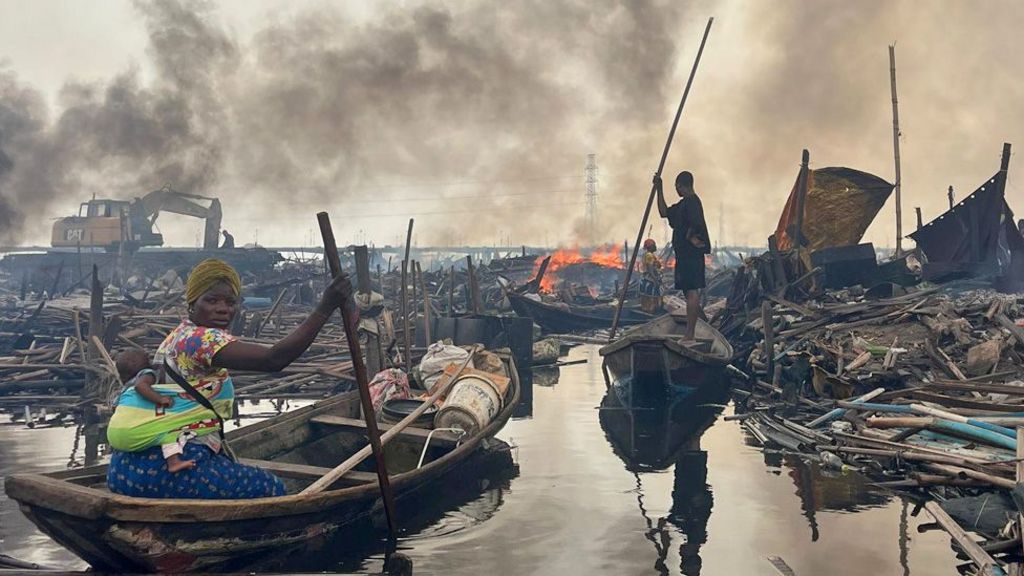
    In the heart of Lagos, Nigeria’s sprawling metropolis, a humanitarian crisis unfolds as thousands of residents face forced evictions from their waterfront homes in Makoko, the country’s largest informal settlement. The Lagos State government maintains these demolitions target structures built dangerously close to high-voltage power lines, citing critical health and safety concerns. However, community members and advocacy groups allege these actions represent systematic land appropriation for elite urban development projects.

    Anna Sobie, a mother of five, exemplifies the human toll of this operation. Her family now sleeps on the fractured wooden platform that once supported their home, exposed to the elements without adequate shelter. “We’re sleeping in an open space under the rain,” Sobie recounts, describing how excavators arrived with minimal warning while her family was inside their home.

    The demolitions, which began two days before Christmas, have reportedly displaced over 10,000 residents and destroyed more than 3,000 structures including homes, schools, clinics, and churches according to a coalition of ten non-governmental organizations. These groups document alarming tactics including the use of armed security personnel, bulldozers, and alleged arson attacks on occupied dwellings.

    Historical context reveals Makoko was established in the 19th century by fishing communities, with residents claiming customary land rights predating modern Lagos. The settlement’s population estimates range from 80,000 to 200,000 people, many of whom are low-income families and migrants seeking economic opportunities in Nigeria’s commercial capital.

    Governor Babajide Sanwo-Olu’s administration defends the actions as necessary urban management, emphasizing the proximity of structures to electrical infrastructure that poses lethal risks. Special Adviser on Urban Development Olajide Abiodun Babatunde stated: “No responsible government anywhere in the world can allow people to live directly under high-tension cables or obstruct vital waterways.”

    The government has promised financial compensation to affected families but has not provided alternative accommodation. This response has failed to satisfy residents like Elizabeth Kakisiwe, who returned from market to find her home demolished and possessions destroyed. “When rain fell days later, we were drenched,” she describes. “At night, we sit in the cold.”

    Tensions escalated recently when police deployed tear gas against more than 1,000 protesters marching toward the state legislature, resulting in injuries and alleged fatalities. Community leaders report five deaths, including children, from tear gas exposure during earlier demolition operations—claims the government says it will investigate.

    Urban development experts note this conflict occurs against Lagos’s severe housing deficit, which has grown from 2.95 million units in 2016 to 3.4 million in 2025 despite increased construction. The city’s rapid population growth and escalating costs have pushed more residents into informal settlements, creating recurring clashes between urban development goals and community rights.

    As excavators continue their work along the lagoon, displaced residents salvage firewood from debris while children repair fishing nets amid the destruction. The remaining structures stand as fragile testaments to a community fighting to preserve its existence against the pressures of modern urban development.

  • Envoy calls on US to encourage more youth exchanges

    Envoy calls on US to encourage more youth exchanges

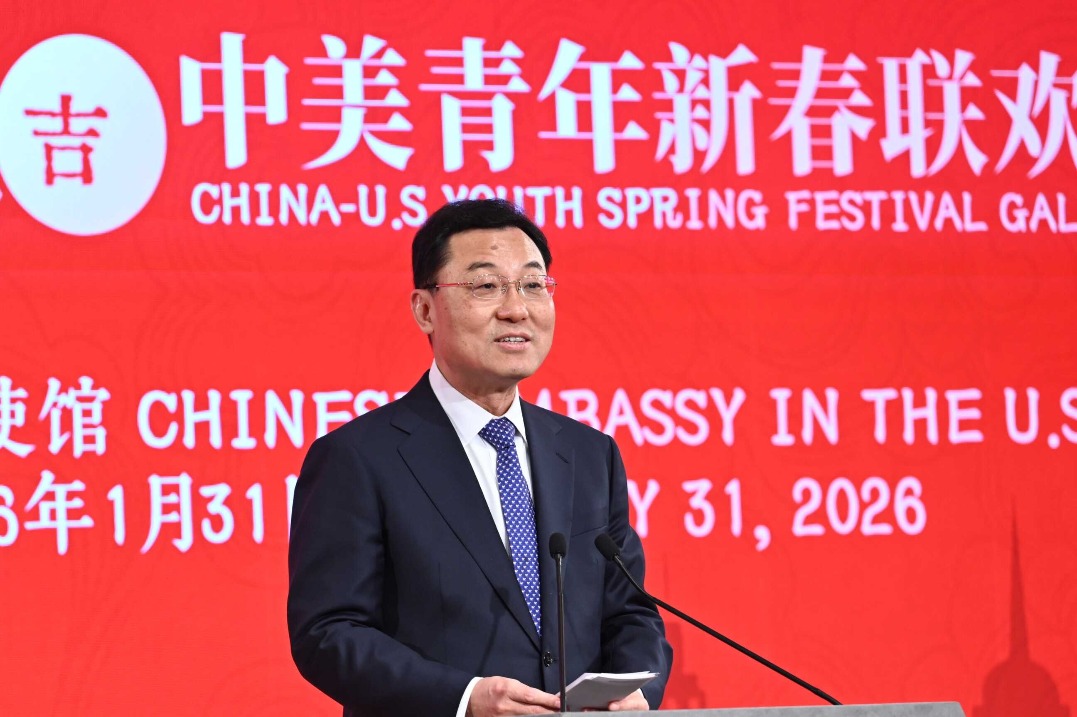
    WASHINGTON – China’s ambassador to the United States has issued a compelling appeal for strengthened educational and cultural bridges between the two nations, emphasizing youth exchanges as fundamental to stabilizing the world’s most crucial bilateral relationship. Ambassador Xie Feng delivered his remarks during the 2026 China-US Youth Spring Festival Gala at the Chinese embassy, where he highlighted the transformative impact of intercultural engagement.

  • Bill and Hillary Clinton to testify to congressional Epstein probe

    Bill and Hillary Clinton to testify to congressional Epstein probe

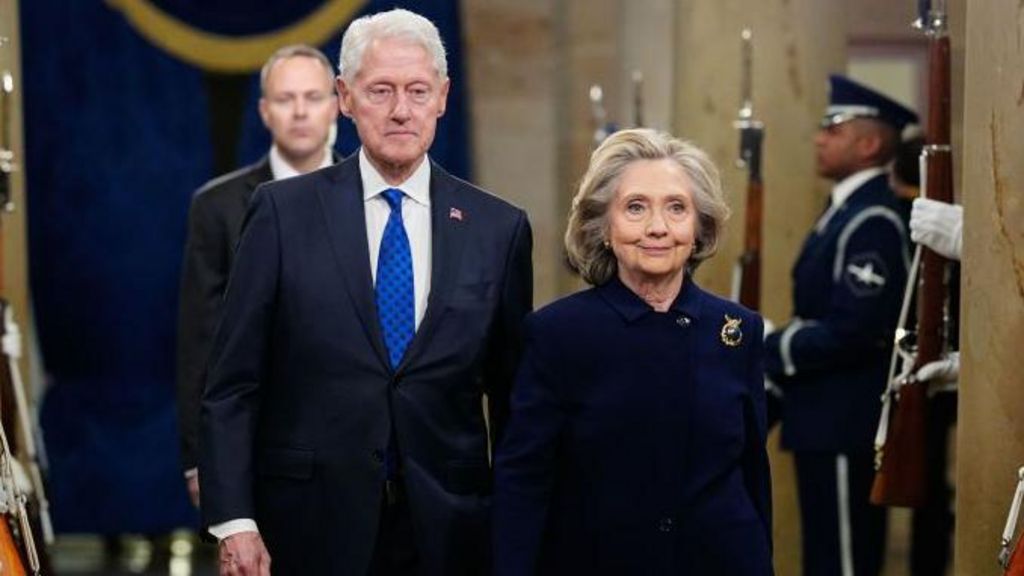
    In a significant reversal, former U.S. President Bill Clinton and former Secretary of State Hillary Clinton have consented to provide testimony before Congress regarding the Jeffrey Epstein investigation. This development follows months of legal resistance that nearly culminated in criminal contempt proceedings.

    The announcement came via social media from Bill Clinton’s deputy chief of staff, who stated unequivocally: “The former President and former Secretary of State will be there.” This commitment arrives just days before the Republican-controlled House of Representatives was scheduled to vote on holding the Clintons in criminal contempt for their prolonged avoidance of congressional subpoenas.

    The Republican-led House Oversight Committee had advanced the contempt measure in late January with bipartisan support, signaling growing impatience with the Clintons’ reluctance to cooperate. Committee Chairman James Comer emphasized in an official statement that this action demonstrated that “no-one is above the law” when it comes to congressional investigations.

    While photographic evidence released by the Department of Justice places Bill Clinton at Epstein’s properties, including images showing the former president swimming in a pool and relaxing in what appears to be a hot tub, Clinton has consistently denied any knowledge of Epstein’s criminal activities or any personal wrongdoing. Clinton’s spokesperson, Angel Ureña, previously characterized these images as decades old and emphasized that Clinton had severed ties with Epstein long before his sex crimes became public knowledge.

    Notably, no survivors of Epstein’s abuse have accused Bill Clinton of misconduct, and the Clintons’ legal team had previously argued that the congressional subpoenas were “unenforceable,” maintaining they had already provided all relevant information available to them about Epstein.

    The testimony commitment marks a critical juncture in one of the most politically charged investigations in recent memory, potentially shedding new light on the extent of Epstein’s network and its connections to high-profile figures.

  • The yachting industry searches for alternatives to teak

    The yachting industry searches for alternatives to teak

    The global luxury yacht industry is undergoing a significant transformation as it confronts the ethical and legal implications of using Myanmar teak, a prized tropical hardwood now largely prohibited in Western markets. This shift follows high-profile cases involving superyachts belonging to tech billionaires, including Jeff Bezos’s $500 million vessel Koru, built by Netherlands-based Oceanco. Both Oceanco and UK-based Sunseeker faced substantial fines in late 2024 for using this sanctioned timber, which they described as unintentional breaches of due diligence.

    Myanmar teak, renowned for its rot resistance, density, and aesthetic appeal, has long been the standard for high-end yacht decking and interiors. However, its harvest from old-growth forests is controlled by the country’s military-linked sector, leading to international trade sanctions following the 2021 coup. These sanctions, building on existing restrictions, have made imports into the UK, EU, and US illegal.

    The exhaustion of pre-sanction stockpiles and increasing regulatory scrutiny are now accelerating the adoption of alternatives. The industry is exploring a range of innovative materials, including thermally-modified woods, fully synthetic composites, and engineered teak laminates. Major players like Sunreef Yachts, based in Poland and Dubai, have announced a complete transition away from teak. The company now utilizes thermally-modified woods that not only mimic teak’s appearance but offer superior thermal performance, keeping decks cooler and reducing cabin air conditioning needs.

    New products like Tesumo, developed through a collaboration between the University of Göttingen and German shipyard Lürssen, are gaining traction. This material uses a fast-growing African hardwood that undergoes heat treatment and resin impregnation. It has already been installed on high-profile superyachts, including one linked to Google co-founder Sergey Brin.

    Despite these advances, challenges remain. Plantation-grown teak is often viewed as inferior due to shorter, narrower boards and inconsistent quality. While some smaller builders, like the UK’s Jeremy Rogers, continue to source from certified sustainable plantations in Java, the industry consensus is shifting. The driving force is a combination of regulatory pressure, supply chain sustainability concerns, and a growing recognition that modern alternatives can meet the exacting standards of the world’s most discerning yacht owners.

  • Door is open to customs union talks with UK, EU says

    Door is open to customs union talks with UK, EU says

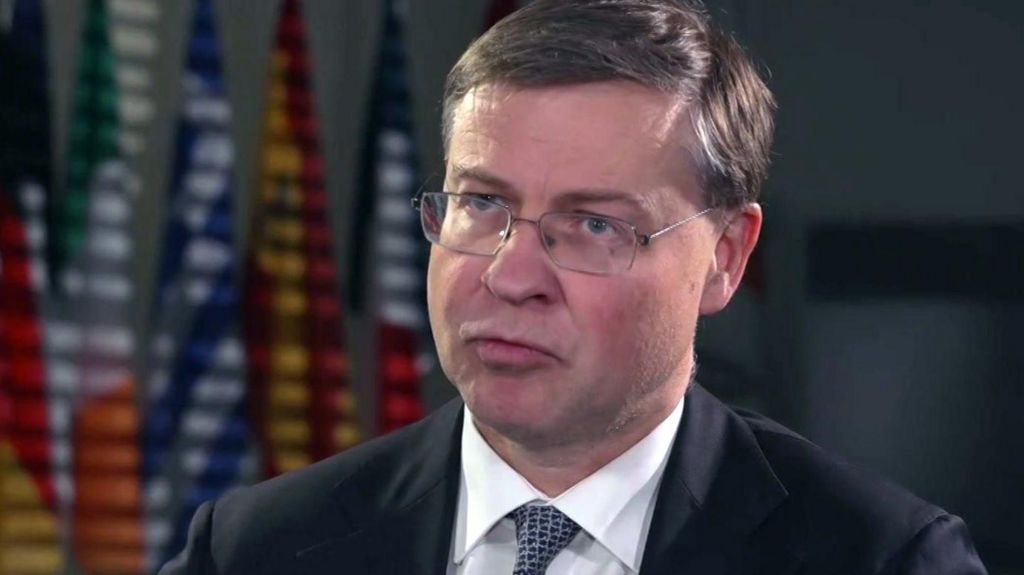
    In a significant diplomatic development, European Commissioner for Finance Valdis Dombrovskis has revealed the European Union’s willingness to explore enhanced trade relations with the United Kingdom, including potential discussions about a customs union arrangement. The announcement came following high-level talks with Chancellor Rachel Reeves and cabinet ministers in London on Monday.

    The Latvian commissioner, speaking exclusively to the BBC, emphasized Brussels’ “open-minded” approach to future cooperation, stating the bloc remains “ready to engage” should Britain seek closer economic integration. This position represents the most substantial indication yet of EU receptiveness to re-evaluating post-Brexit relations amid growing global instability.

    Dombrovskis outlined several areas of potential collaboration, notably suggesting that Britain and the EU could eliminate “most” food checks between territories if the UK aligns with EU sanitary and phytosanitary standards. Additionally, he confirmed advanced negotiations regarding a youth mobility scheme and expressed EU openness to revisiting Britain’s participation in the €150 billion SAFE defense loans program, despite previous negotiations collapsing in November.

    The meeting, which included European Commissioner for Trade Maroš Šefčovič alongside British ministers Peter Kyle and Nick Thomas Symonds, established a new diplomatic forum dubbed the “Quint” by officials. This group aims to coordinate responses to rapidly changing global trade and economic conditions through regular consultations.

    Chancellor Reeves articulated the pressing need for strengthened UK-EU cooperation, warning that “we are sliding towards a world where the rules are less clear.” She emphasized shared values and objectives between Britain and the EU regarding economic policy, trade, and security matters.

    The commissioner’s comments arrive amidst mounting pressure within the Labour party to reconsider customs union arrangements, despite the party’s manifesto explicitly ruling out rejoining either the EU customs union or single market. Justice Secretary David Lammy has previously advocated that such arrangements could stimulate economic growth.

    Dombrovskis acknowledged that single market access would require accepting freedom of movement principles, making such a scenario unlikely. However, he stressed the EU’s commitment to pragmatic cooperation where mutual interests align, particularly given recent global trade tensions that saw the European Commission threaten retaliatory tariffs against the United States before reaching a diplomatic resolution.