作者: admin

  • UAE’s G42-led $1-billion consortium to build Vietnam’s AI and cloud capabilities

    UAE’s G42-led $1-billion consortium to build Vietnam’s AI and cloud capabilities

    A landmark $1 billion investment initiative, spearheaded by Abu Dhabi’s artificial intelligence conglomerate G42 in partnership with Vietnam’s FPT Corporation and Viet Thai Group, is set to establish sovereign AI capabilities and advanced cloud infrastructure throughout Vietnam. This strategic collaboration represents a transformative step toward realizing Vietnam’s national ambition of evolving into an AI-native society and a premier artificial intelligence hub within Southeast Asia.

    The comprehensive agreement outlines the deployment of substantial cloud computing capacity across three distinct data center locations within Vietnam. This infrastructure will deliver high-performance AI and cloud services tailored for both public sector governmental workloads and private enterprise applications. Extending beyond technological infrastructure, the partnership incorporates ambitious national programs focused on AI skill development and workforce training, designed to accelerate AI adoption across government institutions, industrial sectors, and academic environments.

    The consortium is now advancing to subsequent implementation phases, which include finalizing operational distribution between public and private sector requirements, securing necessary regulatory approvals for public cloud adoption, and commencing physical site development for data center construction. The initiative promises significant economic impact through direct infrastructure investment, substantial job creation, and the strategic positioning of Vietnam as an emerging technology epicenter for the region.

    FPT Corporation, Vietnam’s predominant IT services provider, contributes extensive technical expertise and localized market knowledge. Viet Thai Group, a major consumer-focused conglomerate, provides strategic capabilities and cross-sector insights. G42, the Abu Dhabi-based AI holding group, brings world-class artificial intelligence infrastructure capabilities to the partnership.

    Ali Al Amine, Chief Commercial Officer at G42 International, characterized the agreement as representing “a new model for national AI transformation—one built on sovereignty, partnership, and purpose.” He expressed gratitude toward the Vietnamese government for their visionary leadership and acknowledged partner organizations for their commitment to developing infrastructure that enables Vietnam to harness AI’s full potential while maintaining critical data sovereignty and digital independence.

    The initiative aligns with G42’s previously stated ambitious objectives, including CEO Peng Xiao’s announcement during the World Economic Forum regarding plans to develop one billion AI agents to boost economic productivity.

    Dr. Truong Gia Binh, Chairman of FPT Corporation, emphasized Vietnam’s recognition that advancement in semiconductors, AI, cloud computing, big data, and cybersecurity requires strategic international alliances built on reliability and trust. David Thai, Chairman and CEO of Viet Thai Group, noted that this initiative positions Vietnam at the forefront of AI-driven economic development in Asia while supporting the continued growth of Vietnam’s middle class.

  • Dubai gold prices rise above Dh600 per gram again as dollar weakens

    Dubai gold prices rise above Dh600 per gram again as dollar weakens

    Dubai’s gold market witnessed a significant surge at the week’s opening, with 24K gold climbing to Dh603.75 per gram as the US dollar exhibited weakness. This resurgence marks another breach of the psychologically important Dh600 threshold, a level that has been tested multiple times in recent months before profit-taking activities drove prices downward.

    The broader spectrum of gold varieties experienced corresponding gains, with 22K, 21K, 18K, and 14K gold reaching Dh559.25, Dh536.25, Dh459.5, and Dh358.5 per gram respectively. This upward movement mirrored global trends where spot gold exceeded $5,000 per ounce, registering a 1.25 percent increase at Monday’s market opening.

    Market analysts point to sustained volatility in gold trading, with prices maintaining proximity to levels observed in recent sessions. Joseph Dahrieh, Managing Director at Tickmill, noted that while markets might gradually stabilize following previous sell-offs, they remain highly responsive to new economic data and geopolitical developments. “The latter could fuel demand for safe-haven assets,” Dahrieh emphasized.

    Geopolitical tensions continue to play a crucial role in gold’s performance. Ongoing US-Iran negotiations in the Middle East present both diplomatic opportunities and risks, with tense rhetoric and military incidents maintaining market caution. Simultaneously, continued hostilities in Eastern Europe despite peace talks contribute to a persistent geopolitical risk premium that supports gold prices.

    Institutional investment flows have emerged as another critical support pillar. Gold-backed ETFs recorded substantial inflows of 44.8 tonnes in the week ending January 30, representing the strongest weekly influx since mid-October. Asian markets led this demand, effectively counterbalancing modest European outflows and reinforcing the metal’s broader bullish structure.

    The current price environment has already impacted consumer behavior, with UAE gold jewellery demand declining approximately 15% in 2025 as buyers increasingly turn to diamond alternatives amid record-high gold prices.

  • Animals dying in Kenya as drought conditions leave many hungry

    Animals dying in Kenya as drought conditions leave many hungry

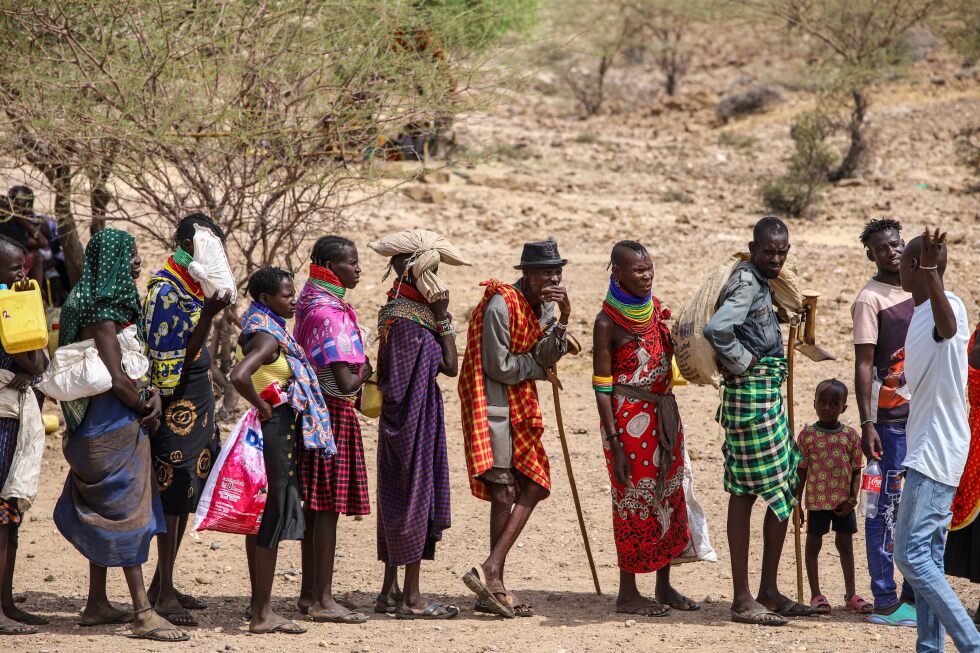
    A severe drought crisis is gripping East Africa, with Kenya experiencing one of its most devastating dry periods in decades. According to United Nations assessments, more than 2 million people are confronting acute hunger, with pastoral communities in northeastern regions bearing the brunt of the catastrophe.

    The humanitarian emergency extends across national borders, affecting populations in Somalia, Tanzania, and Uganda who face similar weather patterns and critical water shortages. The World Health Organization has documented alarming conditions throughout the region, with the October-December wet season ranking among the driest ever recorded. Eastern Kenya specifically has endured its most arid conditions during this period since 1981.

    Climate scientists identify the warming Indian Ocean as a primary driver of these extreme weather patterns. While contributing to more destructive tropical storms in some areas, it has simultaneously extended drought duration and intensity across the Horn of Africa. The region has now suffered four consecutive failed wet seasons, creating conditions reminiscent of the 2020-2023 period when millions of livestock perished across Kenya, Ethiopia, and Somalia.

    The National Drought Management Authority reports ten Kenyan counties currently experiencing drought conditions, with Mandera county bordering Somalia reaching critical ‘alarm’ classification. This designation indicates severe water shortages have resulted in widespread livestock mortality and rising cases of child wasting syndrome.

    In Somalia, the situation appears particularly dire. Islamic Relief assessments document shocking food shortages as families abandon their homes seeking refuge. Over 3 million people have become internally displaced, with approximately 70% of those in Baidoa city surviving on one meal daily or less. Aid organizations report visibly malnourished children in camps, underscoring the urgent need for expanded humanitarian intervention.

    Despite contributing merely 3-4% of global emissions, Africa remains disproportionately vulnerable to climate change impacts. The continent’s limited capacity to prepare for natural disasters exacerbates the crisis, particularly for communities dependent on rain-fed agriculture who face existential threats from increasingly extreme weather patterns.

  • Italy beats Japan to reach Olympic women’s hockey quarterfinals for the first time

    Italy beats Japan to reach Olympic women’s hockey quarterfinals for the first time

    In a landmark achievement for Italian ice hockey, the host nation secured its inaugural Olympic quarterfinal placement in the women’s tournament following a hard-fought 3-2 victory against Japan on Monday. This historic accomplishment marks a significant milestone for Italy’s hockey program, which had previously endured a winless campaign during its sole Olympic appearance at the 2006 Turin Games.

    The Italian squad, currently standing at 2-1 in Group B competition, demonstrated remarkable resilience throughout the contest. Matilde Fantin emerged as the offensive catalyst, netting two consecutive goals during the opening period to establish Italy’s commanding 2-0 advantage. Despite Japan’s determined response through Rui Ukita in the second period, Italy maintained composure with Kristin Della Rovere restoring the two-goal margin in the final frame.

    Japan’s persistent offensive pressure culminated in Akane Shiga’s late third-period goal, which required extensive video review confirmation before narrowing Italy’s lead. The tense final moments culminated in an emotional on-ice celebration as Italian players swarmed goaltender Gabriella Durante following the final buzzer.

    Durante, a Canada-born netminder who recorded 27 crucial saves, expressed profound emotional significance following the victory. “This represents the collective realization of our shared dream,” Durante stated. “We hope this achievement inspires increased participation among young female athletes nationwide and accelerates hockey’s development throughout Italy.”

    The Italian team’s success stems from exceptional defensive dedication and collective sacrifice, with Durante emphasizing that “every player demonstrated willingness to endure physical discomfort for our hockey family.” Italy concludes group stage competition against Germany while other tournament fixtures feature the United States versus Switzerland and Canada facing Czechia.

  • Japan’s TEPCO reactivates Kashiwazaki-Kariwa nuclear power plant

    Japan’s TEPCO reactivates Kashiwazaki-Kariwa nuclear power plant

    In a significant development for Japan’s energy sector, Tokyo Electric Power Company (TEPCO) has successfully reactivated a reactor at the Kashiwazaki-Kariwa nuclear power plant in Niigata Prefecture. This restart on Monday, February 9, 2026, marks a pivotal moment for Japan’s nuclear industry, representing the first operational resumption at this facility since the catastrophic 2011 Fukushima disaster.

    The reactivation follows a brief operational suspension caused by an alarm system malfunction in late January, which temporarily halted the carefully planned restart process. The Kashiwazaki-Kariwa plant, recognized as one of the world’s largest nuclear power stations by output capacity, now enters a new operational phase under enhanced safety protocols and regulatory oversight.

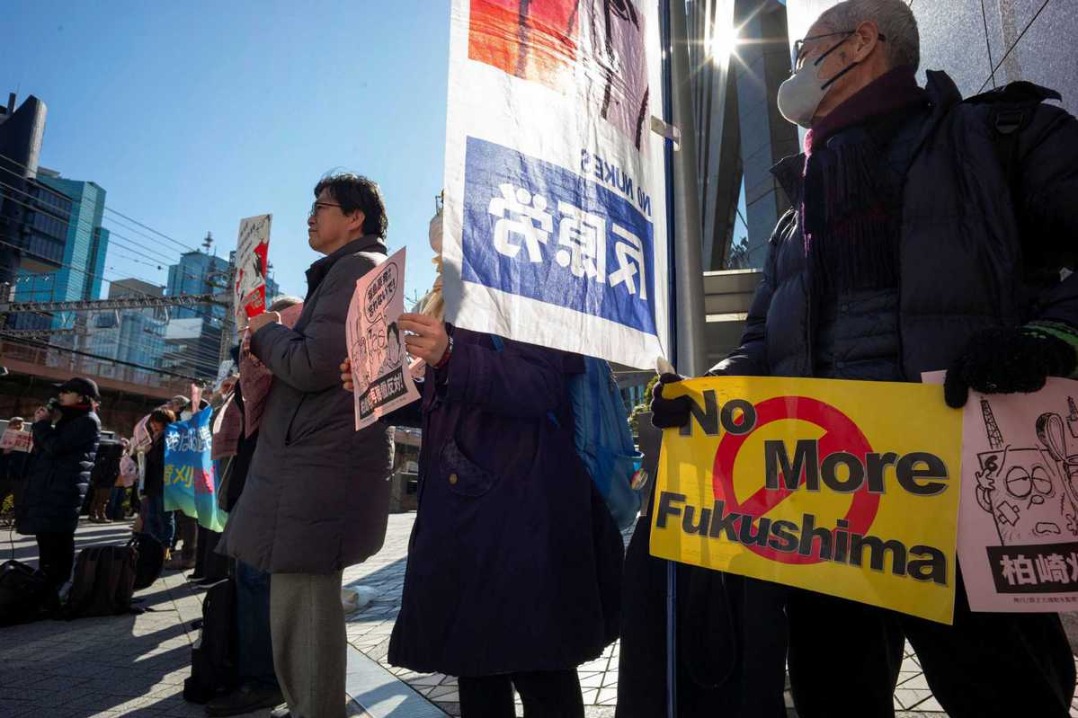
    Concurrent with the reactivation, public demonstrations emerged outside TEPCO’s Tokyo headquarters, where protesters voiced strong opposition to the nuclear restart. These demonstrations highlight the persistent societal divisions regarding Japan’s nuclear energy policy, reflecting ongoing concerns about safety and disaster preparedness more than a decade after the Fukushima incident.

    The restart occurs within a complex energy landscape where Japan continues to balance its carbon reduction commitments against public safety concerns. This development represents a critical test case for Japan’s revised nuclear regulatory framework and could influence future energy policy decisions across the nation.

  • My China chapter: Five years that enriched a 30-year UN journey

    My China chapter: Five years that enriched a 30-year UN journey

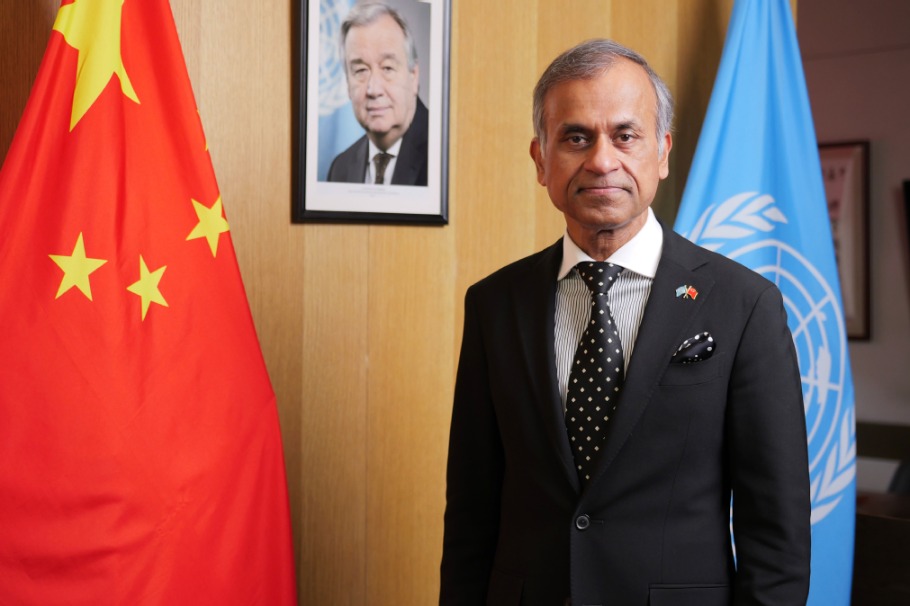
    In a comprehensive reflection on his five-year tenure as United Nations Resident Coordinator in China, Siddharth Chatterjee reveals how the nation’s development model redefined his perspective on global progress. Assuming office in January 2021 amidst worldwide challenges, Chatterjee brought three decades of UN experience spanning conflict zones from Bosnia to Africa through his work with multiple UN agencies.

    China’s distinctive approach to long-term planning and substantial investment in human capital demonstrated how rapid transformation becomes achievable when institutions, markets, and communities unite behind shared ambitions. The coordinator witnessed firsthand China’s exponential advancement in critical future-shaping fields including artificial intelligence, quantum computing, semiconductors, fintech, and clean energy—innovations that extend beyond economic growth to address global challenges like hunger, inequality, and climate change.

    Rather than merely delivering development, the UN’s role in China has evolved into a multifaceted partnership involving coordination, advisory services, and pilot initiatives. Chatterjee’s leadership focused on aligning UN efforts with national priorities while maintaining the organization’s core values, collaborating with government ministries, provincial authorities, academic institutions, youth organizations, private sector entities, and civil society to translate global commitments—particularly the Sustainable Development Goals and 2030 Agenda—into concrete cooperation.

    China’s development narrative possesses significant global resonance, especially when numerous SDG targets remain off-track worldwide. Throughout 2024 and 2025, China hosted substantive dialogues on sustainable finance, digital cooperation, and intergenerational equity in preparation for the UN Summit of the Future. These discussions transcended theoretical exercise, seeking practical connections between climate action, health initiatives, and artificial intelligence while fostering more inclusive systems through genuine partnership.

    The coordinator expressed particular admiration for China’s expanding contribution to multilateral cooperation through poverty reduction, food security, green transition efforts, and strengthened South-South exchanges. This practical, results-oriented partnership approach reflects China’s broader commitment to global solidarity amid increasing uncertainty and fragmented international pathways.

    Looking forward, Chatterjee identifies three critical transitions where China’s path converges with global needs: the green transition through carbon peaking and neutrality goals that influence worldwide technology costs and supply chains; demographic changes creating opportunities in the ‘silver economy’ and healthy aging; and digital transformation requiring governance that centers human welfare while ensuring equitable distribution of opportunities.

    Personally, Chatterjee’s China chapter included a health journey incorporating traditional practices that reinforced qualities essential for public service—resilience and focus. He concludes with a message to younger generations that potential knows no boundaries, emphasizing that pragmatic partnership must define the next chapter of UN-China cooperation both domestically and internationally.

  • Banned kite-flying festival Basant returns to Pakistan with new safety measures

    Banned kite-flying festival Basant returns to Pakistan with new safety measures

    After nearly two decades of prohibition, Lahore’s skies once again erupted in a vibrant tapestry of color as Pakistan’s renowned Basant kite-flying festival returned under stringent new safety measures. The three-day spring celebration, traditionally marking seasonal transition in Punjab province, resumed operations this weekend following its 2007 ban imposed after multiple fatalities caused by glass-coated kite strings and celebratory gunfire.

    The revival sparked widespread enthusiasm across the nation, with participants reporting unprecedented demand for kites and flying equipment. “The entire province, indeed all of Pakistan, is electrified with excitement. Finding kites and strings has become challenging due to overwhelming sales,” remarked Shahzaib, a festival participant, amid background drum celebrations.

    Authorities implemented comprehensive safety protocols including QR-code tracking systems for kite sales, confiscation of prohibited materials, and city-wide police deployment to enforce regulations. Hospitals remained on high alert for potential injuries, while motorcycle riders adopted protective rods to intercept dangerous strings before contact.

    Cultural activists and rights groups had long criticized the original ban, maintaining that inadequate enforcement rather than the festival itself caused previous tragedies. The economic impact proved significant, with kite maker Tariq revealing he sold 20,000-25,000 kites following the ban’s lifting, revitalizing workshops that had remained dormant for years.

    The celebration proceeded despite security concerns following a recent suicide bombing in Islamabad that killed 31 people, which prompted cancellation of some official events. The festival’s centerpiece remained kite-fighting competitions, where participants maneuvered kites to sever opponents’ strings amid cheers from rooftop spectators.

    Veteran string maker Chand Ustand, 51, expressed hope for the tradition’s sustained revival: “Purchasing and flying kites shouldn’t be temporary. Continued participation supports our livelihoods while preserving cultural heritage.”

  • Video: Bomb threats sent to 9 Delhi schools; probe underway

    Video: Bomb threats sent to 9 Delhi schools; probe underway

    A coordinated wave of bomb threats struck nine educational institutions across India’s capital on Monday morning, triggering massive security responses and widespread alarm. Between 8:30 AM and 9:00 AM local time, multiple schools in Delhi received threatening emails, prompting immediate deployment of Delhi Police, fire department teams, and specialized bomb disposal squads to all affected locations.

    The targeted institutions spanned various districts of the capital, including three schools in South Delhi—Air Force School on Lodhi Road, KR Mangalam School, and The Indian School in Sadiq Nagar. Additional schools receiving threats were identified as Loreto Convent School in Delhi Cantt, Cambridge School in Srinivasanpuri, Venkateshwar School in Rohini, Cambridge School in New Friends Colony, CM School in Rohini, DTA School in INA, and Bal Bharati School in Rohini.

    Security personnel conducted thorough sweeps of all premises while authorities maintained high alert status. This incident follows a similar pattern of threats that occurred on January 28 in the Union Territory of Chandigarh, where 30 schools received bomb threat emails. In that previous case, comprehensive inspections revealed no suspicious materials, but authorities implemented enhanced security measures and filed formal charges under the Bharatiya Nyaya Sanhita and Information Technology Act.

    The recurrence of such threats within weeks has raised serious concerns about the security of educational institutions and the potential psychological impact on students and staff. Investigations are ongoing to determine the origin and credibility of the threats, with authorities working to identify those responsible for disrupting educational activities and causing public safety concerns.

  • Maxwell won’t answer questions from Congress, lawyer says

    Maxwell won’t answer questions from Congress, lawyer says

    Convicted sex trafficker Ghislaine Maxwell will exercise her constitutional right against self-incrimination during a closed-door deposition with the U.S. House Oversight Committee on Monday, according to her legal representative. The deposition will be conducted virtually from the federal prison in Texas where Maxwell is serving a 20-year sentence for her role in Jeffrey Epstein’s exploitation network.

    Attorney David Oscar Markus confirmed to BBC that his client would “take the 5th,” referencing the Fifth Amendment protection that allows individuals to avoid answering questions that might implicate them in criminal activity. Instead of responding to committee inquiries, Maxwell will deliver a prepared statement at the commencement of the proceedings, as disclosed by Democratic Representative Ro Khanna.

    The congressional investigation seeks to explore several critical aspects of the Epstein case, including Maxwell’s previous court filing that referenced “four named co-conspirators” and 25 unindicted individuals connected to the Epstein investigation. Lawmakers also intend to question Maxwell about her social connections with former President Donald Trump and whether presidential pardons were ever discussed with her defense team.

    This deposition marks a departure from Maxwell’s previous cooperation with federal investigators. Representative Khanna noted the inconsistency with her July meeting with Deputy Attorney General Todd Blanche, where she reportedly answered questions about similar subject matter without invoking constitutional protections. During that encounter, Maxwell denied witnessing any inappropriate conduct by Trump or former President Bill Clinton and disputed the existence of Epstein’s rumored “client list.

    The long-awaited testimony coincides with the Justice Department’s release of millions of previously confidential documents from its Epstein investigation, compelled by congressional legislation passed last year. Beginning Monday, members of Congress will have access to nearly three million unredacted pages at Justice Department facilities.

    Epstein survivor advocates continue to push for greater transparency, releasing a video statement on Sunday calling for fuller disclosure of documents and reduced redactions. Federal officials have consistently denied allegations of concealing information or protecting powerful individuals connected to the case.

  • Epstein survivors call for full release of files in video

    Epstein survivors call for full release of files in video

    Survivors of Jeffrey Epstein’s sexual exploitation network have launched a powerful public appeal through a striking advertisement released on Super Bowl Sunday. The advocacy group World Without Exploitation produced the 40-second video featuring survivors holding childhood photographs with black redaction bars covering their mouths.

    The advertisement directly challenges the U.S. Department of Justice’s implementation of the Epstein Files Transparency Act, which was signed into law on November 19, 2025. The legislation mandated full public disclosure of documents by December 2023, yet approximately 3 million files remain unreleased or heavily redacted according to the advocacy group.

    In the emotionally charged video, survivors confront viewers with the statement: “we all deserve the truth” while collectively declaring “we’re standing together.” The campaign specifically calls upon Attorney General Pam Bondi to authorize complete transparency, concluding with an urgent plea: “IT’S TIME FOR THE TRUTH.”

    The Justice Department, represented by Deputy Attorney General Todd Blanche, maintains that the January 30th document release “marks the end of a very comprehensive document identification and review process.” Blanche has explicitly denied allegations that officials are deliberately concealing information or protecting additional individuals from prosecution.

    Despite its strategic timing, the advertisement did not air during the actual Super Bowl broadcast due to the prohibitive cost of approximately $8 million for a 30-second commercial slot. Instead, the group distributed the video through alternative channels to maximize awareness.

    The ongoing document releases have already revealed Epstein’s extensive connections with numerous prominent figures, though the delayed transparency continues to generate significant public scrutiny. Meanwhile, Ghislaine Maxwell, Epstein’s incarcerated associate, is scheduled to testify before a congressional committee investigating the government’s handling of the case, though she may invoke constitutional protections against self-incrimination.

    Epstein died in prison in 2019 while awaiting trial on sex trafficking charges, with officials ruling his death a suicide.