作者: admin

  • Trans-Atlantic tensions in focus as annual Munich security gathering opens

    Trans-Atlantic tensions in focus as annual Munich security gathering opens

    MUNICH — The prestigious Munich Security Conference commenced Friday amid heightened tensions in trans-Atlantic relations, assembling an impressive roster of global security leaders including U.S. Secretary of State Marco Rubio, numerous European Union officials, and international representatives from Ukraine and China.

    German Chancellor Friedrich Merz inaugurated the three-day event with an opening address, joined by fifteen EU heads of state or government. The conference anticipates participation from Ukrainian President Volodymyr Zelenskyy, Chinese Foreign Minister Wang Yi, and a substantial congressional delegation from the United States.

    Conference chairman Wolfgang Ischinger highlighted the gathering’s critical timing, noting that trans-Atlantic relations—the foundational element since the conference’s establishment in 1963—currently face “a significant crisis of confidence and credibility.” Ischinger expressed particular appreciation for the strong American engagement despite these challenges.

    The backdrop for this year’s meeting includes lingering tensions from last year’s conference, where then-Vice President JD Vance delivered unexpectedly critical remarks to European leaders regarding democratic standards on the continent. Subsequent months witnessed several controversial actions by the Trump administration targeting allies, including a recently retracted threat to impose tariffs on multiple European nations in pursuit of U.S. control over Greenland—a semi-autonomous territory of NATO ally Denmark.

    While Secretary Rubio’s delegation brings hopes for a less confrontational approach focused on conventional security issues, analysts question whether philosophical alignment with previous administration policies will enable meaningful reconciliation. Claudia Major, senior vice president at the German Marshall Fund in Berlin, emphasized that “Greenland has been a fundamental change for Europeans. That one NATO ally threatens another NATO ally has deeply affected European trust in the trans-Atlantic relationship.”

  • Beijing upset as Dutch court blocks Wingtech bid to recontrol Nexperia

    Beijing upset as Dutch court blocks Wingtech bid to recontrol Nexperia

    China has formally called upon the Dutch government to proactively resolve the escalating semiconductor dispute involving Nexperia, following a Dutch court’s decision to investigate alleged mismanagement by Chinese parent company Wingtech Technology. The diplomatic confrontation highlights growing tensions in global chip supply chains.

    Chinese Foreign Ministry spokesperson Lin Jian asserted Thursday that “the root cause of the Nexperia issue is the improper administrative intervention of the Dutch side in business operations.” He emphasized that Netherlands must “create enabling conditions for companies to resolve internal disputes” while maintaining stability in global semiconductor supply chains. Beijing pledged continued support for Chinese companies protecting their lawful rights and interests.

    The diplomatic demand follows the Enterprise Chamber of the Amsterdam Court of Appeal’s decision to investigate Nexperia’s corporate governance while maintaining the suspension of CEO Zhang Xuezheng, Wingtech’s founder. The court identified multiple governance concerns including conflicts of interest, unilateral strategy changes without internal consultation, violation of agreements with Dutch authorities, and restriction of European managers’ powers.

    Financial repercussions have already emerged, with China Chengxin International Credit Rating downgrading Wingtech’s long-term credit rating from AA- to A with negative outlook, citing significant operational and financial impacts from losing control over Nexperia.

    Wingtech expressed “profound disappointment and strong dissatisfaction” with the Dutch court’s ruling, calling it “self-contradictory and logically flawed.” The company argued the current interim management cannot conduct effective investigations and instead demanded investigation into Nexperia’s interim management.

    The dispute originated in September 2025 when Washington tightened sanctions rules, prompting Dutch intervention under its Goods Availability Act. Although the Netherlands ended direct control in November, Zhang remains barred from leadership. Nexperia’s current interim leadership, including CEO Stefan Tilger, continues operations despite the challenges.

    Industry analysts suggest the hardened Dutch position reflects broader geopolitical alignments, with the new Dutch cabinet featuring several China-hawk officials including Trade Minister Sjoerd Sjoerdsma (sanctioned by China in 2021) and Infrastructure Minister Vincent Karremans (previously involved in Nexperia intervention).

    With Wingtech projecting massive 2025 losses of 9-13.5 billion yuan ($1.25-1.88 billion), the company has initiated legal proceedings that could lead to an $8 billion international arbitration case if not resolved by April 2026. Meanwhile, Nexperia China has begun supply chain restructuring, establishing Dongguan as its global headquarters and implementing data security measures in European operations.

  • Cross-Strait New Year vibes: Shared traditions, shared celebrations

    Cross-Strait New Year vibes: Shared traditions, shared celebrations

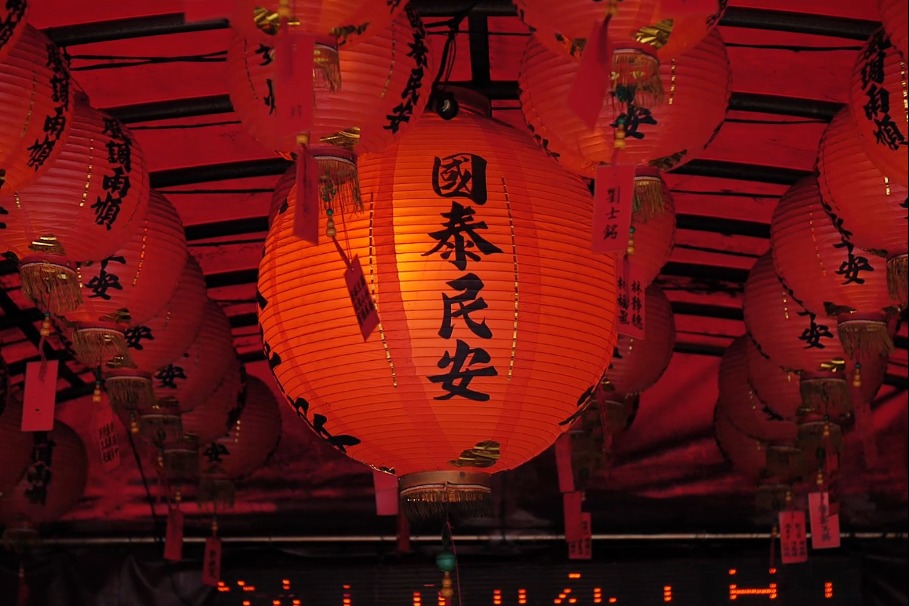
    In a vibrant display of cultural unity, residents from both sides of the Taiwan Strait recently converged in Fuzhou for a special Chinese New Year bazaar, demonstrating how traditional celebrations continue to bridge geographical and political divides. The event showcased the deep-rooted connections maintained through shared customs and festive practices that transcend boundaries.

    The gathering featured heartfelt exchanges of family stories and joyful celebratory moments, creating an atmosphere of warmth and mutual understanding. Participants engaged in various traditional activities that highlighted the common cultural heritage enjoyed across the Strait, emphasizing that the spirit of reunion remains powerful enough to overcome any physical distance.

    This cross-strait cultural exchange occurs alongside numerous other Spring Festival celebrations throughout China, including Beijing’s Dongcheng district decorations, the debut of 30 panda cubs born in 2025, and illuminated lantern festivals in Datong. These simultaneous celebrations demonstrate the widespread cultural significance of the Lunar New Year period throughout Chinese communities worldwide.

    The event in Fuzhou represents ongoing people-to-people connections that continue to flourish despite political complexities, serving as a reminder of the enduring cultural bonds that unite communities across the Strait through shared traditions and celebrations.

  • Mosque gunman wanted online fame. A muted court hearing shows how New Zealand has tried to curb that

    Mosque gunman wanted online fame. A muted court hearing shows how New Zealand has tried to curb that

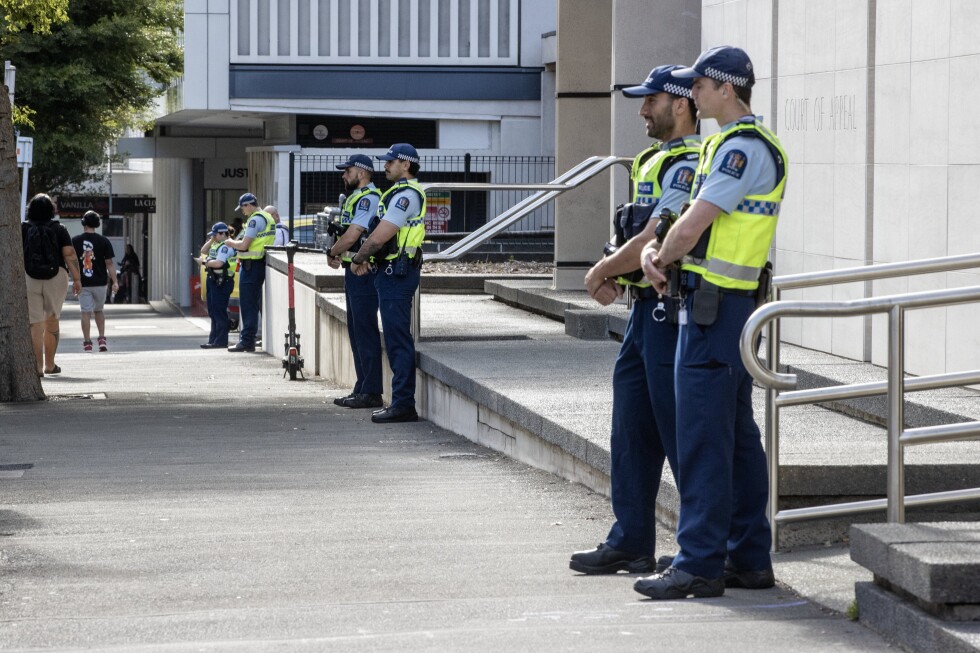
    WELLINGTON, New Zealand — New Zealand’s judicial system conducted a deliberately subdued hearing this week for the nation’s most notorious criminal, Brenton Tarrant, who sought to retract his guilty pleas for the 2019 Christchurch mosque massacres that claimed 51 Muslim worshippers’ lives.

    The Australian white supremacist’s appeal proceedings unfolded with remarkable restraint at the Court of Appeal in Wellington. Only nine journalists, nine lawyers, and essential court staff were present in the near-empty courtroom, with the public gallery deliberately kept vacant. This calculated minimalism reflects New Zealand’s systematic approach to denying Tarrant the platform and notoriety he previously sought through his racially motivated violence.

    Tarrant, 35, currently serving life imprisonment without parole, claimed through video conference from Auckland Prison that his 2020 guilty pleas to charges of terrorism, murder, and attempted murder were “irrational” admissions made during a “nervous breakdown” induced by his solitary confinement conditions.

    Crown lawyers Barnaby Hawes and Madeleine Laracy presented compelling counterarguments, emphasizing that multiple mental health experts had previously determined Tarrant fit to enter pleas. They characterized the defendant as “an unreliable witness” whose narrative should be “treated with caution.” The prosecution highlighted the overwhelming evidence against Tarrant, including his own livestreamed recording of the attacks, which made a guilty verdict inevitable regardless of trial proceedings.

    Notably absent from the weeklong hearing was any substantive discussion of Tarrant’s white supremacist ideology or the detailed motivations behind his attacks. This omission reflects New Zealand’s broader strategy of suppressing the dissemination of his hateful manifesto and violent imagery, which remain legally prohibited throughout the country.

    The judicial approach stands in stark contrast to other high-profile trials of racist murderers, such as Norway’s extensive coverage of Anders Breivik, whom Tarrant cited as an inspiration. New Zealand’s justice system has implemented measures to minimize public exposure to the shooter, with even news organizations practicing restrained reporting by limiting mentions of his name.

    Crown lawyers emphasized that continuing legal proceedings cause “immense distress” to survivors and victims’ families, hindering their healing process. A three-judge panel will deliver its decision within the coming months, with 90% of appeals court judgments typically issued within three months of hearing conclusion.

    If unsuccessful in revoking his guilty pleas, Tarrant’s case will return to the appeals court for a separate hearing challenging his life sentence without parole.

  • French coin found near Culloden may have been used to pay Jacobite

    French coin found near Culloden may have been used to pay Jacobite

    A significant historical artifact has been discovered by metal detectorist Ian Deveney on lands between Inverness and the Culloden Battlefield. The find—a French 4 sols coin dating back to the 1670s—potentially served as payment for soldiers who fought in the pivotal Battle of Culloden 280 years ago.

    Deveney, a Scottish history tour guide and member of the North Detectorists group, made the discovery earlier this month while surveying areas rich in Highland heritage. “I was near the end of the day and quite tired when I received this strong signal,” Deveney recounted. “Upon digging, I uncovered what I initially believed to be a medieval hammered coin, but after careful cleaning, I realized it was French currency from the 17th century.”

    The coin’s presence in the Scottish Highlands reveals fascinating historical connections. France provided financial support to the Jacobite cause during the 1745 uprising led by Charles Edward Stuart, better known as Bonnie Prince Charlie. This backing was partly strategic, intended to divert British military resources from continental conflicts.

    Historical records confirm that Jacobite fighters, particularly the Irish Piquets, Royal Ecossais, and FitzJames’s regiments, received payment in French currency. The Battle of Culloden, fought on April 16, 1746, marked the final pitched battle on British soil and resulted in the devastating defeat of the Jacobite forces, with approximately 1,600 casualties.

    The discovery has been reported to Treasure Trove Scotland, the organization responsible for determining whether archaeological finds should be allocated to museums. This finding adds to a series of recent historical discoveries at Culloden, including musket balls uncovered last October that archaeologists believe relate to the battle’s final actions.

    Deveney’s expertise in Scottish history provided crucial context for understanding the significance of the coin, offering tangible evidence of the international dimensions of the Jacobite uprising and its connections to European power dynamics of the period.

  • Investigation brings closure for long-lost family after WW2 Nazi kidnap

    Investigation brings closure for long-lost family after WW2 Nazi kidnap

    A seven-decade family mystery has been resolved through an extraordinary international investigation that pieced together the life of a Polish teenager kidnapped by Nazi forces during World War II. Jozef Domanski was just 14 years old when forcibly removed from his family in 1941 to work on a German farm under the Nazi occupation regime.

    Despite surviving the war, Domanski never returned to his homeland, creating a permanent separation from his mother and sister. For years following the conflict, he maintained sporadic correspondence from his new life in England, where he had settled across various locations including Worcestershire, Wolverhampton, and Essex. Domanski worked diligently for decades in a textiles factory, documenting his experiences through letters that became increasingly melancholic about his distance from family and homeland.

    The communication ceased abruptly in the 1980s, leaving relatives to assume his permanent disappearance. The truth remained hidden until 2012, when Domanski’s death in Wolverhampton triggered an investigation by the City Council, which enlisted professional heir hunters from Finders International to trace potential beneficiaries after no will was discovered.

    What followed was an unprecedented decade-long genealogical investigation spanning three countries. Benjamin Ratz of GEN SPZOO in Poland led the intricate research as chief probate researcher, working closely with Domanski’s sister before her passing. The breakthrough revealed that Domanski had suffered a workplace accident that left him unable to write, explaining the sudden communication halt. Researchers also discovered that Domanski had consciously remained unmarried and childless throughout his life.

    The investigation uncovered that Domanski never attempted to return to Poland due to legitimate fears of endangering his family’s safety—concerned that his wartime experiences might lead to accusations of espionage during the Communist era. The emotional resolution came when researchers successfully delivered Domanski’s estate, valued at over £100,000, to his surviving relatives. His nephew Krzysztof Sadowski emphasized the profound emotional significance of this closure, noting that his grandmother had died heartbroken over her son’s disappearance. The family plans to place Domanski’s photograph on his parents’ graves, finally providing the connection that was lost for generations.

  • Who is Tarique Rahman, set to become Bangladesh’s next PM?

    Who is Tarique Rahman, set to become Bangladesh’s next PM?

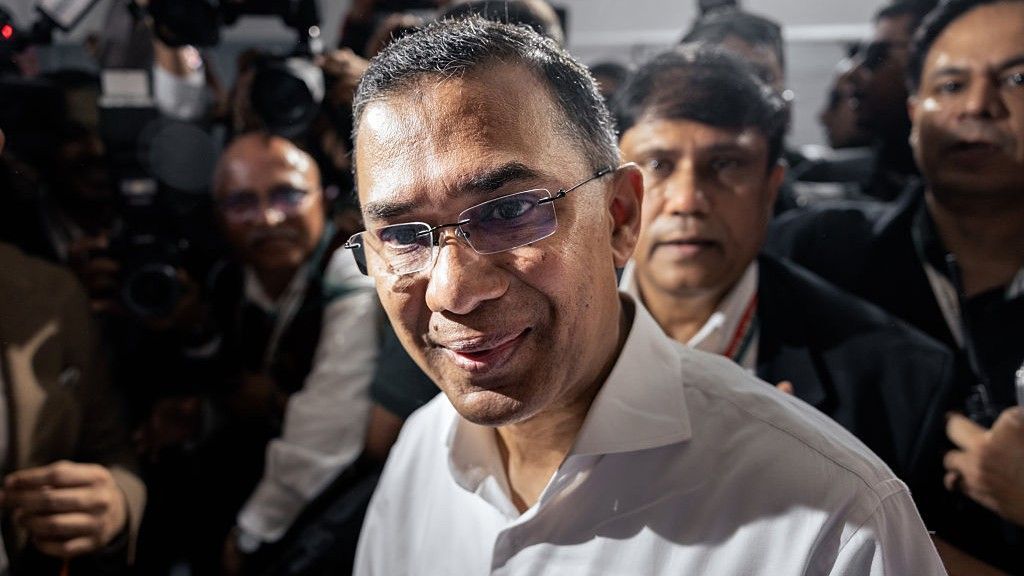
    Tarique Rahman stands on the brink of assuming Bangladesh’s premiership after his Bangladesh Nationalist Party (BNP) clinched a decisive parliamentary majority in the recent general election. The 60-year-old scion of Bangladesh’s influential Zia political dynasty now prepares to lead the nation following a victory that marks a significant shift in the country’s political landscape.

    Rahman’s ascent to power culminates a complex political journey characterized by familial legacy, controversy, and personal tribulation. His elevation to BNP chairman occurred mere weeks before the national polls, succeeding his mother Khaleda Zia—the nation’s first female prime minister—following her recent passing. The Zia family has remained a dominant force in Bangladeshi politics for decades, with both parents having previously governed the country.

    Rahman’s political initiation commenced in 2001 during his mother’s second premiership, though his rapid promotion within party ranks drew immediate accusations of nepotism from opposition forces. His tenure has been shadowed by persistent allegations of corruption and authoritarian leadership styles, with critics labeling him a party ‘hatchet man’ responsible for enforcing discipline.

    The new leader’s path included significant personal challenges: his 2007 arrest under a military-backed caretaker government, allegations of torture during detention, and subsequent 17-year exile in London. During this period, Rahman faced multiple in absentia convictions including charges related to a deadly 2004 grenade attack on a political rally—all of which were eventually overturned.

    Despite physical absence, Rahman maintained substantial influence over BNP strategy and operations, assuming de facto leadership after his mother’s 2018 imprisonment. His December 2025 return to Bangladesh preceded his formal election as party chairman in January, a transition some analysts deemed inevitable given the family’s entrenched political position.

    While some dismiss dynasty politics as irrelevant to effective governance, observers note that Rahman’s true test will be transitioning from party leadership to national statesmanship. Having experienced both the brutal realities of Bangladeshi politics and extended political exile, his capacity to transform personal experience into effective national leadership remains the critical question facing the nation.

  • Australia wins the toss and fields against Zimbabwe at the T20 World Cup

    Australia wins the toss and fields against Zimbabwe at the T20 World Cup

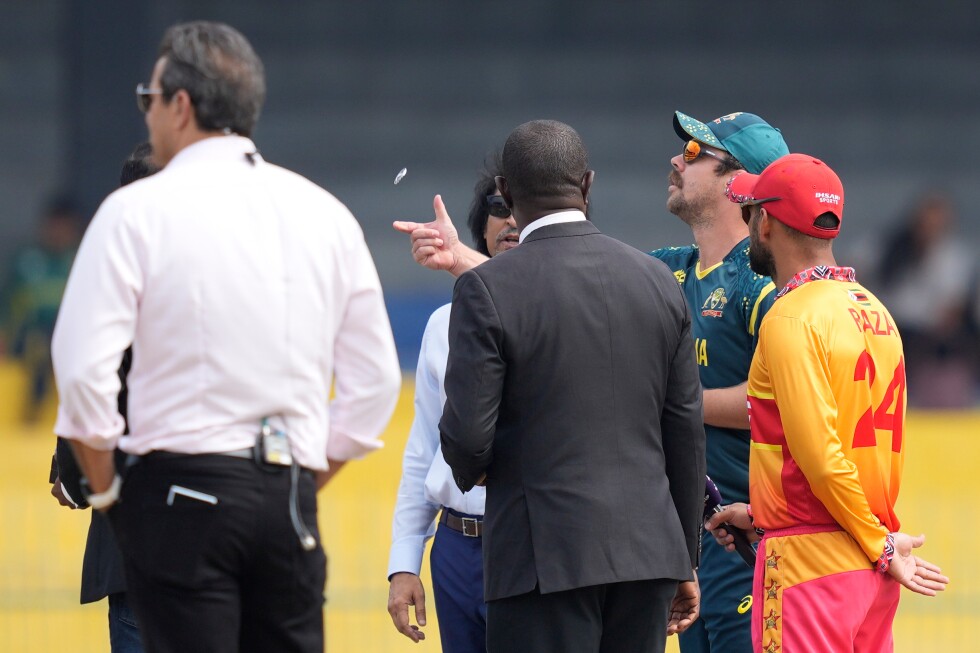
    COLOMBO, Sri Lanka — Australia’s cricket team made strategic adjustments to its lineup as it faced Zimbabwe in a highly anticipated T20 World Cup match on Friday. Captain Mitchell Marsh, who had been sidelined with a testicular injury sustained during pre-match net practice, continued his recovery process while Travis Head retained leadership duties for the encounter.

    The Australian squad implemented two significant changes from their opening victory against Ireland. Middle-order batsman Tim David returned to active play following hamstring rehabilitation that had excluded him from the Big Bash League, replacing Cooper Connolly. Simultaneously, fast bowler Xavier Bartlett made way for Ben Dwarshuis in the bowling department.

    Zimbabwe, fresh from their commanding eight-wicket triumph over Oman, correspondingly adjusted their roster with two modifications. Veteran batsman Brendan Taylor, who retired hurt during the initial match, was substituted by wicketkeeper-batter Tadiwanashe Marumani. The team management opted to rest pace bowler Richard Ngarava, introducing Tony Munyonga into the playing eleven.

    This confrontation marked the first T20 World Cup meeting between the nations since Zimbabwe’s memorable five-wicket upset against Australia during the tournament’s inaugural 2007 edition. The historical context added significance to the Group B encounter as both teams sought to strengthen their positions in the competition.

    Later Friday fixtures featured associate nations in Group D and Group A matches. The United Arab Emirates pursued their first tournament victory against Canada in New Delhi, while the United States, having previously fallen to India and Pakistan, confronted the Netherlands in Chennai.

    Lineups:
    Zimbabwe: Brian Bennett, Tadiwanashe Marumani, Dion Myers, Sikandar Raza (captain), Ryan Burl, Tony Munyonga, Tashinga Musekiwa, Brad Evans, Wellington Masakadza, Graeme Cremer, Blessing Muzarabani.
    Australia: Travis Head (captain), Josh Inglis, Cameron Green, Tim David, Glenn Maxwell, Marcus Stoinis, Matt Renshaw, Ben Dwarshuis, Nathan Ellis, Matt Kuhnemann, Adam Zampa.

  • Trump will announce ‘multi-billion’ Gaza reconstruction and stabilisation force on 19 February: Report

    Trump will announce ‘multi-billion’ Gaza reconstruction and stabilisation force on 19 February: Report

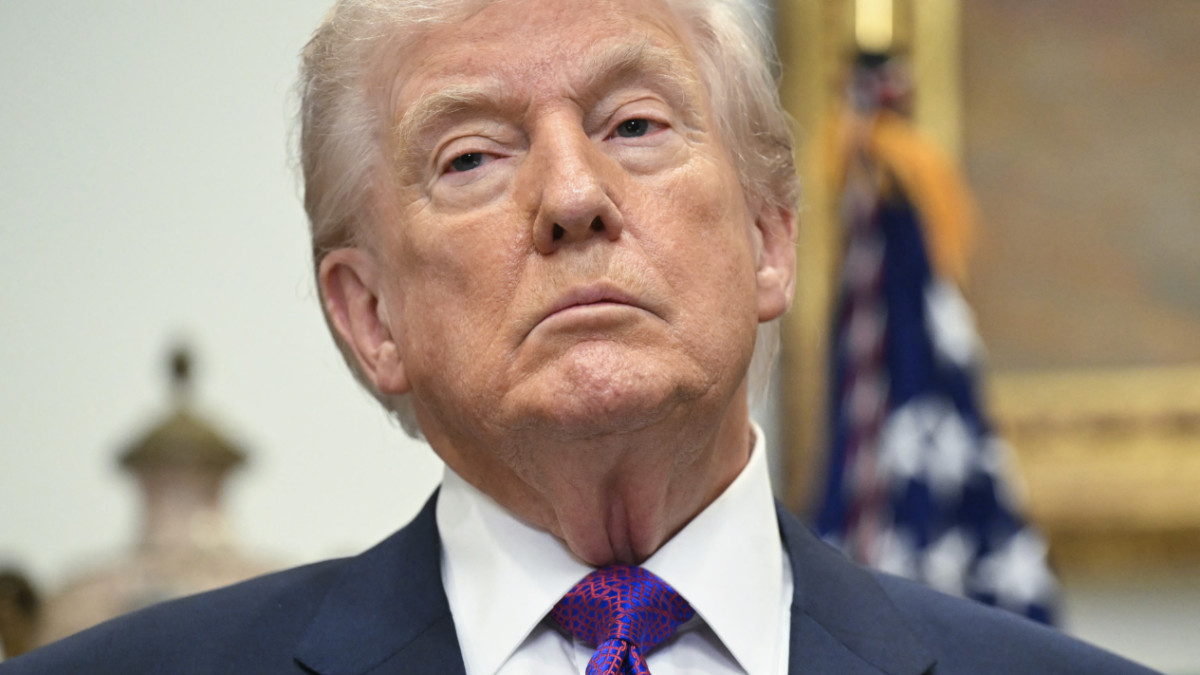
    President Donald Trump is preparing to present a comprehensive multi-billion-dollar reconstruction initiative for Gaza alongside details of a United Nations-mandated stabilization force during the inaugural ‘Board of Peace’ summit on February 19th in Washington, DC. The meeting will convene approximately 20 nations, including multiple heads of state, marking a significant diplomatic effort to address the Gaza crisis.

    The Board of Peace, initially announced by Trump at last month’s Davos Economic Forum, incorporates nearly all major Middle Eastern powers including Qatar, UAE, Saudi Arabia, and Turkey, with additional participation from Pakistan, Armenia, Azerbaijan, and Indonesia. Reuters reports that Trump will announce commitments from several nations to contribute thousands of troops to the proposed stabilization force.

    Indonesia has emerged as a potential major contributor, with Army Chief of Staff Maruli Simanjuntak and President Prabowo Subianto confirming preparations to deploy up to 8,000 soldiers should an agreement be finalized. ‘We are just preparing ourselves in case an agreement is reached and we have to send peacekeeping forces,’ Prabowo stated to journalists.

    The financial architecture of the reconstruction plan envisions wealthier Gulf states including Saudi Arabia, Qatar, and the UAE funding Gaza’s rebuilding. However, these nations have expressed reservations. Saudi Crown Prince Mohammed bin Salman previously demurred when asked about financial contributions, while Qatari Prime Minister Mohammed bin Abdulrahman al-Thani explicitly stated in December that Qatar would not ‘write the check to rebuild what others destroyed,’ referencing Israel’s destructive operations.

    The proposal faces significant geopolitical challenges. Arab and Muslim states remain hesitant to deploy troops, concerned about being positioned between an armed Hamas and Israeli soldiers who continue to occupy approximately 53% of the enclave. Many fear their forces could be perceived as enabling Israel’s occupation and ceasefire violations.

    Despite these obstacles, the Trump administration has made some progress, including backing a committee of Palestinian technocrats reporting to Nickolay Mladenov, the high representative for Gaza. The UAE, currently at odds with Saudi Arabia, has drafted plans to construct compounds for Palestinians in the Israeli-occupied portion of Gaza.

    The situation remains volatile with ongoing ceasefire violations and Israeli strikes continuing to claim Palestinian lives. Hamas refuses to disarm until Israel completely withdraws from Gaza, which remains divided by a ‘yellow line’ and subject to a comprehensive Israeli blockade via the Mediterranean Sea.

  • Trump heads to Fort Bragg to cheer special forces members who ousted Venezuela’s Maduro

    Trump heads to Fort Bragg to cheer special forces members who ousted Venezuela’s Maduro

    President Donald Trump traveled to Fort Bragg, North Carolina on Friday to commend special operations forces involved in the dramatic extraction of Venezuelan leader Nicolás Maduro during a New Year’s operation. The mission resulted in Maduro facing U.S. smuggling charges, marking a significant escalation in American intervention in South American affairs.

    Accompanied by First Lady Melania Trump, the presidential visit to one of the world’s largest military installations by population served dual purposes: recognizing military achievements while engaging with service families. The trip occurs amid increased presidential travel to electorally significant states ahead of November’s midterm congressional elections.

    The administration has subsequently advocated for extensive oversight of Venezuela’s oil industry following Maduro’s removal. In continuation of this foreign policy approach, Trump plans to host Latin American leaders in Florida next month, focusing on countering Chinese influence throughout the region.

    This strategic gathering on March 7 will provide a platform to advance what the president has termed the “Donroe Doctrine”—an assertive foreign policy framework invoking the Monroe Doctrine’s principle of American hemispheric dominance while incorporating Trump’s distinctive approach to international relations.

    The visit marks Trump’s second appearance at Fort Bragg within a year, following a June event commemorating the U.S. Army’s 250th anniversary that was overshadowed by controversial partisan remarks. The administration has recently deployed National Guard units to multiple domestic locations including Washington and Memphis as part of broader immigration enforcement initiatives.