作者: admin

  • Macao, HK universities establish joint lab for robotics, embodied intelligence

    Macao, HK universities establish joint lab for robotics, embodied intelligence

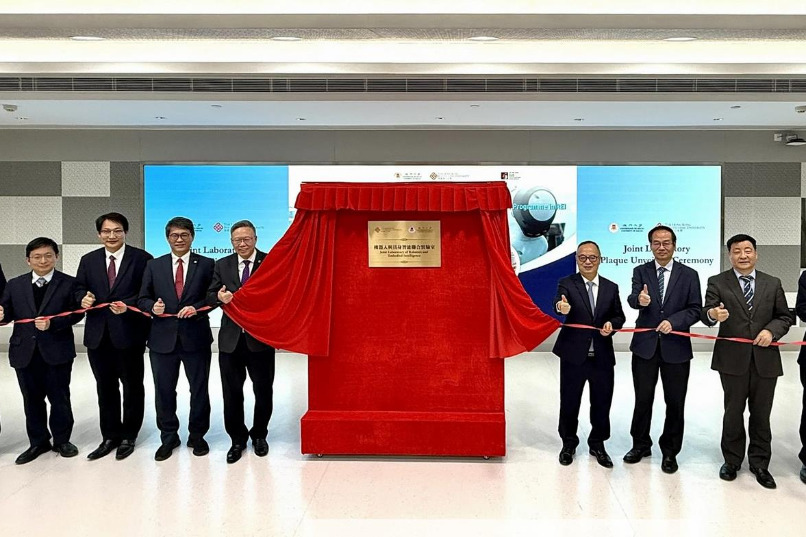
    In a landmark collaboration between two special administrative regions, the University of Macau and Hong Kong Polytechnic University have officially established the Joint Laboratory for Robotics and Embodied Intelligence—the first jointly funded research facility between Macao and Hong Kong. The agreement, signed on February 12, 2026, represents a significant advancement in cross-regional academic cooperation.

    The pioneering initiative includes not only the state-of-the-art research facility but also introduces a dual PhD program featuring joint supervision by faculty members from both institutions. This educational component aims to cultivate elite talent capable of driving innovation in emerging technological fields.

    University of Macau Rector Song Yonghua emphasized the strategic alignment of institutional strengths, noting that ‘this collaboration merges UM’s capabilities in interdisciplinary research, artificial intelligence, and engineering with PolyU’s distinguished expertise in applied science and engineering practice.’ The partnership is positioned to accelerate both fundamental research and practical technology transfer in cutting-edge domains including intelligent robotics and embodied artificial intelligence.

    PolyU President Teng Jin-Guang characterized the initiatives as creating ‘a substantial platform for interdisciplinary teams from both universities to conduct impactful research.’ He further highlighted the project’s potential to ‘address challenges in transformative technologies and accelerate the translation of research outcomes for the benefit of Hong Kong, Macao, and the nation overall.’

    This collaboration marks a new chapter in academic integration within the Greater Bay Area, demonstrating how regional partnerships can leverage complementary strengths to advance technological innovation and high-level talent development in strategically important fields.


  • Brilliant Muzarabani helps Zimbabwe stun Australia

    Brilliant Muzarabani helps Zimbabwe stun Australia

    In a stunning upset at the T20 World Cup, Zimbabwe delivered a masterclass in disciplined cricket to defeat tournament favorites Australia by 23 runs in Colombo. The Chevrons, led by an exceptional bowling performance from Blessing Muzarabani who claimed career-best figures of 4-17, defended a modest total of 169-2 with remarkable composure against the reigning champions.

    The match turned dramatically during Australia’s chase when Muzarabani and Brad Evans (3-23) dismantled the top order, reducing the Aussies to 29-4 within the powerplay. Despite a valiant 77-run partnership between Matthew Renshaw (65) and Glenn Maxwell (31) that briefly revived hopes, Zimbabwe’s bowlers maintained relentless pressure on a slow R. Premadasa Stadium pitch.

    The decisive moment arrived with eight balls remaining when the 6ft 8in pace bowler Muzarabani removed Renshaw, effectively sealing Australia’s fate. Zimbabwe’s fielding proved equally instrumental, with Clive Madande and Tony Munyonga producing spectacular boundary saves that conserved crucial runs.

    Zimbabwe’s batting approach, initially perceived as overly cautious, was vindicated by the result. Opener Brian Bennett anchored the innings with an unbeaten 64 from 56 balls, supported by aggressive cameos from Tadiwanashe Marumani (35 off 21) and Ryan Burl (30 off 30). Captain Sikandar Raza provided late impetus with 25 not out from just 13 deliveries.

    The victory marks Zimbabwe’s second T20 World Cup win against Australia, repeating their 2007 triumph at Newlands. The result leaves Group B delicately balanced after two matches, with Australia now trailing both Zimbabwe and Sri Lanka by two points ahead of their crucial encounter on Monday.

    Raza emphasized the team’s cultural foundation post-match: ‘The unity we’ve created makes me extremely proud. The boys really deserved this victory, but we must now focus on our next challenge.’

    For Australia, stand-in captain Travis Head remained philosophical: ‘We’ve found ourselves in this position before and will look to navigate this situation using our previous experiences.’

    The upset represents one of Zimbabwe’s most significant cricketing achievements in recent years, demonstrating their growing capability to compete with elite international sides.

  • Chinese authorities urge greater safety control on infant formula products

    Chinese authorities urge greater safety control on infant formula products

    In a decisive move to safeguard infant health, Chinese regulatory bodies have mandated enhanced safety protocols across the nation’s infant formula supply chain. The directive from China’s State Council Food Safety Office and the State Administration for Market Regulation (SAMR) comes as a responsive measure to a recent precautionary product recall initiated by Nestle China.

    The regulatory action was precipitated by the identification of an emetic toxin, originating from the Bacillus cereus bacterium, within specific production batches of infant formula. While no substantiated cases of infant poisoning have been reported to date, the discovery prompted immediate regulatory intervention.

    Authorities have instructed Nestle China to execute a comprehensive recall of the affected batches distributed across the Chinese mainland. Simultaneously, the SAMR has issued a broader directive to provincial and municipal regulators, compelling a rigorous reassessment of safety practices. This includes enforcing stricter inspection regimes for raw materials, implementing mandatory screening for the specified toxin, and intensifying pre-market quality assurance checks before products are released from manufacturing facilities.

    The overarching objective is to fortify risk management throughout the entire production ecosystem, from sourcing to store shelves, ensuring the highest standards of quality and safety for infant nutrition products in the Chinese market.

  • China’s efforts in African infrastructure hailed

    China’s efforts in African infrastructure hailed

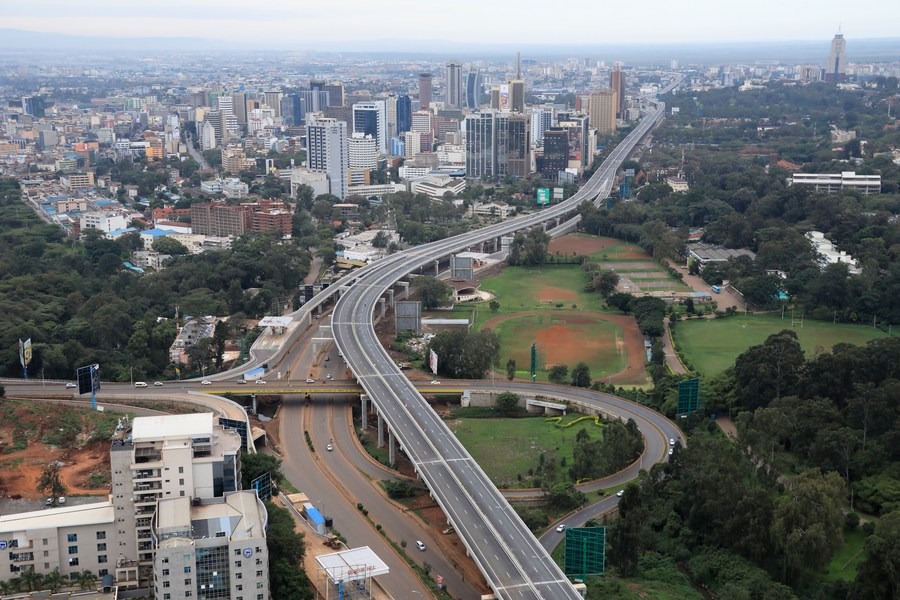
    ADDIS ABABA, Ethiopia – China has earned recognition as a pivotal infrastructure financing ally across Africa, with continental leaders advocating for deepened collaborations that align with domestic industrial expansion and increased mobilization of indigenous capital. The assessment emerged during high-level discussions preceding the 39th African Union Summit, scheduled for this weekend in the Ethiopian capital.

    Lerato Dorothy Mataboge, Commissioner for Infrastructure and Energy at the African Union Commission, emphasized China’s substantial contributions to Africa’s infrastructural advancement, describing it as fundamental to sustainable development. “This positions China as a strategic partner in efforts to bridge long-standing infrastructure gaps,” Mataboge stated in an exclusive interview with China Daily.

    The commissioner outlined a vision for future cooperation that transcends mere financing, focusing instead on alignment with Africa’s industrial ambitions through strengthened local content requirements, skills transfer, and domestic value addition. She revealed that African governments currently bear the majority of infrastructure expenditures, with private sector participation remaining constrained.

    Highlighting the continent’s substantial untapped financial resources, Mataboge cited an estimated $4.6 trillion in domestic capital that remains largely unexploited for infrastructure development. She urged African nations to leverage pension funds and other capital pools, typically invested in low-risk instruments, toward productive infrastructure sectors.

    Through initiatives like the Belt and Road Initiative, China has extensively invested in Africa’s transportation networks, energy systems, and port facilities, completing numerous landmark projects over the past decade. The upcoming AU Summit, themed “Assuring Sustainable Water Availability and Safe Sanitation Systems to Achieve the Goals of Agenda 2063,” will address infrastructure investments supporting long-term economic transformation.

    African Union Commission Chairperson Mahmoud Ali Youssouf reinforced the need for innovative financing mechanisms and strengthened partnerships with private entities and civil society. He reaffirmed that the African Continental Free Trade Area and AU institutions remain central to advancing regional integration, infrastructure expansion, and cross-border trade.

    United Nations Under-Secretary-General Claver Gatete underscored infrastructure’s critical role in promoting socioeconomic development, noting that water accessibility remains a severe challenge. Gatete revealed that over 300 million Africans lack access to safe drinking water, while nearly 780 million experience inadequate sanitation, resulting in waterborne diseases that claim lives and impair economic productivity.

    “Without reliable water infrastructure, industrial zones struggle to compete, logistics hubs cannot scale efficiently, and urban economies face limits to sustainable growth,” Gatete emphasized, advocating for integrated development approaches where infrastructure, finance, trade, and industrial policy operate cohesively.

    Mataboge concluded by urging member states to synchronize national infrastructure plans with continental priorities, ensuring policy continuity beyond electoral cycles and accelerating Africa’s industrial transformation.

  • Indonesia readies up to 8,000 troops in first firm commitment to Gaza peacekeeping force

    Indonesia readies up to 8,000 troops in first firm commitment to Gaza peacekeeping force

    JAKARTA, Indonesia — The Indonesian military has initiated specialized training for a contingent of 5,000-8,000 troops designated for deployment to Gaza as part of an international security force, marking the first tangible commitment to President Donald Trump’s controversial postwar reconstruction framework. This Muslim-majority nation, ranking among the UN’s top ten peacekeeping contributors with extensive experience in Lebanon, now faces domestic criticism over its alignment with Washington’s newly proposed Board of Peace (BoP).

    Despite Indonesia’s historical support for Palestinian statehood and substantial humanitarian investments in Gaza—including hospital funding—President Prabowo Subianto’s rapid embrace of the U.S.-led initiative has sparked concerns about national sovereignty and financial burden. Critics highlight the absence of Palestinian representation on the BoP while Israel maintains membership, questioning whether Indonesia’s participation genuinely advances Palestinian interests.

    The operational ambiguity surrounding the International Security Force (ISF) remains a central controversy. Unlike UN-mandated missions with clearly defined rules of engagement, the BoP-operated force lacks transparent guidelines regarding troop utilization, funding mechanisms, and chain of command. Draft charters suggest Indonesia might bear its own deployment costs plus a potential $1 billion fee for permanent BoP membership.

    Middle East analyst Muhammad Zulfikar Rakhmat of Jakarta’s Center of Economic and Law Studies warned: “We must ensure our military personnel aren’t indirectly supporting Israeli forces or confronting misguided actors.” This sentiment resonates with an online petition signed by over 9,000 scholars and activists criticizing Trump’s lifetime chairmanship of a body they deem “normatively, structurally and morally illegitimate.”

    Army Chief of Staff Gen. Maruli Simanjuntak confirmed training has commenced for engineering and medical units despite no formal operational guidelines from BoP organizers. The initiative received measured regional endorsement from Hassan Jouni, a Qatar-based analyst and former Lebanese general, who noted Indonesia’s perception as an “honest broker” acceptable to both sides due to its Muslim identity without posing strategic threats to Israel.

    With Prabowo scheduled to attend next week’s inaugural BoP meeting in Washington—where he may finalize a parallel trade deal—observers anticipate further international troop commitments. However, domestic opposition appears unlikely to alter Indonesia’s course as it seeks to leverage internal participation to influence Palestinian rights advocacy within the controversial framework.

  • Hit song transforms metro stop into cultural hot spot

    Hit song transforms metro stop into cultural hot spot

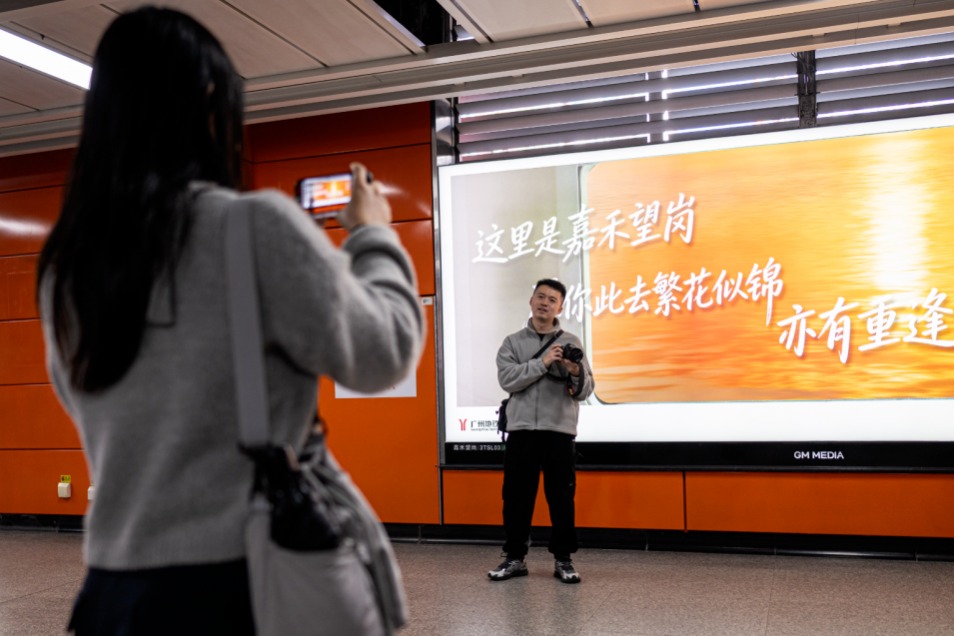
    A poignant musical tribute to a Guangzhou metro station has unexpectedly transformed the transit hub into a nationwide cultural phenomenon. ‘Jiahewanggang,’ performed by Yi ethnic singer Hailai Amu with his distinctive raspy vocals, has captivated Chinese netizens with its melancholic lyrics about parting ways at the station. The track’s emotional resonance has generated over one billion streams since its January 22 release, triggering a pilgrimage trend to the previously ordinary transportation node.

    The Jiahewanggang station, operational since 2010 in Baiyun district, serves as a critical transit junction connecting three metro lines, Baiyun International Airport, and multiple railway stations. Handling approximately 380,000 daily passengers, it ranks among Guangzhou’s busiest transit points. Its geographical significance as a convergence point has historically made it symbolic of separations and new beginnings for the city’s substantial migrant population of 8.2 million.

    Government authorities have strategically embraced the unexpected cultural moment. Guangzhou Mayor Sun Zhiyang officially endorsed the song during the Guangdong People’s Congress session, extending invitations to domestic and international visitors to experience the city’s cultural offerings. The metro administration has enhanced the station with artistic installations showcasing Lingnan cultural elements, including Cantonese opera, porcelain art, and regional architecture.

    Urban culture experts note that metro systems in Chinese megacities have evolved beyond mere transportation infrastructure into cultural landmarks that reflect municipal identity and governance capabilities. The phenomenon parallels similar occurrences at other symbolically-named stations, such as Shenzhen’s Fanshen station, whose name evokes historical narratives of social transformation.

    The station’s management has responded poetically to its newfound fame, installing inspirational messages that acknowledge its emotional significance while offering hopeful sentiments: ‘May your journey ahead be as beautiful as a tapestry of flowers, and may there be a reunion waiting for you.’ This transformation from functional transit space to cultural touchstone demonstrates how organic cultural expressions can reshape urban landscapes and create unexpected community gathering points.

  • TV drama draws visitors to Hangzhou

    TV drama draws visitors to Hangzhou

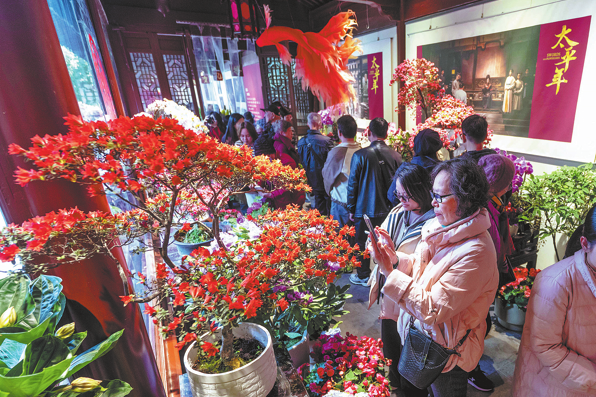
    The sweeping historical drama ‘Swords into Plowshares’ has triggered an unprecedented tourism boom in Hangzhou, Zhejiang province, where the series’ narrative unfolds across ancient Wuyue Kingdom landmarks. Drawing comparisons to ‘Game of Thrones’ for its intricate portrayal of political machinations during China’s Five Dynasties and Ten Kingdoms period (907-960), the production has transformed from mere entertainment into a cultural phenomenon driving substantial visitor increases to historical sites.

    Hangzhou’s tourism infrastructure has capitalized on this surge through innovative collaborations with the series’ producers. The municipality has launched six specialized stamp collection activities at key attractions, curated five thematic travel routes connecting Wuyue cultural relics, and mounted immersive exhibitions at Qianwang Temple—the royal shrine honoring Wuyue’s monarchs. Temple attendance has skyrocketed by 30-40% year-over-year, with daily visitors exceeding 4,000 during peak periods.

    The drama’s central narrative follows the transformation of Qian Hongchu, final ruler of the Wuyue Kingdom, from carefree prince to the sovereign who peacefully surrendered his territory to the unifying Song Dynasty. This historical context has resonated deeply with contemporary audiences, particularly through the series’ juxtaposition of Wuyue’s stability against the Central Plains’ turmoil.

    Tourism analytics from platform Ctrip reveal impressive metrics: Hangzhou experienced a 31% year-on-year increase in overall tourism bookings during the Spring Festival period, complemented by a 26% rise in flight reservations. Professor Wang Jinwei of Beijing International Studies University notes this trend reflects modern travelers’ desire for integrated experiences combining emotional engagement with historical education—a need Hangzhou’s initiatives successfully address by transforming television entertainment into meaningful cultural exploration.

  • China, Central Asia boost desertification measures

    China, Central Asia boost desertification measures

    In a significant ecological initiative, the China-Central Asia Cooperation Center for Desertification Prevention has mobilized a coordinated environmental campaign across four Central Asian nations. The center is deploying cutting-edge technologies developed in China’s Ningxia region to address critical soil and water conservation challenges in Uzbekistan, Kazakhstan, Tajikistan, and Kyrgyzstan.

    The collaboration follows an extensive assessment mission completed in December that identified specific environmental vulnerabilities across the region. The mission revealed distinct ecological challenges in each country, with Uzbekistan struggling with soil salinization and inadequate irrigation infrastructure, while mountainous Tajikistan faces more pressing concerns regarding soil erosion, pest management, and wildfire prevention.

    Feng Zhanwen, director of the center, noted that Central Asian countries have expressed strong appreciation for China’s achievements in combating desertification and related environmental challenges. “China’s experience with desertification prevention and control is of universal value,” Feng stated, emphasizing the center’s mission to share this expertise globally.

    The cooperation framework includes six demonstration bases for technology transfer and project implementation. China’s assistance will involve deploying expert teams, ecological monitoring systems, and specialized training programs that integrate proven strategies from Ningxia’s own environmental transformation.

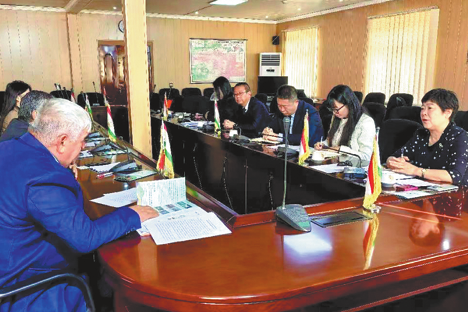
    Diplomatic support was reinforced during a January meeting in Yinchuan, where Uzbekistan’s Ambassador to China, Farhod Arziev, emphasized that local cooperation represents a vital component of China-Uzbekistan relations. The ambassador expressed willingness to learn from Ningxia’s experience in multiple domains including poverty reduction, water-saving agriculture, and tourism development.

    Liu Jun, vice-chairperson of the Ningxia government, highlighted the global nature of desertification challenges, noting shared experiences with sandstorms between Uzbekistan and Ningxia. “This shared experience is the most solid foundation for cooperation between the two sides,” Liu stated, outlining plans to export mature technologies including multilayered windbreak systems and photovoltaic-powered groundwater desalination to Central Asia.

    The initiative will further involve joint laboratory construction, technical training programs, and mutual talent exchanges, aiming to establish a robust regional ecological security barrier across Central Asia.

  • Industry strives to go ‘zero carbon’

    Industry strives to go ‘zero carbon’

    China has launched a comprehensive national strategy to revolutionize its industrial landscape through the systematic development of zero-carbon manufacturing facilities. This initiative represents a critical component of the nation’s broader climate objectives to achieve carbon peak before 2030 and carbon neutrality by 2060.

    The policy framework, collaboratively issued by five governmental bodies including the Ministry of Industry and Information Technology (MIIT), outlines a methodical, phased approach to industrial decarbonization. The strategy prioritizes sectors with urgent emission reduction requirements, high electricity dependency, and technically feasible pathways toward carbon minimization.

    Contrary to terminology suggesting absolute zero emissions, the ‘zero-carbon factory’ concept emphasizes continuous improvement toward near-zero emissions through technological innovation, structural adjustments, and management optimization within existing economic and technical constraints.

    The implementation will commence with pilot programs in 2026 across strategic industries including automotive manufacturing, lithium battery production, photovoltaics, electronics, and computing infrastructure. By 2027, authorities expect to establish numerous model facilities, with subsequent expansion to traditionally energy-intensive sectors like steel, nonferrous metals, petrochemicals, and textiles by 2030.

    Professor Tian Jinping of Tsinghua University’s School of Environment emphasized that this initiative constitutes “the country’s top-level design and comprehensive framework” for industrial transformation. The core objective aligns green technology adoption with enhanced operational efficiency, reduced pollution, and increased productivity, ultimately strengthening China’s position within global supply chains.

    The guideline specifies concrete implementation pathways including establishing comprehensive carbon accounting systems, developing industrial green microgrids, and integrating next-generation information technologies. This systematic approach rests on three foundational pillars: renewable energy infrastructure, low-carbon technical processes, and intelligent management systems.

    This national effort builds upon substantial existing progress. By the end of 2025, China had established 6,430 national-level green factories, representing 20% of manufacturing output value compared to just 9% in 2020. Provincial governments, particularly in economic powerhouses like Jiangsu, Zhejiang, and Guangdong, have implemented supportive policies including financial incentives such as Kunshan’s 1 million yuan reward for certified zero-carbon facilities.

    Corporate engagement matches governmental ambition. Approximately 13,000 businesses globally have joined the ‘Race to Zero’ campaign, with over 2,300 major corporations establishing explicit net-zero targets. Chinese manufacturers like Hisense have committed to operational carbon neutrality by 2050.

    This industrial transformation forms part of a global movement, with 145 countries and regions representing 77% of global emissions having announced or considered carbon neutrality targets. China’s systematic approach to industrial decarbonization demonstrates how environmental objectives can synergize with economic competitiveness and technological advancement.

  • Brooklyn Nets host festive game to celebrate Chinese New Year

    Brooklyn Nets host festive game to celebrate Chinese New Year

    The Barclays Center in Brooklyn transformed into a vibrant crimson spectacle on Wednesday night as the Brooklyn Nets hosted their annual Chinese New Year celebration game, merging professional basketball with rich cultural festivities. For the 14th consecutive year, the arena became a hub of cross-cultural exchange, honoring the Year of the Horse with elaborate equestrian-themed decorations throughout the venue.

    The event featured a remarkable fusion of American sports and Chinese traditions, with Nets players donning custom-designed Chinese New Year apparel during warmups. The celebration included a distinctive cultural performance by Brooklyn Nets cheerleaders who presented a Chinese-style dance routine, joined by members of Brooklyn 8, the team’s official China cheer squad.

    Adding to the cultural significance, Consul General of China in New York Chen Li attended the festivities, engaging in a ceremonial gift exchange with Sam Zussman, CEO of Brooklyn Sports & Entertainment, the Nets’ parent organization. The pre-game ceremonies included a unique rendition of the US national anthem performed on a horsehead fiddle, a traditional bowed instrument from Mongolian ethnic heritage.

    The Chinese New Year tradition has expanded beyond Brooklyn to multiple NBA cities including Chicago, Houston, and San Francisco, and has subsequently influenced other major sports leagues such as Major League Baseball and the National Hockey League. These celebrations attract both local enthusiasts and international visitors from China, creating bridges between cultures through sports.

    Attendee Tayanna Morgan from the Bronx expressed appreciation for the inclusive atmosphere, noting: ‘The decorations create such a welcoming environment. Horses symbolize speed, which aligns with the Nets’ dynamic playstyle. This celebration makes our community feel more inclusive and connected.’ Morgan added her hopes that the equestrian symbolism would bring playoff success to the team.