
The UAE-based International Astronomical Centre (IAC) has released crucial guidance regarding celestial observations for the anticipated commencement of Ramadan 2026, emphasizing the critical distinction between moon presence and crescent visibility. According to astronomical calculations, the parameters on Tuesday, February 17, 2026, will not permit the crescent’s sighting despite the moon’s presence in the sky. The center cited findings from prominent Saudi researcher Mulhim Hindi of King Abdulaziz University, indicating the moon’s elevation above the horizon will be insufficient for visual detection across Arab nations. The maximum elevation of approximately half a degree in Saudi Arabia’s Jizan region falls below the one-degree threshold established by Islamic scholar Ibn Taymiyyah for reliable crescent observation. The IAC further clarified that while the moon exists daily, the crescent represents a specific lunar phase marking Islamic months. Astronomical conditions reveal the moon will set simultaneously with or before the sun across most Islamic countries, with West Africa experiencing merely minutes of separation. This minimal interval prevents the transition from astronomical conjunction to visible crescent formation. Additionally, the center issued serious safety warnings as the moon’s proximity to the sun during sunset creates dangerous viewing conditions. Using optical instruments like binoculars or telescopes toward the sun-adjacent moon risks permanent eye damage due to solar exposure within the field of view. The occurrence of a solar eclipse on the same date further signifies the peak of the new moon phase, reinforcing the impossibility of crescent sighting. Astronomical experts anticipate Ramadan will likely commence on February 19 based on these scientific observations.
作者: admin
-
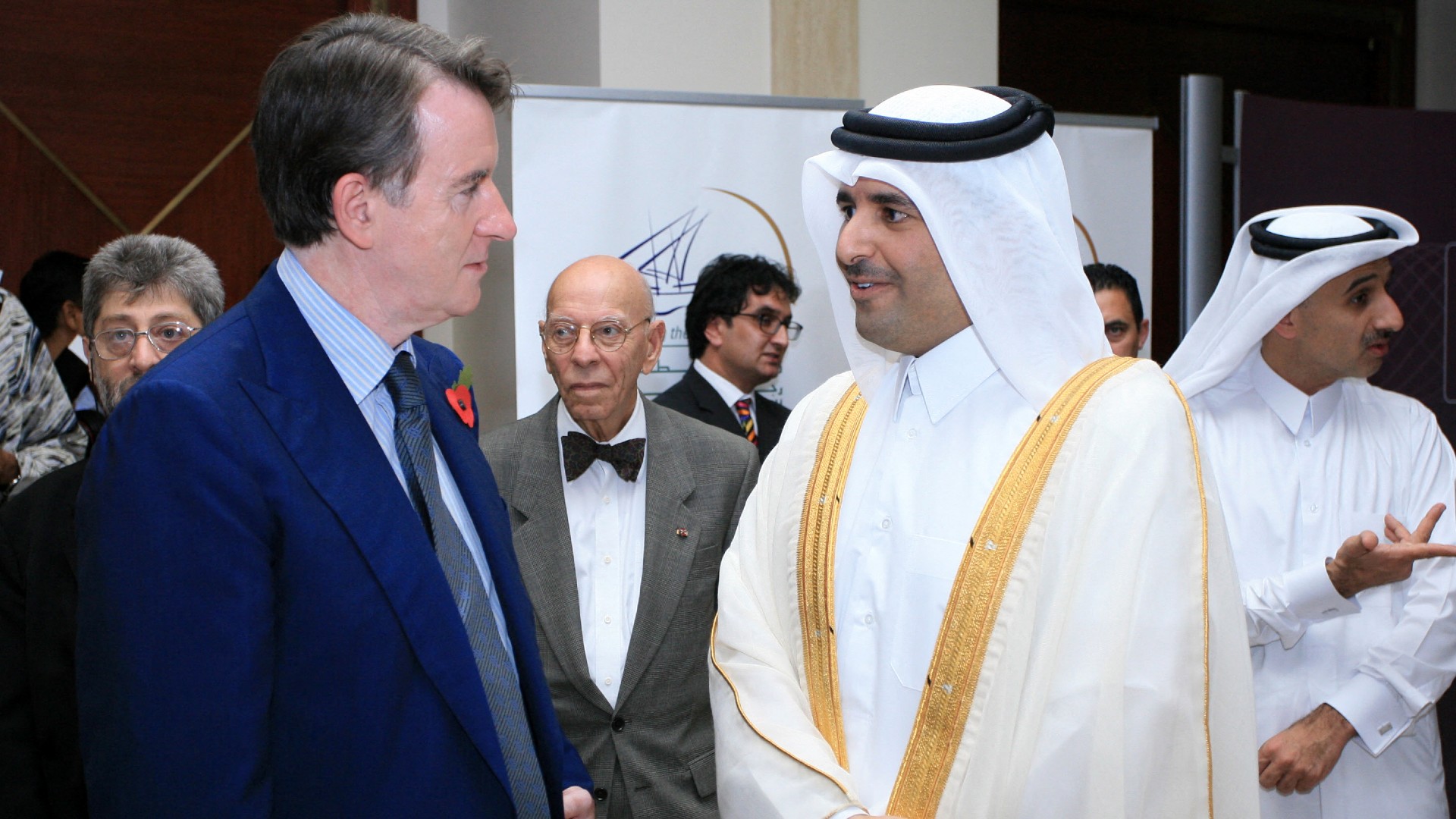
Qatar lobbying UK government through Mandelson firm linked to Epstein
Qatar continues to employ Global Counsel, a strategic advisory firm co-founded by disgraced former UK politician Peter Mandelson, for lobbying senior UK government officials despite recent disclosures about the company’s connections to convicted sex offender Jeffrey Epstein. The firm remains officially registered under the UK’s Foreign Influence Registration Scheme as a Qatari government representative through August 2026.
The revelation follows major client departures from Global Counsel, including Barclays and the Premier League, after US Department of Justice files exposed extensive ties between Mandelson and Epstein. Documents indicate Mandelson sought Epstein’s business counsel even after his 2008 conviction for child sex offenses, with correspondence showing more than 800 instances of Mandelson’s Global Counsel email address in the released files.
Global Counsel’s lobbying activities for Qatar include communications with “senior UK government officials with an interest in technology and infrastructure policy” and providing guidance on “macro-economic and political trends.” The relationship predates its official December 2025 registration, with evidence of undisclosed lobbying for Qatari entities as early as 2023.
The firm underwent significant leadership changes recently, with co-founder Benjamin Wegg-Prosser resigning as CEO last week following revelations of his March 2010 meeting with Epstein. Mandelson, who stepped down from the board in 2024, only divested his shares in the company last week amid the growing scandal.
Released correspondence reveals Epstein actively advised Mandelson on business strategy, including targeting Qatari clients and recommending private equity partnerships. Additional files show Epstein facilitated high-level meetings between Qatari and Israeli officials, further complicating the geopolitical implications of these connections.
Global Counsel previously faced investigation for undeclared lobbying activities but was cleared in February 2025 due to a legal loophole permitting unregistered lobbying by overseas subsidiaries of consultancy firms. The firm has maintained a Doha office since 2021.
-
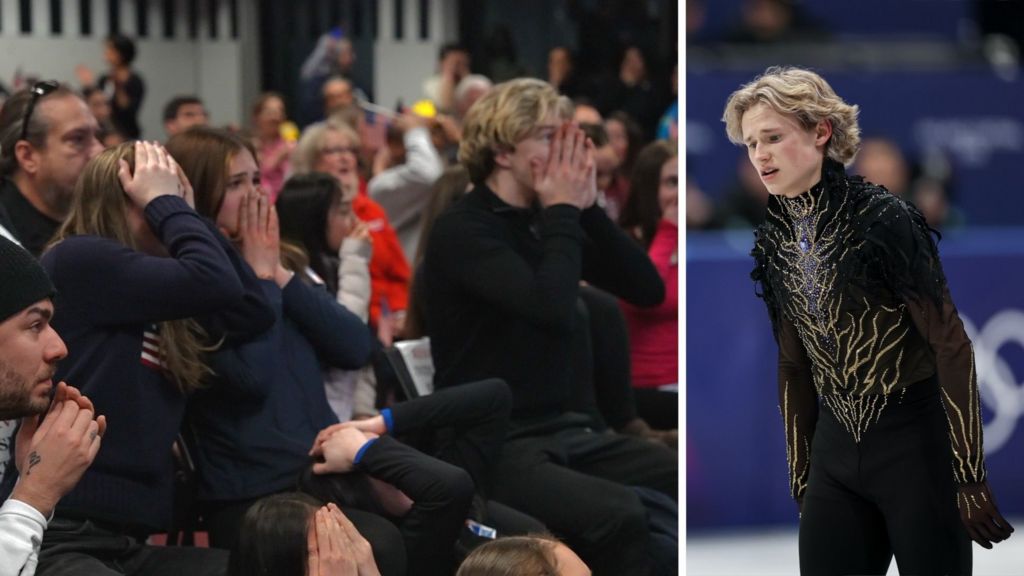
Gasps and disbelief at Malinin’s home rink as Olympic dream falters
A palpable atmosphere of shock and devastation descended upon the Virginia-based training rink of figure skating phenom Ilia Malinin, famously dubbed the ‘Quad God,’ during what was anticipated to be a victorious Olympic broadcast. The BBC, capturing the scene firsthand, documented the raw emotional collapse among Malinin’s most dedicated supporters—his closest friends, teammates, and coaches—as his performance at the Winter Games dramatically veered off its predicted golden course.
The gathering, meticulously organized to celebrate an expected triumph, transformed instantaneously into a vigil of shared disbelief. The air, once buzzing with excited anticipation, was pierced by gasps and fell into a heavy silence as the competition unfolded contrary to all forecasts. This was not merely a competition loss; it was the shattering of a widely held certainty within his inner circle, a testament to the immense pressure and unpredictable nature of elite sports.
Malinin, renowned for his unprecedented ability to land quadruple jumps, had carried the heavyweight of immense expectation into the games. The scene at his home rink serves as a powerful, microcosmic study of the immense psychological burden shouldered by athletes and the profound emotional investment of those who support them behind the scenes. The incident transcends a simple sports report, morphing into a human-interest story about resilience, expectation, and the fragile line between perceived destiny and competitive reality.
-
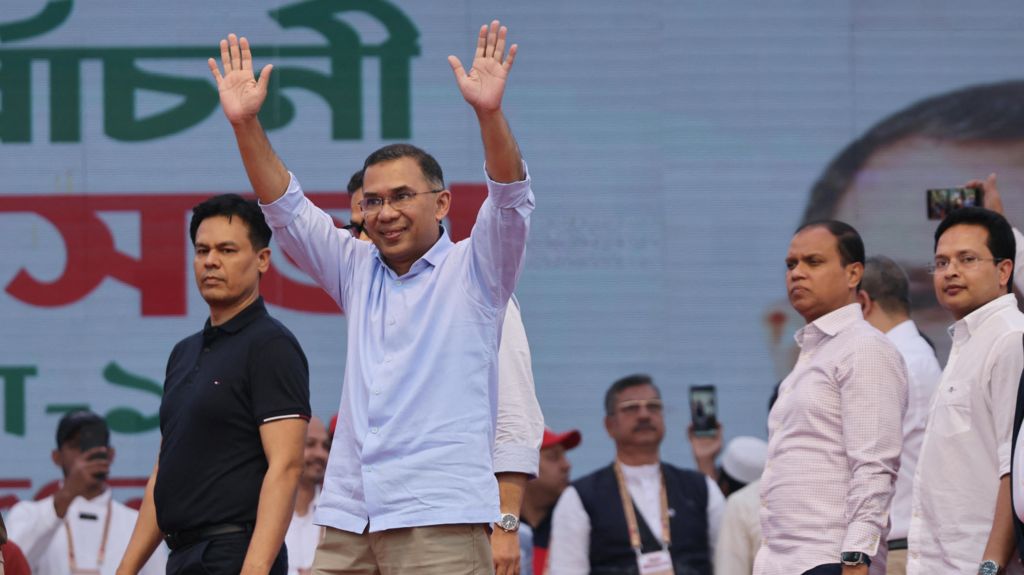
Can Bangladesh’s new leader bring change after election landslide?
Bangladesh stands at a historic political crossroads as Tarique Rahman, despite never holding governmental office, is positioned to assume the role of prime minister. This development marks a dramatic reversal from just two years ago, when Sheikh Hasina secured a controversial election victory that extended her 15-year administration—a reign abruptly terminated by the 2024 “July uprising” that ousted her government.
The Bangladesh Nationalist Party (BNP), once considered politically marginalized, has staged a remarkable resurgence in the nation’s perpetual power alternation with Hasina’s Awami League. Rahman’s leadership represents a significant generational shift—he formally leads the party for the first time and has never previously contested an election. His political inheritance is substantial: his mother, Khaleda Zia, commanded the BNP for four decades until her death last year, while his father, Ziaur Rahman, was both BNP founder and an independence war hero.
Rahman’s ascension is not without controversy. Having returned from 17 years of self-imposed exile in London just days before his mother’s passing, he faces persistent allegations of corruption and past nepotism benefits during his mother’s tenure. Political observers note his largely untested leadership qualities, though some analysts suggest his inexperience may paradoxically serve as an advantage.
“His lack of prior experience probably works in his favor,” observes political scientist Navine Murshid. “The public is willing to embrace change and believes new, positive developments are genuinely possible. There exists substantial hope.”
The incoming administration confronts monumental challenges: restoring democratic institutions dismantled over the previous decade, addressing rampant violence that marred interim leader Mohammad Yunus’s tenure, revitalizing the economy, reducing food prices, and creating employment for Bangladesh’s substantial youth population.
This election introduced unprecedented diversity to parliament, featuring the Islamist Jamaat-e-Islami party securing substantial representation despite historical bans, and the National Citizens Party (NCP)—formed by student uprising leaders—claiming six seats in its electoral debut.
Sociologist Samina Luthfa emphasizes the governing inexperience affecting all parties: “We will witness parliamentarians who have never served in parliament before. NCP youth have much to learn, while seasoned politicians lack national governance experience. This will be an uphill struggle.”
Notably, all parties face criticism for inadequate female representation, with women constituting just over 4% of candidates—a particular disappointment given women’s significant participation in the 2024 uprising.
While this election differed fundamentally from previous polls under Hasina—being genuinely competitive with unpredictable results—the exclusion of the Awami League has raised credibility concerns. From exile in India, Hasina has denounced the poll as a “deceptive farce” and demanded new elections including her party. Despite current public animosity toward the Awami League, Bangladesh’s turbulent political history suggests premature to permanently dismiss the party’s future influence.
-
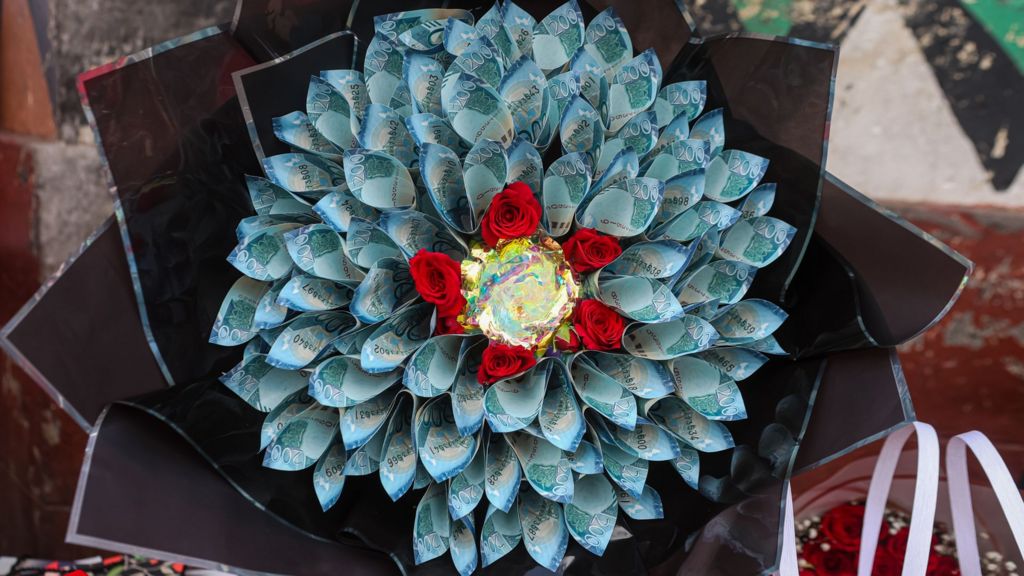
Kenyans drop flowers for Valentine’s bouquets of cash. Not everyone is impressed
Across Nairobi and other African capitals, a controversial Valentine’s Day tradition has drawn the ire of financial regulators. What began as a romantic gesture of gifting cash arranged in elaborate floral designs has evolved into a regional phenomenon that now faces official scrutiny.
Multiple central banks across East and Southern Africa have issued coordinated warnings against the practice of creating monetary bouquets. The Central Bank of Kenya (CBK), alongside regulators in Uganda, Rwanda, Botswana and Namibia, has highlighted the damaging consequences of manipulating currency notes through stapling, gluing, or folding them into decorative arrangements.
The core concern revolves around the mechanical integrity of banknotes. When currency is altered through these methods, automated banking equipment including ATMs and cash-sorting machines frequently reject them. This necessitates costly withdrawal from circulation, ultimately creating financial burdens for national economies and taxpayers.
Despite potential penalties including imprisonment for up to seven years under Kenyan law, the trend continues to flourish. Angela Muthoni, a Nairobi florist, reports receiving 15-20 daily orders for money bouquets in the Valentine’s season. The arrangements range from modest 1,000 shilling ($8) designs to extravagant million-shilling creations, often incorporating both currency and traditional flowers.
The practice has gained momentum through social media influencers and celebrities who showcase elaborate cash presentations. While initially associated with Valentine’s Day, the tradition has expanded to birthdays and other celebrations, creating year-round demand.
Public opinion remains divided. Proponents argue that cash gifts eliminate the stress of selecting presents and provide practical value. Critics contend the trend promotes materialism and undermines genuine romantic expression. Economic analyst Odhiambo Ramogi suggests the phenomenon combines traditional African gifting practices with modern consumerism, noting that “the natural flower has been replaced with the currency flower.”
Innovative alternatives are emerging in response to regulatory pressure. Some designers now create transparent pocket arrangements that preserve note integrity, while others explore digital bouquets or transition to U.S. dollars unaffected by local regulations. Despite official warnings, the deeply entrenched money bouquet culture appears likely to evolve rather than disappear entirely.
-
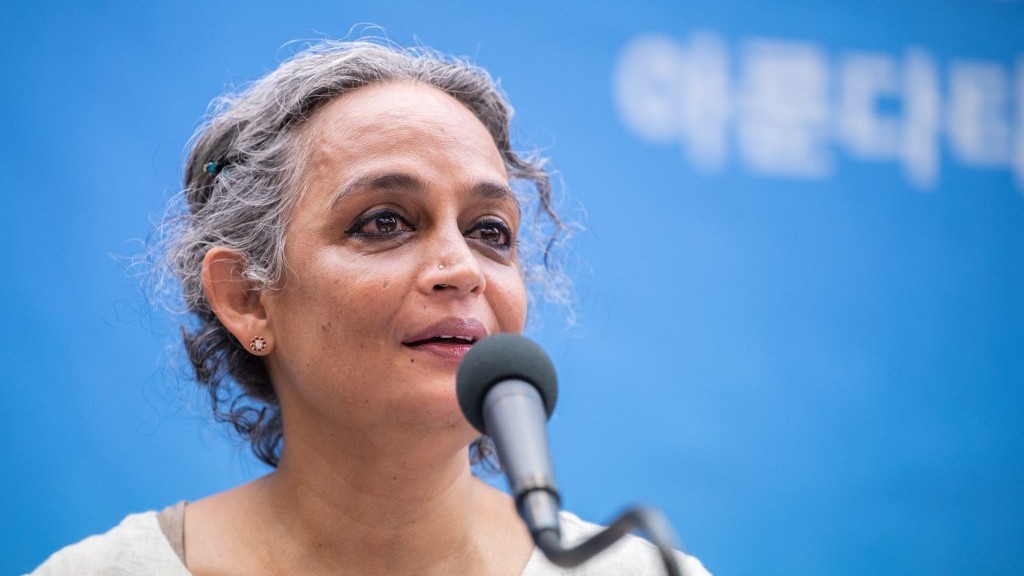
Arundhati Roy pulls out of Berlinale over ‘jaw-dropping’ stance on Gaza
Nobel laureate author Arundhati Roy has dramatically withdrawn from the Berlin International Film Festival (Berlinale), condemning the event’s official stance on Gaza as “jaw-dropping” in its avoidance of political engagement.
The controversy erupted during a press conference featuring festival jury president Wim Wenders, the renowned German filmmaker who emerged from the explicitly political New German Cinema movement. Wenders asserted that filmmakers must “stay out of politics” and position themselves as “the counterweight of politics.” His comments represented a stark departure from his 2024 characterization of Berlinale as “traditionally always the most political of the major festivals.”
Further intensifying the dispute, jury member Ewa Puszczynska dismissed questions about Germany’s support for Israel’s actions in Gaza as “unfair,” suggesting genocide occurs in “many other wars” that receive less attention.
Roy’s withdrawal statement, initially published by Indian media, expressed profound disappointment: “To hear them say that art should not be political is jaw-dropping. It is a way of shutting down a conversation about a crime against humanity even as it unfolds before us in real time.”
This incident continues a pattern of controversy for the festival regarding Gaza. The 2024 Berlinale previously faced criticism when award-winning Israeli filmmaker Yuval Abraham used his acceptance speech for the documentary ‘No Other Land’ to highlight the unequal rights between Israelis and Palestinians under occupation. The subsequent backlash included German officials labeling the festival “one-sided” and “antisemitic,” while Culture Minister Claudia Roth faced scrutiny for allegedly only applauding Abraham’s speech but not that of his Palestinian co-director.
The festival, which receives German government funding, continues amid these tensions, featuring over 200 films with 22 competing for the top Golden Bear award.
-

Dubai authority contains major fire in an hour; arrives at scene in minutes
Dubai Civil Defence demonstrated exceptional emergency response capabilities on Friday, February 13, 2026, when they successfully contained a significant warehouse fire in Ras Al Khor within approximately one hour of notification. The incident, which began at approximately 1:23 PM, was met with a rapid deployment of both human firefighters and advanced robotic firefighting systems from Nad Al Sheba Fire Station.
Emergency crews achieved a remarkable response time of just four minutes, arriving on the scene at 1:26 PM to confront what was initially classified as a moderate-intensity blaze. The integrated firefighting team, combining traditional methods with robotic assistance, worked efficiently to bring the situation under control by 2:28 PM.
According to official statements provided to Khaleej Times, the operation proceeded without any reported injuries. Cooling procedures were immediately initiated following containment, with authorities prepared to transfer control of the site to relevant investigative bodies once these safety measures are completed in accordance with established protocols.
Eyewitness accounts described dramatic scenes of dark smoke plumes visible from Al Manama Street, with one motorist en route to Mirdif City Center reporting both visible smoke and audible emergency vehicle responses around 2:00 PM. The successful containment highlights Dubai’s continued investment in advanced emergency response technologies and protocols, particularly the integration of robotic systems that complement human firefighting efforts.
The incident marks another demonstration of Dubai’s commitment to public safety infrastructure, showcasing how technological innovation combined with well-trained personnel can effectively manage urban emergency situations with minimal disruption and risk to human life.
-

The two Chinese-American Olympians competing for rival superpowers
The 2026 Winter Olympics in Milan have become the stage for an unexpected digital conflict centered around two American-born athletes of Chinese descent—freestyle skier Eileen Gu and figure skater Alysa Liu. Despite their parallel backgrounds as first-generation immigrants and champions in their respective sports, they have been cast as opposing symbols in a geopolitical narrative extending far beyond athletic competition.
This ideological divide emerged when Gu, competing for China, expressed sympathy for US skier Hunter Hess after he faced criticism from former President Trump. Her comments ignited a firestorm among conservative commentators who labeled her a ‘traitor’ for representing China while enjoying US citizenship benefits. Simultaneously, Liu—competing for the US as the daughter of a political activist who fled China—has been celebrated as a patriot by these same voices.
The controversy reveals deeper sociological dimensions beyond nationalism. Professor Yinan He of Lehigh University notes that ‘personal identity is increasingly centered on national loyalty in the public eye, diminishing tolerance for dual identity.’ Gu’s background—educated at elite institutions including Stanford—has led some to frame her choice as a ‘mercenary business decision’ rather than genuine cultural connection. Conversely, Liu’s family narrative of political dissent has positioned her as a symbol of democratic values.
Chinese social media reflects the inverse perspective, where Gu is celebrated as the ‘Snow Princess’ and national icon while Liu receives minimal attention—with occasional comments questioning why anyone would ‘praise this anti-China person.’
The athletes’ performance pressures have intensified under these conditions. Gu recently described feeling like she was ‘skiing with the weight of two countries on my shoulder’ after placing second in women’s slopestyle—a statement that further fueled criticism from those who argued she only represented one nation.
This phenomenon exemplifies what Professor Stanley Thangaraj identifies as ‘the incredibly precarious social and political landscape that Asian Americans must navigate,’ where any political stance risks dislocating them from American identity. When Marvel actor Simu Liu voiced support for Gu, he immediately faced demands to ‘go back to China.’
As the Games continue, the athletic achievements of both women have become secondary to their unwitting roles in a broader cultural confrontation between the world’s two superpowers.
-

Canada Supreme Court overturns one-vote election win in Quebec
In an unprecedented judicial decision with significant political ramifications, Canada’s Supreme Court has invalidated a federal election result determined by a single vote margin. The ruling concerns the Terrebonne electoral district in Quebec, where a razor-thin victory initially awarded to Liberal candidate Tatiana Auguste has been formally nullified.
The judicial reversal stems from a contested mail-in ballot during the April federal election. Media investigations revealed that a Bloc Québécois supporter’s ballot was returned due to a postal code misprint on the return envelope. While the Liberal campaign successfully argued in lower court that this constituted routine human error rather than electoral irregularity, the Supreme Court’s Friday ruling fundamentally disagreed with this assessment.
The court’s decision mandates that the parliamentary seat remain vacant until a special byelection can be conducted, pitting Auguste against Bloc Québécois candidate Nathalie Sinclair-Desgagné in a highly anticipated rematch. This development substantially alters the parliamentary mathematics for Prime Minister Mark Carney’s Liberal government, which now finds itself three seats short of a majority in the House of Commons.
The Terrebonne district carries particular significance, having been a Bloc Québécois stronghold for decades prior to Auguste’s narrow victory. The 25-year-old Liberal representative had been serving in Parliament since the election, but her tenure has now been retroactively invalidated. Political analysts note that recapturing this seat presents a formidable challenge for the Liberals as they attempt to regain majority governance capabilities.
-
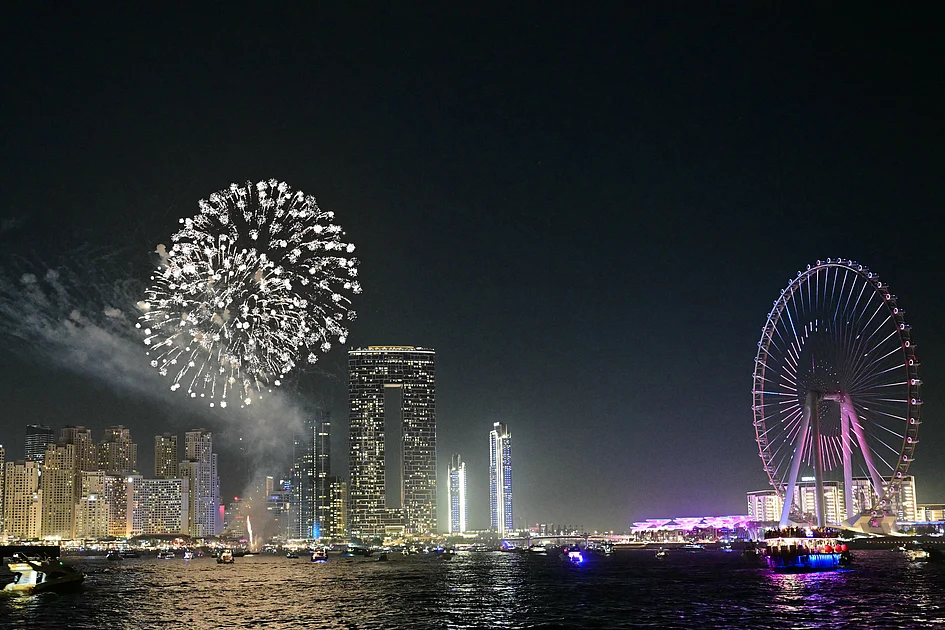
Dubai’s Ramadan 2026 calendar: Fireworks, drone shows to light up skies post iftar
Dubai has officially launched its comprehensive Ramadan 2026 calendar, featuring an extensive array of cultural events, technological displays, and community gatherings throughout the holy month. The program, operating under the overarching ‘Season of Wulfa’ initiative, emphasizes the core Ramadan values of reflection, generosity, and communal unity through diverse experiences across multiple venues.
The city will transform into a vibrant hub of post-iftar activities, including the Ramadan Street Food Festival at Sheikh Hamdan Colony from February 16 to March 15, offering curated culinary selections and family entertainment. Technological marvels will illuminate the skies with daily fireworks at Al Seef and Dubai Creek alongside coordinated drone light shows presenting Ramadan-themed visual spectacles from February 19 to March 19.
Major destinations will host specialized programming: Festival Bay at Dubai Festival City Mall will feature drone displays, cultural performances, and lantern parades; City Walk will create relaxed evening environments with cultural interactions; and Expo City Dubai will present family-friendly cultural programs blending tradition with contemporary experiences.
Hospitality venues across Dubai will offer traditional Ramadan experiences, including majlis gatherings at Jumeirah Emirates Towers, beachfront iftar settings at Jumeirah Al Naseem, and large-scale Ramadan tents at Atlantis, The Palm. Retail establishments will participate through the Season of Wulfa promotion, while citywide decorative lighting and installations will create a cohesive visual identity throughout the emirate.
Government entities including Dubai Municipality, Community Development Authority, and Islamic Affairs Department will support community initiatives such as Souq Ramadan, Eyal Al Freej children’s program, and Steps of Life charitable walking initiative. The comprehensive program reflects Dubai’s commitment to maintaining Ramadan traditions while incorporating innovative technological elements and inclusive community engagement.