作者: admin

  • Trump administration ends temporary protected status for Yemenis in US

    Trump administration ends temporary protected status for Yemenis in US

    The United States Department of Homeland Security announced on Friday the termination of Temporary Protected Status (TPS) for Yemeni citizens residing in the country, effective within a two-month period. Homeland Security Secretary Kristi Noem declared the decision, asserting that continued TPS designation for Yemen contradicts national security interests and fails to meet statutory requirements for extension.

    This policy shift compels approximately 1,700 Yemeni TPS beneficiaries to depart voluntarily or face potential deportation by Immigration and Customs Enforcement authorities. The Department of Homeland Security outlined that affected individuals lacking alternative legal immigration status must arrange their departure within 60 days, utilizing the ‘CBP One’ application to coordinate travel arrangements.

    The termination comes despite the State Department maintaining its most severe travel advisory for Yemen, classifying the country under ‘Level 4 – Do Not Travel’ due to extreme risks including terrorism, civil unrest, widespread crime, health hazards, kidnapping threats, and active landmines. The US embassy in Sanaa suspended operations in February 2015 amid escalating violence and has not resumed full services.

    Yemen initially received TPS designation in September 2015 following the collapse of its government and the commencement of military operations by a Saudi-led coalition with US support. The program underwent regular renewals every 18 months, with extensions granted in 2017, 2018, 2020, 2021, 2023, and most recently in 2024.

    The administration’s departure incentive offers $2,600 plus reimbursed airfare through the CBP One portal, mirroring programs offered to undocumented immigrants since May. However, reports indicate inconsistent payout distribution, with many applicants receiving no funds despite program promises.

    Critics including Amer Ghalib, former mayor of Hamtramck, Michigan—home to a significant Yemeni-American community—denounced the decision as fundamentally contradictory. Ghalib, a Trump supporter and Yemeni immigrant, questioned the administration’s rationale: ‘If Yemen remains unsafe for American travelers, how can it be deemed safe for returning Yemenis facing potential militia persecution?’

    The humanitarian crisis in Yemen persists amid ongoing conflict, with Pentagon airstrikes against Houthi targets continuing through last year and Israeli strikes killing numerous Yemeni journalists. Deportation carries a mandatory 10-year reentry ban, creating permanent separation from family members remaining in the United States.

  • African Union summit opens as youth anger grows over a ‘bloc of old leaders’

    African Union summit opens as youth anger grows over a ‘bloc of old leaders’

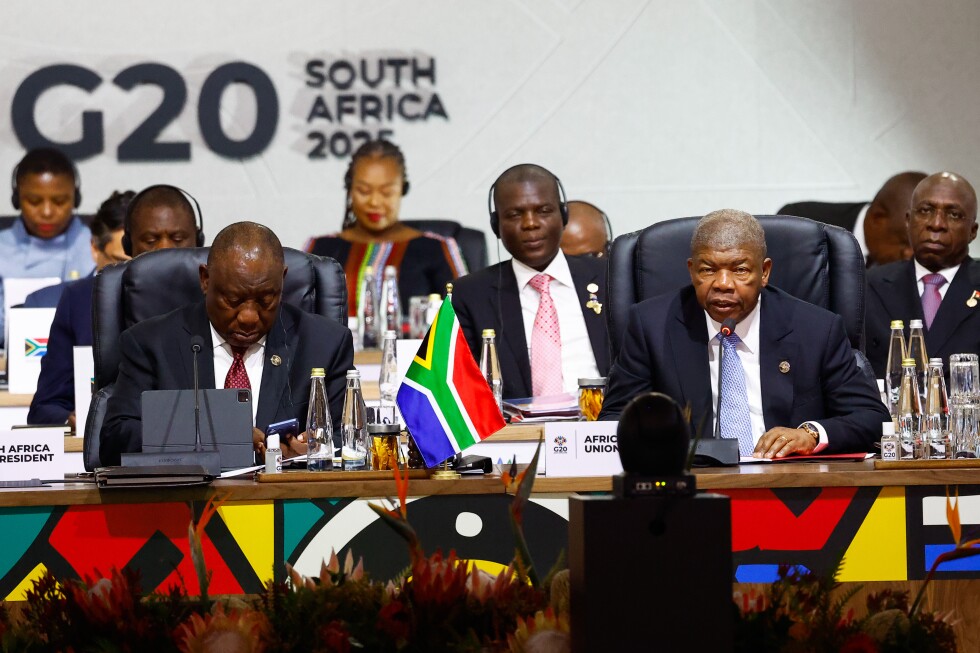
    ADDIS ABABA, Ethiopia — The African Union convenes its 39th annual summit this weekend amidst growing criticism from the continent’s youth population, who increasingly view the regional body as an ineffective organization dominated by aging leaders. Established to foster unity among African states, the AU now confronts a severe credibility challenge as military coups, contested elections, and economic protests sweep across numerous nations.

    Africa’s demographic paradox presents a central challenge: while boasting the world’s youngest population with over 400 million people aged 15-35, the continent simultaneously hosts some of the globe’s longest-serving leaders. This generational disconnect has fueled widespread disillusionment with the AU’s governance approach, which analysts say prioritizes governments over citizens.

    Liesl Louw-Vaudran, senior analyst with the Crisis Group, observes: ‘The fundamental frustration stems from the perception that this is not a citizen-driven African Union. The organization has consistently missed opportunities to center its operations around people rather than political leadership.’

    The AU’s election monitoring has drawn particular scrutiny. During recent presidential elections in Uganda, the Commission initially commended electoral conduct despite widespread reports of opposition suppression, internet shutdowns, and media intimidation. This response provoked fierce social media backlash, with one user decrying the AU as a ‘dictatorship club.’

    Enforcement mechanisms represent another critical weakness. Macharia Munene, professor of history at the United States International University in Nairobi, notes: ‘The AU struggles with implementation because not all members meet their dues or fully accept collectively decided measures.’

    This year’s summit, focused on water sanitation and climate response, occurs against a backdrop of shifting global alliances and reduced foreign aid. While the gathering offers opportunities for international coordination, critics urge the AU to address internal governance failures more urgently.

    In Nigeria’s capital Abuja, 32-year-old resident Chima Ekwueme expressed a common sentiment: ‘They exist for their own interests. Despite Nigeria’s mineral wealth, we face severe security and economic crises. Where is the AU’s accountability mechanism?’

    As the continent’s population projected to double by 2050, the pressure mounts for the AU to transform from a symbolic body into an effective institution capable of addressing Africa’s most pressing challenges.

  • Oil refinery ablaze in Cuba as fuel crisis deepens

    Oil refinery ablaze in Cuba as fuel crisis deepens

    A significant fire erupted at the Ñico López Refinery in Havana, Cuba, on Friday, sending plumes of black smoke over the capital’s bay area. Cuban energy officials confirmed the blaze has been contained without injuries, though it occurred perilously close to moored oil tankers in Havana Bay. An official investigation into the incident has been initiated.

    This industrial accident exacerbates Cuba’s severe fuel crisis, intensified by recent US actions against Venezuelan oil shipments. The United States military’s seizure of former Venezuelan President Nicolás Maduro in Caracas on January 3rd triggered a chain of events that has strangled Cuba’s energy supply. Washington subsequently confiscated Venezuelan oil tankers and imposed new tariffs on nations supplying petroleum to Cuba, effectively blocking the approximately 35,000 barrels of oil Venezuela previously provided daily.

    The embargo’s consequences are reverberating across Cuban society. Hospitals report emergency ward disruptions, dialysis patients face treatment uncertainties, and critical infrastructure like water pumping stations suffers operational failures. The aviation fuel shortage has compelled multiple airlines to suspend services to the island, prompting several countries including the United Kingdom to issue travel advisories against non-essential visits.

    Cuban authorities have implemented strict fuel rationing and scaled back public services across healthcare, education, and transportation sectors. Despite these challenges, humanitarian efforts continue with two Mexican vessels delivering 800 tonnes of aid to Havana Bay on Thursday.

    United Nations human rights experts have condemned Washington’s restrictions as “an extreme form of unilateral economic coercion,” with UN human rights chief Volker Türk expressing extreme concern over the deteriorating situation. The current crisis extends the longstanding US economic and trade embargo on Cuba that has persisted since 1960.

  • Columbia University, Cuny most ‘hostile’ campuses for Muslims: Cair

    Columbia University, Cuny most ‘hostile’ campuses for Muslims: Cair

    A comprehensive investigation by the Council on American-Islamic Relations (CAIR) has revealed a disturbing pattern of institutional hostility toward Muslim students and Palestine advocates across American higher education. The civil rights organization’s assessment of 51 university campuses since 2024 found none could be classified as “unhostile” environments for these communities.

    The report identifies Columbia University and the City University of New York (CUNY) as the most problematic institutions, followed by the University of Michigan, University of Chicago, and Case Western Reserve University. These rankings emerged from CAIR’s systematic monitoring of anti-Muslim incidents through a dedicated public reporting platform.

    Alarmingly, the investigation uncovered that over half of the surveyed institutions completely omit protections against Islamophobia and anti-Muslim bias from their official discrimination policies. Furthermore, approximately 75% of these universities reportedly summoned law enforcement to arrest students, staff, and faculty participating in Gaza genocide protests following the October 7, 2023 Hamas-led attacks on Israel.

    The spring of 2024 witnessed unprecedented student activism mirroring Vietnam-era protests, with Gaza solidarity encampments spreading nationwide. These demonstrations aimed to pressure universities to divest from entities profiting from Israel’s military operations and occupation of Palestinian territories.

    CAIR’s analysis directly links the campus crackdowns to Project 2025, a policy blueprint developed by the far-right Heritage Foundation and largely adopted by the Trump administration. The report notes that twelve institutions—including Harvard, Yale, and Columbia—have embraced the International Holocaust Remembrance Alliance’s definition of antisemitism, which critics argue conflates legitimate criticism of Israel with antisemitism.

    The legal landscape surrounding these issues remains contentious. A September federal court ruling favored Harvard in its lawsuit against federal agencies, with Judge Allison Burroughs condemning the Trump administration’s withholding of nearly $3 billion in research funding as an “ideologically-motivated assault” using antisemitism as a “smokescreen.”

    However, the confrontation continues with the Justice Department recently suing Harvard over admissions documentation, while the Trump administration seeks $1 billion in damages from the university for its defiance during the funding dispute.

    CAIR defines Islamophobia as a pattern of discrimination and oppression rooted in fear, hatred, or prejudice toward Islam and Muslims, often reducing the faith’s diverse traditions to stereotypes of violence and civilizational threat. The organization notes this phenomenon frequently encompasses anti-Palestinian racism justified through anti-Muslim rhetoric.

  • Indian man admits plot to kill US-based Sikh separatist leader

    Indian man admits plot to kill US-based Sikh separatist leader

    In a significant development in international relations and counterterrorism efforts, 54-year-old Indian national Nikhil Gupta has entered guilty pleas on three serious criminal charges in a United States federal court. The charges—murder-for-hire, conspiracy to commit murder-for-hire, and conspiracy to commit money laundering—stem from an alleged plot to assassinate Gurpatwant Singh Pannun, an American citizen and prominent advocate for the Khalistan movement, on New York City soil.

    US prosecutors presented a detailed case alleging that Gupta was not acting alone but was directed by an Indian government official, identified as Vikash Yadav from India’s Cabinet Secretariat—a body housing the nation’s foreign intelligence service. The indictment claims that in May 2023, Gupta was recruited by Yadav, with whom he met in Delhi to orchestrate the assassination. Following these discussions, Gupta allegedly attempted to hire a hitman, who was, in reality, an undercover officer from the US Drug Enforcement Administration.

    The target, Mr. Pannun, leads an organization labeled as terrorist by the Indian government, though he personally denies these allegations, identifying instead as a political activist for Sikh independence. The Khalistan movement seeks a sovereign homeland for Sikhs, a religious minority constituting approximately 2% of India’s population. While the movement has limited traction within India today, it maintains support among parts of the global Sikh diaspora.

    This case is deeply interwoven with broader international tensions. It emerged shortly after the murder of Hardeep Singh Nijjar, another Sikh separatist figure, in Canada in June. Canadian authorities have similarly accused Indian government agents of involvement in Nijjar’s killing—a claim India has also denied. US Attorney Jay Clayton emphasized the gravity of Gupta’s actions, stating that the plot represented a severe violation of US sovereignty and the rights of its citizens. Gupta now faces a potential maximum sentence of 40 years in imprisonment.

    India’s government has consistently denied any official connection to the alleged assassination plots in both the US and Canada, creating a diplomatic rift with two key Western allies. The guilty plea marks a critical judicial step in a case that continues to strain international relations and raise questions about extraterritorial threats to free speech and citizen safety.

  • Trump administration ends temporary protected status for Yemen

    Trump administration ends temporary protected status for Yemen

    The Trump administration has officially terminated Temporary Protected Status (TPS) for Yemeni nationals residing in the United States, Homeland Security Secretary Kristi Noem announced on Friday, February 13, 2026. This decision marks the latest in a series of immigration policy shifts by the current administration.

    Secretary Noem stated that the determination to revoke humanitarian protections for approximately 1,380 Yemeni immigrants followed extensive review and interagency consultation. The administration concluded that maintaining TPS designation for Yemen conflicted with U.S. national interests, despite ongoing concerns about the country’s stability.

    The TPS program, established to provide temporary refuge for individuals whose home countries experience natural disasters, armed conflicts, or other extraordinary circumstances, has faced systematic reduction under Trump’s presidency. Administration officials have consistently argued that the program’s expansion contradicts American immigration priorities.

    According to U.S. Citizenship and Immigration Services data, Yemen’s TPS designation was last extended in 2024 and scheduled to expire on March 3, 2026. The termination means affected Yemeni nationals will lose protection from deportation and work authorization privileges unless they secure alternative immigration status.

    The decision comes amid ongoing humanitarian concerns in Yemen, where conflict and economic instability have persisted for years. Immigration advocates have criticized the move, arguing that returning individuals to Yemen could expose them to dangerous conditions, while administration officials maintain that the program was never intended as a permanent immigration solution.

  • Why writer Arundhati Roy’s cult classic film is still relevant in India

    Why writer Arundhati Roy’s cult classic film is still relevant in India

    A landmark piece of Indian cinema history is poised for a remarkable renaissance as the restored version of Arundhati Roy’s 1989 television film “In Which Annie Gives It Those Ones” prepares for its world premiere at the 2026 Berlin International Film Festival’s Berlinale Classics section. Nearly four decades after its initial broadcast on India’s state broadcaster Doordarshan, this cult classic capturing the anarchic spirit of Delhi’s architecture students will finally receive global recognition.

    The Film Heritage Foundation, spearheading the restoration initiative, has announced concurrent theatrical releases across India in March 2026, with strategically discounted ticket pricing aimed at attracting younger audiences. Shivendra Singh Dungarpur, filmmaker and Director at Film Heritage Foundation, emphasized the film’s enduring significance: “We wanted it to be accessible. In its dialogue, portrayal of college life, and character development, it achieved something truly unusual for its time.”

    Set against the backdrop of late-1980s Delhi, the film presents an unvarnished portrait of final-year architecture students navigating institutional absurdities and personal aspirations. Centered around the endearing fifth-year student Anand “Annie” Grover—a character suspended between idealism and chronic distraction—the narrative unfolds through witty dialogue and situational comedy derived from Roy’s own campus experiences at the School of Planning and Architecture.

    The production boasts historical significance as both Roy’s screenwriting debut and the first screen appearance of Bollywood megastar Shah Rukh Khan. Roy herself appears as Radha, a sharp-witted student embodying the film’s carefree defiance against authority. The ensemble cast delivers authentic performances that capture the specific dialect of English-Hindi hybrid language spoken among Delhi’s student population at the time.

    What makes Annie particularly remarkable is its prescient examination of systemic issues that remain relevant decades later. The film’s debates about hierarchy, bureaucracy, and institutional power mirror India’s transition toward economic liberalization, capturing a generation’s simultaneous optimism and apprehension about their future. Dungarpur notes: “The issues the film speaks about are still prevalent. That’s why it resonates. It hasn’t dated in the way you might expect.”

    The restoration process itself involved forensic-level reconstruction after the original materials were nearly discarded during a house move by director Pradip Krishen. The team faced significant technical challenges, from color correction (particularly in scenes featuring Roy’s red sari) to audio restoration, requiring meticulous attention to historical accuracy.

    As contemporary audiences prepare to experience this cinematic time capsule, they’ll discover not just a period piece with flared trousers and drafting tables, but a surprisingly relevant commentary on educational systems and youthful resistance that continues to echo across generations.

  • Officials investigating DNA found in Nancy Guthrie’s home

    Officials investigating DNA found in Nancy Guthrie’s home

    A significant development has emerged in the investigation into the disappearance of Nancy Guthrie, the 84-year-old mother of NBC News anchor Savannah Guthrie. The Pima County Sheriff’s Department has confirmed the discovery of unidentified DNA evidence within her Tucson, Arizona residence, which authorities confirm does not match the missing woman or any individuals known to be in close contact with her.

    The evidence, collected from Ms. Guthrie’s home, has been submitted for comprehensive laboratory analysis. While officials declined to specify the exact location of the DNA find within the property, they did clarify earlier media reports, stating that no gloves were discovered inside the home or on its immediate grounds. However, investigators have recovered several gloves in the wider vicinity, with one located approximately two miles from the residence.

    In a crucial step forward, the FBI has disseminated a physical description of a primary suspect, derived from analysis of doorbell camera footage captured outside the Guthrie home on the night of the disappearance. The individual is described as a male standing between 5’9″ and 5’10” (175-177 cm) with an average build. A key identifying detail is the backpack he was wearing—a 25-litre Ozark Trail Hiker Pack.

    The release of this footage has generated an overwhelming public response, with investigators receiving more than 13,000 tips, including 4,000 within a single 24-hour period. Consequently, the reward for information leading to a resolution in the case has been doubled from $50,000 to $100,000.

    Authorities maintain that the suspect description is a key focus but emphasize that no possibilities are being ruled out. A broader appeal has been issued for additional video footage from neighbors in the area. With the investigation now entering its second week, concerns are heightened for Ms. Guthrie’s welfare, as she requires daily medication and has limited mobility. Her children have made public appeals, expressing their belief that she is alive and their willingness to negotiate for her safe return.

  • Chinese robots and culture converge at UN’s Year of the Horse celebration

    Chinese robots and culture converge at UN’s Year of the Horse celebration

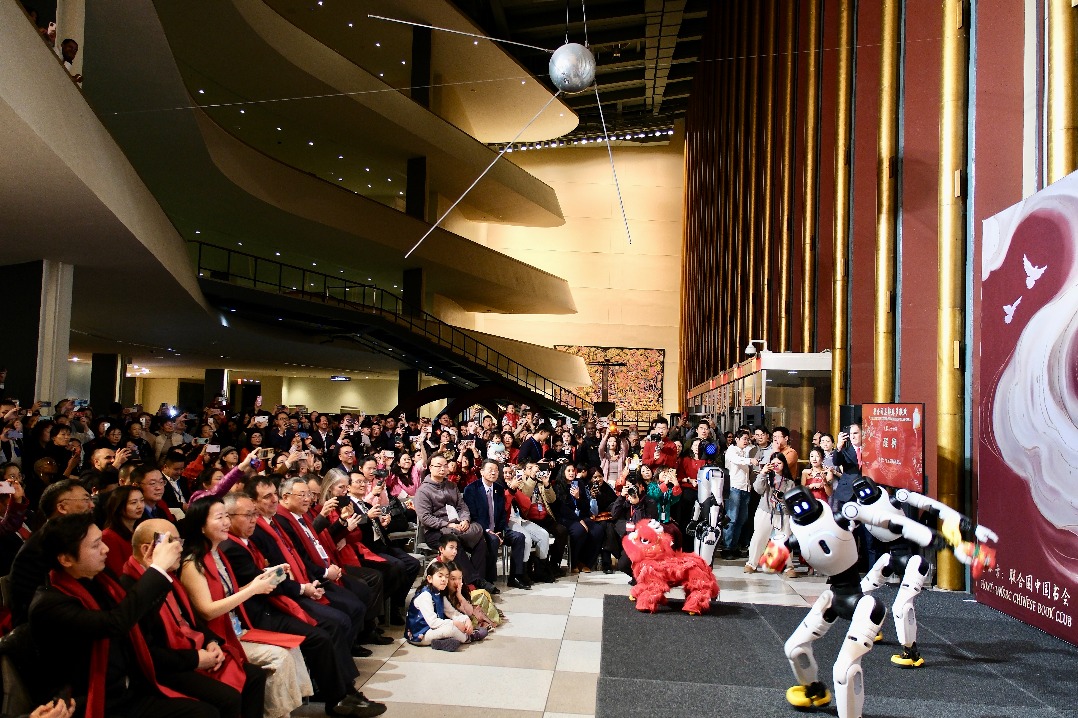
    The United Nations headquarters in New York transformed into a showcase of technological innovation and cultural diplomacy during Thursday’s Chinese New Year gala. Organized by the UN Chinese Book Club, the event featured an unprecedented performance where robotic lion dancers, panda-shaped robots, and humanoid dancing machines shared the stage, captivating hundreds of UN staff members, diplomats, and international visitors.

    The celebration marked a significant milestone as the Spring Festival now holds official recognition as a floating holiday on the United Nations calendar and appears on UNESCO’s list of intangible cultural heritage. China’s Permanent Representative to the UN, Fu Cong, emphasized the festival’s global significance, stating that ‘Spring Festival conveys to the world the values of harmony in diversity and peaceful coexistence, and embodies people’s shared aspiration for a better life.’

    Fu Cong called for strengthened cooperation between China and the United Nations, urging all parties to move forward ‘with unstoppable momentum and tireless vitality’ in the Year of the Horse. The event occurred against the backdrop of broader UN challenges addressed by Li Junhua, UN Under-Secretary-General for Economic and Social Affairs, who noted the organization faces ‘unprecedented challenges’ including raging conflicts, declining mutual trust, and widening poverty gaps.

    The technological demonstration represented more than entertainment, appearing for the second time within a week at UN headquarters. Cuban Deputy Permanent Representative Yuri Gala Lopez acknowledged China’s technological leadership, expressing admiration for the display. Dima Al-Khatib, Director of the UN Office for South-South Cooperation, found the performance ‘very impressive’ and indicated interest in exploring technology transfer opportunities to Global South countries.

    The convergence of robotics and traditional celebration highlighted China’s growing role in both technological innovation and cultural diplomacy. Khaled Khiari, UN Assistant Secretary-General for multiple regions, recognized China’s substantial contributions to UN peacekeeping operations, where China remains one of the largest troop contributors among Security Council permanent members.

  • Appeal rejected: Ex-Philippine leader Rodrigo Duterte to stand trial on Feb 23

    Appeal rejected: Ex-Philippine leader Rodrigo Duterte to stand trial on Feb 23

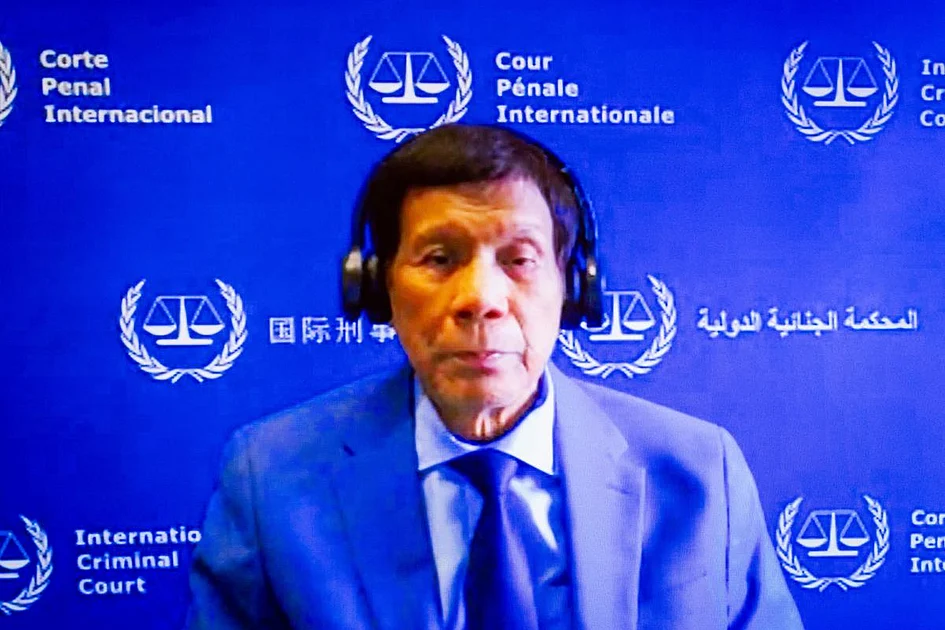
    The International Criminal Court has definitively rejected former Philippine President Rodrigo Duterte’s appeal to avoid trial proceedings, setting the stage for a landmark hearing on February 23rd. This decisive ruling marks a significant development in the long-running investigation into Duterte’s controversial anti-narcotics campaign that resulted in thousands of fatalities.

    ICC Pre-Trial Chamber I, comprising judges Iulia Antoanella Motoc, Reine Adélaïde Sophie Alapini-Gansou, and María del Socorro Flores Liera, issued a comprehensive dismissal of all defense arguments on Friday. The judicial panel determined that Duterte’s legal team had ‘misrepresented relevant findings’ from the court’s January 26th decision that initially declared the former leader fit for trial.

    The court’s assessment relied heavily on evaluations from three independent medical experts who thoroughly examined Duterte’s health condition and capacity to participate in legal proceedings. These specialists, chosen for their expertise in international tribunal fitness assessments, incorporated defense-submitted medical reports into their analysis before reaching their conclusive determination.

    The judicial chamber specifically addressed defense concerns about potential health deterioration during trial, characterizing such arguments as ‘speculative in nature.’ The ruling emphasized that the fitness determination remains subject to reassessment should circumstances change, ensuring procedural fairness throughout the judicial process.

    The upcoming confirmation of charges hearing, scheduled to commence at 10:00 AM Hague local time on February 23rd, will feature oral submissions from prosecution, defense, and victim representation teams across four days of proceedings. Following these hearings, the Chamber will deliver its decision within 60 days regarding whether the case will advance to trial phase.

    Duterte faces allegations of crimes against humanity, specifically murder and attempted murder, connected to his administration’s aggressive narcotics crackdown. While official Philippine National Police records acknowledge approximately 6,000 deaths during the campaign, independent human rights organizations estimate the actual death toll may reach 30,000.