作者: admin

  • Bondi faces criticism after saying all Epstein files have been released

    Bondi faces criticism after saying all Epstein files have been released

    The U.S. Department of Justice has declared full compliance with the Epstein Files Transparency Act, asserting it has released all documents in its possession related to Jeffrey Epstein’s case. However, congressional lawmakers are challenging this assertion, demanding greater transparency regarding internal deliberations about prosecution decisions.

    In a formal communication to Congressional judiciary leaders on Saturday, Attorney General Pam Bondi and Deputy Todd Blanche detailed the Department’s document release, emphasizing that no materials were withheld due to concerns about embarrassment, reputational harm, or political sensitivity. The correspondence included a comprehensive list of individuals mentioned within the files, ranging from government officials to public figures whose names appeared in various contexts.

    The released inventory encompasses prominent figures including former Presidents Donald Trump and Bill Clinton, Microsoft founder Bill Gates, and Prince Andrew, all of whom had documented associations with Epstein or his associate Ghislaine Maxwell. The Justice Department explicitly noted that mere appearance in the documents does not imply wrongdoing, and each individual has previously denied involvement in Epstein’s criminal activities.

    Notably, the list also contains unexpected entries including deceased music icons Janis Joplin and Elvis Presley, raising questions about the context of their inclusion. This development has sparked criticism from lawmakers who argue the disclosure lacks necessary clarification about individuals’ actual connections to Epstein’s network.

    Representative Thomas Massie (R-KY), co-author of the transparency legislation, contends that the Department continues to withhold crucial internal memoranda outlining historical decisions regarding whether to pursue charges against Epstein and his associates. Massie alleges the DoJ is invoking ‘deliberative process privilege’ to avoid releasing documents that would reveal internal prosecution deliberations.

    His legislative partner, Representative Ro Khanna (D-CA), has accused the Justice Department of ‘purposefully muddying the waters’ by failing to distinguish between actual predators and individuals merely referenced in communications. Khanna specifically criticized the inclusion of Joplin—who died when Epstein was 17—alongside convicted sex offender Larry Nassar without contextual explanation.

    The document release follows previous controversies where improperly redacted files revealed identifying information about potential victims, including email addresses and nude photographs. The Department attributed these errors to ‘technical or human error’ and removed the flagged materials. Despite these corrections, victim attorneys and lawmakers continue to demand complete transparency with appropriate protections for survivors’ identities.

  • ‘Erasing history’: British Museum criticised for removing references to ‘Palestine’ from exhibits

    ‘Erasing history’: British Museum criticised for removing references to ‘Palestine’ from exhibits

    The British Museum has ignited a firestorm of academic criticism after eliminating all references to Palestine within its ancient Middle Eastern galleries. This controversial decision, implemented following pressure from the pro-Israel advocacy group UK Lawyers for Israel (UKLFI), has been denounced by scholars as a politically-motivated assault on Palestinian cultural heritage.

    The institution altered exhibit labels dating from 1700–1500BC, replacing the term ‘Palestine’ with ‘Canaan’ and modifying descriptions of the Hyksos people from ‘Palestinian descent’ to ‘Canaanite descent’. Museum representatives justified the changes by asserting the term Palestine lacked historical relevance for that specific chronological context, claiming it only became appropriate for the southern Levant region in the later second millennium BC.

    This rationale has been vehemently contested by leading academics. Marchella Ward, a Classical Studies lecturer at the UK’s Open University, stated, ‘I use the term ancient Palestine frequently in my own research and will continue to do so.’ She characterized claims of the term’s illegitimacy as a ‘lie’ facilitating ‘the erasure of Palestinians.’

    The incident represents merely the latest in a series of successful campaigns by UKLFI targeting British public institutions. Recent targets include Encyclopaedia Britannica, which amended content in its children’s edition, and London’s Chelsea and Westminster Hospital, which removed artwork created by Gazan schoolchildren. The Open University similarly acquiesced to demands to purge ‘ancient Palestine’ from future educational materials.

    According to data compiled by the European Legal Support Centre (ELSC), UKLFI has been involved in 128 of approximately 900 documented cases of anti-Palestinian repression in the UK between 2019-2025. ELSC Director Giovanni Fassina described the pattern as ‘not surprising,’ noting institutions frequently comply with the group’s ‘misleading legal arguments’ despite their questionable foundation.

    The controversy intersects with broader concerns about cultural destruction in Gaza, where Israeli forces have damaged over 316 archaeological sites according to reports. Scholars argue that the revision of historical narratives in Western institutions complements physical destruction in conflict zones, collectively undermining Palestinian historical claims.

  • Israel’s West Bank annexation moves raise security alarm in Jordan

    Israel’s West Bank annexation moves raise security alarm in Jordan

    Jordan has issued a stern condemnation of Israel’s recent policy overhaul in the occupied West Bank, characterizing the measures as an acceleration toward full annexation that directly threatens Jordanian national security. The sweeping changes, announced last week, represent what Jordanian officials describe as a dangerous escalation beyond previous ‘creeping annexation’ into a phase of systematic territorial absorption.

    The most contentious measure involves revoking the 1953 Jordanian-era law that prohibited property sales to non-Arabs in the Palestinian territory—a legal safeguard originally intended to prevent Israeli settlement expansion through land purchases. Additional provisions include declassifying West Bank land registers (previously kept confidential to protect against fraudulent property transfers to settlers) and enabling Israel to reclassify unregistered or abandoned lands as ‘state lands’ for confiscation.

    Jordanian Senator Omar al-Ayasrah warned Middle East Eye that these actions constitute ‘a leap across strategic stages’ designed to eliminate Jordan’s influence over Palestinian affairs while dismantling legal protections for Arab landowners. The fundamental concern, analysts note, is demographic: Jordan fears Israel’s systematic pressure—through geographic constriction, economic suffocation, and political stagnation—will precipitate Palestinian emigration eastward, potentially destabilizing Jordan’s delicate social and security balance.

    In response, Jordan is pursuing diplomatic and legal countermeasures. The Royal Hashemite Documentation Centre is intensifying efforts to restore historical land deeds dating to the Ottoman era, potentially for use in an International Court of Justice challenge. While some Jordanians advocate more drastic responses—including revocation of the 1994 peace treaty or military confrontation—government officials currently describe treaty cancellation as ‘political suicide,’ preferring to exhaust diplomatic channels.

    Political analyst Lamis Andoni cautioned that Jordan’s hesitation to leverage economic agreements (such as the gas deal with Israel) might be interpreted as tacit approval. Meanwhile, retired Major General Mamoun Abu Nuwar characterized the land confiscations as an ‘undeclared war’ on Jordan, warning that forced displacement could ‘trigger a regional earthquake’ given Jordan’s strategic geopolitical position and preparedness to defend its demographic stability.

  • India, Pakistan teams arrive at Colombo stadium as fans cheer, wave flags

    India, Pakistan teams arrive at Colombo stadium as fans cheer, wave flags

    The electrifying atmosphere of the subcontinent’s greatest sporting rivalry descended upon Colombo on Sunday as the national cricket teams of India and Pakistan arrived at the R. Premadasa Stadium. The event, occurring on February 15, 2026, transformed the venue into a vibrant sea of color and sound, setting the stage for an imminent high-voltage encounter.

    Hundreds of fervent fans, a mix of traveling supporters and local enthusiasts, converged outside the stadium hours before the teams’ arrival. The air crackled with anticipation as cheers erupted upon the sight of the team buses. Supporters waved national flags, creating a spectacular mosaic of Indian blue and Pakistani green, while chanting anthems for their cricketing heroes. This public display of passion underscores the unique ability of sports, particularly cricket, to unite and divide with equal intensity in South Asia.

    The arrival ceremony marks a crucial moment in the ongoing tournament, heightening anticipation for one of the most-watched sporting events globally. Beyond the boundary, the match carries significant weight, impacting tournament standings and national pride. The palpable excitement in Colombo reflects the deep historical and cultural significance of the India-Pakistan cricket rivalry, an event that consistently transcends the sport itself to become a broader cultural phenomenon.

  • What UAE families must understand about Ivy League admissions

    What UAE families must understand about Ivy League admissions

    DUBAI – For UAE families aspiring to elite Western universities, the Ivy League dream requires confronting dramatically different admission systems and acceptance rates that plummet below 2% for international applicants, according to insights shared at a recent Dubai Mall event.

    Shanza N. Khan, founder and CEO of educational consultancy Eye on Ivy, delivered a stark assessment to parents and students, emphasizing that today’s admission landscape bears little resemblance to previous generations’ experiences. “Harvard, Yale, Princeton, Stanford, the Ivy Leagues—have less than 5 per cent acceptance rates,” Khan stated, adding that for international students from the UAE, “you’re kind of looking at 1.2 per cent or so” after accounting for citizenship preferences.

    The central distinction Khan highlighted lies between American and British systems. US institutions employ holistic review processes evaluating students within their school context, assessing academic rigor relative to available opportunities and peer performance. Conversely, UK universities operate on subject-specific applications with approximately 80% weight on grades and 20% on application materials, without relative evaluation against classmates.

    Standardized testing has regained critical importance despite recent test-optional trends. “There is a shift in the winds,” Khan noted, explaining that nearly all Ivy League institutions now require SAT scores, with competitive international applicants typically needing 1500+ scores. However, she clarified that perfect scores alone cannot guarantee admission without demonstrated academic rigor and subject mastery.

    Curriculum choices prove particularly consequential for UAE students navigating multiple educational systems. Khan warned that subject selection can “permanently close doors” for certain programs, citing examples where mathematics omissions prevented psychology applications in Canada. For UK-bound STEM applicants, she specifically cautioned against Mathematics AI HL in the IB curriculum.

    The consultant emphasized early strategic planning, recommending curriculum decisions by grades 8-9, subject selection by grade 10, and execution by grade 11. She urged families to resist herd mentality in educational choices, noting that “the IB is really, really difficult” and may not suit all students despite its prestige.

    Ultimately, Khan reframed the conversation from institutional rankings to student fit, advising balanced application strategies with two reach, two match, and one safety school—particularly important for UK applications limited to five choices through UCAS. For those targeting elite institutions, she set unambiguous benchmarks: top 1-5% class ranking for Ivy League consideration and A* trajectory for Oxbridge applications.

  • DNA found on glove appearing to match those in Nancy Guthrie suspect video

    DNA found on glove appearing to match those in Nancy Guthrie suspect video

    Federal investigators have made a significant breakthrough in the disappearance of 84-year-old Nancy Guthrie, mother of NBC News anchor Savannah Guthrie, who vanished from her Tucson, Arizona home two weeks ago. The FBI announced Sunday that investigators recovered a glove containing DNA evidence that appears to match those worn by a suspect captured on doorbell surveillance footage.

    The critical evidence was discovered in a field approximately two miles from Guthrie’s residence, with preliminary DNA testing revealing an unknown male profile. While awaiting final quality control confirmation, the agency emphasized this particular glove differs from approximately 16 others collected near the property, most discarded by search volunteers.

    The investigation centers on surveillance footage showing a masked individual wearing gloves and a distinctive 25-liter Ozark Trail Hiker Pack approaching Guthrie’s front door on February 1st. The suspect attempted to obstruct the camera’s view using vegetation from the yard before presumably entering the property. Forensic analysis indicates the person stands between 5’9″ and 5’10” with an average build.

    Authorities have escalated search efforts involving helicopters, K-9 units, and hundreds of officers while doubling the reward for information to $100,000. Concerns mount for Guthrie’s welfare as she requires medication and was described as being in poor physical health despite having no cognitive impairments.

    Additional DNA evidence not belonging to Guthrie or known associates was previously recovered from her home, though investigators maintain they are not ruling out any possibilities despite the suspect description remaining a key focus.

  • Noble Legacy Masters set early pace as UGC Season 3 tees off in style at Saadiyat links

    Noble Legacy Masters set early pace as UGC Season 3 tees off in style at Saadiyat links

    The Ultimate Golf Challenge Season 3 commenced with spectacular displays of skill and strategy at Abu Dhabi’s prestigious Saadiyat Beach Golf Club, where defending champions Noble Legacy Masters established an early dominance in the team competition.

    Under challenging coastal conditions at the Gary Player-designed oceanfront course, teams navigated both gusty winds and strategic complexities during Saturday’s opening round. The tournament format required each squad to field two sub-teams of five players from their 16-member rosters, with the best four Stableford scores from each sub-team contributing to the overall total.

    Noble Legacy Masters, co-owned by Saket Kanoi and Achal Ghai, demonstrated why they remain the team to beat, posting an impressive 255 points through disciplined, conservative play. Their methodical approach created an eight-point cushion over second-place Meteora Magicians (247 points), while last season’s runners-up, The A Team, positioned themselves third with 234 points.

    Achal Ghai, who personally contributed 34 points, emphasized the team’s tactical approach: ‘Our players followed the script in terms of being conservative and sensible rather than attempting excessively high scores. This disciplined strategy provided our team with an optimal foundation for the season.’

    The individual competition witnessed a standout performance from The A Team’s Maura Duggan, who carded 40 Stableford points off a 10 handicap to lead the field. Her exceptional round highlighted the importance of accuracy and adaptability on the demanding links course.

    ‘Finding the fairways proved absolutely crucial today,’ Duggan explained. ‘The ball rolled out significantly, shortening approach shots. After an unsuccessful conservative attempt with a three-wood, I recommitted to aggressive driving, which ultimately yielded excellent results for both myself and the team.’

    Duggan’s teammate Samvit Chopra reinforced The A Team’s strong position with 38 points, securing third place individually. Their combined efforts, supplemented by Vivek Chand’s 34 points, demonstrated the depth required to contend for the championship.

    UGC Tournament Director Brandon de Sousa praised participants’ preparation and adaptability: ‘I was genuinely impressed with how teams approached Saadiyat’s challenges. Despite the wind and links-style complexities, their thorough preparation was evident in composed performances and promising results.’

    The tournament continues with Noble Legacy Masters aiming to replicate their Season 2 victory, while challengers including Meteora Magicians and The A Team seek to close the gap in subsequent rounds.

  • What is the dart frog toxin allegedly used to kill Alexei Navalny?

    What is the dart frog toxin allegedly used to kill Alexei Navalny?

    In a coordinated declaration, the United Kingdom alongside several European allies has formally attributed the death of Russian opposition leader Alexei Navalny to a rare neurotoxin derived from South American poison dart frogs. Official statements indicate that laboratory analysis confirmed traces of epibatidine, an exceptionally potent compound, within samples taken from Navalny’s body. The allies asserted that the Russian state singularly possessed the “means, motive and opportunity” to deploy such an obscure biological agent.

    The Kremlin has vehemently rejected these allegations. Russian state-run news agency Tass quoted government spokesperson Maria Zakharova dismissing the findings as a baseless “information campaign” engineered to divert attention from Western political issues. The Russian embassy in London further decried the announcement as “feeble-mindedness” and “necro-propaganda.”

    Epibatidine, as explained by toxicology expert Jill Johnson, is a natural compound isolated from the skin of Ecuadorian poison dart frogs, notably the Anthony’s poison arrow frog and the Phantasmal poison frog. It is estimated to be 200 times more potent than morphine. Professor Alastair Hay, an environmental toxicologist at the University of Leeds, detailed its mechanism: the toxin overstimulates nicotinic receptors in the nervous system, which can lead to muscle paralysis, respiratory failure, and ultimately death by suffocation. Its presence in human blood is a strong indicator of deliberate administration.

    The rarity of this toxin underscores the gravity of the accusation. Epibatidine is not found naturally in Russia. Its production is contingent on a specific ecological chain; the frogs synthesize it only by consuming a precise diet of alkaloid-rich insects in their native habitats of Ecuador and Peru. Consequently, frogs in captivity do not produce the toxin. Johnson emphasized that finding a wild frog producing the exact required compound is “almost impossible,” and known cases of human epibatidine poisoning are virtually nonexistent outside of controlled laboratory accidents, which were non-fatal.

    Navalny died two years ago in a Siberian penal colony, where he had been imprisoned for three years following his return to Russia. Official Russian accounts claimed he felt unwell after a walk before collapsing and dying of natural causes—a narrative staunchly contradicted by his widow, Yulia Navalnaya, who has consistently stated her husband was murdered. This latest accusation from European nations reignites international scrutiny on the Kremlin’s alleged involvement in the dissident’s death.

  • Look: From ancient forts to desert rock art, 5 UAE sites added to Islamic heritage list

    Look: From ancient forts to desert rock art, 5 UAE sites added to Islamic heritage list

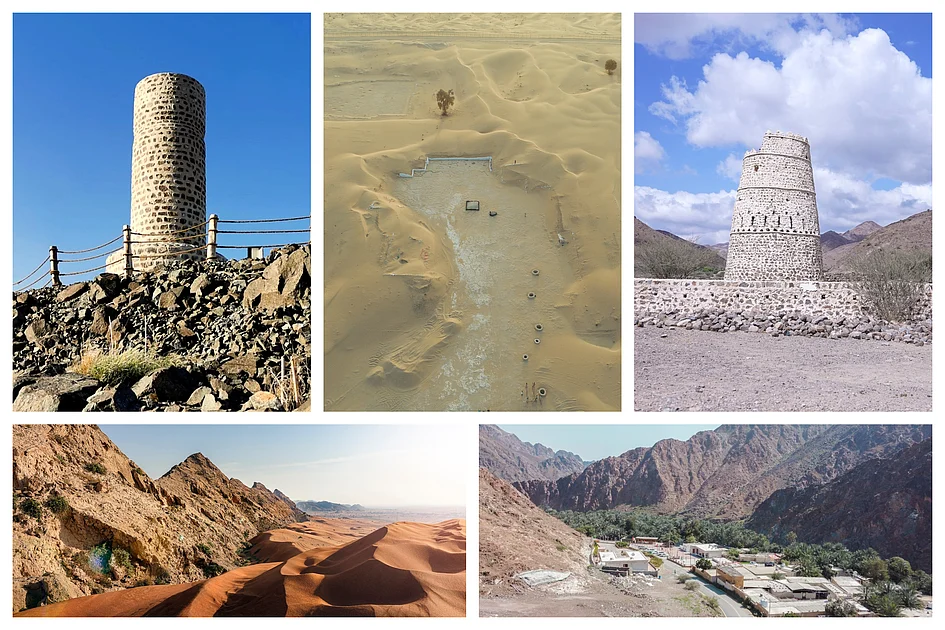
    In a significant achievement for cultural preservation, the United Arab Emirates has secured international recognition for five historically significant sites through their inscription on the Islamic World Educational, Scientific and Cultural Organization’s (ICESCO) List of Islamic World Tangible Heritage. The announcement came during the 13th session of the Islamic World Heritage Committee convened in Uzbekistan.

    The newly designated locations span the emirates of Dubai and Sharjah, representing diverse aspects of the region’s rich historical tapestry. The recognition underscores the UAE’s commitment to safeguarding its cultural legacy while promoting global awareness of its archaeological wealth.

    Among the honored sites is Saruq Al Hadid, an archaeological marvel located approximately 95 kilometers from Dubai. Discovered in 2002 following aerial observations by His Highness Sheikh Mohammed bin Rashid Al Maktoum, Ruler of Dubai, the site features distinctive dark patches subsequently identified as metallurgical slag from ancient smelting operations. Research indicates continuous human activity from the Early Bronze Age (2600 BCE) through the Late Iron Age (550 BCE), with excavations yielding bronze artifacts, pottery, stone tools, weaponry, and exquisite gold and silver ornaments.

    The historic defensive structures of Khor Fakkan, including the Portuguese Fort and Al Adwani Tower, received recognition for their role in coastal protection from the 14th to the 20th centuries. The Portuguese Fort stands as the sole surviving triangular-shaped fortification in the eastern Arabian Peninsula.

    Al Nahwa, situated south of Khor Fakkan, earned inclusion for its remarkable collection of rock carvings spanning from the Bronze Age to contemporary times. Preservation efforts have employed advanced three-dimensional digital technologies to document these artistic expressions.

    Sharjah’s Faya Palaeolandscape gained recognition as a critical record of early human settlement patterns, containing archaeological evidence that documents human presence across multiple historical epochs.

    Wadi Al Helo in the Eastern Region was honored for its evidence of copper mining activities during the Neolithic transition period. The valley features remnants of copper extraction technological development, Bronze Age rock art, and historic village remains, illustrating the enduring relationship between inhabitants and their environment.

    Sheikh Salem bin Khalid Al Qassimi, Minister of Culture and Chairperson of the National Commission for Education, Culture and Science, described the inscriptions as “a significant milestone that reflects the depth and richness of the UAE’s cultural heritage.” The minister further emphasized the nation’s ongoing commitment to “strengthening the presence of Emirati heritage on international heritage lists” through comprehensive documentation and sustainable preservation initiatives for future generations.

  • US boards second tanker in Indian Ocean after tracking it from Caribbean

    US boards second tanker in Indian Ocean after tracking it from Caribbean

    The United States military has executed its second maritime interception operation within a week, boarding the Panamanian-flagged oil tanker Veronica III in the Indian Ocean following an extensive surveillance operation that originated in the Caribbean Sea. The Pentagon released operational footage showing special forces personnel boarding the vessel, which had been under tracking surveillance for suspected involvement in circumventing U.S. sanctions against Venezuela.

    This strategic operation represents the latest escalation in the Trump administration’s comprehensive campaign to restrict Venezuela’s oil exports, with at least seven tankers seized since last year. The Department of Defense characterized the mission as “a right-of-visit, maritime interdiction and boarding” exercise, though officials did not confirm whether the vessel was ultimately seized or permitted to continue its journey.

    According to monitoring data from TankerTrackers.com, the Veronica III departed Venezuelan waters on January 3rd, coinciding with the controversial capture of Venezuelan President Nicolás Maduro during a raid on his presidential compound in Caracas. The vessel was reportedly carrying approximately 1.9 million barrels of crude oil at departure and has been implicated in transporting Russian, Iranian, and Venezuelan oil since 2023.

    The Pentagon issued a stark warning in its official statement: “Distance does not protect you. The vessel tried to defy President Trump’s quarantine – hoping to slip away. We tracked it from the Caribbean to the Indian Ocean, closed the distance, and shut it down. No other nation has the reach, endurance, or will to do this. International waters are not sanctuary. By land, air, or sea, we will find you and deliver justice.”

    This operation follows last week’s boarding of the Aquila II, another tanker similarly “tracked and hunted” into the Indian Ocean. The intensified enforcement stems from President Trump’s December announcement ordering a blockade of sanctioned oil tankers operating in Venezuelan waters, which the Maduro government has condemned as “theft.”

    The economic impact has been substantial, with Venezuelan oil exports dramatically reduced to approximately 400,000 barrels per day in January—roughly half previous levels—according to Kpler analytics. Only vessels associated with Chevron and destined for U.S. ports continue normal operations amid the escalating maritime enforcement campaign.