作者: admin

  • Tributes to family as mother, father and son die

    Tributes to family as mother, father and son die

    A tragic incident in rural County Louth has left the community in mourning after the deaths of Mark and Louise O’Connor, along with their adult son Evan, who was autistic. The family, described as passionate advocates for autism support services, were found deceased in their home in Dromgowna on Monday morning. A man in his 30s remains in custody as investigations continue, though authorities have stated there is no ongoing threat to the public.

    The O’Connors were instrumental in establishing Drogheda Abacas Special School, where Evan was a former pupil. The school expressed profound sadness, highlighting their tireless efforts to support autistic individuals and their families. ‘Mark and Louise were passionate advocates for their son Evan and for all autistic people,’ the school stated. ‘Their legacy will forever be remembered.’

    Post-mortem examinations are underway to determine the cause of death, with the scene cordoned off for forensic analysis. Irish broadcaster RTÉ reported that the bodies were discovered by a staff member who had arrived to take Evan to a daycare center. Gardaí have ruled out the use of a firearm in the incident.

    Mark O’Connor was also a board member of Autism Support Louth and Meath and a professional advocate for disability rights. His involvement with North East Runners Dundalk was celebrated, with the club expressing ‘immense sadness and shock’ at the loss. ‘His kindness and spirit enriched our entire community,’ the club stated, planning to organize support for members in the coming days.

    An Incident Room has been established at Ardee Garda Station, and a family liaison officer has been appointed to assist relatives. Gardaí have urged anyone with information to come forward as the investigation continues.


  • 13-hour flight and future Chelsea wonderkid – Real’s visit to Kairat

    13-hour flight and future Chelsea wonderkid – Real’s visit to Kairat

    Kairat Almaty, the debutants of the UEFA Champions League, are set to host Real Madrid in a historic first home fixture on Tuesday, marking a monumental moment for Kazakh football. Despite facing immense geographical challenges, Kairat’s journey to this stage has been nothing short of extraordinary. The team traveled a staggering 6,900 kilometers across three time zones for their opening match against Sporting Lisbon, where they suffered a 4-1 defeat. Now, they prepare to face the 15-time European champions, Real Madrid, in Almaty, a city closer to Beijing than Madrid. The Spanish giants will endure a 13-hour flight to reach the 24,000-seater Ortalyq Stadion, a logistical hurdle that could level the playing field. Kairat’s defender, Damir Kassabulat, emphasized the home advantage, stating, ‘With our fans, it will be like a fortress.’ Kairat’s qualification for the Champions League is a historic achievement for Kazakhstan, a nation that joined UEFA in 2002. Club president Kairat Boranbayev highlighted the financial and national significance of this milestone, joking, ‘We congratulate Europe for expanding its borders.’ Despite being massive underdogs with a squad valued at just £10.9 million compared to Real Madrid’s £1.2 billion, Kairat’s determination remains unshaken. Manager Rafael Urazbakhtin described the campaign as ‘the toughest exam’ but also ‘a dream come true.’ Kairat’s journey to the Champions League proper was sealed with a dramatic 3-2 penalty shootout victory over Celtic, a moment that saw goalkeeper Temirlan Anarbekov become a national hero. The club’s success is also a testament to their investment in youth development, with 17-year-old striker Dastan Satpaev emerging as a rising star. Satpaev, who is set to join Chelsea next summer, has already made waves in the Champions League qualifying rounds, showcasing his talent and work ethic. As Kairat prepares to face Real Madrid, they carry the hopes of a nation, proving that even the most daunting challenges can be overcome with resilience and determination.

  • Russian mum and children found living in Indian cave return home

    Russian mum and children found living in Indian cave return home

    Nina Kutina, a 40-year-old Russian woman, and her two young daughters, aged five and six, have returned to Russia after being rescued from a cave in Karnataka, India, in July. The family was discovered during a routine police patrol in the Gokarna forest, near the tourist hub of Goa. The rescue made international headlines due to the unusual circumstances of their living conditions. Kutina, who lacked valid documentation to remain in India, was detained along with her daughters at a foreigners’ detention center. Last week, the Karnataka High Court intervened, directing the federal government to issue travel documents for their repatriation. They departed for Russia on September 28, accompanied by Kutina’s minor son from a previous relationship, who was later found living in Goa. The court’s decision followed a custody petition filed by Dror Shlomo Goldstein, an Israeli businessman based in Goa, who claimed paternity of the two girls. Goldstein argued against their deportation, citing India’s commitments under the United Nations Convention on the Rights of the Child and the Goa Children Act, 2003. However, the court ruled in favor of Kutina, noting her expressed desire to return to Russia. The Russian embassy facilitated their travel, offering an emergency window between September 26 and October 9. Kutina had defended her unconventional lifestyle, stating that she and her children were content living in nature. However, authorities emphasized the dangers of their isolated living conditions, particularly during the monsoon season. The case has sparked debates over child welfare, parental rights, and the complexities of international custody disputes.

  • ‘I can kill and not be convicted’: The Ukrainian convicts swapping jail for the battlefield

    ‘I can kill and not be convicted’: The Ukrainian convicts swapping jail for the battlefield

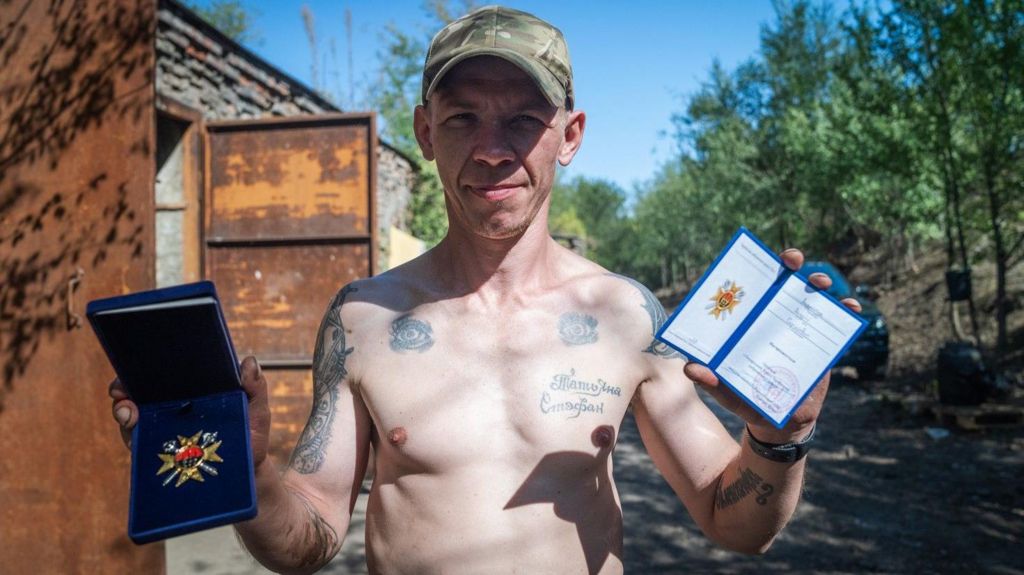
    In the shadow of Ukraine’s ongoing conflict with Russia, a unique and controversial initiative is unfolding within the nation’s penal system. At Penal Colony No. 4, a medium-security prison with an imposing atmosphere, inmates like Andrii Askerov and Roman Chech are trading their prison jumpsuits for military fatigues. Under a law enacted last year, over 10,000 prisoners, including drug dealers and even murderers, have volunteered to join the Ukrainian army in exchange for early release. Their mission? To fight on the front lines until the war ends. For many, this is not just a path to freedom but a chance for redemption and revenge. Roman, whose sister was killed by a Russian missile in Kharkiv in 2023, sees this as an opportunity to avenge her death. ‘I would have a lifelong label as a convict, but if I serve, I’d be a serviceman,’ he says. The recruits, many of whom have no prior military experience, undergo a month of training before being deployed to some of the most dangerous sectors of the front line. According to the governor of Penal Colony No. 4, half of the thousand inmates who volunteered have already perished. Despite the high mortality rate, morale among these convict soldiers remains surprisingly high. For them, the battlefield offers a chance to rewrite their legacies. Andrii Andriichuk, a former career burglar turned soldier, proudly displays his ‘Hero of Ukraine’ medal, the nation’s highest honor. ‘I’ve committed many evil deeds for this country,’ he admits. ‘There is a price to pay for everything. I’ll just go back to the job I’m good at: fighting.’ The initiative has drawn comparisons to Russia’s earlier strategy of recruiting prisoners, which was widely criticized. However, Ukraine’s Deputy Justice Minister, Evhen Pikalo, insists there is a fundamental difference. ‘The Russians are paid per hundred meters, and Ukrainians are driven by patriotic feelings,’ he claims. Pikalo views the program as a form of rehabilitation, offering convicts a chance to contribute to their country’s defense. Yet, the moral implications of releasing serious offenders remain contentious. Pikalo emphasizes that these are conditional releases, not pardons, and that the program aims to resocialize rather than exploit. As Ukraine’s war effort continues, the search for motivated soldiers grows increasingly desperate. For these convicts, the battlefield is both a proving ground and a path to redemption, even as the odds of survival remain grim.

  • Thousands of workers in limbo as US-Africa trade deal set to expire

    Thousands of workers in limbo as US-Africa trade deal set to expire

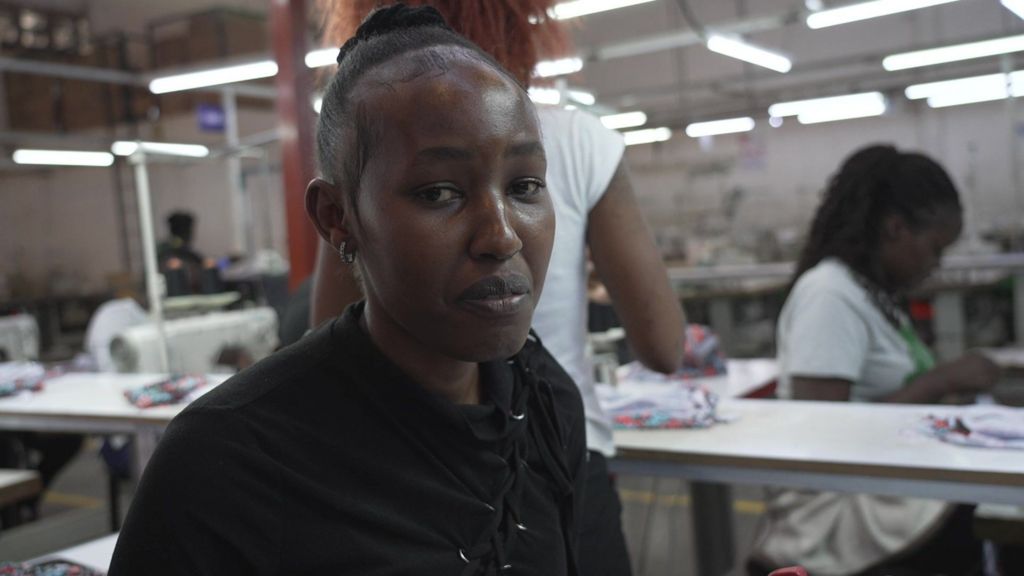
    At Shona EPZ, a bustling garment factory in Nairobi, Kenya, the hum of sewing machines and the chatter of workers typically create a reassuring rhythm. However, today’s atmosphere is tinged with anxiety as the factory’s future hangs in the balance due to the impending expiration of the African Growth and Opportunity Act (Agoa). This landmark US trade policy, which has granted duty-free access to the US market for African goods for 25 years, is set to expire on Tuesday, leaving thousands of workers like Joan Wambui uncertain about their livelihoods. Joan, a 29-year-old mother, has been employed at Shona EPZ for six months, sewing sportswear exclusively for the American market. Her salary supports her four-year-old daughter, two college-going sisters, and her mother. Losing her job would not only disrupt her family’s stability but also strip her of the dignity and hope that come with a steady income. Shona EPZ, which employs 700 people, has already seen a significant drop in output due to buyer hesitancy amid the uncertainty. Factory director Isaac Maluki warns that without an Agoa extension, layoffs and even shutdowns may be inevitable. The stakes are high not just for Kenya but for over 30 African countries that rely on Agoa to export over 6,000 products to the US. Kenyan Trade Minister Lee Kinyanjui is pushing for at least a short-term extension to allow for transition mechanisms, while President William Ruto seeks a bilateral trade deal with the US. Meanwhile, trade experts like Teniola Tayo urge African nations to diversify their markets and leverage the African Continental Free Trade Area to reduce overreliance on the US. For workers like Joan, the urgency of feeding their families overshadows the slow pace of diplomatic negotiations. Her plea to governments is simple: provide young people with opportunities to showcase their potential.

  • Trump’s Gaza plan is a significant step – but faces fundamental obstacles

    Trump’s Gaza plan is a significant step – but faces fundamental obstacles

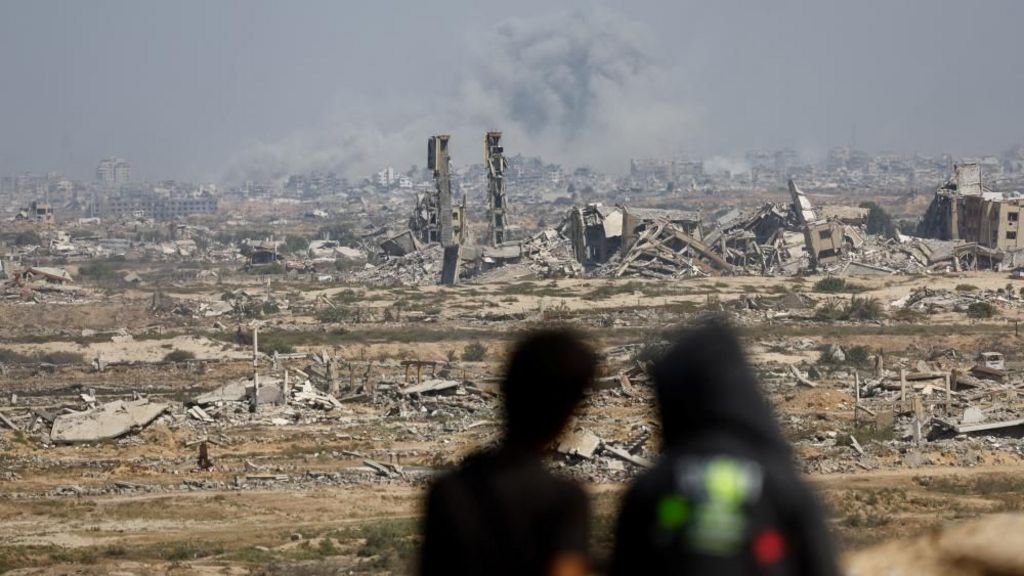
    In a high-profile announcement at the White House, U.S. President Donald Trump and Israeli Prime Minister Benjamin Netanyahu unveiled a 20-point peace plan aimed at ending the protracted war in Gaza. Trump hailed the proposal as a historic milestone, potentially ushering in “eternal peace in the Middle East.” However, the plan, while ambitious, remains a framework for further negotiations rather than a detailed roadmap to resolution. The proposal marks a significant shift in the Trump administration’s stance on Gaza’s post-war future and increases pressure on Netanyahu to accept a deal. Key elements include a ceasefire, limited Israeli withdrawal, the release of hostages and Palestinian prisoners, and the establishment of a technocratic administration in Gaza overseen by a U.S.-led “Board of Peace.” The plan also vaguely references Palestinian statehood, contingent on reforms within the Palestinian Authority. While Arab nations view the proposal as a breakthrough, Hamas remains skeptical, with one figure criticizing its failure to safeguard Palestinian interests. Netanyahu’s domestic opponents also question his commitment, citing his history of derailing deals for political gain. The plan’s success hinges on overcoming longstanding obstacles, including Hamas’s demands for Israeli withdrawal and Netanyahu’s coalition’s resistance to concessions. The proposal, crafted by Trump’s envoy Steve Witkoff and Jared Kushner, draws on previous diplomatic efforts, including the Saudi-French plan and Tony Blair’s involvement. Despite its lofty goals, the plan’s ambiguity leaves room for both sides to exploit negotiations, potentially stalling progress. As the world watches, the path to peace remains fraught with challenges, with the response from Hamas and Netanyahu’s government likely to determine the plan’s fate.

  • Chinese woman convicted after ‘world’s biggest’ bitcoin seizure

    Chinese woman convicted after ‘world’s biggest’ bitcoin seizure

    In a landmark case, Zhimin Qian, also known as Yadi Zhang, has been convicted for her pivotal role in what is now recognized as the largest cryptocurrency seizure globally, valued at over £5.5 billion ($7.4 billion). Qian, a 47-year-old Chinese national, pleaded guilty on Monday at Southwark Crown Court in London to charges of illegally acquiring and possessing cryptocurrency. The Metropolitan Police revealed that between 2014 and 2017, Qian orchestrated a massive scam in China, defrauding more than 128,000 victims and converting the stolen funds into Bitcoin assets. Her arrest followed a seven-year international investigation into a complex money laundering network. Detective Sergeant Isabella Grotto, who led the investigation, noted that Qian had been evading justice for five years before her capture, which required coordinated efforts across multiple jurisdictions. Qian fled China using falsified documents and entered the UK, where she attempted to launder the stolen money through property purchases. She was aided by Jian Wen, another Chinese national, who was sentenced to six years and eight months in prison last year for her involvement. Robin Weyell, deputy chief Crown prosecutor, emphasized the growing use of cryptocurrencies by organized criminals to conceal and transfer illicit assets. The Crown Prosecution Service (CPS) is actively working to prevent the fraudsters from accessing the stolen funds. Many victims have already received partial compensation through a scheme established in China. Qian remains in custody awaiting sentencing, with the date yet to be determined. This case underscores the increasing challenges posed by cybercrime and the critical need for international cooperation in combating such sophisticated financial frauds.

  • Ecuador president’s aid convoy attacked, officials say

    Ecuador president’s aid convoy attacked, officials say

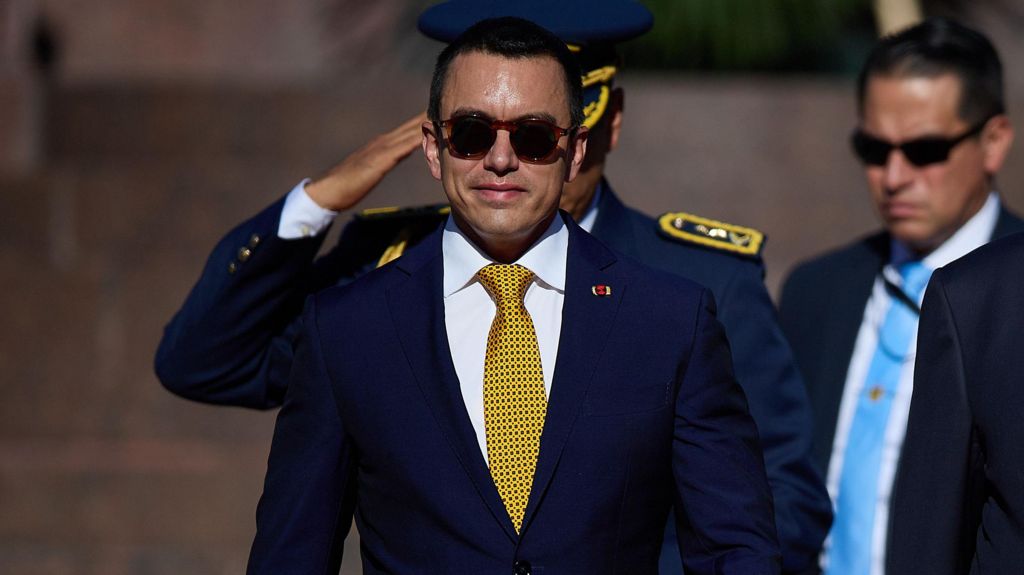
    A humanitarian convoy led by Ecuadorian President Daniel Noboa was violently ambushed on Sunday night, resulting in 17 soldiers being taken hostage, according to government spokeswoman Carolina Jaramillo. The convoy, which included UN and European diplomats, was attacked by approximately 350 individuals armed with Molotov cocktails in Cotacachi, Imbabura province. The incident occurred during a national strike organized by Conaie, Ecuador’s largest Indigenous rights organization, in protest against the government’s decision to cut fuel subsidies. President Noboa, who was accompanied by the Italian ambassador and Vatican diplomats, condemned the attack, stating, ‘They resist Ecuador’s progress and chose violence. Ecuador cannot go backward.’ He shared images of the damaged vehicles on social media, emphasizing the severity of the assault. The Ecuadorian armed forces accused the attackers of being ‘terrorist groups’ and reported that 12 soldiers were injured in the clash. Meanwhile, Conaie claimed that one of its members, Efrain Fuerez, was shot three times and died in hospital, describing his death as a ‘state crime’ ordered by President Noboa. The organization denied any involvement in terrorism, asserting that ‘the true terror is imposed by the government with its repression.’ The UN Human Rights Council’s regional representative, Jan Jarab, called for an ‘urgent dialogue’ and a thorough investigation into the violence. Ecuador’s prosecutors’ office has announced it will probe the alleged death of Fuerez. In response to the escalating unrest, a state of emergency has been declared in eight provinces, with a nighttime curfew imposed in five. President Noboa has accused the Venezuelan cartel Tren de Aragua of orchestrating the demonstrations and warned that protesters breaking the law could face 30-year prison sentences for terrorism. This incident marks a significant escalation in the ongoing protests, which have already led to violent clashes across the country.

  • Nicole Kidman and Keith Urban separate after almost 20 years

    Nicole Kidman and Keith Urban separate after almost 20 years

    Hollywood power couple Nicole Kidman and Keith Urban have reportedly parted ways after nearly 20 years together, according to a source close to the BBC. The duo, who tied the knot in June 2006, share two daughters: Sunday Rose, 17, and Faith Margaret, 14. TMZ initially broke the news, revealing that the pair had been living separately since the summer, with Kidman reportedly reluctant about the separation. The BBC’s source corroborated this information, though the exact reasons for their split remain undisclosed. Both Kidman, an Oscar-winning actress, and Urban, a four-time Grammy-winning country singer, have faced challenges and triumphs throughout their relationship. Urban’s battle with drug and alcohol addiction shortly after their wedding tested their bond, but the couple emerged stronger, with Kidman playing a pivotal role in his recovery. Over the years, they have been a constant support system for each other, frequently appearing together at high-profile events. Despite recent public appearances that suggested a harmonious relationship, including attending a FIFA Club World Cup match in June and Urban’s ACM Triple Crown Award ceremony in May, the couple has now decided to go their separate ways. Kidman was previously married to actor Tom Cruise, with whom she shares two children, before their divorce in 2001.

  • Mumbai’s new airport faces traffic woes as it takes on Singapore and Dubai

    Mumbai’s new airport faces traffic woes as it takes on Singapore and Dubai

    The Navi Mumbai International Airport (NMIA), a sprawling 1,100-hectare facility, is poised to transform India’s aviation landscape. Located 40 kilometers from Mumbai’s commercial center, the airport will feature four terminals and handle up to 90 million passengers annually upon full expansion. This development comes as a much-needed relief for Mumbai’s overburdened Chhatrapati Shivaji Maharaj International Airport, which has reached its capacity of 55 million passengers per year. Arun Bansal, CEO of Adani Airport Holdings Limited, emphasized that NMIA will significantly ease congestion and meet the growing demand for air travel in India’s financial capital. The airport, connected to Mumbai by India’s longest sea bridge, will operate two parallel runways and is designed to be India’s first fully digital hub, leveraging advanced technology to streamline check-in, security, and boarding processes. However, challenges remain, including connectivity issues and regulatory hurdles that could impede its ambition to become a global aviation hub on par with Singapore or Dubai. Despite these obstacles, NMIA represents a critical step in India’s aviation ambitions, joining cities like New York and London in operating multiple airports.