
South Africa’s ambassador to France, Nathi Mthethwa, was discovered deceased near the Hyatt Regency Hotel in Paris, according to French authorities. The 58-year-old diplomat had been reported missing by his wife on Monday evening following a concerning message from him. Mthethwa had reserved a room on the 22nd floor of the hotel, where a security window was found forced open. The Paris prosecutor’s office has initiated an investigation into the unclear circumstances surrounding his death, with a duty magistrate dispatched to the scene. Mthethwa, a prominent member of the African National Congress (ANC), had been serving as ambassador since December 2023. He previously held significant roles in the South African government, including Minister of Police and Minister of Arts and Culture. A close ally of former President Jacob Zuma, Mthethwa was implicated in the state capture inquiry, which investigated allegations of high-level corruption during Zuma’s presidency. South Africa’s Foreign Minister Ronald Lamola praised Mthethwa as a ‘distinguished servant of the nation,’ emphasizing that his loss is deeply felt both nationally and within the international diplomatic community. Lamola confirmed that French authorities are actively investigating the incident.
作者: admin
-

Bowen: Momentum is the strength of Trump’s Gaza plan, but lack of detail is its weakness
A framework agreement proposed by former U.S. President Donald Trump to end the Gaza war and reconstruct the devastated territory has garnered significant momentum, driven by Trump’s personal influence and support from key Arab and Islamic nations, including Jordan, Egypt, Qatar, Saudi Arabia, the UAE, Pakistan, Indonesia, and Turkey. Israeli Prime Minister Benjamin Netanyahu, standing alongside Trump, has also accepted the plan, despite its implicit nod to a potential pathway to Palestinian statehood—a concept he has vehemently opposed. Trump has set a tight deadline, giving Hamas ‘three to four days’ to decide on the proposal, warning that a rejection would result in the continuation of hostilities. The plan bears resemblance to an earlier initiative by President Joe Biden, which faltered due to Netanyahu’s shifting demands under pressure from his hard-right cabinet. However, Trump’s framework marks a pivotal moment, as it represents the first instance of him exerting pressure on Israel to cease the conflict. The document, endorsed by the UK and other European countries, outlines a rough roadmap for an IDF pullback but lacks detailed specifics, a hallmark of Trumpian diplomacy. While mainstream Israeli opposition parties have backed the plan, it has drawn condemnation from ultra-nationalist factions within Netanyahu’s coalition, who previously supported the controversial ‘Trump Riviera’ proposal advocating for the displacement of Gaza’s Palestinian population. The new plan explicitly states that no Palestinian will be forced to leave, a stance that has angered hardliners like Finance Minister Bezalel Smotrich, who likened it to the 1938 Munich Agreement. The agreement’s ambiguity allows for divergent interpretations, with Netanyahu viewing it as a step toward Israel’s victory over Hamas, while Arab and Islamic nations see it as a pathway to a two-state solution and the rebuilding of Gaza. The plan’s success hinges on intricate negotiations, with numerous opportunities for breakdowns, particularly given the structural flexibility it affords Israel to veto unfavorable moves. Ultimately, the framework’s lack of clarity and detail raises questions about its viability in resolving a century-old conflict.
-
Gaza’s children face genetic harm ‘for generations to come’ from Israel’s genocide
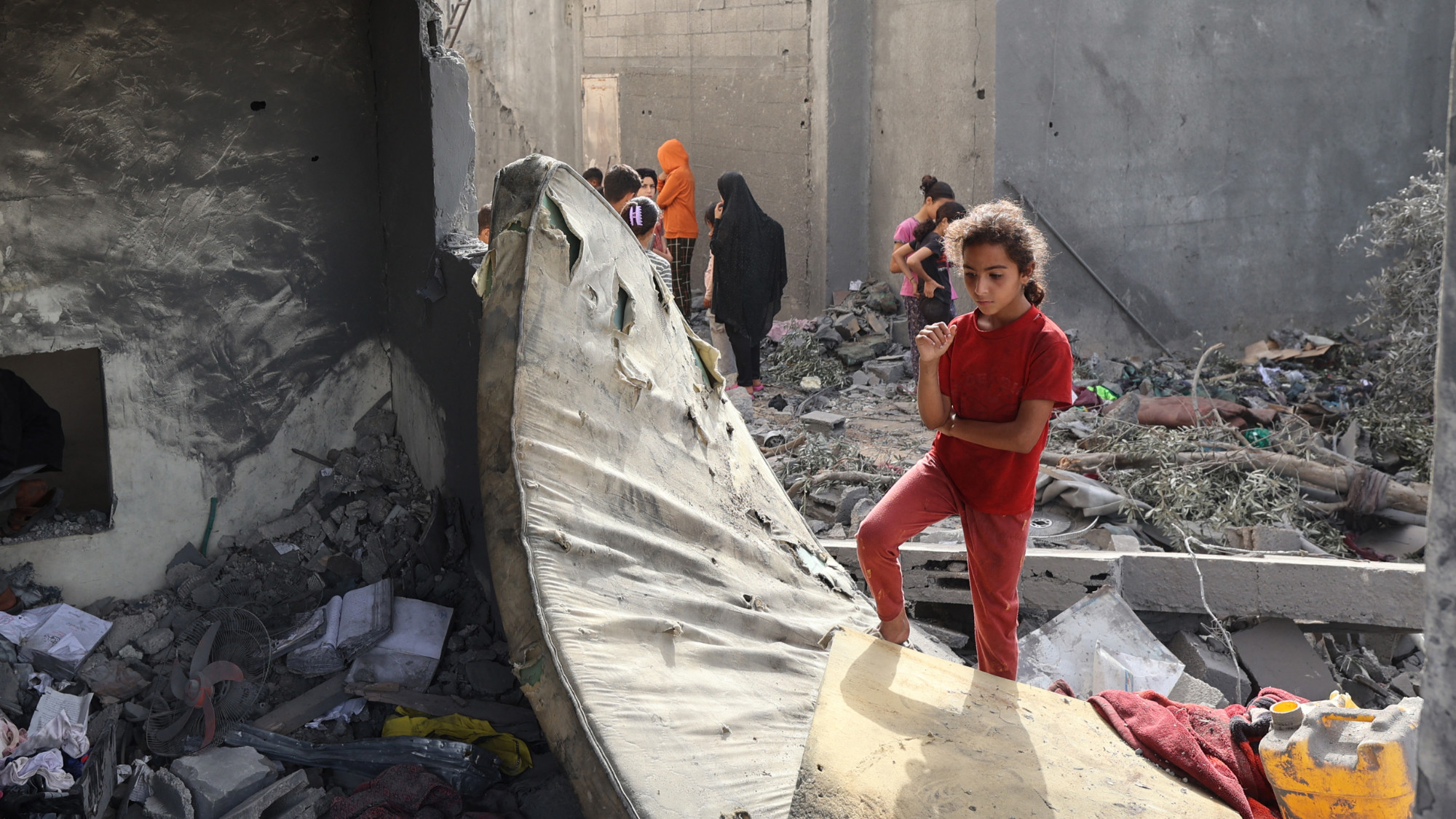
In the war-torn Gaza Strip, 22-month-old Rewan Aldreini’s life is a stark illustration of the devastating impact of conflict and malnutrition. Born in November 2023, just a month after the Israeli siege began, Rewan has never tasted her mother’s milk. Her mother, grappling with depression and post-traumatic stress disorder (PTSD), stopped producing milk due to the trauma of relentless bombardment and displacement. The family fled their home in Beit Lahia, moving first to Gaza City and then to Khan Younis, where they now struggle to survive. Rewan’s father, Mohamed Aldreini, can only afford rice to feed his daughter, who suffers from severe malnutrition, a weak immune system, heart problems, and developmental delays. At just 7kg, her health continues to deteriorate under what her father describes as “engineered starvation.”
Rewan’s plight is not unique. Scientists warn that the ongoing crisis in Gaza is creating an epigenetic disaster, with long-term health consequences for future generations. Epigenetics, the study of how environmental factors like stress and malnutrition alter gene expression without changing the DNA sequence, has shown that such conditions can leave lasting genetic imprints. Research from historic famines, such as the Dutch Hunger Winter and the Rwandan genocide, reveals that trauma and starvation can lead to increased risks of chronic diseases, mental health disorders, and developmental issues in children and their descendants.
Professor Tessa Roseboom, a biologist at the University of Amsterdam, explains that stress hormones in mothers can affect babies’ bodies and brains. Similar findings were observed in Holocaust survivors and their children, where gene changes were directly linked to parental trauma. In Gaza, the combination of starvation, displacement, and ongoing violence is creating a perfect storm for epigenetic damage. Dr. Leon Mutesa of the University of Rwanda, who studied the epigenetic legacy of the 1994 genocide, warns that the symptoms in Gaza—fear, stress, and high cholesterol—are early indicators of epigenetic changes.
According to Palestinian health officials, at least 20,000 children have been killed since the war began, and over 50,000 have been injured or killed. In August alone, 12,800 children were identified as acutely malnourished, a condition the UN has confirmed as famine. Experts like Professor Hassan Khatib of the University of Wisconsin–Madison predict that the epigenetic damage in Gaza will be catastrophic, affecting not only current generations but also future ones. Khatib emphasizes that the crisis is particularly harmful to pregnant women and adolescent boys, whose developing bodies are more vulnerable to genetic alterations.
While the damage already inflicted may be irreversible, scientists agree that immediate action can mitigate further harm. Ending the war, providing access to food, healthcare, and safe living conditions, and offering psychological support are critical steps. “We need action from the international community to stop the suffering in Gaza,” says Roseboom. “This conflict isn’t just about the present moment; it’s creating life-long consequences for children like Rewan, and potentially for generations to come.”
For Mohamed Aldreini, the hope for a normal life remains. “I still dare to dream this genocide will end,” he says. “That we can return to a normal life—as human beings.”
-
Trump peace plan ‘ignores interests of Palestinian people’, Hamas official tells BBC
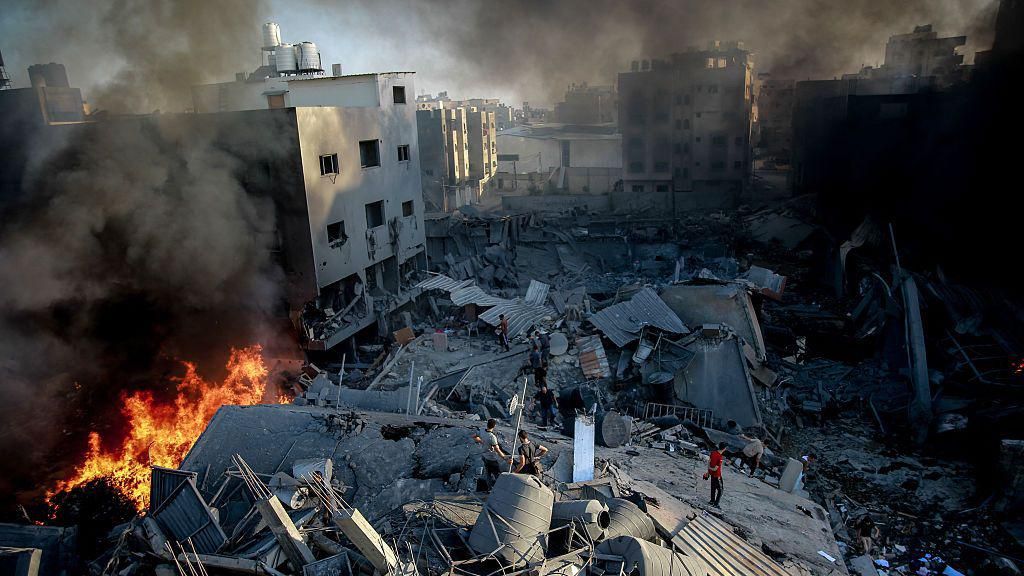
A senior Hamas official has indicated to the BBC that the group is poised to reject former U.S. President Donald Trump’s proposed peace plan for Gaza, labeling it as heavily skewed in favor of Israel while neglecting Palestinian interests. The official emphasized that Hamas is unlikely to comply with the plan’s key condition of disarming and surrendering their weapons. Additionally, the group opposes the deployment of an International Stabilisation Force (ISF) in Gaza, viewing it as a potential new form of occupation. Israeli Prime Minister Benjamin Netanyahu has already endorsed Trump’s plan following White House discussions on Monday, but Hamas has yet to issue an official response. Qatar’s foreign ministry has noted that Hamas is currently reviewing the proposal ‘responsibly.’
Hamas’s military commander in Gaza, Ez al-Din al-Haddad, is reportedly determined to continue fighting rather than accept the plan. Meanwhile, Hamas leaders outside Gaza have found themselves increasingly marginalized in negotiations due to their lack of direct control over hostages. The ongoing discussions, expected to last several days, also involve other Palestinian factions, including the Palestinian Islamic Jihad (PIJ), which has already rejected the plan. A major sticking point for Hamas is the requirement to release all hostages at once, effectively eliminating their primary bargaining chip.
Despite Trump’s backing, there is widespread skepticism that Israel will halt military operations post-hostage release, especially following a recent assassination attempt on Hamas leadership in Doha. Further complicating matters, a map shared by the Trump administration suggests a planned buffer zone along Gaza’s southern border with Egypt, raising concerns about Israeli involvement. Netanyahu’s recent statements, including a video on X, have also contradicted the plan’s terms by insisting on continued Israeli military presence in Gaza and opposing Palestinian statehood.
Within Gaza, many Palestinians support the plan solely for its potential to end the war, despite its perceived flaws. Resident Khadar Abu Kweik expressed this sentiment, stating, ‘The American plan has bad clauses, but I support it because it will stop the war and get rid of Hamas.’ Palestinian journalist Fathi Sabah warned that a Hamas rejection could embolden Netanyahu to continue the conflict with Western backing, further devastating Gaza. The Israeli military’s campaign in Gaza, launched in response to the October 7, 2023, Hamas-led attack, has resulted in significant casualties and widespread destruction, with recent UN reports confirming famine and allegations of genocide.
-

Start-up founder Charlie Javice sentenced for defrauding JPMorgan
Charlie Javice, the founder of student loan start-up Frank, has been sentenced to 85 months in prison for defrauding JPMorgan Chase during the bank’s $175 million acquisition of her company. The sentencing, delivered on Monday in Manhattan federal court, follows her conviction earlier this year on charges of bank, wire, and securities fraud, as well as conspiracy to commit fraud. Javice was found guilty of fabricating customer data to inflate Frank’s user base, misleading JPMorgan into believing the platform had 4 million users when the actual number was closer to 300,000. Federal prosecutors had sought a 12-year sentence, while Javice’s defense team argued for 18 months. In addition to the prison term, U.S. District Judge Alvin Hellerstein ordered Javice to forfeit over $22 million and pay $287 million in restitution to JPMorgan, jointly with her co-defendant Olivier Amar, Frank’s chief growth and acquisition officer. Javice, 33, gained prominence in the financial sector after launching Frank in 2017, which aimed to simplify the college financial aid process. Her success earned her a spot on Forbes’ ’30 Under 30′ list in 2019. However, JPMorgan’s acquisition of Frank in 2021 quickly unraveled as the bank discovered the fraudulent user data. JPMorgan CEO Jamie Dimon has since labeled the deal a ‘huge mistake.’ In a recent letter to Judge Hellerstein, Javice expressed remorse, stating, ‘I accept the jury’s verdict and take full responsibility for my actions. There are no excuses, only regret.’
-
How many people cross the Channel in small boats?
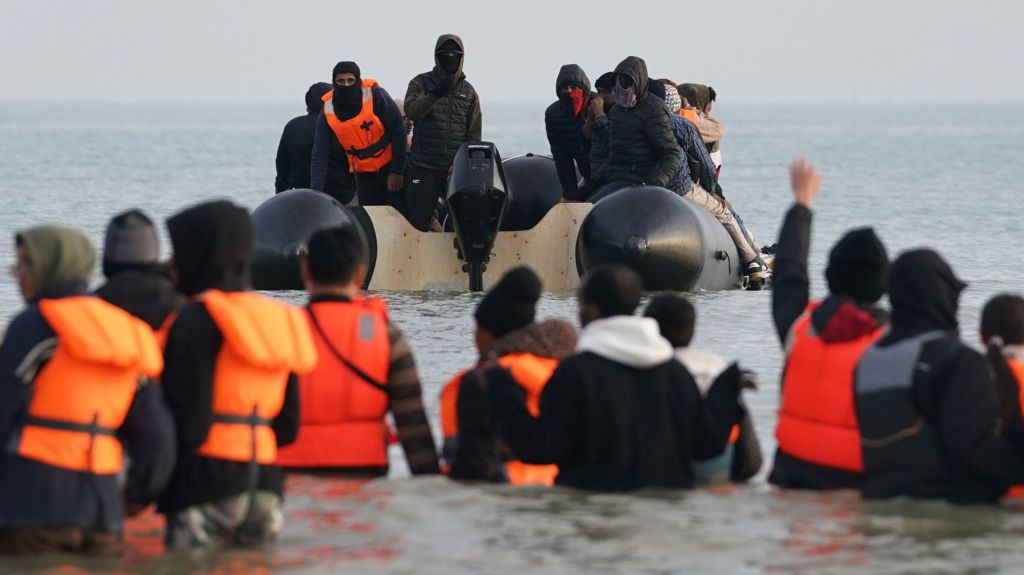
The English Channel has become a perilous route for thousands of migrants seeking refuge in the UK, with over 33,500 individuals crossing in small boats since the start of 2025. This marks a 721-person increase compared to the same period in 2022, the year with the highest recorded crossings. Despite Prime Minister Sir Keir Starmer’s pledge at the Labour Party conference to dismantle people-smuggling networks and reduce crossings by 2029, the crisis persists. Weather conditions and other factors make it uncertain whether 2025 will surpass 2022’s record of 45,000 crossings. Since 2018, more than 184,000 people have arrived in the UK via small boats, though this represents a small fraction of the country’s overall immigration figures. In 2024 alone, nearly 37,000 crossings were detected, a 25% increase from 2023. Tragically, 2024 also saw at least 82 migrant deaths, the deadliest year on record, with 20 fatalities reported in 2025. The International Organization for Migration (IOM) highlights the escalating dangers, attributing them to overcrowded and unseaworthy vessels. A year-long pilot scheme initiated in August allows UK officials to refer migrants for return to France within three days of arrival, but critics argue this will impact only a small proportion of crossings. The UK government has intensified efforts to combat people-smuggling, freezing assets of 25 individuals, including gang leaders, and deploying 300 additional National Crime Agency officers. Despite these measures, the Refugee Council advocates for safer legal routes to asylum, emphasizing the need for a comprehensive policy overhaul. Afghans constitute the largest group of small boat arrivals, followed by Eritreans, Iranians, Syrians, Sudanese, and Vietnamese. The UK’s immigration challenges mirror broader trends in Europe, where nearly 189,000 sea arrivals were recorded in 2024, with Italy receiving the majority. The EU and EEA saw 1.1 million asylum claims in 2024, with Germany leading in applications.
-
India calls Gandhi statue defacement in London ‘shameful’
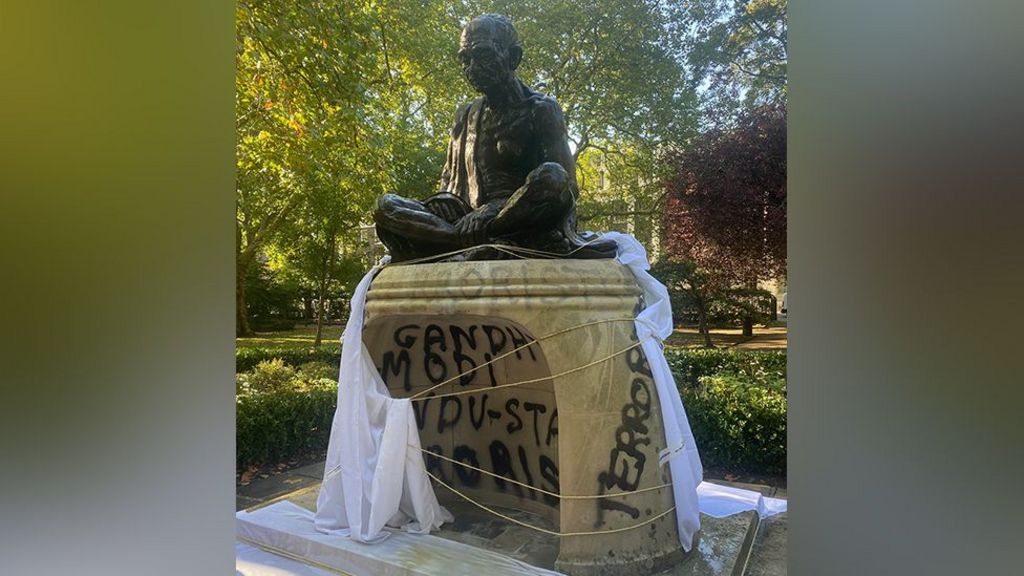
India has called for ‘immediate action’ following the vandalism of a statue of Mahatma Gandhi in London. The bronze statue, located in Tavistock Square and unveiled in 1968, was defaced with graffiti, including the words ‘Terrorists,’ ‘Gandhi,’ ‘Modi,’ and ‘Hindustani [Indians].’ The Indian High Commission condemned the act as not merely vandalism but a ‘violent attack on the idea of non-violence,’ describing it as ‘shameful.’ The Metropolitan Police are investigating the incident as a racially aggravated crime, though no arrests have been made. Cleaning teams from Camden Council were seen power-hosing the statue to remove the graffiti. The incident occurred just days before the 156th anniversary of Gandhi’s birth on October 2, which is also observed as the International Day of Non-Violence. The statue, created by Polish sculptor Fredda Brilliant, depicts Gandhi in robes, seated cross-legged, with an inscription honoring his life. This is not the first time Gandhi’s statue has been targeted in the UK; a similar incident occurred in Leicester in 2014. The Indian mission is working with local authorities to restore the statue’s dignity.
-

Ibiza flooding: Rain deluges streets as red weather alert issued
Spain’s meteorological agency, Aemet, has declared a red alert for heavy rainfall on the popular holiday islands of Ibiza and Formentera, with up to 180mm (7 inches) of rain expected within a 12-hour period. The alert, which began at 11:00 local time on Tuesday, remained in effect until 16:00, accompanied by a yellow alert for thunderstorms lasting from 08:00 to 18:00. Emergency services were mobilized to rescue individuals trapped in vehicles and homes, while access to key towns like Sant Antoni de Portmany and Santa Eulària was blocked due to severe flooding. Ibiza’s main E-10 road was also inundated, disrupting travel and daily life. Meanwhile, Mallorca, another Balearic island, was placed under a yellow alert for similar weather conditions, with authorities warning residents to avoid flood-prone areas and seek higher ground if necessary. This comes just a year after Valencia experienced catastrophic floods that claimed over 230 lives, highlighting the recurring threat of extreme weather in the region. Emergency services have urged caution, advising against travel and outdoor activities as the situation remains critical.
-
Ukrainian wanted over Nord Stream pipeline blasts arrested in Poland
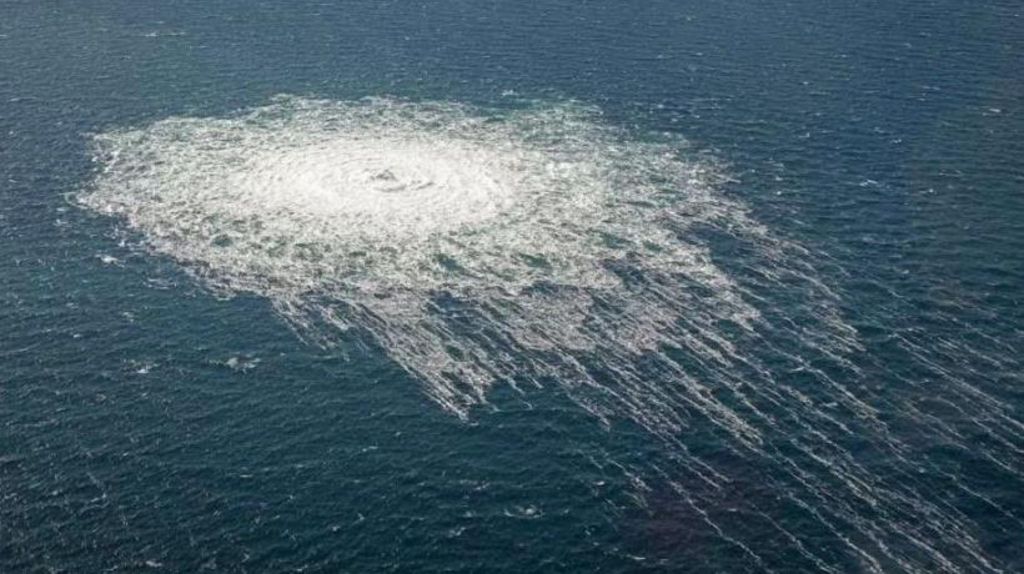
A Ukrainian national, identified as Volodymyr Z, has been arrested in Poland in connection with the 2022 explosions that damaged the Nord Stream gas pipelines under the Baltic Sea. The arrest was made under a European arrest warrant in a town near Warsaw, according to his lawyer. The incident, which occurred during Russia’s full-scale invasion of Ukraine, saw three of the four Nord Stream pipelines ruptured by explosives, cutting off a crucial natural gas supply to Europe amidst an energy crisis. The explosions remain shrouded in mystery, with no party claiming responsibility. Ukraine denied involvement, while Russia faced Western suspicion and accused the US and UK. German prosecutors issued their first arrest warrant in August 2024, naming Volodymyr Z as a suspect. Reports suggest he was a diving instructor living near Warsaw, but authorities had previously been unable to locate him. This arrest follows the detention of another Ukrainian national, Serhii K, in Italy last month, who is accused of coordinating the attack. Prosecutors believe the suspects were part of a team that sailed a yacht from Rostock, Germany, to the Baltic Sea near Bornholm. German reports indicate that seven suspects have been identified, with one since deceased. Investigations by Germany, Denmark, and Sweden have yet to link any state to the attacks.
-
Thousands of jobs at risk in Africa as US trade deal expires
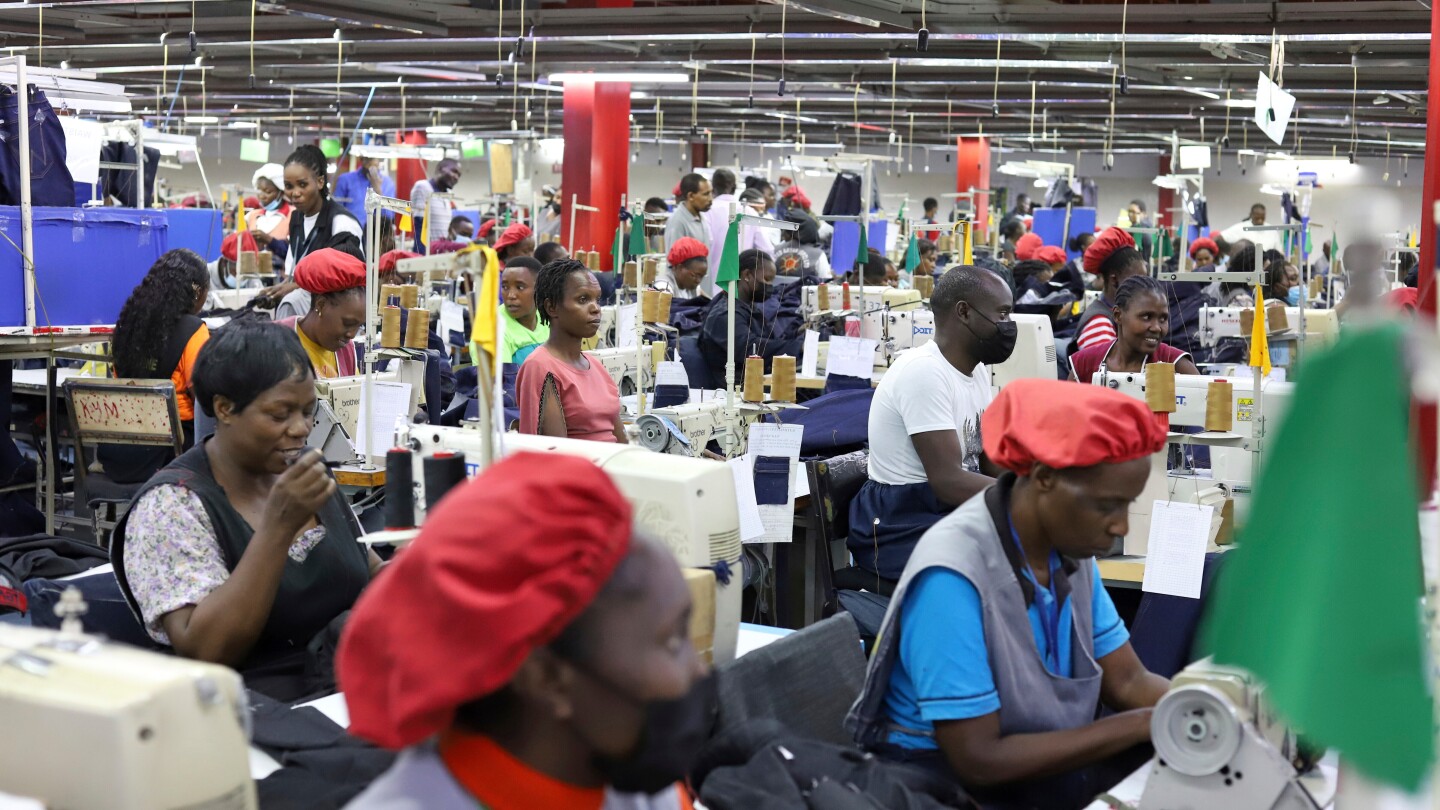
The expiration of the African Growth and Opportunity Act (AGOA), a pivotal U.S. trade agreement that has provided African exporters with duty-free access to American markets since 2000, is set to take effect this Tuesday. This development has left businesses across the continent grappling with heightened competitive pressures and the looming imposition of new tariffs. AGOA has been instrumental in bolstering industries such as Kenya’s textile and apparel sector, enabling it to compete effectively with Asian counterparts like Bangladesh and Vietnam. However, with the agreement’s termination, Kenyan manufacturers, including United Aryan, a Nairobi-based apparel exporter, fear they will lose their competitive edge. ‘Without AGOA, we stand no chance against Asian competitors,’ lamented Pankaj Bedi, owner of United Aryan, which exports Levi’s and Wrangler jeans to the U.S. Kenyan President William Ruto has urged the U.S. to consider renewing and extending AGOA for at least five years, emphasizing its role as a vital link between Africa and the U.S. The end of AGOA coincides with the introduction of new U.S. tariffs, announced in April, which could further exacerbate challenges for African exporters. Kenya, for instance, already faces a 10% tariff on non-AGOA exports, and its manufacturers are hindered by high energy costs, imported raw materials, and limited domestic supply chains. African leaders, including Ruto, are pushing for last-minute renegotiations and bilateral agreements with the U.S., but uncertainty remains. The termination of AGOA threatens to disrupt industries that employ millions, particularly in countries like Kenya, where over 66,000 workers in the textile sector are at risk of job losses. The broader economic implications include reduced foreign investment, weakened supply chains, and rising poverty, according to researchers at the German Institute of Development and Sustainability. For workers like Julia Shigadi, a machinist at United Aryan, the end of AGOA is not just a professional setback but a personal crisis. ‘This job is my lifeline,’ she said. ‘If it’s gone, my life is over.’