作者: admin

  • Bank of England’s Taylor says high US tariffs appear to be here to stay

    Bank of England’s Taylor says high US tariffs appear to be here to stay

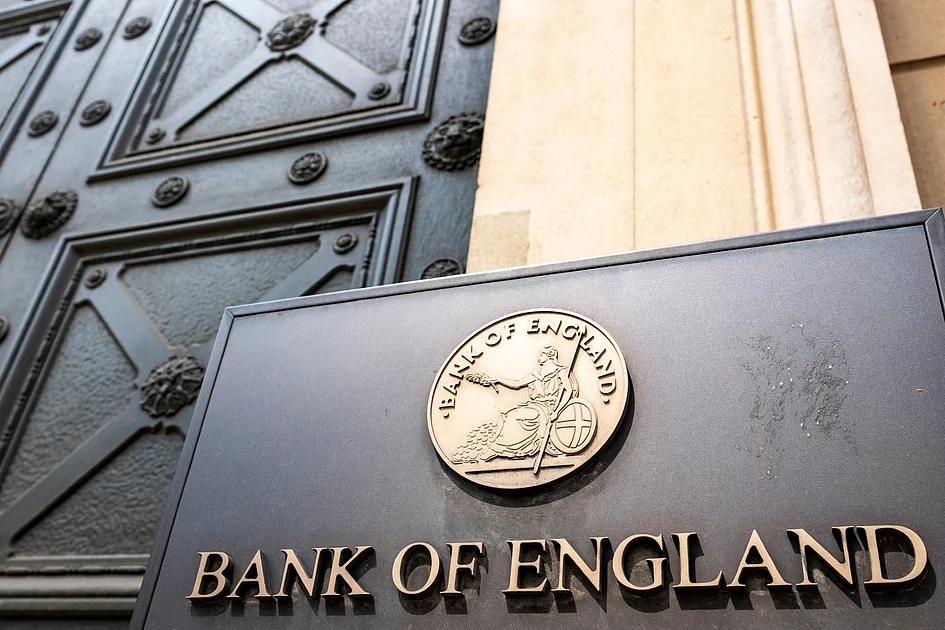
    Bank of England Monetary Policy Committee member Alan Taylor has declared that elevated U.S. import tariffs represent a permanent structural shift in global trade with consequences that will unfold over ‘many years.’ Speaking at a Deutsche Bank event on Monday, Taylor responded to recent developments including President Donald Trump’s imposition of a 15% global import levy following Supreme Court rulings that voided most of his previous tariff increases.

    Taylor emphasized the profound nature of this trade policy transformation, stating, ‘The fundamental thing to realize is those tariffs are here to stay at some kind of number that is an order of magnitude bigger than it was two years ago.’ He cautioned that the full impact of this ‘meaningful change’ would require extensive time to fully materialize within the global economic system.

    The policymaker, who was among four MPC members advocating for an interest rate reduction to 3.5% this month, identified emerging patterns in trade diversion. He noted preliminary evidence suggesting China is redirecting exports toward East Asian markets and the European Union, potentially creating deflationary pressures across global markets. However, Taylor acknowledged the difficulty in precisely quantifying the ultimate significance of these shifting trade patterns.

    Regarding domestic monetary policy, Taylor maintained that the Bank of England likely has ‘two or three more quarter-point rate cuts’ before requiring a pause, assuming no additional economic shocks emerge. He expressed particular concern about the evolving risk balance in the BoE’s forecasts, which he believes is shifting toward lower inflation expectations and greater economic damage from rising unemployment.

    While noting he wouldn’t be alarmed by January’s isolated services price growth data alone, Taylor indicated he would grow concerned if underlying inflation pressures consistently exceeded expectations ‘over and over again.’ His advocacy for recent rate cuts stemmed partly from concerns that inflation might persistently undershoot the Bank’s 2% target in the coming period.


  • Bitcoin slides toward $65,000 as tariff shock rattles risk appetite

    Bitcoin slides toward $65,000 as tariff shock rattles risk appetite

    Digital asset markets experienced significant turbulence Monday as Bitcoin plunged toward the $65,000 threshold, reflecting heightened investor anxiety following unexpected U.S. trade policy developments. The cryptocurrency’s 5% intraday decline underscores its continued vulnerability to macroeconomic shocks and institutional capital movements.

    The market deterioration follows a dual policy shock: the Supreme Court’s invalidation of previous presidential tariff authorities and the subsequent White House announcement of new 15% global import duties. This policy whiplash has reignited concerns about potential trade conflicts and their implications for global economic growth.

    Financial analysts observe that cryptocurrency assets are facing compounded pressure from multiple fronts. Linh Tran, Senior Market Analyst at XS.com, noted: ‘The earlier recovery from $60,000 levels lacked substantive institutional backing and couldn’t overcome medium-term bearish tendencies. Current market dynamics are being shaped by trade policy ambiguity, diminished institutional participation, persistent high interest rates, and dollar strength.’

    Institutional engagement, previously a cornerstone of crypto market advances, has notably weakened. U.S. spot Bitcoin ETFs have witnessed substantial capital outflows, with over 100,000 Bitcoin withdrawn from fund holdings since October 2025. This reduction brings total ETF reserves to approximately 1.26 million Bitcoin, indicating cautious institutional positioning.

    Jeff Mei, Chief Operating Officer at blockchain firm BTSE, highlighted how escalating trade tensions are prompting portfolio adjustments: ‘The tariff rate increase is triggering crypto asset divestment as investors anticipate broader market deterioration. Geopolitical risks and potential trade flow disruptions are additionally dampening market sentiment.’

    Bitcoin’s current valuation represents a 26% year-to-date decline and a 47% retreat from its October peak above $125,000. This correction magnitude has simultaneously pressured cryptocurrency-equivalent stocks, with major U.S. digital asset firms seeing pre-market share declines.

    Market intelligence from 10x Research suggests the downturn reflects structural vulnerabilities rather than isolated events. Head of Research Markus Thielen observed: ‘This decline aligns with typical bear-market characteristics featuring limited liquidity and weak conviction. Policy uncertainty and global macroeconomic trends continue restraining upward potential.’

    The divergence between cryptocurrency performance and traditional safe havens has become particularly striking. While gold gained over 1% amid the uncertainty, Bitcoin’s correlation with risk assets rather than protective investments has challenged its ‘digital gold’ narrative.

    Despite current pressures, some analysts identify potential support levels around $60,000, citing persistent long-term investor interest and absence of severe liquidity crises. However, sustainable recovery likely requires renewed ETF inflows, Federal Reserve monetary easing signals, and stabilization in global trade relations.

    Near-term trading expectations suggest continued volatility within a broad range, with $65,000 representing crucial support and the $69,000-$70,000 zone constituting significant resistance. Market participants anticipate potential retests of lower support levels should current pressure factors persist.

  • Baftas 2026: BBC faces backlash for airing n-word, cutting ‘free Palestine’ from speech

    Baftas 2026: BBC faces backlash for airing n-word, cutting ‘free Palestine’ from speech

    The British Broadcasting Corporation (BBC) has ignited a firestorm of criticism following its handling of the 79th British Academy Film Awards (BAFTAs) broadcast, facing accusations of racial insensitivity and political censorship.

    The controversy stems from two distinct editorial decisions during the ceremony. First, the broadcast included an unedited racial slur shouted by an audience member with Tourette syndrome—a neurological condition causing involuntary vocalizations—during a presentation by actors Michael B Jordan and Delroy Lindo. Although host Alan Cumming addressed the incident live with an apology to those offended, this clarification was omitted from the televised version.

    Simultaneously, the corporation deliberately edited out a portion of award winner Akinola Davies Jr’s acceptance speech. The British-Nigerian filmmaker’s truncated remarks included a message of solidarity with migrants and those experiencing persecution, specifically concluding with the phrase ‘free Palestine.’

    The BBC’s dual approach—airing potentially harmful language while censoring political speech—prompted immediate backlash across social media platforms. Many commentators expressed particular bewilderment at the editorial choice to leave the racial slur unedited while cutting the pro-Palestinian message, given that the awards ceremony was broadcast on a two-hour delay specifically to allow for content review.

    In response to mounting pressure, the BBC issued an apology specifically for broadcasting the racial slur, attributing it to involuntary verbal tics associated with Tourette syndrome and confirming its removal from the BBC iPlayer version. However, the corporation remained silent regarding its decision to censor Davies Jr’s speech, directing inquiries instead to its statement about the racial incident.

    This selective editing has drawn condemnation from human rights organizations and media critics alike. Amnesty UK described the censorship as ‘shameful,’ while media analysts suggested the decisions revealed institutional priorities influenced more by political pressures than journalistic integrity. The incident has sparked broader conversations about media responsibility, racial justice, and the silencing of Palestinian solidarity in mainstream broadcasting.

  • Israeli minister says army to occupy all Gaza if Hamas does not disarm

    Israeli minister says army to occupy all Gaza if Hamas does not disarm

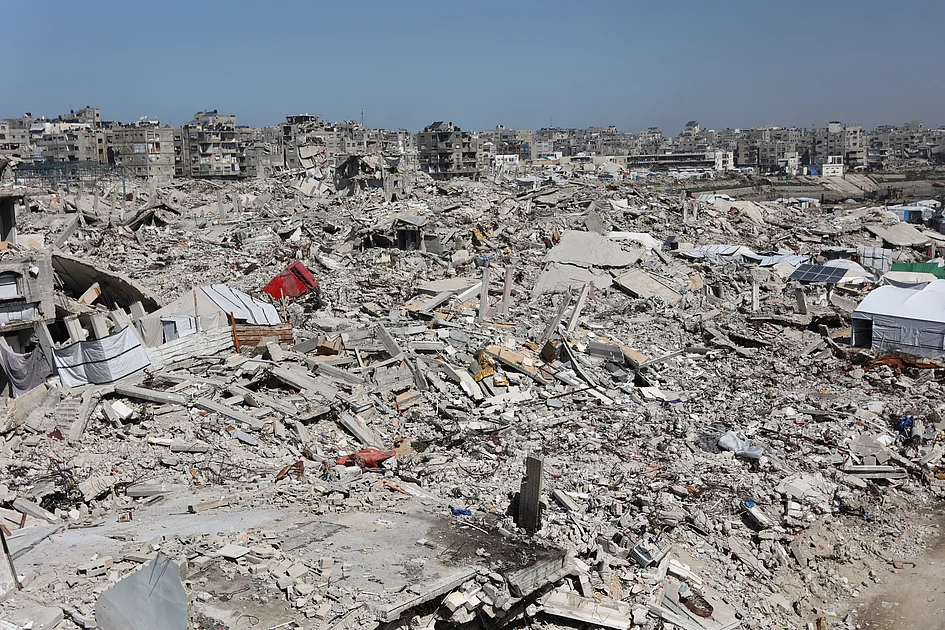
    Israeli Finance Minister Bezalel Smotrich, a key member of the nation’s security cabinet, declared on Monday that Hamas faces an imminent deadline to surrender its weapons or risk comprehensive military occupation of Gaza by Israeli forces. In a televised interview with public broadcaster Kan, the far-right minister revealed that Palestinian militants would shortly receive a formal ultimatum demanding complete demilitarization.

    Smotrich asserted that should Hamas refuse compliance, the Israel Defense Forces would possess both international legitimacy and American support to execute a full-scale occupation. The minister confirmed military strategists are already developing operational plans for this contingency, with multiple alternatives under active consideration.

    This development occurs within the fragile framework of a U.S.-brokered ceasefire agreement that recently concluded two years of sustained conflict. During the initial phase, Israeli troops withdrew to positions behind the designated Yellow Line while maintaining control over more than half of Gaza’s territory. The subsequent phase, initiated last month, envisions progressive Israeli military withdrawal coupled with Hamas disarmament—a provision the militant organization has vigorously opposed.

    The American peace proposal, championed by President Donald Trump, additionally calls for establishing a 20,000-strong International Stabilization Force (ISF). While several nations have pledged troop contributions, Smotrich expressed skepticism regarding the rapid deployment of international forces. He suggested coordinated arrangements with American officials would ensure foreign troops quickly withdraw to facilitate Israeli military operations if necessary.

  • ‘Very sad’: Warriors hunt for quality forward after Mitch Barnett granted early release

    ‘Very sad’: Warriors hunt for quality forward after Mitch Barnett granted early release

    The National Rugby League community has been stunned by the announcement that Warriors co-captain and representative forward Mitch Barnett will depart New Zealand to return to Australia following the 2026 season. The 31-year-old veteran, who joined the Warriors in 2023, has been granted an early release from the final year of his contract due to compelling personal circumstances.

    Barnett’s tenure with the Warriors has marked the most productive period of his professional career, with his exceptional performance earning him selection to represent both New South Wales and Australia at the international level. Warriors chief executive Cameron George expressed profound disappointment while acknowledging the necessity of Barnett’s decision. “We’re very sad to see this happen but Mitch and his family need to be back home,” George stated. “He has become such a big part of our club. We love having him here and we know how much he loves it too, but it’s important he, Clare and their boys are back around their family support network.”

    The departure coincides with significant challenges for the Warriors organization, which is currently navigating an injury crisis that will sideline halfbacks Luke Metcalf and Te Maire Martin for the opening two months of the upcoming season. This development creates an opportunity for Tanah Boyd to establish himself as the permanent halfback after elevating his performance significantly since joining the Warriors from the Titans.

    Boyd, who has expressed enthusiasm about securing the starting position, commented: “My game has gone through the roof in a new environment with a new culture. I’m loving my footy and loving my time here so I’m looking forward to a big year. My knowledge on the game and my skill levels have improved dramatically under Coach Webster’s guidance.”

    Barnett will begin the season recovering from a knee injury that prematurely ended his 2025 campaign, with multiple Australian clubs expected to pursue the accomplished forward for the 2027 season.

  • Trump denies top US officer warned of Iran strike risks

    Trump denies top US officer warned of Iran strike risks

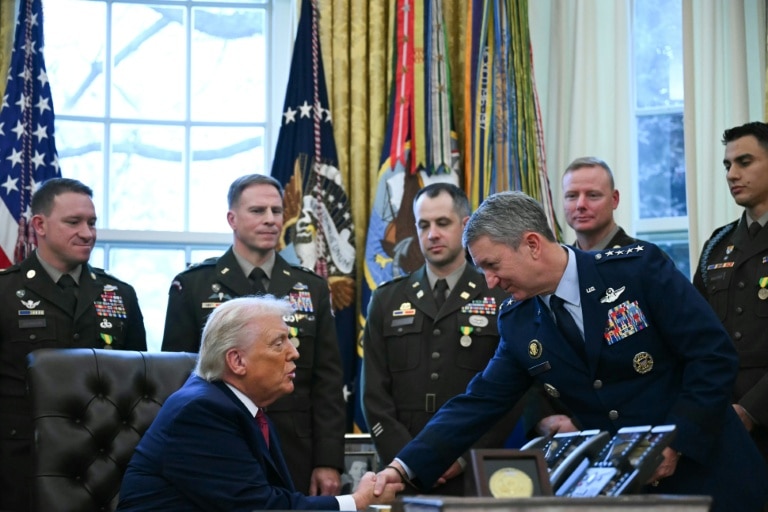
    President Donald Trump has publicly contradicted media reports suggesting that the United States’ highest-ranking military officer expressed significant reservations about potential military action against Iran. Utilizing his Truth Social platform, Trump characterized reports about General Dan Caine, Chairman of the Joint Chiefs of Staff, as “100 percent incorrect,” asserting instead that the general would be “leading the pack” in any military engagement.

    Multiple major U.S. news outlets, including The Washington Post and The Wall Street Journal, had reported that General Caine raised serious concerns in White House and Pentagon discussions. These concerns reportedly highlighted the risks of munition shortages, a lack of international allied support, potential U.S. and allied casualties, and the danger of the U.S. becoming entangled in a prolonged, complex conflict. The Axios news outlet further reported that key advisors, including Trump’s roving negotiator Steve Witkoff and son-in-law Jared Kushner, had also advised pursuing diplomatic channels instead of military action.

    Trump dismissed these narratives as purposefully misleading. He stated that while he and General Caine would prefer to avoid war, he believes any conflict with Iran would be “easily won.” The President emphasized that he alone holds the authority to make the final decision, stating his preference for a diplomatic deal but warning that without one, it would be “a very bad day” for Iran.

    This exchange occurs amidst a significant U.S. military buildup in the Middle East, which includes the deployment of two aircraft carrier groups and numerous other assets. The tensions stem from the collapse of the 2015 nuclear deal, which Trump withdrew from in 2018. He has repeatedly threatened further military action if ongoing negotiations fail to produce a new agreement. Despite the heated rhetoric, a U.S. official confirmed that the next round of talks with Tehran is scheduled for Thursday, indicating that diplomatic efforts are continuing.

  • How Iranians coped in the lead-up to war

    How Iranians coped in the lead-up to war

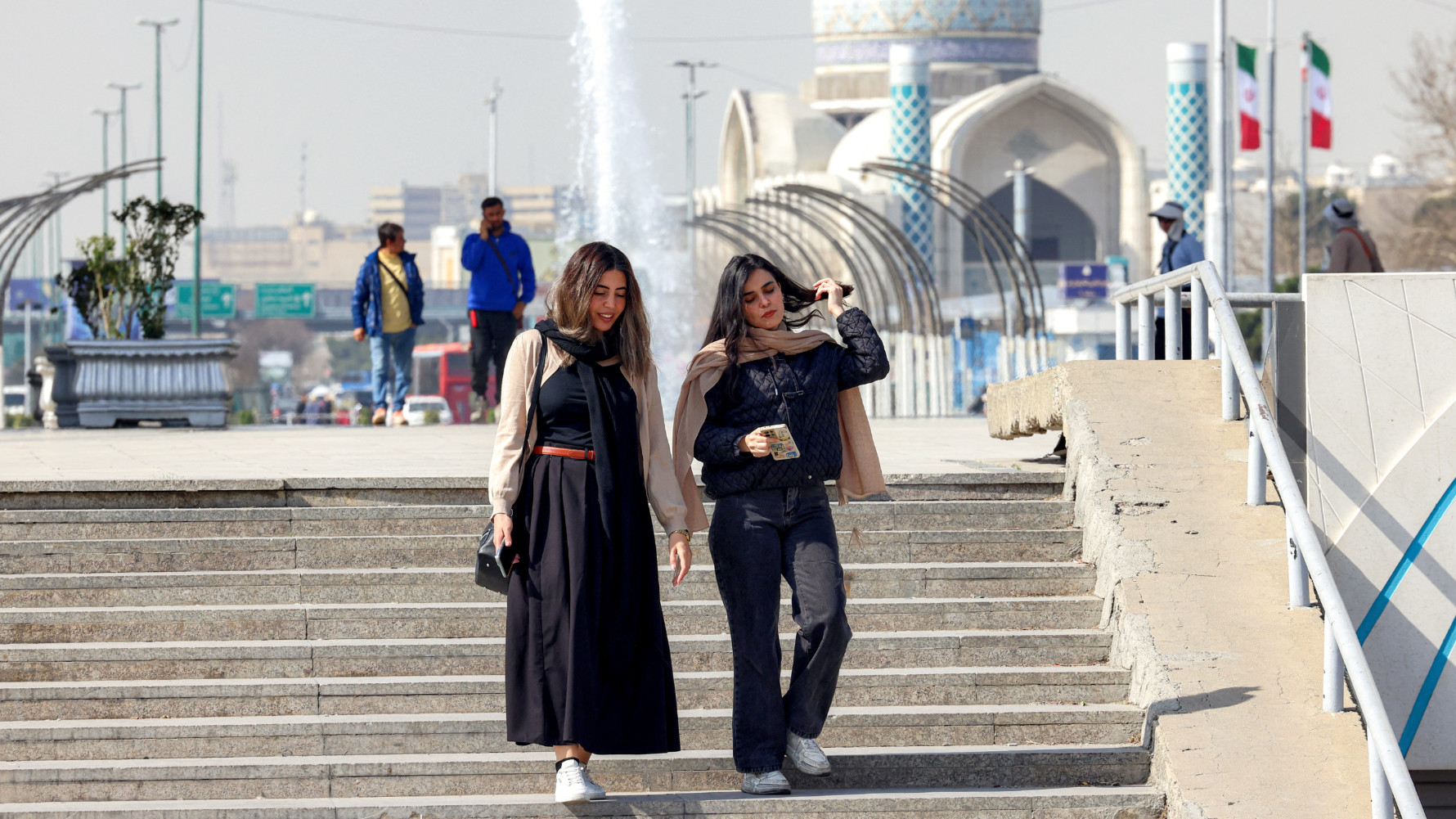
    In the heart of Tehran’s winter, amidst a nationwide internet blackout that severed digital connections for millions, an intimate gathering organized through the Hamneshin app (‘companion’ in Persian) revealed profound shifts in Iranian social dynamics. This encounter unfolded against a backdrop of simmering tensions—from December 2025 unrest and violent crackdowns to threatened airstrikes over Tehran’s nuclear program and lingering trauma from a recent 12-day war with Israel.

    The Hamneshin platform, resembling Western supper clubs in structure, has evolved into something far more significant in contemporary Iran. Participants register through the app, pay fees, and join age-grouped gatherings ranging from dinners to bowling nights. Yet these meetings transcend leisure, representing a collective response to deepening structural isolation driven by economic strain, migration, rising divorce rates, and shrinking spaces for mixed-gender interaction.

    At an upscale Tehran café, socioeconomic disparities manifested visibly—from luxury cars waiting outside to carefully styled outfits contrasting with rapidly fluctuating market prices. The participants, predominantly educated professionals including engineers, managers, and entrepreneurs, revealed complex layers of loneliness despite outward success. Javad, a confident entrepreneur, and Roya, a language teacher battling depression, both sought companionship unavailable in their daily lives.

    A poignant silence fell when recent violence was mentioned—not indicating indifference but collective exhaustion. The gathering consciously created temporary distance from external turmoil. For Vahid, who left energy sector stability for cryptocurrency trading, and Aida, a divorced mother watching friendships thin as people ‘disappear into work or leave the country,’ these connections offered rare emotional respite.

    While not all gatherings forge lasting bonds—many WhatsApp groups go inactive—some participants developed offline friendships that provided stability during internet blackouts. The platform represents broader social initiatives across Iran, including pottery workshops and discussion circles, that create structured environments for connection despite requiring disposable income that excludes many.

    These digital-facilitated gatherings cannot solve structural pressures but provide symbolic resistance against fading friendships, shrinking social circles, and growing public hesitation. As one 43-year-old attendee noted: ‘It sounds simple, but you leave feeling lighter. You remember that you can still connect.’ In a society navigating multiple crises, such temporary interruptions of isolation carry profound significance.

  • Middle East cyber threats surge as UAE emerges as a global model for digital resilience

    Middle East cyber threats surge as UAE emerges as a global model for digital resilience

    The Middle East is experiencing a dramatic surge in cybersecurity threats, with attempted digital intrusions exceeding 200,000 per day in the United Arab Emirates alone—representing a 40% year-over-year increase across the Gulf Cooperation Council region. This alarming trend coincides with accelerated digital transformation initiatives throughout government services, energy sectors, financial technology, and smart-city infrastructure development.

    According to cybersecurity experts, the region has reached a critical inflection point where digital protection mechanisms have evolved from technical considerations to fundamental national security priorities. Deep Chanda, Chief Officer at Ampcus Cyber, emphasizes that contemporary cybersecurity transcends traditional IT concerns, noting that “It is about whether a nation keeps running, its economy, its public services, and preserves the trust of its citizens.”

    The UAE’s ambitious digital economy project, valued at over Dh100 billion, has catalyzed a strategic shift toward resilience-by-design frameworks. This approach integrates security protocols directly into digital services and national infrastructure rather than treating protection as an afterthought. Chanda asserts that “You cannot build a digital economy on speed alone. You build it on trust engineered by design.”

    Identity-centric security models have emerged as critical defense mechanisms, with 70% of regional organizations identifying insider threats as primary vulnerabilities. Enterprises across finance, energy, and government sectors are implementing continuous verification systems, behavioral monitoring technologies, and stringent privileged-access controls in response to escalating credential-theft attacks and supply-chain infiltration attempts.

    The rapid integration of artificial intelligence and large language models presents both operational opportunities and novel threat vectors. UAE organizations are addressing this dual nature through structured governance controls encompassing data access protocols, model accountability measures, and security-by-design principles. This governance framework enables innovation while mitigating risks associated with AI adoption at scale.

    In response to growing cybersecurity challenges, the recently established CISO Intelligence Council in Dubai facilitates collaboration among top security leaders across banking, healthcare, telecommunications, fintech, government, and critical infrastructure sectors. This invitation-only platform serves as a regional nerve center for intelligence sharing, threat briefings, and cross-sector coordination, positioning Dubai as a hub for cybersecurity strategy development.

    As operational technology footprints expand across utilities, healthcare, logistics, and manufacturing sectors, cybersecurity has become intrinsically linked to national operational continuity and public safety. The ultimate measure of digital resilience in the Middle East’s evolving threat landscape now depends on maintaining uninterrupted services, ensuring operational continuity, and preserving institutional trust.

  • Watch: What to watch for during Trump’s State of the Union address

    Watch: What to watch for during Trump’s State of the Union address

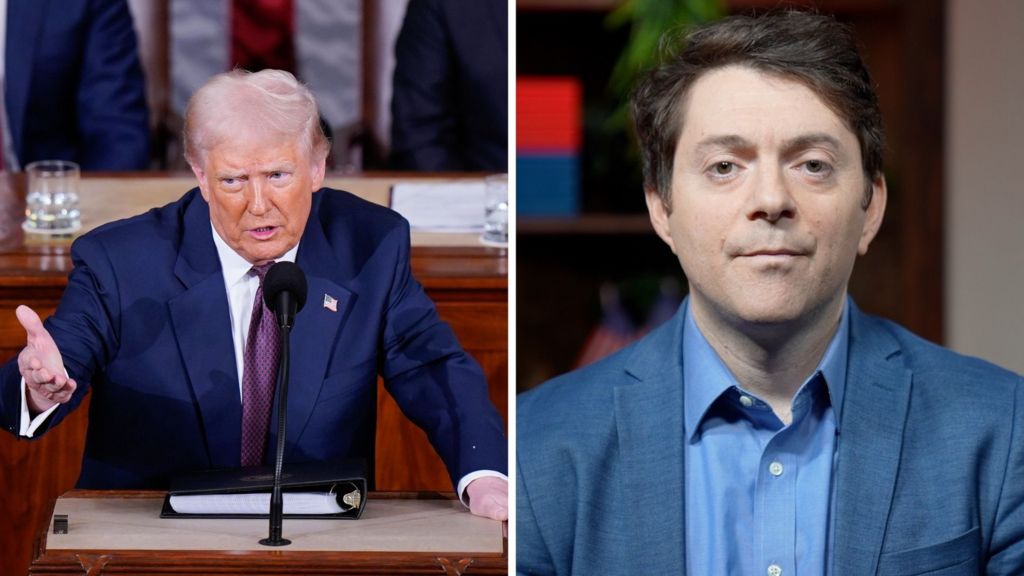
    As President Trump prepares to deliver his pivotal State of the Union address, multiple political undercurrents are converging to shape one of the most anticipated presidential speeches of the year. According to analysis from BBC Washington correspondent Daniel Bush, several critical elements warrant close observation.

    The event may witness notable absences, with certain lawmakers potentially boycotting the presidential appearance. This prospect underscores the deeply polarized political climate characterizing current Washington dynamics.

    Simultaneously, the President’s reported frustration toward the Supreme Court introduces another layer of complexity to the upcoming address. This tension between the executive and judicial branches reflects broader constitutional tensions that may influence both the tone and content of the speech.

    Policy analysts are particularly attentive to which legislative areas might experience significant shifts following the address. While some policy domains appear poised for substantial overhaul, others seem likely to maintain their current trajectory despite presidential rhetoric. The address is expected to reveal administration priorities while testing the boundaries of presidential influence amid competing power centers in Washington.

  • Venezuelan foreign minister demands ‘immediate release’ of Maduro

    Venezuelan foreign minister demands ‘immediate release’ of Maduro

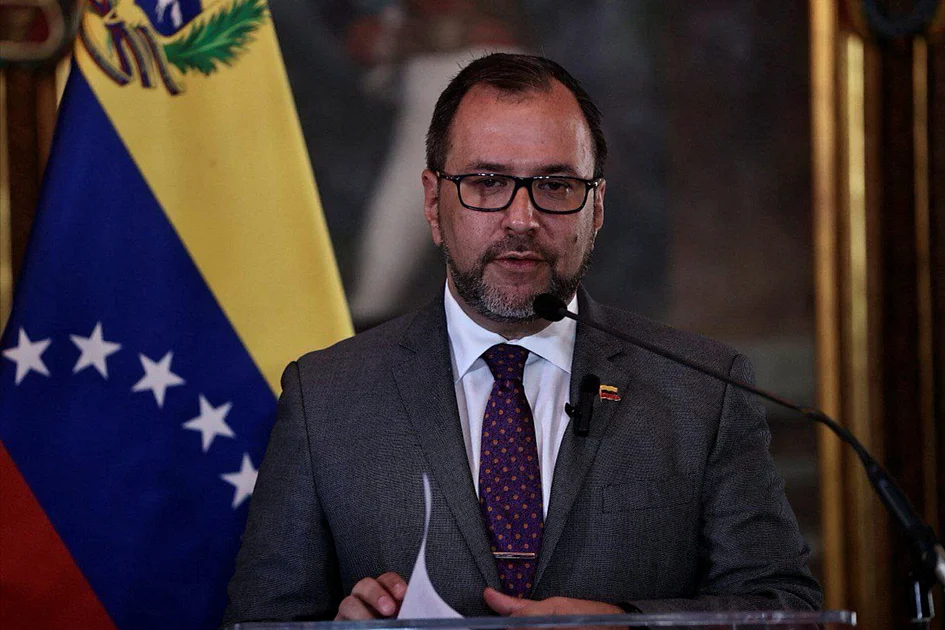
    In a forceful address before the United Nations Human Rights Council in Geneva, Venezuelan Foreign Minister Yvan Gil issued a formal demand for the liberation of former President Nicolas Maduro and First Lady Cilia Flores from U.S. custody. The diplomatic confrontation stems from the January 3rd operation conducted by American authorities that resulted in Maduro’s removal from power and subsequent detention.

    Minister Gil characterized Maduro as the ‘constitutional president’ of Venezuela while condemning what Caracas views as an unlawful seizure of its democratically elected leader. The Venezuelan delegation’s appearance at the UN’s premier human rights forum signals an escalation in diplomatic efforts to challenge Washington’s actions through international institutions.

    The development occurs alongside domestic unrest within Venezuela, where thousands have recently demonstrated to demand Maduro’s release. Concurrently, the administration led by Maduro’s allies has announced sweeping judicial reforms including a mass amnesty proposal and plans to shutter the notorious El Helicoide prison facility. These moves appear calculated to bolster governmental legitimacy amid the ongoing political crisis.

    According to independent monitoring organizations, at least 80 political prisoners have been freed in Venezuela recently, though the circumstances surrounding these releases remain unclear. The situation continues to evolve as both domestic and international actors maneuver for position in Venezuela’s protracted political struggle.