
In a nail-biting encounter at the ICC Women’s World Cup in Visakhapatnam, South Africa emerged victorious by three wickets against Bangladesh, showcasing resilience and determination. Chasing a target of 233, the Proteas faced early adversity, collapsing to 78-5. However, half-centuries from Chloe Tryon (62 off 69) and Marizanne Kapp (56 off 71) steadied the ship. Nadine de Klerk, fresh from her heroics against India, played a pivotal role, remaining unbeaten on 37 off 29 balls, including a match-winning six with three balls to spare. Bangladesh, despite a competitive total bolstered by Shorna Akter’s rapid 51 off 34 balls, were left to rue missed opportunities, including crucial dropped catches. South Africa’s third consecutive win highlights their fighting spirit, while Bangladesh must regroup from this heart-wrenching defeat.
作者: admin
-

Zelenskyy to visit Washington this week seeking long-range weapons and a Trump meeting
Ukrainian President Volodymyr Zelenskyy announced on Monday his upcoming visit to the United States to discuss the potential provision of long-range weapons, including Tomahawk missiles, to bolster Ukraine’s defense against Russia. The visit, scheduled for later this week, will include meetings with U.S. President Donald Trump, defense and energy companies, and members of Congress. Zelenskyy emphasized that the primary focus of the talks would be enhancing Ukraine’s air defense capabilities and long-range strike potential to maintain pressure on Russia. This follows a ‘very productive’ phone call between Zelenskyy and Trump, during which the U.S. president warned Russia of the possibility of supplying Ukraine with advanced missile systems if Moscow does not de-escalate the conflict. The move has sparked ‘extreme concern’ from Moscow, with Russian President Vladimir Putin previously stating that such actions would severely damage U.S.-Russia relations. Zelenskyy also highlighted the need for U.S. assistance to protect Ukraine’s electricity and gas networks, which have been relentlessly targeted by Russian attacks. The Ukrainian delegation, led by Prime Minister Yulia Svyrydenko, is already in the U.S. for preliminary discussions. Meanwhile, Russia has intensified its strikes on Ukraine’s energy infrastructure, particularly in the Black Sea port of Odesa and the Chernihiv region, resulting in casualties and widespread damage. EU High Representative for Foreign Affairs Kaja Kallas, who met with Zelenskyy, pledged continued pressure on Moscow and expressed optimism that EU member states would overcome objections to a new sanctions package against Russia, despite potential delays.
-
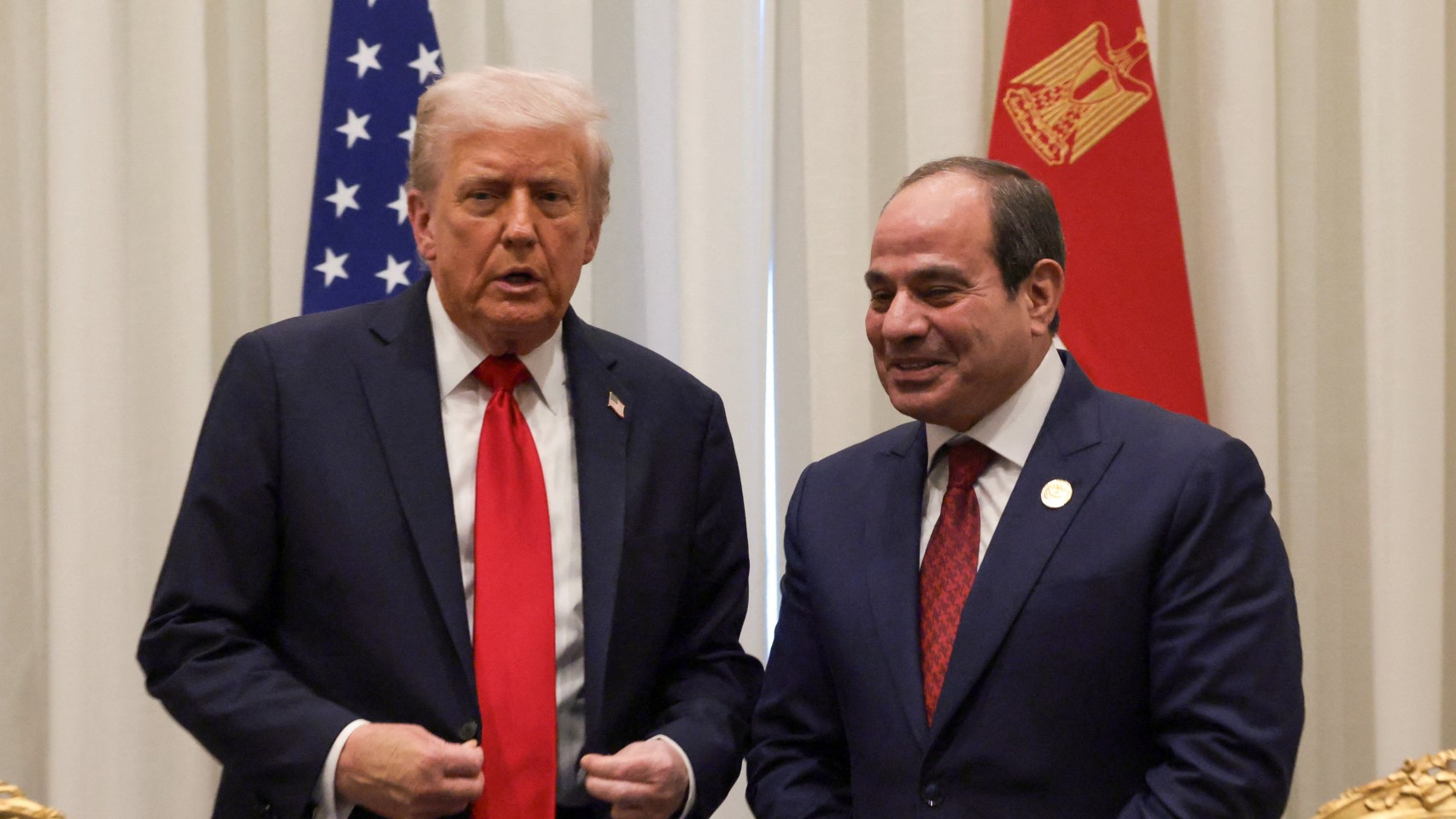
World leaders descend on Egypt to sign Trump’s Gaza ceasefire deal
In a landmark event, leaders and officials from over two dozen nations convened in Sharm el-Sheikh, Egypt, on Monday to formalize a ceasefire agreement aimed at concluding Israel’s prolonged conflict in Gaza. The summit, orchestrated by Qatar’s Emir Sheikh Tamim bin Hamad Al Thani and Egyptian President Abdel Fattah el-Sisi, saw the participation of prominent figures including Palestinian Authority President Mahmoud Abbas, Turkish President Recep Tayyip Erdogan, and Indonesian President Prabowo Subianto. Notably absent were representatives from Hamas and Israel, as well as the leaders of Saudi Arabia and the United Arab Emirates, who opted to send lower-level delegates instead.
US President Donald Trump, who arrived to a warm reception, played a pivotal role in the proceedings. He praised Israeli Prime Minister Benjamin Netanyahu as ‘one of the greatest wartime leaders’ and heralded the ceasefire as a ‘once in a lifetime deal.’ Trump unveiled the ‘Trump Declaration for Enduring Peace and Prosperity,’ a memorandum signed by the US, Egypt, Qatar, and Turkey, which emphasized diplomatic resolutions over force and the protection of fundamental human rights for both Palestinians and Israelis.
The ceasefire agreement, reached days prior, stipulated the release of Israeli captives by Hamas and the return of Palestinian detainees by Israel. While celebrations erupted in Israel, Gaza witnessed subdued reunions due to Israeli warnings against public celebrations. However, critical questions remain unresolved, including Gaza’s governance, Israeli troop withdrawal, and Hamas’s disarmament.
Trump’s controversial 20-point peace plan, announced earlier, proposed the creation of a Board of Peace led by the US president. Former British Prime Minister Tony Blair, whose involvement has sparked mixed reactions, was also named to the committee. Despite his controversial legacy in the region, Blair met with Palestinian officials to discuss post-war strategies and the implementation of Trump’s peace efforts.
Hamas, in a statement, claimed that Netanyahu had ‘submitted to the resistance’s conditions,’ highlighting the group’s efforts to protect Israeli captives during the conflict. The war, which spanned over two years, resulted in significant civilian casualties and widespread destruction in Gaza, with recent reports indicating that over 80% of the fatalities were civilians.
-
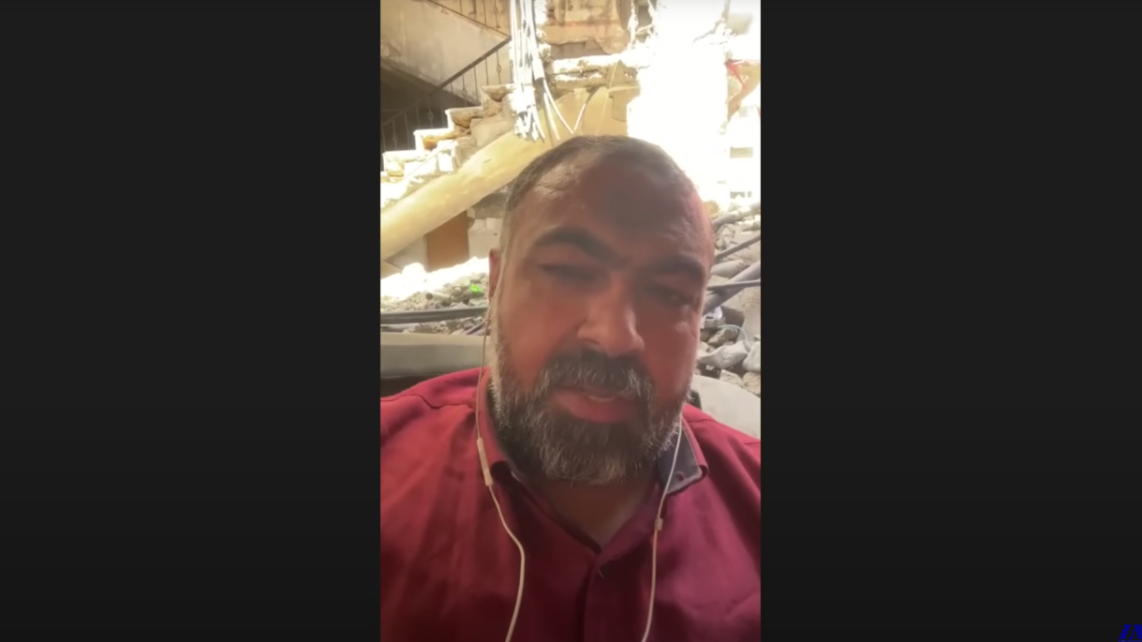
‘My joy was shattered’: Journalist grieves killing of third son as ceasefire arrives too late
The announcement of a ceasefire in Gaza, intended to bring relief to war-torn communities, instead marked another devastating loss for journalist Motasem Dalloul. Just hours after U.S. President Donald Trump declared the end of hostilities, Dalloul received the heart-wrenching news that his 21-year-old son, Ibrahim, had been killed by Israeli forces while searching for food. This tragedy marks the third son Dalloul has lost since the onset of what he describes as the ‘genocide in Gaza.’
Dalloul, a prominent journalist, has remained steadfast in Gaza City throughout the two-year conflict, refusing to evacuate despite repeated Israeli threats and invasions. His family has been displaced 13 times, most recently living in a tent in the al-Rimal neighborhood. The relentless violence has left them grappling with unimaginable hardships, including famine and the destruction of their home and livelihood.
On the day before the ceasefire, Ibrahim and his friends ventured south in search of food, driven by unbearable hunger and the hope of earning money by selling goods in the north. However, their journey ended in tragedy near the al-Nabulsi roundabout, where Israeli forces opened fire. The exact circumstances of the attack remain unclear, but the loss has left Dalloul and his family shattered.
Dalloul’s grief is compounded by the memories of his wife, Riham, and their two-year-old son, Abu Bakr, who were killed in an Israeli bombing last year while waiting for flour. Three months later, his son Yehya was fatally shot by an Israeli tank as they searched the rubble of their destroyed home. Dalloul’s pain is palpable as he reflects on the loss of his loved ones and the destruction of his family’s future.
Despite the ceasefire, Dalloul emphasizes that the suffering in Gaza continues. The region’s infrastructure lies in ruins, and basic necessities remain scarce. As the community begins to reckon with their losses, the scars of war run deep. Dalloul’s story is a poignant reminder of the human cost of conflict and the enduring resilience of those who endure it.
-

A voice that broke down barriers: Crowds fill Sarajevo to mourn beloved folk singer Halid Beslic
Sarajevo, Bosnia-Herzegovina — The streets of Sarajevo were filled with tens of thousands of mourners on Monday as they gathered to pay their final respects to Halid Beslic, a beloved Bosnian folk singer whose music and humanitarian efforts transcended ethnic divisions in a region historically plagued by conflict. Beslic, who passed away last week at the age of 71 after battling cancer, was celebrated not only for his artistic contributions but also for his unwavering commitment to peace and compassion during the turbulent 1992-95 Bosnian War. His concerts during the war raised critical funds for displaced Bosnians, while his songs about life and love resonated deeply across the Balkans. The funeral procession, led by Muslim cleric Muhamed Velic, saw mourners silently make their way to Sarajevo’s main cemetery, many visibly moved by the loss of a man whose voice and kindness bridged divides. Velic remarked that Beslic’s music “reached people’s hearts and his goodness broke barriers and crossed various borders.” Beslic’s career, which began in the former Yugoslavia, spanned decades, earning him reverence as a symbol of the peaceful prewar era. Over the weekend, tributes poured in from across the region, with thousands gathering in Bosnia, Croatia, Serbia, Slovenia, and Montenegro to sing his songs. Social media also showcased gatherings in Western Europe, Australia, Canada, and the United States, where diaspora communities from the former Yugoslavia honored his legacy. Bosnian actor Emir Hadzihafizbegovic, a close friend of Beslic, described him as the “personification of Bosnia and the former Yugoslavia,” crediting him with teaching “how to live without prejudice.” Beslic’s humanitarian work during the war, including organizing concerts abroad to support war victims, cemented his status as a unifying figure in a region still grappling with the scars of ethnic division. The Bosnian War, which erupted after Bosnian Serb nationalists opposed the country’s independence from Yugoslavia, claimed over 100,000 lives and displaced millions. Nearly three decades later, Bosnia remains ethnically fragmented and economically challenged, a stark reminder of the enduring impact of the conflict.
-

Trump’s 130% China tariff looks like another TACO moment
The global economic landscape is bracing for potential upheaval as former US President Donald Trump proposes a staggering 130% tariff on Chinese imports, escalating the US-China trade war to unprecedented levels. While markets react with alarm, analysts remain skeptical about the likelihood of such a drastic measure being implemented on November 1 as threatened. The imposition of such tariffs between the world’s two largest economies could trigger a global recession, with the combined $45 trillion output of the US and China forming the backbone of international trade. The cessation of commerce between these economic giants would be catastrophic for trade-dependent nations, potentially leading to a near-extinction-level event for their economies. The core issue, however, lies not in the tariff threat itself but in the underlying motivations driving Trump’s aggressive stance. The stated rationale—a response to China’s restrictions on critical mineral exports—appears to mask a broader agenda. Trump’s recent setbacks in trade negotiations with South Korea, Japan, and the European Union have left him increasingly desperate to secure a ‘grand bargain’ with China. Despite his bluster, many view this as a negotiating tactic rather than a genuine policy shift. Goldman Sachs analysts suggest that the ultimate outcome will likely be an extension of the current tariff pause. Meanwhile, Chinese President Xi Jinping appears to hold the upper hand, leveraging Trump’s desperation to his advantage. As the global economy teeters on the brink, the stakes have never been higher, with the potential for renewed volatility and risk repricing looming large.
-

Teaching halted as Nigerian lecturers go on strike
Lecturers at Nigeria’s public universities have initiated a two-week strike, citing unresolved issues over pay and funding. The industrial action, announced by Professor Chris Piwuna, leader of the Academic Staff Union of Universities (ASUU), was described as ‘inevitable’ due to what he termed as government failures. The strike commenced shortly after universities reopened for the new academic year, raising concerns about potential disruptions to the academic calendar. The Nigerian government has urged lecturers to reconsider their decision, emphasizing the importance of constructive dialogue to resolve the crisis. It also warned that striking lecturers may not receive payment under the country’s ‘No Work, No Pay’ labor law. In a statement, the government claimed to have presented a comprehensive offer addressing key concerns such as working conditions, institutional governance, and staff welfare, but is still awaiting ASUU’s official response. This strike is part of a long-standing pattern of industrial actions by Nigerian university lecturers, who have repeatedly clashed with successive governments over issues of funding, salaries, and welfare. Historical agreements from 1992, 2009, and 2013 have often been unfulfilled, leading to repeated strikes. The most recent major strike in 2022 lasted eight months, severely disrupting the academic calendar and affecting millions of students nationwide. Observers argue that these recurring strikes highlight deeper structural challenges in Nigeria’s higher education sector, including chronic underfunding, politicized management, and a persistent lack of trust between the government and university unions.
-
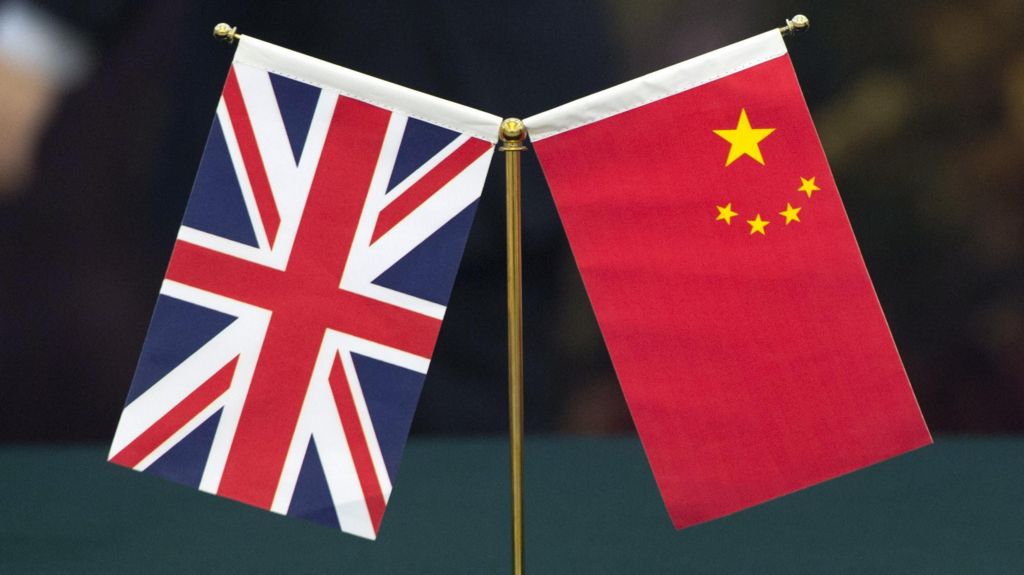
The controversy over the collapsed China spy case explained
The UK government is embroiled in a heated political dispute following the unexpected collapse of a high-profile espionage case involving two men accused of spying for China. Christopher Cash, a former parliamentary researcher, and Christopher Berry were charged under the Official Secrets Act in April 2024, accused of gathering and providing sensitive information detrimental to national security between December 2021 and February 2023. However, prosecutors dropped the charges in September, just weeks before the trial was set to begin, citing insufficient evidence. The Crown Prosecution Service (CPS) revealed that critical evidence, including official government designation of China as a ‘national security threat,’ could not be obtained. This development has ignited a blame game between the current Labour government and the previous Conservative administration. Prime Minister Sir Keir Starmer has pointed fingers at the Tories, arguing that the prosecution was based on their stance at the time, which did not label China as a threat. In contrast, Conservative leader Kemi Badenoch has accused the government of deliberately sabotaging the case to appease Beijing, a claim vehemently denied by Downing Street. The case’s collapse has raised concerns about the UK’s approach to China, particularly as the Labour government has sought to strengthen trade ties with Beijing. Critics argue that this incident highlights a potential weakness in addressing national security threats, while the government maintains its policies are aligned with the UK’s interests. The controversy underscores the complexities of UK-China relations and the challenges of balancing economic cooperation with national security concerns.
-

Woody Allen pays glowing tribute to Diane Keaton
Renowned filmmaker Woody Allen has penned an emotional and deeply personal tribute to Diane Keaton, the celebrated actress who passed away on Saturday at the age of 79. In a heartfelt essay published in *The Free Press*, Allen described Keaton as a one-of-a-kind talent, stating, ‘She was unlike anyone the planet has experienced or is unlikely to ever see again.’ He fondly recalled how her radiant presence and infectious laughter could light up any room. The two first crossed paths in 1969 during rehearsals for Allen’s play *Play It Again, Sam*, marking the beginning of a creative partnership that spanned eight films, including the iconic *Annie Hall*, for which Keaton won the Best Actress Oscar in 1977. Allen admitted that Keaton became his sole audience, writing, ‘As time went on, I made movies for an audience of one, Diane Keaton. I never read a single review of my work and cared only what Keaton had to say about it.’ Their on-screen chemistry in *Annie Hall*, where Keaton portrayed the quirky, free-spirited title character, mirrored their real-life romance at the time. Allen reminisced about their first meeting, comparing her to ‘a gorgeous young Huckleberry Finn,’ and lamented that the world feels ‘drearier’ without her. Despite her passing, Allen finds solace in her enduring legacy, stating, ‘Still, there are her movies. And her great laugh still echoes in my head.’ Beyond *Annie Hall*, Keaton starred in other Allen classics such as *Manhattan*, *Sleeper*, and *Radio Days*. Keaton remained a steadfast supporter of Allen, even amid controversies surrounding allegations of misconduct, which he has consistently denied. In a 2023 interview with *The Guardian*, she credited Allen with shaping her career, saying, ‘He gave me everything. He really did. Woody made it loose. That helped me enormously.’ Keaton’s career skyrocketed with her role as Kay Adams-Corleone in *The Godfather* films, followed by memorable performances in *Father of the Bride* and *The First Wives Club*. Francis Ford Coppola, director of *The Godfather*, also paid tribute to Keaton, calling her ‘endlessly intelligent’ and ‘creativity personified.’ Coppola highlighted her groundbreaking work in *Annie Hall*, which not only showcased her acting prowess but also set new fashion trends. Diane Keaton’s legacy as a trailblazing actress and style icon continues to inspire generations.
-
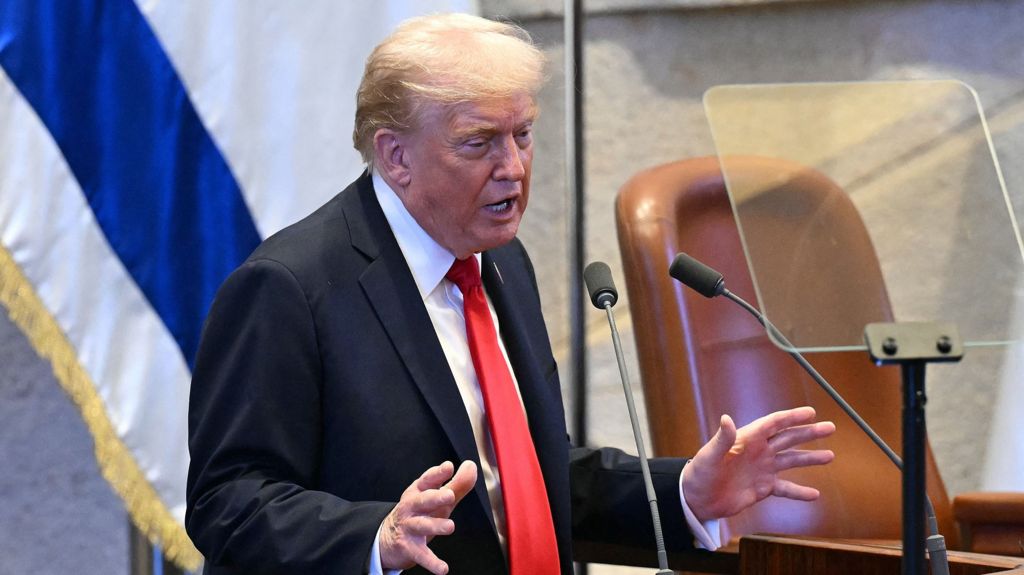
‘It will be a golden age for the Middle East’ – Trump
In a historic address to the Israeli parliament, US President Donald Trump proclaimed the dawn of a ‘golden age’ for the Middle East. His remarks followed the successful release of all 20 living hostages held in Gaza, marking a significant diplomatic achievement. Trump emphasized the importance of regional stability and cooperation, highlighting the role of the United States in fostering peace. He praised the efforts of Israeli and international negotiators, underscoring the potential for a new era of prosperity and unity in the region. The president’s speech resonated with optimism, as he called for continued collaboration to address longstanding conflicts and build a brighter future for the Middle East.