
The United States has conducted a series of military strikes in the Caribbean Sea, targeting vessels allegedly involved in drug trafficking. President Donald Trump announced the first of these strikes in September, claiming that a boat operated by the Tren de Aragua cartel, departing from Venezuela and carrying drugs bound for the US, had been destroyed. Subsequent strikes have been accompanied by grainy footage, though US officials have not provided concrete evidence of drug trafficking or detailed information about the vessels targeted. These actions have sparked regional condemnation and raised significant legal and ethical questions. Colombian President Gustavo Petro disputed one strike, asserting that the targeted boat was Colombian with Colombian citizens onboard, a claim denied by the White House. Legal experts have questioned the legality of the strikes under international maritime law, particularly the United Nations Convention on the Law of the Sea, which the US has not signed but claims to follow. Professor Luke Moffett of Queen’s University Belfast noted that while force can be used to stop a boat, it should generally be non-lethal and must be reasonable and necessary in self-defense. Critics argue that labeling individuals as narco-terrorists does not make them lawful military targets, and the US is not engaged in an armed conflict with Venezuela or the Tren de Aragua cartel. A leaked memo to Congress reportedly stated that the Trump administration considers the US to be in a ‘non-international armed conflict’ with drug cartels. Despite support from some Republicans, including Senator Lindsey Graham, who praised the strikes as a sign of strong leadership, concerns have been raised about compliance with US law, particularly the War Powers Resolution, which requires consultation with Congress before military action. Venezuela’s President Nicolás Maduro has denied involvement in drug trafficking and condemned the strikes, which come amid reports of increased US naval presence in the region. The USS Lake Erie, USS Gravely, USS Jason Dunham, and USS Fort Lauderdale have been identified in the Caribbean, supporting anti-narcotics operations. Trump has also offered a $50 million reward for information leading to Maduro’s arrest, further escalating tensions between the two nations.
作者: admin
-

Greek riot police scuffle with protesting doctors during hospital tour by PM Mitsotakis
Tensions flared at Athens’ University General Hospital Attikon on Wednesday as riot police clashed with medical staff during a protest over deteriorating public health services. The demonstration coincided with a visit by Greek Prime Minister Kyriakos Mitsotakis, who was attending the inauguration of a new oncology department and touring the renovated emergency wing. Armed with shields, batons, and pepper spray, police forcefully dispersed doctors demanding to meet with the prime minister, according to local media reports. The protest highlighted critical issues plaguing Greece’s healthcare system, including severe staff shortages, stagnant wages, and unsafe working conditions. Dr. Giorgos Sideris, head of the Association of Hospital Doctors of Athens and Piraeus, condemned the government’s inaction, stating that healthcare workers are owed 10,000 days of leave and have endured frozen salaries. He also revealed that 130 patients recently slept on stretchers in hospital corridors due to overcrowding, emphasizing the urgent need for 125 additional nursing staff to meet basic safety standards. Mitsotakis acknowledged the challenges during his speech, noting that funding for Attikon had risen from 90 million euros to 150 million euros and that staffing levels had improved, albeit insufficiently. The new oncology ward, funded by a charity organization, is expected to treat over 20,000 patients annually, marking a 41% increase from 2019. Despite these developments, the protest underscored the deep-seated frustrations of healthcare workers and the pressing need for systemic reforms.
-
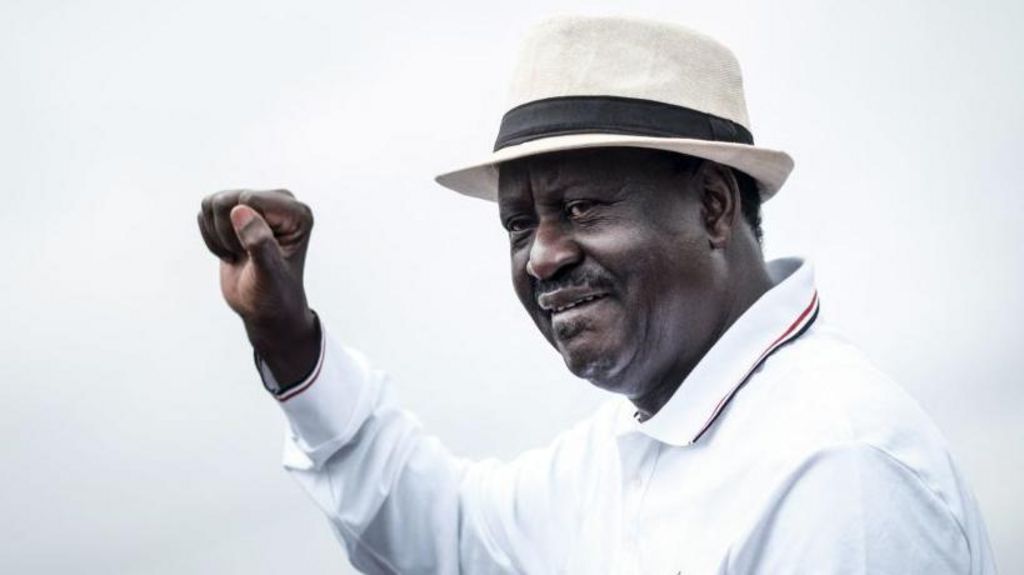
Raila Odinga: The man who shaped Kenyan politics
Raila Odinga, one of Kenya’s most prominent and enduring political figures, passed away on Wednesday morning at the age of 80 in India, where he had been receiving treatment for an undisclosed illness. Known affectionately as ‘Baba’ (father), Odinga was a firebrand politician and a staunch advocate for multi-party democracy, earning both fervent support and fierce opposition throughout his career. His death marks the end of an era for Kenya and leaves a significant void in the country’s political landscape as it approaches the 2027 elections. Odinga, a veteran opposition leader, made five unsuccessful presidential bids, coming closest to the presidency in 2008 when he was appointed prime minister in a coalition government. Despite his political misfortunes, he remained a formidable force, with successive Kenyan presidents seeking his support to govern effectively. In 2022, he made his final bid for the presidency, choosing former Justice Minister Martha Karua as his running mate—a historic move that was widely celebrated. Odinga’s legacy extends beyond Kenya; he was a dedicated pan-Africanist who championed African unity and self-reliance, serving as the African Union High Representative for Infrastructure Development from 2018 to 2023. Born into a famous political family, Odinga followed in the footsteps of his father, Jaramogi Odinga, Kenya’s first vice-president, who fell out with the country’s founding leader, Jomo Kenyatta. Raila Odinga’s life was marked by struggle, including two periods of detention during the rule of Daniel arap Moi, Kenya’s second president. He was also a former political prisoner, holding the record for being Kenya’s longest-serving detainee. Odinga’s commitment to democracy and his role in Kenya’s political history will be remembered, even as questions about the fairness of the electoral system he criticized remain unresolved.
-
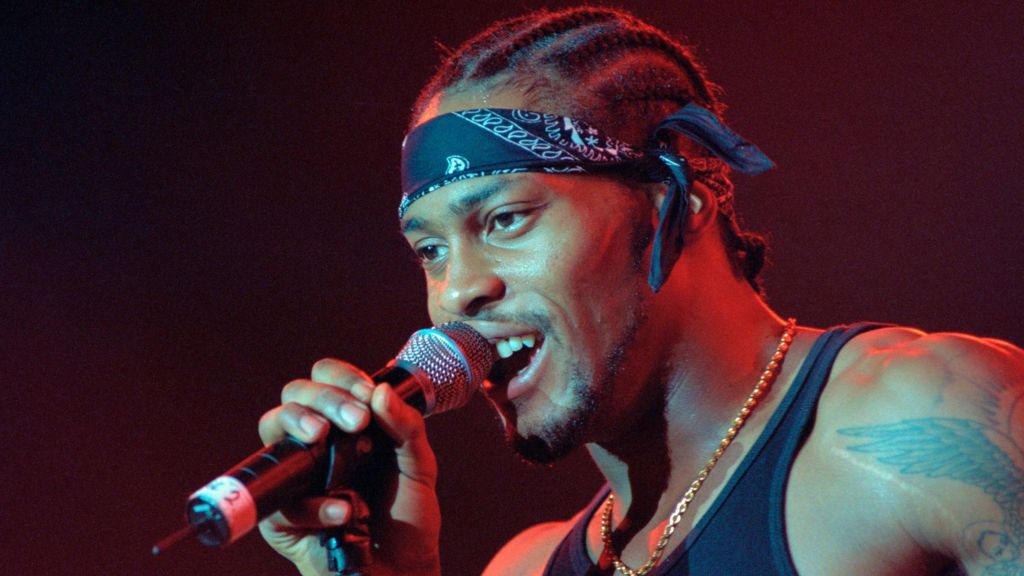
D’Angelo: A musical pioneer who reshaped soul
The music world mourns the loss of D’Angelo, a visionary artist whose groundbreaking debut album ‘Brown Sugar’ not only redefined R&B but also birthed an entirely new genre: neo-soul. Released in July 1995, the album’s slow tempos, smooth vocals, and fusion of rhythm and blues with hip-hop beats, jazz, and funk created a sound that was both nostalgic and revolutionary. D’Angelo’s influence extended far beyond his own era, inspiring a wave of artists like Erykah Badu, Jill Scott, and Maxwell, who followed in his footsteps during neo-soul’s golden era. Despite his relatively small discography—only three studio albums—D’Angelo’s impact on modern music remains profound. His 2000 album ‘Voodoo,’ hailed as a masterpiece, further cemented his legacy, while his 2014 release ‘Black Messiah’ showcased his evolution as an artist, blending rock, psychedelia, and politically charged lyrics. D’Angelo’s career was marked by both triumph and struggle, including battles with fame, depression, and substance abuse. Yet, his artistry and authenticity continue to resonate, leaving an indelible mark on the music industry and inspiring generations of musicians to embrace their unique voices.
-

Hong Kong lawmakers pass bill to regulate ride-hailing services like Uber
Hong Kong has taken a significant step toward regulating its ride-hailing industry with the passage of a new bill on Wednesday. The legislation mandates that platforms like Uber, along with their vehicles and drivers, must obtain licenses to operate legally. This move comes after years of tension between the city’s taxi industry and online ride-hailing services. The first licensed platforms are expected to launch by late 2026 at the earliest. Under the new rules, Hong Kong’s transport commissioner will evaluate applicants based on their experience, financial capacity, and planned investments in the region. Licensed companies must ensure their services are ‘proper and efficient’ and that all vehicles and drivers on their platforms hold valid permits. Drivers must meet specific criteria, including being at least 21 years old, holding a private car driving license for at least one year, and having no serious traffic convictions within the past five years. Additionally, they must pass a test and complete a pre-service course. The bill represents a pivotal moment in the development of ride-hailing services in Hong Kong, where private vehicles have been prohibited from offering paid services without a permit. Uber Hong Kong welcomed the decision, calling it a ‘significant milestone’ in integrating ride-sharing into the city’s transport system. However, the legislation also imposes strict penalties for non-compliance, including fines of up to 1 million Hong Kong dollars (approximately $128,600) and a maximum jail term of one year for unlicensed operators. The government plans to introduce a cap on the number of ride-hailing vehicles, with details to be outlined in subsidiary legislation next year. This framework aims to balance the interests of traditional taxi companies and the growing demand for modern, convenient transportation options.
-
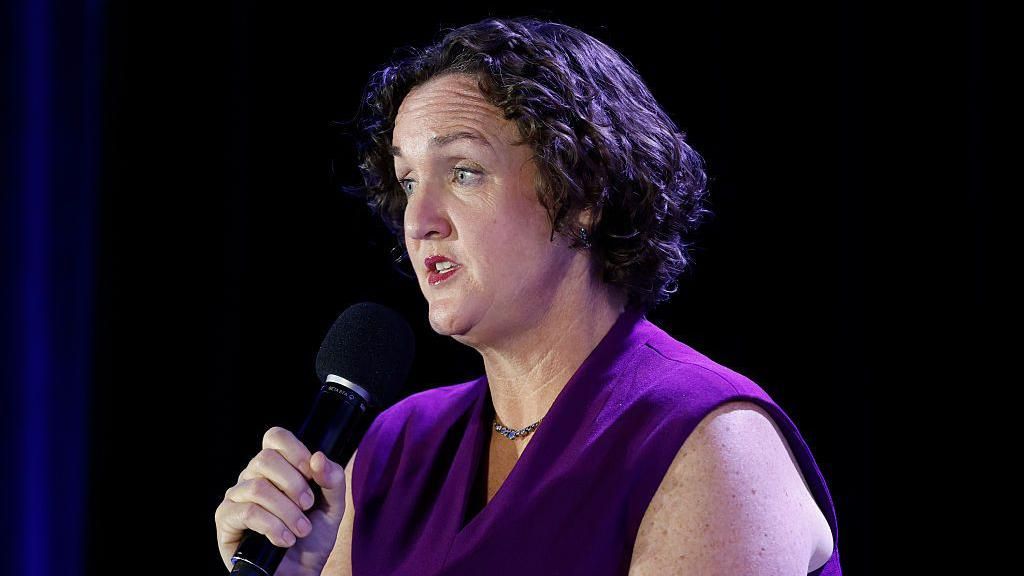
California governor candidate says she ‘fell short’ in viral videos
Katie Porter, a prominent Democratic candidate vying to become California’s next governor, has issued a public apology following the circulation of videos depicting her aggressive interactions with a news reporter and a former staff member. In her first remarks since the videos went viral, Porter acknowledged that she “fell short” and expressed regret for her conduct. Despite her apology, the incident has cast a shadow over her campaign, with some within her party questioning her suitability for the role of governor. Porter, who is widely regarded as a frontrunner in the race to succeed Gavin Newsom, has received minimal support from fellow Democrats, with critics suggesting her behavior raises concerns about her temperament. The controversy emerged just months ahead of the June 2026 primary vote, which will determine the final two candidates in the gubernatorial race. During an appearance on the Inside California Politics program, Porter was directly questioned about her ability to lead the state. She used the opportunity to address the viral footage, stating, “When I look at those videos, I want people to know that I understand that I could have handled things better.” Porter emphasized her commitment to her staff and her determination to continue her campaign, vowing to fight for California’s future. The first video, shared online last week, captured Porter threatening to walk out of an interview with a local CBS reporter and laughing at a question. The second video, dating back to 2021, showed her shouting at a staffer and using explicit language. Porter rose to national prominence during her tenure in the U.S. House of Representatives from 2019 to 2025, where she was known for her incisive questioning and use of a whiteboard during congressional hearings. Her campaign gained momentum after former Vice President Kamala Harris announced she would not run for governor. However, with the primary still months away, other potential candidates, including California Senator Alex Padilla, are being urged to enter the race.
-
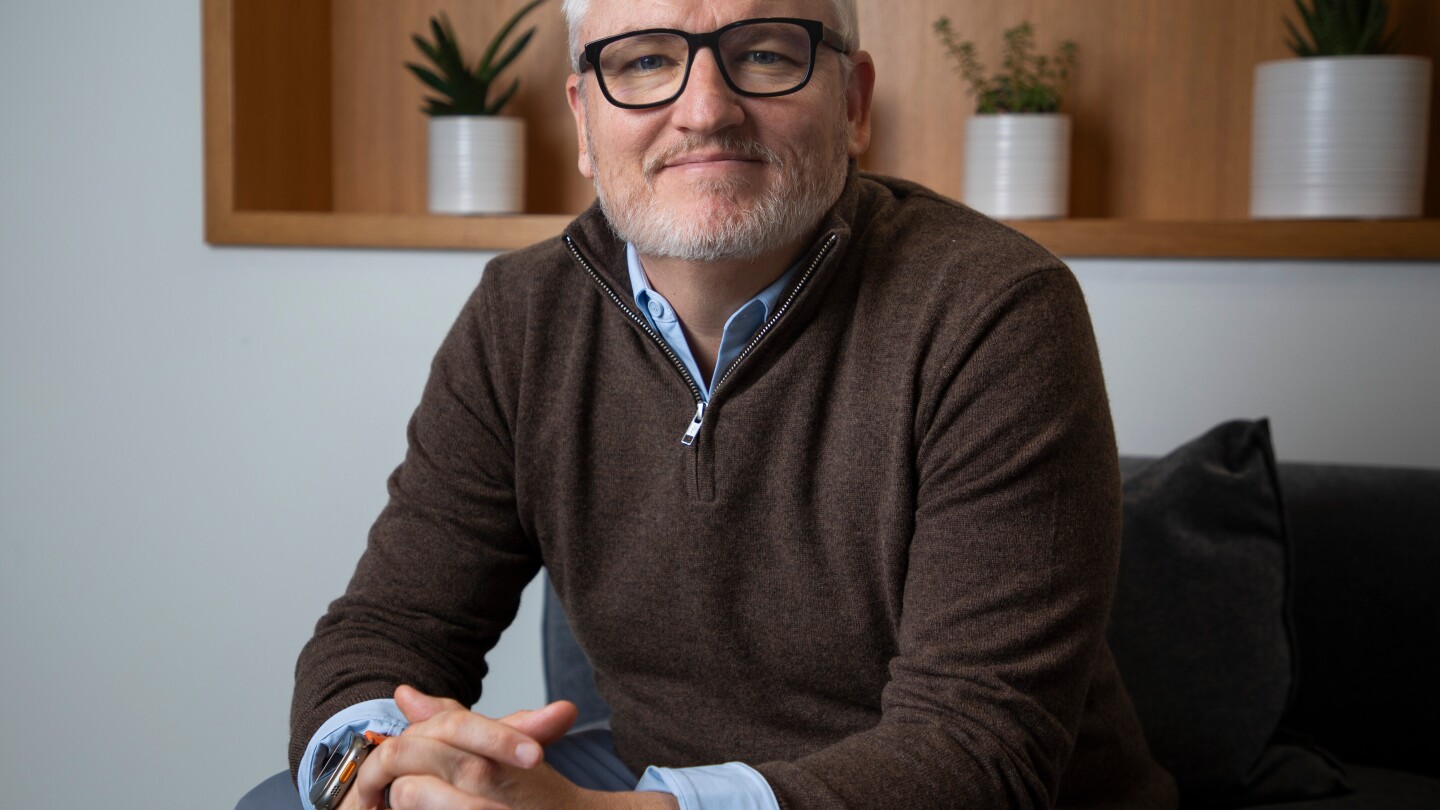
How Promote Giving, a new investment model, will raise millions for charities
Joel Holsinger, an investment manager and partner at Ares Management Corp., has launched Promote Giving, a groundbreaking initiative aimed at encouraging investment managers to integrate charitable donations into their business models. This initiative stems from Holsinger’s transformative experience during a 2019 visit to Dharavi, India’s largest slum, where he witnessed the impact of a tuberculosis prevention program hindered by funding shortages. Inspired to bridge the gap between profit and purpose, Holsinger created the Pathfinder family of funds, which donates at least 5% of performance fees to charities. Since its inception, the initiative has raised over $10 billion in investments and pledged more than $40 million to charitable causes. Promote Giving, launched with participation from nine firms including Ares Management, Pantheon, and Pretium, represents $35 billion in assets and could generate up to $250 million in donations over the next decade. Unlike ESG or impact investing, Promote Giving focuses on maximizing financial returns while allocating a portion of management fees to charities after investors receive their promised returns. This model addresses the funding challenges faced by nonprofits, particularly in the wake of cuts to U.S. foreign aid and the dismantling of USAID. Kammerle Schneider of PATH and Sal Khan of Khan Academy have praised the initiative for its potential to provide stable, long-term funding for critical global health and education programs. Holsinger envisions Promote Growing into a movement akin to the Giving Pledge, encouraging industries to embed philanthropy into their core operations. Research from Chief Executives for Corporate Purpose supports this approach, showing that companies with purpose-driven missions achieve higher revenue growth and employee engagement. Holsinger believes that by channeling more capital to nonprofits, Promote Giving can help solve global challenges that lack not solutions but funding.
-

Dubai’s VARA: Regulating the future of virtual assets
Dubai has solidified its position as a global leader in digital finance by establishing the Virtual Assets Regulatory Authority (VARA), the world’s first dedicated regulator for virtual assets. Since its inception in 2022, VARA has been at the forefront of shaping a regulatory framework that balances innovation, investor protection, and market integrity. Under the leadership of CEO Matthew White, VARA has evolved into a full-scale authority overseeing one of the most dynamic virtual asset markets globally.
VARA’s approach is rooted in principles rather than rigid prescriptions, ensuring flexibility and clarity for market participants. The framework emphasizes activity-specific requirements, data-driven supervision, and global alignment. White highlights the importance of leveraging technology-enabled supervision, scaling innovation through sandboxes, and fostering cross-border cooperation. Collaborations with entities like the UAE Securities and Commodities Authority further strengthen Dubai’s unified national framework.
Innovation remains a cornerstone of VARA’s strategy, but not at the expense of accountability. White asserts that compliance and innovation are complementary, benefiting investors, consumers, and innovators alike. The authority’s principles-based framework sets clear guardrails while allowing Virtual Asset Service Providers (VASPs) the flexibility to meet standards. Strict enforcement mechanisms, including fines up to Dh10 million, underscore VARA’s commitment to compliance.
Engagement with the industry is central to VARA’s operations. Regular consultations with VASPs, tech experts, and investors ensure that regulations remain relevant and effective. Workshops and participation in major events like GITEX and TOKEN2049 further enhance VARA’s connection with the ecosystem. Dubai’s appeal as a virtual asset hub is bolstered by its world-class infrastructure, business-friendly policies, and lifestyle advantages, attracting institutional investors and major players in the industry.
VARA is also pioneering the tokenization of real-world assets and exploring AI-powered Web3 platforms. The Dubai Land Department’s Property Token Ownership Certificate exemplifies this shift, linking tokenized assets to the land registry. Successful projects, such as Prypco Mint’s tokenized real estate, demonstrate the potential of these innovations. Additionally, VARA’s Pilot Framework allows for the safe testing of new products, ensuring responsible innovation.
Looking ahead, VARA is preparing for the next generation of digital assets, focusing on robust governance and tech oversight. The Technology & Information Rulebook ensures firms meet stringent cybersecurity and data protection standards. White envisions Dubai as a global hub for virtual assets, driving economic growth, creating jobs, and competing on the international stage.
-

‘We shouldn’t have lost’: UAE fans unite in support despite heartbreaking Qatar defeat
The UAE’s dream of securing a spot in the 2026 FIFA World Cup was dashed in a dramatic 2-1 defeat to Qatar at Jassim bin Hamad Stadium. Despite the heartbreaking loss, the match became a symbol of national unity as fans across the Emirates rallied behind their team in unprecedented fashion. From bustling malls to cinema screens broadcasting the game live, the UAE came together in a remarkable display of solidarity. Families, students, and elders filled venues like Cinema City and VOX Cinemas, pausing their daily lives to share in the collective hope of World Cup qualification. The atmosphere was electric, with fans of all ages cheering for the national team, affectionately known as ‘the whites.’ The match ended in disappointment as Qatar’s Boualem Khoukhi and Ró-Ró scored, with Sultan Adil Alamiri’s late goal offering a glimmer of hope. Despite the loss, UAE supporters remain optimistic about their team’s future. ‘The 35-year wait continues, but it’s not over—it’s just longer,’ said Yousef AlNaqbi, reflecting the resilience of the fanbase. The game sparked debates over officiating decisions, with many fans questioning key moments on social media. Yet, amid the frustration, there was also respect for Qatar’s victory and a recognition of the rivalry’s role in pushing both nations forward. As fans left screenings and turned off their TVs, the prevailing sentiment was one of pride in the team’s effort and belief in their potential. ‘The dream isn’t over,’ AlNaqbi added. ‘It’s just taking the long road home.’
-

The smart lens that could replace your phone: Inside XPANCEO’s $250 million vision for the future
In a groundbreaking leap for wearable technology, Dubai-based deep tech startup XPANCEO is pioneering the development of the world’s first invisible, AI-powered smart contact lens. This innovative device seamlessly integrates augmented reality (AR), biosensing, and human vision into a single interface, potentially revolutionizing how we interact with technology. Recently, XPANCEO secured a staggering $250 million in Series A funding, valuing the company at $1.35 billion — the largest such round in the UAE and Mena region and among the top three globally in AR/VR and wearables. Roman Axelrod, XPANCEO’s founder, envisions this technology as more than a mere advancement; it’s a paradigm shift in human-tech interaction. Unlike smartphones or wearables, which often disrupt our engagement with the world, smart contact lenses merge directly with our senses, offering a seamless and intuitive experience. Over the next decade, XPANCEO aims to transition these lenses from lab prototypes to practical tools, with initial applications in healthcare, advanced manufacturing, and mobility. The company’s minimalist approach sets it apart from tech giants like Apple and Meta, focusing on consolidating devices rather than adding to them. XPANCEO has already developed 20 working prototypes, featuring integrated microbatteries, biosensors, and AR displays. By 2026, the company plans to merge these components into a unified lens, paving the way for pre-clinical and human trials. With a strong emphasis on privacy, security, and ethics, XPANCEO is committed to ensuring its lenses meet the highest medical and regulatory standards. The company will showcase its vision at GITEX GLOBAL 2025 in Dubai, offering a glimpse into the future of personal technology.