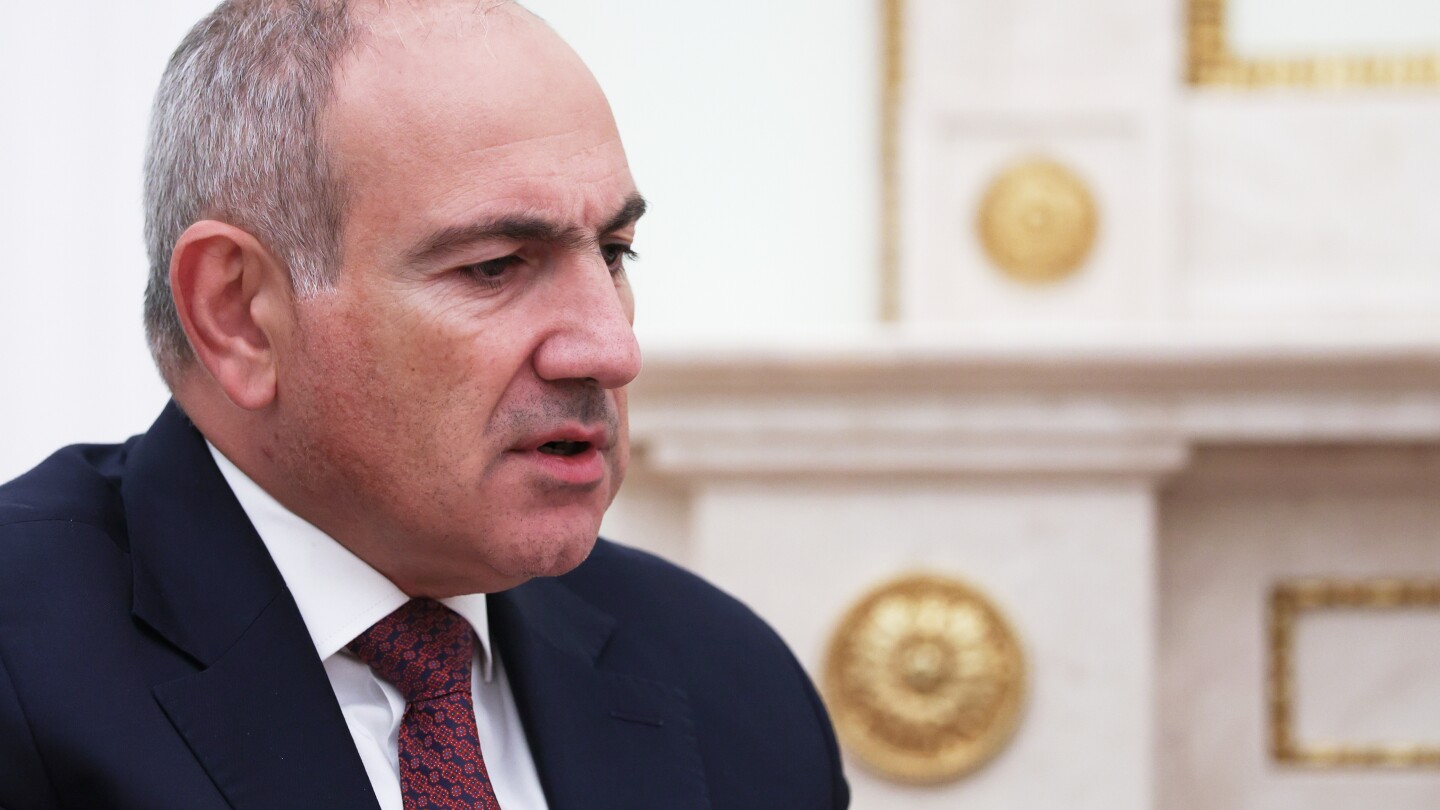
In a significant escalation of tensions between the Armenian government and the influential Armenian Apostolic Church, Bishop Mkrtich Proshyan has been charged with coercing citizens into participating in public gatherings, as well as allegations of large-scale theft and obstruction of electoral rights. The charges, announced by Armenia’s Investigative Committee on Wednesday, mark the latest in a series of high-profile arrests targeting critics of Prime Minister Nikol Pashinyan. Proshyan, who is the nephew of the church’s leader, Catholicos Karekin II, was detained alongside twelve other clergymen from his diocese. The church has condemned the arrests as part of a systematic campaign to undermine its activities, stating on social media that there is ‘obvious malicious intent to hinder the normal activities of the church.’ The investigation into Proshyan began in September following accusations from a clergy member that the church pressured its members to join anti-government rallies in 2021. This arrest follows the sentencing of Archbishop Mikael Ajapahyan to two years in prison in June for allegedly calling for the government’s overthrow. Relations between Pashinyan and the church have deteriorated sharply since April 2024, when tens of thousands of demonstrators protested Armenia’s decision to cede control of several border villages to Azerbaijan as part of a broader effort to normalize relations. The church, along with opposition groups like Sacred Struggle, has vehemently opposed these territorial concessions, which have become a focal point of broader grievances against Pashinyan’s administration. The ongoing conflict between Armenia and Azerbaijan, rooted in territorial disputes since the early 1990s, has further complicated the political landscape. In September 2023, Azerbaijan reclaimed full control of the Karabakh region, leading to Armenia’s subsequent handover of border villages. A White House-brokered peace deal signed in August aimed to end decades of conflict, but internal tensions in Armenia continue to simmer.
作者: admin
-

How Sharjah cut rental process from multiple visits to minutes
Sharjah has transformed its rental process from a cumbersome, multi-visit ordeal to a seamless digital experience, saving residents both time and money. Through a unified digital system integrating key government entities such as the Sharjah Electricity, Water and Gas Authority (SEWA), Sharjah City Municipality, the Real Estate Registration Department, and the Department of Town Planning and Survey, the emirate has achieved remarkable efficiency gains. Between 2022 and 2024, this system saved Dh250 million and reduced over 1.2 million work hours across government bodies. Residents have directly benefited, saving Dh1 million and more than 79,000 hours, as services like moving into a new home can now be completed in minutes through a single digital channel. Sheikh Saud bin Sultan Al Qasimi, Director General of the Sharjah Digital Department (SDD), emphasized that the future of government services in Sharjah will be defined by integration and simplicity, with every experience designed to be seamless and people-centric. Lamia Al Hussan Al Shamsi, Director of the SDD, highlighted key digital projects showcased at Gitex Global 2025, including Digital Sharjah, an AI-powered chatbot, and the Aqari Platform, which has processed over 2,000 transactions and registered 42,000 real estate units entirely online. Sharjah’s digital transformation aligns with the UAE’s broader smart governance goals, leveraging AI and data to enhance urban life, sustainability, and community trust.
-
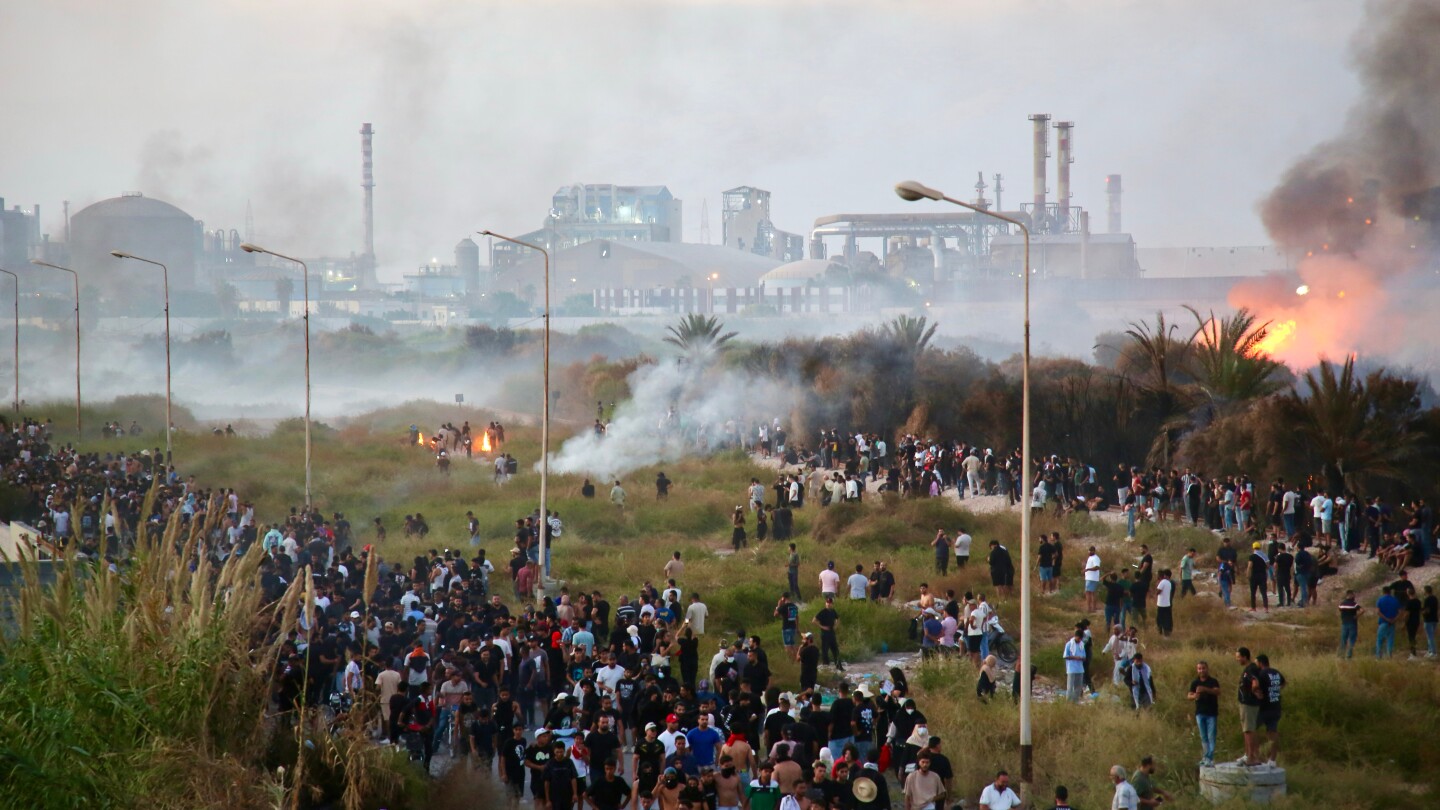
Violence erupts during anti-pollution protest as anger boils in Tunisia’s phosphate belt
The southern Tunisian city of Gabes witnessed violent clashes on Wednesday as thousands of protesters took to the streets to demand action against worsening air pollution caused by a phosphate-processing plant. Riot police deployed tear gas to disperse the crowds, resulting in injuries to both demonstrators and officers. The protest, which escalated into chaos, was sparked by a recent gas leak near the state-owned Chemical Group of Tunisia (GCT) industrial complex, a facility that has long been a source of environmental and health concerns for the city’s 400,000 residents. Gabes, a hub of Tunisia’s phosphate industry, has suffered from decades of industrial activity that residents blame for rising cancer rates, respiratory illnesses, and the destruction of the region’s once-thriving ecosystem. The latest gas leak, which sent dozens of people, including children, to hospitals, reignited public outrage. Protesters blocked major roads, burned tires, and chanted against what they called “environmental crimes,” demanding the closure of the GCT’s phosphate units. The plant, which processes raw phosphate into fertilizer, has been discharging toxic waste directly into the Gulf of Gabes, devastating marine life and forcing generations of fishermen out of work. Despite repeated government promises to modernize or relocate the facility, activists say no meaningful action has been taken. Tunisian President Kais Saied recently announced the formation of a joint commission to address protesters’ demands, but residents remain skeptical, citing years of unfulfilled pledges. The GCT admitted to “major non-conformities” in a 2025 environmental audit, acknowledging excessive ammonia and other emissions that fall short of global standards. However, locals say no visible improvements have been made, leaving the community to endure the ongoing environmental and health crisis.
-

Bangladesh prosecution seeks death penalty for ex-PM Sheikh Hasina over protest killings
In a dramatic turn of events, a prosecutor in Bangladesh’s special domestic tribunal has called for the death penalty for former Prime Minister Sheikh Hasina, accusing her of crimes against humanity during last year’s mass uprising. The violent protests in July and August 2024 resulted in the deaths of hundreds, including students, security officials, and political activists. Chief Prosecutor Tajul Islam, presenting his closing arguments at the International Crimes Tribunal in Dhaka, also demanded the death sentence for former Home Minister Asaduzzaman Khan, citing the severity of his alleged crimes. The fate of former police chief Chowdhury Abdullah Al-Mamun, who has pleaded guilty and turned state witness, was left to the tribunal’s discretion. Hasina, who has been in exile in India since August 5 last year, did not appoint legal representation, dismissing the trial as a “kangaroo court.” Meanwhile, Nobel Peace Prize laureate Muhammad Yunus, who assumed leadership of the interim government after Hasina’s ouster, has vowed to hold her accountable and banned her Awami League party’s activities. The United Nations estimates up to 1,400 deaths during the uprising, though Hasina’s party disputes these figures and calls for independent investigations. The case has further escalated political tensions in Bangladesh, with 25 former and serving military officials indicted for enforced disappearances during Hasina’s 15-year rule. Yunus has promised elections in February to transition power to a democratically elected government, though the Awami League remains barred from participation.
-

Taylor Swift fans flood German museum to see painting echoing her hit video ‘The Fate of Ophelia’
A German museum has experienced an unexpected surge in visitors, thanks to Taylor Swift’s latest music video. The Hessische Landesmuseum in central Germany has drawn hundreds of additional guests over the weekend, with some traveling from as far as Hamburg, after fans noticed a striking resemblance between an Art Nouveau painting in its collection and the opening scene of Swift’s hit song, “The Fate of Ophelia.” The painting, created by Friedrich Heyser around 1900, depicts Ophelia, a character from William Shakespeare’s “Hamlet,” clad in white and surrounded by white water lilies. Museum spokesperson Susanne Hirschmann confirmed the influx of visitors to German news agency dpa. Museum director Andreas Henning expressed both surprise and delight at the possibility that Swift’s video was inspired by the painting. “This is a great opportunity to attract people who don’t know us yet,” he said. While the museum has attempted to contact Swift to confirm the connection, they have yet to receive a response. Henning added, “I would love to show Taylor Swift the original painting sometime.” The song currently tops the charts in both Germany and the United States.
-

Canada threatens Jeep-maker over proposed US move
The Canadian government has issued a stern warning to global automotive giant Stellantis, threatening legal action over its decision to relocate the production of the Jeep Compass from Ontario, Canada, to its Illinois plant in the United States. This move comes as part of Stellantis’ $13 billion investment in the US, aimed at bolstering its manufacturing capabilities and creating more American jobs. However, Canada’s Industry Minister, Mélanie Joly, has accused the company of reneging on a ‘legally binding’ commitment to maintain operations in Brampton, Ontario, in exchange for substantial financial support from the Canadian government. Joly emphasized that the government would ‘exercise all options, including legal’ to ensure the agreement is honored. In a letter to Stellantis CEO Antonio Filosa, Joly highlighted the billions of dollars Canada had invested in the company, warning that the relocation could jeopardize the future of the Brampton factory. Filosa, in a statement, described the investment as the largest in the company’s history, focusing on growth and strengthening the US manufacturing footprint, but notably omitted any mention of its Canadian operations. Joly countered by reminding Stellantis of the strong partnership between the company and the Canadian government, recalling how Canada had supported the company during its near-bankruptcy in 2009. Prime Minister Mark Carney also expressed concern, stating that the government is working to protect Stellantis employees in Brampton and explore new local opportunities for them. Stellantis, which owns 14 car brands including Jeep, Alfa Romeo, and Chrysler, operates manufacturing plants across the US, UK, Europe, Canada, Mexico, and South America. The company has previously cited the impact of tariffs imposed by the Trump administration, which cost it $349.2 million in 2018. While President Trump initially introduced car tariffs to boost US manufacturing, he later eased tariffs on foreign car parts. However, a new 10% tariff on Canadian softwood lumber, effective this week, has further strained US-Canada trade relations, with Canadian producers now facing combined tariffs of over 45% due to an ongoing trade dispute.
-
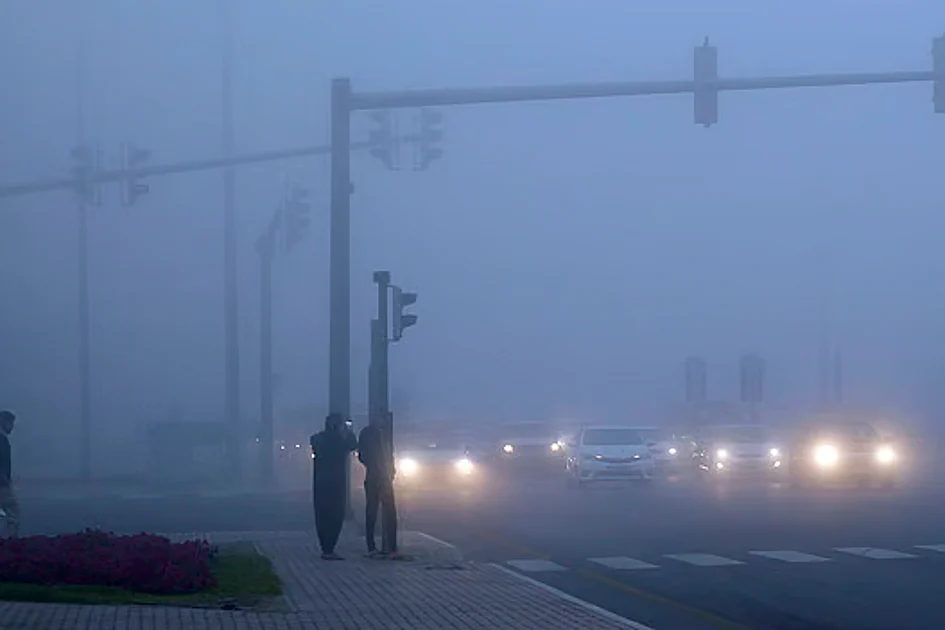
UAE weather: Red alert issued for thick fog; temperatures to dip to 18ºC in some areas
The National Centre of Meteorology (NCM) has issued red and yellow alerts across various regions in the UAE due to thick fog, significantly reducing visibility. Motorists are advised to exercise extreme caution, particularly in areas where fog is prevalent. The Abu Dhabi Police has temporarily lowered speed limits on certain roads and urged drivers to adhere to the updated limits displayed on electronic boards. The weather forecast predicts fair to partly cloudy conditions, with convective clouds expected in the east and south by the afternoon. Humidity is likely to increase by night and early Friday morning, particularly in coastal and internal areas, potentially leading to fog or mist formation. Temperatures are set to vary widely, with mountainous regions experiencing lows of 18ºC, while internal areas could see highs of 39ºC. In Dubai, temperatures will range between 28ºC and 35ºC, Sharjah between 25ºC and 37ºC, and Abu Dhabi between 27ºC and 36ºC. Light to moderate winds are expected, occasionally freshening throughout the day.
-
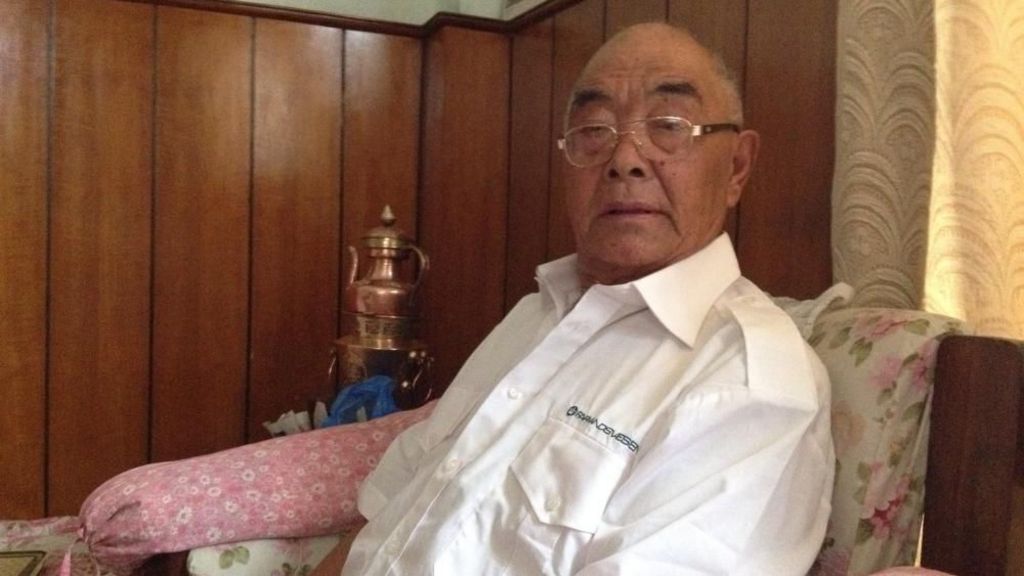
Last surviving member of first team to scale Everest dies aged 92
Kanchha Sherpa, the final surviving member of the pioneering 1953 Mount Everest expedition, has passed away at the age of 92 in Kathmandu, Nepal. His family confirmed that he had been unwell in recent times. Sherpa was just 19 years old when he joined the legendary team led by Sir Edmund Hillary and Tenzing Norgay, which achieved the first successful ascent of the world’s highest peak. Despite having no prior mountaineering experience, Sherpa served as a porter on the 35-member expedition, carrying essential supplies such as food, tents, and equipment to the base camp during the grueling two-week journey. Remarkably, he was one of only three Sherpas to surpass the 8,000-meter mark (26,247 feet) during the climb. Sherpa’s contributions to mountaineering earned him widespread admiration, with fellow Nepali guides hailing him as a legend and a source of inspiration. After the historic expedition, he continued working as a high-altitude porter in the Himalayas for two more decades before retiring at the request of his wife, who urged him to cease the perilous climbs. His legacy remains an enduring testament to the courage and resilience of the Sherpa community in the world of mountaineering.
-

A former security guard at the US Embassy in Norway is convicted of spying for Russia and Iran
A former security guard at the U.S. Embassy in Norway has been convicted of espionage after a court in Oslo found him guilty of spying for Russia and Iran. The 28-year-old Norwegian national, whose identity remains undisclosed, was sentenced to three years and seven months in prison. While he admitted to the facts of the indictment, he denied any criminal wrongdoing. Prosecutors revealed that he had shared sensitive information, including details about embassy diplomats, floor plans, and security protocols, with foreign agents. According to Norwegian state broadcaster NRK, the man’s actions were reportedly influenced by American ties to Israel and the Gaza conflict. His defense attorneys argued that the information he provided was of minimal value, likening his access to that of a janitor. They also questioned the legal definition of espionage under Norwegian law. The defendant was convicted on five espionage charges but acquitted of gross corruption. Both the defense and prosecution are considering appeals, with the latter seeking a harsher sentence than the three-and-a-half-year term imposed. The case marks the second espionage incident involving Norway’s Arctic University, UiT, in recent years. Norway, which shares a 198-kilometer Arctic border with Russia, has tightened restrictions on Russian nationals since the 2022 invasion of Ukraine and is contemplating building a fence along the border.
-
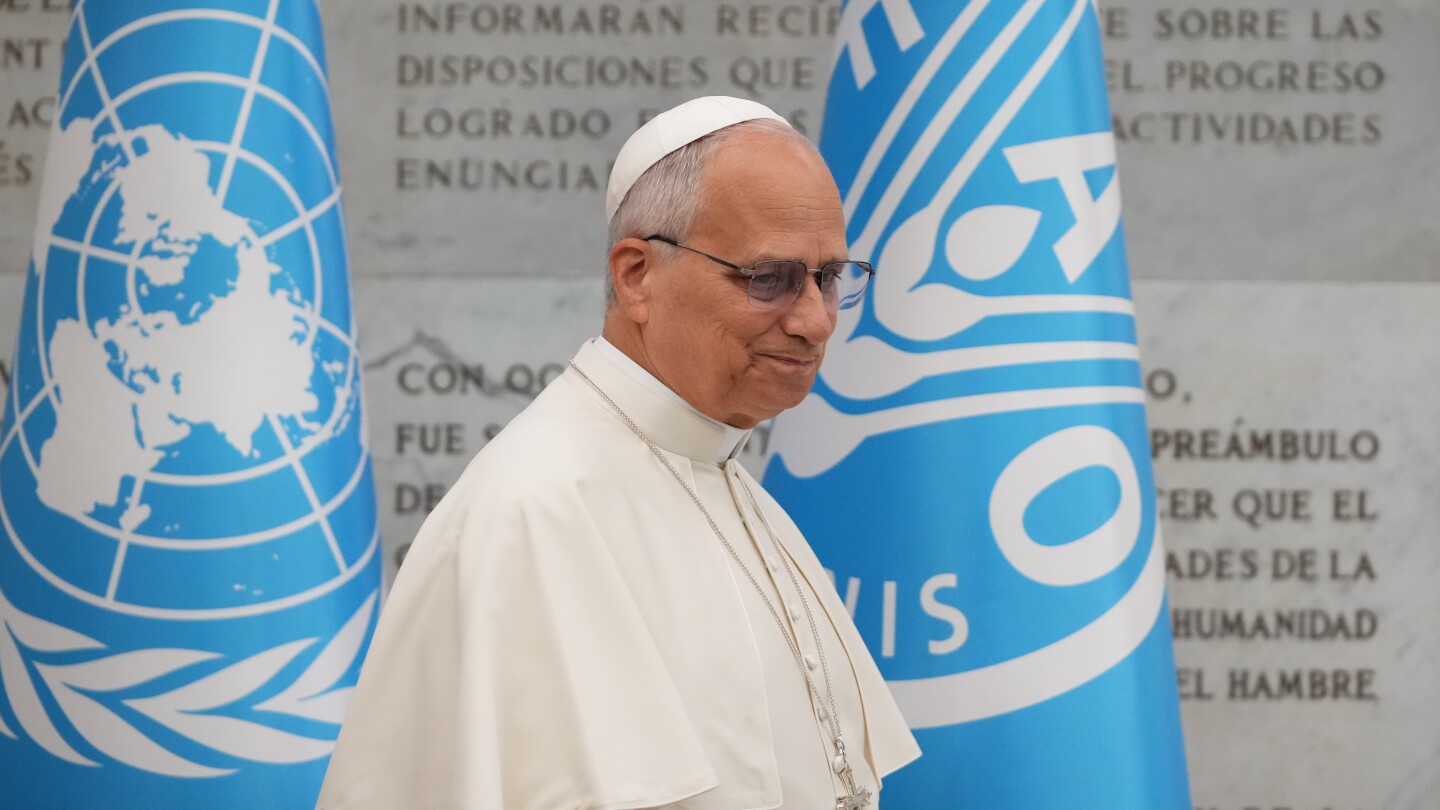
Pope Leo urges world leaders ‘not to look the other way’ in fighting global hunger
In a powerful address during the World Food Day global ceremony at the U.N. Food and Agriculture Organization’s headquarters in Rome, Pope Leo XIV urged world leaders to take responsibility for addressing the escalating crises of hunger, war, and suffering worldwide. The event also commemorated the 80th anniversary of the FAO. The pontiff emphasized the need for the international community to confront global food emergencies head-on, rather than turning a blind eye. He specifically highlighted the ongoing conflicts in Ukraine, Gaza, Haiti, Afghanistan, Mali, the Central African Republic, Yemen, and South Sudan, underscoring the dire consequences of inaction. Citing U.N. statistics, Pope Leo revealed that approximately 673 million people globally suffer from insufficient daily food intake. He challenged the global community to reevaluate their lifestyles and priorities, stating, ‘The hungry faces of so many who still suffer challenge us and invite us to reexamine our lifestyles, our priorities, and our overall way of living in today’s world.’ The pope concluded his speech by urging collective empathy, declaring, ‘We must make their suffering our own.’ Pope Leo also condemned the use of hunger as a weapon of war, labeling it a ‘collective failure, an ethical derailment, and a historic offence.’ His warning comes as U.N. food aid agencies face significant funding cuts, particularly from the U.S. and other Western donors, threatening operations in critical regions and potentially pushing millions into emergency hunger levels. The World Food Program reported that 13.7 million recipients of its aid could face severe food insecurity due to these cuts, with Afghanistan, Congo, Haiti, Somalia, South Sudan, and Sudan at the greatest risk.