
South Korean authorities are moving to formally arrest the majority of 64 citizens repatriated from Cambodia, where they were allegedly involved in online scam operations. The individuals, detained in Cambodia over recent months, were flown back to South Korea on a charter flight last Saturday. Upon arrival, they were held for questioning to determine whether their participation in the scam organizations was voluntary or coerced. Police have requested arrest warrants for 58 of the returnees, accusing them of engaging in fraudulent activities such as romantic scams, fake investment schemes, and voice phishing, primarily targeting fellow South Koreans. Courts are expected to decide on the arrest requests in the coming days. Five individuals have been released, though the reasons remain undisclosed as investigations continue. Four returnees reported being beaten while held against their will in Cambodian scam centers. The case has sparked public outcry in South Korea, urging stronger measures to protect citizens from being trafficked into overseas scam operations. This follows the tragic death of a South Korean student in Cambodia, who was reportedly lured into providing his bank account for scam activities and later tortured. The U.N. estimates that over 100,000 people have been trafficked to scam centers in Cambodia, with similar numbers in Myanmar and other regions. South Korea has imposed a travel ban on parts of Cambodia and dispatched a government delegation to address the issue. Interpol reports indicate that the reach of these scam centers has expanded globally, with victims now being trafficked from South America, Western Europe, Eastern Africa, and new centers emerging in the Middle East, West Africa, and Central America.
作者: admin
-

Asian shares advance, with Japan’s benchmark surging after ruling party forms new coalition
Asian markets experienced a significant surge on Monday, buoyed by a strong performance on Wall Street and easing concerns over bank lending and the U.S.-China trade war. Japan’s Nikkei 225 soared 2.9% to a record high of 48,970.40, following the Liberal Democratic Party’s formation of a new coalition, paving the way for Sanae Takaichi to potentially become Japan’s first female prime minister. Takaichi is anticipated to advocate for market-friendly policies, including low interest rates and increased government spending. Meanwhile, China reported a 4.8% annual economic growth rate for the last quarter, driven by robust exports to non-U.S. markets. However, this marks the slowest growth pace in a year, as the nation grapples with a prolonged property market slump and sluggish consumer and business spending. The Chinese Communist Party’s leadership convened in Beijing to outline policy goals for the next five years and address personnel changes, with outcomes expected to be formalized in March. Hong Kong’s Hang Seng rose 2.5%, while South Korea’s Kospi hit a record high, fueled by optimism over a potential trade deal with the U.S. and strong semiconductor demand. U.S. futures edged higher, and oil prices declined slightly. Bank stocks stabilized after several institutions reported stronger-than-expected quarterly profits, though concerns linger over loan quality following recent bankruptcies. JPMorgan CEO Jamie Dimon warned of potential risks in the lending sector, emphasizing the need for caution. In currency markets, the U.S. dollar strengthened against the Japanese yen, while the euro also gained ground.
-

Women’s World Cup: England clinch semifinal berth after Indian collapse
In a dramatic showdown at the Women’s World Cup in Indore, England secured their place in the semifinals with a narrow four-run victory over hosts India. Despite a shaky bowling performance, England’s competitive total of 288-8, anchored by Heather Knight’s stellar century, proved just enough to edge out the Indian side. Knight’s masterful 109 off 91 balls, featuring 15 fours and a six, was the cornerstone of England’s innings, earning her the Player of the Match accolade. The match took a dramatic turn when India, seemingly in control with 62 runs needed off the last 10 overs and seven wickets in hand, suffered a sudden collapse. The dismissals of Smriti Mandhana, Richa Ghosh, and Deepti Sharma in quick succession derailed India’s chase, leaving their tailenders with an insurmountable task. Mandhana’s reckless attempt to clear long-off and Sharma’s ill-fated slog sweep were pivotal moments that shifted the momentum decisively in England’s favor. India’s third consecutive defeat has left their semifinal hopes hanging by a thread, with their upcoming match against New Zealand now a must-win encounter. Meanwhile, England’s clinical performance has cemented their position in the semifinals, sitting second on the table with nine points, just behind defending champions Australia. Indian captain Harmanpreet Kaur expressed her disappointment, lamenting the team’s inability to close out the game despite coming so close in their last three matches.
-

UK military to get powers to shoot down drones near bases
The United Kingdom is set to grant its military personnel enhanced powers to shoot down drones that pose a threat to military installations. Defence Secretary John Healey will announce the initiative in a speech on Monday, emphasizing the need for quicker and more decisive responses to aerial threats. This move follows a series of mysterious drone sightings at four British airbases utilized by US forces last year, as well as numerous disruptions across European airspace in recent months. While the new authority initially applies solely to military sites, there is potential for its extension to civilian locations, including airports. The proposed ‘kinetic option,’ first reported by the Daily Telegraph, will empower British troops and Ministry of Defence (MoD) police to neutralize drones endangering UK military bases. Current protocols require soldiers to divert drones or disrupt their GPS signals using counter-drone equipment, with shooting down drones permitted only in extreme cases. RAF Lakenheath, RAF Mildenhall, RAF Feltwell, and RAF Fairford all reported drone incursions in November 2023, prompting the deployment of 60 RAF personnel to assist the US Air Force in its investigation. The strategic importance of these airbases was underscored by the recent deployment of F-22A fighter jets to RAF Lakenheath following US airstrikes on Iranian nuclear sites in June. The UK’s decision aligns with broader European efforts to address drone threats. Earlier this month, EU leaders convened in Denmark to discuss a multi-layered ‘drone wall’ aimed at detecting, tracking, and destroying Russian drones. Recent incidents, including 20 Russian drones crossing into Poland in September and Russian MiG-31 jets entering Estonian airspace, have heightened concerns. Drone sightings have also forced temporary closures of airports in Germany, Denmark, and Norway. While Russia has denied involvement in these incursions, the UK’s new measures reflect a proactive approach to safeguarding national security.
-
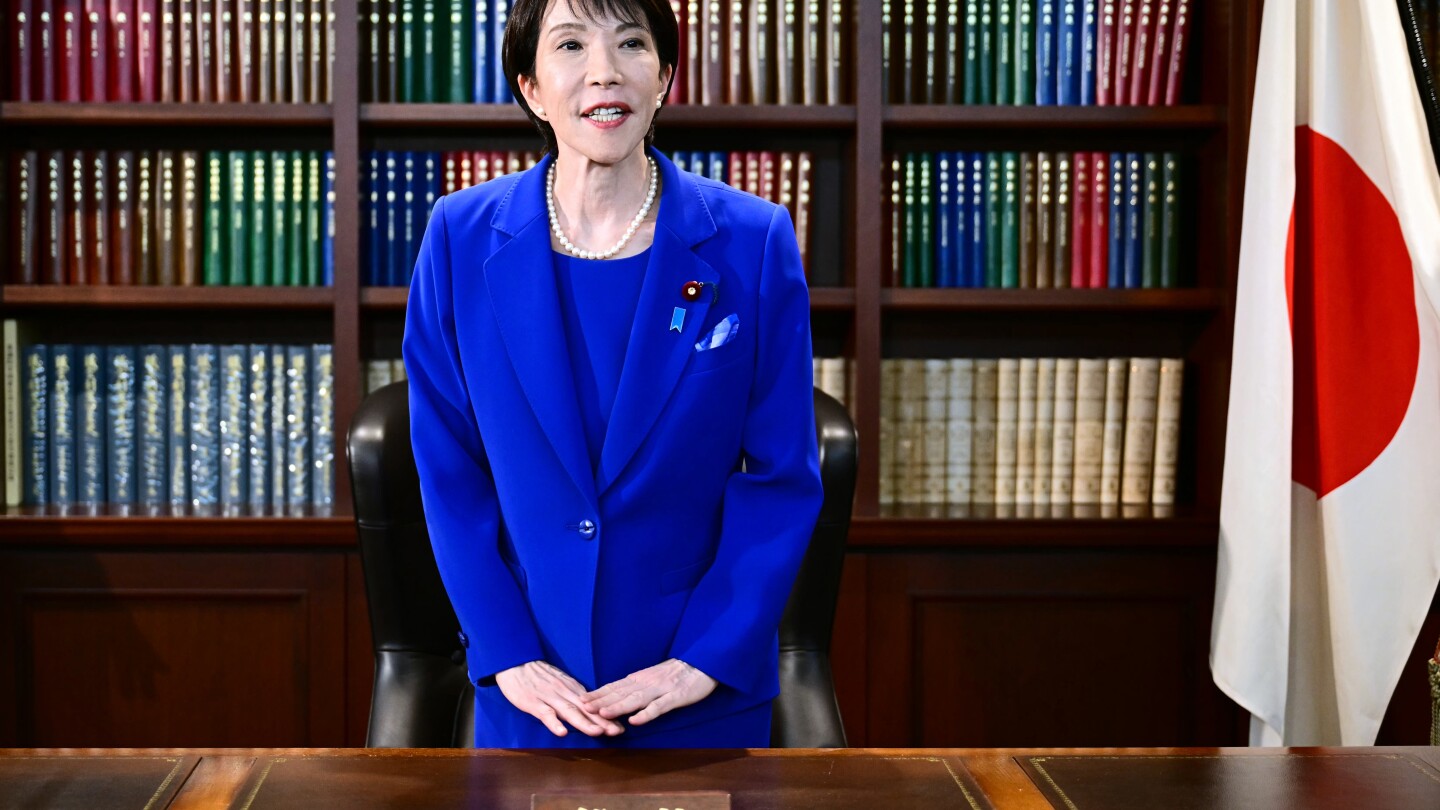
Ultraconservative Sanae Takaichi on track to become Japan’s first female prime minister
Japan is on the brink of a historic political milestone as Sanae Takaichi, leader of the Liberal Democratic Party (LDP), is set to become the nation’s first female prime minister. This follows a tumultuous period of political instability after the LDP’s coalition with the Komeito party dissolved in July, leading to a three-month leadership vacuum. Takaichi, 64, is expected to replace Prime Minister Shigeru Ishiba in a parliamentary vote on Tuesday, marking a significant shift in Japan’s political landscape. However, her path to power has been fraught with challenges. The Komeito party, a moderate centrist group, severed ties with the LDP after 26 years, citing concerns over Takaichi’s ultraconservative policies and the LDP’s handling of slush fund scandals. To secure the necessary votes, Takaichi forged a fragile alliance with the Japan Innovation Party (JIP), a conservative faction based in Osaka. While this coalition offers a short-term solution, its long-term stability remains uncertain. Takaichi’s premiership, if confirmed, will face immediate tests, including diplomatic engagements with U.S. President Donald Trump and regional summits. Domestically, she must address rising prices and implement economic measures to appease a frustrated public. Despite her historic achievement, Takaichi’s leadership is met with skepticism, particularly among women. Critics argue that her ultraconservative stance on issues like male-only imperial succession, same-sex marriage, and separate last names for married couples undermines gender equality. Political commentators also question her ability to navigate Japan’s complex political environment, given her coalition’s minority status and the need for opposition support to pass legislation. Takaichi’s policies, which focus on short-term economic fixes and military expansion, have drawn criticism for lacking a long-term vision to address Japan’s demographic challenges. As she prepares to take office, Takaichi faces a delicate balancing act between maintaining conservative support and fostering stability in a deeply divided political landscape.
-

Israel army says resumes enforcement of Gaza ceasefire
The Israeli Defense Forces (IDF) announced on Sunday the resumption of ceasefire enforcement in Gaza, following a series of targeted strikes against Hamas earlier in the day. The military emphasized its commitment to maintaining the truce while warning of a robust response to any breaches. In an official statement, the IDF declared, ‘In accordance with the directive of the political echelon, and following a series of significant strikes in response to Hamas’ violations, the IDF has begun the renewed enforcement of the ceasefire.’ The statement further underscored the military’s resolve, stating, ‘The IDF will continue to uphold the ceasefire agreement and will respond firmly to any violation of it.’ This development comes amid ongoing tensions in the region, highlighting the fragile nature of the ceasefire and the potential for renewed conflict.
-

Vietnam’s love affair with gas bikes is colliding with a new electric reality
Vietnam stands at a crossroads, torn between its reliance on gas-powered motorbikes and the government’s push for an electric future. With Hanoi set to ban fossil-fuel motorcycles from its city center by July 2026, and Ho Chi Minh City considering similar measures, the nation is accelerating its transition to cleaner transportation. By 2030, Vietnam aims for one-third of cars and over a fifth of motorbikes to be electric. However, this shift is not without challenges. While electric bikes promise reduced emissions and quieter streets, concerns about affordability, range, and charging infrastructure persist. For many Vietnamese, motorbikes are more than just vehicles—they are lifelines for small businesses, daily commerce, and family transportation. The country’s 77 million two-wheelers, including 7 million in Hanoi and 8.5 million in Ho Chi Minh City, are deeply ingrained in its culture and economy. Despite the hurdles, electric bike sales are surging, with startups like Dat Bike and VinFast leading the charge. VinFast, backed by Vietnam’s largest conglomerate VinGroup, is investing heavily in battery-swapping stations and low-interest loans to boost adoption. Meanwhile, traditional giants like Honda and Yamaha argue that the 2026 timeline is too ambitious, citing consumer strain and production challenges. Government subsidies and incentives aim to ease the transition, but long-term success hinges on delivering electric bikes that match the performance and affordability of gas-powered models. As Vietnam navigates this transformation, its experience could serve as a blueprint for other developing nations seeking to balance tradition with sustainability.
-

Man United stretch Liverpool losing streak to four games
In a thrilling Premier League clash, Manchester United ended their nine-year wait for a victory at Anfield, defeating Liverpool 2-1 on Sunday. Harry Maguire’s decisive 84th-minute header secured back-to-back league wins for the first time under manager Ruben Amorim, marking a significant milestone in his tenure. The match began explosively, with Bryan Mbeumo scoring for United just 61 seconds into the game. Liverpool responded in the 78th minute through Cody Gakpo, but their defensive vulnerabilities were exposed when Maguire capitalized on a looping cross from Bruno Fernandes to seal the win. This defeat extends Liverpool’s losing streak to four games, their worst run in 11 years, leaving them four points behind league leaders Arsenal. The loss also raises questions about manager Arne Slot’s ability to integrate new signings, having spent nearly £450 million in the transfer market. For United, the victory narrows the gap with Liverpool to two points and lifts them to ninth in the table, easing pressure on Amorim. Maguire expressed the significance of the win, stating, ‘It means everything. We haven’t given our fans enough days like today.’ Liverpool, meanwhile, continues to struggle with form and injuries, compounded by the tragic loss of Diogo Jota earlier this year. The match highlighted their defensive frailties and lack of cohesion, despite their wealth of attacking talent. With this result, United reignites their pursuit of a record 21st English top-flight title, while Liverpool faces an uphill battle to regain their dominance.
-

Trump threatens to send military troops to San Francisco
Former President Donald Trump has reignited controversy by threatening to deploy military troops to San Francisco, a move that aligns with his broader strategy of involving the U.S. military in Democratic-controlled cities. In a recent interview with Fox News, Trump declared, ‘Next we’re going to go to San Francisco,’ emphasizing his belief that the city ‘wants us’ to restore its former glory. This statement follows his previous deployments of the National Guard to Los Angeles, Washington, and Memphis, often against the wishes of local leaders. Judges have already halted similar deployments in Chicago and Portland, highlighting the contentious nature of these actions. Trump has consistently exaggerated crime and unrest in U.S. cities to justify military interventions, a tactic that has drawn sharp criticism from Democratic officials. California Governor Gavin Newsom, a frequent Trump adversary, has vocally opposed these deployments, particularly the one to Los Angeles in June, which followed protests over immigration raids. The situation in San Francisco is further complicated by the city’s symbolic significance in Republican rhetoric, often portrayed as a failing urban center under Democratic governance. Marc Benioff, CEO of Salesforce, initially supported military intervention in San Francisco but faced public backlash, forcing him to apologize. This episode underscores the deep political divisions surrounding Trump’s militaristic approach to urban governance.
-

Millions of lamps light up Indian temple town ahead of Diwali
In a breathtaking display of tradition and devotion, the historic temple town of Ayodhya in Uttar Pradesh, India, witnessed an unprecedented illumination on Sunday. A staggering 2.6 million earthen lamps, known as diyas, were lit in unison, marking a record-breaking celebration ahead of Diwali, the Festival of Lights. The event transformed the town into a radiant spectacle, symbolizing the triumph of light over darkness and good over evil. Thousands of devotees and tourists gathered to witness this awe-inspiring moment, which not only highlighted the cultural significance of Diwali but also showcased Ayodhya’s spiritual heritage. The massive lighting ceremony was meticulously organized, with volunteers and local authorities working tirelessly to ensure its success. This grand celebration has set a new benchmark for Diwali festivities, reinforcing Ayodhya’s status as a hub of religious and cultural importance in India.