作者: admin

  • Israelis unite across political divides in support of ‘justified’ war against Iran

    Israelis unite across political divides in support of ‘justified’ war against Iran

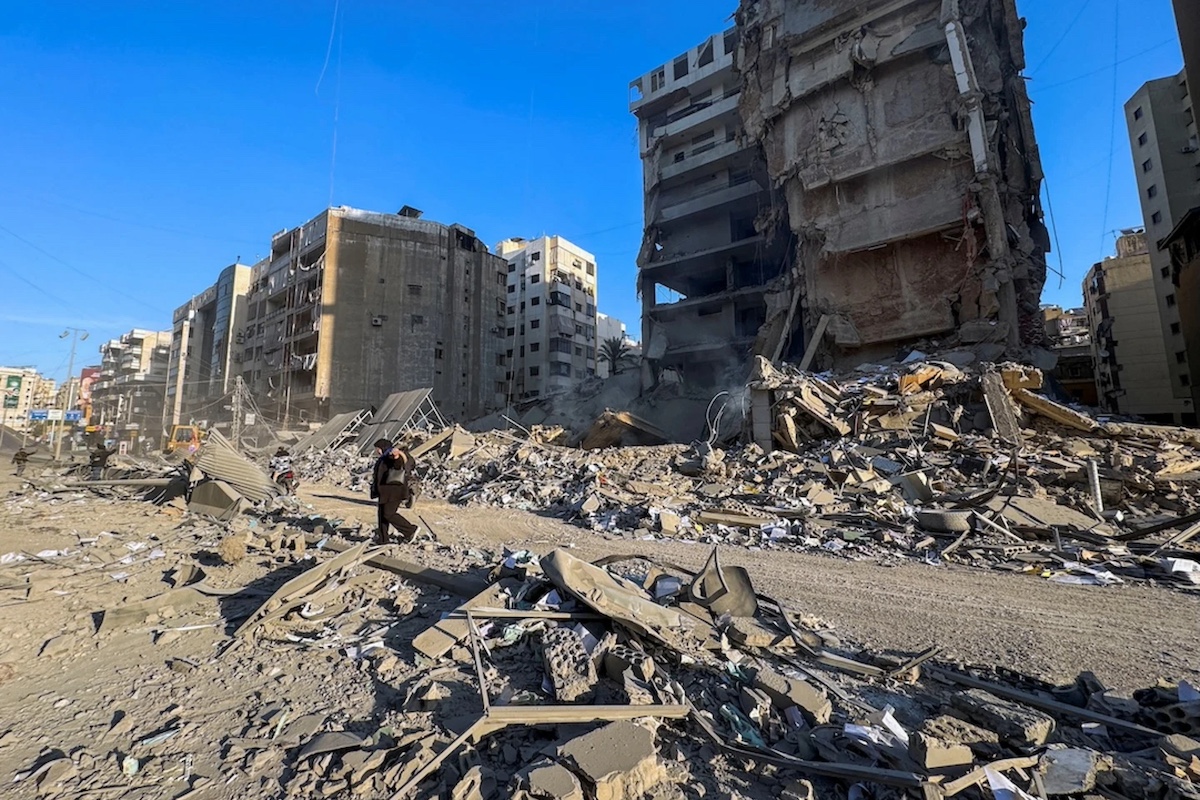
    Tel Aviv’s streets transformed into scenes of urgent preparation Saturday morning as air raid sirens sent residents scrambling—some toward bomb shelters, others loading children and belongings into vehicles to evacuate. This latest escalation with Iran has created what locals describe as a ‘new war routine’ in Israeli life, simultaneously familiar and unprecedented.

    Despite underlying fears, the conflict has generated remarkable national cohesion, temporarily bridging Israel’s deep political divisions. Orly Hareuveny, a physiotherapist and self-described leftist, sheltered from missile explosions while explaining to Middle East Eye that war has become an intrinsic part of Israeli existence—’the same as the weather is for people in England.’ Though traditionally supporting Palestinian coexistence, she views the current conflict as ‘very justified,’ characterizing Iranian leadership as ‘enemies of the world’ whose threat parallels historical persecution.

    The national consensus appears overwhelming. Central Israeli couple Osnat and Haiem (using pseudonyms) asserted that ‘everyone in Israel agrees that this war should happen,’ citing October 7th as demonstrating existential threats to Zionism. Media commentary reflects this unity, with prominent writer Ben-Dror Yemini declaring the conflict a ‘war of commandment’ representing both moral duty and national necessity.

    Even typically oppositional figures have rallied behind military action. Yair Golan of the left-wing Democrats party emphasized giving ‘full backing’ to military forces, while centrist leader Yair Lapid declared ‘no coalition and no opposition, only one people.’ Only Ayman Odeh, representing Palestinian citizens, offered dissent, noting Israel contained ‘fifty shades of militarism.’

    Political commentator Meron Rapoport confirmed widespread support, referencing polls showing half of Israelis favored striking Iran regardless of diplomatic outcomes. The conflict is widely rationalized as a ‘pre-emptive attack’ against an ‘existential threat,’ though Rapoport acknowledged underlying public fear and trauma from recent conflicts. Reports suggest military leadership has privately warned of potentially devastating consequences while publicly maintaining silence about risks.

    As Haaretz documented via Instagram, Israelis have adapted to what they term ‘coffee and arak in the parking lot’—maintaining casual routines amid emergency protocols. Yet beneath this surface normalcy, hundreds remain displaced from previous conflicts, with many suffering lasting psychological trauma, indicating the profound human cost of Israel’s perpetual war footing.

  • Israel’s military confirms Khamenei killed in operation by Israeli Air Force

    Israel’s military confirms Khamenei killed in operation by Israeli Air Force

    In an unprecedented military escalation, the Israel Defense Forces (IDF) have officially confirmed the successful execution of a high-profile operation resulting in the death of Iran’s Supreme Leader Ali Khamenei. The targeted airstrike, conducted on Sunday, directly hit Khamenei’s central leadership compound in Tehran, according to an official military statement.

    The operation, characterized by Israeli authorities as one of the most complex intelligence-driven missions in recent history, eliminated the long-serving Iranian leader who had governed the Islamic Republic since 1989. The precision strike was carried out by the Israeli Air Force utilizing advanced capabilities and was guided by what the IDF described as ‘exceptionally accurate intelligence assets.’

    Initial reports indicate that the targeted facility served as Khamenei’s primary office and command center, where he was reportedly meeting with several senior Iranian officials at the time of the attack. The confirmation marks a significant escalation in the ongoing regional tensions between the two Middle Eastern powers and represents the most dramatic development in the conflict to date.

    The operation’s success demonstrates Israel’s capability to penetrate deep into Iranian territory and execute precision strikes against highly secured locations. Military analysts anticipate substantial geopolitical repercussions across the region, with potential implications for global security dynamics and Middle Eastern power structures.

  • Israel closes Rafah crossing and all other checkpoints in the West Bank and Gaza Strip

    Israel closes Rafah crossing and all other checkpoints in the West Bank and Gaza Strip

    In a significant escalation of movement restrictions, Israeli authorities implemented a comprehensive closure of all crossings and barriers throughout the occupied West Bank and Gaza Strip on Saturday. This security measure coincided with the commencement of joint military operations by Israel and the United States targeting Iranian assets.

    The Israeli Coordinator of Government Activities in the Territories (COGAT), the military body governing Palestinian civilian matters, announced the indefinite shutdown of all transit points including the critical Rafah crossing. The directive permits exceptions solely for Palestinians holding pre-approved ‘essential worker permits,’ which would be processed through designated terminals.

    Despite COGAT’s assertion that the Gaza closure wouldn’t exacerbate humanitarian conditions, immediate consequences emerged across the territories. In the West Bank, approximately 1,000 barriers and iron gates separating Palestinian communities were sealed, stranding hundreds of travelers. Many were compelled to sleep in vehicles or seek temporary shelter with relatives, while others faced arduous detours that transformed routine 45-minute commutes into multi-hour ordeals.

    The Palestinian Education Ministry responded to the mobility crisis by transitioning all academic institutions to remote learning, acknowledging the impossibility of students and educators reaching campuses. Medical services faced severe disruption as ambulance crews experienced significant delays in patient transfers, particularly affecting those requiring dialysis and other critical treatments.

    The Karameh border crossing connecting the West Bank with Jordan was similarly shut down, trapping numerous Palestinians including returning Umrah pilgrims. Anas Hreibat from Hebron described his family’s grueling 24-hour wait under difficult conditions with elderly relatives before being granted limited re-entry.

    Concurrently, Israeli forces implemented closures at major religious sites including Jerusalem’s Al-Aqsa Mosque and Hebron’s Ibrahimi Mosque, forcibly evacuating worshippers and installing metal barriers—a security protocol previously enacted during June’s conflict with Iran.

    According to activist Bashar al-Qaryouti, these measures represent an established Israeli policy of imposing collective punishment through movement restrictions during security emergencies. He warned that prolonged closure could precipitate humanitarian disaster by severing aid and food supplies to vulnerable populations.

    In Gaza, the Rafah crossing’s closure—just one month after reopening following a two-year shutdown—further tightened the siege on over two million residents. Ismail al-Thawabta, director of the Gaza Government Media Office, condemned the action as illegal collective punishment under the Fourth Geneva Convention that directly endangers civilian lives by blocking medical access for thousands of wounded and ill Palestinians.

  • UK says Iran nearly hit British troops, won’t rule out participation in strikes

    UK says Iran nearly hit British troops, won’t rule out participation in strikes

    British military personnel faced imminent danger as Iranian missiles landed merely 200 meters from their position in Bahrain, Defense Secretary John Healey revealed in a Sunday BBC interview. The close call occurred amid escalating regional hostilities, with approximately 300 UK personnel exposed to Iranian drone and missile attacks.

    Healey characterized Iran as an increasingly indiscriminate threat, stating that Iranian missile commanders appear to possess expanded autonomy in target selection. While confirming UK non-involvement in recent US-Israeli operations against Iran, the Defense Secretary deliberately avoided ruling out future British participation in offensive strikes.

    The conflict spectrum widened with two missiles directed toward Cyprus, where RAF Akrotiri serves as a critical surveillance hub for regional operations. Although not specifically targeted, the Cyprus incident demonstrates Iran’s expanding reach across the Middle East. RAF Typhoons are currently engaged in defensive operations countering Iranian attacks.

    Prime Minister Keir Starmer emphasized Britain’s commitment to protecting national interests and allies in accordance with international law. However, political divisions emerged as Green Party leader Zack Polanski expressed grave concerns about potential UK involvement in what he termed an ‘illegal war,’ urging immediate de-escalation.

    Strategic military assets including joint UK-US facilities on Diego Garcia place bomber aircraft within 5,300km of Iran, though Britain reportedly restricted American use of this base for offensive operations. Additional UK airbases in Qatar, UAE, Oman, and Cyprus remain potential Iranian targets, with Shahed-136 kamikaze drones possessing sufficient range to threaten these installations.

    The Labour government faces mounting political pressure should Iran directly attack British bases, potentially forcing involvement in retaliatory strikes despite current diplomatic reservations.

  • How Iran erupted with screams and cheers as news of Khamenei’s killing hit the streets

    How Iran erupted with screams and cheers as news of Khamenei’s killing hit the streets

    The reported death of Iran’s Supreme Leader Ayatollah Ali Khamenei on Saturday has triggered a profound and visible schism across Iranian society, revealing a nation caught between starkly opposing emotional poles. The event, attributed to US and Israeli airstrikes, instantly fractured the public sphere into scenes of spontaneous celebration and deep mourning, underscoring the decades of polarization under his 37-year rule.

    In western Tehran’s Ekbatan district, a historic epicenter of anti-regime dissent, residents erupted in cheers moments after news broke. Described by local resident Maryam as a spontaneous reaction to a dictator’s demise, the celebrations mirrored long-suppressed anger from the 2022 ‘Woman, Life, Freedom’ protests. Simultaneously, in the religious stronghold of Mashhad—Khamenei’s birthplace—unprecedented scenes unfolded as citizens distributed sweets and danced in traffic, with young women disregarding mandatory hijab laws in a powerful symbolic defiance.

    Conversely, organized pro-establishment rallies mobilized by Sunday morning, with state-backed groups chanting for ‘severe revenge’ against the US and Israel. Supporters like Ali expressed grave concerns about a fractured future, viewing Khamenei as a unifying force whose absence threatens national stability. This institutional response highlighted the regime’s preparedness to channel grief into renewed nationalist fervor.

    Amid the polarization, a third voice emerged—that of pragmatic caution. Citizens like Mohammad and Bahareh articulated fears of state collapse, drawing parallels to protracted conflicts in Syria and Libya. They warned against optimistic assumptions of democratic transition, predicting instead a descent into civil strife or an even more authoritarian successor regime determined to maintain power through intensified violence. This perspective reflects deep anxiety about foreign intervention and its capacity to dismantle complex governmental structures without ground forces.

    The underlying narrative reveals a nation at a historic inflection point, where decades of internal repression, international isolation, and generational dissent collide with geopolitical ambitions. The contrasting public reactions not only illustrate Khamenei’s divisive legacy but also foreshadow the immense challenges in navigating Iran’s subsequent political transformation, where the aspirations of a liberated populace confront the grim realities of revolutionary aftermath.

  • Obituary: Ayatollah Ali Khamenei, Iran’s Supreme Leader and dominant political figure for decades

    Obituary: Ayatollah Ali Khamenei, Iran’s Supreme Leader and dominant political figure for decades

    In a seismic development for Middle Eastern geopolitics, Iran’s Supreme Leader Ayatollah Ali Khamenei was killed Saturday in a coordinated US-Israeli aerial assault, abruptly concluding his four-decade dominance over Iranian political and religious life. The 86-year-old cleric had governed as Iran’s ultimate authority since 1989, steering the nation through profound internal transformations and confrontational foreign policies.

    Khamenei’s ideological journey began within a clerical family in April 1939. He pursued religious education in Mashhad and Najaf seminaries before returning to Qom for advanced studies under prominent theologians including Ayatollah Ruhollah Khomeini. During the 1960s-70s, Khamenei engaged in underground resistance against Shah Pahlavi’s regime, enduring repeated imprisonment and torture by the SAVAK secret police.

    The 1979 Islamic Revolution catapulted him into leadership roles, including positions on the Revolutionary Council, parliamentary membership, and deputy defense ministership. His political ascent nearly ended in 1981 when an assassination attempt by the Forqan Group left his right arm permanently paralyzed. Following the simultaneous assassinations of President Raja’i and Prime Minister Bahonar that same year, Khamenei won the presidency with 95% support in an uncontested election.

    Khamenei’s presidency coincided with Iran’s devastating eight-year war against Saddam Hussein’s Iraq, during which he cultivated anti-American rhetoric at international forums including the UN General Assembly. The 1989 demise of Ayatollah Khomeini created a leadership vacuum that Khamenei filled despite his self-professed inadequacy as a “minor seminarian.” Constitutional revisions subsequently emphasized political acumen over religious credentials for the leadership position.

    His tenure witnessed constant tension between conservative and reformist factions. Initially collaborating with President Rafsanjani, Khamenei later countered President Khatami’s liberalization attempts and openly supported Ahmadinejad’s controversial 2009 re-election, triggering the Green Movement protests. The Supreme Leader consistently attributed domestic unrest to foreign interference, particularly following the 2022 Mahsa Amini protests and 2025 economic demonstrations.

    Khamenei’s foreign policy legacy includes the nuclear negotiations that produced the 2015 JCPOA, which he later denounced as proof of American untrustworthiness after Trump’s 2018 withdrawal. His most significant regional project—the “Axis of Resistance” uniting Hezbollah, Hamas, Houthis, and Syrian allies—began disintegrating following Israel’s 2023 Gaza offensive, the 2024 assassination of Hassan Nasrallah, and Syria’s regime collapse. This deterioration enabled Israel’s direct strikes culminating in the June 2025 homeland conflict and ultimately Khamenei’s assassination.

  • 9 killed, over 20 injured in clash outside US Consulate in Pakistan’s Karachi

    9 killed, over 20 injured in clash outside US Consulate in Pakistan’s Karachi

    Karachi witnessed violent confrontations on Sunday resulting in significant casualties during protests outside American diplomatic facilities. Official reports confirm nine fatalities and more than twenty individuals sustaining injuries when demonstrators clashed with security forces stationed at the US Consulate in Pakistan’s southern port city.

    The violence erupted as protest participants attempted to breach the consular compound located on Mai Kolachi Road, prompting security personnel to implement defensive measures. Emergency response teams from Rescue 1122 Sindh provided immediate assistance at the scene, transporting the wounded to nearby medical facilities. Hospital authorities reported many victims arrived in critical condition, with medical examinations revealing most injuries resulted from projectile impacts.

    Karachi’s Civil Hospital received thirty casualties from the incident, with six pronounced dead upon arrival and three subsequently succumbing to their injuries during treatment, according to medical staff speaking under condition of anonymity. The circumstances surrounding the initial discharge of firearms remained unclear as investigations commenced.

    Sindh provincial leadership expressed profound grief over the tragic events. Chief Minister Syed Murad Ali Shah mandated an impartial inquiry into the incident while directing law enforcement agencies to enhance protective measures for public gatherings and ensure civilian safety.

    Federal Interior Minister Mohsin Naqvi characterized the day as one of mourning for both Pakistan and the broader Muslim community, appealing for calm and peaceful expression of dissent. The minister emphasized governmental solidarity with citizens while urging compliance with legal protocols for demonstrations.

    The US Embassy in Islamabad issued a security advisory confirming awareness of protests at multiple diplomatic posts including Karachi, Lahore, and potential demonstrations in Islamabad and Peshawar. American citizens received recommendations to maintain heightened situational awareness, avoid concentration points, and verify enrollment in the Smart Traveler Enrollment Program (STEP).

    These developments follow regional tensions sparked by recent military actions against Iranian targets, which resulted in the death of Tehran’s supreme leader. Additional protests occurred in Lahore where significant crowds gathered outside US diplomatic premises, while Islamabad authorities implemented Section 144 restrictions prohibiting public assemblies with warnings of strict legal consequences for violations.

  • Arsenal corner Chelsea into submission, Man Utd climb to third

    Arsenal corner Chelsea into submission, Man Utd climb to third

    The Premier League landscape witnessed significant shifts this weekend, headlined by Arsenal fortifying their championship credentials with a tactical masterclass against London rivals Chelsea. The Gunners secured a 2-1 victory, a win heavily influenced by their set-piece supremacy and Chelsea’s recurring disciplinary woes.

    The match’s narrative was defined by defensive contributions. William Saliba broke the deadlock in the 21st minute, capitalizing on a rehearsed corner routine that saw Gabriel Magalhaes nod the ball back across goal. Chelsea momentarily found parity, albeit through an unfortunate Pedro Hincapie own goal from another corner. The decisive blow came just after the hour mark from an unlikely source. Dutch defender Jurrien Timber headed into an unguarded net after Chelsea goalkeeper Robert Sanchez misjudged Declan Rice’s in-swinging delivery. The Blues’ frustrations culminated in a red card for Pedro Neto, his dismissal marking the ninth instance of a Chelsea player being sent off this season. A late disallowed equalizer for offside sealed a defeat that severely dents Chelsea’s top-five aspirations.

    Meanwhile, at Old Trafford, Benjamin Sesko emerged as the hero for Manchester United, vindicating manager Michael Carrick’s decision to reinstate him to the starting lineup. United overcame an early deficit against Crystal Palace, who had taken the lead through Maxence Lacroix. The game’s pivotal moment arrived just before the hour mark when Lacroix was dismissed for a professional foul on Matheus Cunha, conceding a penalty in the process. Bruno Fernandes converted from the spot and later turned provider, delivering a precise cross for Sesko to power home his seventh goal in eight appearances, sealing a 2-1 comeback.

    In contrast, Tottenham Hotspur’s crisis deepened under interim manager Igor Tudor. A 2-1 defeat at Fulham, with goals from Harry Wilson and Alex Iwobi, extended their winless run in 2026, making them the only Premier League side without a victory this calendar year. A late Richarlison header proved a mere consolation, leaving Spurs hovering just four points above the relegation zone amidst what Tudor described as ‘big problems’ within the squad.

  • Iran: Thousands take to streets to mourn Ali Khamenei’s killing

    Iran: Thousands take to streets to mourn Ali Khamenei’s killing

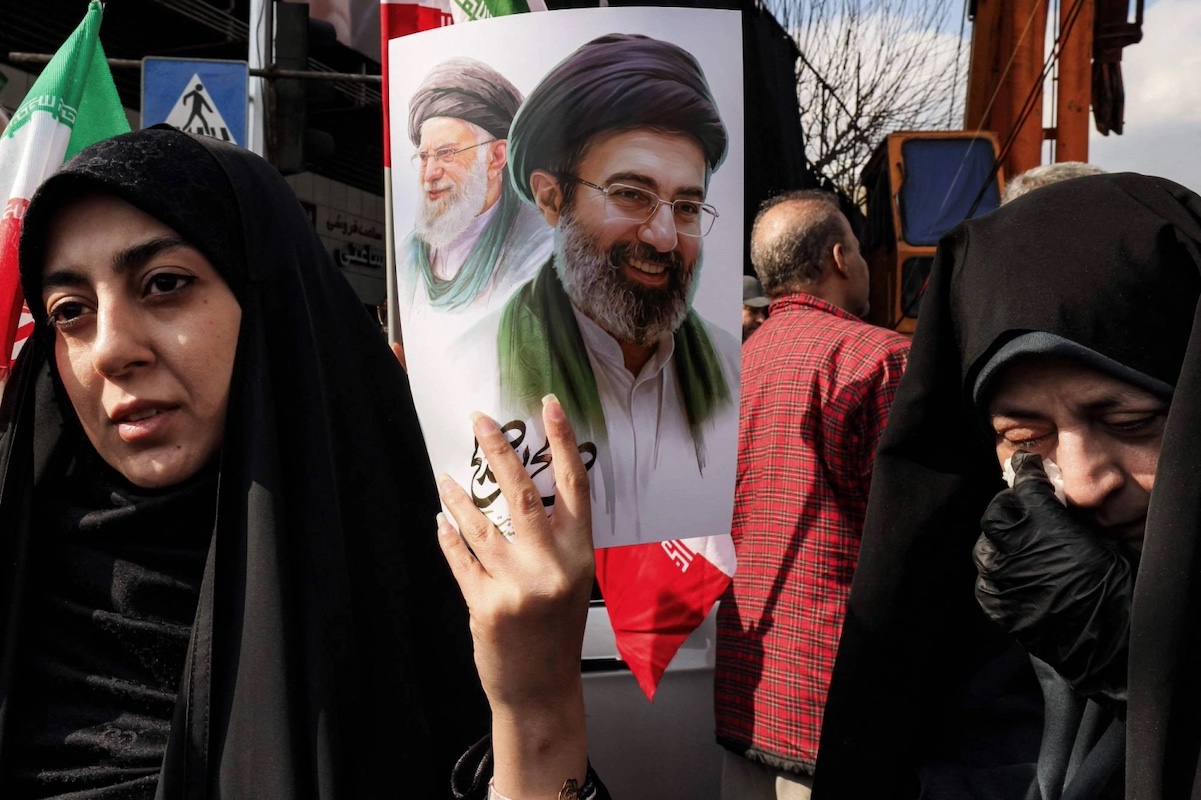
    Iran has been plunged into a state of profound national mourning and outrage following the confirmed death of its Supreme Leader, Ayatollah Ali Khamenei, who was killed during a coordinated military strike by the United States and Israel on Saturday. The 86-year-old leader, who had held the Islamic Republic’s highest authority since 1989, was confirmed dead by Iranian state media in the early hours of Sunday, an announcement that triggered immediate and massive public demonstrations across the nation and in sympathetic regions abroad.

    In Tehran, thousands of grief-stricken citizens flooded Enghelab Square, many clad in traditional black mourning attire, waving Iranian flags and holding aloft portraits of the deceased leader. The atmosphere was charged with emotion and calls for retribution, with crowds vehemently chanting slogans such as ‘Death to America’ and demanding severe retaliation against both Israel and the U.S. for the targeted operation.

    The government’s response was swift, declaring an official seven-day holiday and a forty-day national mourning period to honor Khamenei. The profound sense of loss was visually symbolized when the flag atop the golden dome of the Imam Reza Shrine in Mashhad was replaced with a black standard, while weeping worshippers gathered nearby. Similar scenes of mass mourning and protest were documented in other major cities including Isfahan, Qom, and Zanjan, with state-run outlets like Press TV reporting the raising of a red flag—a potent symbol of a blood vow for revenge—at the Jamkaran Mosque.

    The wave of grief transcended Iran’s borders, sparking solidarity gatherings in locations such as Baghdad, Iraq; Kashmir; and Karachi, Pakistan. The demonstrations in Karachi, however, turned deadly, resulting in violent clashes between protesters and local security forces that left at least six people dead.

    The official confirmation on state television was delivered by a visibly emotional announcer who broke down in tears, hailing Khamenei’s death as a ‘long-cherished wish of martyrdom’ during the holy month of Ramadan. The broadcaster condemned the ‘evil attacks by the criminal Americans and wicked Zionists,’ prophesying that this martyrdom would ignite a ‘great uprising against the world’s oppressors.’

    Further reports from the semi-official Fars news agency, which maintains links to the Islamic Revolutionary Guard Corps (IRGC), indicated that the strike also claimed the lives of Khamenei’s daughter, son-in-law, and granddaughter. Satellite imagery and social media videos corroborated reports of significant destruction at the leader’s compound, showing structures engulfed in black smoke.

    In a stern declaration, Iran’s Supreme National Security Council vowed to avenge what it termed a ‘martyrdom,’ asserting that the event had ‘opened a new chapter of ruling in Islam’s history.’ This pledge sets a confrontational tone for the geopolitical landscape moving forward.

    Conversely, U.S. President Donald Trump publicly claimed responsibility for the operation in a lengthy post on his Truth Social platform. He framed the killing as an act of justice ‘for the people of Iran and all Great Americans,’ boasting that Khamenei was unable to evade U.S. intelligence and sophisticated tracking systems. Trump characterized the event as the ‘single greatest chance for the Iranian people to take back their country,’ signaling a clear objective of regime change.

  • Foreign visitors taste the delicacies of Tianjin’s ancient town

    Foreign visitors taste the delicacies of Tianjin’s ancient town

    The historic streets of Yangliuqing Ancient Town in Tianjin became a culinary crossroads during the Spring Festival as international visitors discovered traditional Chinese delicacies. Master Zhang, a local artisan, demonstrated the ancient preparation of chatang (tea soup), skillfully combining red sorghum flour, millet flour, and boiling water before garnishing with red sugar, sesame seeds, raisins, and peanut crumbs.

    Ahmed Mohamed Saleh from Egypt expressed delight after his first taste. “It’s wonderfully warm and sweet,” he remarked, curious about the name despite the absence of tea. Master Zhang explained the historical context: “Tea soup originated in the late Ming Dynasty. The name derives from the tea-brewing technique of using boiling water, though no actual tea leaves are involved. It’s particularly comforting during winter months, providing immediate warmth.”

    Nearby, Hassan Sameh Hassan Elsayed, another Egyptian student, sampled Sutang (crispy candy) and immediately purchased two boxes to send home. Xu Liansen, third-generation inheritor of Xu’s Crispy Candy, reported exceptional visitor engagement during the holiday period. “Our workshop attracted substantial tourist attention, with approximately 10% of purchases made by international visitors like Mr. Elsayed,” Xu noted.

    The culinary experiences formed part of a broader cultural celebration that featured over 500 performances and interactive activities throughout the Spring Festival period, averaging more than 70 daily events. According to official data from the Tianjin Municipal Bureau of Culture and Tourism, the city experienced an 11.7% increase in tourist arrivals compared to the previous year during the Year of the Horse Spring Festival, accompanied by a 9.4% growth in hotel revenue.