作者: admin

  • Trump says US attack on Iran capable of going ‘far longer’ than 4 to 5 weeks

    Trump says US attack on Iran capable of going ‘far longer’ than 4 to 5 weeks

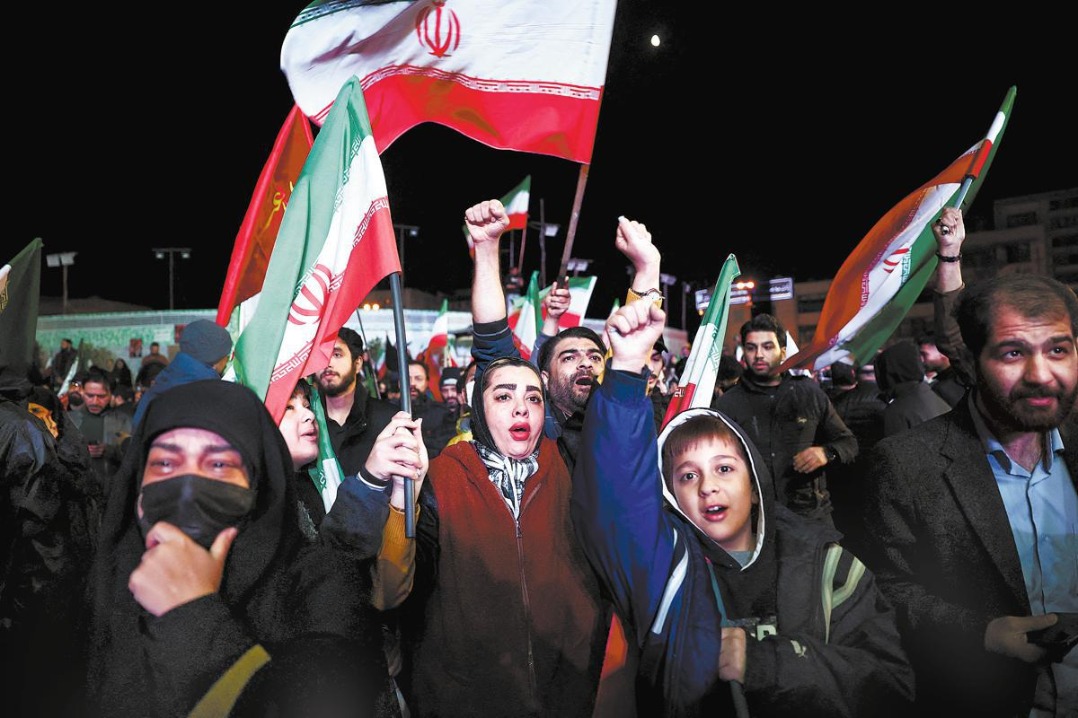
    WASHINGTON — President Donald Trump has significantly revised his assessment of the US military engagement with Iran, declaring that American forces possess the “capability to go far longer” than his initial four-to-five-week projection. The statement was delivered from the White House on Monday, March 2, 2026, amid escalating hostilities across the Middle East.

    Contradicting his own remarks from media interviews just one day prior, Trump asserted there would be no operational time constraints. “We have capability to go far longer than that. We’ll do it,” the President stated, emphasizing his personal resolve by adding, “I don’t get bored. There’s nothing boring about this.

    The administration’s strategic posture appears to be hardening. In an interview with the New York Post, President Trump declined to rule out the deployment of US ground troops to Iran, contingent upon military necessity. This suggestion marks a potential intensification of a conflict that has already seen joint US-Israeli strikes on Iranian infrastructure, including a police station in Tehran.

    Domestically, the military campaign faces growing public scrutiny. A recent Reuters/Ipsos poll conducted over the weekend revealed significant opposition among Americans, with 43% disapproving of the strikes and only 27% expressing approval. This data suggests a contentious reception to the administration’s foreign policy decisions as operations continue to evolve.

  • Asian shares are mostly lower as investors focus on the Iran war’s impact on energy supplies

    Asian shares are mostly lower as investors focus on the Iran war’s impact on energy supplies

    Financial markets across Asia experienced significant declines Tuesday as escalating military conflict in Iran triggered widespread concerns about regional energy security and potential supply disruptions. The turmoil sent shockwaves through trading floors, with major indices posting substantial losses amid heightened investor anxiety.

    South Korea’s benchmark index plummeted 4.8% to 5,946.06 as trading resumed following a holiday closure, while Japan’s Nikkei 225 dropped 2.1% to 56,853.48. Australian markets followed the downward trend with the S&P/ASX 200 declining 1.2% to 9,089.50. Hong Kong and Shanghai indices recorded more modest decreases of 0.1% and 0.3% respectively.

    The energy sector emerged as a primary focal point, with crude prices continuing their upward trajectory. Benchmark U.S. crude advanced by 77 cents to reach $72.00 per barrel, while Brent crude, the international standard, gained $1.10 to trade at $78.84. These increases built upon Monday’s substantial price jumps, reflecting persistent worries that prolonged conflict could obstruct vital crude shipping routes through the Strait of Hormuz.

    Japanese energy companies suffered particularly severe losses, with Eneos Corp. plunging nearly 6% and Idemitsu Kosan dropping approximately 4%. The sell-off extended to defense-related stocks despite recent gains fueled by expectations of increased military spending. Mitsubishi Heavy Industries plummeted 5%, while IHI declined 4% as investors moved to secure profits from previous sessions.

    Airline stocks faced additional pressure throughout Asian trading sessions, mirroring Monday’s substantial losses on Wall Street. Japan Airlines fell 5.2%, ANA Holdings declined 2.4%, Korean Air dropped 8.9%, and Qantas Airways lost 2.9% as rising fuel costs threatened to exacerbate already significant operational expenses.

    Market analysts noted that despite the pronounced volatility, reactions remained relatively measured compared to historical Middle East conflicts. According to Morgan Stanley strategists led by Michael Wilson, sustained oil prices exceeding $100 per barrel would likely be necessary to generate prolonged market impacts. Stephen Innes of SPI Asset Management observed that energy shocks typically require both severity and duration to substantially derail equity markets, citing 22 single-day oil price spikes exceeding 10% since 2000.

    U.S. markets demonstrated resilience Monday, with the S&P 500 ultimately posting a marginal gain of less than 0.1% at 6,881.62 after recovering from an early 1.2% decline. The Dow Jones Industrial Average dipped slightly by 0.1%, while the Nasdaq Composite advanced 0.4%. Strength in oil producers, defense contractors, and technology shares helped offset broader market concerns, with Exxon Mobil climbing 1.1% and Nvidia rising 2.9%.

    Safe-haven assets attracted increased interest, with gold prices advancing 1.2% as investors sought stability. Bond markets saw the 10-year Treasury yield rise to 4.04% from 3.97%, partially driven by better-than-expected U.S. manufacturing data. Currency markets showed minimal movement, with the U.S. dollar trading at 157.32 Japanese yen and the euro edging upward to $1.1693.

  • Why did Kuwait shoot down 3 US F-15s?

    Why did Kuwait shoot down 3 US F-15s?

    In a significant friendly fire incident, Kuwaiti air defense systems mistakenly shot down three US F-15E fighter jets on Sunday, March 1, during defensive operations against an Iranian missile and drone offensive. While no casualties were reported, the incident has raised serious questions about coordination between allied forces and the operational protocols of integrated air defense networks.

    Kuwait employed multiple advanced air defense systems during the engagement, including Patriot PAC-3 MSE, upgraded PAC-2, HAWK (MIM-23), NASAMS, and SPADA 2000 platforms. The sophisticated arsenal is designed to counter diverse aerial threats through various interception methods—from hit-to-kill kinetic impactors to blast fragmentation warheads.

    Video evidence shows at least one F-15 in an uncontrolled descent after sustaining critical damage to its vertical stabilizer, suggesting possible engagement by terminal heat-seeking munitions. Technical analysis indicates that the aircraft were likely conducting counter-drone operations against Iranian Shahed-136 and Arash-2 drones when mistakenly identified as threats.

    The incident has prompted a US Central Command (CENTCOM) investigation into multiple potential failure points: possible Iranian electronic warfare interference using Cobra V8, Sayyad-4, and Avtobaza-M jamming systems; potential IFF (Identification Friend or Foe) system failures; and questions about operational discipline among Kuwaiti air defense operators. While Iranian jammers were operational from positions approximately 1,000 miles away, their effective range makes direct involvement questionable.

    Military experts note that shooting down three advanced fighter jets suggests either systemic technical failures or concerning operational practices. The incident highlights challenges in integrated coalition warfare, particularly regarding communication protocols and threat identification procedures in high-intensity environments.

    The broader context involves Iran’s major offensive, during which Kuwaiti defenses engaged 97 ballistic missiles and 283 drones according to official reports. This incident represents one of the most significant friendly fire occurrences in recent Middle Eastern conflict zones and may influence future coalition operating procedures and technology integration standards.

  • ‘Better man’: Keaon Koloamatangi insists things won’t get ‘weird’ as he prepares for final season at Souths

    ‘Better man’: Keaon Koloamatangi insists things won’t get ‘weird’ as he prepares for final season at Souths

    In a move demonstrating profound personal prioritization, rugby league star Keaon Koloamatangi has finalized a career-defining transition from the South Sydney Rabbitohs to the St. George Illawarra Dragons. The decision, which will see him remain with the Dragons until the end of the 2031 season, was reached through a remarkably pragmatic process: a pros and cons list drafted over dinner with his partner.

    Koloamatangi, a Mascot Jets junior who has spent all six of his NRL seasons with the Rabbitohs, emphasized that the choice transcended mere sporting considerations. His central motivation was the pursuit of personal development to become ‘a better man’ and leader for his family. This necessitated a deliberate exit from his comfort zone, with the Dragons’ offer presenting the optimal path for his family’s future growth.

    The timing of his decision coincides with his career peak. Koloamatangi is arriving from his most successful season yet, a period that earned him Kangaroos selection. Despite a horrific injury crisis at Souths last year, he excelled after a move to the front row, averaging a career-high 131 meters and boasting a formidable four-game stretch where he exceeded 200 meters per game against the world’s premier props.

    Handling the transition with professional integrity, Koloamatangi personally informed Rabbitohs coach Wayne Bennett of his decision before it became public. He maintains a mature perspective on the nature of professional sports, acknowledging that ‘people move clubs every single year’ and that players are ‘always replaceable.’ His focus for his final season with Souths remains unwavering, with a commitment to striving for an ‘eight out of ten’ performance each week as he anticipates his first full pre-season in the front row.

  • Nepal leaders call on voters to ensure success of ‘historic’ election

    Nepal leaders call on voters to ensure success of ‘historic’ election

    Nepal stands at a critical democratic crossroads as it prepares for its first general election on Thursday, March 7th, following the youth-led uprising that toppled the government last September. The nation has mobilized extensive security measures with nearly 300,000 personnel deployed to ensure peaceful voting.

    Interim Prime Minister Sushila Karki, in a nationally televised address, characterized this electoral process as emerging from a ‘complex, sensitive and challenging’ period in Nepal’s history. She emphasized that active citizen participation is essential for the survival of the country’s democracy, urging all eligible voters to exercise their franchise responsibly.

    The electoral landscape features approximately 3,400 candidates competing for 274 parliamentary seats in the House of Representatives, with more than 1,000 candidates representing the younger generation under age 40. Nearly 19 million registered voters, including 800,000 first-time participants, are eligible to shape the nation’s political future.

    Security agencies have maintained heightened vigilance nationwide, resulting in 133 arrests for alleged anti-election activities. Among those detained is Durga Prasai, a controversial medical entrepreneur and monarchist activist who leads the campaign demanding restoration of Nepal’s Hindu monarchy. Prasai’s organization had planned protests targeting the election, prompting what his secretariat describes as an infringement on his ‘right to freedom of expression.’

    President Ram Chandra Poudel joined in appealing for peaceful participation, describing the election as a ‘historic opportunity’ to strengthen Nepal’s federal democratic republic. Election officials report that preparatory activities have proceeded peacefully thus far, with comprehensive security arrangements involving 77,000 police officers, 134,000 dedicated election police, and 80,000 army personnel deployed across the nation.

  • ‘We can all move on’: Eels react to massive Zac Lomax news as they look to heap more misery on the Storm in round one

    ‘We can all move on’: Eels react to massive Zac Lomax news as they look to heap more misery on the Storm in round one

    A protracted contractual dispute surrounding rugby league player Zac Lomax has reached its judicial conclusion, with the Supreme Court ruling to uphold the original terms of his release from the Parramatta Eels. The verdict, delivered on Tuesday, formally prohibits Lomax from signing with, training alongside, or playing for any other NRL club until October 31, 2027.

    The saga originated last November when Lomax was granted an early release from the final three years of his contract with the Eels. A critical condition of this release, which the representative star agreed to after seeking legal counsel, was a clause forbidding him from joining a rival NRL team before the October 2028 deadline without written consent from Parramatta.

    The situation escalated when the proposed rebel competition, R360, postponed its launch until 2028. This development prompted Lomax to seek an immediate return to the NRL through a contract with the Melbourne Storm. When the two clubs failed to reach an agreement on financial compensation, the matter was elevated to the Supreme Court for a definitive ruling.

    Parramatta Eels chairman Matthew Beach clarified the club’s position, stating, ‘The legal case was never about preventing Zac from returning to the NRL. It was about ensuring that the terms of Zac’s release, which Zac agreed to after seeking legal advice, were adhered to.’ He emphasized the fundamental importance of honoring contractual agreements within the sport and the wider community.

    For the Eels, the court’s decision is a significant affirmation of their stance on player contracts. The club sought to demonstrate to its fanbase a firm commitment to upholding legal agreements, refusing to capitulate easily when players seek to break them.

    On the field, Eels coach Jason Ryles and the playing squad learned of the verdict during a training session. Ryles expressed relief at the resolution, insisting the protracted saga had not derailed the team’s preparations for their Round One clash against the Melbourne Storm this Thursday. Veteran prop forward Junior Paulo echoed this sentiment, affirming the issue had not been a distraction, though he expressed concern for Lomax’s current mental well-being.

    With the legal matter settled, the Eels can now focus entirely on their season opener—a highly anticipated rematch against the Storm, who decisively defeated them 56-18 in the first round of the 2025 season.

  • New home approvals plunge unexpectedly, putting Australia’s housing accord in jeopardy

    New home approvals plunge unexpectedly, putting Australia’s housing accord in jeopardy

    Australia’s ambitious national housing strategy faces mounting challenges as new data reveals a significant downturn in construction approvals. Fresh statistics from the Australian Bureau of Statistics indicate dwelling approvals plummeted by 7% in January to just 14,564, starkly contradicting market expectations of a 5% increase.

    This decline places the country increasingly off-track from its National Housing Accord objective of constructing 1.2 million new homes by 2029. Achieving this target would require approximately 20,000 monthly approvals, a benchmark now appearing increasingly elusive.

    Economic analysts attribute this construction slowdown primarily to monetary policy concerns. ANZ economist Madeline Dunk explains that the building sector is responding to a higher interest rate environment, with expectations of further tightening from the Reserve Bank of Australia likely to maintain suppressed approval levels. Despite the RBA maintaining steady rates in recent months, Dunk notes that rate expectations have been influencing housing market dynamics for the past quarter.

    The approval downturn reveals particular weakness in multi-unit construction. Apartment approvals experienced a dramatic collapse, falling nearly 50% to just 1,819 units—representing a 60.1% decrease compared to January 2022. Townhouse approvals similarly declined by 39.2% to 1,684 dwellings, continuing a negative trend from December.

    AMP economist My Bui identifies additional headwinds beyond financing costs, citing construction cost inflation driven by labor and material shortages. Bui suggests these combined factors make significant approval recovery unlikely through 2026.

    Both major financial institutions anticipate the RBA will maintain current rates in March before implementing another 25 basis point increase in May, potentially raising the cash rate to 4.10%. This monetary tightening trajectory continues to most acutely affect price-sensitive markets including Sydney and Melbourne, where housing price growth has stagnated since November and investor credit shows early signs of contraction.

  • Liam Lawson says 2026 F1 cars are not “super fun” to drive

    Liam Lawson says 2026 F1 cars are not “super fun” to drive

    WELLINGTON, New Zealand — As the 2026 Formula 1 season prepares to launch in Melbourne this weekend, New Zealand driver Liam Lawson offers a nuanced perspective on the sport’s revolutionary new-generation vehicles. While expressing enthusiasm for the upcoming campaign, Lawson characterized the redesigned cars as technically demanding rather than “super fun” to drive.

    The Racing Bulls competitor enters the new season following a turbulent 2025 campaign that saw him demoted from Red Bull’s primary team after merely two races. His previous performance yielded inconsistent results, particularly when measured against teammate Isack Hadjar, who has since earned a promotion to partner with reigning champion Max Verstappen. Lawson’s position on the 2026 grid was among the last to be finalized, with the team pairing him with rookie driver Arvid Lindblad.

    During a recent New Zealand radio interview, Lawson detailed the complexities introduced by sweeping regulation changes that implement hybrid power units and altered aerodynamic configurations. “These cars demonstrate considerably more movement, which depending on perspective could enhance the driving experience,” Lawson noted. “However, our primary focus remains extracting maximum lap performance, and currently it feels somewhat restrictive compared to previous high-downforce vehicles that permitted more aggressive driving styles.”

    The 2026 models feature significantly reduced dimensions and what Lawson describes as a “more playful” character, primarily attributable to substantial reductions in aerodynamic downforce. This fundamental redesign shifts engineering priorities toward mechanical grip and power unit efficiency.

    Racing Bulls will debut new Red Bull-Ford power units this season, with Lawson reporting encouraging reliability during preseason testing. He emphasized that durability would likely emerge as a critical differentiator in the early stages of the championship.

    Reflecting on his challenging 2025 season, Lawson expressed gratitude for the learning experience while acknowledging the fresh uncertainties introduced by the regulatory overhaul. “Personally, I feel substantially more prepared and genuinely excited for the new season,” he stated. “Nevertheless, these revolutionary vehicles present numerous unknown variables that will require adaptation throughout the opening races.”

    The Australian Grand Prix at Melbourne’s Albert Park Circuit will inaugurate the 2026 Formula 1 World Championship this Sunday, marking the beginning of a new technological era for the sport.

  • ‘Blind spots’: Professional women losing confidence in gender pay gap reporting

    ‘Blind spots’: Professional women losing confidence in gender pay gap reporting

    A significant crisis of confidence is emerging among professional Australian women regarding gender equality initiatives, despite groundbreaking transparency laws mandating public disclosure of corporate pay gaps. New research commissioned by HR platform HiBob reveals a dramatic collapse in trust, with only 5% of female employees now believing their employers are actively addressing pay disparity—a staggering drop from 51% just one year earlier.

    The comprehensive survey of 2,000 Australian workers conducted in January 2024 exposes growing skepticism about whether transparency alone can drive meaningful change. Anna Volkova, HiBob’s Head of People and Culture, characterized the findings as revealing ‘a quiet but profound collapse in confidence among women in corporate Australia.’

    This crisis of confidence coincides with the recent release of the third annual gender pay gap data dump from the Workplace Gender Equality Agency, showing Australia’s national pay gap has narrowed to 11.2%. Under reforms enacted since 2012, all organizations with more than 100 employees must now publicly report their gender pay metrics, revealing significant disparities across industries, particularly in finance and insurance sectors.

    The research identifies several critical concerns: a pronounced ‘promotion paradox’ where women increasingly believe men are promoted at higher rates, and a stark perception gap with 75% of men believing roles are paid equally compared to only 59% of women. With April 1 deadlines approaching for larger organizations to submit detailed gender equality policies, experts warn against these measures becoming mere ‘box-ticking exercises’ without substantive action plans.

    Volkova emphasized that ‘visibility without sustained action erodes trust,’ suggesting transparency has reached its limit as a catalyst for genuine equality without corresponding commitment to structural changes and accountability mechanisms within Australian corporations.

  • US ‘stonewalling’ requests by Gulf states to replenish interceptors, sources say

    US ‘stonewalling’ requests by Gulf states to replenish interceptors, sources say

    According to sources familiar with diplomatic discussions, the United States is allegedly delaying responses to several Gulf nations seeking to replenish their depleted air defense interceptor inventories amid escalating regional tensions. A former US official and a Western diplomat disclosed to Middle East Eye that these Gulf states face mounting pressure to align with US-Israeli military operations against Iran.

    One Gulf nation, previously targeted by Iranian attacks, reportedly inquired about restocking interceptor supplies diminished during recent joint US-Israeli operations against Iran. The request was allegedly met with non-committal responses from US officials. Separately, another Gulf state responded to US requests for base access by seeking clarifications regarding Washington’s commitment to their aerial defense capabilities.

    The former US official indicated that Gulf states should not anticipate immediate resupply, stating: “Whatever munitions were produced in the last couple of months, we have shot several years’ worth of production in the last few days.”

    Saudi Arabia, Kuwait, the UAE, Qatar, and Bahrain have all faced Iranian ballistic missile and drone assaults, with Bahrain, Qatar, and the UAE experiencing the most intensive attacks. Qatar recently announced the interception of two Iranian Su-24 fighter jets, while the UAE reported destroying 814 of 871 incoming projectiles since Saturday—typically requiring two to three interceptors per incoming missile.

    The UAE’s sophisticated defense network includes Terminal High Altitude Area Defense (THAAD) systems, Patriot PAC-3 surface-to-air missiles, and additional South Korean, Russian, Israeli, and domestic Skynight systems. Despite maintaining a government-reported 90% interception rate, THAAD and Patriot interceptors remain costly and require years to manufacture.

    Kelly Grieco of the Stimson Center noted on social media: “The UAE has now burned through a significant chunk of an interceptor stockpile that took years to build.”

    The geopolitical developments coincide with a reported redeployment of the USS Gerald R. Ford aircraft carrier from the Mediterranean to the Gulf, potentially indicating US efforts to address regional security concerns following President Trump’s discussion with Emirati leader Mohammed bin Zayed regarding Iranian attacks.