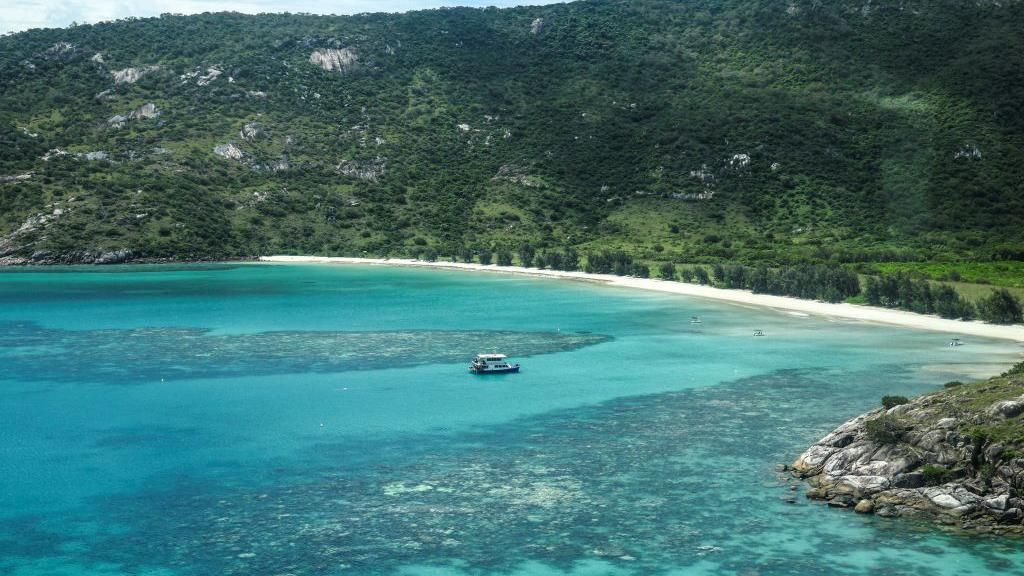
Australian authorities have launched an investigation following the tragic death of an 80-year-old woman who was inadvertently left behind on Lizard Island, part of the Great Barrier Reef, by a cruise ship. The incident occurred on Saturday when the woman, a passenger on the Coral Adventurer cruise ship, reportedly separated from her group during a hike to the island’s highest peak, Cook’s Look, to rest. The ship departed the island around sunset but returned hours later after realizing the woman was missing. A large-scale search operation ensued, and her body was discovered on Sunday morning. The Australian Maritime Safety Authority (AMSA) has confirmed it is investigating the incident and will meet with the ship’s crew when it docks in Darwin later this week. AMSA was first alerted to the situation by the ship’s captain at approximately 21:00 local time on Saturday. Coral Expeditions CEO Mark Fifield expressed deep sorrow over the incident and assured that the company is providing full support to the woman’s family. Witnesses reported seeing a helicopter and search teams scouring the island overnight, but the search was called off early Sunday morning when the woman’s body was found. The woman was on the first leg of a 60-day cruise around Australia, a journey costing tens of thousands of dollars. The Coral Adventurer, designed to access remote coastal areas, accommodates up to 120 guests and 46 crew members. Queensland police have stated that the death is considered sudden and non-suspicious, with a report to be prepared for the coroner.
作者: admin
-
Tata Group – the divided empire facing boardroom drama
The Tata Group, one of India’s most iconic conglomerates, is grappling with a series of internal and external challenges that threaten its stability and growth. A year after the passing of Ratan Tata, the visionary leader who transformed the group into a global powerhouse, the company is embroiled in a boardroom power struggle and facing significant business headwinds. The group, which owns renowned brands like Jaguar Land Rover (JLR) and Tetley Tea, is also navigating crises in its newer ventures, including semiconductors, electric vehicles, and the revival of Air India. Recent reports suggest that Mehli Mistry, a close confidant of Ratan Tata and a trustee on the board of Tata Trusts, has been ousted, though this remains unverified. The internal discord stems from disagreements among trustees over board nominations, funding approvals, and the potential public listing of Tata Sons, the group’s holding company. The SP Group, Tata Sons’ largest minority shareholder, is pushing for a public listing, while most trustees oppose the move, fearing it would dilute decision-making authority and expose the company to market pressures. The conflict has raised governance concerns and tarnished the group’s reputation, compounded by recent setbacks such as the Air India crash and a cyber-attack on JLR. Amid these challenges, the tenure of Tata Sons’ chairman, N Chandrasekaran, has reportedly been extended. Experts warn that the group’s current instability could have short-term destructive effects but may eventually lead to a more transparent and accountable structure.
-
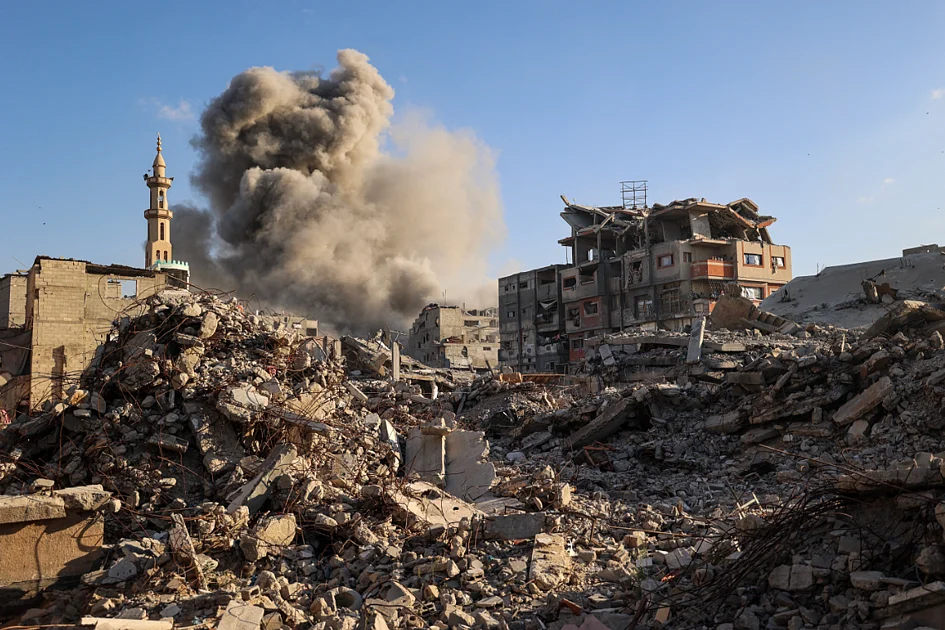
Israel’s Netanyahu orders immediate ‘powerful strikes’ on Gaza: PM office
Israeli Prime Minister Benjamin Netanyahu has directed the military to execute immediate and forceful strikes on the Gaza Strip, following allegations that Hamas breached a US-mediated ceasefire agreement. The decision was announced on Tuesday, October 28, after extensive security consultations. Netanyahu’s office released a statement confirming the order, emphasizing the need for a robust response to the ceasefire violation. The Israeli Defense Forces (IDF) subsequently launched a series of targeted attacks on Hamas positions in southern Gaza. Earlier reports indicated that Hamas had fired towards Israeli troops stationed behind the ‘yellow line,’ a demarcation established under the ceasefire terms. This incident marks at least the third violation since the ceasefire was implemented. The escalation underscores the fragile nature of the truce and raises concerns about renewed hostilities in the region.
-
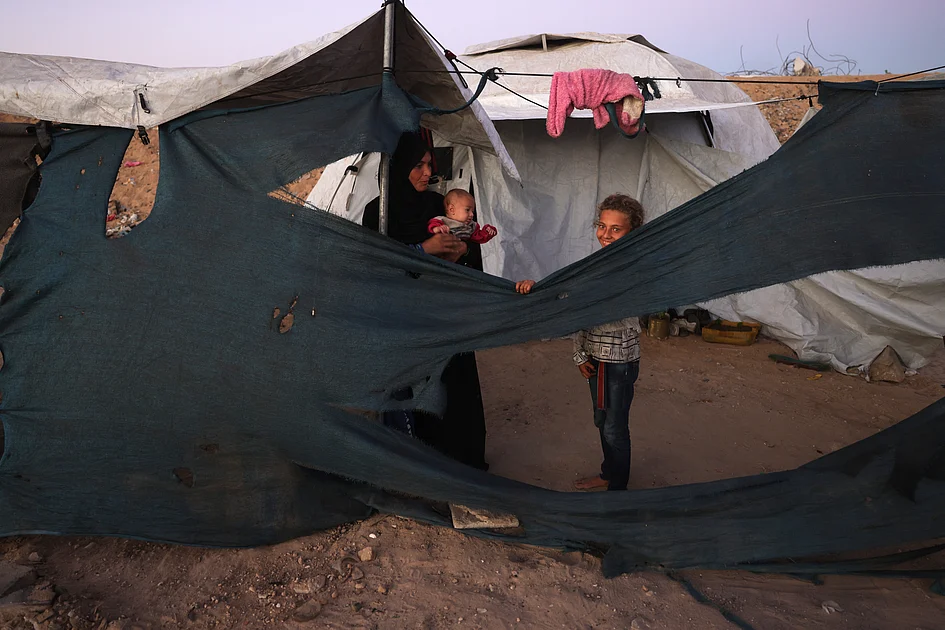
Israel lifts restrictions on communities near Gaza after security review
In a significant development, Israel has officially lifted restrictions on communities near the Gaza border, as announced by the Israel Defence Forces (IDF) on Tuesday, October 28, 2025. This decision follows a comprehensive situational assessment and formal approval from Defence Minister Israel Katz. The move marks the first time such measures have been revoked since the October 2023 Hamas attacks, which prompted the imposition of a state of emergency in the region. Katz’s office stated, ‘I have decided to adopt the (Israeli military’s) recommendation and to lift, for the first time since October 7, the special state on the home front.’ The decision reflects the improved security conditions in southern Israel, bolstered by a ceasefire that has largely held since its initiation on October 10. This step signals a gradual return to normalcy for residents in the affected areas, who have endured heightened security measures for over two years.
-

The AI job cuts are here – or are they?
The recent wave of corporate layoffs, spearheaded by tech giant Amazon, has reignited concerns about Artificial Intelligence (AI) replacing human jobs. Amazon’s decision to cut approximately 14,000 corporate roles follows similar workforce reductions by companies like Chegg, Salesforce, and UPS, all of which have cited AI as a contributing factor. However, experts caution against attributing these layoffs solely to AI, emphasizing the complexity of corporate dynamics and broader economic trends. Martha Gimbel, executive director of Yale University’s Budget Lab, argues that attributing job losses to AI based on executive statements during layoffs is a flawed approach. She highlights that company-specific factors, such as overhiring during the pandemic and the Federal Reserve’s interest rate hikes, play significant roles. A study by the Federal Reserve Bank of St. Louis found a correlation between AI adoption and rising unemployment since 2022, particularly in sectors like office and administrative support. Yet, Morgan Frank, an assistant professor at the University of Pittsburgh, notes that only certain occupations, such as administrative roles, have been directly impacted by AI advancements like ChatGPT. For tech and math-related jobs, the impact remains negligible. The broader economic context, including the pandemic hiring surge and subsequent corrections, complicates the narrative. Enrico Moretti, an economics professor at UC Berkeley, points out that companies like Amazon, which both produce and consume AI, are uniquely positioned to automate roles quickly. Lawrence Schmidt of MIT Sloan School of Management adds that job reallocation, rather than outright job loss, is a more likely outcome. As the debate continues, distinguishing between cyclical economic patterns and AI-driven disruptions remains a critical challenge for policymakers and businesses alike.
-
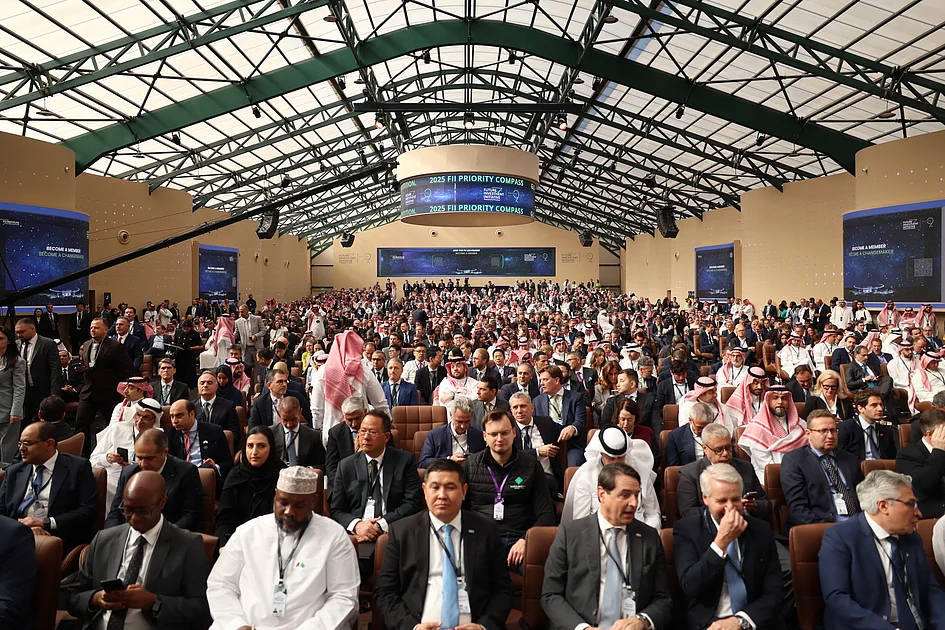
Saudi’s Red Sea Global chief says alcohol ‘not essential’ to draw tourists
Saudi Arabia’s ambitious plans to diversify its oil-dependent economy through tourism and entertainment are progressing steadily, with alcohol remaining off the table. John Pagano, CEO of Red Sea Global, a key player in the kingdom’s tourism strategy, emphasized that the absence of alcohol would not hinder the country’s appeal to international visitors. Speaking at the Future Investment Initiative (FII) in Riyadh, Pagano stated, ‘Alcohol is not permitted in the kingdom. It’s as simple as that. People come for the experiences and to lead healthier lives. Alcohol is not essential for our success.’
Saudi Arabia, the birthplace of Islam and home to its holiest cities, Makkah and Madinah, has traditionally been a religious destination. However, since the introduction of tourist visas in 2019 and the launch of Crown Prince Mohammed bin Salman’s Vision 2030 plan, the kingdom has been transforming into a global tourism hub. Despite this shift, the alcohol ban remains intact, with the exception of a single liquor store opened in January 2024, exclusively serving non-Muslim diplomats.
Pagano highlighted the kingdom’s significant investments in mega-projects, including entertainment, tourism, sports, and artificial intelligence. ‘The Public Investment Fund has committed $800 billion to tourism between now and 2030,’ he said, referencing the upcoming 2030 World Expo and the 2034 FIFA World Cup, both to be hosted in Saudi Arabia. Red Sea Global is spearheading the development of 27 hotels and resorts along the kingdom’s west coast, with ten already operational and the rest set to open by mid-2026. Pagano also expressed confidence in tapping into the lucrative market of Haj pilgrims, who visit Makkah annually. ‘Pilgrims come once in their lifetime, and we plan to capitalize on that,’ he added.
While the alcohol ban may deter some tourists, Pagano remains optimistic about Saudi Arabia’s ability to attract visitors through unique experiences and its rich cultural heritage. The kingdom’s focus on health-conscious tourism and its strategic investments in global events and infrastructure underscore its commitment to becoming a leading destination on the world stage.
-

Adnoc Drilling posts 17% surge in nine-month profit
Adnoc Drilling has announced a significant 17% increase in net profit for the first nine months of 2025, reaching $1.06 billion. This growth is attributed to heightened activity across onshore, offshore, and integrated drilling services. Revenue for the period soared by 27% to $3.63 billion, driven by improved rig utilization, expanded unconventional drilling programs, and a sharp rise in integrated drilling services. Free cash flow surged by 174% to $1.2 billion, enabling the company to enhance shareholder returns while investing in fleet expansion and technological advancements. Return on equity stood at 36%, and return on capital employed at 25%, reflecting the company’s operational efficiency and robust margins. CEO Abdulla Ateya Al Messabi highlighted the disciplined execution and resilience of Adnoc Drilling’s contract model, emphasizing plans for transformational growth. The company aims to expand unconventional capacity to over 300 wells annually and grow its integrated drilling services fleet to approximately 70 rigs by 2026. These initiatives are expected to generate billions in new revenue streams, supported by in-house technical capabilities and a transition to becoming an AI-native company. Onshore revenue increased by 13% to $1.52 billion, while offshore jack-up and island drilling revenue reached $1.04 billion. Oilfield services revenue skyrocketed by 114% to $1.07 billion. Shareholders will benefit from a third-quarter dividend of $250 million, with the company targeting a minimum of $6.8 billion in distributions between 2025 and 2030. Adnoc Drilling is also advancing strategic initiatives, including joint ventures in Kuwait and Oman, and accelerating AI and automation adoption across fleet operations. Looking ahead, the company anticipates revenue of around $5 billion in 2026 and aims to expand its fleet to over 151 rigs by 2028.
-
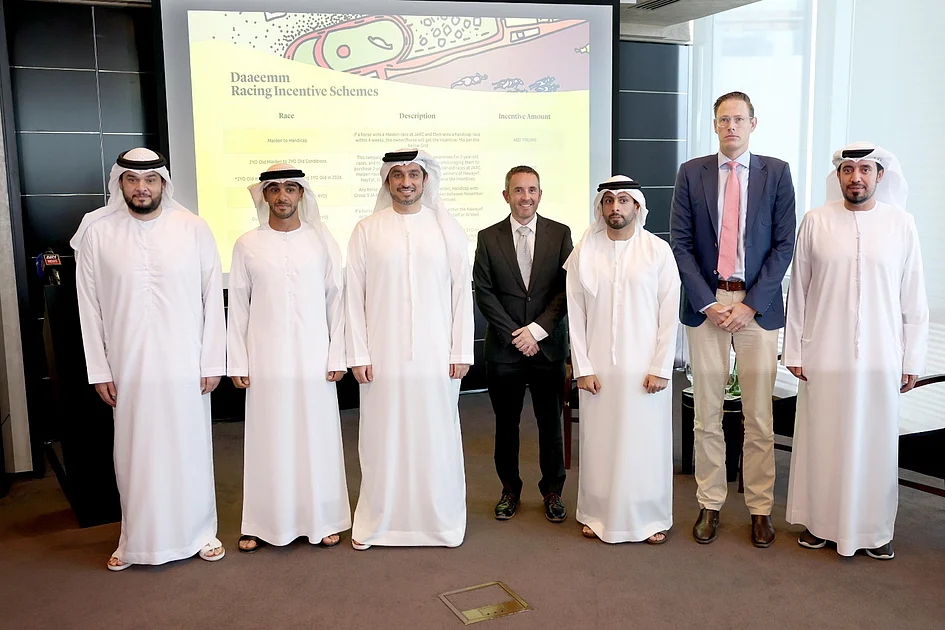
UAE set for big season as countdown begins to 30th Dubai World Cup
The UAE is gearing up for an extraordinary horse racing season as the countdown begins to the 30th anniversary of the Dubai World Cup, set to take place on March 28, 2026. The 2025–2026 racing season officially commences on November 1, 2025, at Jebel Ali Racecourse, which will host 11 meetings through March 8, 2026. Meanwhile, Meydan Racecourse will stage 16 meetings starting November 7, 2025, as part of the prestigious Dubai World Cup Carnival, culminating in the $12 million Dubai World Cup.
At a press conference held at Jumeirah Emirates Towers, Jebel Ali Racecourse announced a 20% increase in total prize money for the season and introduced the groundbreaking ‘Daaeemm’ scheme, the world’s first racing incentive program designed to support horse owners. This initiative aims to reward participation and competitiveness by offering additional bonuses to horses in selected categories, including maidens and younger horses, beyond their standard race purses.
Mohamed Ahmed Al Ahmed, Director General of Jebel Ali Racecourse, emphasized the season’s focus on growth and inclusion, highlighting the vision of Maj. General Sheikh Ahmed bin Rashid Al Maktoum. ‘With the launch of the Daaeemm scheme, we’re creating an incentive structure that benefits everyone in the racing community — owners, trainers, and fans alike,’ he said. ‘It’s about building a sustainable, competitive, and vibrant future for UAE racing.’
Mohammad Saeed Al Shehhi, General Manager and Board Member of the Emirates Racing Authority (ERA), described the 2025–2026 season as a milestone in the internationalization of UAE racing. ‘The UAE has long been recognised as a global leader in horse racing, and the build-up to the 30th Dubai World Cup only strengthens that reputation,’ he said. ‘Our goal this season is not just to celebrate history, but to show how far UAE racing has come.’
The season will feature 64 race meetings across five tracks — Meydan, Jebel Ali, Abu Dhabi, Sharjah, and Al Ain — with Jebel Ali hosting events like the Jebel Ali Mile, Jebel Ali Sprint, and Jebel Ali Stakes. Community-focused initiatives, such as Students and Universities Day, Gallop & Glam Fashion Day, and Ramadan Celebrations, will further enhance the season’s appeal.
As the UAE racing community prepares for this landmark season, the focus remains on making the 30th Dubai World Cup a historic and unforgettable event for the global sporting world.
-

Ben & Jerry’s co-founder creating watermelon-flavoured ice cream to support Palestine
Ben Cohen, co-founder of Ben & Jerry’s, disclosed on Tuesday that the ice cream brand’s parent company, Unilever/Magnum, prevented the creation of a watermelon-flavored ice cream intended to advocate for peace in Palestine. Cohen, 74, shared this revelation in an Instagram post, expressing frustration over the decision. He explained that the proposed flavor aimed to promote justice and dignity for Palestinians, but Unilever/Magnum intervened, much like when the company blocked Ben & Jerry’s earlier decision to cease sales in Israeli-occupied territories.
-

Man arrested after €8m cocaine seizure
In a significant crackdown on organized crime, Irish police have confiscated suspected cocaine valued at over €8 million (£7 million) in County Laois, Republic of Ireland. The operation, led by the Garda National Drugs and Organised Crime Bureau, was conducted on Tuesday following a search of a residential property and surrounding land in the area. During the raid, authorities arrested a man in his 30s and recovered approximately 116 kilograms of the illicit substance. The investigation targeted a notorious crime syndicate based in west Dublin, according to Irish broadcaster RTÉ. Additionally, law enforcement officers seized several electronic devices believed to be linked to the gang. Det Ch Supt Seamus Boland, head of the bureau, emphasized the ongoing commitment to disrupting drug trafficking networks in Ireland. He urged the public to consider the consequences of illegal drug use, stating, ‘We are determined to continue dismantling drug trafficking routes into Ireland and will continue doing our part to keep our communities safer.’ The seized drugs were later displayed by the Garda National Drugs and Organised Crime Bureau, underscoring the scale of the operation.