作者: admin

  • Fire in a hospital nursery kills 14 newborns in Pakistan’s capital

    Fire in a hospital nursery kills 14 newborns in Pakistan’s capital

    On a devastating Wednesday in Pakistan’s capital Islamabad, a fire sparked by an exploding air conditioning unit claimed the lives of 14 newborns being cared for in the nursery of the Pakistan Institute of Medical Sciences, one of the city’s largest and most prominent public healthcare facilities, senior government and hospital officials confirmed.

    Of the 15 infants present in the third-floor nursery when the blaze broke out, only one was successfully rescued by a quick-acting on-duty doctor, hospital spokesperson Dr. Aneeza Jalil told reporters. As of Thursday morning, six of the 14 infant bodies had already been released to grieving families for burial, with the remaining remains set to be turned over pending final formal identification.

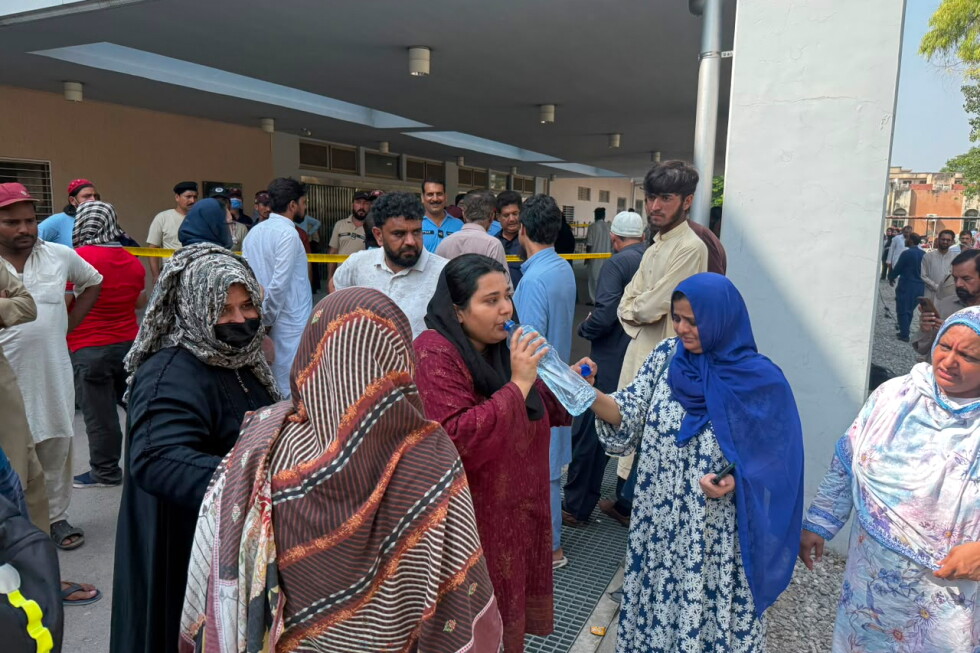
    Television footage captured from the scene showed rescue teams scaling ladders to reach the locked nursery through shattered windows after the fire trapped the infants inside. Outside the hospital, distraught parents and family members clustered together, many openly weeping as they waited for updates, while others demanded immediate answers about the cause of the fire and whether the unit lacked mandated fire safety equipment that could have prevented the deaths.

    The tragedy has already triggered swift official action: Prime Minister Shehbaz Sharif immediately ordered the removal of Aslam Ghauri, the top civil servant at Pakistan’s Health Ministry, from his post, and announced a full independent probe into the incident. The Islamabad district magistrate has convened a formal fact-finding committee mandated to deliver a full investigative report within 24 hours. The panel’s scope includes identifying the root cause of the blaze, assessing how it spread so rapidly through the nursery, verifying whether the facility met national fire safety standards, and evaluating the speed and effectiveness of the emergency response after the fire was reported.

    Federal Health Minister Mustafa Kamal confirmed the final death toll in an interview with Geo News, noting he was traveling immediately from Karachi to Islamabad to oversee the investigation personally. Interior Minister Mohsin Naqvi joined Prime Minister Sharif and President Asif Ali Zardari in issuing public statements of profound condolences to the affected families.

    “This is a heartbreak no parent should ever have to endure; the loss of a child is an irreparable harm,” Sharif said during an emergency high-level meeting with security and health officials held just hours after the blaze was extinguished. President Zardari echoed that sentiment, calling the deaths “heartbreaking and unforgivable,” demanding that all individuals found responsible for safety failures be held legally accountable, and issuing an urgent order for all hospitals across Pakistan to immediately audit and upgrade their fire safety protocols and emergency response plans.

    Hospital officials confirmed the fire was fully contained to the nursery wing, with no damage or injuries reported in other parts of the large facility, and emergency crews extinguished the blaze within an hour of the first alarm.

    For many grieving family members, however, official action has come too late. Mrs. Mohammad Sami, a new mother who gave birth just three days before the fire, told reporters her infant was receiving critical intensive care in the nursery when the blaze broke out. “I don’t know what to say or whom to blame,” she said through tears. “I have lost my child.”

    This incident marks the second major deadly tragedy involving children in Pakistan in less than two months. In June, a structural collapse at an under-construction tutoring center in the eastern city of Lahore killed 14 schoolchildren, renewing public outcry over widespread disregard for safety regulations in both public and private facilities across the country.

  • ‘Our patron saint’: Tennesseans mourn local hero Dolly Parton

    ‘Our patron saint’: Tennesseans mourn local hero Dolly Parton

    When news of legendary country music star Dolly Parton’s passing broke Tuesday, thousands of fans and local residents across her home state of Tennessee turned out to honor the woman whose decades of generosity and artistry reshaped their region forever. In Sevierville, Parton’s hometown, hundreds gathered at the bronze statue of the singer outside the Sevier County Courthouse, where her iconic hit “Jolene” drifted through the evening air as mourners left bouquets of flowers and shared personal memories of the icon.

    Callie Konane Rickards, a 43-year-old costume designer and lifelong fan who placed flowers at the statue’s base, told Agence France-Presse, “We’ve always called her our patron saint of Tennessee.” Families with small children joined local police, lifelong residents, and out-of-town tourists at the site, with many stopping to take selfies next to the statue that shows Parton strumming her signature acoustic guitar. “I just feel like her sparkle lives on in all of us,” Rickards added.

    While global music superstars including Taylor Swift, Beyoncé, and Jack White have released public tributes honoring Parton’s legacy, her neighbors in East Tennessee offered deeply personal reflections on a star who never lost connection to her working-class, mountain roots. Locals highlighted Parton’s unifying presence, her lifelong commitment to her Appalachian home, and the way she wrapped the region in a uniquely warm, approachable country glamour that drew visitors and opportunity to the area.

    Twenty-four-year-old local resident Jonah La Grand, who wore a vintage Dolly Parton t-shirt to the gathering, still speaks of Parton in the present tense, saying, “Dolly is like a mother to everyone who lives here. She gives so much growth to the county and the surrounding Appalachia — economically, yes, but she has also uplifted us spiritually. She’s known worldwide for being so kind.”

    Mourners repeatedly pointed to Parton’s long record of generosity to the community, specifically her rapid support for local families when devastating wildfires tore through the region a decade prior. Even today, her nearby Dollywood theme park stands as the single most vital economic engine for Sevier County, drawing millions of tourists annually and supporting thousands of local jobs. Her pioneering Imagination Library, meanwhile, has put free books into the hands of millions of children across the globe, opening access to literacy for young people who would otherwise lack that opportunity.

    As dusk fell, local residents gathered at Bluffs, a popular neighborhood watering hole just outside Sevierville, to raise a glass to Parton, sing karaoke versions of her greatest hits, and swap stories of the legend who grew up alongside them. Among the crowd was Brent Allen, Parton’s 49-year-old cousin, who grew up just a short walk from the singer’s childhood home in the hills of Locust Ridge outside Sevierville. “She’s Aunt Granny to me,” Allen told AFP, right before a bar patron launched into a raucous, crowd-joining performance of Parton’s iconic hit “9 to 5.”

    Allen recalled that Parton grew up in extreme poverty alongside 11 siblings in the hills of East Tennessee, and he says that much of the progress and transformation the region has seen over the past 50 years can be traced directly to Parton’s tireless work and charitable giving. “Sevier County is 100 percent the way it is today for no other reason than for Dolly Parton,” he said. “I think she has ascended to sainthood now.”

    Allen also remembered how Parton always made time for her family, showing up for reunions, holiday celebrations, and even funerals no matter how busy her global touring and career schedule became. What impressed him most, he said, was her down-to-earth, grounded demeanor that brought people together across dividing lines of politics, class, and background. “I hope Dolly is our generation’s Mother Teresa,” Allen said. “She made everybody feel like they were special.”

    Plans for Parton’s memorial are already underway: a private funeral will be held first for immediate family and close personal friends, followed by at least one public memorial service that will be open to fans, expected to take place in either Nashville or her hometown of Sevierville.

  • Iran says Hormuz strait still closed despite transit corridor talks

    Iran says Hormuz strait still closed despite transit corridor talks

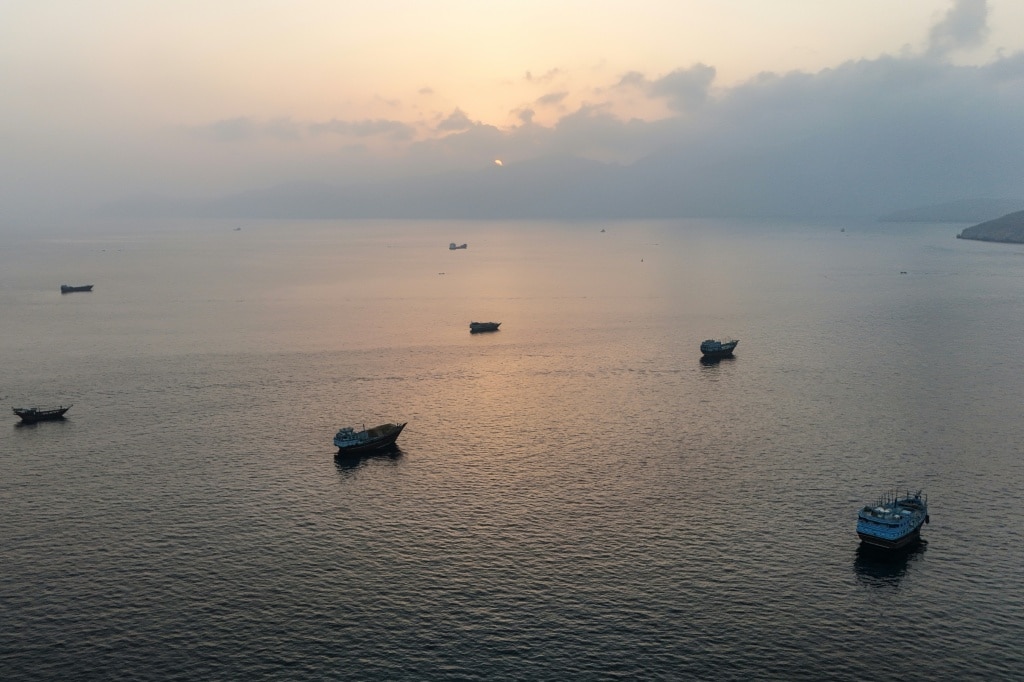
    Nearly six months into the open conflict between the United States, Israel and Iran, the strategic Strait of Hormuz remains closed to most commercial and all military traffic, Tehran’s top diplomatic officials confirmed Wednesday, even as discussions with Oman over a proposed temporary transit corridor and joint mine-clearing operations move forward. The closure, which has already upended global energy markets by blocking roughly 20% of the world’s daily oil and liquefied natural gas exports, will remain in place until Washington fulfills its unmet commitments from a June bilateral memorandum of understanding, ends its military campaign against Iran and lifts harsh economic sanctions, Iranian Deputy Foreign Minister Kazem Gharibabadi told state news agency IRNA.

  • A Kenyan mother bled for hours after childbirth and died as healthcare remains weak

    A Kenyan mother bled for hours after childbirth and died as healthcare remains weak

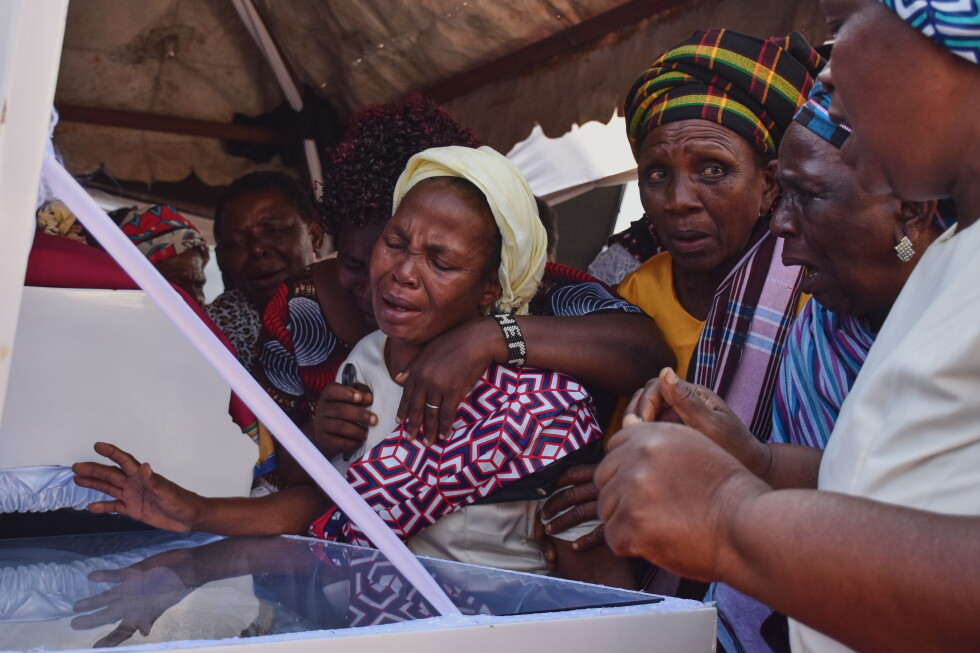
    Along the sun-drenched white sand shores of Kenya’s Indian Ocean coast, Kilifi County draws millions of tourists annually to its thriving hospitality industry. But just a short distance from luxury beach resorts and busy coastal boardwalks, a quiet public health crisis unfolds: rural communities here suffer some of the highest maternal mortality rates in the country, leaving grieving families and broken lives in its wake. The case of 29-year-old Penina Zawadi, who died from complications of childbirth in late June, lays bare the systemic gaps that continue to claim hundreds of maternal lives in the region each year.

    As Zawadi was wheeled into the operating theater at Malindi Hospital for an emergency cesarean section, she handed her jewelry to her mother Esther Bendera for safekeeping, confident she would return with her newborn. An hour later, Bendera held her healthy grandson, but Zawadi never came back. The young mother, who had enjoyed an uneventful, healthy pregnancy, suffered severe postpartum hemorrhage. Instead of receiving urgent emergency care immediately, she waited four hours at Malindi Hospital for a referral to the higher-level Kilifi County Referral Hospital, a 60-minute drive along a crumbling, potholed highway. By the time she arrived for a last-ditch hysterectomy to stop the bleeding, the damage was irreversible. She spent several days in intensive care before succumbing to her injuries on June 23.

    “She was bleeding so much, you would think it was water gushing out,” Bendera recalled. “After the second surgery, she never opened her eyes again.”

    Zawadi’s story is far from unique. Sub-Saharan Africa is home to the world’s fastest-growing population, and accounts for 70% of all global maternal deaths, with roughly 180,000 pregnancy-related deaths recorded across the continent each year. In Kilifi County, the latest 2022 Kenyan government data puts the maternal mortality rate at 532 deaths per 100,000 live births — far above the national average of 355. Reproductive health organizations identify the leading causes of death as severe hemorrhage, obstructed labor, hypertension-related conditions including preeclampsia, and complications from unsafe abortions. But beyond medical causes, systemic failures and chronic shortages drive most of these preventable deaths: local clinics lack basic life-saving medical equipment, emergency transport to advanced care is often unavailable, and critical health information rarely reaches pregnant women and their families in time.

    Halima Ramadhan, a 27-year-old mother, became another statistic in March when she died a week past her due date while delivering twins. Staff at Malindi Hospital recommended an emergency C-section, and handed the healthy twins to Ramadhan’s mother-in-law Mariam Kazungu an hour later, saying the new mother was stable in recovery. They then sent Kazungu to a private pharmacy to purchase required medication, with no explanation of Ramadhan’s declining condition. Over three weeks of intensive care, Kazungu was repeatedly told to buy more medication, but still received no updates on her daughter-in-law’s health. Only after she showed AP the hospital discharge summary, which cited heart failure brought on by uncontrolled hypertension, did her family finally learn the official cause of death. Kazungu, who quit her job as a chef to care for the orphaned twins, says she still struggles to reconcile what happened.

    “I never thought a big government hospital would lack medicine. I’d rather have taken her to a private hospital and even called for a fundraiser so she could receive better care,” Kazungu said. Today, Ramadhan’s oldest child, not yet three years old, still kisses her twin siblings’ cheeks and recognizes her mother’s photo, believing she will come home soon. “She never got to see her children grow up,” Kazungu said, her eyes filling with tears.

    Kilifi County officials claimed in June that the 81 maternal deaths recorded over the prior 18 months represented progress, pointing to efforts to expand the number of local healthcare facilities to bring care closer to expectant mothers. But on the ground, many small rural clinics remain little more than basic outposts serving scattered communities of mud-walled homes, stocked with little more than painkillers and antacid. Recent funding cuts from international donors including the Trump administration have deepened these gaps, hitting Kenya’s poorest communities the hardest.

    For Zawadi’s family, the grief is still raw. After her coffin was lowered into the grave and covered in traditional coral stones, her 5-year-old firstborn son was led to the site and wailed for his mother. Under local Giriama cultural traditions, Zawadi’s newborn son is considered a bad omen and was barred from the funeral, requiring traditional cleansing rituals before he can be fully accepted by the community. Zawadi’s husband, who had no stable income before her death, now relies on community support to raise their two sons, with additional help from Zawadi’s father Nixon Charo, a civil servant who already sends regular money for food. Charo says the family was left in the dark about the severity of his daughter’s complications, and is calling on the government to fix broken systems that put expectant mothers at risk.

    “We never got to know how serious the complications were,” Charo said, urging officials to ensure hospitals are fully equipped to handle obstetric emergencies and keep families informed when crisis strikes.

    Community groups and local nonprofits are now stepping in to fill gaps left by government failure. Chadi Karisa operates a community health center in Gongoni, an area where residents previously had to travel 90 kilometers for even basic prenatal care. Karisa, who has witnessed multiple maternal deaths during his work assisting deliveries, says widespread underpayment and overwork leave many frontline health workers demotivated, and some even view questions from patients as an unwelcome nuisance. At the same time, many expectant mothers skip critical prenatal appointments that can catch life-threatening complications like anemia and hypertension before they become emergencies.

    “In most cases, pregnant women arrive very late because some of the mothers are still ignorant and lack information on maternal health,” he said.

    Local NGO Youth Voices and Action Initiative is working to close this information gap by hosting community education forums and launching a podcast targeted at women and girls. CEO Leila Abdulkheir says working with trusted local community leaders and health promoters is key to reaching women who may not access formal healthcare services.

    “We really need to have these conversations with community gatekeepers, especially the community health promoters,” Abdulkheir said. “These are the people that the women prefer to talk to and are trusted within the community.”

    At Zawadi’s funeral, community members held a fundraiser to help the family cover unexpected medical and funeral costs, but most attendees could only contribute roughly one dollar each. For families already living on the edge of poverty, the maternal mortality crisis does not just end with a mother’s death — it leaves surviving children and relatives to pick up the pieces of fractured lives amid a system that has failed to protect the most vulnerable.

    The Associated Press receives financial support for global health and development coverage in Africa from the Gates Foundation. AP maintains full editorial control over all content.

  • Drought-hit Danube gives way to fossil hunt in Bulgaria

    Drought-hit Danube gives way to fossil hunt in Bulgaria

    As record-breaking drought parches much of Europe, the shrinking waters of the Danube, the continent’s second-longest river, have exposed long-submerged lands along its banks – creating an unexpected opportunity for fossil hunters and historians to uncover artifacts hidden for thousands of years. In northern Bulgaria, just a short distance from where a massive mammoth skeleton was uncovered last month, around 20 volunteer enthusiasts gathered for a guided fossil-hunting expedition organized by the Ruse Regional History Museum, hunting for more prehistoric remains exposed by the retreating river.

    Among the participants was Aleksandar Denkov, a 30-year-old amateur photographer, who excitedly called out his discovery: a small yellowish fossil tooth protruding from the dry river sand. While the group did not locate additional full mammoth remains to match last month’s find, their day of searching yielded a range of significant discoveries. Museum experts identified the recovered artifacts as the remains of an ancient large mammal likely to be an aurochs or ancient European bison, a partially preserved subfossil horse jawbone, and a cluster of fossilized oysters dating back an estimated 60 to 65 million years.

    Climate scientists have repeatedly confirmed that the ongoing extreme drought gripping Europe has been intensified by human-caused climate change, bringing widespread disruption to communities across the continent. Low river levels have crippled commercial cargo shipping operations and forced output cuts at nuclear power plants that rely on river water for cooling. But alongside these serious negative impacts, the dropping water levels have unlocked a trove of historical and prehistoric remains that have remained hidden for decades, even millennia.

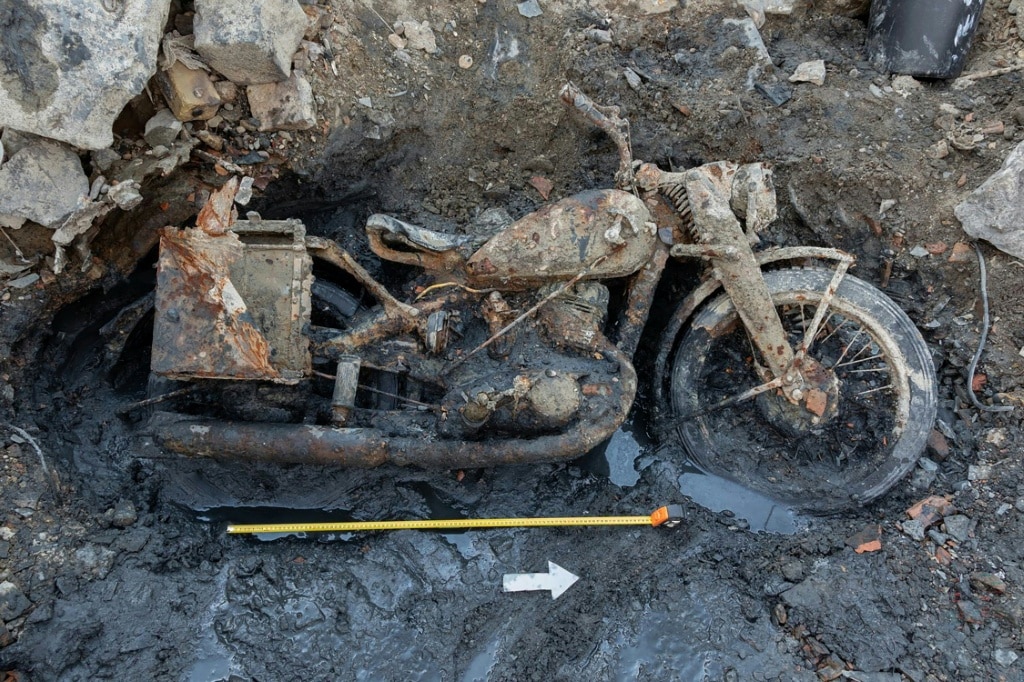
    Recent weeks have seen a steady stream of discoveries along the full length of the Danube. Beyond the Bulgarian fossil finds, receding waters have revealed World War II-era shipwrecks in Austria and Serbia, as well as the remains of two German World War II soldiers and a preserved military motorbike in the heart of Budapest, Hungary.

    Krasimir Kirov, a curator at the Ruse Regional History Museum, explained that the museum launched the guided expedition to introduce the public to fossil identification, share guidance for safe exploration, and foster public interest in local history. After the initial mammoth discovery was announced last month, Kirov says he received dozens of calls from local residents reporting potential finds of their own. That initial discovery was made by a local resident from the nearby village of Ryahovo, located roughly 30 kilometers from Ruse, who spotted a massive mammoth jawbone, tusk fragments, shoulder blade remains, and a femur by chance while walking the newly exposed banks.

    News of the guided search spread quickly on social media, drawing a flood of interested participants and already generating requests for a follow-up expedition. Before the search began, organizers shared simple ground rules: volunteers would move forward in a coordinated line, stop the entire group when a find was spotted by raising a hand, and strictly avoid touching any unknown metal objects that could be leftover unexploded ammunition. But enthusiasm quickly overtook discipline, and the organized line dissolved within minutes as participants scattered to explore the exposed banks on their own.

    For many participants, the expedition offered a once-in-a-lifetime chance to connect directly with ancient history. “It’s a very rare opportunity to feel this close to history,” explained Ekaterina Yordanova, a 34-year-old psychologist who joined the hunt. She acknowledged the concern over the Danube’s record-low levels: “Seeing the Danube in this state is worrying, but it also gives us the chance to discover new things that we would never have access to otherwise.” Vladimir Tsvyatkov, a 44-year-old local business owner who attended the expedition with his wife and two children, said the family came primarily “for the adventure.” Having grown up along the Danube’s banks, he noted he had “never seen the Danube so dried up” in his lifetime.

    The discoveries stretch far beyond the Bulgarian stretch of the river. Further upstream in Bulgaria, the low water levels have allowed archaeologists to fully document the foundations of a 2-kilometer Roman bridge first inaugurated under Emperor Constantine I in 328 AD, a structure that has remained largely submerged for centuries. Along other parts of the river, dozens of World War II military remnants have been exposed. In central Austria, two sunken German warships that were damaged during 1945 fighting with American tanks and scuttled by their own crews now jut clearly from the water. In Serbia, near the town of Prahovo, the receding river has exposed dozens of additional German warships scuttled in 1945 by retreating German forces to block the river and slow the advance of the Soviet Red Army. In Budapest, the German War Graves Commission has confirmed the discovery of two German soldiers’ remains and a preserved military motorbike.

    Data from the European climate observatory Copernicus confirms that these record-low water levels are unprecedented for the month of July across most of Europe’s major river basins, highlighting the severity of the ongoing climate-driven drought.

  • Release of Marine veteran from Russian custody turns focus to other detainees with health concerns

    Release of Marine veteran from Russian custody turns focus to other detainees with health concerns

    The long-awaited release of U.S. Marine veteran Robert Gilman from Russian custody earlier this month has brought his family a long-desired homecoming, but it has also cast a harsh new spotlight on the plight of dozens of other American detainees still held in Russian prisons, many of whom are battling untreated health conditions in substandard correctional healthcare systems.

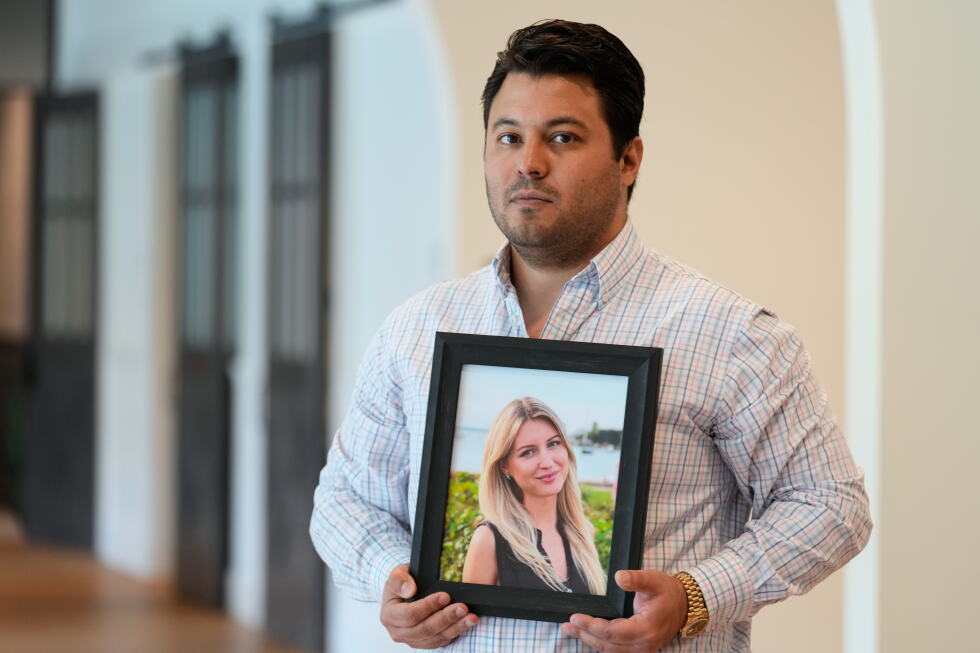
    As Harold Jezler, whose wife Olga has been detained in Russia since 2022, watched media coverage of Gilman’s return, the 36-year-old’s gaunt, visibly unwell appearance struck a nerve. Jezler, who already waits anxiously for updates on Olga’s progressing endometriosis, says Gilman’s condition raised alarming questions about how the U.S. prioritizes detainee releases. “You just look at the pictures and the guy is not in good shape. It’s concerning for me and for all the families, I would imagine,” Jezler told The Associated Press in an interview. “Is this what it takes for the government to really make a move and prioritize this — that the person is basically in dire straits? It was a very bittersweet thing to see that.”

    Gilman is only the latest American to be released from Russian custody in a years-long string of prisoner exchanges and negotiated releases. But his freedom has done nothing to resolve the crisis of the dozens of Americans still behind bars there. Advocates and family members report that many of the remaining detainees are living with serious, unmanaged medical conditions, receiving inadequate care that has amplified urgency for renewed diplomatic action to bring them home.

    Among those still detained are a Navy veteran living with chronic gastrointestinal illness, a man with a life-altering autoimmune disease, another detainee with severe, untreated dental damage, and Olga Jezler, who was diagnosed with endometriosis after her 2022 arrest. Olga traveled to Russia to visit her sister, who was battling cancer, and was detained on charges of possessing legally permitted CBD capsules. Her condition has progressed, with a growth on her ovary steadily expanding; her family fears Russian medical providers will opt to fully remove the ovary rather than pursue fertility-sparing treatment that would standard in the U.S., permanently ending her chance to have children. The couple recently marked their seventh wedding anniversary, the fifth they have spent apart. “She’s been there way over half our marriage,” Harold Jezler lamented.

    Eric Lebson, chief strategy officer for Global Reach — an organization that advocates for hostages and detainees and represents multiple Americans jailed in Russia — says there is no excuse for waiting until detainees are on the brink of death to prioritize their release. “These are American citizens who are innocent of violations of Russian law. They’re being held in Russia because they are Americans or because they have American status, and we shouldn’t need to wait for their health to be on the brink of death for there to be an urgency to bring them home,” Lebson said.

    Former detainee Paul Whelan, a Michigan man who spent more than five years in Russian custody on baseless espionage charges before being released in a 2024 high-profile prisoner swap, says he has firsthand knowledge of the poor quality of Russian prison healthcare. Whelan, who believes he received better care than most detainees due to his high-profile status and value as a bargaining chip, described systemic deficiencies during his detainment. When COVID-19 spread through Russian prisons, he says authorities distributed extra raw onions as a supposed immunity boost. Prisoners with damaged teeth typically had them pulled instead of receiving restorative care, first-aid supplies were so scarce that inmates had to fashion makeshift bandages, and fresh produce could only be obtained by bartering with guards. When Whelan finally received emergency middle-of-the-night surgery for a hernia he had complained about for months, he watched medical staff pick up dropped instruments off the floor and put them directly back into the surgical tray. “The poor conditions are part of the punishment,” Whelan explained. “You are supposed to get less of everything than normal citizens would get.”

    The poor state of Russian prison healthcare is not a new revelation. The issue has drawn international scrutiny for decades, dating back to the 2009 death of Russian whistleblower lawyer Sergei Magnitsky, who died from untreated pancreatitis. More recently, U.S. Marine veteran Trevor Reed reported severe health complications including coughing up blood, lung pain, and a broken rib before his 2022 release.

    Gilman, a Massachusetts teacher who had been detained since 2020 on disputed assault charges the U.S. government calls false, was in extremely poor condition by the time he was released. Lebson says Gilman spent 47 days in a “dissociative stupor” from prison abuse before being transferred to a hospital, where he was placed on a feeding tube and handcuffed to his bed. Liz Richards, director of hostage advocacy and research at the Foley Foundation, says images of Gilman’s frail condition on his flight home confirm he never received the care he needed while imprisoned. “I really do think Russia realized, if we don’t release him, he is going to die, and that would create an international incident between our two countries — to have a Marine Corps veteran, an American, die in custody in Russia because of their treatment,” Richards said.

    The current crisis is exemplified by the case of 59-year-old Chuck Zimmerman, who was intercepted by the Russian navy in international waters in June 2022 while sailing from the U.S. to New Zealand. Russian authorities charged him with transporting firearms on his yacht, though his representatives note he voluntarily disclosed the weapons after arriving at the Black Sea port of Sochi. He was sentenced to five years in prison, and within months began experiencing excruciating stomach pain so severe he induced vomiting to find temporary relief. Initial Russian tests failed to identify the cause, but independent medical consultations arranged by advocacy groups point to possible diagnoses including a gastric ulcer, pancreatitis, or a hiatal hernia with gastric bypass disorder. “It’s heart-wrenching to know that he’s having to make himself do that to stop the pain,” said his sister Robin Stultz. “It’s hard for me to sit down and eat dinner knowing that he’s throwing up his.”

    In recent weeks, 16 U.S. senators sent a letter to Secretary of State Marco Rubio, citing Gilman’s weakened condition to push for more aggressive action to secure the release of five detained Americans beyond Zimmerman and Jezler: Aleksandr Antonov, who lives with a traumatic brain injury; Andre Khachatoorian, jailed for nearly five years with an autoimmune disease; and David Barnes, who needs urgent dental surgery. Other Americans still in Russian custody include Stephen Hubbard, accused of fighting as a mercenary in Ukraine and classified as wrongfully detained by the U.S., and Travis Leake, an American rock musician held on drug charges. Richards estimates that roughly 28 Americans are currently detained in Russia, with six classified as wrongfully detained by the U.S. government.

    In response to inquiries, the U.S. State Department said it is aware of concerns about inadequate medical care for detained Americans and continues to raise the issue directly with Russian authorities. The Russian Federal Penitentiary Service did not respond to requests for comment.

  • Pakistan’s girls fight for their place in the boxing ring

    Pakistan’s girls fight for their place in the boxing ring

    Karachi’s gritty Lyari neighborhood, a once gang-violence-plagued community where sports have long woven through the fabric of daily life, is now home to a quiet, powerful revolution: young Pakistani girls trading domestic expectations for boxing gloves and determination.

    Thirteen-year-old aspiring boxer Hoorain Zahra is at the forefront of this movement. Sweat beading on her forehead, she drills through punch combinations during sparring sessions at a local Lyari gym, her gaze fixed on following in the footsteps of her role model, 21-year-old trailblazer Aliya Soomro. Last year, Soomro made national headlines when she claimed victory at an international boxing match in Bangkok — a historic win for a Pakistani woman, where deep-rooted patriarchal and cultural norms still relegate women to the home, barring them from public athletic spaces like gyms and sports clubs.

    The nation’s female boxers reclaimed public attention in late July, when 22-year-old Fatima Zahra made history as Pakistan’s first female Commonwealth Games boxing medalist, taking home bronze in the 60kg category in Glasgow. For girls like Hoorain, who grew up in Lyari’s sports-obsessed community, Fatima and Soomro’s wins are more than just athletic achievements — they are proof that women can thrive in a sport that society insists is not for them.

    For these young athletes, even stepping through the gym door is an act of defiance. Hoorain, adjusting her black hijab between drills, told AFP that widespread societal belief holds girls should never leave the home unchaperoned, framed by false claims that women are unsafe in public spaces. “But it is not possible to live without going outside, you have to go out,” she says. Around her, fellow fighters prepare for their session, layering modest athletic wear that keeps them covered while they train. The gym itself is unassuming: a cramped, worn room in a run-down Lyari building, where whirring overhead fans offer only intermittent relief from sweltering summer heat when power becomes available in the late afternoon.

    The man behind this decade-long movement to open boxing to girls is 56-year-old coach Ustad Younis Qambrani, who opened his gym doors to female fighters more than 10 years ago, starting with his own two daughters as his first trainees. “I believed women’s boxing was very important for girls,” Qambrani explained. “The girls who train with us go outside with great confidence. They show great courage and are not afraid of anything.”

    The fighters’ struggle to claim space for their sport mirrors Lyari’s own turbulent modern history. For decades, the neighborhood was labeled one of Pakistan’s most dangerous, flooded with weapons and drugs after it became a key transport hub during the Soviet-Afghan War. A 2013 paramilitary crackdown rooted out gang violence, but the political vacuum that followed was filled by conservative religious parties that won power in 2018. Those parties tightened restrictions on girls’ public activities, even banning bicycle riding for young women in some local areas.

    Even amid growing conservative pressure, Lyari’s sporting culture has refused to die. The neighborhood has long been famous for producing elite Pakistani athletes, including a new generation of unshakable female boxers. Crucially, many local families have stood behind their daughters’ athletic ambitions: both Hoorain and Soomro count on full support from their parents to pursue their boxing dreams.

    Soomro, who is building on her 2023 Bangkok win toward future international competitions, says girls deserve the exact same access to sports as boys. “Our society regards girls as very weak. People think girls are weak and cannot do anything,” she said from a nearby mixed-gender boxing arena. “But I believe girls can do everything, sometimes even more than men.”

  • Australian police hunt thieves in $250,000 oyster heist

    Australian police hunt thieves in $250,000 oyster heist

    Authorities in New South Wales, Australia, are currently searching for a gang of perpetrators responsible for one of the country’s most unusual high-value seafood heists, police confirmed Wednesday. The massive theft targeted a commercial oyster farming operation located close to Taree, a coastal town roughly 300 kilometers north of Sydney. In total, the thieves made off with more than 300 bulk bags holding a staggering 400,000 farmed oysters, which carry a combined market value of approximately 350,000 Australian dollars, equal to around 250,000 U.S. dollars.

    What makes the case even more unusual is the timing: the theft occurred at some point earlier this year, but local law enforcement only received the official stolen property report from the farm’s owners on Tuesday. As investigators work to piece together details of the coordinated heist, New South Wales Police have issued a public appeal, urging any community members with relevant tips, even seemingly minor information about suspicious activity near the farm around the time of the theft, to contact authorities immediately.

    Oysters hold a prominent place in Australia’s food culture, serving as a staple on brunch menus, at seafood buffets, and on high-end restaurant dining tables across the nation. Local Australian oyster varieties are widely celebrated by chefs and seafood lovers alike for their distinctive rich, creamy texture and briny, flavorful profile, making stolen oysters a relatively easy commodity to pass off to unsuspecting buyers on the black market.

  • In a divided America, the left and right unite to oppose artificial intelligence data centers

    In a divided America, the left and right unite to oppose artificial intelligence data centers

    The global race to scale artificial intelligence has triggered a rush to build massive data centers across the United States, turning quiet rural farmlands into the frontline of an unusual political conflict that defies traditional partisan divisions. What was supposed to be a straightforward win for economic growth and technological competitiveness has instead emerged as a polarizing issue reshaping political rhetoric ahead of November’s midterm elections, uniting unlikely allies against a development wave many local communities see as moving too fast.

    In the tiny village of Murdock, Nebraska, population just 275, the clash played out recently at the local firehouse, where conservative fifth-generation grain farmers and environmental advocates from the state Sierra Club chapter sat side-by-side to voice shared opposition to planned data center projects. For Judy Stroy, whose family has grown corn and soybeans on land outside Murdock for generations, the primary fear is the permanent loss of prime agricultural land to concrete and computing infrastructure. “With the amount of ground that’s getting gobbled up every year, our food source is in trouble,” Stroy said. “That should scare everyone.”

    Cass County, where Murdock is located, has responded by approving a 12-month moratorium on new data center development, pausing potential plans from energy firm Tenaska to acquire more than 1,300 acres along Highway 75 for a project that could include a large data center and an on-site natural gas power plant. A second data center operator, CyrusOne, controls nearly 400 acres nearby in Plattsmouth, though no formal project has been announced. The region’s strategic location—with a recently widened highway connecting it to Omaha to the northeast and college-heavy Lincoln to the southwest, plus easy access to water from the nearby Missouri River—has made it a top target for developers, who often offer landowners four times the standard market rate of $10,000 per acre to sell. For many farmers struggling with rising input costs and declining soybean exports tied to ongoing trade tensions with China, the huge payouts are difficult to reject, Stroy acknowledged, even as she worries about the long-term cost to local food production.

    The cross-partisan opposition playing out in Nebraska is mirrored across the country, from Republican-led Texas and Wyoming to swing-state Pennsylvania to Democratic-leaning New Mexico. In southern New Mexico, the $165 billion Project Jupiter data center complex planned by Oracle near the Mexican border has united farmers, ranchers and business owners across the political spectrum around shared fears of strain on already depleted water supplies. New Mexico is grappling with persistent, decades-level drought that has left the state’s largest reservoir at just 1.3% capacity and dried up large stretches of the Rio Grande, while a recent U.S. Supreme Court-approved water settlement requires the state to send increased water flows to Texas. Doña Ana County Commission Republican candidate Samantha Barncastle Salopek, whose family grows pecans in the region, said the issue transcends traditional political divides. “It is not about blue vs. red, or whether we’re a purple state or county,” she said. “This is about the local community coming together and saying, ‘Hold on, hold on.’ We didn’t get enough information, and now we’re very concerned because also we have to cut back our water use anyway.”

    Oracle has framed Project Jupiter as a generational economic investment for New Mexico, saying it will generate $4.7 billion in tax revenue, create more than 7,000 construction jobs and 1,500 permanent positions, and include water-efficient closed-loop cooling and fuel-cell systems that will keep long-term water use low. The company has also pledged $50 million for local water infrastructure and partnered on agricultural tech initiatives to help farmers cut water consumption by an estimated 21 million gallons per year. Even so, the Center for Biological Diversity successfully petitioned the New Mexico Supreme Court to issue an emergency halt to well drilling for the project’s construction water, a win that has temporarily paused development amid ongoing legal challenges.

    Supporters of expanded data center development draw backing from a bipartisan bloc as well, including former Republican President Donald Trump and many union leaders who typically align with Democratic candidates. They argue that the buildout delivers critical economic benefits for struggling small communities, creates high-quality construction and permanent jobs, helps retain young skilled workers who would otherwise leave rural states, and strengthens U.S. technological competitiveness against China in a high-stakes geopolitical race. “This problem is also a very big opportunity for some small communities,” said Mike Gage, president and secretary-treasurer of the Nebraska State AFL-CIO, noting that a decades-old data center near Omaha still employs roughly 60 local workers today. Heather McKenzie, a labor relations professional in Lincoln, added that data center development can reverse the outward migration of young Nebraska workers: “I don’t think that enough people understand that this is going to create really good jobs. I think a lot of people view it in a negative sense because it’s being sprung on them.”

    Trump has framed data centers as a clear win for local communities, arguing they bring jobs, increased tax revenue and lower local tax burdens. His administration has pushed developers to build their own on-site power plants to ease concerns about rising utility costs for local residents, though he has acknowledged that tech firms could improve their public outreach to address community fears. Even so, polling from July shows broad public opposition to local data center development: a Fox News survey found 60% of Republican voters and 53% of MAGA voters oppose new construction in their areas. As a result, politicians across both parties have been forced to adapt to shifting voter sentiment, with leaders from both sides of the aisle adopting anti-development stances to court voters ahead of the midterms.

    Prominent state leaders from both parties have already moved to curb rapid development: Democratic New York Governor Kathy Hochul ordered a one-year ban on large new data centers, while Democratic Pennsylvania Governor Josh Shapiro has ended preferential permitting and tax breaks for projects that do not meet strict local standards. On the Republican side, Texas Governor Greg Abbott issued a halt on new data center approvals until full audits of their impact on the state’s electrical grid are completed, saying developers earned backlash by failing to coordinate with state and local officials. “They basically dug their own grave for the problem that’s been caused for them, and that’s why they got the backlash they deserve,” Abbott said.

    Wyoming Secretary of State Chuck Gray, a Republican running for an open House seat, has pledged to halt all new data center construction, declaring in a campaign ad: “If Silicon Valley wants to build their liberal empire, they can do it somewhere else.” That rhetoric mirrors a campaign ad from Democratic Scranton Mayor Paige Cognetti, who is challenging a first-term Republican incumbent in a battleground district, who said the city “is not for sale” to data center developers. Across rural East Texas, residents have already complained that data center development has left them living near constant fossil fuel power generation to feed the centers’ huge energy demands, with critics decrying increased air pollution, noise, rising utility costs, and contribution to the climate crisis.

    For local opponents, the core grievance is not ideological, but practical: they say development is moving far faster than local regulatory frameworks can manage, leaving communities to cope with lasting impacts to their land, water, and infrastructure that were never debated or approved by the people who live there. As the midterm election season progresses, the cross-partisan backlash over data centers has proven that what was once seen as an obscure local development issue has become a national political flashpoint that could tip the balance in competitive races across the country.

  • Asian shares mostly rise as oil prices fall and hope grows for AI

    Asian shares mostly rise as oil prices fall and hope grows for AI

    In early trading on Wednesday, most Asian equity markets posted gains, as investors closely monitored diplomatic negotiations aimed at reopening the Strait of Hormuz — a critical global shipping chokepoint that remains largely closed following the outbreak of war in Iran.

    Global enthusiasm around artificial innovation continued to lift a number of regional technology stocks, while sliding crude oil prices injected fresh optimism into major oil-importing economies including Japan, which relies on foreign purchases for nearly 100% of its energy needs. Japan’s benchmark Nikkei 225 climbed 0.6% to 66,227.55 during morning session trading. Meanwhile, South Korea’s Kospi outperformed regional peers with a 1.6% jump to 6,849.92, Hong Kong’s Hang Seng gained 0.8% to 25,712.29, and China’s Shanghai Composite posted a modest 0.7% rise to 3,917.04. Australia’s S&P/ASX 200 was the only major index to trend downward, dipping 0.2% to 9,142.60.

    Oil prices extended their downward trend through early Wednesday, with benchmark U.S. crude falling $2.06 to settle at $80.30 per barrel. International benchmark Brent crude dropped $2.31 to $86.27 a barrel. Brent saw extreme volatility last month, swinging between $72 and $102 per barrel as investor hopes for a U.S.-Iran negotiated deal rose and fell amid escalating tensions. Tensions between Washington and Tehran climbed higher recently after the Trump administration unveiled a new round of economic sanctions designed to further pressure Iran’s struggling economy.

    Diplomatic efforts to de-escalate conflict and reopen the strategic waterway gained momentum this week. Top diplomats from Iran and Oman met Tuesday to discuss a phased plan for restoring commercial ship traffic through the strait. The talks followed a recent attack that left an oil tanker disabled off the coast of Oman, a stark reminder of the persistent safety risks facing shipping operators that attempt to traverse the waterway while it remains under Iranian control. In a parallel diplomatic push, a Pakistani delegation held discussions with Iran’s president to restart negotiations aimed at ending the U.S.-Iran conflict. Pakistan’s Interior Minister Mohsin Naqvi described the meeting with Iranian President Masoud Pezeshkian as “very positive and productive,” per comments shared by the Pakistani military.

    Beyond energy and geopolitics, the global AI sector remained a key driver of market momentum. On U.S. markets, chipmaker Nvidia — one of the biggest beneficiaries of the AI boom, which is scheduled to release its latest quarterly earnings report Wednesday — led gains with a 2.2% rise. The uptick came one day after a 2.9% drop for the stock, which had been the largest drag on the S&P 500 in the prior session.

    Eric Schiffer, CEO of the Los Angeles-based investment firm Patriarch Organization, argued that long-term demand for AI technology will continue to grow despite near-term market fluctuations, as both private companies and governments view AI investment as a non-negotiable requirement to maintain global competitiveness. “There’s a lot of fear about AI. Those fears are based on the financing side, meaning that there is so much money that needs to be raised. What it’s underrating, in my opinion, is the fact that this technology is so incredible,” Schiffer said. AI stocks have seen sharp volatility through the summer, as investors weigh concerns that valuations have risen too quickly and that the AI boom may prove unsustainable over the long term.

    U.S. bond markets also saw movement this week, with the yield on 10-year Treasury notes falling to 4.63%, down from 4.70% on Monday and 4.74% at the end of last week. While this represents a notable shift for the bond market, the 10-year yield remains well above the 3.97% level recorded before the Iran war sent oil prices and inflation concerns soaring. By the close of trading, the S&P 500 gained 24.42 points to reach 7,677.28, the Dow Jones Industrial Average added 160.24 points to hit 53,577.40, and the Nasdaq composite climbed 171.11 points to 26,151.30.

    In foreign exchange markets, the U.S. dollar edged slightly lower against the Japanese yen, falling to 159.02 yen from 159.20 yen in the prior session. The euro also slipped modestly, trading at $1.1669 compared to $1.1675 at the previous close.