作者: admin

  • AFL 2026: Sam Mitchell warns of GWS depth despite injuries

    AFL 2026: Sam Mitchell warns of GWS depth despite injuries

    Hawthorn Hawks coach Sam Mitchell is adopting a distinctly different perspective regarding the injury crisis plaguing the GWS Giants ahead of their Opening Round AFL clash. While the Giants face the prospect of being without at least seven of their premier players for Saturday’s encounter, Mitchell emphatically rejects any notion that this diminishes the threat posed by the home side.

    Mitchell acknowledged the obvious absence of key personnel but emphasized the remarkable depth of the Giants’ roster. “You look at their team sheet and we were chatting through their possible line-up,” Mitchell stated, “there’s no one out there that’s not more than capable. They bat really deep, of all the teams they’ve got one of those lists that have got some really strong top-end talent but also go long.”

    The coach specifically addressed the significant midfield changes, noting the acquisition of Clayton Oliver who has demonstrated strong pre-season form, while acknowledging the season-ending ACL injury to star midfielder Tom Green. Mitchell also highlighted the potential return of Finn Callaghan, provided he emerges unscathed from final training sessions, as another element adding to the Giants’ strength.

    Meanwhile, Hawthorn faces its own fitness concerns with key defender Tom Barrass undergoing a final assessment. Barrass has experienced a slow recovery following last month’s State of Origin match, but Mitchell expressed confidence in the experienced campaigner’s availability. “I expect him to get up,” Mitchell said, noting the team’s conservative approach to his rehabilitation. “He’s an experienced campaigner and expect him to play.”

    The match marks Hawthorn’s return to the venue where they secured a memorable elimination final victory last season, adding another layer of narrative to this early-season showdown between two teams navigating significant roster challenges.

  • Names and ages of children killed in strike on Iranian school

    Names and ages of children killed in strike on Iranian school

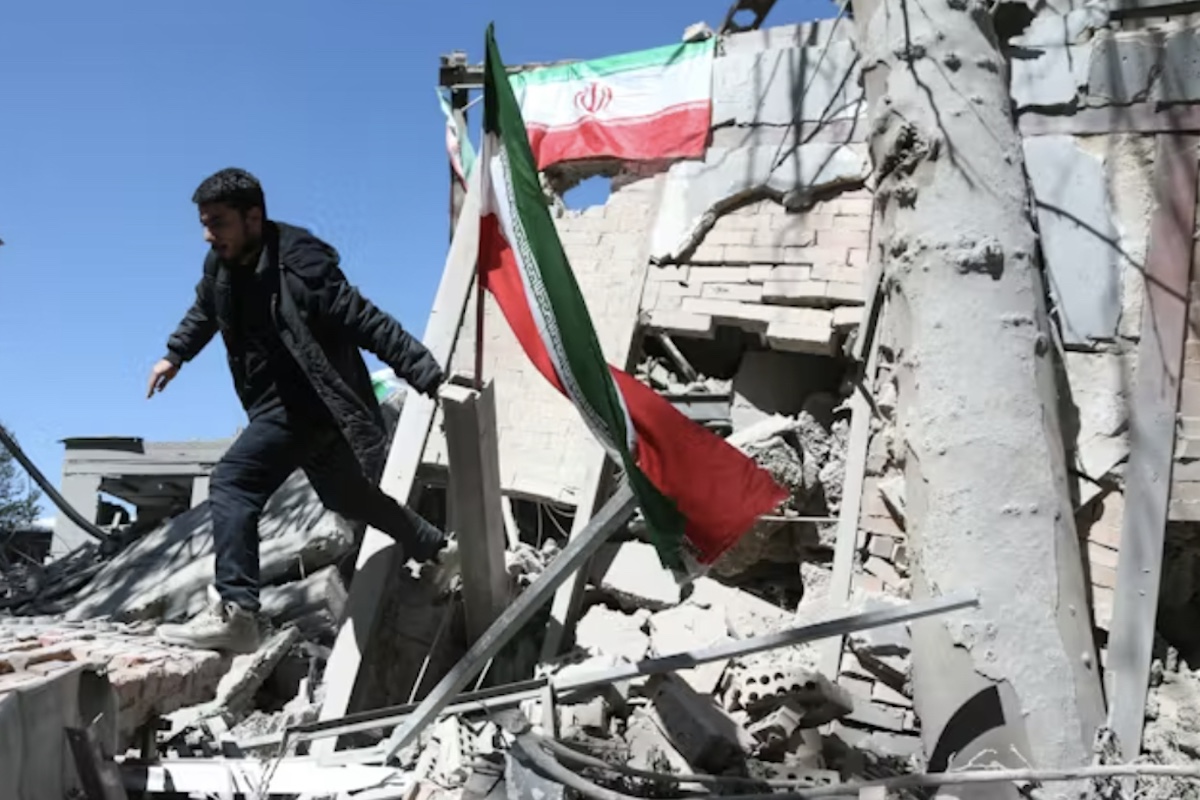
    A devastating aerial assault on the Shajareh Tayyebeh primary school in Minab, Hormozgan province, has resulted in the deaths of at least 165 individuals, predominantly young children, according to multiple sources. The attack, attributed to joint US-Israeli military operations, employed a controversial ‘double tap’ tactic where a second strike targets first responders and survivors shortly after the initial explosion.

    Eyewitness accounts from Red Crescent medics describe a horrific scene where school administrators attempted to protect students by moving them to a prayer hall following the first impact. As parents arrived to retrieve their children, a subsequent missile struck the same shelter area, dramatically increasing the casualty count. School staff reported being rendered speechless by the overwhelming sounds of children’s screams and cries amidst the devastation.

    Middle East Eye has independently verified 61 victims through cross-referencing sources including Iran’s Gymnastics Federation, handwritten casualty lists, and Tasnim news agency reports. The documented fatalities include 25 boys, 26 girls, eight women, one man, and a two-month-old infant. Among the youngest confirmed victims were Sara Shayesteh (5), Ehsan Saleminia (6), and Salma Zakeri (6).

    US Secretary of War Pete Hegseth acknowledged the incident days after the strike, stating that an investigation was underway. The attack has sparked international condemnation and widespread mourning across Iran, with mass funerals attended by thousands of grieving community members.

    The extensive victim list includes:
    – Hana Dehqani, 8
    – Arya Bahadori, 9
    – Ahmad Soltani, 8
    – Athena Chamani-nezhad, 6
    – Mahna Zarei, 2 months
    – Mohammadreza Shahsavari, 8
    – Reza Ranjbar, 6
    – And numerous other children whose ages range from 5 to 12 years old

    This incident represents one of the deadliest attacks on an educational facility in recent Middle Eastern conflict, raising serious questions about targeting protocols and the protection of civilian infrastructure in warfare.

  • After oil, US moves to secure access to Venezuelan minerals

    After oil, US moves to secure access to Venezuelan minerals

    In a significant strategic pivot, the United States is expanding its resource interests in Venezuela beyond petroleum to include critical mineral reserves. U.S. Interior Secretary Doug Burgum led a high-level delegation of mining executives to Caracas on March 4, 2026, signaling Washington’s intensified focus on securing access to Venezuela’s vast mineral wealth.

    Burgum’s visit marks the second senior U.S. official engagement since the January military intervention that removed former president Nicolás Maduro. Accompanied by executives representing billions in potential investments, Burgum emphasized the eagerness of American companies to navigate regulatory barriers and initiate mining operations. The Interior Secretary, who chairs President Trump’s National Energy Dominance Council, characterized the collaborative potential between the nations as “unlimited.”

    The diplomatic thaw has produced tangible results, including the U.S. Department of Transportation’s authorization of direct flights between Miami and Venezuelan cities—the first such connection since 2019. This development follows Energy Secretary Chris Wright’s previous visit advocating for increased oil production.

    Venezuela’s mineral portfolio extends beyond its world-leading oil reserves to include gold, diamonds, bauxite, and particularly coltan—a crucial component in electronics manufacturing. Most mining activity concentrates in the environmentally sensitive Orinoco arc region, where expansion has raised ecological concerns.

    Interim President Delcy Rodríguez, who has implemented significant reforms to attract foreign investment in oil, now turns to modernizing mining regulations. While details remain undisclosed, her administration promises reforms enabling “large foreign companies” to exploit mineral and rare earth deposits.

    The cooperation has garnered presidential approval, with Trump praising Rodríguez’s compliance on his Truth Social platform. The collaboration has already yielded concrete results: Venezuelan state oil company PDVSA has shipped over 80 million barrels to the U.S. since January and recently signed additional supply agreements. This expanded partnership emerges amid global oil market uncertainties driven by Middle East conflicts, which have driven prices to 18-month highs.

  • Fidan reveals failed Turkish attempts to stop Iran war

    Fidan reveals failed Turkish attempts to stop Iran war

    Turkish Foreign Minister Hakan Fidan has disclosed extensive diplomatic efforts by Ankara to prevent military confrontation between the United States and Iran, revealing that Tehran fundamentally misjudged Washington’s determination during critical negotiations.

    In a comprehensive briefing, Fidan detailed how Turkey initiated backchannel diplomacy following a historic January 27 phone conversation between President Recep Tayyip Erdogan and US President Donald Trump. During this exchange, Trump expressed support for Erdogan’s proposal to facilitate direct talks with newly elected Iranian President Masoud Pezeshkian via teleconference—an offer Tehran ultimately declined.

    “Had the proposal for a trilateral meeting between the United States, Turkey and Mr. Pezeshkian been accepted by the Iranian side, it would have been a game-changing development,” Fidan stated, emphasizing that negotiations had reached a critical impasse requiring innovative diplomatic solutions.

    The minister described January’s security environment as particularly volatile, with Washington facing intense decision-making pressure regarding potential military action against Iran. “Those were truly dark days,” Fidan recalled. “Talk of war breaking out, of an imminent strike, was everywhere.”

    Three days after the Trump-Erdogan discussion, Turkey hosted Iranian Foreign Minister Abbas Araghchi in Istanbul, where Turkish diplomats developed a novel negotiation architecture. The proposal involved separating four contentious issues into two categories: two matters for direct US-Iran discussion and two for resolution through regional mediation involving Turkey and other Middle Eastern nations.

    While American officials immediately accepted this framework, Iranian representatives requested consultation with senior leadership in Tehran. Turkish officials later learned that Supreme Leader Ali Khamenei—recently deceased—opposed multilateral negotiations in Istanbul.

    Iran instead opted for bilateral talks in Oman, excluding regional powers Qatar, Saudi Arabia, the UAE, Egypt, and Jordan from the process. By February 27, Fidan recognized the negotiations were stalling, though he believed extended dialogue might have produced agreements absent American military timetables and substantial Israeli pressure.

    Fidan suggested Iran’s misreading of Trump’s decision-making constraints ultimately weakened their diplomatic position. He expressed Ankara’s preference for limited military de-escalation rather than regime change, which would introduce “far more complex risks” regionally.

    The foreign minister indicated that Iran’s temporary leadership council—including President Pezeshkian—might present new opportunities for conflict resolution, describing the Iranian leader as someone Ankara could productively engage with on American concerns.

  • Legendary Notre Dame college football coach Lou Holtz dies at 89

    Legendary Notre Dame college football coach Lou Holtz dies at 89

    Lou Holtz, the iconic American football coach who led the University of Notre Dame to a national championship during his transformative tenure, has passed away at age 89. His family confirmed he died peacefully while surrounded by loved ones in Orlando, Florida.

    Holtz’s coaching legacy spans five remarkable decades, most notably his 11-season leadership of Notre Dame’s Fighting Irish from 1986 to 1996. His crowning achievement came in 1988 when he guided the team to an undefeated season and national championship victory. Throughout his 33-season coaching career across multiple universities, Holtz accumulated 249 total victories, including 100 wins with Notre Dame alone.

    Beyond his athletic accomplishments, Holtz was recognized for his profound impact on players’ lives and his commitment to team values. He implemented enduring traditions including the famous ‘Play Like A Champion’ locker room sign and removed individual names from jerseys to emphasize collective effort over personal recognition.

    His influence extended into the political arena where the longtime Republican endorsed Donald Trump at the 2020 party convention and received the Presidential Medal of Freedom that same year. Post-coaching, Holtz transitioned to broadcasting roles with ESPN and CBS, where his inspirational pre-game speeches gained renewed popularity among new generations of fans.

    The Holtz Charitable Foundation continues his legacy of service, reflecting what his family described as ‘enduring values of faith, family, service, and an unwavering belief in the potential of others.’ Tributes from Notre Dame and the broader sports community highlight his dual legacy as both a championship coach and transformative mentor who shaped countless lives beyond the football field.

  • American Airlines gets approval to resume regular flights to Venezuela

    American Airlines gets approval to resume regular flights to Venezuela

    In a significant development for U.S.-Venezuela relations, American Airlines has received formal authorization to reinstate commercial flights to Venezuela, marking the first such service by a U.S. carrier since 2019. The approval, granted on Wednesday, follows President Donald Trump’s January directive to the Transportation Department to reopen Venezuelan airspace to American commercial aviation.

    The decision comes despite ongoing State Department travel advisories warning U.S. citizens against visiting Venezuela due to security concerns and political instability. American Airlines suspended its Miami-Caracas and Miami-Maracaibo routes in 2019, becoming the last U.S. airline to cease operations in the country amid deteriorating diplomatic relations.

    This aviation breakthrough signals a potential thaw in bilateral relations that collapsed during the political crisis that saw Nicolás Maduro’s administration challenged by U.S.-backed opposition forces. The resumption of air connectivity could facilitate family reunifications and create new commercial opportunities between the two nations.

    While specific flight schedules and operational details remain undisclosed, the restoration of service represents a symbolic step toward normalizing travel patterns that were commonplace before the diplomatic rupture. The airline previously emphasized that renewed service would provide vital connections for Venezuelan-Americans seeking to visit relatives and explore business ventures in their homeland.

  • Israel ‘approved Lebanon attack’ hours before Hezbollah rocket fire

    Israel ‘approved Lebanon attack’ hours before Hezbollah rocket fire

    Tensions between Israel and Hezbollah have escalated dramatically following a series of preemptive military actions, bringing the region to the brink of renewed full-scale conflict. According to intelligence reports from Israel’s Channel 12 News, the Israeli security cabinet approved offensive operations against Lebanon on Sunday night after receiving intelligence indicating imminent Hezbollah attacks. This decision came shortly before Hezbollah launched rocket barrets into Israeli territory, which the group characterized as both retaliatory for recent targeted assassinations and preemptive against anticipated Israeli aggression.

    Sources close to Hezbollah leadership revealed to Middle East Eye that the militant organization detected preparations for significant Israeli military action and opted to strike first to disrupt attack plans and facilitate civilian evacuations from vulnerable areas. The group’s leadership viewed this move as strategically necessary to mitigate potential casualties from an expected Israeli assault.

    In response to Hezbollah’s rocket attacks, Israel has intensified aerial bombardments across southern Lebanon and Beirut’s southern suburbs, particularly targeting the Dahiyeh area. Lebanese health authorities report at least 61 fatalities and 335 injuries resulting from the ongoing military operations. Israeli Defense Minister Israel Katz issued stark warnings on social media platform X, declaring that “Hezbollah will pay a heavy price” and threatening further escalation.

    The conflict has triggered massive displacement, with approximately 65,000 Lebanese citizens registering at emergency shelters and an additional 10,000-20,000 believed displaced but not yet registered. Israel’s Northern Command has ordered widespread evacuations south of the Litani River, affecting an estimated 300,000 residents.

    In a significant political development, the Lebanese government has moved to ban Hezbollah’s military and security operations, with Prime Minister Nawaf Salam demanding the group surrender its “illegal” weapons. Meanwhile, Israeli military leadership, including Chief of Staff Eyal Zamir, has emphasized that operations will continue until Hezbollah’s military capabilities are substantially degraded, asserting that the Lebanese government has failed to adequately disarm the organization.

    Rafi Milo, commander of Israel’s Northern Command, claims Hezbollah has “fallen into a strategic trap” as Israel implements attack plans developed over the past eight months. Israeli forces report striking approximately 250 targets across Lebanon and eliminating several senior Hezbollah commanders. Military officials have vowed to intensify operations in coming days regardless of Hezbollah’s actions, with potential targeting expanding to include major population centers such as Beirut, Tyre, and Sidon.

  • Brazil’s Congress ratifies EU-Mercosur trade deal

    Brazil’s Congress ratifies EU-Mercosur trade deal

    SAO PAULO — In a landmark decision, Brazil’s Senate has given unanimous approval to the monumental free-trade agreement between the Mercosur trade bloc and the European Union, signaling a major advancement toward the pact’s implementation. This decisive move follows similar ratification by Brazil’s lower house and positions the agreement closer to realization than at any point in its quarter-century negotiation history.

    The agreement, which would create an integrated market encompassing over 700 million consumers, represents one of the most significant trade partnerships globally. With Argentina and Uruguay having previously ratified the deal, and Paraguay expected to follow shortly, the Mercosur bloc demonstrates unified progress. Bolivia, as the newest Mercosur member, retains the option to join the agreement in subsequent years despite not participating in initial negotiations.

    Brazil, as Mercosur’s dominant economy with a projected GDP exceeding $2.3 trillion by 2025, has been instrumental in advancing the agreement. President Luiz Inácio Lula da Silva emerged as a pivotal advocate for the pact, which still requires validation from the European Union’s top court before full implementation.

    European Commission President Ursula von der Leyen has repeatedly acknowledged President Lula’s diplomatic efforts in overcoming European opposition. The combined economic power of the participating nations amounts to approximately $22 trillion in GDP, underscoring the agreement’s global significance.

    Despite legal proceedings in Europe, Brazilian officials including Vice President Geraldo Alckmin indicate the agreement could partially take effect within months—a timeline von der Leyen supports. Senate President Davi Alcolumbre characterized the ratification as demonstrating “institutional maturity” and alignment with Brazilian societal interests.

    The trans-Atlantic trade pact, formally signed on January 17 after 25 years of stalemate, faces continued resistance from European agricultural sectors concerned about competitive imbalances. Recent months have witnessed tractor-blocking protests and firework demonstrations by European farmers in Brussels opposing the agreement.

    French President Emmanuel Macron, among the pact’s most prominent critics, has insisted on implementing robust safeguards against economic disruption, enhanced regulatory standards in Mercosur nations regarding pesticide usage, and intensified import inspections at EU ports.

  • US sub sinks Iranian warship in intl waters near Sri Lanka

    US sub sinks Iranian warship in intl waters near Sri Lanka

    In a significant naval escalation, a United States submarine has sunk an Iranian warship during a military operation in the Indian Ocean. The incident occurred in international waters off the southern coast of Sri Lanka, marking the first torpedo sinking of an enemy vessel by U.S. forces since World War II.

    U.S. Defense Secretary Pete Hegseth confirmed the engagement during a Pentagon briefing on Wednesday, stating, “An American submarine sunk an Iranian warship that thought it was safe in international waters. Instead, it was sunk by a torpedo.”

    The targeted vessel was identified as the IRIS Dena, a Soleimani-class frigate of the Iranian navy. According to Sri Lankan officials, the attack resulted in substantial casualties. Sri Lanka’s Deputy Minister of Foreign Affairs Arun Hemachandra reported that at least 80 crew members aboard the Iranian frigate were killed in the sinking.

    The incident represents a dramatic escalation in ongoing military operations between the United States and Iran. U.S. Central Command (CENTCOM) disclosed that American forces have now struck or sunk more than 20 Iranian vessels since joint U.S.-Israel military operations against Iran commenced on Saturday morning.

    Notably, the IRIS Dena had recently participated in multinational naval exercises held in the Bay of Bengal from February 18-25, according to official exercise documentation. The sinking has raised concerns about further regional instability and potential impacts on crucial shipping lanes in the Indian Ocean.

    Recovery operations are underway, with photographs showing bodies of Iranian sailors being transported to the mortuary at Karapitiya Hospital in Galle, Sri Lanka, highlighting the human cost of the confrontation.

  • ‘They’re going to take over’: Jamal Fogarty praises young halves for driving him to be a better player

    ‘They’re going to take over’: Jamal Fogarty praises young halves for driving him to be a better player

    A compelling narrative of mentorship and self-preservation is unfolding within the Manly Warringah Sea Eagles camp as veteran playmaker Jamal Fogarty confronts the dual reality of his role. The 32-year-old halfback, one of the NRL’s most significant acquisitions last year, finds himself in the unique position of both tutor and student, guiding the club’s promising young talents while simultaneously evolving his own game to retain his starting position.

    Fogarty, who secured a three-year contract with the northern beaches club, acknowledges that the emergence of teenage prospects Joey Walsh and Onitoni Large serves as powerful motivation. “Healthy competition is great competition,” Fogarty told NewsWire. “I know that they are very exciting young prospects at the club, and that pushes me to keep bettering myself each week. I’ve got to keep evolving my game because if I don’t, then they’re going to take over.”

    The former Canberra Raider demonstrates remarkable humility in his approach, actively seeking to learn from his junior counterparts despite their age difference. He particularly praises Walsh’s rugby union background, noting his exceptional passing skills, craft, and deceptive ball handling. Fogarty has made a conscious effort to study these techniques during training sessions, recognizing the value they could add to his own arsenal.

    This Saturday marks a significant milestone for Fogarty as he prepares to face his former team while partnering with Luke Brooks in the halves, filling the considerable void left by longtime Sea Eagles halfback Daly Cherry-Evans. His extensive experience provides stability during this transitional period, though club insiders suggest 19-year-old Walsh is rapidly developing toward NRL readiness.

    Walsh, who made his debut in the final round of the 2025 season, maintains a focused perspective on his development. “My main goal this year is just to play consistent footy,” Walsh stated. “We have some unreal halves here at the club who are very experienced, so I just want to learn as much as I can from Jamal, Brooksie and also having Foz (Kieran Foran) and Noddy (Brett Kimmorley) here on the staff.”

    The new interchange rules, allowing six players on the bench with four available each game, present interesting strategic possibilities for Walsh’s integration into first grade. Regardless of deployment decisions, both athletes demonstrate unwavering commitment to team success and continuous improvement, creating a productive competitive environment that could significantly benefit the Sea Eagles’ premiership aspirations.