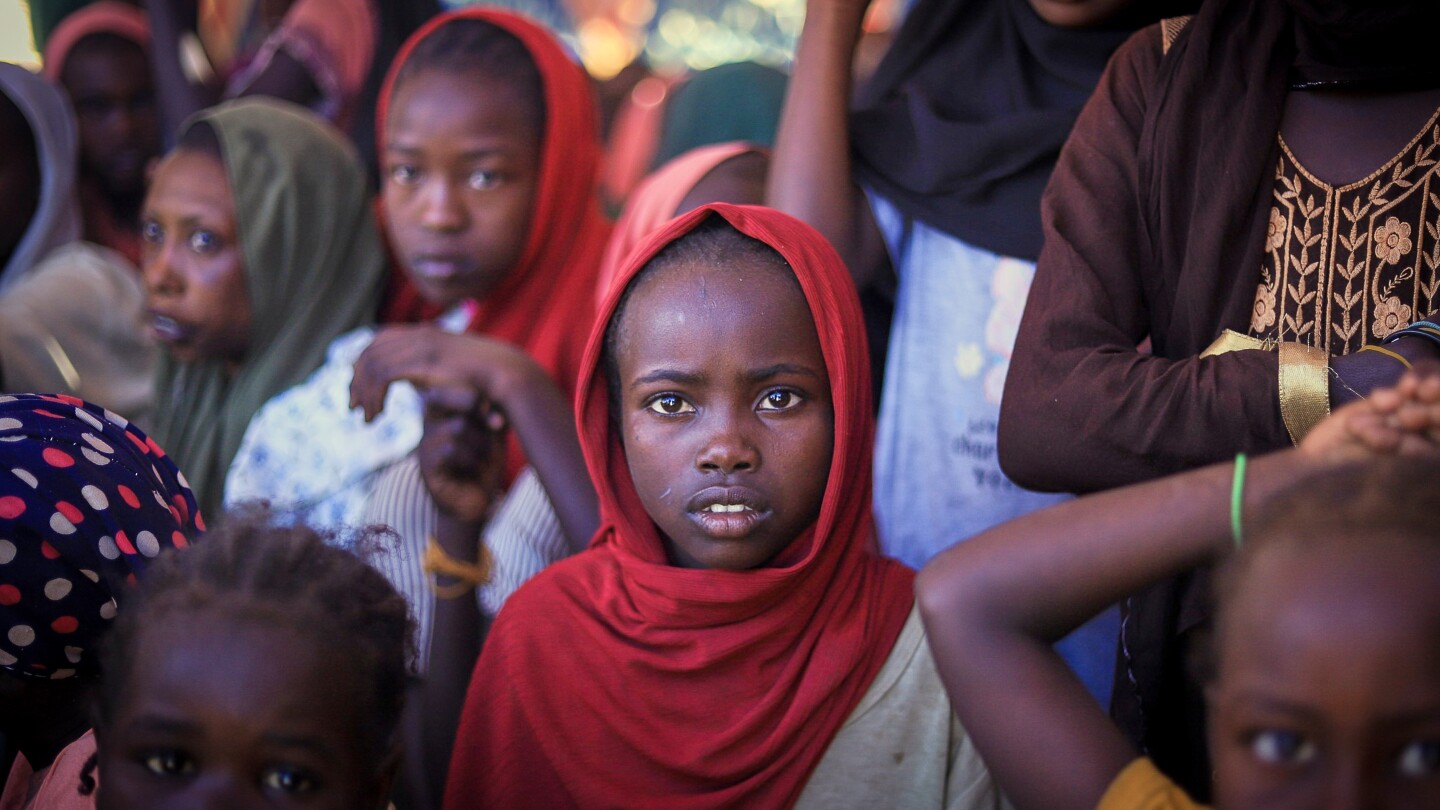
The war in Sudan has plunged the nation into an unprecedented humanitarian catastrophe, with famine now declared in two regions, including the besieged city of el-Fasher in Darfur, according to a report released Monday by the Integrated Food Security Phase Classification (IPC), the leading global authority on hunger crises. The IPC confirmed that famine has been detected in el-Fasher and Kadugli in South Kordofan, with 20 other areas in Darfur and Kordofan also at imminent risk. The conflict, which erupted in April 2023, has claimed over 40,000 lives, displaced more than 14 million people, and fueled widespread disease outbreaks. The Rapid Support Forces (RSF), a paramilitary group, has been accused of blockading el-Fasher for 18 months, severing food and supply lines to tens of thousands. Last week, RSF fighters seized the city, reportedly killing hundreds in violent attacks. Kadugli has also been under siege for months, trapping thousands as the RSF seeks to expand its territorial control. The IPC report highlights ‘extremely high levels of malnutrition’ and a ‘total collapse of livelihoods’ in these regions, with famine conditions meeting stringent criteria, including acute malnutrition affecting 30% of children under five. The IPC has confirmed famine only a few times in recent history, including in northern Gaza earlier this year and in Somalia and South Sudan in previous years. The report warns that towns near el-Fasher, such as Tawila, Melit, and Tawisha, are also at risk. As of September, 375,000 people in Darfur and Kordofan were pushed into famine, with 6.3 million across Sudan facing extreme hunger. While improved humanitarian access in Khartoum and surrounding areas has slightly reduced acute food insecurity, the IPC emphasizes that only a ceasefire can prevent further loss of life and mitigate the crisis.
作者: admin
-
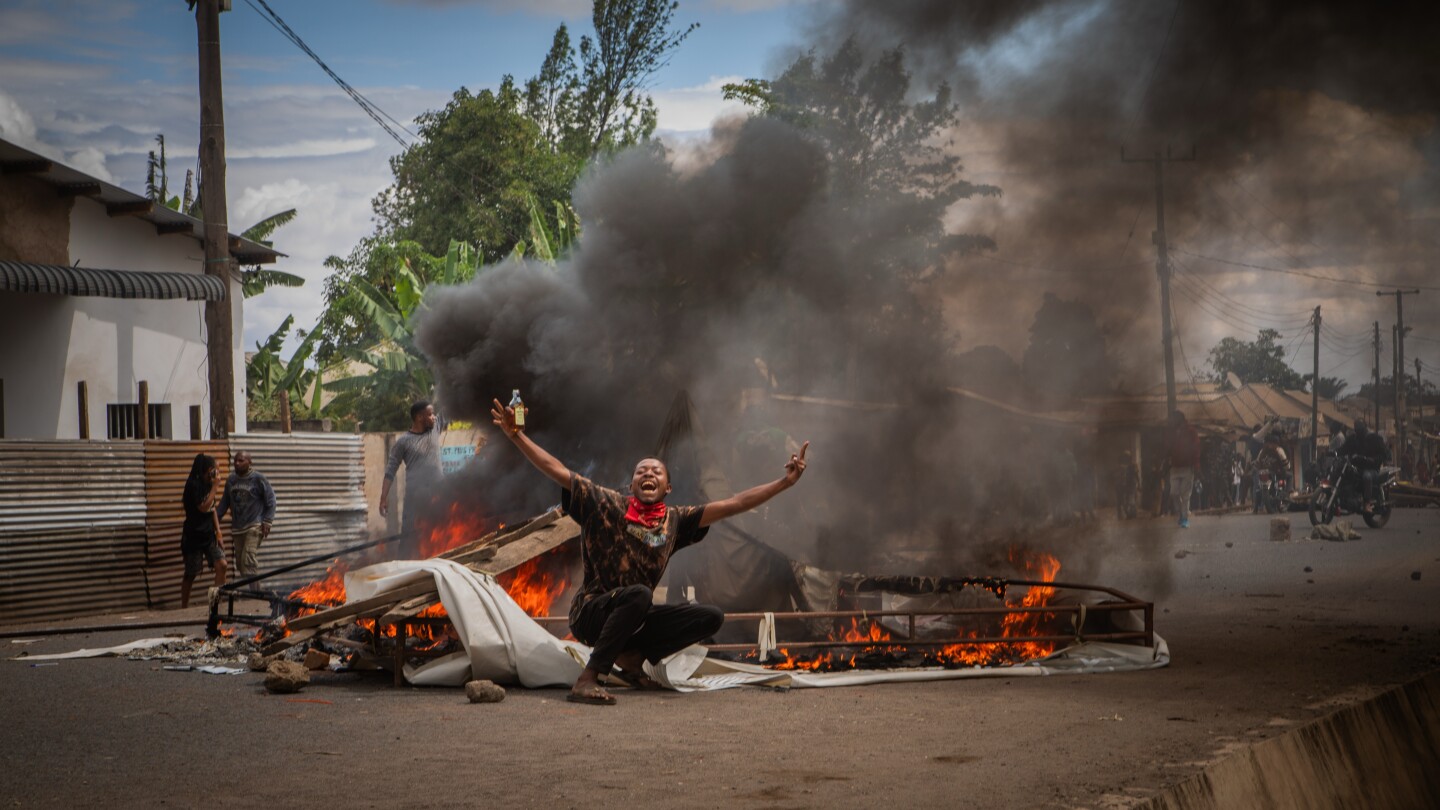
Africa’s latest elections end with crackdowns on opposition and disputed results
Recent elections across Africa have once again highlighted a troubling pattern: sidelined opposition candidates, disputed results, and widespread protests, particularly among the continent’s youthful population. Incumbents in Cameroon, Ivory Coast, and Tanzania have secured reelection, raising concerns about the erosion of democratic norms and the rise of authoritarianism.
In Cameroon, 92-year-old Paul Biya, the world’s oldest leader, has been reelected for an eighth term, extending his 43-year rule. Critics argue that his advanced age has diminished his capacity to govern, while protests against his victory have turned deadly. Similarly, Ivory Coast’s 83-year-old President Alassane Ouattara has secured a fourth term amid low voter turnout and the exclusion of his main challenger, Tidjane Thiam, due to dual nationality issues. Thiam has denounced the election as a sham, sparking further unrest.
In Tanzania, President Samia Suluhu Hassan, the country’s first female leader, initially inspired hope for change but has since been criticized for maintaining repressive policies akin to her predecessor. Her reelection was marred by violence, internet shutdowns, and the exclusion of opposition candidates.
Analysts warn that these disputed elections could further destabilize Africa’s fragile democracies, emboldening military takeovers and deepening public frustration. The continent, home to some of the world’s youngest populations and oldest leaders, faces a paradox of abundant natural resources yet unmet promises of basic amenities. Jeffrey Smith of Vanguard Africa notes that these elections reflect a broader trend of competitive authoritarianism, where incumbents exploit state resources and flawed legal processes to maintain power.
As protests continue and tensions rise, the future of democracy in Africa remains uncertain, with calls for genuine political competition and accountability growing louder.
-

Bella Culley freed from Georgian prison
In a dramatic turn of events, 19-year-old Bella Culley, a pregnant teenager from Billingham, Teesside, has been released from prison in Georgia after admitting to drug trafficking charges. Initially facing a potential 20-year sentence, Culley’s fate changed when prosecutors altered the terms of her plea bargain at the last minute. The decision, influenced by her age and pregnancy, was announced during a court hearing in Tbilisi, where Culley expressed her relief and happiness by embracing her lawyer, Malkhaz Salakaia. Culley, who is eight months pregnant, was arrested on 10 May at Tbilisi International Airport after authorities discovered 12kg of marijuana and 2kg of hashish in her luggage. Her family had previously paid £137,000 to reduce her sentence to two years. Culley, who pleaded guilty to drug trafficking, claimed she was coerced into the act by gangsters who allegedly tortured her with a hot iron. She had been held in pre-trial detention since May, initially in harsh conditions before being transferred to a ‘mother and baby’ unit. Her lawyer plans to appeal for a presidential pardon. Culley, now free, will regain her passport and is expected to leave the country soon.
-
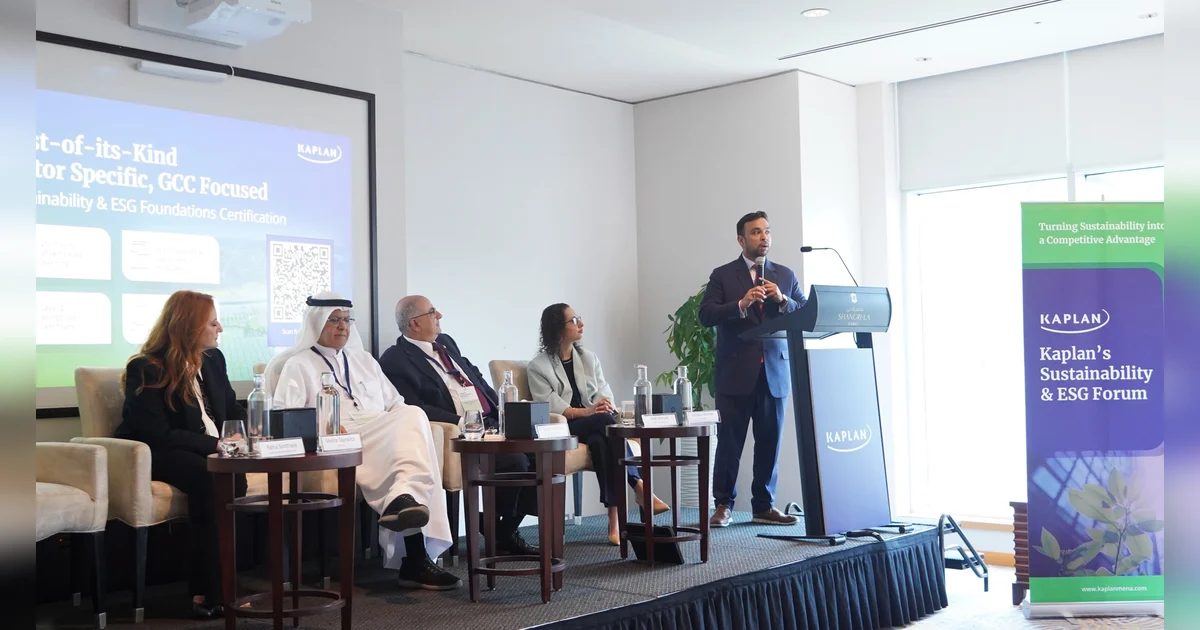
Kaplan MENA hosts landmark Sustainability and ESG Forums in Riyadh and Dubai
Kaplan Middle East & North Africa (MENA), a leading professional learning provider, recently hosted two pivotal Sustainability & ESG Forums in Riyadh and Dubai on October 28 and 29, 2025. These events brought together prominent leaders in environmental, social, and governance (ESG) from across the globe to address the critical need for integrating ESG principles into core business strategies. The Riyadh forum was co-hosted with the Financial Academy, while the Dubai event was organized solely by Kaplan MENA. Both gatherings featured senior decision-makers from government, industry, and finance sectors, focusing on transforming ESG from a compliance requirement to a driver of competitive advantage. Under the theme ‘Turning Sustainability into a Competitive Advantage: From Cost Center to Value Driver,’ the forums included panel discussions and keynote speeches from renowned sustainability experts, including representatives from ACWA Power, Emirates Global Aluminium, Al Safi Danone, VFS Global, and a UN-awarded ESG specialist. The discussions emphasized operationalizing ESG strategies, future-proofing businesses, and aligning with national visions like ‘Saudi Vision 2030’ and ‘UAE Net Zero 2050.’ Stuart Whent, COO of Kaplan MENA, highlighted the forums as catalysts for meaningful change, stating, ‘We are convening the people who have the influence and vision to reshape how sustainability is embedded in our region’s economic future.’ A key outcome of the forums was the launch of Kaplan’s Sustainability and ESG Foundations Certificate, a first-of-its-kind accredited learning program tailored for GCC professionals. Developed in collaboration with Melina Taprantzi, founder of Earth & Co. and a UN-awarded ESG expert, the program integrates regional context, sector-specific pathways, and global academic rigor. Taprantzi noted, ‘We designed this program to close the gap between ESG intent and credible implementation.’ The initiative aims to support Middle Eastern organizations by enhancing ESG reporting, facilitating access to green capital, building a sustainable talent pipeline, and fostering cross-sector collaboration. With over 1.2 million learners annually in 27 countries, Kaplan is leveraging its global expertise to address the region’s pressing ESG challenges.
-

Dubai: Parkin introduces new paid parking zones at Academic City, Sports City
Dubai continues to enhance its public parking infrastructure with the introduction of new paid parking zones in Dubai International Academic City and Dubai Sports City. This move follows the recent launch of similar zones in Dubai Studio City and Outsource City, signaling the city’s commitment to addressing parking challenges in high-traffic areas. The new zones, managed by Parkin, Dubai’s leading provider of paid public parking facilities, will operate under distinct tariff codes: Code F for Academic City and Code S for Sports City. Clear signage has been installed in both locations to guide motorists. Tariffs vary by zone, with Academic City offering rates starting at Dh2 for half an hour, while Sports City begins at Dh2 for one hour. Parkin has also introduced subscription packages for both zones, providing long-term parking solutions for residents and visitors. In addition to these developments, Parkin has announced plans to construct five multi-story car parking buildings over the next two years to alleviate congestion in Dubai’s busiest commercial districts. Currently, Parkin operates 3,651 parking spaces across seven multi-storey car parks in key areas such as Oud Metha, Al Jaffiliya, and Al Satwa. These initiatives underscore Dubai’s proactive approach to urban planning and infrastructure development.
-
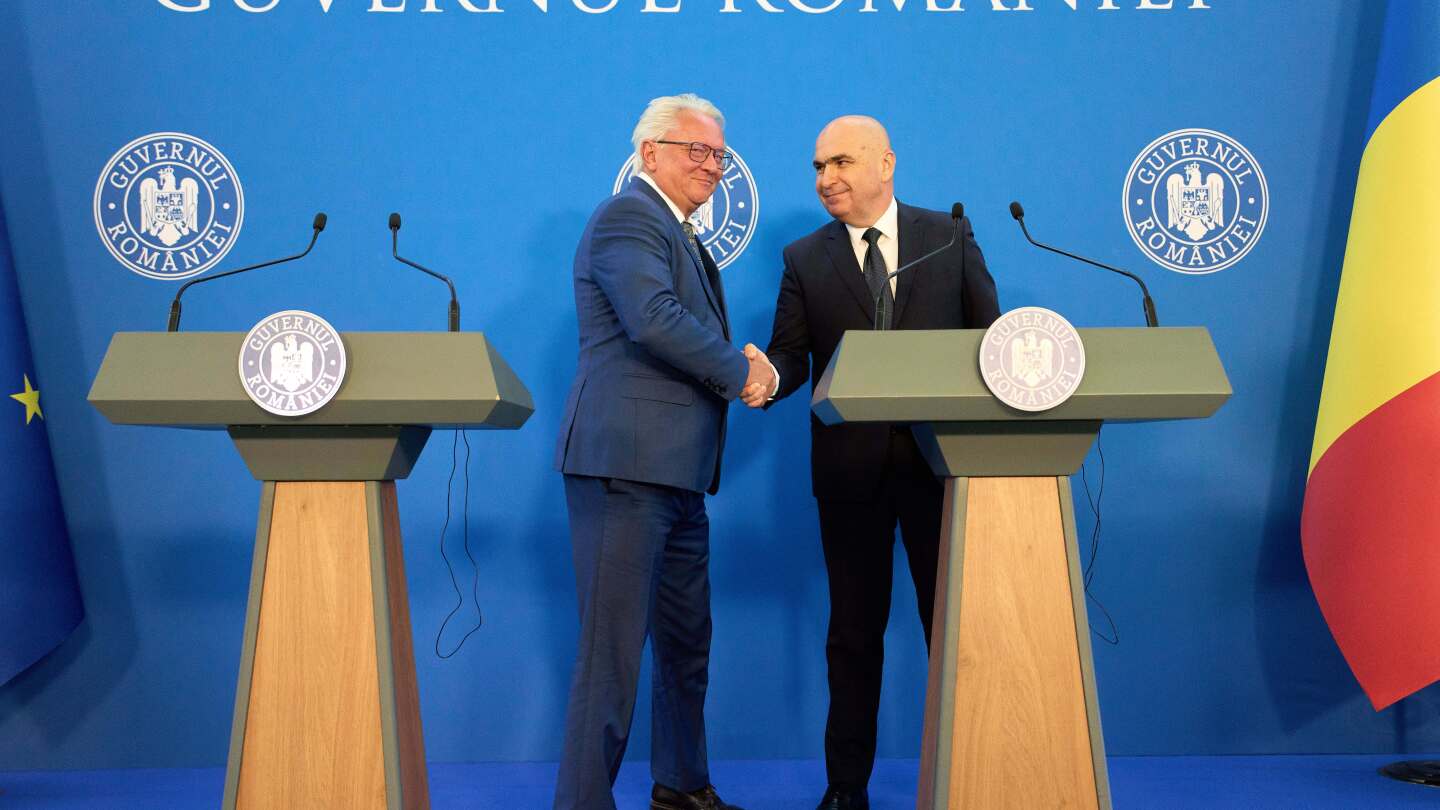
NATO member Romania signs agreement with Germany’s Rheinmetall to build a gunpowder plant
In a significant move to bolster Europe’s defense capabilities, NATO member Romania has inked a landmark agreement with German defense giant Rheinmetall to construct a state-of-the-art gunpowder factory in central Romania. The deal, signed on Monday, underscores Romania’s growing role in the region’s defense industry amid escalating tensions with Russia. Prime Minister Ilie Bolojan lauded the joint venture as a testament to Romania’s emergence as a pivotal player in Southeast Europe’s defense sector. The 535 million-euro ($616 million) facility, set to be built in Victoria, Brasov County, is slated to commence construction in 2026 and is expected to take three years to complete. The project is projected to generate approximately 700 local jobs and will be partially financed through the European SAFE mechanism, aimed at enhancing defense readiness. Bolojan emphasized that Romania’s renewed focus on defense is a direct response to the deteriorating security landscape in Eastern Europe. Rheinmetall CEO Armin Papperger highlighted the factory’s strategic importance, noting that the ammunition powder produced there is in high demand globally, particularly in Europe. He also stressed that the initiative positions Romania as a critical component of both the European and NATO defense ecosystems. Since Russia’s full-scale invasion of Ukraine in 2022, Romania has stepped up its contributions to NATO, including donating a Patriot missile system to Ukraine and establishing an international training hub for F-16 pilots from allied nations.
-

Arshad Warsi on his new crime thriller ‘Bhagwat’, life in Dubai, and why he chooses real stories
Arshad Warsi, the beloved actor known for his iconic role as Circuit in ‘Munna Bhai M.B.B.S.’, is now exploring darker territories with his latest crime thriller, ‘Bhagwat Chapter One: Raakshas’. At 57, Warsi plays an intense cop tasked with solving a disappearance case in a notorious small town. This role marks a significant shift from his comedic repertoire, which includes hits like ‘Golmaal’, ‘Dhamaal’, and ‘Jolly LLB’. Despite the darker tone, Warsi’s signature humor and instinct remain intact, both on and off the screen.
-

A medieval tower in Rome partially collapses during renovations, injuring a worker
A historic medieval tower in Rome, the Torre dei Conti, partially collapsed on Monday during renovation work, leaving at least one worker seriously injured. The incident occurred near the iconic Roman Forum ruins, drawing the attention of hundreds of tourists who witnessed the dramatic scene. Firefighters swiftly responded, using a mobile ladder and stretchers to rescue three workers, while one remained trapped inside the structure. During the rescue operation, another section of the tower collapsed, creating a cloud of debris and forcing firefighters to retreat from their elevated position. The extent of additional injuries remains unclear. Built in the 13th century by Pope Innocent III as a family residence, the Torre dei Conti has a history of structural damage, including collapses in the 17th century and damage from a 1349 earthquake. Rome Mayor Roberto Gualtieri and Italian Culture Minister Alessandro Giuli were present at the scene to assess the situation.
-

Dutch court tries an Eritrean man accused of brutal migrant smuggling
A high-profile trial commenced in Zwolle, Netherlands, on Monday, involving Tewelde Goitom, an Eritrean man accused of orchestrating a vast migrant smuggling network. Prosecutors allege that Goitom, also known as Amanuel Walid, facilitated the perilous journey of East African migrants to Europe under harrowing conditions, extorting exorbitant sums from their families to secure their release from Libyan detention camps. Goitom, who appeared in court wearing jeans and a blue puffer jacket, maintains his innocence, claiming a case of mistaken identity. He was extradited to the Netherlands in 2022 from Ethiopia, where he had been convicted of similar offenses. The trial, described as one of the largest human smuggling cases in Dutch history, is expected to span three weeks. The proceedings were delayed due to the extradition of another key suspect, Kidane Zekarias Habtemariam, a notorious human trafficker who escaped custody in Ethiopia in 2020. Habtemariam, currently detained in the United Arab Emirates, is set to be extradited to the Netherlands. Prosecutors aim to merge the two cases, while Goitom’s defense hopes Habtemariam’s testimony will exonerate their client. Dutch authorities assert jurisdiction, citing alleged crimes committed within the Netherlands, though defense lawyers argue the lack of a clear connection. The case highlights the plight of Eritrean migrants fleeing a repressive regime, with the Netherlands hosting approximately 28,000 people of Eritrean descent. The trial underscores the broader challenges of global migration and the exploitation faced by vulnerable populations.
-

Valencia leader resigns over handling of deadly floods
Carlos Mazón, the president of Spain’s Valencia region, has stepped down following intense public and political pressure over his handling of the catastrophic flash floods that struck the area on October 29, 2024. The disaster, which claimed 229 lives in Valencia and eight more in neighboring regions, marked Spain’s deadliest natural calamity in decades. Mazón faced widespread criticism for his perceived negligence during the crisis, including his decision to spend nearly four hours dining with journalist Maribel Vilaplana while floodwaters devastated communities. Additionally, his administration failed to issue emergency alerts to residents until after 8:00 PM, by which time dozens had already perished. In his resignation speech, Mazón admitted to grave errors, stating, ‘I can’t go on anymore… I know that I made mistakes, I acknowledge it and I will live with them for the rest of my life.’ He emphasized that his actions were not driven by political calculation or ill intent. Public outrage had been mounting for months, with polls showing overwhelming support for his resignation and large-scale protests demanding accountability. Mazón’s attendance at a memorial service for flood victims on the tragedy’s first anniversary further inflamed tensions, as grieving relatives confronted him during the event. His resignation coincided with Vilaplana’s testimony in a judicial investigation into potential negligence. Mazón, who will retain his seat in the regional parliament, accused Spain’s left-wing central government of withholding aid to inflict political damage. His departure poses challenges for the conservative People’s Party (PP), which must navigate its alliance with the far-right Vox party to appoint his successor.