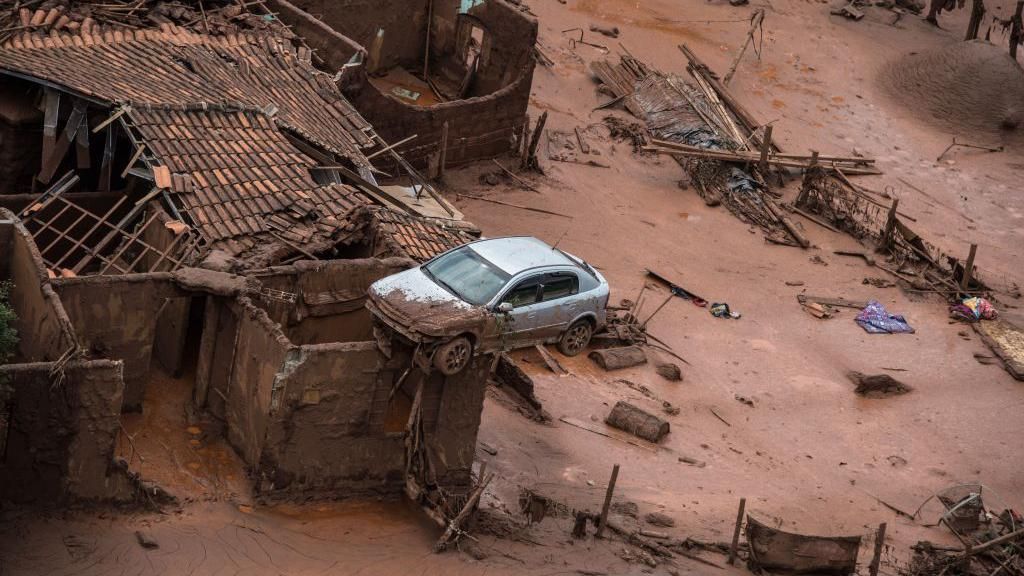
In a landmark ruling by London’s High Court, mining giant BHP has been found liable for the catastrophic 2015 collapse of the Fundão dam in Brazil, an event widely regarded as the country’s most severe environmental disaster. The collapse unleashed tens of millions of cubic meters of toxic waste and mud, devastating communities, claiming 19 lives, and causing extensive environmental damage. The civil lawsuit, representing over 600,000 claimants including individuals, local governments, and businesses, was valued at up to £36 billion ($48 billion). BHP has announced its intention to appeal the ruling, arguing that many claimants have already received compensation in Brazil. The dam, located in Mariana, southeastern Brazil, was owned by Samarco, a joint venture between BHP and Brazilian mining company Vale. The claimants’ legal team successfully argued that the case should be heard in London due to BHP’s UK headquarters at the time of the incident. A separate lawsuit against Vale is ongoing in the Netherlands, involving more than 70,000 plaintiffs. Judge Finola O’Farrell ruled that the decision to continue raising the dam’s height despite safety concerns was the direct cause of the collapse, making BHP liable under Brazilian law. BHP’s Minerals Americas president, Brandon Craig, stated that 240,000 claimants in the London lawsuit have already been compensated in Brazil, which he believes will reduce the scale of UK claims. The case has been marked by disputes between BHP and the claimants’ UK law firm, Pogust Goodhead, which has faced accusations of exploiting vulnerable Brazilians. Pogust Goodhead has denied these allegations, claiming that BHP and Vale pressured claimants into settling for less than their claims’ true value. The Renova Foundation, established by BHP and Vale, has disbursed billions in compensation and repair efforts, including building a new city for displaced residents. However, Pogust Goodhead alleges that a $30.3 billion compensation agreement signed in 2024 prevents claimants from discussing the deal or paying legal fees. The firm claims to have incurred $1 billion in borrowing costs to finance the UK case. BHP has rejected all allegations, stating that Brazil remains the most appropriate jurisdiction for compensation. The case highlights the ongoing legal and ethical complexities surrounding one of the world’s worst mining disasters.
作者: admin
-

The Caden by Prescott introduces Dh650 million lagoon-front homes designed for wellness and innovation
Prescott, a renowned developer in Dubai, has launched its latest residential project, The Caden, a Dh650 million development designed to redefine luxury living. Situated in Meydan Horizon, one of Dubai’s last lagoon-front master-planned communities near Downtown, The Caden offers spacious, meticulously designed residences with no studios, emphasizing low-density, high-comfort living. The project is strategically positioned on a man-made crystal lagoon, providing residents with stunning waterside views and a serene environment.
The Caden is more than just a residential development; it is a wellness and innovation hub. The project features resident-curated amenities, smart technology, and elevated design, reflecting Prescott’s commitment to quality and functionality. Shaheer Tabani, Prescott’s executive director, described the project as a passion endeavor, highlighting the team’s dedication to delivering an unparalleled living experience. ‘Every square foot of this project surpasses anything seen before,’ Tabani stated, emphasizing the attention to detail and customer-centric approach.
The unveiling took place at Prescott’s newly upgraded experience centre in Dubai Hills, a multifunctional space that includes a fully furnished show apartment, podcast studio, theatre, refreshment lounge, and meeting rooms. This venue underscores Prescott’s ambition to set new standards in Dubai’s competitive real estate market. The Caden’s amenities and layouts were shaped by direct feedback from Prescott’s loyal clientele, ensuring the development aligns with the needs and desires of its future residents.
For more information, visit www.prescott.ae.
-

Pakistan says arrested 4 from Afghanistan-based group over Islamabad bombing
Pakistan announced on Friday the arrest of four individuals connected to a suicide bombing in Islamabad, an attack allegedly orchestrated by a group based in Afghanistan. The bombing, which occurred outside court buildings on Tuesday, was claimed by a faction of the Pakistani Taliban, known as the Tehreek-e-Taliban Pakistan (TTP). The attack resulted in 12 fatalities and left dozens injured. According to a government statement, the network responsible for the bombing was ‘handled and guided at every step by the high command based in Afghanistan.’ The arrested individuals include the cell’s alleged commander and three other members, though the specific locations of the arrests were not disclosed. Interior Minister Mohsin Naqvi informed the Senate that the bomber, identified as Usman alias Qari, was a resident of Nangarhar province in eastern Afghanistan. Investigations are ongoing, with more revelations and arrests anticipated. The Islamabad bombing marks a resurgence of militant violence in Pakistan, which officials attribute to armed groups allegedly sheltered in Afghanistan. This incident follows a recent attack on Cadet College Wana, a military-linked school in northwest Pakistan, in which Afghan nationals were reportedly involved. The Taliban government has not directly addressed Pakistan’s allegations but expressed ‘deep sorrow & condemnation’ over both attacks. The accusations have exacerbated the already strained relations between Islamabad and Kabul, leading to recent cross-border clashes that resulted in over 70 deaths, including dozens of Afghan civilians. Despite agreeing to a fragile ceasefire, negotiations to finalize its details have stalled, with each side blaming the other for the impasse. Prime Minister Shehbaz Sharif, addressing parliament, condemned the Islamabad bombing as a ‘horrific act of terrorism’ and emphasized Pakistan’s desire for peace, urging Afghanistan to be a partner in combating terrorism.
-
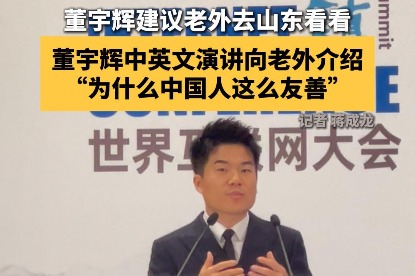
From ‘Ren’ to reality: Dong Yuhui explains China’s culture of hospitality
At the prestigious World Internet Conference Wuzhen Summit, Dong Yuhui, a renowned livestream influencer and former English teacher, shed light on the profound cultural ethos of hospitality in China. Addressing a global audience, Yuhui delved into the concept of ‘Ren’—a cornerstone of Confucian philosophy that emphasizes benevolence and harmonious coexistence. He articulated how this ancient principle continues to shape the Chinese approach to interpersonal relationships, fostering a societal inclination towards peace rather than confrontation. Yuhui’s insights not only highlighted the enduring relevance of traditional values but also underscored their practical application in contemporary Chinese society. His discourse served as a bridge between historical wisdom and modern-day practices, offering a nuanced understanding of why the Chinese people prioritize amicable interactions in both personal and professional spheres. This presentation at the summit was a testament to the global appeal of China’s cultural heritage and its potential to inspire harmonious living worldwide.
-
As NATO pushes for faster innovation, drones flood a test battlefield in Greece
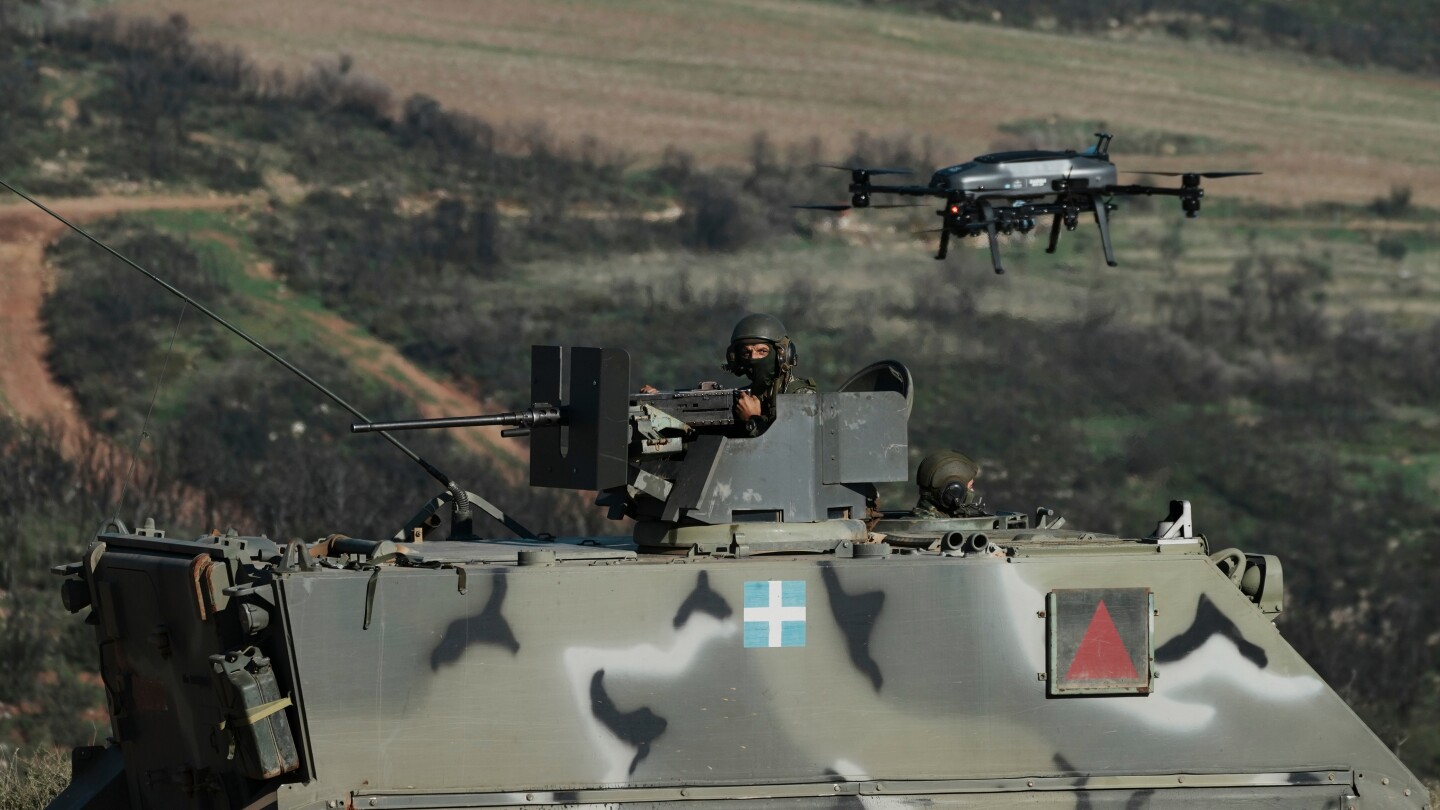
Under the pale November sun in Alexandroupolis, Greece, a hillside transformed into a futuristic battlefield. Helicopters soared above tree lines, infantry units maneuvered through smoke and explosions, and a diverse array of drones—quadcopters, fixed-wing models, loitering munitions, and experimental prototypes—orchestrated the mock combat. This marked Greece’s first full tactical exercise testing domestically developed drones and counter-drone systems, a significant step in NATO’s broader push for rapid battlefield innovation. Military observers from the U.S., France, Bulgaria, Armenia, and Turkey witnessed the event, as Greece, historically reliant on imports, joined the global race to develop and deploy its own advanced military technology.
The exercise showcased the versatility of drones in modern warfare. Small quadcopters deployed tire spikes and mines to hinder enemy vehicles, while others laid smoke screens or delivered medical supplies and ammunition to frontline positions. Some drones even carried loudspeakers broadcasting demoralizing messages in English. An experimental two-wheeled ‘tunnel crawler’ demonstrated its ability to leap into the air from confined spaces, carrying explosives, oxygen, or radiation detectors.
Greece’s efforts reflect a broader trend among mid-sized NATO economies, spurred by Russia’s invasion of Ukraine. Countries like Estonia and Denmark have also invested in indigenous drone technology, viewing autonomy and rapid production as critical to deterrence. For Greece, embroiled in a decades-long maritime dispute with Turkey, this initiative is part of a €25 billion overhaul of its armed forces following years of austerity. NATO’s urgency is further fueled by uncertainty over the U.S.’s long-term security commitments to Europe, prompting calls for Europe’s defense sector to adopt a startup mentality.
NATO Secretary-General Mark Rutte emphasized the need for advanced technology and rapid innovation during a recent visit to Romania. Greek companies, particularly small firms, are seizing the opportunity. Dimitris Stefanakis of Ucandrone, a Greek drone manufacturer, noted that Ukraine’s battlefield adaptations have reshaped the industry, favoring agile, innovative companies over larger, slower-moving ones. Greek developers also foresee military advancements accelerating civilian applications, such as disaster response.
Western officials stress the need for Europe to move away from lengthy procurement cycles toward rapid-development ecosystems. Analysts, including Swasti Rao of India’s Jindal School for International Affairs, highlight the decisive role of rapid innovation in modern warfare. Greek Defense Minister Nikos Dendias underscored the profound mindset shift required to adapt to this new era of warfare, emphasizing the transition from large mechanized units to small, technology-driven teams.
-

Tanzania president promises probe into election protest deaths
Tanzanian President Samia Suluhu Hassan has initiated an official investigation into the widespread unrest that erupted during the recent election week, following allegations that her government violently suppressed historic protests. The announcement comes after she was re-elected with an overwhelming 98% of the vote, a result the opposition has labeled a ‘mockery of democracy.’ In a parliamentary address, President Samia urged prosecutors to exercise leniency towards those arrested during the violence, invoking a biblical reference: ‘Father, forgive them, for they know not what they do.’ Her call for mercy aligns with the UN High Commissioner for Human Rights, Volker Türk’s, plea for a transparent investigation into reports of killings and human rights violations during and after the 29 October elections. The opposition claims hundreds may have died in the post-election chaos, though official figures remain undisclosed. The violence has shocked a nation long regarded as a bastion of stability and order. President Samia emphasized the need for political parties to engage in constructive dialogue and reaffirmed her commitment to a new constitution-making process. Analysts attribute the unrest to a tense political climate fueled by stalled reforms, youth discontent, internal power struggles within the ruling party, and the systematic exclusion of opposition leaders from the election. While President Samia’s initial leadership was praised for fostering openness, recent months have seen a surge in abductions, arrests, and killings of opposition members, casting doubt on her reform agenda.
-

Shanghai to revoke licenses of school meal supplier
In a significant move to address food safety concerns, Shanghai authorities have announced the revocation of licenses for Shanghai Green Jie Industrial Development Co., following a series of violations uncovered during an investigation. The probe was initiated after complaints from parents regarding contaminated shrimp and scrambled egg dishes served to students on September 15. The investigation revealed multiple illegal activities, including improper food handling, bid rigging, and systematic cover-ups by the company. The company’s operator, surnamed Zhang, along with eight other individuals, has been arrested. Additionally, Bright Food (Group) Co Ltd, a state-owned enterprise, has taken over meal provision for 484 schools across the city since September 23. The investigation team discovered that Green Jie staff failed to wash shrimp before cooking, leading to the discovery of worms in the food. Managers reported the issue to Zhang, who ordered the destruction of all shrimp distributed to 211 schools that day but concealed the incident. Further investigations revealed improper handling of frozen shrimp in seven school kitchens and a history of unreported food safety issues. Due to its organized efforts to falsify and destroy evidence, the company’s food business license will be revoked, and key personnel face fines and a five-year ban from the food industry. Shanghai’s education and market authorities have pledged to strengthen supply chain management and enhance oversight of school meals to prevent future incidents.
-
Fears over migration and crime push Chile’s presidential race to the right
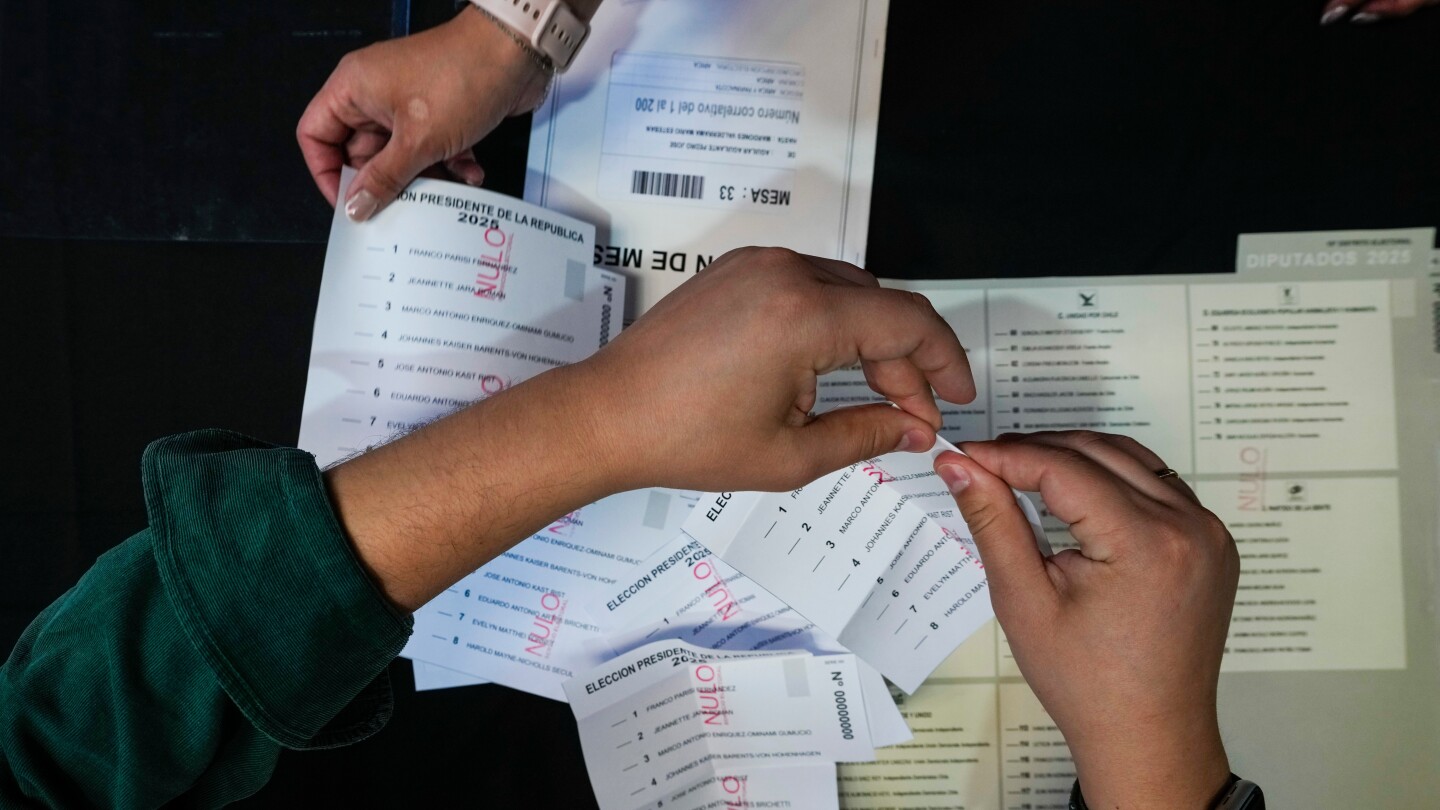
In Santiago, Chile, the final campaign rally for radical libertarian candidate Johannes Kaiser mirrored the fervor of a Donald Trump event, complete with MAGA-style caps, AC/DC anthems, and red, white, and blue flags. Kaiser, who is gaining traction ahead of Sunday’s presidential election, tapped into rising fears of uncontrolled migration, a sentiment that has pushed even the governing coalition’s Communist candidate, Jeannette Jara, to adopt tougher stances on immigration. Kaiser’s supporters, like Claudia Belmonte, praised his promises to “Make Chile Great Again,” close borders to Venezuelan migrants, and withdraw from the United Nations. The surge in anti-immigrant rhetoric reflects broader concerns over transnational gangs like Tren de Aragua, which have brought violent crimes such as kidnappings and contract killings to Chile, a nation once considered one of Latin America’s safest. This shift marks a stark contrast to the 2019 social upheaval that propelled leftist Gabriel Boric to the presidency. Now, experts say nativist fears could benefit ultraconservative candidate José Antonio Kast, who is polling strongly but unlikely to secure a first-round victory. The campaign has seen candidates across the political spectrum, including Jara, adopt hardline immigration policies inspired by figures like Trump and El Salvador’s Nayib Bukele. Kast, a devout Catholic and father of nine, has focused on his tough-on-migration platform, distancing himself from his conservative cultural values. Meanwhile, Kaiser’s extreme proposals, such as building a border wall and mass deportations, have positioned him as a more radical alternative. The election underscores a broader redirection of public anger from economic inequality to immigration, reshaping Chile’s political landscape.
-
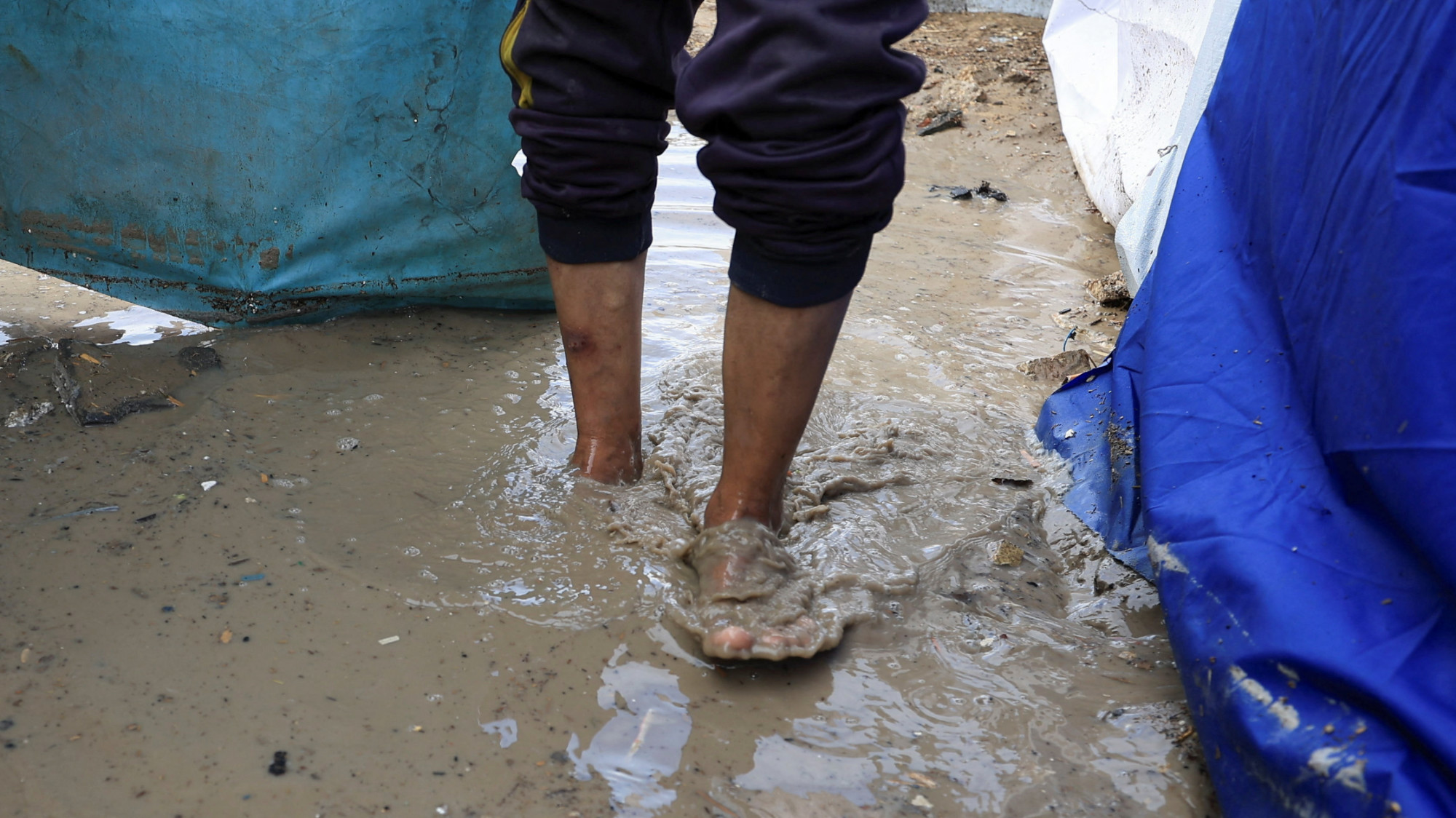
Fears of ‘catastrophic consequences’ in Gaza as rain floods tents
A severe winter storm has brought heavy rainfall and thunderstorms to Gaza, flooding the makeshift tents of displaced Palestinians and raising fears of catastrophic consequences for nearly two million people without adequate shelter. Thousands of families in displacement camps awoke on Friday to find their tents submerged in water, according to local media reports. The Palestinian Civil Defence has issued urgent warnings for residents, particularly the displaced, to take precautions against potential destruction from the storm. The Palestinian Meteorological Department has also alerted the region to the risk of flash floods in low-lying areas and valleys across the Gaza Strip and the occupied West Bank, with strong winds and heavy rain expected in the coming days. Adnan Abu Hasna, spokesperson for the United Nations Relief and Works Agency for Palestine Refugees (UNRWA), emphasized that the storm could have devastating effects on the already vulnerable displaced population. In the al-Mawasi area of southern Gaza alone, over 900,000 displaced individuals are living in tents, with their safety at risk due to the lack of flood-prevention barriers. Across the Gaza Strip, hundreds of thousands more are displaced, many living in cramped conditions with limited access to basic services. The situation is exacerbated by the extensive damage caused during the two-year conflict, with 83% of structures, including homes, schools, and hospitals, destroyed or damaged. The Global Shelter Cluster reports that more than 282,000 homes have been razed or rendered uninhabitable. Despite a ceasefire agreement last month, Israel has restricted the entry of essential shelter supplies and equipment, leaving at least 259,000 families without adequate protection this winter. While the agreement required Israel to allow the entry of tents and mobile shelters, heavy restrictions on relief materials have persisted, with only 150 aid trucks entering Gaza daily—far fewer than the 600 agreed upon. The humanitarian crisis continues to deepen as displaced Palestinians struggle to cope with the harsh winter conditions.
-
Peru eyes more Chinese investment after Chancay Port boost
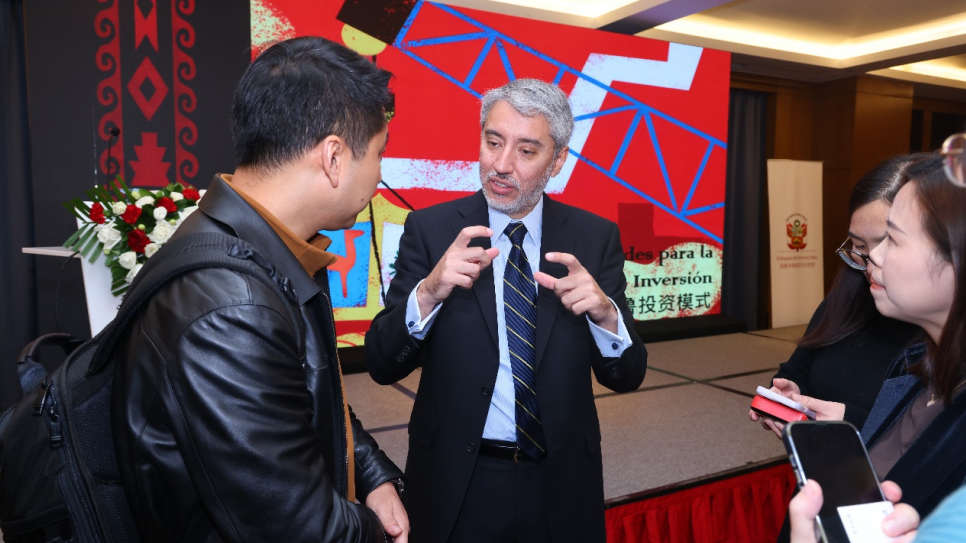
Peru is actively pursuing increased Chinese investment to bolster its economic development and enhance public welfare, following the successful inauguration of the Chancay Port, a key project under China’s Belt and Road Initiative. Gonzalo Talavera, the charge d’affaires ad interim of the Peruvian Embassy in China, emphasized this goal during a recent event in Beijing, where he highlighted investment opportunities in sectors such as infrastructure, energy, and public well-being. The Chancay Port, which celebrated its first anniversary on Friday, has emerged as a pivotal trade hub in Latin America, significantly reducing maritime transport times and boosting trade between China, Peru, and the broader South American region. According to Peru’s Customs authority, the port has facilitated $603 million in exports and $984 million in imports in the first nine months of this year, generating $207 million in tax revenue and supporting regional economic growth. Talavera noted that the port has enhanced connectivity for landlocked neighboring countries and reduced logistics costs across South America. He also praised China’s leadership in railway construction and solar energy, inviting more Chinese enterprises to invest in Peru and share their expertise. ‘We consider China a reliable partner,’ Talavera stated, adding that increased Chinese investment would drive Peru’s socioeconomic development and benefit both nations.