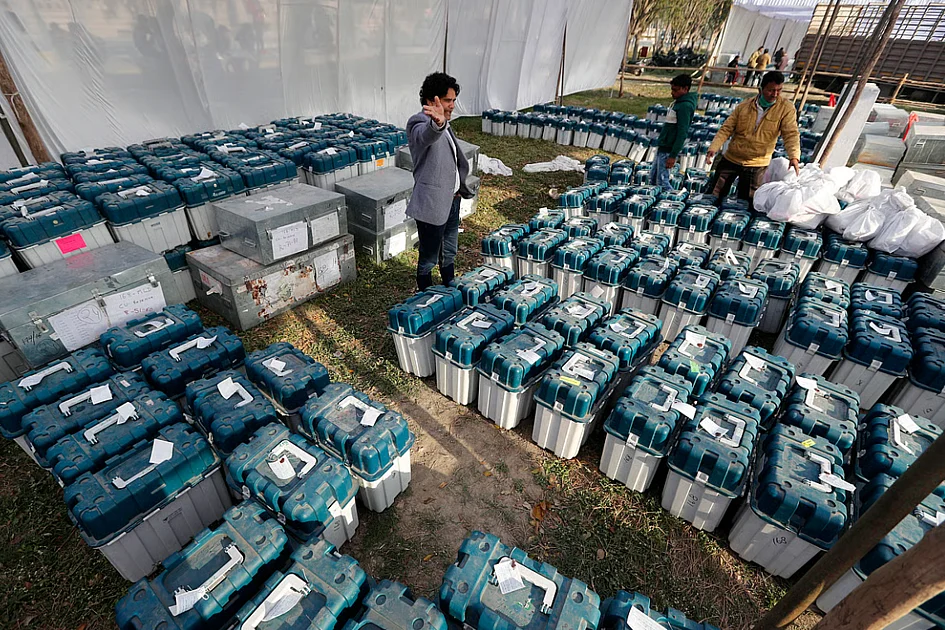
Indian expatriates residing in the UAE are actively engaging in the Special Intensive Revision (SIR) process to update and verify their voter status ahead of the 2026 elections in India. The Election Commission of India is conducting this initiative across 12 states and Union Territories, including Kerala and Karnataka, to ensure accurate voter rolls by removing fraudulent entries and adding eligible voters. This marks the first such comprehensive revision in 21 years. Only those listed on the electoral roll will be eligible to vote in upcoming local and national elections. Many expats are sending necessary documents, such as Aadhar cards and passports, to their families in India to facilitate the process. Dubai resident Asheem PK shared, ‘My father urged me to complete the process, so I sent all required documents as soon as it began.’ The first draft of the voter list will be published on December 9, after which new applicants can submit Form 6A online to be added. Muneer Berike, an Indian social worker, emphasized the significance of this opportunity for non-resident Indians (NRIs), stating, ‘We fought hard for this right, and now it’s crucial for NRIs to exercise it.’ NRI voter registration began in 2010, with overseas electors allowed to register since 2011. Applicants must provide details such as their overseas address, reason for residing abroad, and a relative’s voter information. Proof documents, including the Aadhar card, may also be required. Unlike resident voters, NRIs do not receive voter IDs and must vote in person in India using their passports. To assist expats, Indian social groups are planning to set up help desks, though the Indian consulate has yet to confirm its involvement in the registration process. The final voter list will be published in February 2026.
作者: admin
-

Traffic drones, automated public transport: 9 deals to ease Abu Dhabi commutes
Abu Dhabi is taking a giant leap toward revolutionizing urban transportation with the signing of nine strategic agreements aimed at creating a smart, safe, and sustainable mobility ecosystem. These initiatives, unveiled during the DRIFTx 2025 event as part of the Abu Dhabi Autonomous Week, span across air, land, and sea, showcasing the emirate’s commitment to cutting-edge technology and innovation. The Integrated Transport Centre (ITC), in collaboration with global and national partners, is spearheading these efforts to transform the way residents and visitors navigate the city. Key projects include AI-powered traffic-monitoring drones, personal driverless vehicles, mini robo-buses, electric air taxis, and autonomous marine vessels. Additionally, the agreements focus on enhancing connectivity through 5G and 5.5G networks, bolstering cybersecurity, and advancing autonomous logistics with self-driving trucks and cargo drones. These initiatives not only aim to reduce congestion and emissions but also to improve first- and last-mile connectivity, ensuring a seamless and eco-friendly transportation experience. With these partnerships, Abu Dhabi is positioning itself as a global leader in smart mobility, setting a benchmark for other cities to follow.
-

CNS Sichuan achieves desired results on its maiden sea trial
China’s first Type 076 amphibious assault ship, the CNS Sichuan, has successfully concluded its maiden sea trial, marking a significant milestone in the nation’s naval advancements. The vessel, which is the largest and most advanced of its kind in China, returned to the Hudong-Zhonghua Shipbuilding yard in Shanghai on Sunday afternoon after a three-day voyage. During the trial, engineers meticulously tested and verified the ship’s electric, propulsion, and other critical systems, achieving the desired results. Further tests are planned as part of the ship’s construction blueprint. The Sichuan, with a hull code of 51, displaces over 40,000 metric tons and is equipped with an electromagnetic catapult system, making it the first Chinese amphibious assault ship capable of deploying fixed-wing drones. This technology, previously seen only on the CNS Fujian aircraft carrier, underscores China’s growing prowess in naval innovation. Once commissioned, the Sichuan will support a range of operations, including amphibious landings, airstrikes, and airborne missions. The PLA Navy currently operates four Type 075 amphibious assault ships, each with a full displacement of nearly 40,000 tons, built at the same Shanghai shipyard.
-

Global energy challenges targeted through China-UN collaboration
In a groundbreaking initiative to address global energy transition challenges, a Chinese international NGO, the Global Energy Interconnection Development and Cooperation Organization (GEIDCO), has partnered with United Nations agencies to launch a comprehensive research program. Announced during the COP30 climate conference in Belem, Brazil, this collaboration aims to identify capacity gaps and training needs across different regions to foster a just and inclusive energy transition. GEIDCO, established in 2016 as China’s first international energy organization, brings extensive experience in capacity-building, having trained over 10,000 participants from 80+ countries through 30+ international programs. The research will focus on energy policies, technologies, talent development, and financing, with a particular emphasis on regional disparities. For instance, African participants prioritize distributed renewable energy and project financing, while West Asian stakeholders are more interested in emerging technologies like hydrogen energy. The program, developed in collaboration with the UN Framework Convention on Climate Change and the Paris Committee on Capacity-building, seeks to create targeted training initiatives to bridge these gaps. Gloria Alvarenga of the Latin American Energy Organization praised the initiative, highlighting the importance of shared experiences and collaborative mechanisms in accelerating climate action. Riad Meddeb of the UN Development Programme emphasized the urgency of addressing capacity gaps to ensure a just transition, noting that 60% of global energy production remains inefficient. He also underscored the role of digitalization in transforming clean energy systems, while pointing out the stark digital divide, with only 27% of people in low-income countries having internet access. The initiative reflects a growing global consensus to limit temperature rise to 1.5°C, as outlined in the Paris Agreement, to avoid catastrophic climate impacts.
-
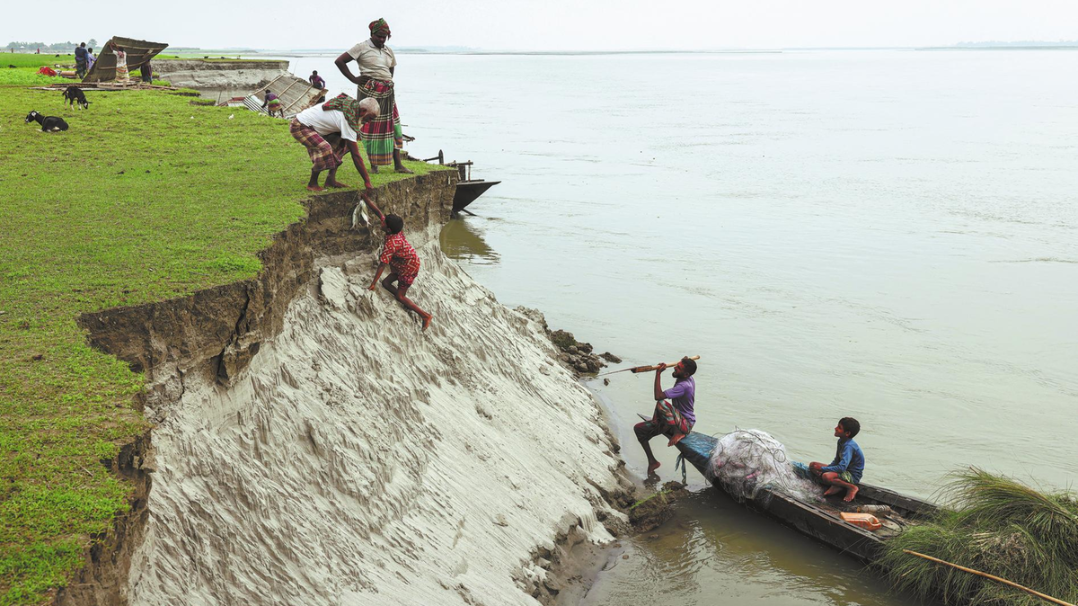
Engulfed by water
As global leaders convene at COP30 to address climate challenges, Bangladesh continues to grapple with the devastating effects of river erosion. On a somber morning in Kurigram, Nurun Nabi prepares to relocate his family for the second time in a year. His home, constructed just twelve months ago on the precarious Char Youthnet island in the Brahmaputra River, is now threatened by the encroaching waters. ‘The river is coming closer every day,’ Nabi lamented, his voice heavy with fatigue. ‘We are born to suffer. Our struggle is never-ending. I’ve lost count of how many times the river took my home.’
The plight of Nabi and countless others underscores the urgent need for effective climate solutions. The Brahmaputra River, a lifeline for many, has become a source of relentless destruction, swallowing homes, schools, and livelihoods. The only school on Char Youthnet island, where children continue their education amidst the crisis, stands as a fragile symbol of resilience.
As nations gather to strategize at COP30, the situation in Bangladesh serves as a stark reminder of the human cost of climate change. The country, already vulnerable to rising sea levels and extreme weather events, faces an existential threat from river erosion. The international community’s response will be crucial in determining whether nations like Bangladesh can adapt and survive in an increasingly unstable climate.
-
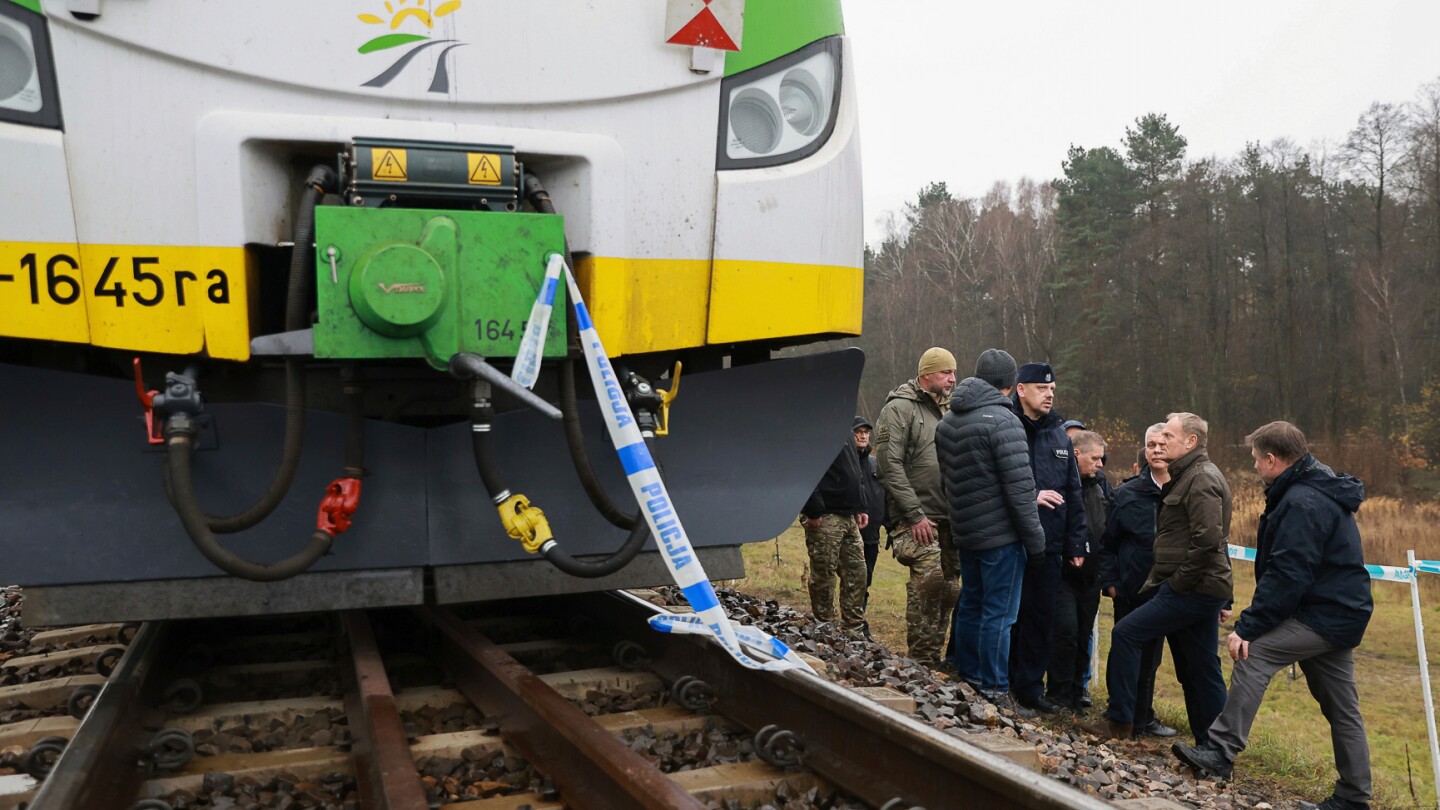
Polish prime minister says weekend rail line explosion near Warsaw was act of ‘sabotage’
WARSAW, Poland — A critical railway line connecting Warsaw to southeastern Poland was severely damaged by an explosion on Sunday, which authorities have labeled as an act of sabotage. Prime Minister Donald Tusk confirmed the incident on Monday, stating that the explosion occurred on the Warsaw-Lublin route near the village of Mika, approximately 100 kilometers (62 miles) southeast of the capital. The blast destroyed a section of the railway track, disrupting train services. Fortunately, no injuries were reported among the two passengers and several staff members aboard the train at the time. The incident was first detected by a train driver who reported irregularities on the track around 7:40 a.m. Sunday. Subsequent investigations revealed damage at multiple locations along the route. Tusk vowed to apprehend the perpetrators, calling the act ‘unprecedented’ and emphasizing that justice would be served ‘regardless of who is behind them.’ This incident adds to a series of suspected sabotage and espionage cases in Poland since Russia’s invasion of Ukraine in February 2022, with dozens of individuals detained in connection with these activities.
-

Climate protesters seek action at COP30
Thousands of climate activists gathered in Belem, Brazil, on Saturday, staging a vibrant and peaceful protest to demand stronger global action against climate change. The demonstration, dubbed the ‘Great People’s March,’ coincided with the halfway point of the COP30 climate conference, where negotiations have stalled amid disagreements among nations. Protesters, including indigenous leaders and environmental advocates, marched through the city under the scorching sun, chanting slogans and rolling a massive inflatable globe to symbolize the planet’s fragility. Some participants staged a symbolic funeral procession for fossil fuels, carrying coffins labeled ‘coal,’ ‘oil,’ and ‘gas’ to highlight the need for a transition to renewable energy. Indigenous leader Txai Surui, 28, emphasized the urgency of the situation, stating, ‘We are here to pressure countries to fulfill their promises and prevent any regression.’ The march concluded near the COP30 venue, where security forces were deployed to maintain order. Inside the conference, COP30 President Andre Correa do Lago acknowledged the lack of progress in negotiations and urged delegates to prioritize meaningful dialogue over procedural delays. He pledged to release a summary of key positions on Sunday to guide ministers in the final week of talks. The protesters’ demands include reparations for environmental damage caused by corporations and governments, particularly to marginalized communities, and greater representation of indigenous voices in climate discussions.
-

First winter rains soak makeshift Gaza tents
The first heavy rains of winter have inundated the Mawasi tent camp in Gaza, exacerbating the already dire living conditions for displaced Palestinians. On Saturday, torrential downpours flooded the makeshift shelters, forcing residents to dig trenches in a desperate attempt to divert water from their tents. The rains, which began on Friday, seeped through torn tarpaulins and fragile structures, soaking the meager belongings of families. Strong winds further threatened to topple tents and disrupt the already scarce food and supply distribution.
Bassil Naggar, a resident who recently purchased a new tent for $712 on the black market, described the relentless struggle to keep his shelter dry. ‘I spent all of Friday pushing water out of my tent,’ he said, noting that his neighbors’ tents and possessions were also ruined. ‘Water puddles are inches high, and there is no proper drainage.’
The United Nations reports that Mawasi housed up to 425,000 displaced Palestinians earlier this year, most of whom are living in temporary tents after being displaced by Israel’s military campaign. While the Israeli defense body overseeing humanitarian aid claims to be allowing winter supplies like blankets and tarpaulins into Gaza, aid organizations argue that these efforts are insufficient as temperatures drop and winds intensify.
Amid the worsening humanitarian crisis, international efforts to stabilize Gaza are underway. The UN Security Council is set to vote on a U.S. proposal for a UN-mandated stabilization force, which would operate independently of the UN and maintain Israel’s control over Gaza’s security perimeter. Meanwhile, Russia has introduced a competing resolution advocating for a UN-led stabilization force, opposing territorial changes in Gaza and urging a two-state solution.
On Saturday, Russian President Vladimir Putin and Israeli Prime Minister Benjamin Netanyahu discussed the Gaza ceasefire, Iran’s nuclear program, and stability in Syria during a phone call. As the first stage of the Gaza ceasefire agreement nears its end, the focus shifts to the more challenging task of establishing a governing body and deploying an international stabilization force.
-

US scraps tariffs on some foods over inflation woes
In a significant policy shift, the US administration has announced the removal of tariffs on over 200 food products, including essential items like coffee, beef, bananas, and orange juice. This decision comes as American consumers grapple with escalating grocery prices, which have fueled widespread discontent. The move represents a notable departure from President Donald Trump’s earlier stance, where he maintained that the tariffs imposed earlier this year were not contributing to inflation. The executive order, released on Friday, modifies the scope of reciprocal tariffs initially announced on April 2 and took immediate effect. Duties already collected will be refunded. Trump, speaking aboard Air Force One, acknowledged that tariffs might ‘in some cases’ raise prices but reiterated his belief that the US has ‘virtually no inflation.’ He also revealed plans to distribute a $2,000 payment to lower- and middle-income citizens next year, funded by tariff revenues. The list of exempted products includes everyday staples that have seen double-digit price increases, such as oranges, cocoa, and fertilizers. Critics, including US Representative Don Beyer, argue that the administration is finally acknowledging the inflationary impact of its trade policies. Despite the tariff rollback, consumers remain frustrated by high grocery prices, which economists attribute partly to import duties. Richard Neal, the top Democrat on the House Ways and Means Committee, criticized the move as ‘putting out a fire that they started.’ The US Consumer Price Index for September 2025 showed a 3% year-over-year increase, with beef and coffee prices surging by 14.7% and 18.9%, respectively. While some industry groups have praised the exemptions, the broader economic implications of the tariff reversal remain a contentious issue.
-
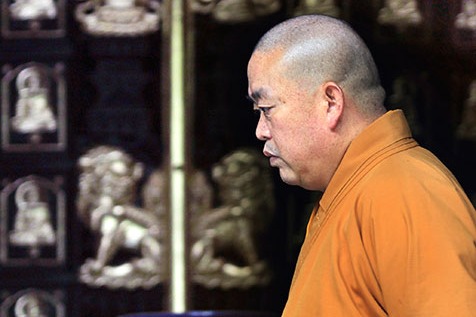
Prosecutors approve ex-abbot’s arrest
The Supreme People’s Procuratorate has officially sanctioned the arrest of Shi Yongxin, the former abbot of the renowned Shaolin Temple in Henan Province. Shi is accused of embezzlement, misappropriation of funds, and bribery. The case, initially investigated by the Xinxiang public security authorities under the directive of the Henan Provincial Public Security Department, has now progressed to the arrest phase following approval from the Xinxiang People’s Procuratorate. The allegations against Shi surfaced on July 27, when the Shaolin Temple disclosed that he was under investigation for embezzling funds, misusing project and temple assets, maintaining inappropriate relationships with multiple women, and fathering an illegitimate child. The following day, the Buddhist Association of China revoked Shi’s ordination certificate, effectively expelling him from the monastic community. Shi, who became a monk in 1981 and served as the 30th abbot of the 1,500-year-old Shaolin Temple since 1999, has been a prominent figure in Zen Buddhism and the temple’s celebrated kung fu tradition. The case has drawn significant attention due to the temple’s cultural and spiritual significance.