作者: admin

  • Stark ANU study finds majority of Australians expect imminent foreign conflict

    Stark ANU study finds majority of Australians expect imminent foreign conflict

    A comprehensive national study conducted by the Australian National University’s National Security College has uncovered profound public apprehension regarding Australia’s security landscape. The research, drawing from an extensive dataset of over 20,000 surveys, 480 interviews, 300 meetings, eight focus groups, and 100 public submissions collected between November 2024 and February 2026, reveals a nation increasingly concerned about multiple security challenges.

    The findings indicate that 68% of Australians anticipate their country’s involvement in foreign military conflicts within the next five years, with 45% considering a direct foreign military attack on Australian soil as probable. The study documented a significant escalation in security concerns throughout the research period, particularly among younger demographics. Anxiety among 18- to 24-year-olds surged dramatically from 22% to 55% over the 15-month study duration.

    Beyond conventional military threats, Australians expressed overwhelming concern about emerging risks. An astonishing 85-89% of respondents identified climate change impacts, AI-enabled attacks, disinformation campaigns, foreign interference, economic crises, and supply chain disruptions as likely to affect Australia within the coming half-decade. The research specifically highlighted artificial intelligence-enabled attacks and coordinated disinformation operations as particularly worrisome emerging threats.

    The report further revealed that most Australians believe the nation remains inadequately prepared for these multifaceted challenges and feel the government provides insufficient information about national security issues. Terrorism concerns also saw a sharp increase, rising from 55% in 2024 to 72% in 2026, with researchers noting this spike followed closely after the Bondi Beach attack of December the previous year.

    Researchers concluded that the cumulative data portrays a public that recognizes the reality of security risks, questions national preparedness, and desires greater transparency and information from leadership despite understanding the complexity of these issues.

  • Planet trapped record heat in 2025: UN

    Planet trapped record heat in 2025: UN

    A dire warning has been issued by the United Nations World Meteorological Organization (WMO), confirming that Earth’s energy imbalance reached a record high in 2025, with consequences projected to persist for millennia. The agency’s annual State of the Global Climate report reveals that the eleven hottest years in recorded history all occurred between 2015 and 2025, with last year ranking as the second or third warmest at approximately 1.43°C above pre-industrial levels.

    UN Secretary-General Antonio Guterres characterized the situation as a ‘climate emergency,’ stating that ‘every key climate indicator is flashing red.’ For the first time, the WMO incorporated measurements of planetary energy imbalance—the disparity between incoming solar radiation and outgoing energy—revealing a dangerous disruption to Earth’s natural equilibrium. Concentrations of heat-trapping greenhouse gases, including carbon dioxide, methane, and nitrous oxide, have reached their highest levels in at least 800,000 years.

    Scientific advances have enabled improved understanding of this energy imbalance, which has particularly accelerated over the past two decades. WMO Chief Celeste Saulo emphasized that human activities are fundamentally disrupting planetary systems, with consequences that will endure for hundreds and thousands of years.

    The oceans have absorbed more than 91% of excess heat, reaching unprecedented temperatures in 2025. The rate of ocean warming has more than doubled since the 1960-2005 period, causing severe degradation of marine ecosystems, biodiversity loss, and reduced capacity for carbon absorption. This warming intensifies tropical and subtropical storms while accelerating polar ice loss.

    Both the Antarctic and Greenland ice sheets have experienced significant mass reduction, with Arctic sea ice extent in 2025 ranking among the lowest ever recorded. Global mean sea levels now stand approximately 11 centimeters higher than when satellite measurements began in 1993, with continued rise projected for centuries.

    While current weather patterns remain under the influence of cooling La Niña conditions, forecasts indicate a potential shift to warming El Niño conditions by late 2026. WMO scientific officer John Kennedy warned that this development could lead to elevated temperatures in 2027, potentially challenging records.

    WMO Deputy Chief Ko Barrett described the outlook as a ‘dire picture,’ acknowledging that climate indicators are moving in concerning directions. Guterres connected climate instability to global security concerns, noting that ‘our addiction to fossil fuels is destabilizing both the climate and global security.’ The report concludes with an urgent call to action, emphasizing that ‘climate chaos is accelerating and delay is deadly.’

  • ‘Wouldn’t say yes’: Energy boss’ brutal call as Aussies face wfh, carpooling amid Iran crisis

    ‘Wouldn’t say yes’: Energy boss’ brutal call as Aussies face wfh, carpooling amid Iran crisis

    The head of the International Energy Agency (IEA) has issued a stark warning about the severity of the global fuel crisis triggered by the Middle East conflict, drawing direct comparisons to the economic shocks of the 1970s while stopping short of endorsing immediate COVID-style restrictions.

    During his address at the National Press Club in Canberra on Monday, IEA Executive Director Dr. Fatih Birol revealed the conflict has already removed 11 million barrels of oil daily from global markets – equivalent to more than two major 1970s oil crises combined. The situation is further exacerbated by natural gas shortages approaching double those experienced after Russia’s invasion of Ukraine.

    When questioned about whether Australian households are prepared for potential fuel conservation measures reminiscent of pandemic restrictions, Dr. Birol responded cautiously: “I definitely wouldn’t say yes. But households need to be better informed about the magnitude of the challenge we are facing.”

    The energy expert emphasized that while peaceful resolution remains the optimal outcome, market normalization would require significant time even if hostilities ceased immediately. He identified the effective closure of the Strait of Hormuz – transit route for one-fifth of global oil shipments – as particularly severe.

    The IEA has already coordinated the largest-ever release of strategic petroleum reserves among member nations, totaling 400 million barrels. While this provided temporary price relief, Dr. Birol confirmed additional releases remain under consideration based on ongoing market assessment.

    Rather than mandating specific measures, Dr. Birol emphasized governmental responsibility in determining appropriate responses: “Governments need to expect to take measures to protect their economies, their citizens, their businesses. The primary responsibility lies with governments, with help from industry and citizens.”

    The agency recommends practical conservation strategies including increased telecommuting, carpooling arrangements, and reduced air travel to alleviate demand pressures during what Dr. Birol characterized as an unprecedented convergence of energy market disruptions.

  • Reza Pahlavi calls for dismantling Iran’s leadership with ‘US and Israel support’

    Reza Pahlavi calls for dismantling Iran’s leadership with ‘US and Israel support’

    Reza Pahlavi, the exiled son of Iran’s last monarch, has issued a forceful appeal for the complete dismantlement of Tehran’s government while urging American and Israeli leadership to intensify military pressure against the Islamic Republic. The royal descendant specifically called upon President Trump and Prime Minister Netanyahu to continue targeting regime assets while sparing civilian infrastructure essential for Iran’s postwar reconstruction.

    Pahlavi’s declaration arrives during a critical escalation in the ongoing military confrontation between US-Israeli forces and Iran, now entering its fourth week of sustained operations. According to Iranian Red Crescent reports, the conflict has already inflicted substantial damage to over 81,000 civilian structures nationwide, including medical facilities, educational institutions, and humanitarian aid networks.

    The human cost continues to mount with approximately 1,400 fatalities recorded across more than 200 urban centers since hostilities commenced on February 28. The initial strikes proved particularly devastating, eliminating Iran’s Supreme Leader Ayatollah Ali Khamenei along with several family members. Mojtaba Khamenei has been designated as successor but remains absent from public view.

    Despite previous positioning as an opposition figure during January’s anti-government protests, Pahlavi’s influence appears to be waning among Iranians. Many citizens have expressed diminishing confidence in the exiled prince who continues advocating for domestic uprising despite severe crackdown risks. Notably, no significant street protests have materialized against the government since warfare began.

    Prime Netanyahu has echoed similar calls for insurrection, addressing Iranian citizens directly through social media to characterize the conflict as a “once in a lifetime opportunity” for regime change. President Trump’s endorsement remains measured, having described Pahlavi as “very nice” but questioning his capacity to garner substantial internal support.

    The pre-war protest suppression continues to cast a long shadow, with estimated casualties ranging from 5,000 (per Iranian officials) to 22,000 (per HRANA documentation). Current mass demonstrations primarily condemn foreign aggression, particularly referencing the Minab elementary school tragedy that claimed 165 young lives.

  • ‘It’s unfair’: Jake Trbojevic’s brothers leap to his defence following recent calls for the Manly great to retire

    ‘It’s unfair’: Jake Trbojevic’s brothers leap to his defence following recent calls for the Manly great to retire

    A wave of criticism targeting Manly Sea Eagles veteran Jake Trbojevic has prompted a staunch defense from his brothers and teammates, who have denounced calls for his retirement as profoundly unfair and statistically misguided.

    Recent commentary from analysts and journalists has suggested the 32-year-old lock forward should consider retiring to protect his long-term health and to facilitate a team transition, despite his contractual option to remain through 2027. The criticism primarily focuses on Trbojevic’s perceived limited offensive impact, highlighted by a Round 2 performance against Newcastle with merely two carries for 15 meters and no try contributions since 2024.

    However, Sea Eagles captain Tom Trbojevic has vehemently challenged this narrative, emphasizing that statistical metrics fail to capture his brother’s true value. “I think it’s a little bit disappointing that he is coming under fire,” stated Tom. “He’s been exceptional defensively and serves as our defensive leader. People become overly fixated on ball-carrying statistics while overlooking his critical role in organizing our defensive line, forcing errors, and providing strategic linkage in attack.”

    Tom further contextualized Jake’s performance by noting his recovery from a significant head injury sustained last season, asserting that his current form represents a strong foundation for improvement throughout the year.

    Younger brother Ben Trbojevic echoed these sentiments, acknowledging public opinion while dismissing its relevance to Jake’s actual contributions. “Everyone’s entitled to their opinion, but I don’t read into it too much,” Ben remarked. “Jake remains one of the best forwards in driving line speed and delivering momentum-shifting tackles. His leadership energizes our entire squad during critical moments.”

    Observers at Manly training noted Jake Trbojevic’s vocal presence and intense participation, contradictoring suggestions of diminished capacity. Widely respected as one of the NRL’s most respected figures, critics have emphasized their commentary reflects professional assessment rather than personal criticism of Trbojevic’s decorated career with Manly, NSW Blues, and the Australian national team.

    The Trbojevic brothers unanimously affirmed their support for Jake continuing his career as long as he desires, emphasizing his irreplaceable value to the Sea Eagles’ culture and performance system beyond conventional statistics.

  • Desperate search resumes for man who vanished in waters off NSW south coast

    Desperate search resumes for man who vanished in waters off NSW south coast

    Emergency services have launched an extensive search operation along the New South Wales south coast for a 25-year-old man who disappeared in treacherous waters near Sussex Inlet. The urgent mission, involving NSW Police, Surf Life Saving, and Marine Rescue NSW, resumed at dawn on Monday after initial efforts on Sunday evening failed to locate the individual.

    The incident unfolded around 6:30 PM Sunday when first responders rushed to Pacificana Drive following reports of a water emergency. Authorities discovered a 29-year-old woman at the scene who required immediate medical attention. She was transported to Shoalhaven District Memorial Hospital where she remains in stable condition.

    According to police statements, the woman had been accompanied by the missing man prior to emergency services arriving at the location. Despite comprehensive search efforts throughout Sunday evening, no trace of the 25-year-old was found.

    The search perimeter now encompasses a substantial coastal stretch from Wreck Bay to Bendalong Point, with multiple agencies coordinating their expertise in the challenging marine environment. NSW Police have established an information hotline and are appealing to the public for any details that might assist in locating the missing individual.

    This developing situation highlights the dangerous conditions that can occur in coastal waters, even in regional areas known for their natural beauty. The community awaits updates as search teams continue their critical mission amid difficult circumstances.

  • Everything you need to know about ‘BTS: The Return,’ the new Netflix documentary

    Everything you need to know about ‘BTS: The Return,’ the new Netflix documentary

    NEW YORK — The highly anticipated Netflix documentary ‘BTS: The Return’ offers an unprecedented glimpse into the monumental comeback of global K-pop phenomenon BTS following their nearly four-year hiatus. Directed by acclaimed filmmaker Bao Nguyen and produced collaboratively by This Machine and HYBE Entertainment, the Korean-language film chronicles the septet’s journey toward their latest album ‘ARIRANG’ while capturing their reintegration into celebrity life after completing South Korea’s mandatory military service.

    The documentary immediately addresses the military service that temporarily disbanded the group—a constitutional requirement for all able-bodied South Korean men aged 18-28 intended as a deterrent against North Korean aggression. Opening scenes show RM reflecting on military lessons while footage depicts the members’ head-shaving ceremonies and uniform transitions, highlighting their years-long separation before June’s reunion announcement.

    Following their service completion, the band embarked on an intensive creative process in Los Angeles during summer 2025, residing together in shared accommodations to develop their 14-track fifth studio album. The tight timeline forced Jin to join immediately after his solo tour, causing him to miss initial recording sessions.

    Facing industry pressures including the notorious ‘seven-year curse’ that dismantles many K-pop groups, BTS confronted existential questions about their artistic direction. ‘We’re conducting experiments to discover what makes us special,’ RM articulated during studio sessions, while Jimin emphasized their urgency: ‘We’ve been absent too long and don’t want to extend this break.’

    Los Angeles proved instrumental creatively, with the documentary showcasing collaborations with producers like Diplo and songwriter Pdogg. The film reveals internal dynamics including Suga’s meticulous guitar work and V comforting an anxious Jin during recording challenges.

    The album’s conceptual breakthrough emerged from historical inspiration: Executive Creative Director Boyoung Lee revealed how 19th-century Korean students recorded the first Korean-language song in America with ethnologist Alice C. Fletcher—the traditional folk song ‘Arirang’ dating to the 1400s. This discovery cemented the album as a cultural celebration, prompting Suga to advocate for greater Korean linguistic authenticity in tracks like ‘Normal’.

    Despite their legendary status, members expressed vulnerability about fan expectations after their extended absence. The documentary captures V practicing baseball throws in parking lots before his Dodgers Stadium pitch—a metaphor for their perfectionism—and shows late-night musical debates over pork belly and soju, demonstrating their relentless dedication.

    Internal discussions about lead single selection revealed artistic evolution concerns, with some members questioning whether ‘Swim’ possessed sufficient energy despite its parallels to their record-breaking 2020 single ‘Dynamite’. Suga championed the track’s maturity, reflecting the group’s conscious shift toward adult themes mirroring their personal growth. ‘We’ve all aged,’ Suga noted, ‘and now express more about adulthood.’

  • Rubio to testify in trial of former roommate accused of secretly lobbying for Venezuela

    Rubio to testify in trial of former roommate accused of secretly lobbying for Venezuela

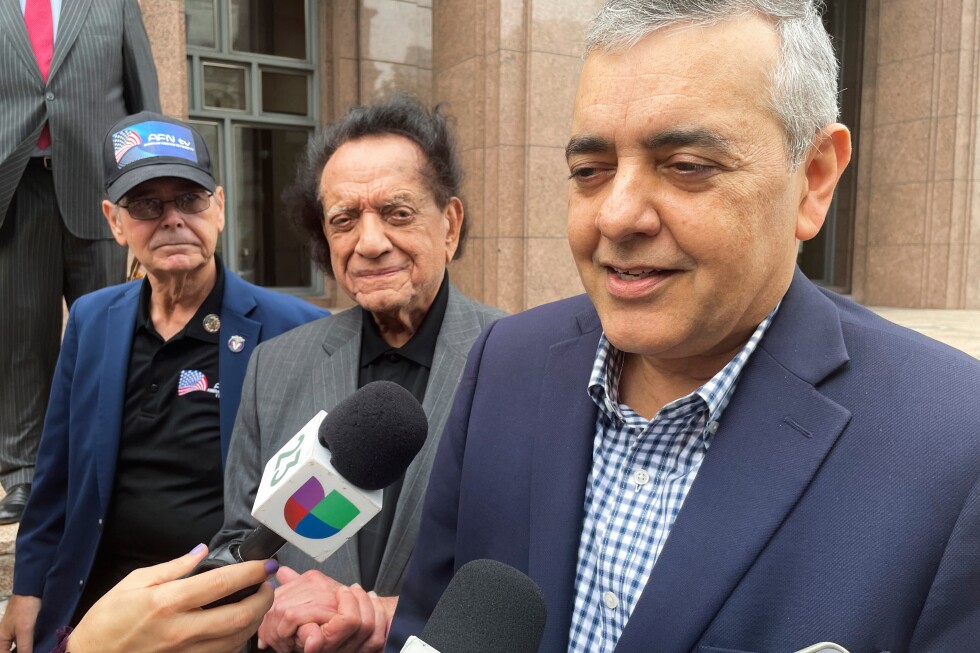
    MIAMI — The federal trial of ex-Congressman David Rivera commenced Monday, centering on allegations he covertly lobbied for Venezuela’s socialist government during the Trump administration. Prosecutors assert Rivera leveraged his Republican connections to influence U.S. policy toward Venezuela while secretly receiving millions from Caracas.

    The case offers unprecedented insight into how Miami’s political landscape shapes U.S.-Latin American relations. Secretary of State Marco Rubio, scheduled to testify Tuesday, represents a central figure in the proceedings due to his longstanding friendship with Rivera, including their time as roommates in Florida.

    According to court documents, Rivera allegedly secured a $50 million lobbying contract through Venezuela’s state oil company PDVSA, facilitated by then-Foreign Minister Delcy Rodríguez. Prosecutors claim he employed an elaborate scheme involving encrypted chats with code names—referring to President Nicolás Maduro as ‘bus driver’ and millions of dollars as ‘melons’—to conceal his activities.

    The indictment charges Rivera with money laundering and operating as an unregistered foreign agent. His defense maintains his consulting work focused on Venezuela’s U.S. energy interests and was separate from diplomatic efforts. However, civil plaintiffs allege the contract primarily served as cover for illegal lobbying, with funds diverted to maintain a luxury yacht belonging to Venezuelan media tycoon Raúl Gorrín.

    The trial highlights unusual diplomatic backchannels, including Rivera’s attempts to arrange meetings between Venezuelan officials and Exxon Mobil through Texas Republican Pete Sessions. Despite failed normalization efforts in 2017, the case emerges as current U.S.-Venezuela relations show tentative signs of improvement under different circumstances.

  • Asia stocks slide as US and Iran threaten to intensify war

    Asia stocks slide as US and Iran threaten to intensify war

    Asian financial markets experienced severe declines on Monday as escalating threats between Washington and Tehran intensified concerns about the ongoing Iran conflict, now entering its fourth week. Japan’s Nikkei 225 benchmark plummeted 3.4% during morning trading sessions, while South Korea’s Kospi index witnessed a dramatic 5% drop. The regional selloff came in response to heightened geopolitical risks that threaten to destabilize global energy supplies.

    The market turbulence follows President Donald Trump’s stark ultimatum delivered via social media on Saturday, warning that the United States would “obliterate” Iranian power facilities unless Tehran reopened the strategically vital Strait of Hormuz within 48 hours. Iran’s parliamentary speaker Mohammad Bagher Ghalibaf responded with a counter-threat, vowing to target regional energy and desalination infrastructure if Iranian power plants faced attack.

    This exchange represents a significant escalation in the conflict that began with US-Israeli strikes on Iran on February 28th. Since then, Iran has effectively blockaded the Strait of Hormuz, a critical maritime passageway that typically handles approximately 20% of global oil shipments and substantial liquefied natural gas exports. The closure has triggered dramatic increases in worldwide fuel prices and raised concerns about supply shortages.

    International Energy Agency Executive Director Fatih Birol issued a grave assessment on Monday, comparing the current situation to the oil crises of the 1970s and the energy market disruption following Russia’s 2022 invasion of Ukraine. Speaking in Australia’s capital, Birol characterized the developing crisis as “two oil crises and one gas crash put all together,” suggesting the world could be facing its most severe energy emergency in decades.

    The economic impact extended beyond Japan and South Korea, with Hong Kong’s Hang Seng index declining 2.5% and Taiwan’s Weighted Index dropping 2%. Meanwhile, global oil prices remained relatively stable with Brent crude trading at $112 per barrel and US-traded oil at $98.57, suggesting markets had already priced in considerable risk premiums from the prolonged conflict.

  • Asian shares decline as hopes dim for resolution in Iran after Trump’s latest comments

    Asian shares decline as hopes dim for resolution in Iran after Trump’s latest comments

    Financial markets across Asia opened the week under severe pressure as escalating geopolitical tensions triggered a broad selloff. The catalyst was President Donald Trump’s weekend ultimatum threatening to ‘obliterate’ Iranian power plants if Tehran fails to reopen the Strait of Hormuz within 48 hours. This bellicose rhetoric effectively crushed market optimism for a near-term resolution to the conflict, sending shockwaves through global exchanges.

    Regional benchmarks reflected the bearish sentiment with pronounced declines. South Korea’s Kospi plummeted 5.1%, while Japan’s Nikkei 225 sank 3.3%. Hong Kong’s Hang Seng dropped 3.1%, with Taiwan’s Taiex falling 2.6% and China’s Shanghai Composite declining 2.1%. Australia’s S&P/ASX 200 showed relative resilience but still retreated 0.7%.

    The confrontation entered a dangerous new phase as Iranian officials vowed retaliatory strikes against U.S. and Israeli energy and infrastructure assets in response to any American military action. According to Mizuho Bank analyst Ng Jing Wen, ‘The exchange of threats indicates an expanding conflict that sustains energy disruption concerns and market volatility with no visible de-escalation pathway.’

    Beyond immediate security concerns, the crisis is reshaping monetary policy expectations. Soaring oil prices—with Brent crude recently touching $119.50 per barrel—have dramatically reduced prospects for Federal Reserve interest rate cuts this year. This represents a stark reversal from pre-war expectations of at least two reductions. Central banks in Europe, Japan, and the UK have similarly maintained steady rates amid the uncertainty.

    The volatility extended to Wall Street, where the S&P 500 concluded its fourth consecutive weekly decline—its longest losing streak in twelve months. Friday’s session saw the Dow drop 443 points (1%), while the Nasdaq composite tumbled 2%. Smaller companies bore the brunt of selling pressure, with the Russell 2000 index falling a market-leading 2.3%.

    Bond markets reflected the altered outlook, as the 10-year Treasury yield surged to 4.38% from its pre-conflict level of 3.97%. The two-year Treasury yield, which tracks Fed policy expectations, rose to 3.88%. Currency markets showed dollar strength against the yen and euro, underscoring the flight to safety amid heightened geopolitical risk.