作者: admin

  • European fishing firms reflag ships to tap Indian Ocean tuna quotas, report finds

    European fishing firms reflag ships to tap Indian Ocean tuna quotas, report finds

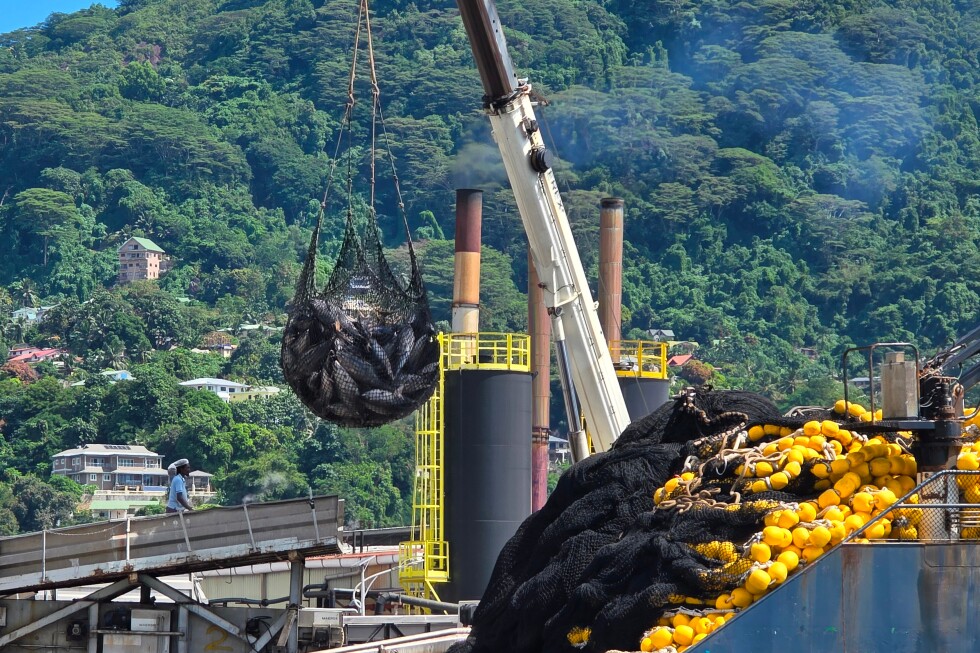
    For decades, the European fishing industry has held unmatched dominance in Indian Ocean tropical tuna harvesting, centered around a fleet of large purse seiners—massive vessels with the capacity to hold up to 1.8 million kilograms of tuna in a single trip. Dozens of these ships patrol the Indian Ocean’s waters, catching skipjack, yellowfin and bigeye tuna that eventually end up as canned products on grocery store shelves across the globe. But when Jess Rattle, head of investigations at the London-based environmental non-profit Blue Marine Foundation, spotted numerous purse seiners operating under the flags of Mauritius, Tanzania and Oman, she began questioning the true ownership of these vessels.

    “Our core goal was to unpack who actually holds ownership of these vessels,” Rattle explained. “Were they the property of the coastal states whose fishing quotas they were using, or did the true ownership trace back to European Union entities?”

    A groundbreaking joint investigation released Thursday by Blue Marine Foundation and global corporate investigations firm Kroll, shared exclusively with The Associated Press ahead of publication, now lays bare the full scale of European access to Indian Ocean tuna stocks. The probe finds that European companies currently take one-third of all tropical tuna caught in the region—a revelation that comes as yellowfin and bigeye tuna populations remain strained, still working to recover from historic overfishing.

    Rattle’s investigation confirms that European firms access these extra quotas by reflagging their vessels to five coastal Indian Ocean nations: the Seychelles, Mauritius, Kenya, Tanzania and Oman. This common, though not illegal, practice has allowed the European-controlled fleet to expand to more than 50 purse seiners and support vessels, and maintain high catch levels even as the EU made public commitments to reduce overall tuna harvesting to support stock recovery.

    The findings arrive on the eve of the annual gathering of the Indian Ocean Tuna Commission (IOTC) in the Maldives, a summit that brings together the EU and 20 member nations with commercial stakes in the region’s tuna industry. While reflagging is widespread across the global fishing sector, it creates significant barriers for regulators and independent observers seeking to accurately measure European firms’ impact on vulnerable tuna stocks. True parent company ownership is often hidden behind complex layers of shell companies and opaque foreign registry systems, which Rattle and Kroll’s team spent months untangling to map the full extent of hidden European control.

    While European firms have operated under the Seychelles’ flag for decades, Rattle notes that growing reflagging to Oman and Kenya is a new, unreported trend. In response to the investigation’s findings, Europeche Tuna Group, the trade body representing the European tuna industry, framed its cross-border partnerships as a net positive for regional economies. “Our industry’s relationships with coastal African and Indian Ocean nations are built on decades of long-term investment and deep local collaboration,” said group spokesperson Anne-France Mattlet. She added that European operators contribute to local economies through tax and fishing license payments, investment in local infrastructure, and offloading catches at regional ports and canneries. Mattlet also confirmed the investigation’s count of more than 50 European-linked purse seine and support vessels operating in the Indian Ocean, including those flying non-EU flags.

    A spokesperson for the European Commission, Maciej Berestecki, noted that reflagging is a private commercial decision made independent of EU public authorities, and that the bloc does not advocate for or represent the interests of vessels registered to non-EU countries. “The EU has worked, and continues to work, to the fullest extent to promote and enforce binding catch limits that support sustainable tuna management,” Berestecki said in a statement.

    European dominance in the Indian Ocean tuna trade is not new: Spanish and French tuna companies first introduced large purse seine technology to the region in the 1980s, allowing the fleet to rapidly scale annual catches and establish a dominant market position. But this outsized influence has repeatedly brought the EU into conflict with coastal nations seeking greater control over fishing activities in their adjacent waters. Five years ago, as yellowfin populations plummeted, the Maldives publicly accused the EU of refusing to table meaningful proposals to cut catch quotas during a heated IOTC meeting. In 2023, the bloc opposed an Indonesian proposal for targeted restrictions on purse seine fishing that passed with support from 15 other IOTC member states.

    In recent years, the IOTC has implemented new binding management rules designed to rebuild vulnerable yellowfin and bigeye tuna populations, which have started to show early signs of recovery. As part of these measures, the EU agreed to cut yellowfin tuna catches for EU-flagged vessels by 21%. Glen Holmes, a senior officer with the Pew Charitable Trusts, says these mandatory cuts are likely pushing European firms to turn to reflagging to tap into other nations’ quotas and maintain their historic catch volumes. Holmes, alongside partners from Pew, Global Fishing Watch and other conservation groups, is pushing for stricter ownership transparency requirements for all fishing fleets operating in the Indian Ocean.

    Foreign reflagging has long been a point of contention for transparency advocates, who argue the practice enables weak oversight of vessel activities. The phenomenon mirrors trends seen in the “shadow fleet” of sanctioned oil tankers, which frequently change names and flags to hide true ownership and evade international sanctions. Certain coastal states have become known as “flags of convenience,” offering low registration fees and lax enforcement of international fishing and trade rules, in many cases due to limited resources to patrol and regulate distant fleets.

    A January 2024 investigation by environmental group Oceana already documented widespread reflagging of European-owned fishing vessels to non-EU nations, including some the EU itself has accused of ignoring illegal fishing activity. Oceana is calling on EU member states to mandate collection and public publication of full beneficial ownership data for all European-controlled fishing vessels, regardless of the flag they fly. Vanya Vulperhorst, Oceana’s Europe director for illegal fishing campaigns, says this change would help the EU enforce its own existing laws, which bar European individuals and companies from profiting from illegal fishing activity. It would also reveal the true size of the European fishing footprint: “What our investigation found last year is that the actual size of the European fleet, when you add all the non-EU flagged vessels controlled by European firms, doubles the official count,” Vulperhorst said.

    This reporting was supported by funding from the Walton Family Foundation, with The Associated Press holding sole editorial responsibility for all content.
  • ARN reveals $22m ‘brand safety’ revenue hit after Kyle and Jackie O fallout

    ARN reveals $22m ‘brand safety’ revenue hit after Kyle and Jackie O fallout

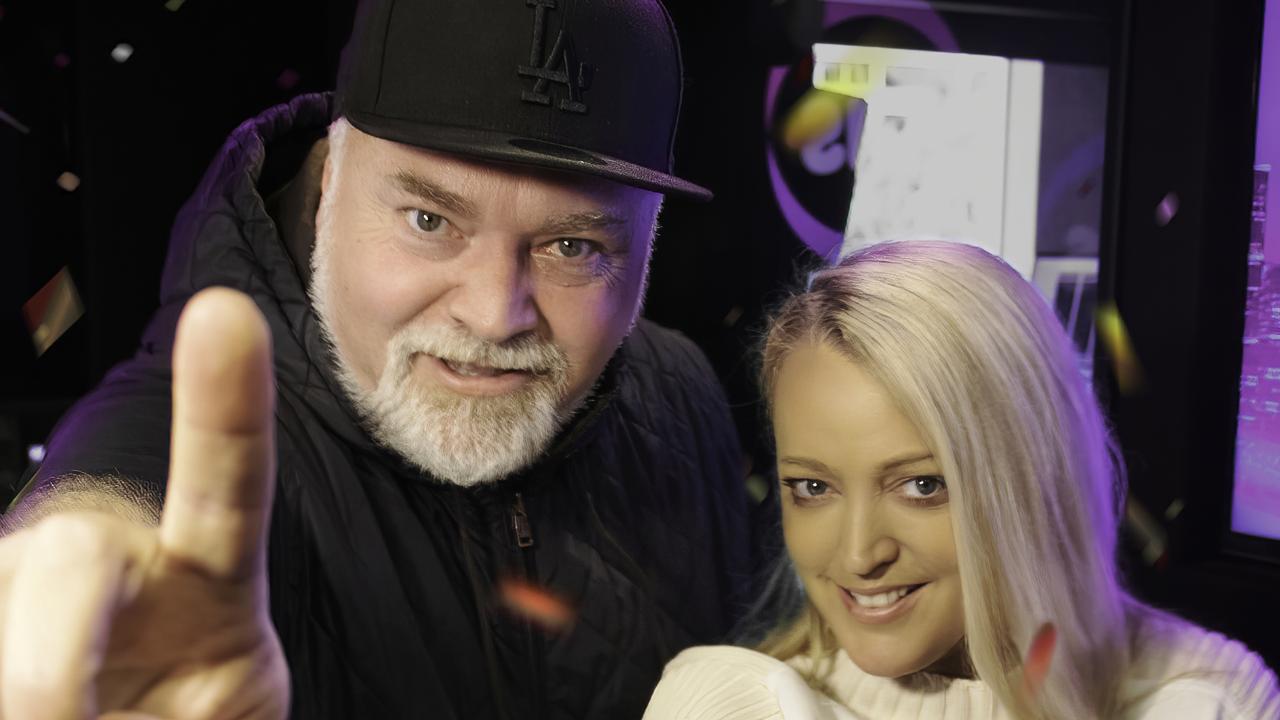
    Australian Radio Network (ARN) Media’s board of directors faced intense scrutiny from disgruntled shareholders at its annual general meeting held in North Sydney on Thursday, as investors slammed leadership for a year of steep financial losses, a collapsing share price, and the high-profile split and subsequent legal battle with beloved breakfast radio hosts Kyle Sandilands and Jackie Henderson, known collectively as Kyle and Jackie O.

    During the meeting, senior ARN executives laid out the scale of the company’s recent financial troubles, confirming that total annual revenue for the 12 months ending December fell 10% year-on-year to $285 million. Metro radio division revenue dropped by $28 million over the period, according to chief executive Michael Stephenson. Of that decline, he explained, just $6 million stemmed from broader industry headwinds in a tough advertising market, while the remaining $22 million came from advertisers pulling spending over brand safety concerns tied directly to the controversy surrounding Sandilands and Henderson. Regional revenue also dipped by $5.3 million, Stephenson noted, though it did not face the same brand safety-driven client exodus.

    Stephenson framed the network’s decision to cut ties with the pair as a proactive step to protect ARN’s brand reputation, and he struck an optimistic tone on future revenue recovery. “Over time, we expect a significant percentage of the $26 million of revenue that was lost last year because of brand safety concerns to return, improving both our metro radio revenue and revenue share,” he said. While the board declined to comment in detail on the active legal dispute, Stephenson confirmed that the departure of the high-profile hosts could pave the way for the return of former advertisers that had withdrawn their spending.

    ARN chairman Hamish McLennan later outlined the timeline of events that led to the show’s cancellation to shareholders, referencing the legal claims brought by Quasar Media (Sandilands’ company) and Henderson Media. McLennan confirmed that an on-air incident involving the two hosts took place on February 20, 2026. After the incident, Henderson took a paid leave of absence supported full by ARN management. On February 26, 2026, Henderson notified the network that she could no longer continue working alongside Sandilands, stating that direct contact with him had become untenable.

    “The Company considered this a repudiation of her contract, on the basis that it was not possible for her to perform her core contractual requirement to deliver the ‘Kyle and Jackie O show’ and, as a result, her contract was terminated,” McLennan explained. Sandilands, who was ousted alongside Henderson, has since launched a lawsuit against his former employer ARN Media.

    The network’s poor financial performance over the past year has hit shareholder value hard: ARN’s share price has plummeted 51% over the last 12 months to trade at just 26 cents, a drop that became a key point of criticism from investors at the AGM. Shareholders openly questioned the board about the ongoing share price decline and the missteps that led to the loss of one of radio’s most popular shows, paired with the costly pending litigation.

  • Health worker’s terror before surgery after nurses allegedly boasted killing Israeli patients

    Health worker’s terror before surgery after nurses allegedly boasted killing Israeli patients

    As Australia’s Royal Commission into Anti-Semitism and Social Cohesion enters its fourth day of public hearings, multiple witnesses have laid bare profound harm and broken trust stemming from rising anti-Jewish sentiment across Australian public institutions, media, and community spaces. The testimonies have cast a stark light on the deep-seated biases and systemic failures that have eroded safety for Jewish communities across the country. One dual Australian-Israeli citizen, identified only as AAV to protect her privacy, told the commission of crippling fear that preceded a scheduled knee surgery at a New South Wales (NSW) public hospital in February 2025. Four days before her procedure, she encountered a viral social media video — currently the subject of active criminal proceedings — in which nurses at Bankstown Hospital allegedly boasted about harming Israeli citizens. The revelation shattered her long-held trust in the state public health system, leaving her terrified that she could be killed while unconscious on the operating table. “I can’t even describe the terror that that created for me because of my knowledge of healthcare,” AAV told the hearing. “I spent the worst 24 hours of my life imagining all the ways I could be killed. I was paralysed with fear.” The witness shared that she already carried profound trauma from the October 7 2024 attacks on Israel: her cousin was taken hostage in that assault, and their remains were only returned to family this past January. Even before the pre-surgery panic, AAV’s faith in Australian institutions had already been shaken by a deeply upsetting experience with an NSW Health employee assistance program (EAP) counsellor following the December 2024 Bondi Junction attack. She had sought counselling to process overwhelming grief and anger over what she viewed as the government’s failure to protect Jewish and all Australian citizens, but the session left her reeling. Instead of providing support, the counsellor asked AAV to “put yourself in the position of those men and understand why they might have acted that way,” before prompting her to imagine a conversation with a Gazan mother who had lost family in the conflict. AAV said she stormed out of the session in a burst of rage, stunned by the questions. Reflecting on the broader shift in safety for Jewish Australians, she added: “What we have done in the Jewish community is made abnormal normal. It’s not normal for a person to go to the hospital and think ‘Is somebody gonna harm me while I’m here’?” She stressed that extensive, intentional work is required from NSW Health to begin repairing the damage done to trust within the Jewish community. Two people, Sarah Abu Lebdeh and Ahmad Rashad Nadir, have already pleaded not guilty to charges related to the social media video: Lebdeh faces counts of using a carriage service to menace, harass, offend and threaten group violence, while Nadir has pleaded not guilty to charges of menace, harassment, and offense. The pair is scheduled to go on trial in August 2025. Beyond healthcare, the hearings also brought sharp criticism of Australian media from veteran former Age editor-in-chief Michael Gawenda, who called the sector’s response to rising anti-Semitism “an enormous failure.” Gawenda argued that major media outlets have systematically downplayed the growing crisis of anti-Jewish bias in Australia, echoing long-running complaints from Jewish community groups that the scope of the problem has been underreported. He told the commission he was stunned by the breadth of harm shared by the more than 30 witnesses who have already testified, most of whose stories have never been reported in mainstream media. “Why was there a need to have a royal commission to tell these stories?” Gawenda asked. “It cannot be that they didn’t have the journalists to do it. Why didn’t they spend time in these communities, talk to ordinary people about what they’re experiencing?” Gawenda also condemned a growing trend of journalists abandoning long-held ethical norms to act as political activists, specifically calling out reporters who have publicly stated it is acceptable to side exclusively with one side of the Israeli-Palestinian conflict. “This was a denial of the ethical positions that have existed in journalism from the time I became a journalist in 1970: that we don’t be activists, that we don’t even belong to the Labor or the Liberal party,” he said. Another witness, Stephanie Cunio, a lifelong Jewish left activist and Bondi local who has worked with union and advocacy groups for decades, shared her experience of being marginalized by progressive communities for rejecting one-sided takes on the Israeli-Palestinian conflict. Cunio told the hearing she holds the nuanced view that both the October 7 Hamas attacks and the ongoing violence in Gaza are unacceptable atrocities, but that most of her left-leaning peers refuse to accept that both realities can coexist. “The left could only see one truth, which was the horrible things happening in Gaza,” she said. “So that truth was heartbreaking, and then further on the fact that broadly the left could not stand in solidarity with Jews as we are increasingly experiencing anti-Semitism. I don’t know if it’s naivety, but I don’t find it forgivable.” Cunio, who first joined the Jewish left in the 1990s, said she was “cancelled and gaslit” by a climate organization where she served on the board, after she refused to fully denounce Israel’s right to exist and adopt a framing that labeled the state entirely colonial. “There was a strong pressure to denounce completely the existence of Israel and to take the colonial view of the conflict, which I don’t completely disagree with,” she explained. “But Israel is my ancestral lands as well. If I wasn’t taking that position I was cancelled and gaslit.” She added that she feels humiliated by the widespread demonization of the word “Israel” in progressive spaces, noting that for her, the word evokes beautiful landscapes and beloved friends, not just the actions of the current Israeli government — while acknowledging that for Palestinians, the term is inextricably tied to war, displacement, and violence. After the December 14 2024 Bondi attack that killed 15 people, Cunio received an outpouring of support from community members, but she called the experience bittersweet. “It was a double edged sword: it was welcome, but where was it before, and where was it for those people who died on October 7th?” she asked. The commission also heard from the owners of Lewis Continental Kitchen, a beloved kosher deli in Bondi that was firebombed in October 2024. Mother-daughter co-owners Judith and Karyn Lewis described the arson attack as devastating to their family business, which had become a central community hub where customers became close friends. “For us it’s devastating because we’re not seeing all our friends because our customers very much became our friends,” Judith Lewis told the commission. The public hearing was briefly closed to allow the pair to speak freely about the attack, as three men facing charges over the arson are still before the courts. The Royal Commission into Anti-Semitism and Social Cohesion was called by Prime Minister Anthony Albanese on January 8 2025, following weeks of community pressure in the wake of the alleged December 2024 Bondi terror attack. This first block of hearings is scheduled to run for two weeks, focused on establishing a clear definition of anti-Semitism, mapping its prevalence across Australian society, and assessing how bias has taken root in major public and private institutions. The commission’s final report, including policy recommendations to address rising anti-Semitism, is due to be delivered to the government in December 2025, one year after the Bondi attack.

  • In ‘Musk v Altman’, this judge will make the final call

    In ‘Musk v Altman’, this judge will make the final call

    As the world’s wealthiest individual, boasting a net worth that exceeds $750 billion, Elon Musk has long grown accustomed to leveraging his vast resources, influence, and industry connections to shape outcomes across Silicon Valley on his own terms. But in the high-stakes $150 billion legal clash between Musk and OpenAI unfolding in a Northern California federal courtroom, the tech billionaire has finally encountered a counterpart who answers to no one but the law: District Judge Yvonne Gonzalez Rogers.

    The legal dispute at the heart of this high-profile trial dates back to 2015, when Musk co-founded OpenAI alongside current CEO Sam Altman. Musk stepped away from the organization three years later following an internal power struggle, and now alleges that Altman and OpenAI President Greg Brockman breached a founding charitable trust and gained unjust enrichment when OpenAI launched a for-profit subsidiary in 2019, three years before the runaway commercial success of ChatGPT ignited a global AI boom. OpenAI has pushed back against the claims, arguing Musk’s lawsuit is nothing more than a play to gain a competitive edge for his own rival AI startup, xAI.

    The trial, which began in late April, has already delivered one of its most memorable moments: when Musk attempted to act as his own legal counsel during testimony last week, objecting that OpenAI’s lead attorney William Savitt was asking improper leading questions. Gonzalez Rogers did not hesitate to rein in the billionaire, immediately interjecting to clarify courtroom procedure. She reminded Musk that unlike attorneys conducting direct examination of their own clients, opposing counsel are permitted to pose leading questions during cross-examination, before delivering the now-viral line: “Let’s remind everyone in the courtroom that you are not a lawyer.” Musk quickly acknowledged the correction, joking that while he had taken an introductory law course in college, he ultimately conceded: “Yes – I am not a lawyer,” drawing laughter from the packed gallery.

    For legal observers who have worked with Gonzalez Rogers, the moment was entirely in character for the 61-year-old judge, who hails from southern Texas and has built a decades-long reputation for her no-nonsense, firm-but-fair approach to high-stakes Big Tech litigation. “I think it’s a function of the fact that she’s now so experienced – nothing’s going to faze her,” explained Michael Rhodes, a retired former partner at Cooley LLP, where Gonzalez Rogers once practiced law, and who has previously represented both Musk and OpenAI in separate matters.

    Veteran courtroom artist Vicki Behringer, who has documented multiple of Gonzalez Rogers’ high-profile cases including this current OpenAI trial, noted the striking contrast between the two central figures in the courtroom. “It does make an interesting juxtaposition. He’s the wealthiest man in the world. He’s used to being on top. She’s definitely on top now. She’s in charge,” Behringer said.

    A key detail that underscores the weight of Gonzalez Rogers’ role in this case: while a nine-person advisory jury is hearing testimony and expected to deliver a verdict by the end of May, their decision is non-binding. Ultimately, the judge will hand down the final ruling in the dispute. As plaintiffs’ attorney Jay Edelson, who currently has wrongful death lawsuits pending against OpenAI, put it: “That changes the whole landscape. It really means that this is completely her show.”

    Gonzalez Rogers is no stranger to navigating the most complex, closely watched Big Tech legal battles in the country. Beyond the Musk-OpenAI clash, she currently oversees a massive multi-district litigation that consolidates dozens of social media addiction lawsuits brought by U.S. states and school districts against Meta, Snap, TikTok, and Google. She also previously presided over the high-profile Epic Games antitrust lawsuit against Apple, in which Fortnite-maker Epic accused Apple of anti-competitive practices by forcing app developers to use Apple’s in-house payment system in the App Store. In a stunning 2024 court filing, Gonzalez Rogers found that a top Apple executive had lied under oath, referring the matter to the U.S. Attorney for the Northern District of California. While an appeals court upheld her contempt finding, it struck down her order barring Apple from collecting commissions on transactions via third-party payment systems, and just this week Apple asked the U.S. Supreme Court to issue a stay of the appeals court ruling that would require Gonzalez Rogers to reopen the case to set a fair commission rate.

    Legal professionals who appear before her universally acknowledge that her reputation for rigor demands extra preparation. “There are certain judges who, if they’re on the case, you kind of stand up a little bit straighter,” Edelson said. “You want to make sure everything’s right, that your tie’s on straight, and that you don’t mis-cite a case.”

    Appointed to a lifetime federal bench seat in Oakland, California in 2011 by then-President Barack Obama, Gonzalez Rogers’ path to the judiciary was rooted in humble origins. During her confirmation hearings, then-U.S. Senator Dianne Feinstein shared that Gonzalez Rogers worked cleaning houses and mowing lawns during school breaks and weekends to cover her Princeton University tuition. After graduating from law school, she spent more than a decade in private practice, making partner at her firm before California Governor Arnold Schwarzenegger appointed her to a state superior court judgeship. She declined to comment for this report through a spokesperson.

    Throughout the Musk-OpenAI trial, Gonzalez Rogers has run an extremely tight, efficient courtroom: proceedings start promptly at 8 a.m. every morning, with no formal lunch break, only two 20-minute recesses per day. While she is uncompromising with parties and counsel, she maintains a warm, approachable rapport with the advisory jury, regularly thanking them for their public service and acknowledging the fatigue that comes with daily proceedings. On one occasion, she joked, “If you get cranky with family, just know it’s because you’re tired.”

    Despite her stern reputation in court, those who know her describe her as having a sharp, self-deprecating sense of humor. Rhodes called her “wickedly funny,” noting she often jokes that her children tell her her jokes are bad, and that lawyers only laugh out of politeness. When a courtroom microphone malfunctioned during the trial last week, she drew genuine laughter from the room with her deadline quip: “What can I tell you? We are funded by the federal government.”

    When it comes to the parties involved in the OpenAI dispute, however, she wastes no time on pleasantries and holds all high-powered players to the same standard. In the first week of trial, she publicly chided Musk for inflammatory posts he made to his social platform X, where he referred to Altman as “Scam Altman” and made disparaging comments about OpenAI outside the courtroom. “How can we get this done without you making things worse outside the courtroom?” she asked Musk. When Musk argued he was only responding to OpenAI’s own public statements about the case, she pushed for a truce: “How about a clean slate? Beginning today.” Musk agreed, and Gonzalez Rogers extended the same request to Altman and Brockman, saying, “Let’s just try it, gentlemen. Let’s just try it and see if we can make things work.”

    At a March pre-trial hearing, she made clear that the fame and wealth of the parties involved would not earn them special treatment, though she has made small accommodations for security and privacy: Musk and other top executives complete standard security screenings, but use a non-public entrance to avoid reporters and crowds outside the courthouse. She has also worked to keep the proceedings focused on legal facts rather than sensational speculation, cutting off Musk when he compared the risks of unregulated AI to the *Terminator* film franchise, telling him after jurors adjourned: “You’ve made your little statement. But that’s it.”

    As the trial heads toward its conclusion, all eyes remain on Gonzalez Rogers, the steady, unflappable judge who will ultimately decide the outcome of one of the most consequential AI industry legal battles in history.

  • From cricket’s capital to Olympic ambitions, India’s next play on the world sports stage

    From cricket’s capital to Olympic ambitions, India’s next play on the world sports stage

    As one of the world’s most populous nations with a fast-expanding economy and unrivaled global influence in cricket, India is now laying the groundwork to extend its global footprint across the broader international sports landscape. Having already secured hosting rights for the 2030 Commonwealth Games in the western city of Ahmedabad, the country has set its sights on an even bigger prize: securing the right to host the 2036 Summer Olympic Games.

    This push for international sporting leadership aligns with Prime Minister Narendra Modi’s broader national vision of building a fully developed India by 2047, a plan centered on upgrading public living standards, expanding transport infrastructure, advancing education, and establishing the country as a global hub for technology and innovation. These national development efforts form the core foundation of India’s growing sporting ambitions.

    In an interview with The Associated Press, Union Minister of Youth Affairs and Sports Dr. Mansukh Mandaviya framed India’s current moment as one of newfound confidence. “India today reflects a confident and aspirational mindset, ready to lead and shape the future of global sport,” he said. “Our growing capability to host major international sporting events is a testament to how far we have progressed. At the same time, our athletes continue to make the nation proud across sports disciplines, signaling the steady rise of India as a formidable sporting force.”

    On Thursday, Mandaviya was set to lead a national sports conclave in the capital New Delhi, where stakeholders will review India’s preparation for upcoming major events, including the 2026 Asian Games, 2026 Commonwealth Games, and the 2028 Los Angeles Olympics. The gathering will also address compliance requirements under the National Sports Governance Act, a 2025 law enacted to improve transparency across national sports federations and set clear standards for international event hosting and athlete participation.

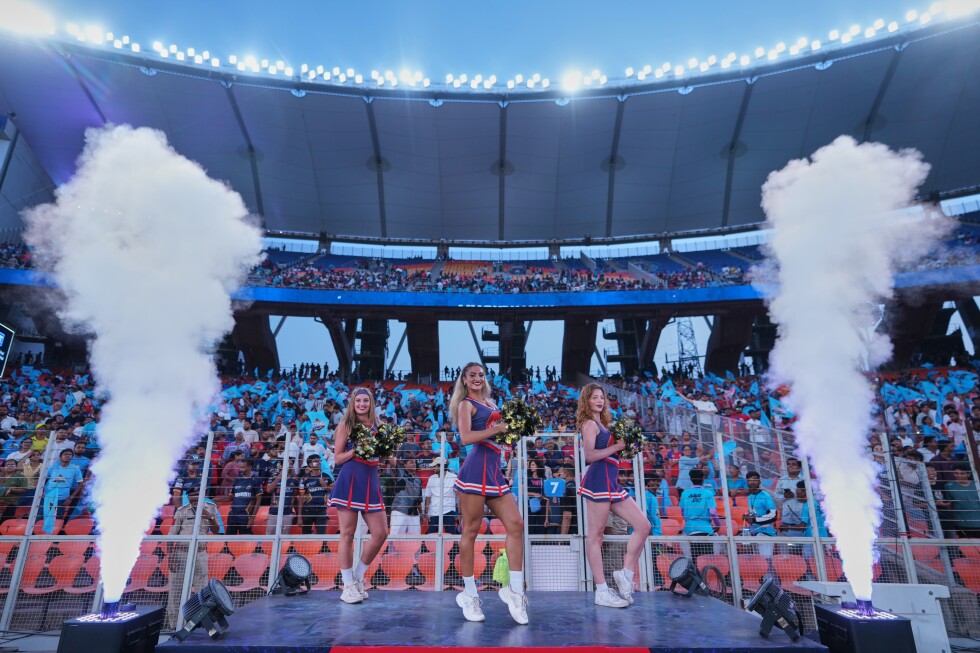
    Already in 2026, India has hosted three high-profile cricket events: the men’s ICC Twenty20 World Cup, the second edition of the Women’s Premier League, and the ongoing season of the Indian Premier League — one of the wealthiest and most widely followed franchise sports leagues on the planet. Beyond cricket, New Delhi is playing host to the BWF World Badminton Championships, the eastern city of Bhubaneshwar is scheduled to welcome a World Athletics Continental Tour competition, and Ahmedabad will host the Asian Weightlifting Championships later this year. Indian authorities are also exploring options to bring Formula One racing back to the country for the first time since the last Indian Grand Prix was held in 2013, and national sports officials successfully campaigned for cricket’s reintroduction to the Olympic program for the 2028 Los Angeles Games.

    For India, the 2030 Commonwealth Games in Ahmedabad will serve as a critical benchmark to demonstrate how far the country has come since its last major multi-sport event hosting experience. New Delhi previously hosted the 2010 Commonwealth Games, an event overshadowed by widespread logistical delays, unfinished facilities, and high-profile corruption scandals. Indian officials are confident the 2030 iteration will leave those past missteps far behind. The centerpiece of the 2030 Games will be the Sardar Patel Sports Enclave, a purpose-built complex that already houses the world’s largest cricket venue, the Narendra Modi Stadium, which can be reconfigured to host a range of Olympic and Commonwealth sports.

    But India’s sporting transformation extends far beyond new infrastructure. Over the past decade, policymakers have made sustained investments to build a robust, inclusive domestic sports ecosystem that nurtures talent from the grassroots to the elite level. Today, more than 15 professional leagues across different sports operate across the country, creating pathways for young athletes to pursue competitive careers. The Sports Authority of India has also launched a network of specialized national centers of excellence, providing elite athletes with access to world-class training facilities and evidence-based, scientific coaching programs designed to produce Olympic and world championship medalists.

    These investments are already delivering measurable results on the global stage. At the 2023 Asian Games, India recorded its best performance in history, finishing with a total of 107 medals. The country claimed its first Thomas Cup badminton world title in 2022, won its first-ever men’s squash World Cup crown, earned 29 medals (including seven gold) at the 2024 Paris Paralympics, and captured 20 medals at the 2025 World Boxing Cup finals. Individual standout Neeraj Chopra, the Olympic and world champion javelin thrower, has become a national icon and inspiration for young athletes across the country.

    Sports advocates note that these high-profile success stories also play a key role in shifting cultural attitudes toward fitness and recreational participation across India’s vast population. “While the infrastructure is put in place, we are also working on our messaging,” said Hari Ranjan Rao, Sports Secretary for the Government of India. The national Khelo India (Play India) initiative, launched in 2018, has expanded rapidly to include youth competitions, university-level events, winter sports, para sports, beach and water sports, and even dedicated competitions for tribal athletes. “The aim is to draw out the masses into an active lifestyle,” Rao said, “As well as into participation.”

    With growing grassroots participation and a pipeline of elite talent emerging, Indian officials are optimistic about the country’s sporting future. “As we prepare to host the 2030 Commonwealth Games and advance our bid for the 2036 Olympic Games, India stands ready to take center stage,” Mandaviya said. “We are determined to emerge as a global sporting powerhouse, both in producing champions and in hosting world class events.”

  • Key bridge linking North Korea and Russia almost finished, satellite images show

    Key bridge linking North Korea and Russia almost finished, satellite images show

    New analysis of commercial satellite imagery conducted by BBC Verify has revealed that the first dedicated road bridge linking North Korea and Russia is in the final stages of construction, marking a tangible milestone in the rapidly deepening strategic partnership between the two nations against the backdrop of Russia’s full-scale invasion of Ukraine.

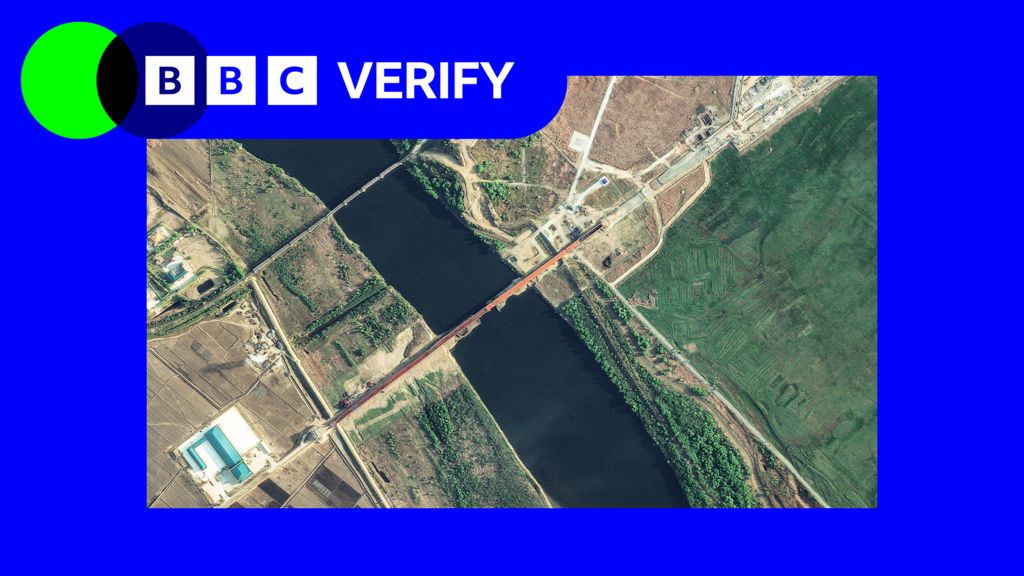
    Located just hundreds of meters from the existing Friendship Bridge – the only current cross-border connection between the two countries, which operates solely as a rail link – the new 1-kilometer Khasan–Tumangang Bridge spans the Tumen River. The latest satellite photos confirm that alongside the main bridge span, all required supporting infrastructure has been nearly finished: new access roads, a dedicated border checkpoint, paved vehicle parking areas, and service facilities are all in place, signaling the project is on track to meet its scheduled completion date of June 19, 2026. A ceremony to connect the two halves of the bridge was held on April 21 this year, as publicly confirmed by Russia’s embassy in Pyongyang.

    The agreement to construct the new crossing was first signed during Russian President Vladimir Putin’s 2024 official visit to Pyongyang, where he met with North Korean leader Kim Jong Un. Construction broke ground roughly one year after the agreement, and BBC Verify has tracked the project’s progress through routine satellite imagery updates throughout the build phase. According to Russia’s transport ministry, the bridge is engineered to accommodate up to 300 vehicles and 2,850 cross-border travelers per day. Russian state media reports put the total construction budget at more than 9 billion roubles, equivalent to roughly $120 million or £88 million.

    Regional security experts widely view the rapid construction of the bridge as clear evidence of expanding cross-border activity, driven primarily by deepening military cooperation tied to the war in Ukraine. “The speed of construction is a reflection of the volume of trade activity between the two sides,” explained Victor Cha, a senior analyst at the Washington-based Center for Strategic and International Studies (CSIS). Cha added that the surge in cross-border exchange is “spurred largely by North Korea’s provision of troops, weapons, munitions, and labourers for Putin’s war in Ukraine.”

    Prior to the start of the Ukraine war, this stretch of the North Korea-Russia border was one of the least active cross-border links in East Asia. But CSIS research finds that rail traffic through the existing Friendship Bridge has remained consistently high throughout the road bridge’s construction, as bilateral trade and military exchanges have expanded dramatically. Under current operational plans, analysts expect that Russian and North Korean truck drivers will transfer cargo loads at the new checkpoint, rather than being allowed to operate vehicles deep into each other’s territory.

    The new bridge is far more than an infrastructure project, according to both officials and analysts. Russia’s foreign ministry emphasized that the bridge’s opening will “become a truly landmark stage in Russian–Korean relations. Its significance goes far beyond a purely engineering task.” During the same 2024 summit that approved the bridge, Putin and Kim signed a sweeping mutual defense pact that pledges mutual assistance in the event of “aggression” against either country.

    According to estimates from South Korean intelligence, North Korea has deployed approximately 15,000 troops to support Russian operations in Ukraine, alongside large shipments of missiles and long-range artillery systems. Seoul estimates that roughly 2,000 of those North Korean troops have been killed in combat to date. Neither Pyongyang nor Moscow has officially confirmed these troop numbers, but just last week Kim Jong Un joined Russian Defense Minister Andrey Belousov to unveil a memorial in Pyongyang honoring North Korean service members killed in Ukraine. Russian state media reports that Belousov and North Korean officials held extensive talks on long-term military cooperation during the visit.

    Analysts say the bridge will solidify long-term bilateral ties beyond the current conflict in Ukraine. In exchange for North Korea’s military support for Moscow’s war effort, Western intelligence agencies assess that North Korea has received critical supplies including grain, fuel, and advanced military technology from Russia. “The construction of the bridge epitomizes how North Korea’s ties with Russia look to continue beyond any end to the Ukraine war,” noted Dr. Edward Howell, a Korea Foundation Fellow at the London-based Chatham House think tank. Howell added that the crossing will provide a critical new logistics route for moving military goods and munitions between the two countries, in both directions.

  • From ego-ridden team to complete package – why PSG pose ultimate test

    From ego-ridden team to complete package – why PSG pose ultimate test

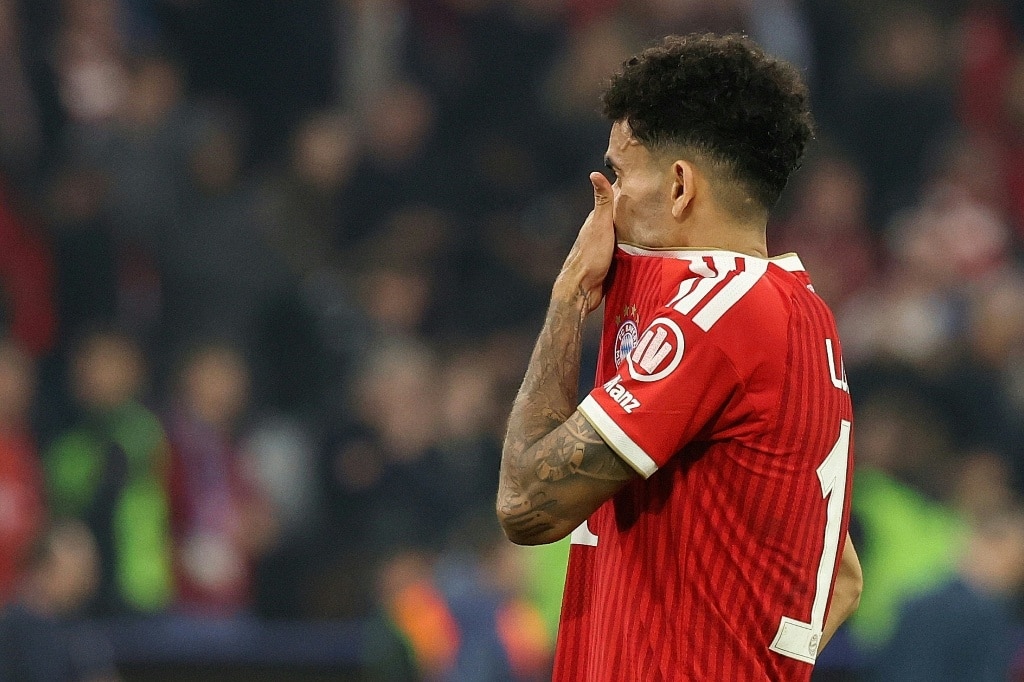
    The UEFA Champions League semi-final second leg at the Allianz Arena delivered all the drama and high stakes football fans have come to expect from Europe’s premier club competition, but it was Paris Saint-Germain that walked away with a spot in the 2026 final, holding off a late Bayern Munich push to secure their place in back-to-back title deciders. The result sets up a monumental clash with Arsenal at the Budapest final on May 30, and cements Luis Enrique’s transformed PSG as overwhelming favorites to lift the trophy for a second consecutive season.

    Bayern Munich’s supporters set the tone for the night before a single ball was kicked, unfurling a giant banner emblazoned with the rallying cry “Shoot us into the final” as they sought to inspire their side to overturn a 5-4 first leg deficit from the classic opening encounter in Paris. But it was PSG who turned that slogan into action, striking a devastating early blow just three minutes into the tie. Georgian winger Khvicha Kvaratskhelia, whose dynamic form has been one of the stories of this Champions League campaign, burst down the flank before delivering a pinpoint pass to Ousmane Dembele, who lashed a clinical finish high past Bayern’s legendary goalkeeper Manuel Neuer.

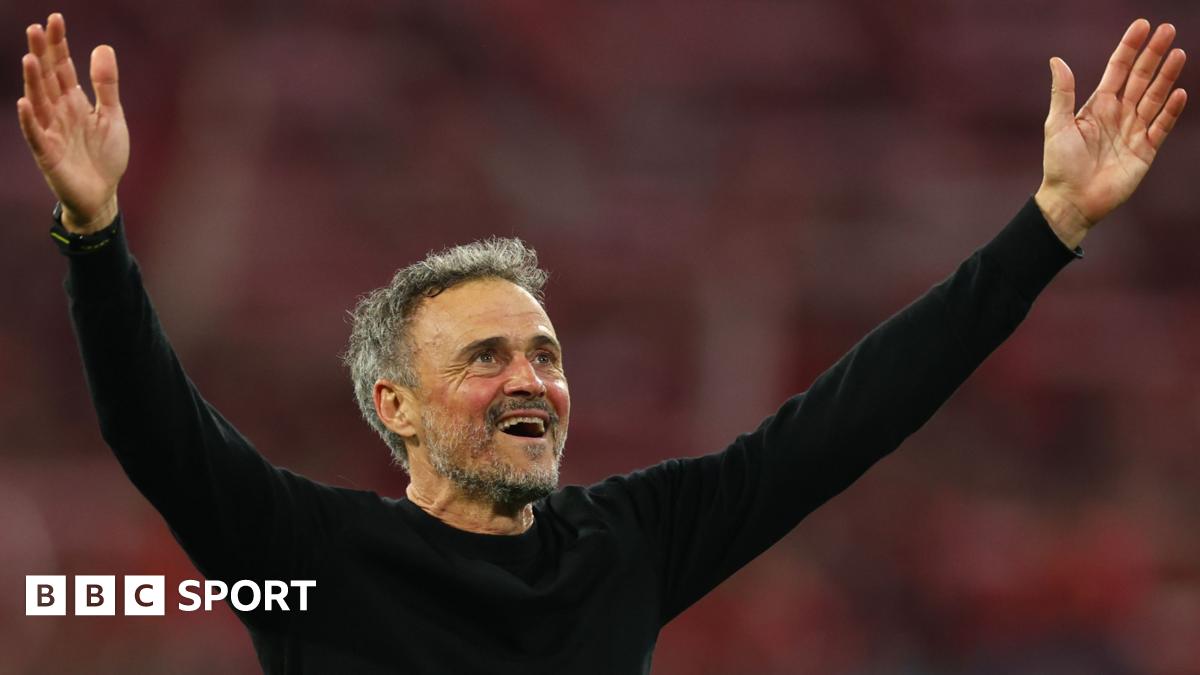
    Bayern threw everything at PSG in search of the goals they needed to turn the tide, and ultimately grabbed a last-gasp equalizer on the night through England captain Harry Kane just seconds before the final whistle. But the late strike proved too little, too late, as the full-time whistle blew moments later to send PSG through to their second straight Champions League final, with the French side chasing back-to-back titles following their dominant 5-0 victory over Inter Milan in the 2025 decider. An ecstatic Luis Enrique celebrated on the Allianz Arena turf, just as he did 12 months earlier, after his side delivered yet another resounding performance that proves they deserve to be ranked among the greatest club sides of the modern era.

    For Arsenal, the moment is historic: the Gunners are contesting their first Champions League final in 20 years, and Mikel Arteta’s side will head to Budapest full of confidence. But there is no avoiding the scale of the challenge that awaits them, one that begins with outsmarting one of the game’s greatest tactical minds in Luis Enrique. When the Spanish manager took charge of PSG in the summer of 2023, he inherited a club fractured by the “superstar era” that saw superstars Lionel Messi, Kylian Mbappe and Neymar anchor a dysfunctional, ego-driven squad that never functioned as a cohesive unit. A proven winner who lifted the Champions League with Barcelona in 2015, Luis Enrique made an immediate promise: all egos would be left at the door, and any player who refused to comply would be moved on.

    What he has built in Paris is a near-perfect blend of world-class individual talent, relentless work rate and rock-solid defensive organization that makes them a nightmare for any opposition. The backbone of this new PSG is captain Marquinhos, the veteran Brazilian centre-half who arrived at the club from Roma back in 2013 and survived Luis Enrique’s clear-out of big names thanks to his consistent class and professional leadership. Now 31, Marquinhos remains peerless in the heart of defence, forming a formidable partnership with Willian Pacho, who successfully marked Kane out of the game until the England captain’s stoppage-time strike.

    Across the pitch, every department of PSG is firing. Kvaratskhelia and Dembele, who has now notched seven Champions League goals this season, combined for the tie’s defining goal, while 20-year-old winger Desire Doue, one of the exciting young talents spearheading PSG’s new era, tormented Bayern’s backline and went close to scoring on multiple occasions in the second half. The team’s midfield trio of Vitinha, Fabian Ruiz and Joao Neves acts as a well-oiled engine room that links defence to attack seamlessly: Ruiz produced a gorgeous pass to build up Dembele’s opening goal, then immediately dropped back to carry out the gritty defensive work that Luis Enrique demands from every player, a standard every member of the squad has fully embraced.

    Former Liverpool defender Stephen Warnock, speaking to BBC Match of the Day, argued that PSG are clear favourites to lift the trophy in Budapest, saying it is almost impossible to pick out a real weakness across their starting XI. “One of the issues Arsenal will have is trying to contain the PSG full-backs,” Warnock explained. “That means asking Bukayo Saka and Leandro Trossard, who will probably be on the wings, to then contain the full-backs and stick with them, and also go the other way and attack them as well. It is going to be very difficult for Arsenal to keep this PSG side out because you can’t sit back against them for long periods of time. If you sit off them, then Bradley Barcola, Doue and Kvaratskhelia are good enough in one-v-one situations, with Dembele as well, to be able to beat you individually. Whichever way you look at them, they are a brilliant team and you struggle to find any weakness.”

    PSG have proven their pedigree against top European opposition across this season’s Champions League run. Their 6-5 aggregate win over Bayern showcased all of their strengths: devastating attacking football in the first leg, followed by disciplined, well-drilled defending to soak up intense Bayern pressure at the Allianz Arena. They displayed exactly the same balance against Liverpool in the quarter-finals, winning at Anfield for the second consecutive season and digging in defensively to secure a comprehensive 4-0 aggregate win over the reigning English Premier League champions.

    The shift in culture that Luis Enrique has instilled is perfectly summed up by Dembele himself: once labeled an expensive misfit at Barcelona, he has been transformed into a Ballon d’Or-calibre player under the Spaniard’s management, and he celebrated winning a defensive tackle with just as much enthusiasm as he celebrated his opening goal. That team-first attitude runs through every level of the squad.

    Bayern, for their part, deserve credit for a valiant effort. roared on by a raucous home crowd that delivered an atmosphere worthy of a major rock concert, Vincent Kompany’s side never let up and pushed PSG all the way to the final whistle, but they ultimately came up against a side operating at a higher level. Former Liverpool captain Steven Gerrard, working as a pundit for TNT Sports, praised Luis Enrique’s transformative work: “A couple of years ago they had prima donnas, egos in the team but [Luis Enrique] wasn’t having it. He pushed them aside and built a team on work-rate and principles. This team could dominate for years to come. They are that good.”

    Right until the final whistle, every PSG player maintained the same relentless work rate they started with, blocking every dangerous cross into the box and throwing their bodies on the line to protect their advantage. Now, it is Arsenal that must find a way to crack this cohesive, well-drilled unit. For the Gunners, the task is simple in theory, but enormous in practice: they must beat the team that is widely regarded as the best in European football right now.

  • Trump says Iran deal ‘very possible’ but threatens strikes if talks fail

    Trump says Iran deal ‘very possible’ but threatens strikes if talks fail

    On Wednesday, U.S. President Donald Trump laid out a dual track of cautious optimism and stark warning for ongoing negotiations with Iran, saying a breakthrough agreement is “very possible” even as he threatened to resume devastating military strikes at far greater intensity if talks collapse.

    The latest diplomatic push comes after weeks of stalled dialogue between the two long-time adversaries, following an inconclusive first round of talks mediated by Pakistan last month. Negotiations gained a faint pulse last week when Trump paused a short-lived U.S. military operation designed to reopen the Strait of Hormuz — the world’s most critical oil chokepoint — citing emerging prospects for a negotiated settlement. Progress remains gridlocked, however: Iran has not yet formally responded to a new U.S. proposal put forward in recent days.

    “ We’ve had very good talks over the last 24 hours, and it’s very possible that we’ll make a deal,” Trump told reporters Wednesday. “If Iran agrees to give what has been agreed to, the war will be over. If not, the bombing will resume at a much higher level and intensity.” Trump also reiterated his demand that Iran hand over all its stockpiles of enriched uranium to the U.S., a major sticking point in negotiations that he offered no clear path to resolving.

    Iranian officials have pushed back against the U.S. framework, with top negotiator and Parliament Speaker Mohammad Bagher Ghalibaf accusing Washington of seeking to force Iran into unconditional surrender through a combination of economic pressure, naval blockades and targeted media manipulation. “Washington is seeking, through a naval blockade, economic pressure and media manipulation, to destroy the country’s cohesion in order to force us to surrender,” Ghalibaf warned. Foreign Ministry spokesman Esmaeil Baqaei confirmed Wednesday that the U.S. proposal remains under internal review, with Tehran set to share its formal position with mediator Pakistan once internal deliberations are complete.

    The military standoff around the Strait of Hormuz has remained tense despite the diplomatic pause. The U.S. military confirmed Wednesday that one of its warplanes targeted and disabled the rudder of an oil tanker that attempted to break the U.S. blockade of Iranian ports. Trump has maintained the full U.S. blockade will remain in place as long as Iran continues its own restrictions on shipping through the strait.

    Pakistani Prime Minister Shehbaz Sharif, a key broker in the initial talks hosted in Islamabad last month, has voiced public optimism for a lasting outcome. “We are very hopeful that the current momentum will lead to a lasting agreement that secures durable peace and stability for the region and beyond,” Sharif said in a post on X.

    U.S. news outlet Axios, citing two anonymous senior U.S. officials, reported Wednesday that both sides are nearing agreement on a one-page memorandum of understanding that would end active hostilities and establish a framework for future detailed negotiations over Iran’s nuclear program.

    On the diplomatic front, Iran’s top foreign diplomat Abbas Araghchi met with his Chinese counterpart Wang Yi in Beijing Wednesday to discuss the ongoing negotiations. Araghchi said after the meeting that Iran looks forward to Chinese support for building a new post-war regional framework that balances security and sustainable development for all nations in the Middle East.

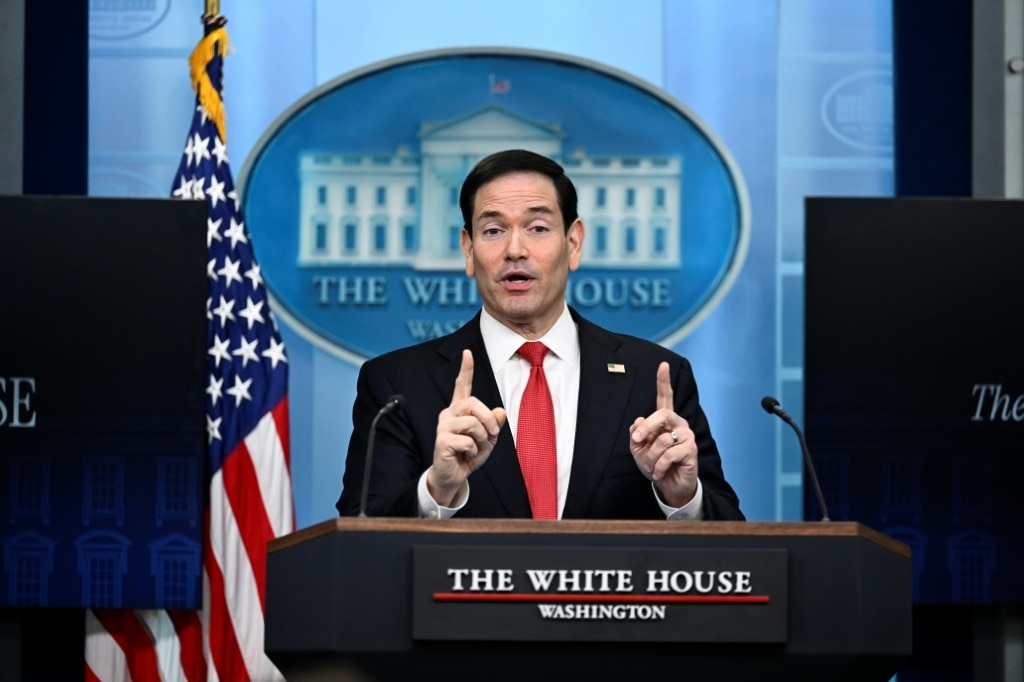
    Trump’s conciliatory rhetoric came hours after U.S. Secretary of State Marco Rubio announced that the U.S. had concluded all active offensive operations against Iran. Global financial markets reacted positively to the signs of de-escalation, with the S&P 500 and Nasdaq both closing at all-time record highs on Wednesday as investors grew more optimistic about a breakthrough that would ease regional energy market risks.

    Not all reaction to the talks has been positive, however. Speaking to AFP from Tehran, 43-year-old translator Azadeh expressed deep fear about the prospect of a deal between the Trump administration and Iran’s current government, saying years of economic hardship and conflict have brought no tangible benefits to ordinary Iranian citizens. “We’ve gone through so much hardship and suffering, and no achievements for people? I honestly just hope they finish this regime,” she said.

    Tensions across the broader region escalated Wednesday on the Lebanese front of the ongoing conflict. Israel carried out an airstrike on Beirut’s southern suburbs, the first attack on the densely populated area in nearly a month. A source close to the Iran-backed Hezbollah group told AFP the strike killed a senior commander from the group’s elite fighting unit. Lebanon’s health ministry confirmed that at least 11 additional people were killed in a series of separate Israeli strikes across southern and eastern Lebanon Wednesday. Israel’s Army Chief Lieutenant General Eyal Zamir visited Israeli troops deployed along the southern Lebanon border Wednesday, vowing to “seize every opportunity to deepen the dismantling of Hezbollah.”

    U.S. Secretary Rubio also announced that Washington and its Gulf Arab allies have drafted a new United Nations Security Council resolution demanding that Tehran halt all attacks on commercial shipping, disclose the location of naval mines in regional waterways and end efforts to collect tolls from ships passing through the strait. A vote on the resolution is expected in the coming days, though its adoption remains uncertain amid expected divisions among Security Council member states.

  • Holders PSG edge Bayern Munich to reach Champions League final

    Holders PSG edge Bayern Munich to reach Champions League final

    Defending UEFA Champions League champions Paris Saint-Germain (PSG) have secured their place in a second straight continental decider, advancing past Bayern Munich on a 6-5 aggregate score after a 1-1 second-leg draw at the Allianz Arena on Wednesday. The French giants will now lock horns with England’s Arsenal in the May 30 final in Budapest, bidding to become just the second club since 1990 to win back-to-back Champions League titles, following in the footsteps of Real Madrid.

    The match got off to a blistering start, with PSG striking on a lightning-fast counterattack inside the opening three minutes. Forced into one starting lineup change by an injury to Achraf Hakimi, PSG slotted Fabian Ruiz into the side, and the Spaniard turned creator just moments in. Ruiz slipped a precision through ball down the left flank to Khvicha Kvaratskhelia, who beat his marker and cut the ball back for an unmarked Ousmane Dembele. The Ballon d’Or winner smashed the finish past Manuel Neuer, putting PSG ahead on the night and stretching their aggregate lead to two goals.

    Bayern, who already wrapped up the Bundesliga title ahead of the tie, entered the match brimming with confidence after a high-scoring 5-4 first-leg defeat in Paris that many hailed as one of the greatest Champions League matches in recent memory. But the six-time European champions struggled for rhythm early on, with key playmakers misplacing passes that ended promising attacking moves. Tensions boiled over in the first half over contentious refereeing calls from official Joao Pinheiro: Bayern players were furious when no penalty was awarded after a Vitinha clearance struck Joao Neves’s arm in the 18-yard box, and they were further incensed that PSG full-back Nuno Mendes escaped a second yellow card for an earlier handball offense.

    PSG came close to doubling their lead before the break, but Neuer produced a sharp reflex save to tip Neves’s close-range header just wide of the post. Bayern finally found their footing just before halftime, with Jamal Musiala forcing a brilliant low stop from PSG goalkeeper Matvey Safonov before firing a follow-up effort over the bar.

    The second half saw PSG adopt a more pragmatic approach, dropping deep to absorb wave after wave of Bayern pressure while retaining their cutting edge on the break. Neuer pulled off two more critical saves to deny Kvaratskhelia and substitute Desire Doue, keeping Bayern in touching distance of a comeback. Though the Bavarians dominated possession and territory for most of the second period, they could not find a breakthrough until stoppage time, when Harry Kane extended his incredible scoring run to seven consecutive Champions League matches with a late finish.

    The goal came too late to turn the tie around, however. The final whistle blew moments after the restart, confirming PSG’s place in the final and bringing an end to Bayern’s 2024-25 continental campaign. This defeat marks Bayern’s fourth loss across all competitions this season, and leaves the club still waiting for its first Champions League final appearance since it defeated PSG in the 2020 Lisbon showpiece.

    Post-match, Bayern manager Vincent Kompany struck a measured tone about the narrow defeat. “I don’t have the ability to be disappointed for long,” he said. “Of course, in the end we lost two very, very tight games against a very good opponent.” For PSG, the result adds another chapter to their growing Champions League legacy, returning to the scene of their 2024 final triumph over Inter Milan to secure another shot at the trophy they pursued for decades without success. Speaking to reporters after the match, Doue expressed the team’s joy at the result. “It was an exceptional match, another magical night in Munich against a great team,” the forward told Canal Plus. “These are the kinds of matches we’ve dreamt of playing since we were little. Now, we’re going to enjoy this as a team.”

    Heading into the final against Premier League leaders Arsenal, PSG enter the match as clear favorites to lift the trophy for a second straight year, capping a historic run in Europe’s most prestigious club competition.

  • Hantavirus-hit cruise ship leaves Cape Verde after three evacuated

    Hantavirus-hit cruise ship leaves Cape Verde after three evacuated

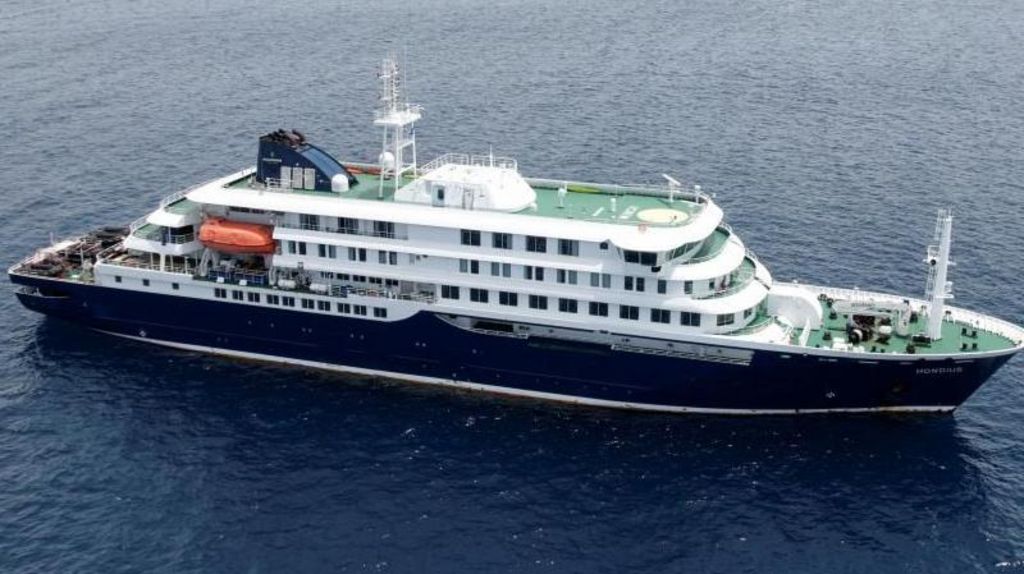
    A hantavirus outbreak aboard the Dutch cruise vessel MV Hondius has triggered an international public health response, after the ship left its anchorage off Cape Verde this week following the medical evacuation of three passengers and crew. The outbreak, which began after the ship set sail from Argentina one month ago, has already claimed three lives, with global health authorities racing to trace contacts and contain further spread.

    The three evacuated patients — a 56-year-old British national, a 41-year-old Dutch crew member, and a 65-year-old German passenger — are being transported to the Netherlands for specialized medical care, according to the ship’s operator, Netherlands-based Oceanwide Expeditions. As of the latest update, two of the three have already arrived at a Dutch hospital, while the third’s evacuation flight has been delayed. None of the evacuees have returned positive hantavirus tests to date, though two are exhibiting classic symptoms of the infection. Oceanwide Expeditions confirmed the German evacuee had close contact with a German woman who died aboard the vessel on May 2, one of the three fatalities linked to the outbreak.

    Three people who were on the MV Hondius have died since the voyage began. Only one death has been definitively linked to hantavirus so far, with the cause of the other two still under investigation. The timeline of fatalities traces back to April 11, when a Dutch man died aboard the ship; his cause of death has not been confirmed. His wife, also Dutch, disembarked at St Helena on April 24 and traveled to South Africa, where she died on April 26. Post-mortem testing confirmed she carried the Andes strain of hantavirus, a variant most commonly found in Latin America, the region where the cruise originated. The third fatality is the German woman who died on May 2; her cause of death is still unconfirmed, and her body remains aboard the ship.

    Contact tracing efforts are already underway across multiple countries. After the Dutch woman’s death, KLM Royal Dutch Airlines confirmed she had boarded a flight from Johannesburg to Amsterdam on April 25, but crew removed her from the flight after noticing her poor health condition. The World Health Organization (WHO) is currently tracing all passengers who shared the flight with her as a precaution. Separately, the UK Health Security Agency confirmed two British passengers who disembarked the MV Hondius earlier in the voyage are currently self-isolating at home in the UK after potential exposure, and neither has developed symptoms.

    As of the WHO’s latest public update, eight cases of hantavirus have been identified aboard the ship: three confirmed infections and five suspected cases. While hantavirus most commonly spreads to humans from rodent populations, public health experts believe human-to-human transmission through close physical contact is driving this outbreak. This matches patterns of previous outbreaks involving the Andes strain, which has been documented to spread between people in close contact. Testing for the virus among the 146 remaining people aboard the ship is still ongoing, though health officials have stressed that the risk of widespread transmission to the general public remains very low.

    Before the MV Hondius departed Cape Verde on Wednesday, three additional medical staff joined the vessel to monitor passengers and crew through the three-day voyage to the Canary Islands, a Spanish archipelago off the coast of northwestern Africa. The trip to the Canaries was approved by Spanish national health authorities, but the regional government of the Canary Islands has openly pushed back against the plan. Canary Islands President Fernando Clavijo told Spanish broadcaster Onda Cero that he could not allow the vessel to enter the region’s waters, arguing the central government’s decision lacked any supporting technical public health criteria and that regional officials had not been provided enough information about the outbreak. Clavijo has called for an urgent meeting with Spanish Prime Minister to address the dispute.

    Spanish Health Minister Mónica García has pushed back against regional concerns, saying all remaining people aboard the MV Hondius are currently asymptomatic, and the planned arrival protocol has been designed to eliminate any risk to Canary Island residents. A team of infectious disease specialists and WHO staff are now aboard the vessel, accompanying it to the Canary Islands and maintaining strict precautionary infection control measures for all people on board. When the ship docks in Tenerife, every passenger and crew member will undergo a full medical assessment. Passengers and crew from foreign countries will be repatriated directly to their home countries after clearing assessment, while Spanish nationals will be transferred to a military hospital in Madrid to complete quarantine. García emphasized that the entire process will be structured to avoid any contact between people on the ship and the general Canary Islands population.

    WHO technical lead Dr Maria Van Kerkhove has sought to ease public anxiety by clarifying how hantavirus spreads, noting it differs drastically from more transmissible respiratory viruses such as COVID-19 and influenza. “We’re not talking about casual contact from very far away from one another,” she explained, adding that transmission only occurs through close physical contact.